

Does Medicare Ever Stop Paying for Home Health?
Receiving a notice that Medicare might stop paying for a loved one's home health care can be upsetting. The short answer is yes, Medicare coverage for home health services can end. This usually happens when a patient’s condition improves and they no longer meet specific criteria.
Understanding When Medicare Stops Paying for Home Health

It is normal to feel worried when essential services might be ending. But these decisions are not random. They are based on a clear set of rules.
Think of Medicare’s home health benefit as a bridge, not a permanent road. It helps patients who need skilled care and have trouble leaving home. When a patient's needs change, Medicare may decide the services are no longer medically necessary.
The Core Requirements for Coverage
For Medicare to keep covering home health, a few key conditions must be met. A doctor reviews and re-certifies a plan of care every 60 days. This plan confirms the patient's ongoing needs.
To maintain coverage, the patient must:
- Be under a doctor's care with a plan the doctor reviews regularly.
- Need intermittent skilled care, like services from a Registered Nurse or physical therapist. This is different from "custodial" care, which is help with daily tasks like bathing or dressing.
- Be certified by a doctor as "homebound." This term can be confusing, but it doesn't mean you are trapped in your house.
The term "homebound" means that leaving home takes a lot of effort. You can still go to medical appointments, religious services, or even the salon and qualify as homebound.
Common Reasons Medicare May Stop Home Health Coverage
If your home health agency says Medicare coverage is ending, it is usually because a core requirement is no longer met. This table explains what that means.
| Reason for Coverage Ending | What This Means for the Patient | Next Steps to Consider |
|---|---|---|
| Goals of Care Met | The patient has recovered and no longer needs skilled care to be safe at home. | Celebrate the progress! Discuss any ongoing needs with the doctor and agency. |
| No Longer Homebound | The patient can now leave home without major effort. | The patient may be able to go to outpatient therapy or other community services. |
| Care Becomes "Custodial" | The main need is for help with daily living, not skilled medical care. | Explore private-pay home care, community programs, or long-term care insurance. |
| Refusal of Care | The patient consistently refuses visits from the home health team. | The family and care team should discuss the reasons and explore other options. |
| Patient is Hospitalized | Home health services stop during a hospital stay but can resume after discharge if criteria are still met. | Work with the hospital discharge planner to set up new home health services. |
When a patient's condition improves, Medicare sees this as a success. The need for their specific benefit has ended. You can find more details in our guide on Medicare home care eligibility requirements.
At Central Coast VNA & Hospice, we know navigating these rules is stressful. As a nonprofit home healthcare provider with over 74 years of experience in Monterey County, San Benito County, Santa Cruz County, and South Santa Clara County, our mission is to offer clear, compassionate guidance. We are here to help families understand their options.
Common Reasons for a Medicare Home Health Denial
It’s a big worry for families: what if Medicare stops paying for home health? Understanding why this happens can reduce fear and confusion. It usually comes down to a few key reasons.
Sometimes, coverage issues are due to administrative problems. This can include things like prior authorization in healthcare. Let’s review the most common reasons so you know what to expect.
You Are No Longer Considered Homebound
Think back to when care started. Maybe leaving home felt like a huge task. But with help from your physical therapist, you have made great progress.
This is wonderful news! From Medicare’s view, however, this progress means you may no longer be "homebound." Once your home health agency notes this improvement, Medicare might stop covering in-home services.
You No Longer Need Skilled Care
Skilled care is the foundation of the Medicare home health benefit. This is care that only a licensed professional can provide safely. A Registered Nurse (RN) or physical therapist are examples.
It helps to see the difference between skilled and custodial care:
- Skilled Care: This includes an RN managing a complex wound or a physical therapist guiding you through exercises.
- Custodial Care: This is non-medical help with daily life, like bathing, dressing, or making meals.
Medicare will not cover custodial care on its own. If you no longer need a skilled professional, Medicare will stop paying for home health. This is true even if you still need help with daily tasks.
The Goals of Your Care Plan Are Met
When you started home health, your doctor and agency created a plan of care with specific goals. A goal might be "walk 50 feet without a walker."
Reaching these goals is a major milestone. It signals to Medicare that the original purpose of the skilled care has been met. This is a positive outcome, but it can feel sudden if you do not feel ready to be on your own.
A Crucial Fact: Care Doesn't Have to Lead to Improvement
A harmful myth is that Medicare only pays for home health if you are "getting better." This is not true. A court case, Jimmo v. Sebelius, confirmed that Medicare must cover skilled services needed to maintain a patient's condition or slow their decline.
Sadly, some agencies may still incorrectly stop services when a patient's condition is stable. If skilled care is needed to keep you from getting worse, it should be covered by Medicare. It is important to know your rights.
What to Do After Receiving a Notice of Medicare Non-Coverage
Getting a notice that Medicare will no longer pay for home health is stressful. But that notice, called a Notice of Medicare Non-Coverage (NOMNC), is not the final word. You have the right to challenge the decision.
When services are set to end, your home health agency must give you the NOMNC. This paper explains why coverage is ending and the exact date it will stop. The most important thing is to act fast once you get this notice.
Understanding the Fast Appeal Process
The NOMNC notice is your key to starting an appeal. It has the contact information for an independent reviewer called the Beneficiary and Family Centered Care-Quality Improvement Organization, or BFCC-QIO. They are a neutral party that handles Medicare disputes.
You can ask for a "fast appeal." This means the BFCC-QIO must decide quickly, usually within 72 hours. A fast appeal allows your services to continue at no cost to you while the review happens, as long as you request it before the coverage end date. If you get a notice that home health is ending, it is vital to learn how to appeal a health insurance denial.
How to File a Fast Appeal for Home Health Care
Because the timelines are so short, you need to act right away. Here is a simple checklist to guide you.
| Step | Action to Take | Important Note |
|---|---|---|
| 1. Find the Deadline | Look at the NOMNC for the date your coverage ends. You must call the BFCC-QIO before noon on the day before that date. | Missing this deadline means you lose the right to a fast appeal. You can still file a standard appeal later. |
| 2. Call the BFCC-QIO | Use the phone number on your notice to call the BFCC-QIO. Tell them you want to file a fast appeal. | Keep your Medicare card handy. They will need your Medicare number. |
| 3. Explain Your Situation | Be ready to explain why you feel you still need skilled care. For example, "I still need a nurse for my wound care." | The BFCC-QIO will then get your medical records from the home health agency. |
| 4. Wait for the Decision | The BFCC-QIO will call you with their decision, typically within 72 hours. You will also get a written decision in the mail. | If you win, your Medicare coverage continues. If not, the notice explains your next steps. |
Taking these steps ensures your voice is heard and an expert reviews your case.
Your Right to Appeal is a Powerful Tool
The appeals process protects you. It ensures an unbiased review of your case. Do not hesitate to use it if you believe the care is still medically necessary.
Navigating this process can feel overwhelming. As a nonprofit home health provider, Central Coast VNA & Hospice is committed to providing care through our Continuum of Care. If you live in Monterey County, San Benito County, Santa Cruz County, or South Santa Clara County, our team is here to help.
We can help you understand the notice and figure out what to do next. You can also read our guide on what to do if insurance doesn’t cover everything. If you received a coverage notice, call our team to review next steps.
How Medicare Advantage Plans Affect Your Coverage
People often think of “Medicare” as one program. In reality, there are two main ways to get coverage: Original Medicare and Medicare Advantage. The home health rules for each are very different.
Medicare Advantage (MA) plans are sold by private insurance companies. They work like health insurance you might have had through a job. MA plans have their own rules and provider networks.
The Role of Provider Networks
One of the biggest differences with Medicare Advantage is the focus on provider networks. Every MA plan has a list of specific doctors, hospitals, and home health agencies it works with. You usually have to use providers from that list to keep costs down.
This is where a family can be surprised. Your coverage can end even if you still medically qualify for care. If your MA plan drops your home health agency from its network, your coverage with that agency is terminated.

The first step is always to review the notice. Then, call to start an appeal to protect your right to care.
When Your Plan and Provider Part Ways
It feels like hiring a trusted contractor for a project at your home. Then, the group that helps pay for it decides it won't work with that contractor anymore. You are left stressed and trying to find a new person.
This is what it feels like when an MA plan ends its contract with a home health agency. When this happens, studies show that about 10% of affected patients get frustrated and switch back to Original Medicare for more stability (KFF, 2023). This shows how much a private insurance plan's business decisions can disrupt a family's care.
Stability in a Shifting System
As a nonprofit healthcare provider, Central Coast VNA & Hospice offers stability and a commitment to our Continuum of Care. Our mission is to serve patients in Monterey County, San Benito County, and our surrounding areas. We focus on patient care, not shareholder demands.
Understanding your plan's details is essential. You might also find our guide on Medicare skilled nursing coverage at home helpful. If you have received a notice that your coverage is ending, contact our team today to review your next steps.
Planning Your Next Steps When More Care Is Needed

Learning that Medicare will stop paying for home health can feel like a door has closed. It is normal to wonder, “What do we do now?”
This moment is not an ending. Think of it as a transition to a different type of support.
The good news is you do not have to figure this out alone. For families in Monterey County, San Benito County, Santa Cruz County, and South Santa Clara County, there are clear paths forward. As a nonprofit provider offering a Continuum of Care, Central Coast VNA & Hospice makes this transition smooth.
When Symptoms Require More Than Home Health
Sometimes, a serious illness gets worse. The goal may shift from recovery to comfort. Symptoms like constant pain or shortness of breath can become hard to manage with just home health visits.
This is where palliative care can help. Palliative care is special medical care focused on relief from symptoms and stress. It can be provided with other treatments and helps improve your quality of life.
Continuum of Care: A Seamless Transition
A great benefit of partnering with Central Coast VNA & Hospice is our integrated approach. A patient can move from our home health services to our palliative care program without the stress of finding a new provider. Our teams work together to ensure uninterrupted support.
Considering Hospice for End-of-Life Comfort
If a doctor believes a patient has six months or less to live, the focus may shift to comfort and dignity. This is the heart of hospice care. It is a compassionate approach that supports the patient and their family.
Hospice manages pain and symptoms while providing emotional and spiritual support. This care can be delivered wherever the patient calls home.
Sadly, Medicare's home health services are often cut short. A report showed that from 2019 to 2022, home health agencies served 15% fewer traditional Medicare patients. During that time, in-person visits dropped by over 30%, a trend that hurts those with chronic conditions. You can read more in the report on declining Medicare-covered home health care.
Private Pay and Other Support Options
What if you no longer qualify for skilled care but still need help with daily activities? This is where private pay services become a vital support. You can hire aides to provide non-medical help, allowing you to live safely at home.
Navigating these changes requires a partner who is both knowledgeable and kind. For over 74 years, Central Coast VNA & Hospice has been that trusted partner for our community. We can help you explore every option.
Our guide on getting skilled nursing at home offers more insight. If you received a coverage notice, call our team to talk through the next steps.
Frequently Asked Questions About Medicare Home Health
Trying to understand Medicare can be hard. Below are answers to common questions we hear from families across the Central Coast.
How long does Medicare pay for home health care?
There is no set time limit for Medicare home health benefits. Coverage is not cut off after a specific number of weeks or months.
Medicare covers care in 60-day periods. As long as you meet the rules, like being homebound and needing skilled care, your doctor can recertify you for another 60 days. This can continue for as long as the care is medically needed.
Can I appeal if Medicare stops paying for my home health?
Yes, you have the right to appeal. The system is designed to let you do so quickly. Your home health agency must give you a written notice called a "Notice of Medicare Non-Coverage" (NOMNC).
This notice is the official start of your appeal. It explains why coverage is ending and gives you contact information for an independent review group. You must act fast because there are strict deadlines.
What happens if I lose my appeal but still need care?
Losing an appeal is not the end of the road. A trusted care partner can help you find the next steps.
Depending on your needs, you might:
- Transition to Palliative Care: Our palliative care team can manage symptoms and improve your quality of life.
- Arrange Private Pay Services: You can hire aides for daily help like bathing or meals.
- Consider Hospice Care: If your illness is terminal, our hospice care team provides compassionate support at home.
As a nonprofit organization offering a Continuum of Care, Central Coast VNA & Hospice helps patients in Monterey, San Benito, Santa Cruz, and South Santa Clara counties move smoothly between services.
Does my condition have to improve for Medicare to keep paying?
No. This is a common and incorrect belief. Medicare must cover skilled services needed to maintain a person’s current condition or slow their decline.
The myth that you must be "getting better" for coverage is false. If skilled care from a Registered Nurse or therapist is keeping you stable, that care should be covered by Medicare.
Why did my Medicare Advantage plan stop paying for home health?
Medicare Advantage plans have their own rules and networks. Your coverage could end if your plan stops working with your home health agency. This can happen even if you still medically need the care. If this occurs, you have the right to appeal the decision.
How can Central Coast VNA & Hospice help if my coverage ends?
Getting a coverage denial notice is stressful. Our team at Central Coast VNA & Hospice has helped many families through this situation. We offer clear, compassionate guidance.
As a local nonprofit with over 74 years of service on the Central Coast, our mission is to ensure you get the right care at the right time. We can help you understand the denial and talk through your next steps.
If you received a notice that your Medicare coverage is ending, you do not have to figure this out on your own. Call the team at Central Coast VNA & Hospice today at ccvna.com to review your options and get the support you need.
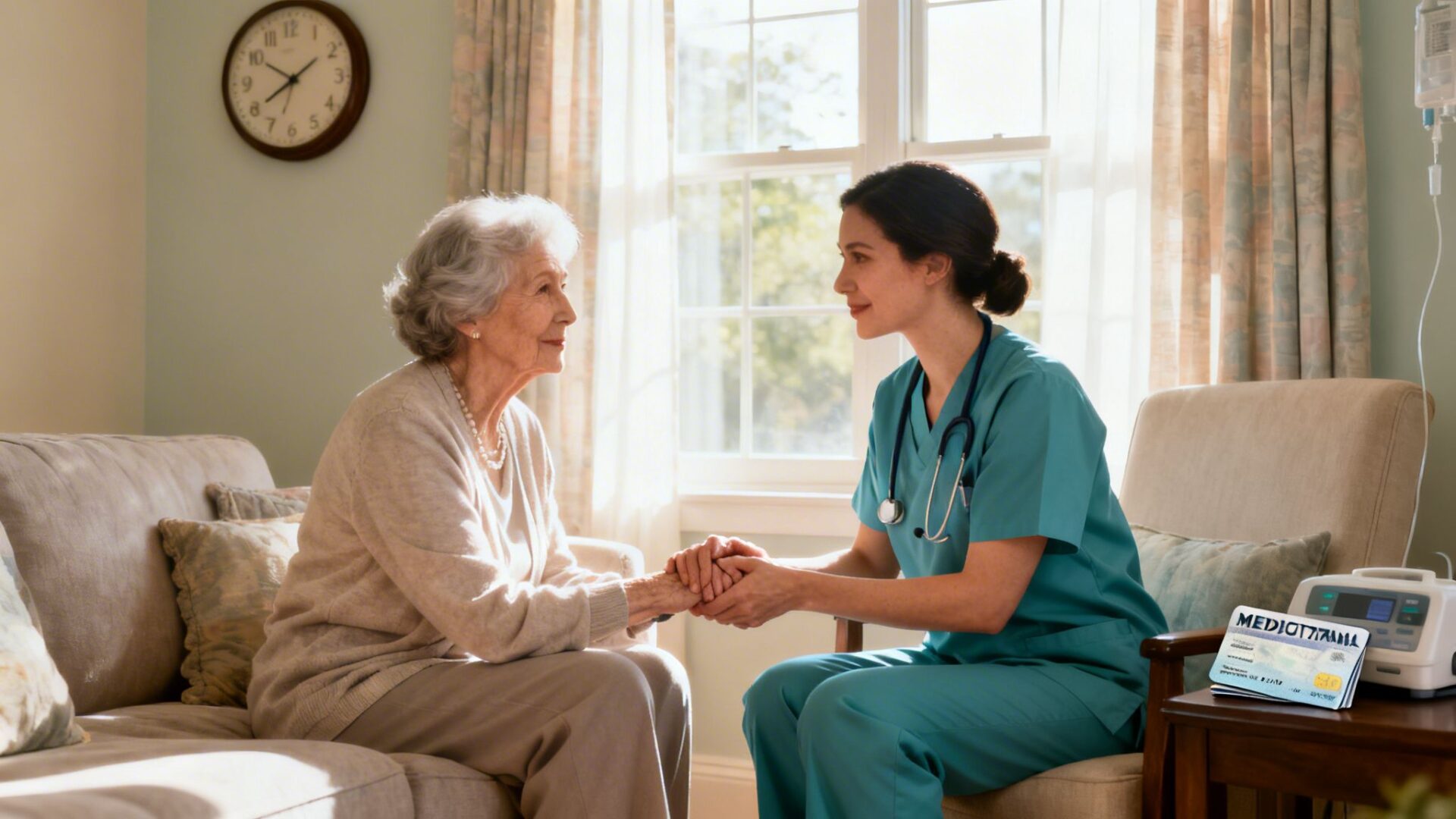
Does Medicaid Cover 24-Hour Home Health Care?
When a loved one needs constant care, keeping them at home is often the main goal. But this goal comes with a big question: how will we pay for it? This leads families to ask one of the most common questions we hear: Does Medicaid cover 24-hour home health care?
The short answer is that standard Medicaid very rarely covers 24-hour skilled home health care.
Setting Realistic Expectations for Home Care

For families here in Monterey County, San Benito County, and nearby areas, it is vital to know what Medicaid pays for. Understanding this from the start helps you avoid frustration. It also makes sure your loved one gets the right support quickly.
The first step is to learn about the two main types of in-home support. They are used for very different reasons.
Skilled Home Health Care vs. Personal Care
Think of these as two different tools for two different jobs.
- Skilled Home Health Care: This is medical care that a doctor orders. It is given by licensed professionals like a Registered Nurse or a physical therapist. It is usually short-term and helps a patient recover from surgery, an injury, or a serious illness. This care includes tasks like wound care, IV therapy, or physical therapy.
- Personal Care (or Custodial Care): This is non-medical help with daily life. Aides help with Activities of Daily Living (ADLs), such as bathing, dressing, making meals, or light cleaning. The goal is to provide safety and support, not to treat a medical issue.
This chart shows what standard Medicaid usually covers.
Home Care Covered by Medicaid At a Glance
| Type of Care | What Medicaid Usually Covers | Primary Goal of Care |
|---|---|---|
| Skilled Home Health Care | Part-time, periodic visits from a licensed medical professional (like a nurse or therapist). | To treat an illness or injury and help the patient recover. |
| Personal Care (Custodial) | Varies by state; often paid for through special waiver programs, not the standard benefit. | To assist with daily living activities (bathing, dressing, meals) and ensure safety. |
| 24-Hour (Continuous) Care | Not covered by standard Medicaid; requires a specific waiver or special program approval. | To provide constant monitoring and support for complex medical needs. |
As you can see, the key word for standard Medicaid (known as Medi-Cal in California) is intermittent. This means visits are scheduled and part-time. They are not continuous or around-the-clock. We explain more in our article about why home health isn't 24-hour care and what to do instead.
The purpose of Medicaid's standard home health benefit is to provide targeted medical help during recovery, not constant supervision.
As a nonprofit home health provider serving the Central Coast for over 74 years, our team at Central Coast VNA & Hospice can help you understand these details. We believe in providing clear, honest guidance. While getting 24-hour skilled nursing at home is rare, there are often other state programs that can help.
Understanding Medicaid's Home and Community-Based Services
If standard Medi-Cal only covers brief, skilled visits, how do some people get more care at home? The answer is through special state programs called Home and Community-Based Services (HCBS) waivers. These programs are the main way for families to get long-term support at home.
Think of an HCBS waiver as a special exception. It allows a state like California to "waive" certain federal Medicaid rules. This frees up money for more services for specific groups of people. The goal is to provide the support someone needs to live safely at home instead of in a nursing facility.
How HCBS Waivers Work
HCBS waivers are for people who qualify for a nursing-home level of care but want to stay in their own homes. This idea fits with our mission at Central Coast VNA & Hospice. We focus on helping people stay independent for as long as possible.
These programs can pay for a wider range of services than traditional Medicaid.
- Personal Care Services: Help with daily life, like bathing, dressing, making meals, and moving around safely.
- Adult Day Health Care: Supervised care in a group setting during the day.
- Respite Care: Short-term relief for family members who provide most of the care.
- Home Modifications: Money for changes that make a home safer, like adding ramps or grab bars.
- Case Management: A professional who helps coordinate all the services a person receives.
There has been a big shift toward this type of care. Medicaid is now a major funder of home care. It served about 5.1 million people through HCBS programs in 2023. That’s up from 4.5 million in 2021. This shows that families prefer to receive care at home when they can.
Why Waivers Differ From State to State
Here is where things can get tricky. HCBS waivers are not an entitlement. Regular Medicaid benefits must be given to anyone who qualifies. But states can limit the number of people in a waiver program. This often leads to long waiting lists.
Also, every state designs its own waiver programs. This means the services, rules, and care hours can be very different from one state to another. They can even be different between programs right here in California.
A waiver program is a state-specific solution. It unlocks Medicaid funding for non-medical, long-term support at home. Its goal is to prevent or delay the need for a nursing home.
The people who provide this hands-on support, like our dedicated Hospice Aides, are the heart of this system. You can learn more about their important work by reading about Working in Home Health Care as a CNA.
Understanding how these waivers work is the first step in creating a lasting care plan. They may not offer one person for 24 hours a day. But they provide the funds needed to build a strong support system. To get started, read our guide on qualifying for home health care.
When Medicaid Might Cover Around-the-Clock Care
While 24-hour coverage is rare, Medicaid can cover it in very specific situations. It is for people with extremely high medical needs. In these cases, constant skilled care is the only thing that keeps them out of the hospital.
This level of support is not for managing chronic conditions or providing basic supervision. It is for patients with complex medical needs that often depend on technology. Getting approval is very difficult and requires a lot of medical paperwork.
What Constitutes a High Medical Need
For Medicaid to consider around-the-clock care, the patient must need continuous help from a Registered Nurse (RN) or Licensed Practical Nurse (LPN). This is very different from what a personal care aide or a family member can safely provide.
If a loved one's condition is so fragile that a licensed nurse must be nearby to prevent a medical crisis, they might qualify.
These situations often involve conditions like:
- Ventilator Dependence: For someone who cannot breathe on their own.
- Tracheostomy Care: For individuals who need frequent, complex care for a breathing tube.
- Intravenous (IV) Nutrition or Medication: For patients who need continuous IV drips that a nurse must manage.
- Complex Wound Care: For those with severe wounds that need constant monitoring to prevent infection.
Even then, "24-hour care" does not mean one nurse works a full day. It is a schedule of nursing shifts to make sure a skilled professional is always there. Navigating the approval process is a challenge. That is why working with an expert team like Central Coast VNA & Hospice can provide valuable guidance.
Understanding the Pathway to Continuous Care
This high level of care is almost always approved through a state’s Home and Community-Based Services (HCBS) waiver programs. It is not part of standard Medicaid benefits. These waivers are for people who qualify for nursing home placement but can be cared for at home.
This chart helps show the different ways to get Medicaid-funded home care.

As the chart shows, the key question is whether a person's needs are complex enough to qualify for a nursing home. If they are, a waiver might unlock more services.
While an estimated 70% of adults over 65 will eventually need long-term services, very few ever get 24-hour skilled nursing at home. The system is built for intermittent care, making continuous support a rare exception.
For families here on the Central Coast, from Monterey to South Santa Clara County, understanding these facts is the first step. It helps set realistic goals and focuses your energy on the best solutions. Our experts can help you assess the level of medical need and explore options for skilled nursing at home.
How Medi-Cal and IHSS Work in California

For families on the Central Coast, California's specific programs are key to getting help. Our state’s version of Medicaid is called Medi-Cal. It offers a vital program for long-term, non-medical support at home called In-Home Supportive Services (IHSS).
It is important to know that IHSS is not the same as skilled nursing or therapy from a home health agency like Central Coast VNA & Hospice. IHSS is all about personal care. It helps with daily tasks so someone can stay safely in their own home.
The Role of IHSS in California
Think of IHSS as a way to pay for the help your loved one needs to live on their own. It provides money so a person can hire a provider for daily activities. This includes bathing, dressing, cooking, and light housekeeping.
The number of hours a person gets is decided by a county social worker. They visit the home to see what tasks your loved one can and cannot do. They then calculate the time needed for each activity, up to a state limit.
For a non-severely impaired person, the maximum is 195 hours per month. A severely impaired individual might get up to 283 hours per month. Even at the highest level, this is not 24/7 coverage.
One of the best things about the IHSS program is that your loved one can choose their own provider. This could be a professional aide, a friend, or often, a family member.
When you are dealing with complex health issues, it is helpful to see the line between IHSS personal care and medical services. Understanding all your options for in-home support to avoid a nursing home can show you how these programs can work together. This is a key step for families in Monterey, San Benito, Santa Cruz, and South Santa Clara counties.
How IHSS Hours Are Determined
When the county social worker visits for the IHSS assessment, they look at very specific needs. They use a standard form to figure out how much help is needed for different tasks.
The assessment focuses on:
- Activities of Daily Living (ADLs): These are basic self-care tasks, like bathing, dressing, grooming, and moving around the house.
- Instrumental Activities of Daily Living (IADLs): These are tasks needed to live independently, such as making meals, shopping, and doing laundry.
- Protective Supervision: If your loved one has a condition like dementia and could get hurt if left alone, extra hours may be approved for safety.
Based on this evaluation, the social worker assigns a certain number of hours for each task. These are added up to get the total number of approved hours per month.
As a nonprofit with over 74 years of local experience, we at Central Coast VNA & Hospice see how these systems fit together. We often see families combine our intermittent skilled nursing visits with daily personal care from an IHSS provider. This "blended" model is often the most realistic way to provide complete care at home.
Creating a Complete Care Plan with Blended Services

For most families, a single program like IHSS is not enough to cover every need. So, while you may start by asking, "Does Medicaid cover 24-hour home health care?" you will often find a better solution. Blending different types of support can create a true safety net.
This approach knows that care is not one-size-fits-all. By layering services, you can fill gaps and reduce stress on your family. This is where having an experienced guide makes all the difference.
Layering Support for Around-the-Clock Care
Think of a blended plan like a quilt. Each piece is a different source of support. Together, they provide complete comfort and security. For families on the Central Coast, this often means combining paid services with help from family and friends.
A typical blended plan might look like this:
- Skilled Home Health Visits: A Registered Nurse from Central Coast VNA & Hospice visits a few times a week to handle medical needs. This includes managing medications, providing wound care, or checking your loved one's condition.
- IHSS Personal Care Hours: An IHSS provider comes daily to help with personal tasks like bathing, making meals, and light housekeeping.
- Family & Community Support: Family members or trusted neighbors fill in the other hours. They often cover evenings, overnights, and weekends.
This model lets each person and service focus on what they do best. It requires excellent care coordination to make sure everyone is working toward the same goals.
The Critical Role of Family Caregivers
Family members are the heroes of the home care system. Many juggle their own jobs while providing hours of unpaid care each week. Medicaid programs like HCBS waivers are designed to support this network, not replace it.
The strain on family caregivers is real. According to AARP, about 9% of U.S. caregivers rely on Medicaid for their own health insurance while providing unpaid care. A significant 38% of these caregivers provide over 40 hours of care each week, which is like a full-time job.
Blending services is about more than just planning. It's about creating a support system that prevents caregiver burnout and ensures your loved one gets consistent, high-quality attention.
As a nonprofit home health provider with deep roots in Monterey and San Benito counties, Central Coast VNA & Hospice understands this well. We work with families and IHSS providers to make sure our skilled medical care fits with the personal support you already have.
This coordinated approach is at the heart of what we do, from home health to palliative and hospice care. You can learn more about our integrated home health and hospice services and see how we help families build these support networks every day.
How We Can Help You Navigate Your Options
We know how overwhelming the world of Medicaid and home care can feel. You do not have to go on this journey alone.
For over 74 years, Central Coast VNA & Hospice has been a trusted, local nonprofit partner for families. We serve Monterey, San Benito, Santa Cruz, and South Santa Clara counties. Our compassionate team is here to walk with you and help you find the clearest path forward.
Figuring out which programs your loved one might qualify for can be confusing. Our clinical experts can provide a professional, in-home assessment. This will give you an honest picture of your loved one’s medical needs and help clarify if skilled care or another service is the right fit.
Guiding You Through Every Stage
As a provider of the full continuum of care, from home health to palliative and hospice, we help families manage these important transitions.
We see how our skilled nursing visits can be blended with IHSS hours to create a complete care plan. Our deep roots in the community give us a unique understanding of how to coordinate these services so nothing is missed.
Our commitment is to your family’s well-being. As a nonprofit home healthcare provider, our only goal is to ensure your loved one receives the right care, at the right time, in the place they call home.
Let’s review your loved one’s needs and coverage options. We can help you understand the difference between the skilled medical care a Registered Nurse provides and the personal support an IHSS provider offers.
Contact Central Coast VNA & Hospice today to learn more about our home health, palliative care, and hospice services.
FAQs: Common Questions About Medicaid and Home Care
Navigating Medicaid and home care can feel confusing. The rules are complex, and it’s easy to feel lost. Here are some simple answers to questions we hear all the time.
What is the difference between home health care and personal care?
Home health care is medical care you receive at home. It is prescribed by a doctor and provided by licensed professionals, like a Registered Nurse or physical therapist. It is meant to be short-term to help you recover from an illness or injury.
Personal care is non-medical help with daily activities. This includes tasks like bathing, dressing, making meals, and light housekeeping. It is often provided long-term through programs like California's In-Home Supportive Services (IHSS).
Does Medicaid pay for 24-hour home care?
Standard Medicaid does not typically pay for 24-hour home care. It covers intermittent, or part-time, skilled care. However, in rare cases, specific state waiver programs may approve around-the-clock care for individuals with very high-level medical needs, such as ventilator dependence.
Are there waiting lists for Medicaid long-term care at home?
Yes, many states have waiting lists for their Home and Community-Based Services (HCBS) waiver programs. These programs fund long-term care at home. Because states can cap enrollment, it is smart to apply as soon as you think you might need the services.
Can I pay a family member to provide care through Medi-Cal in California?
Yes, in many cases. California's IHSS program lets your loved one choose and hire their own provider. This can often be a trusted family member. This flexibility allows care to be provided by someone your loved one already knows and trusts.
What should I do if my request for more home care hours is denied?
A denial is not the end of the road. You have the right to appeal the decision. This is also a good time to consider a blended care plan. A blended plan combines different sources of support, such as skilled home health visits from an agency like ours and personal care hours from IHSS.
Feeling overwhelmed is understandable, but you don't have to figure it out alone. As a local, nonprofit provider with over 74 years of experience here on the Central Coast, Central Coast VNA & Hospice is here to be your guide. Let’s talk through your loved one’s needs and what coverage options make sense. Contact us today to learn more about our hospice care in Monterey County and other supportive services.
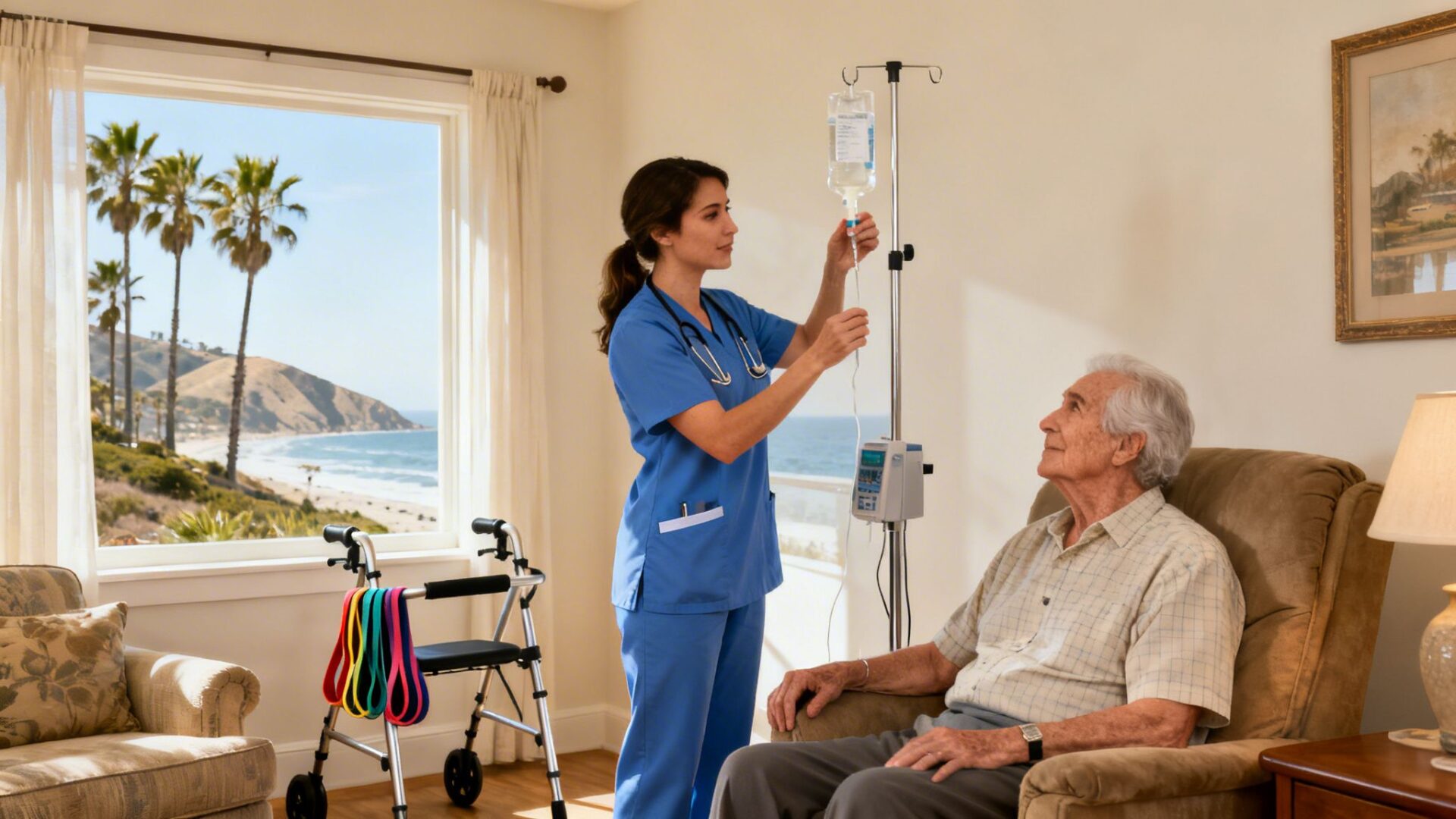
California Home Health Care: What It Covers & Who Qualifies
When you or a loved one are recovering from surgery, an injury, or a new illness, a long hospital stay can feel overwhelming. Many people don't realize there's another path to healing. California home health care brings a dedicated medical team right to your front door. This lets you recover in the comfort of home.
This isn't 24/7 personal help. It's a specific type of care ordered by a doctor that focuses on skilled, intermittent visits. These visits from a Registered Nurse or therapist help you get back on your feet.
What Is California Home Health Care?
Think of it as bringing the hospital's recovery team into your living room. That is the heart of California home health care. It is a medical service prescribed by your doctor to help you heal safely at home. It can often prevent a hospital stay or let you come home sooner.
This care is for patients who need professional medical support but not around-the-clock. Instead, you get targeted visits from licensed experts focused on your recovery goals. It's important to know this is different from general home care services for seniors, which usually helps with daily tasks. Home health care delivers clinical expertise directly to you.
Home Health Care Services at a Glance
To give you a clearer picture, here is a snapshot of the skilled services in a home health plan. This team works together to provide support based on your medical needs.
| Service Type | What It Means for You |
|---|---|
| Skilled Nursing | A Registered Nurse (RN) manages your care, from wound dressing and IVs to medication education and monitoring your health. |
| Physical Therapy | A Physical Therapist (PT) helps you regain strength, balance, and mobility with targeted exercises and training. |
| Occupational Therapy | An Occupational Therapist (OT) helps you safely return to daily activities like dressing, bathing, and cooking. |
| Speech Therapy | A Speech-Language Pathologist (SLP) assists with communication or swallowing problems after a stroke or illness. |
| Medical Social Work | A Medical Social Worker (MSW) connects you with community resources and provides counseling to help you and your family cope. |
| Home Health Aide | A certified Home Health Aide (HHA) assists with personal care, like bathing, under the supervision of a nurse or therapist. |
These services are coordinated by your doctor and the home health agency. This ensures your care plan helps you meet your personal recovery goals.
The Purpose of Skilled Care at Home
The main goal of home health care is to help you recover and regain independence. While every patient's journey is unique, the focus is always on improving your health at home.
The goals of these services often include:
- Recovering after a hospital stay for surgery, a heart attack, or a serious infection.
- Managing a new medical diagnosis, such as diabetes or chronic obstructive pulmonary disease (COPD).
- Receiving therapy to rebuild strength or communication skills after an injury or stroke.
- Learning to manage medications safely to prevent future health problems.
For over 75 years, Central Coast VNA & Hospice has been a trusted nonprofit provider. We serve communities across Monterey County, Santa Cruz County, San Benito County, and South Santa Clara County. Our mission is to deliver expert, compassionate care that keeps our neighbors healthy and safe at home.
As a mission-driven nonprofit, our focus is on patient well-being, not profits. We provide a full continuum of support, from recovery with our home health care services to managing illness with palliative care and providing comfort with hospice. Our dedicated teams of Registered Nurses, therapists, and medical social workers are committed to your recovery, with 24/7 on-call clinical support always available.
Who Qualifies for Home Health Care in California
Figuring out who qualifies for California home health care can feel confusing. But the rules are more straightforward than they seem. Eligibility comes down to two main requirements.
First, you need a physician's order. A doctor must certify that you need "intermittent" skilled nursing or therapy. This is an official referral that confirms home-based medical care is essential for your recovery.
The Homebound Requirement Explained
The second major requirement is that you must be homebound. This is the most misunderstood part of qualifying. It does not mean you are stuck in bed or can never leave the house.
So, what does it mean? Medicare says:
- Leaving your home takes a considerable and taxing effort because of your illness or injury.
- You might need help from another person or a device like a walker to get out.
- When you do leave, it’s usually for short, infrequent trips like medical appointments.
Think of someone recovering from knee surgery. They can get to their doctor's appointment, but a trip to the grocery store would be exhausting. That is a perfect example of being homebound. The focus is on the effort involved.
This decision path helps show how it all comes together.

It all starts with a medical need and a doctor's order. Those are the first steps before home health care can be approved.
Meeting the Criteria for Skilled Care
Besides being homebound and having a doctor’s order, there is one more piece. The care must be both skilled and intermittent. "Skilled" means it requires the knowledge of a professional, like a Registered Nurse or Physical Therapist.
At Central Coast VNA & Hospice, our clinical teams specialize in assessing patient needs. With a legacy of serving Monterey, Santa Cruz, San Benito, and South Santa Clara counties, we help families navigate these requirements with compassion.
For instance, a nurse teaching a patient about new diabetes medications is a skilled service. So is a therapist guiding someone through exercises after a fall. A Home Health Aide can also be covered if their services support an existing plan of skilled care.
You can find more details in our guide about qualifying for home health care.
What Services Home Health Care Actually Covers
Once a doctor gives the green light for California home health care, the next question is, "What does that mean for us?" Home health is not just one service. It is a team of clinical experts who come right to your door.
Each team member has a specific role in your recovery. They all follow a personal care plan that your doctor approves.

The goal is to bring the medical care you need into your home. At a nonprofit provider like Central Coast VNA & Hospice, this team approach is everything. It ensures we are looking at the whole picture with compassion.
So, let's break down the key services you can expect.
Skilled Nursing Care
At the heart of your home health plan is skilled nursing care. A Registered Nurse (RN) or Licensed Vocational Nurse (LVN) becomes the manager of your care at home. They are your main point of contact and oversee your progress.
These nurses handle complex medical needs right in your living room. These are things you might have thought could only happen in a hospital.
- Wound Care: They change dressings after surgery and care for complex wounds to prevent infection.
- IV Therapy and Injections: Nurses can manage intravenous medications, fluids, or nutrition. This service often lets patients come home from the hospital sooner.
- Medication Management: They teach you and your family about new medications—what they are for, when to take them, and what side effects to watch for.
- Disease Management Education: If you are managing a condition like diabetes, the nurse is your coach. They teach you how to spot symptoms and take control of your health.
This high level of care is why a doctor's order is needed. You can learn more about our approach to skilled nursing at home.
Rehabilitation Therapies
Helping you regain independence is a key part of home health. This is where the rehabilitation team comes in. These specialized therapists work with you to restore function and quality of life.
Physical Therapy (PT)
A Physical Therapist helps you get moving again. They work on building strength, improving balance, and increasing mobility. A PT will design an exercise plan to get you walking safely after a fall, stroke, or joint replacement.
Occupational Therapy (OT)
An Occupational Therapist helps you get back to the "occupations" of daily life. This is about essential activities like bathing, dressing, or making a meal safely on your own.
Speech-Language Pathology (SLP)
A Speech-Language Pathologist helps with communication and swallowing problems. After a stroke, they work with patients to improve speech and learn to swallow food and liquids safely.
At Central Coast VNA & Hospice, our interdisciplinary team works hand-in-hand. The therapists and nurses share updates and time their visits to make sure your care plan is working as a whole.
Medical Social Work and Home Health Aide Services
Recovery is not just physical. It has emotional and practical challenges, too. That is where medical social workers and home health aides complete the circle of care.
Medical Social Work
A Medical Social Worker is a great source of support for you and your family. They can help you cope with stress, connect you to community resources like Meals on Wheels, and assist with long-term planning.
Home Health Aide Services
Working under the supervision of your nurse or therapist, a Home Health Aide can help with personal care. This might include help with bathing and dressing. These services are only covered when part of a skilled care plan.
This team-based model ensures patients in Monterey, Salinas, Hollister, Santa Cruz, and South Santa Clara County receive complete care. We empower people in our community to heal where they feel most comfortable.
Understanding Your Medicare and Medi-Cal Coverage
Worries about paying for medical care should not get in the way of recovery. When your doctor orders California home health care, you might wonder how to pay for it. The good news is that for most eligible people, these services are covered by Medicare or Medi-Cal, often at no cost.
Understanding this financial support provides peace of mind. It is also central to our mission as a nonprofit home healthcare provider. At Central Coast VNA & Hospice, our focus is on delivering great care to our communities in Monterey and Santa Cruz County, not on profits.
How Medicare Covers Home Health Care
If you are 65 or older or have certain disabilities, Medicare is likely your primary coverage. When you have Original Medicare (Part A and/or Part B) and meet the requirements, your home health services are typically covered at 100%. This means you must be certified as homebound and need physician-ordered skilled care.
That means you will have $0 out-of-pocket costs for all approved services, including:
- Skilled nursing visits from a Registered Nurse
- Physical, occupational, and speech therapy
- Medical social work consultations
- Home health aide services to support your skilled care plan
You don’t have to worry about a deductible or copay for these visits. The only potential cost is a 20% coinsurance for any durable medical equipment (DME), like a walker or hospital bed.
You can find more details in our guide on Medicare home care eligibility.
Medi-Cal as a Vital Safety Net
Medi-Cal, California's Medicaid program, is a healthcare safety net for low-income individuals. Like Medicare, Medi-Cal covers all medically necessary home health services ordered by a doctor. If you are eligible for Medi-Cal, you can receive skilled care without a copay.
This coverage ensures that all Californians, regardless of income, have access to the support they need to recover at home. This aligns with our 75-year history of serving everyone in our community.
According to the Centers for Medicare & Medicaid Services (CMS), nearly 3.2 million beneficiaries received home health services in 2021 (CMS, 2023). This shows how vital these programs are in helping people recover safely at home.
Private Insurance and Other Options
What if you have private insurance or a Medicare Advantage Plan (Part C)? Your coverage will depend on your policy. Most plans cover home health services but may have different rules about copayments or which agencies are in their network. The team at Central Coast VNA & Hospice can help you verify your benefits.
Our goal is to make sure you can focus on your health. With strong coverage from programs like Medicare and Medi-Cal, you can feel confident that expert care is available right at home.
How Home Health Fits in Your Long-Term Care Journey
A person’s healthcare needs can change over time. A sudden illness or a new diagnosis can shift the kind of support your family needs. Understanding how different levels of care connect is key to feeling confident about the future.
California home health care is often the first step people take. It is a temporary, goal-oriented service to help someone recover. But what happens when the goal is no longer recovery but managing a serious illness long-term?
From Recovery to Long-Term Support
It helps to think of the healthcare journey as a path with different stages. Each one has a specific purpose.
A common path might look like this:
- Home Health Care: This is the recovery phase. A team of nurses and therapists comes to your home to help you regain strength and independence.
- Palliative Care: If an illness becomes a long-term condition, the focus may shift to comfort and symptom management. Palliative care adds an extra layer of support while you continue treatment.
- Hospice Care: When curative treatments are no longer working, the focus moves to comfort and dignity. Hospice provides compassionate support for the patient and family.
During recovery, many families also invest in modern wellness equipment to make the home safer.
The Power of an Integrated Care Partner
Moving between these stages can be stressful. Finding a new provider and learning a new system adds an emotional burden. This is why a single, trusted partner that can provide care at every stage is so powerful.
As a nonprofit provider serving the Central Coast for over 75 years, Central Coast VNA & Hospice offers this seamless continuum. Our families in Monterey, Santa Cruz, San Benito, and South Santa Clara counties never have to search for a new agency as their needs evolve.
This integrated approach provides consistency and peace of mind. The same organization that helped with home health care can smoothly transition to our palliative care team. And if the time comes for hospice care, you will be surrounded by a familiar, trusted team.
This continuum of care means you always have a compassionate partner by your side. It ensures you get the right care at the right time.
How to Start Receiving Home Health Care Services
Taking the first step to get professional medical support at home is easier than you think. We will walk you through how to start California home health care for yourself or a loved one.
It all starts with a talk with your doctor. A physician’s order is a mandatory first step to begin services covered by Medicare, Medi-Cal, or private insurance.

The Power of a Physician Referral
A referral from your doctor or a hospital discharge planner officially kicks things off. This order certifies that you have a medical need for skilled care. You have the right to speak up for yourself or your family member.
Especially after a hospital stay, you can and should ask for a home health evaluation. This talk is a key part of good discharge planning from the hospital. It helps make the transition home safe and supported.
At Central Coast VNA & Hospice, our teams are always here to answer questions. With 75 years of nonprofit service to Monterey, Salinas, Hollister, and Santa Cruz, we've made the referral process simple.
Once your doctor sends the referral, things move quickly. A team member from the agency will call you to schedule an assessment at home.
What to Expect From the First Visit
During this first visit, a Registered Nurse (RN) will come to your home for an assessment. Think of it as a friendly meeting. The goal is to understand your needs and review your medical history.
The nurse will then work with you, your family, and your doctor to create a personal plan of care. This plan is your roadmap. It outlines what services you will get and how often the team will visit.
With an organization like Central Coast VNA & Hospice, help is always a phone call away. Our 24/7 on-call clinical support means a Registered Nurse is available to answer urgent questions day or night. This gives you and your family incredible peace of mind.
Speak with our clinical team to see if home health care is right for your family.
Frequently Asked Questions About California Home Health Care
Even after learning the basics, you may still have questions about California home health care. Let’s walk through some common questions we hear from families. This can help you feel clear about your next steps.
Is home health care the same as a private aide?
No, and this is an important difference. Home health care is skilled medical care from a licensed nurse or therapist. It is prescribed by a doctor to help you recover from an illness, injury, or surgery. A private aide helps with non-medical daily activities like meal prep or errands and is usually paid for out-of-pocket.
How fast can home health services begin?
Services can begin very quickly, often within 24 to 48 hours after the agency receives a referral from your doctor. Once the referral is made, a Registered Nurse will contact you to schedule the first visit. This visit includes a full assessment to create your personalized plan of care so visits can start right away.
Can I choose my home health care provider?
Yes, absolutely. Federal law guarantees Medicare beneficiaries the right to choose any certified agency in their area. A hospital may give you a list of local providers, but the final decision is always yours. We encourage families to look for a trusted, local agency with deep community roots, like Central Coast VNA & Hospice.
Do I need a hospital stay to qualify?
Not necessarily. While many people start home health care after a hospital stay, it is not a strict requirement. You can also qualify if your doctor sees that a new or worsening chronic condition needs skilled management at home. In these cases, home health care can help you avoid a hospital stay.
What if I need help on a weekend or at night?
Your health needs don't keep business hours. While your regular visits are scheduled during the day, you should never feel alone. Reputable agencies like Central Coast VNA & Hospice provide 24/7 on-call clinical support. This means a Registered Nurse is always a phone call away to answer urgent questions.
For over 75 years, Central Coast VNA & Hospice has been a trusted nonprofit home healthcare provider serving Monterey County, San Benito County, Santa Cruz County, and South Santa Clara County. We are guided by our mission to deliver care at every stage of life. Speak with our clinical team to see if home health care is right for your family.
What’s the Real Difference Between Hospice and Palliative Care?
When you or a loved one has a serious illness, it's important to know your care options. Palliative care can start at any stage of an illness. On the other hand, hospice care is for the final months of life.
Palliative care adds a layer of comfort and support during medical treatment. Hospice focuses completely on comfort and quality of life when a cure is no longer the goal.
A Compassionate Guide to Your Care Options

Dealing with a serious illness can feel overwhelming for patients and families. You will likely hear two terms: palliative care and hospice care. Both aim to provide comfort, but they serve different needs at different times.
Understanding the real difference between hospice and palliative care helps you make good decisions. It ensures you get the right support at the right time. For over 74 years, Central Coast VNA & Hospice has helped families in Monterey, San Benito, Santa Cruz, and South Santa Clara counties understand these choices.
Both palliative care and hospice are about helping people live as well as they can, for as long as they can. They focus on improving your quality of life, allowing you to spend that time in the way you want to spend it.
To clear up any confusion, let's look at their main features. This comparison is a great starting point for talks with your family and doctors. For another helpful overview, see this resource on Hospice vs Palliative Care Understanding the Difference.
Hospice vs. Palliative Care at a Glance
This table gives a quick summary of the differences between these two types of compassionate care.
| Feature | Palliative Care | Hospice Care |
|---|---|---|
| Timing of Care | Can begin at diagnosis and be provided at any stage of a serious illness. | Typically begins when an illness is terminal, with a life expectancy of six months or less. |
| Treatment Goals | Provided alongside curative treatments (like chemotherapy) to manage symptoms and stress. | Focuses on comfort and quality of life when curative treatments are no longer being pursued. |
| Care Team | Includes a specialized team, often a Registered Nurse and Social Worker, who work with your current doctors. | Involves a full interdisciplinary team, including a Medical Director, Registered Nurse, Hospice Aide, and Chaplain. |
| Location of Care | Often provided at home, in an outpatient clinic, or during a hospital stay. | Primarily delivered wherever the patient calls home, including private residences, nursing homes, or assisted living. |
Both services provide comfort and dignity. The key difference is the timing and approach. Palliative care works with active treatment, while hospice becomes the main focus when comfort is the priority.
Exploring Palliative Care for Comfort and Quality of Life

When you are living with a serious illness, the focus is often on treatment. But what about comfort, stress, and your overall quality of life? This is where palliative care helps.
Palliative care is a specialized type of support that eases the symptoms and stress of a serious illness. It's an extra layer of support that can begin at any age or stage of an illness. Its main goal is to improve life for both the patient and their family.
This care is very helpful for people with conditions like cancer, heart failure, or dementia. It works alongside your current doctors and treatments. For residents in Monterey County and Santa Cruz County, palliative care at home can lead to fewer hospital visits.
Who Is on the Palliative Care Team?
A palliative care team adds to the care you get from your other doctors. At Central Coast VNA & Hospice, our team provides complete, coordinated support. These professionals work together to meet your needs.
A typical palliative care team includes:
- Registered Nurse: A skilled Registered Nurse manages your symptoms and coordinates care. They are your main contact for managing pain and other difficult symptoms.
- Social Worker: A medical Social Worker gives emotional support and helps you navigate your healthcare journey. They can connect you with community resources and help with advance care planning.
The core principle of palliative care is that it can be provided at the same time as curative treatments. You do not have to choose between getting better and feeling better.
This approach ensures you are fully supported while you continue treatment. Our team works with your doctors to make sure your care plan matches your goals.
What Does Palliative Care Actually Do?
Palliative care focuses on relief from symptoms, pain, and stress of a serious illness. The real difference is its focus on your comfort and well-being.
Here’s how palliative care can help you or your loved one:
- Symptom and Pain Management: Provides expert treatment for pain, shortness of breath, fatigue, and other symptoms.
- Emotional and Spiritual Support: Helps patients and families cope with the emotional toll of an illness.
- Improved Communication: Helps you, your family, and your doctors stay on the same page.
- Coordination of Care: Helps you navigate the healthcare system and makes sure your providers work together.
Despite its benefits, many people don't know about palliative care. A poll from the National Hospice and Palliative Care Organization (NHPCO) found many Americans are unfamiliar with it. This knowledge gap means people miss out on care that could improve their life.
Central Coast VNA & Hospice is dedicated to educating our community. By bringing this care into homes across the Central Coast, we help patients live more comfortably. If you're wondering how this support fits in, you might enjoy our article on why palliative care isn't just for the end.
Understanding Hospice Care for Dignity at End of Life
While palliative care offers support at any stage, hospice is for when an illness enters its final phase. It’s not about giving up. It’s a shift in focus from curing the disease to maximizing quality of life.
This compassionate approach is for people with a life-limiting illness and a life expectancy of six months or less. When curative treatments are no longer working or wanted, hospice provides support that centers on the whole person.
The Shift to Comfort and Quality of Life
Starting hospice is a personal decision that marks a change in healthcare goals. Instead of aggressive treatments, the focus turns entirely to comfort. This means managing pain and symptoms so a person can live their remaining time as alert as possible.
Central Coast VNA & Hospice has provided this care for over 74 years. We have helped thousands of families across Monterey County, San Benito County, Santa Cruz County, and South Santa Clara County. As a nonprofit, mission-driven organization, our decisions are guided by patient needs.
Hospice care is a philosophy that embraces life and focuses on making every day count. It helps patients and families find peace by providing expert medical care, pain management, and emotional and spiritual support tailored to their specific needs and wishes.
The goal is to empower patients to live their final months on their own terms. For most, this means receiving care where they call home. To learn more, read our guide on what exactly happens when someone starts hospice care.
The Interdisciplinary Hospice Team
Hospice care is delivered by a dedicated, interdisciplinary team. They work together to support both the patient and their family. This team approach addresses physical, emotional, and spiritual well-being.
The Central Coast VNA & Hospice team includes:
- Medical Director: A physician who offers medical guidance and works with the patient's own doctor.
- Registered Nurse: Manages pain and symptoms, making regular home visits to provide skilled care.
- Hospice Aide: Helps with personal care like bathing and dressing to keep the patient comfortable.
- Chaplain: Provides spiritual support that respects the patient's and family's beliefs.
- Social Worker: Offers emotional support and connects the family with community resources.
This team creates a circle of support for the entire family. We’re available 24/7 for urgent needs, which often prevents trips to the emergency room.
Where Is Hospice Care Provided?
A common myth is that hospice is a place you go to. In reality, hospice is a type of care provided wherever a person calls home. Most of our patients receive hospice care in their own residence.
This commitment to home-based care is a key part of our service. Our teams travel throughout the Central Coast to support patients in settings like:
- Private homes
- Assisted living communities
- Skilled nursing facilities
By bringing expert care to the patient, hospice helps families spend quality time together. It’s all about honoring a person's final wishes with dignity and respect.
Making the Right Choice for Your Family's Needs
Understanding the definitions of hospice and palliative care is one thing. Figuring out how they apply to your family is another step. Looking at a few real-life examples can make the path forward clearer.
These choices are not about giving up hope. They are about regaining control and ensuring your loved one gets the right support at the right time. By walking through some examples, you can have better talks with your doctor.
A Palliative Care Scenario for Heart Failure
Let's imagine a 72-year-old man in San Benito County with congestive heart failure (CHF). He is tired and short of breath, and frequent hospital trips are draining. He still sees his cardiologist, but his symptoms are getting in the way of daily life.
This is a perfect time to bring in palliative care. Here’s why:
- He is still seeking curative treatment: He is still working with his cardiologist. Palliative care adds support, it doesn't replace his doctor's plan.
- His biggest need is symptom management: The palliative team can focus on managing his shortness of breath and fatigue at home.
- The goal is to improve his quality of life: By controlling his symptoms, the team helps him avoid stressful ER visits and feel better.
In this situation, palliative care from Central Coast VNA & Hospice acts as an extra layer of support. Our team works with his doctors to manage symptoms and reduce anxiety.
A Hospice Scenario for Heart Failure
Now, let's fast-forward five years. The same man's heart failure has gotten worse. The treatments are no longer as effective, and he wants to avoid the hospital. His priority has shifted to comfort and quality time with his family at home in Monterey County.
This is when a transition to hospice care becomes the most supportive choice.
The real difference often comes down to this pivotal moment: the decision to shift the focus from trying to cure the illness to maximizing comfort and quality of life for the time that remains.
The infographic below helps show the key question for starting hospice care.

As this shows, when a doctor certifies a life expectancy of six months or less, hospice becomes the recommended path for comfort-focused care.
In this hospice scenario, the entire focus changes:
- Comfort is the top priority: The hospice team—including a Registered Nurse and Hospice Aide—manages his pain and symptoms at home.
- Holistic support is provided: The team supports the patient, his wife, and children with emotional and spiritual guidance.
- Care is brought directly to him: All care, medications, and medical equipment for his hospice diagnosis are delivered to his home.
These scenarios show how Central Coast VNA & Hospice provides a continuum of care. It is common for a patient to start in our palliative care program and later move to hospice. This ensures they have a familiar, trusted team.
If you’re wondering about the timing, a great next step is to check out our guide on how to know when hospice is needed.
Correcting Common Myths About Hospice and Palliative Care
Fear and confusion about hospice and palliative care are common. These myths can stop families from getting the support they need. Let's look at the truth.
At Central Coast VNA & Hospice, we want to give our community clear answers. Let's tackle some of the biggest myths so you can feel confident in your choices.
Myth 1: Palliative Care Means I'm Dying
This is a big and harmful myth. Palliative care is not end-of-life care. It is care focused on relief from the symptoms and stress of a serious illness.
You can get palliative care at any age or stage of an illness. The goal is to improve your quality of life while you continue curative treatments. Think of it as an extra layer of support.
Myth 2: Hospice Means Giving Up Hope
Many people feel that choosing hospice is giving up. In reality, it’s about shifting hope from a cure to comfort, peace, and meaningful time with loved ones. Hospice care is about making every day count.
When a cure is not possible, hospice provides expert pain management. This allows patients to live more comfortably. Families often tell us they wish they had started hospice sooner.
A common fear is that hospice shortens life, but research often shows the opposite. By focusing on aggressive symptom management and holistic support, hospice can actually improve both the quality and length of life.
Some studies have even found that hospice patients may live longer than similar patients who don't receive it. For instance, one study found that hospice patients lived an average of 29 days longer than those who were not in hospice.
Myth 3: You Can Only Get Hospice for a Few Days
Another myth is that hospice is only for the last few days of life. Patients are eligible when a doctor certifies they have a life expectancy of six months or less.
Many people receive hospice care for weeks or months. This gives them the full benefit of our team's support. To learn more, check our article on the top misconceptions about hospice.
By clearing up these myths, we can help more families in Monterey, San Benito, Santa Cruz, and South Santa Clara counties get the care they deserve.
How to Access Palliative and Hospice Services
Living with a serious illness is a challenge, but you don't have to do it alone. The first step is to understand your options. The second is knowing how to get support.
The process often starts with a conversation. Your doctor is the best person to talk to first. They can give you a referral and help you figure out which service is the right fit.
Starting the Conversation with Your Doctor
Bringing up palliative or hospice care can feel difficult, but it's an important step. Talk openly with your doctor about your symptoms and your hopes.
Here are a few questions you can ask:
- Could palliative care help me manage my symptoms while I continue my treatments?
- What would need to change for hospice to be a supportive option for me?
- Can you give me a referral to Central Coast VNA & Hospice so my family and I can learn more?
This talk allows your doctor to recommend services. A referral is often all it takes to begin.
Starting the conversation is not about giving up; it’s about adding a layer of expert, compassionate support to your existing care. It's about ensuring your journey is guided by your wishes and your comfort.
Once you have a referral, you can reach out to a trusted provider. An informational visit can answer your questions with no obligation. You can also look into local health care resources for seriously ill family members for more information.
A Seamless Continuum of Care
Choosing a local, nonprofit provider like Central Coast VNA & Hospice has many benefits. One is the ability to move smoothly between different types of care as your needs change. For over 74 years, we have been a trusted partner for families across Monterey, San Benito, Santa Cruz, and South Santa Clara counties.
A patient might start with our home health services after a hospital stay. They can then transition to our palliative care program for symptom management. If their goals later shift to comfort, they can move into our hospice program with the same familiar team.
This continuity ensures you get the right care at the right time. Our only goal is your well-being. We are here to help you with dignity and compassion.
If you or a loved one is facing a serious illness, please do not wait to get support. Contact us today to learn how our services can help.
Frequently Asked Questions
When you're trying to understand hospice and palliative care, many questions come up. Here are clear answers to common concerns from families.
How Are Hospice and Palliative Care Paid For?
This is a very important question. For the most part, hospice is a fully covered benefit under Medicare Part A. This means there is typically no out-of-pocket cost for the patient or family. This benefit covers the care team, medications for the terminal illness, and medical equipment.
Palliative care is different. It’s usually covered by Medicare Part B and private insurance, like a visit to a specialist. You might have a co-pay depending on your plan. The team at Central Coast VNA & Hospice can help you understand your coverage.
Can I Receive Palliative Care at Home?
Yes, absolutely. Our palliative care program at Central Coast VNA & Hospice is designed to bring this support right into your home. This helps you manage symptoms in a comfortable, familiar setting. In-home support also cuts down on tiring trips to the doctor's office.
Do I Have to Give Up My Doctor for Hospice?
No, you don't. This is a common myth. When you start hospice care, your personal doctor remains an important part of your care team.
Our hospice team works in close collaboration with your doctor. We see ourselves as partners in your care, making sure your doctor’s insights are combined with our specialized comfort care expertise to give you the best support possible.
The hospice Medical Director and your Registered Nurse will work with your primary doctor. You are not losing a doctor; you are gaining a whole team.
What Happens If My Condition Improves on Hospice?
It is not unusual for someone's condition to stabilize or improve on hospice. The focused symptom management and support can lead to a better outlook. If a patient's health improves, they can be "discharged" from hospice. They can always re-enroll if their condition declines again later.
How Do I Start the Conversation About Care with My Family?
Bringing up this topic can feel hard, but focusing on goals can make it easier. Try asking your loved one questions like, "What is most important to you right now?" or "How can we make your days more comfortable?" This opens the door to a talk about improving their quality of life. You can then introduce palliative or hospice care as tools to help.
If you have more questions, the team at Central Coast VNA & Hospice is here to help. With over 74 years of service to Monterey, San Benito, Santa Cruz, and South Santa Clara counties, we are a nonprofit provider offering care at every stage. Contact us today to learn how we can support you and your family.

Top Guide: Is Home Nursing Care Better Than a Nursing Facility?
When families ask, "is home nursing care better than a nursing facility?" the answer depends on your loved one. Many find that skilled medical care at home offers a safer and more personal choice. It helps them keep their independence with true one-on-one attention.
Deciding Between Home Nursing Care and a Facility
Choosing the right care for a loved one is a major decision. You want high-level medical support but also want them to feel comfortable. The good news is that you have options and don't have to trade quality for comfort.
Many people believe skilled nursing only happens in a facility. This is a common misstep. In reality, Registered Nurses and therapists can provide these exact services at home.
These services are often covered by Medicare after a hospital stay or during a chronic illness. This makes professional care accessible right where your loved one feels most secure.
Core Differences at a Glance
Home nursing care supports a loved one's wish for Aging In Place Staying Independent. This approach honors their personal routines. It also keeps them connected to their community.
Central Coast VNA & Hospice has served the Central Coast for over 74 years. As a local nonprofit, we help families in Monterey County, San Benito County, Santa Cruz County, and South Santa Clara County navigate these choices every day.
This table shows the key differences between skilled care at home versus in a nursing facility. It helps you see the primary trade-offs at a glance.
At a Glance Comparison: Home Nursing vs. Nursing Facility
| Factor | Home Nursing Care | Nursing Facility |
|---|---|---|
| Environment | The patient's own comfortable and familiar home. | A clinical, institutional setting with multiple residents. |
| Personalization | One-on-one care from a dedicated team of clinicians. | Staff care for multiple residents simultaneously. |
| Independence | Promotes autonomy and allows for personal routines. | Structured schedules for meals, activities, and care. |
| Family Involvement | Easy and frequent access for family visits and participation. | Restricted visiting hours and less direct involvement. |
| Social Interaction | Maintained connections with neighbors and community. | Primarily with other residents and facility staff. |
The choice often comes down to what matters most. Is it the personalized, independent environment of home care? Or is it the structured setting of a facility?
This chart helps show the benefits of each setting. It highlights how home care focuses on comfort and safety. A facility focuses more on clinical structure.

The image shows that home care provides a personal touch. Facilities offer a structured environment with 24/7 on-site staff. You can learn more about how we provide in-home support to avoid a nursing home on the Central Coast.
A Nuanced Look at Clinical Outcomes and Patient Safety
When comparing home nursing to a facility, safety is a top concern. While facilities offer constant supervision, home nursing provides dedicated, one-on-one attention. This personalized focus often leads to better health outcomes.
When a skilled Registered Nurse from Central Coast VNA & Hospice works with a patient, the care plan is very responsive. Any change in health is noticed and addressed quickly. This can stop a small problem from becoming a crisis.

Reducing Risks in a Familiar Environment
A clear advantage of home care is the lower risk of infection. Infections can spread quickly in hospitals and nursing facilities. Receiving care at home reduces this exposure, which is vital for patients with a weakened immune system.
Falls and poor communication are also common concerns in facilities. Skilled care at home offers a safer, more personalized alternative.
Medication management is another area where home nursing shines. A home health Registered Nurse oversees medications, reducing the risk of errors. The nurse also teaches the patient and family about the regimen.
The Healing Power of Comfort
The benefits of being home are mental as well as physical. Familiar surroundings provide a deep sense of comfort, especially for those with dementia. This stability can reduce stress and confusion.
This emotional well-being is tied to better physical health. When a patient feels safe, they tend to rest and eat better. You can read our guide that asks, is it safer to age at home instead of a nursing home?
Data backs this up. A study of Medicare beneficiaries showed a clear survival advantage for those who received skilled care at home.
After one year, 77.7% of home health patients were still alive, compared to just 76.2% of nursing home patients. Even more telling, for patients eligible for both Medicare and Medicaid, long-term care costs were $4,582 higher for nursing home residents.
You can read more in the full study on long-term care outcomes. This research shows that home nursing is a powerful and effective model for managing health. It blends clinical expertise with the comfort of being home.
Breaking Down the Costs of Care
Cost is a major concern when deciding on care. Many families assume a facility is the only option for serious medical needs. However, skilled nursing at home can be more affordable and effective.
The biggest factor is overhead. Nursing facilities have high costs for their buildings, utilities, and round-the-clock staff. These expenses are bundled into their daily rate.
Home nursing care is different. You pay only for the specific, skilled services your loved one needs from a Registered Nurse or therapist. This model cuts out the high overhead costs of a facility.
How Medicare Supports Care at Home
Many families do not realize how home nursing gets paid for. For those recovering from a hospital stay, Medicare often covers the full cost of skilled home health services.
To qualify for Medicare-covered home health, a patient needs to meet a few criteria:
- Be under a doctor's care. A physician must create and review a plan of care.
- Need skilled services. This includes skilled nursing, physical therapy, or speech therapy.
- Be certified as homebound. This means leaving the house requires a lot of effort.
When these conditions are met, Medicare can cover care from an agency like Central Coast VNA & Hospice. You can learn more in our guide on how families afford in-home care long-term.
Comparing the Numbers
Home care's financial edge is clear when looking at national averages. The data shows that receiving care at home is much less expensive than a nursing facility.
Cost comparisons show full-time home care has a national median of $6,292 per month. In contrast, a semi-private room in a nursing home averages $9,277 per month, representing potential savings of up to 32%.
These numbers show how home care helps you avoid paying for a facility's bundled costs.
For families in Monterey County and surrounding areas, this means you can get professional support without the financial strain. Learning about long-term care insurance costs is another key step.
As a nonprofit, Central Coast VNA & Hospice is mission-driven. Our focus is on delivering the highest quality of care. This gives families on the Central Coast peace of mind.
Evaluating Quality of Life and Emotional Well-Being
The care environment has a huge impact on a person’s emotional health. This human element is often the tiebreaker when families decide between home and a facility. The comfort of a familiar home can be very powerful.
Receiving care at home means being surrounded by personal memories and even the family pet. This reinforces a person’s dignity. It is about honoring a life well-lived, not just medical treatment.

Fostering Independence and Connection
Good home nursing care is designed to support independence. Patients keep their own routines and sleep in their own beds. This control helps maintain a sense of purpose.
Staying at home also makes it easier to stay connected with friends and neighbors. Social isolation is a major risk for older adults. Home-based care allows for natural social interactions that support mental health.
Home care prioritizes personal dignity by allowing individuals to receive expert medical care without sacrificing the familiarity and warmth of their own home. It shifts the focus from simply managing a condition to supporting a whole person.
This model helps the whole family. Loved ones can visit freely and take part in care decisions. Read our guide on how to get real support as a family caregiver on the Central Coast.
The Link Between Comfort and Thriving
A person’s environment affects their ability to heal. A calm setting can reduce stress, which has a real effect on physical health. It can lead to better sleep and appetite.
This is especially true for people with cognitive conditions like dementia. A familiar environment can decrease confusion and agitation. The comfort of home provides a stable anchor.
At Central Coast VNA & Hospice, our teams in Monterey County, San Benito County, Santa Cruz County, and South Santa Clara County see this daily. Our Registered Nurses and therapists know that healing is more than medicine. It's about creating an environment where patients feel safe and respected.
How to Choose the Right Care for Your Loved One
Deciding between home nursing and a facility is a personal choice. There is no one-size-fits-all answer, but there is a right answer for your family. This guide gives you a framework to feel confident in your choice.
The best first step is to look at your loved one’s needs. This includes their medical, social, and emotional needs. The right path often becomes clear when you consider the whole person.

Considering Different Health Scenarios
A health condition often points to the best care environment. Here are a few common examples.
- Post-Surgery Recovery: After a surgery like a hip replacement, home nursing is often ideal. A skilled Registered Nurse or Physical Therapist can provide one-on-one care at home to manage pain and guide recovery.
- Chronic Illness Management: For conditions like COPD or diabetes, home health offers consistent medical oversight. A Registered Nurse can help manage medications, monitor symptoms, and teach the patient how to stay healthy.
- Advanced Cognitive Decline: In this case, a facility might be safer. If a loved one with advanced dementia needs 24/7 supervision, a specialized memory care unit is often the best option.
These are general guidelines. The best choice depends on the individual’s needs and support system.
Essential Questions to Ask Yourself
Take a moment to think about your loved one’s needs and what your family can provide. Answering these questions can bring clarity.
- Medical Needs: What specific medical tasks are required, like wound care or IV therapy? How often are they needed?
- Safety and Mobility: Is the home safe and accessible? Can your loved one move around without risk of falling?
- Social and Emotional Needs: How important is their social network? Do they thrive on the comfort of home, or would they enjoy the activities a facility offers?
- Family Support: What level of support can the family truly provide? Be honest about who will be the main point of contact and their limitations.
A growing national trend shows a strong preference for aging in place. Data from 2009 to 2020 reveal that home care workforces expanded while nursing home staffs contracted. This reflects both patient preference and the effectiveness of care at home. You can learn more about this shift toward home care.
How We Can Help on the Central Coast
Navigating these decisions is tough, but you don’t have to do it alone. At Central Coast VNA & Hospice, we help families in Monterey, San Benito, Santa Cruz, and South Santa Clara counties find the right care. Our experienced clinicians can come to the home for an assessment.
We help determine the most appropriate care along our continuum. This may be home health, palliative care, or hospice care. We work with you and your doctor to create a plan that honors your loved one’s wishes. Contact us today to start the conversation.
Your Partner in Home-Based Care on the Central Coast
Figuring out the right care for a loved one is a personal journey. For over 74 years, Central Coast VNA & Hospice has been a nonprofit partner for families like yours. Our mission is to provide expert care right where you want to be—at home.
We understand. Choosing home nursing is about holding onto comfort, dignity, and independence. Our teams of Registered Nurses, therapists, and Hospice Aides are committed to that vision.
Care at Every Stage of Life
A local, community-focused provider can offer continuous support as needs change. Central Coast VNA & Hospice provides a seamless experience for patients and families.
Our continuum of care includes:
- Home Health: Skilled nursing and therapy to help you recover after surgery or manage an illness.
- Palliative Care: Support that focuses on relieving symptoms and stress of a serious illness.
- Hospice Care: Compassionate end-of-life care that puts comfort, dignity, and quality of life first.
This integrated approach means your loved one gets the right support at the right time. They get it all from a single team they know and trust.
Because we’re a nonprofit, mission-driven organization, every decision is guided by what’s best for our patients, not the bottom line. We reinvest our resources into providing exceptional care for our neighbors across Monterey, San Benito, Santa Cruz, and South Santa Clara counties.
If you're in Monterey County or South Santa Clara County and need help, we are here. Our team can come to you for an in-home assessment and answer your questions. Learning why Central Coast VNA is the best choice for home health care can give you peace of mind.
Contact us today to learn how we can support your family with compassionate, professional care at home.
Frequently Asked Questions (FAQs)
Can my loved one get the same level of medical care at home?
Yes. Home health agencies like Central Coast VNA & Hospice bring skilled nursing and therapy right to your door. Our licensed clinicians, including Registered Nurses and therapists, are experts at managing complex needs like wound care and IV therapy under a doctor’s supervision.
Does Medicare cover home nursing care?
Yes, it often does. Medicare will cover skilled home health care if a doctor certifies it is medically necessary and the patient is "homebound." To be homebound means leaving the house requires a major effort.
What happens if their health needs become too complex for home care?
Our team at Central Coast VNA & Hospice continuously assesses a patient’s condition. If needs change, we talk with the family and doctor to decide on the next steps. We help make any transition smooth, whether that means adding palliative services or coordinating with a facility.
Is home care a good option for someone with dementia?
For many, it is an excellent choice in the early-to-moderate stages. The familiar sights of home can reduce confusion and anxiety. For advanced stages that require 24/7 supervision, a specialized memory care facility might be a safer alternative.
What should I do to get started with home nursing care?
The first step is to ask about Medicare-covered in-home nursing. Talk to your doctor, especially after a hospital discharge or during chronic illness, as their order is required. You can also contact Central Coast VNA & Hospice directly if you live in Monterey County, San Benito County, Santa Cruz County, or South Santa Clara County.
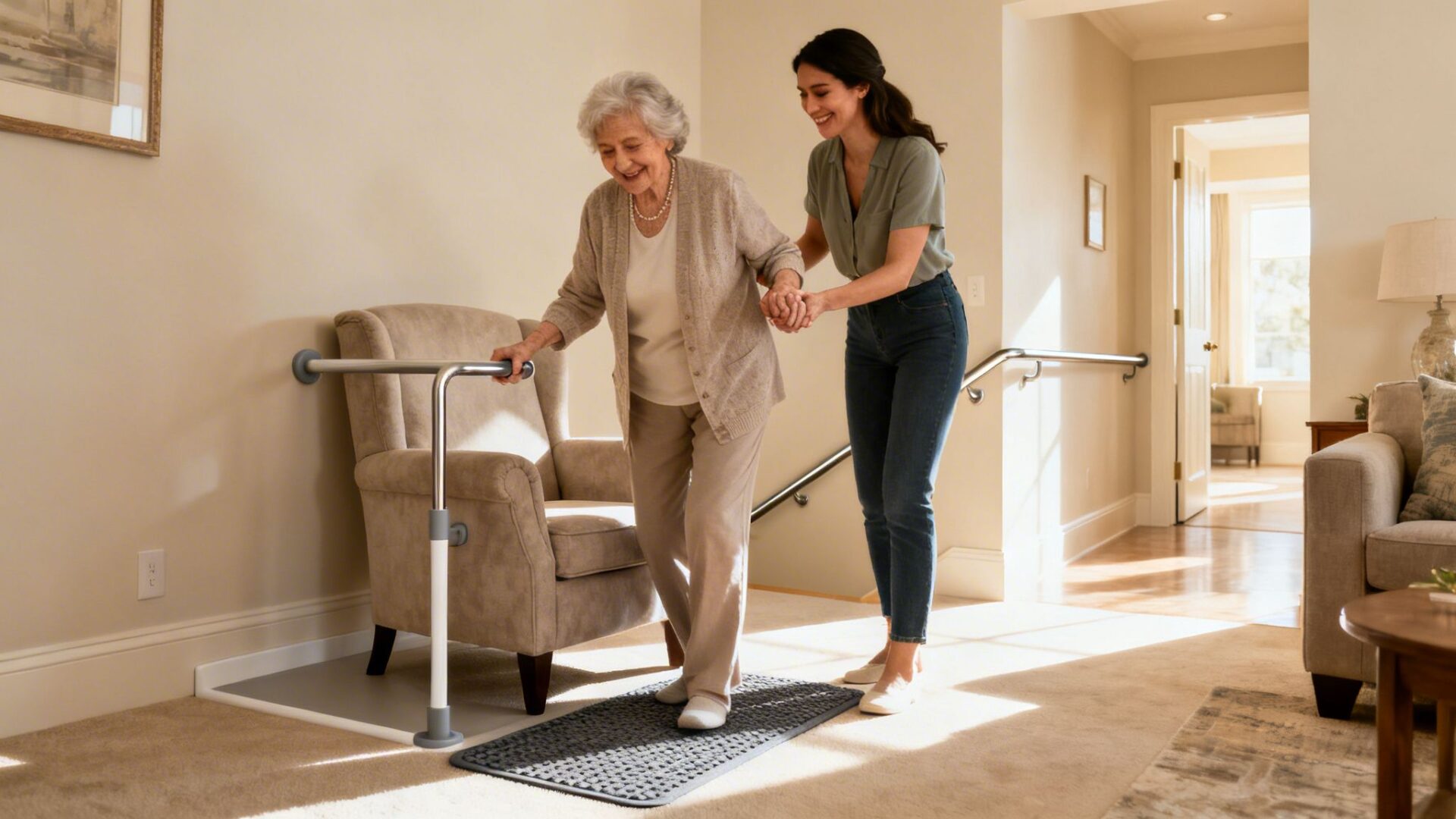
Smart Steps: What’s the Best Way to Help My Parents Age in Place?
When you ask, "what’s the best way to help my parents age in place?" the answer is simple. Create a coordinated, proactive plan. It starts with open talks and professional support long before a crisis happens.
This approach means you look at their needs honestly. You make their home as safe as possible and know when to bring in medical help.
Your Proactive Plan for Aging in Place
Many adult children want to support their parents living at home. But they often don't know where to begin. The process can feel overwhelming.
This often leads families to wait until a fall or health emergency. Then, they are forced to make rushed, stressful decisions. But creating a plan now is the most compassionate way to honor your parents’ wishes.
And most seniors want to stay home. Research shows older adults prefer to age in their own homes. According to the World Health Organization, by 2030, one in six people globally will be 60 or older. This makes aging in place more important than ever.
A good aging-in-place plan is not just one action. It is built on a few core pillars that create a strong support system.
The Four Pillars of a Successful Plan
Thinking about the future can feel hard. The key is to break the challenge into smaller parts. A proactive plan focuses on four areas.
These areas are assessing needs, making the home safe, coordinating care, and planning for the future. This framework helps you handle the most critical parts of aging at home.
This visual guide breaks down the 4-step process for building a plan that works.

As the infographic shows, each step builds on the last. This creates a full support structure for your parents.
The table below explains these four pillars. It lists key actions for each and why they are so important.
Four Pillars of a Successful Aging-in-Place Plan
| Pillar | Key Actions | Why It Matters |
|---|---|---|
| 1. Honest Assessment | Talk openly about health, finances, and what they want. Involve doctors to get a clear picture of their needs. | This avoids guesswork and makes sure the plan is based on reality. It gives your parents a voice. |
| 2. A Safe Home | Install grab bars, improve lighting, remove trip hazards, and consider things like walk-in showers. | This prevents falls, which often trigger a health crisis. It allows for independence in a secure home. |
| 3. Coordinated Care | Arrange for home health services from a Registered Nurse or Physical Therapist if needed. Use a shared calendar to track appointments. | A strong support network ensures all medical and daily needs are met. It also prevents family burnout. |
| 4. Future-Proofing | Complete legal documents like a Power of Attorney. Discuss long-term financial plans and know the signs when more help is needed. | This prepares you for unexpected changes. It removes legal stress during an emergency so you can focus on care. |
This structured approach turns a vague hope into a real plan. It gives everyone a clear roadmap to follow.
The most common mistake families make is waiting for a crisis to start planning. Being proactive is the best way to protect your parents' independence and reduce stress.
For families in Monterey County, San Benito County, and nearby areas, you don't have to do this alone. For over 74 years, Central Coast VNA & Hospice has been a trusted local nonprofit partner. We help families navigate these challenges.
Our expertise is providing compassionate care at every stage, from home health to palliative and hospice care. To learn more, read our guide on what aging in place really means for families.
Adapting the Home for Safety and Independence
A safe home is the foundation of aging in place. Our homes are our comfort zones. But as parents' mobility changes, familiar spaces can hide new risks.
The goal is to proactively shape their environment. This supports their independence and keeps them safe. It is more than just a checklist.
It's about looking at their home through their eyes. Small changes can make a huge difference in their safety and confidence. This is true whether they live in Monterey or Salinas.

A Room-by-Room Approach to Safety
Start by walking through the house with your parents. Look at each space with a "safety first" mindset. When you do it together, they feel like part of the solution.
Focus on the high-impact changes first. These are often simple and cheap tweaks that can lower the risk of an accident.
Key Areas for Immediate Attention:
- Pathways and Floors: Clear walkways of clutter and cords. Area rugs are a major trip hazard, so secure them with tape or remove them.
- Lighting: Make sure every room, hallway, and staircase is bright. Add nightlights to bedrooms, bathrooms, and hallways for safer navigation at night.
- Stairs: Check that all handrails are sturdy. If possible, install them on both sides of the staircase and add non-slip treads to each step.
Once you’ve handled these basics, you can focus on specific rooms.
Focusing on Critical Zones: The Bathroom and Kitchen
The bathroom and kitchen are the two most critical areas to address. Bathrooms are risky because of wet surfaces. Kitchens involve reaching, bending, and handling hot items.
In the bathroom, the top priority is preventing slips and falls. This is where you can make life-saving adjustments.
Bathroom Safety Must-Haves:
- Grab Bars: Install sturdy grab bars next to the toilet and in the shower. Never rely on suction-cup bars as they are not a safe substitute.
- Non-Slip Surfaces: Use non-slip mats or decals inside the tub and on the floor.
- Accessible Seating: A shower chair can reduce fatigue. A raised toilet seat can make a big difference for stiff joints.
If your parents' needs are greater, a full aging in place bathroom remodel might be a good long-term solution. For more tips, check our guide on preventing falls in the home.
In the kitchen, it's all about easy access. You want to reduce the need for your parents to bend or stretch.
Rearrange cabinets so that frequently used items are on lower, easy-to-reach shelves. This simple change reduces the need for a step stool, a common cause of falls.
Knowing When to Bring in Professional Help
Many of these changes are simple DIY projects. But some things need a professional, like installing grab bars or stairlifts.
If you’re not sure where to start, a professional home safety assessment can help. At Central Coast VNA & Hospice, our skilled Physical Therapists and Occupational Therapists can provide an expert evaluation as part of our home health care services. We serve families across Monterey, Santa Cruz, and South Santa Clara Counties.
Integrating Professional Home Health Services

Making the house safe is a key first step. But what happens when your parent needs more than grab bars? Managing chronic conditions like diabetes or heart failure can feel like a full-time job.
This is where professional home health services become essential. These skilled services bring clinical experts right into your parent’s home. They create a bridge between their doctor's office and daily life.
The goal is to manage health issues proactively. This helps prevent hospital visits that can disrupt an older adult’s life. For many families on the Central Coast, this support is the key to aging in place with dignity.
What Home Health Care Actually Involves
Home health care is different from non-medical help. This is skilled medical care prescribed by a doctor. It is often covered by Medicare after a hospital stay or a change in health.
A dedicated home health team from a trusted local nonprofit like Central Coast VNA & Hospice can help. This team works under a doctor's orders to create a personalized care plan.
A typical home health team might include:
- Registered Nurses: They manage medications, provide wound care, and teach you how to manage an illness at home.
- Physical Therapists: They focus on rebuilding strength and improving balance after a fall or surgery.
- Occupational Therapists: They help your parent regain the ability to handle daily tasks like bathing and dressing.
- Speech-Language Pathologists: These specialists help with communication or swallowing problems after a stroke.
This team approach means every part of your parent's health is addressed. All of this happens in the comfort of their home.
The Benefits of Clinical Oversight at Home
Home health is valuable because it is proactive. A skilled clinician can spot warning signs early. A Registered Nurse might notice subtle changes in your mom’s condition before it becomes a crisis.
This professional oversight leads to better health outcomes. It also gives families peace of mind. You can learn more by exploring our home health care services.
By managing symptoms and providing education at home, skilled home health care reduces the chance of re-hospitalization. This stability is key to helping your parents age in place successfully.
For families in Monterey County, San Benito County, Santa Cruz County, and South Santa Clara County, having a reliable partner is vital. As a nonprofit home health provider with over 74 years of local service, Central Coast VNA & Hospice is committed to our community. Our mission is to provide a seamless continuum of care, from home health to palliative or hospice care.
If your parent is struggling to manage their health, don't wait. Contact us today to learn how our compassionate, expert team can help.
Planning for the Future

Helping your parents stay safe at home means more than just physical support. It also means preparing for the future. You need to have crucial talks about their legal, financial, and healthcare wishes.
These talks can feel hard. But starting them early is a gift of clarity for everyone. It ensures their future is guided by their values. This is called advance care planning.
Starting the Conversation
Starting these talks requires a soft touch. The goal is to understand their wishes, not to take control. Frame the conversation around empowerment, so their voice is heard.
Try starting with gentle questions like:
- "Mom, if you ever got sick and couldn't speak for yourself, who would you want to make medical decisions for you?"
- "Dad, have you thought about what kind of medical care you would want in certain situations?"
- "It would give me peace of mind to know we have a plan in place that respects your wishes."
These questions open the door for a real dialogue. Remember to listen more than you talk.
The most loving thing you can do is ensure your parents' values guide their future care. These conversations honor their independence.
Essential Legal Documents
Once you’ve started talking, make their wishes official with legal documents. These papers give authority to the people your parents choose to act for them.
Key Advance Care Planning Documents:
- Durable Power of Attorney for Healthcare: This names a "healthcare agent" to make medical decisions if your parent is unable.
- Living Will (Advance Directive): This outlines specific wishes for end-of-life medical treatments.
- Durable Power of Attorney for Finances: This appoints someone to manage financial matters like paying bills.
For help, you can look at guides on Power of Attorney for aging parents. Having these documents prepared by a legal professional is always a good idea.
For families in Monterey, Santa Cruz, or San Benito County, we can help. As a local nonprofit with over 74 years of experience, Central Coast VNA & Hospice offers compassionate guidance. Our palliative care team can help facilitate these talks.
When to Consider Palliative and Hospice Care
As your parents age, comfort may become the main priority. Palliative or hospice care is not about giving up. It is about wrapping your loved one in expert support when they need it most.
Palliative care can start at any stage of a serious illness. It focuses on relief from symptoms like pain and stress. It works alongside other medical treatments.
Hospice care is for when life expectancy is six months or less. It focuses on quality of life instead of curative treatments. For a deeper look, see our guide on the Difference Between Hospice and Palliative Care.
Central Coast VNA & Hospice offers a seamless continuum of care. Our team ensures that if needs change, the transition from home health to palliative or hospice care is handled with expertise. We have supported families in Salinas, Santa Cruz, and across the Central Coast for over 74 years.
Frequently Asked Questions (FAQs)
1. How early should we start planning for aging in place?
The best time to start is now, before a crisis happens. Planning early gives your parents a voice in their future. It allows you to explore options without pressure.
2. What if my parents are resistant to getting help?
This is normal and often comes from a fear of losing independence. Frame conversations around preserving their freedom. For example, explain that grab bars can help them stay independent at home longer.
3. What are the first steps to making my parents' home safer?
Start with a walk-through to identify risks. Focus on improving lighting, removing trip hazards like rugs, and installing grab bars in the bathroom.
4. What is the difference between home health and palliative care?
Home health provides skilled medical care, like nursing or physical therapy, to help someone recover from an illness or injury. Palliative care focuses on relieving symptoms and stress from a serious illness and can be provided at any time, even alongside curative treatment.
5. How can Central Coast VNA & Hospice help my family?
As a local nonprofit with over 74 years of experience, we provide a full continuum of care in Monterey, San Benito, Santa Cruz, and South Santa Clara counties. We offer home health, palliative care, and hospice services to support your parents at every stage of their health journey.
If you're asking, “What’s the best way to help my parents age in place?” the first step is to talk to a trusted partner. At Central Coast VNA & Hospice, we are a mission-driven nonprofit here to provide care at every stage. Contact us today to learn how we can support your family.

Can Someone with Dementia Go on Hospice? An Essential Guide
Yes, a person with dementia can absolutely go on hospice. It’s a question that weighs heavily on families, and the answer brings both relief and a path forward.
Many families delay this crucial support because dementia’s progression is unpredictable. It’s often a slow decline, not a sudden event. This uncertainty can leave families feeling lost and leads to missed opportunities for comfort and peace.
Choosing hospice isn't about giving up. It's a decision to shift the focus from trying to cure an incurable disease to ensuring the highest possible quality of life.
Understanding When Hospice Is the Right Choice for Dementia
Navigating a dementia diagnosis is a tough journey for any family. As the disease advances, priorities shift from aggressive treatments to making sure your loved one is comfortable and free from pain. Answering the question, “Can someone with dementia go on hospice?” is the first step toward compassionate care.
Hospice is designed for the final phase of a terminal illness. For a person with dementia, this means focusing on them as a whole person, not just the disease. It's about managing symptoms like agitation while providing emotional and spiritual support for everyone involved.
The Importance of Early Conversations
A common misstep is waiting for a doctor to bring up hospice. Families might also wait for a major health crisis to force the conversation. It's easy to overlook the subtle signs of decline that signal eligibility for this care.
Some of these indicators can include:
- Frequent infections, like recurring pneumonia or urinary tract infections (UTIs).
- A noticeable decline in mobility, needing more help to walk or stand.
- Significant, unintentional weight loss over the last six months.
- Increasing difficulty with speaking, often using just a few words or becoming non-verbal.
Recognizing these changes early allows for a calmer transition to comfort-focused care. At Central Coast VNA & Hospice, a nonprofit provider with over 74 years of service, we encourage families in Monterey and Santa Cruz Counties to talk sooner. You can learn about specific hospice eligibility requirements.
To help families identify these signs, here is a quick reference table.
Key Indicators for Hospice Eligibility in Dementia
| Indicator Category | Specific Signs to Watch For |
|---|---|
| Functional Decline | Needing help with most daily activities like dressing, bathing, and eating. |
| Communication | Speaking only a few words a day or becoming non-verbal. |
| Mobility | Unable to walk without assistance; often chair-bound or bed-bound. |
| Swallowing Issues | Frequent coughing or choking during meals; difficulty swallowing food or liquids. |
| Recurrent Infections | Frequent UTIs, pneumonia, or sepsis. |
| Weight Loss | Significant, unintentional weight loss (typically 10% or more) in the past six months. |
Watching for a combination of these indicators provides a clearer picture of when your loved one might be ready for hospice.
Hospice shifts the focus from curative treatment to compassionate care. It’s a decision to prioritize comfort, manage pain, and provide emotional support, ensuring a loved one’s final chapter is lived with dignity and peace in the familiar surroundings of home.
Choosing hospice brings a dedicated team of professionals—including a Registered Nurse, a Hospice Aide, and a Medical Social Worker—directly into your home. This support system helps manage symptoms around the clock. This reduces stressful hospital visits and allows your family to focus on making memories together.
Understanding the Hospice Criteria for Dementia
When caring for a loved one with dementia, figuring out if it’s time for hospice can feel overwhelming. The decision is based on specific medical guidelines that help identify when the focus should shift toward comfort.
Knowing these criteria can empower families in Monterey County and surrounding areas to have clearer conversations with doctors. The main tool used to measure dementia's progression is the Functional Assessment Staging (FAST) scale.
It also helps to start with a big-picture view, like understanding the different kinds of dementia. This context helps explain why the disease can look so different from one person to the next.
The Role of the FAST Scale
The FAST scale lays out seven distinct stages of dementia. For hospice eligibility, clinicians look closely at Stage 7. This stage signals a severe decline in a person's ability to function.
Stage 7 is marked by a few key signs:
- Loss of Mobility: The person can no longer walk without help and might be confined to a bed or chair.
- Impaired Speech: Communication is extremely limited, often six intelligible words or fewer per day.
- Dependence on Others: They need help with all activities of daily living, from dressing and bathing to eating.
A person doesn't have to show every single one of these signs. Reaching this advanced stage is the first major indicator for hospice.
Beyond the FAST Scale: Other Important Factors
Clinicians always look at the whole person. Along with the FAST scale, they consider other medical complications that have popped up within the last year. These secondary conditions are a sign that the body is weakening.
The flowchart below shows how the journey from a dementia diagnosis can lead toward a focus on comfort care.

As the disease moves forward and daily abilities decline, the focus naturally shifts to providing compassionate, comfort-oriented care.
Here are some of the crucial secondary factors doctors look for:
- Recurrent Infections: This might mean repeated bouts of pneumonia, sepsis, or frequent urinary tract infections (UTIs).
- Significant Weight Loss: An unintentional loss of 10% or more of their body weight in the last six months is a key indicator.
- Trouble Swallowing (Dysphagia): This can cause choking, lead to aspiration pneumonia, and make it difficult to get enough food and fluids.
When a person in Stage 7 dementia also has one or more of these secondary conditions, they will likely meet the medical criteria for hospice. We cover this topic in more detail here: How Doctors Determine Hospice Eligibility.
The Challenge of a Six-Month Prognosis
One of the biggest hurdles for families is Medicare's rule that a doctor must certify a life expectancy of six months or less. With dementia, predicting that timeline is incredibly difficult. Dementia often progresses slowly and unpredictably.
According to the National Hospice and Palliative Care Organization (NHPCO), over 1.72 million Medicare beneficiaries received hospice services in 2020 (NHPCO, 2021). Still, many with dementia are referred late. This data shows just how important it is for families to understand all the eligibility criteria.
If your loved one lives in Santa Cruz, San Benito, or South Santa Clara County, our team at Central Coast VNA & Hospice is here to help. We can offer a no-obligation consultation to talk through your loved one’s situation.
Why Earlier Hospice Enrollment Makes a Difference
Many families see choosing hospice as giving up. But it’s exactly the opposite. It's about choosing a better quality of life for the time that’s left.
Starting hospice care sooner allows an expert team to get ahead of distressing symptoms like pain and anxiety. This specialized care can prevent late-night trips to the emergency room. It empowers your loved one to spend their final months where they are most comfortable—at home.

A Focus on Whole-Person Comfort
Hospice care isn’t just about managing physical symptoms. At Central Coast VNA & Hospice, our team works together to address the complex needs that come with late-stage dementia.
Our goal is to improve day-to-day life by creating a calm and dignified environment. This comprehensive approach helps ensure your loved one’s final chapter is lived with grace.
The benefits of this early support are backed by research. A UCSF study of 2,059 Medicare seniors found that 59% of those with dementia who enrolled in hospice received excellent end-of-life care. That rate surpassed those who didn't use hospice. You can discover more insights about these findings on UCSF.edu.
Enrolling in hospice sooner means more time for symptom control, more opportunities for meaningful connection, and more support for the entire family. It shifts the focus from crisis management to quality of life.
Support for the Entire Family
A dementia diagnosis impacts everyone in the family. The emotional and logistical challenges can feel overwhelming. Hospice provides an essential layer of support for family, helping you navigate this journey with less stress.
Our team at Central Coast VNA & Hospice supports the whole family. We provide guidance and resources in our communities, from Salinas to Santa Cruz.
- Medical Social Workers help families navigate complex dynamics and connect with community resources.
- Chaplains offer non-denominational spiritual support, providing comfort that aligns with your family's beliefs.
- Hospice Aides provide practical, hands-on assistance with personal care.
- Registered Nurses are on call 24/7, giving you peace of mind that expert help is just a phone call away.
This team-based approach means you never have to walk this path alone. You can learn more about starting hospice sooner in our guide for families.
As a nonprofit provider serving Monterey County, San Benito County, Santa Cruz County, and South Santa Clara County for over 74 years, our mission is to bring compassionate care to every family who needs it.
How to Start the Hospice Conversation
Talking about hospice can feel like an impossible weight. It’s a conversation that comes from a place of love, yet finding the right words is often the hardest part. The best approach is a gentle one, involving your family and your loved one's doctor.
Starting this dialogue isn’t about giving up. It's about changing the focus to what truly matters now: making sure your loved one’s final chapter is lived with dignity.
When you discuss end-of-life wishes, you may encounter legal documents. Tools like a Texas durable power of attorney for health care can empower family members to be strong advocates for their loved one's choices.

Talking to Your Family and the Doctor
The first step is getting key family members together. Find a quiet time to talk. You can open the conversation by sharing what you’ve noticed about your loved one's health.
Try using "I" statements to share your feelings. For instance, "I've been worried about Mom's comfort lately, and I want to be sure we're doing everything possible to support her."
Next, schedule an appointment with your loved one’s doctor. Go in with a list of the specific changes you’ve seen. This gives the physician a fuller picture.
Don't be afraid to ask direct questions:
- "We've noticed these changes... Do you think it’s time we focus more on comfort care?"
- "What are your thoughts on hospice at this stage?"
- "Could you help us understand the benefits hospice might offer right now?"
Our guide on how to talk to your parents about hospice care has more practical tips for these sensitive talks.
Understanding the Admission Process
Once your family decides to explore hospice, the process is straightforward. For families in Salinas, Santa Cruz, and nearby areas, Central Coast VNA & Hospice provides a clear and supportive path.
Here’s what you can generally expect:
- The Initial Call: It starts with a simple phone call. You can ask questions and learn about our services with no commitment.
- A No-Obligation Visit: A Registered Nurse will schedule a visit to your loved one’s home. This is an assessment to understand their needs and confirm eligibility.
- Creating the Care Plan: If you move forward, our team works with you and the doctor. Together, we create a personalized care plan.
The hospice admission process isn't about losing control; it's about gaining a dedicated team of experts. This team comes to you, providing comprehensive, compassionate care right in the comfort of home, 24/7.
As soon as someone is admitted, the support begins. You'll get regular visits, hands-on help with personal care, and 24/7 on-call support. This brings an incredible sense of peace, allowing families to spend quality time together.
Specialized Dementia Care on the Central Coast
When navigating advanced dementia, choosing the right care partner is a profound decision. It's about finding a local team in Monterey or Santa Cruz County that understands our community.
Central Coast VNA & Hospice is that partner. For over 74 years, we’ve served our neighbors as a nonprofit home healthcare provider. Our mission is simple: we are guided by people, not profits.
The Continuum of Care: A Seamless Approach
Dementia is a journey, and your loved one's needs will change over time. That’s why we offer a seamless continuum of care that adapts with them. This approach prevents the stress of changing agencies when consistency matters most.
Our services flow together to meet you where you are:
- Home Health: In the earlier stages, our home health nursing and therapy teams can help manage health conditions at home.
- Palliative Care: As symptoms become more challenging, palliative care at home can be added for expert symptom management.
- Hospice Care: When the focus shifts to comfort, the transition to our hospice service is smooth.
This continuum ensures your loved one gets the right support at the right time. It all comes from one trusted organization rooted on the Central Coast.
Your Dedicated In-Home Hospice Team
When your family chooses Central Coast VNA & Hospice, you welcome an entire team of compassionate experts into your home. Each person plays a vital role, creating a circle of support around your loved one and your family.
Your dedicated team includes:
- Registered Nurse: Manages the care plan and provides expert pain and symptom control.
- Hospice Aide: Offers gentle, hands-on help with personal care like bathing and dressing.
- Medical Social Worker: Provides emotional support and practical guidance for families.
- Chaplain: Offers non-denominational spiritual comfort for patients and families of all beliefs.
At Central Coast VNA & Hospice, our team-based model means you are never alone. We provide 24/7 on-call support, so peace of mind is always just a phone call away.
Families across Monterey County, San Benito County, Santa Cruz County, and South Santa Clara County have trusted us for generations. As you explore your options, you might find our guide on who offers the best hospice care for parents near Monterey helpful.
Contact us today. Families in Santa Cruz, Salinas, and nearby areas can call VNA for a no-obligation hospice consultation today.
Frequently Asked Questions About Hospice for Dementia
1. What is the main goal of hospice care for someone with dementia?
The main goal is to maximize comfort and quality of life. Hospice care focuses on managing symptoms like pain, anxiety, and agitation. It also provides emotional and spiritual support for both the patient and their family.
2. Can a person with dementia refuse hospice care?
Yes, if they still have the capacity to make their own healthcare decisions. If they can no longer do so, the decision falls to their legally appointed healthcare agent. This person is expected to make choices based on the patient's known wishes.
3. Does choosing hospice for dementia mean we are giving up?
Not at all. Choosing hospice is a shift in focus. Instead of seeking a cure, the hope is for comfort, peace, and dignity. It is a proactive choice to ensure the best possible quality of life during the final months.
4. What happens if my loved one lives longer than six months on hospice?
The six-month prognosis is a guideline for admission, not a time limit. A person can continue to receive hospice care as long as their doctor recertifies that they have a life-limiting illness. Hospice support continues for as long as it is needed.
5. Who pays for hospice care for a person with dementia?
Hospice care is typically covered 100% by Medicare Part A. Medicaid and most private insurance plans also offer comprehensive coverage. This includes the care team's services, medications for symptom control, medical equipment, and supplies.
At Central Coast VNA & Hospice, our nonprofit mission is to provide compassionate, expert care that supports patients and families at every stage. If you have more questions, we are here to help. Contact us today for a no-obligation consultation to learn more about our home health, palliative, and hospice care in Monterey County. Learn more at ccvna.com.
Beyond the Basics: How Skilled Nursing Fits into Whole-Person Care
Skilled nursing is often seen as short-term medical care after a hospital stay. But it is much more. It can be the start of whole-person care.
This approach uses one team to manage a patient's physical, emotional, and social needs. It prevents scattered care and builds long-term stability at home. It creates a roadmap for the entire care journey.
Rethinking Skilled Nursing in Modern Healthcare
When a loved one comes home from the hospital, families focus on immediate tasks. This can include managing medicines or helping with therapy. Many providers view skilled nursing as a temporary service with a clear start and end.
This limited view often creates a gap in care.
After short-term recovery ends, families are often left alone. This happens in communities from Salinas to Santa Cruz. They must find new providers and manage complex needs without a clear path, adding to their stress.
The Problem with Fragmented Care
Fragmented care happens when healthcare providers do not communicate. Families must repeat medical histories and manage transitions on their own. This lack of coordination can lead to serious problems.
Without a unified team, small health issues can be missed. They can become emergencies. This often results in hospital readmissions that could have been prevented.
A Seamless Approach to Health at Home
At Central Coast VNA & Hospice, we offer a different path. For over 74 years, our nonprofit mission has been to provide a full continuum of care. We ensure patients in Monterey County and San Benito County get seamless support.
Our interdisciplinary teams include Registered Nurses, therapists, and Medical Social Workers. They work together from day one. This model ensures care plans are built around the whole person, not just one health issue.
Skilled Nursing: Traditional View vs. Whole-Person Care
| Care Aspect | The Traditional View | The Whole-Person Approach |
|---|---|---|
| Focus | Treats a specific medical issue, like a wound or post-op recovery. | Addresses the patient's complete physical, emotional, and social needs. |
| Timeline | Short-term service that ends when the immediate issue is resolved. | A continuous journey that adapts as the patient's needs change. |
| Team Structure | Separate providers who work independently and may not communicate. | An integrated team that works together on a single care plan. |
| Goal | Fix the immediate problem and discharge the patient from service. | Achieve long-term stability, prevent future crises, and improve quality of life. |
| Family Role | Often left to coordinate services and fill care gaps on their own. | Supported as an essential part of the care team. |
This table shows a shift in thinking. Instead of restarting the care process with each new challenge, your family gets a single, trusted team. This continuity improves patient safety and reduces family stress.
Deciding on the right environment is also key. Many families wonder if skilled nursing care at home is better than a facility for their loved one's needs.
Understanding the Power of Whole-Person Care
What is “whole-person care”? It is like a dedicated pit crew for a race car. Each person has a specific job, but they all work together toward one goal.
This approach focuses on a person’s complete well-being. This includes their emotional, social, and spiritual health. Our team creates a care plan that supports every part of a person's life.
More Than Just Medical Tasks
In traditional healthcare, different providers often work alone. A nurse might handle medicines while a therapist focuses on movement. Whole-person care brings everyone to the same table.
This teamwork is critical for managing chronic illness. A staggering 95% of adults over 60 live with at least one chronic condition, and 80% have two or more. An integrated team is the best defense against fragmented services that can lead to confusion and unnecessary hospital trips.
The Team Behind the Care
Our whole-person care is brought to life by a team of professionals. Each member contributes their unique skills to support your family.
- Registered Nurses manage complex medical needs, from medication to wound care.
- Physical, Occupational, and Speech Therapists work to restore function, improve safety, and help patients regain independence.
- Medical Social Workers offer emotional support and connect families with community resources.
- Chaplains provide spiritual guidance and comfort to patients and their loved ones.
This infographic captures the shift from a confusing system to the seamless approach of whole-person care.

As you can see, a coordinated care model leads to fewer crises and better health. It also brings peace of mind for families.
Why This Coordinated Approach Matters Now
The need for coordinated, whole-person care is more urgent than ever. Staffing shortages continue to challenge the healthcare system. Today, nursing facility residents get an average of just 3.85 hours of nursing care per day.
This is a 7% decline from a decade ago. It is driven by a 19% drop in registered nurse hours.
By bringing a full team into a patient’s home, we bridge the gaps left by a strained system. This ensures every patient receives consistent, high-quality attention.
Embracing whole-person care means considering every aspect of well-being. This can include proactive steps like getting at-home health testing insights. Our model is designed to improve quality of life, which is why it is important to know that palliative care isn't just for the end of life.
How Skilled Nursing Anchors the Care Continuum
For many families on the Central Coast, their journey with us starts with skilled nursing. It often begins after a hospital stay or a new diagnosis. But this service is more than a temporary fix—it’s the anchor for our continuum of care.
Our Registered Nurses are highly trained professionals. They do more than manage medicines. They become our eyes and ears in your home, seeing the complete picture of your loved one’s well-being.

Having this consistent presence in the home is what makes our model work. It allows our team to spot a family’s changing needs before they become a crisis.
The Nurse as a Central Coordinator
Picture this: a skilled nurse is visiting a patient recovering from pneumonia. The nurse checks vitals and gives medicine. They also notice the patient seems withdrawn and is in pain.
In a disconnected system, these details might be missed. But at Central Coast VNA & Hospice, our nurse acts as a central coordinator. They know that health is about more than just physical symptoms.
Connecting the Dots for Better Care
Our skilled nurses are trained to see when more support is needed. They act as the link between different levels of care.
Here’s how they connect the dots:
- Identifying Palliative Care Needs: If a patient has ongoing pain or other symptoms, the nurse can bring in our palliative care team to improve comfort.
- Engaging Social Work Support: When a family is stressed by financial worries or caregiving, a nurse will bring in a Medical Social Worker for guidance.
- Integrating Therapy Services: If a patient is at risk for falls, the nurse will coordinate with our therapists to build strength and make the home safer.
This integrated approach means you have one team looking out for your loved one. It prevents the frustration of starting over with new providers. You can explore our guide on how VNA is reducing hospital readmissions on the Central Coast.
Building a Foundation for Long-Term Stability
By anchoring the care continuum, skilled nursing sets the stage for future success. It ensures the care plan is a living roadmap that adapts to your family’s needs. It is a proactive model designed to prevent emergencies and reduce hospital visits.
Physical comfort also plays a huge role in well-being. For example, things like adjustable beds for seniors can make a big difference in comfort. Our nurses look at the entire home to make recommendations that improve daily life.
At Central Coast VNA & Hospice, skilled nursing is not just a service—it’s the beginning of a partnership. Our goal is to build a foundation of trust and stability that supports your family.
Why Integrated Care Reduces Family Stress and Prevents Crises
Navigating healthcare can feel like solving a puzzle with missing pieces. Families often repeat medical histories and make stressful trips to the emergency room. This reactive cycle leaves everyone exhausted.
The stability of a single, trusted team makes all the difference. When care is coordinated, worry is replaced by confidence and peace of mind. The benefits create a supportive journey instead of a chaotic one.

From Chaos to Coordination
Imagine an elderly man is discharged from the hospital after a fall. He has new prescriptions and follow-up appointments with different specialists. His daughter is left to coordinate everything.
This creates constant stress. Every new symptom feels like a crisis. It is emotionally draining and can lead to poor health outcomes.
Now, imagine the alternative with Central Coast VNA & Hospice. Our skilled nurse visits the same man at his home in Salinas. The nurse manages his medications and also listens to the family’s concerns.
With a single point of contact, the family knows who to call. The nurse becomes their partner, proactively addressing issues before they get worse.
The Tangible Benefits of a Single Team
Having one team from a nonprofit provider like CCVNA transforms the care experience. Instead of starting over with each new service, families gain continuity and trust. This is true for people in Hollister, Monterey, and Santa Cruz County.
The benefits are clear:
- Reduced Family Stress: Loved ones no longer have to manage a complex healthcare puzzle. We handle the coordination.
- Improved Patient Safety: With a team that communicates constantly, there's less risk of medication errors or missed symptoms.
- Fewer Hospitalizations: Our proactive approach helps manage chronic conditions at home, preventing crises that lead to ER visits.
Workforce challenges in nursing facilities are reshaping care. You can learn more by reading these insights on nursing facility challenges. This reality reinforces the value of home-based services, where patients get coordinated care.
We also offer resources for the challenges of being a family member providing care. You can find help in our article on support for family caregivers.
Navigating Your Journey with Central Coast VNA & Hospice
Taking the first step to get support for a loved one can feel overwhelming. We understand. We have made accessing our care as simple as possible.
You do not need a doctor's referral to contact us. If you're in Monterey County, San Benito County, Santa Cruz County, or South Santa Clara County, you can call us. We are here to listen and help you review your options for home health, palliative, and hospice care.
How to Get Started
The process starts with a simple conversation. Our team will ask about your loved one's health and what your family hopes to achieve. From there, we can see if they are eligible for services.
As a nonprofit organization for over 74 years, our decisions are guided by your needs. Our mission-driven focus means we are committed to delivering the right care at the right time.
Understanding Your Coverage
Insurance can be confusing, but we are here to help. Our services are covered by a wide variety of plans.
Coverage typically includes:
- Medicare: Most of our home health and hospice patients find their care is 100% covered by Medicare.
- Medi-Cal: We work with Medi-Cal to provide essential services for those who are eligible.
- Private Insurance: We accept many private insurance plans and can help you verify your coverage.
The financial weight of healthcare is a big worry for families. Home-based services from a nonprofit like ours offer a clear advantage. We help reduce healthcare costs while allowing your loved one to stay independent at home. You can read more about these cost trends in senior care.
Our commitment as a nonprofit is to ensure that care decisions are based on what is best for your family. We help you explore all coverage options.
This focus on accessible, high-quality care at home is critical. We help families avoid the high costs and strain of repeat hospitalizations. For a deeper dive, check out our guide on whether you can get skilled nursing care without moving your parent.
Your Partner on the Central Coast
If you are managing complex care in Monterey, Hollister, Salinas, or Santa Cruz, you are not alone. A single call can connect you with a team that has been a trusted partner for generations.
Let us show you how an integrated care plan can bring stability and peace of mind. Contact us today to learn more about our services.
Frequently Asked Questions
1. What is whole-person care?
Whole-person care is an approach that addresses a patient's complete needs. This includes their physical, emotional, social, and spiritual well-being. A single, coordinated team works together to create a unified care plan.
2. How is skilled nursing different from other home care?
Skilled nursing care is provided by a licensed medical professional, like a Registered Nurse. It involves clinical tasks such as wound care, medication management, and patient education. Other types of home care may focus on non-medical support like daily chores or personal hygiene.
3. Will my loved one lose their primary doctor?
No. Our team works closely with your loved one’s primary care physician and specialists. We act as an extension of their medical team, providing regular updates from the home. This collaboration ensures everyone is on the same page.
4. How do we know when it's time to consider palliative or hospice care?
Our team helps guide these decisions. If a skilled nurse notices that symptoms are becoming harder to manage, they will start a gentle conversation with your family. We explain the options clearly, so you can make an informed choice that is right for your loved one.
5. How are your services paid for?
Our services are covered by Medicare, Medi-Cal, and most private insurance plans. For eligible patients, Medicare often covers 100% of the cost for home health and hospice. As a nonprofit, our goal is to provide the best care regardless of a family's financial situation.
At Central Coast VNA & Hospice, our mission is to provide compassionate, high-quality care that supports the whole person. If you are managing complex care at home in Monterey, Hollister, Salinas, or Santa Cruz, you don’t have to do it alone. Contact us today to learn how our integrated team can bring peace of mind to your family. https://ccvna.com
What’s the Difference Between Hospice and Palliative Care?
The main difference between hospice and palliative care comes down to timing and goals. Both types of care focus on comfort and improving quality of life for people with serious illnesses.
Palliative care can start at any time during a serious illness. You can receive it while you are also getting treatments to cure your illness. Hospice care is for someone with a life expectancy of six months or less who is no longer seeking a cure.
Understanding the Core Differences in Supportive Care
People often use the terms “hospice” and “palliative care” to mean the same thing, especially in moments of crisis. While both provide comfort and dignity, they are not the same. Knowing the difference can help you and your family get the right support sooner.
A common mistake is waiting too long to request palliative care. Many people think it means “giving up,” but that is not true. Research shows that palliative care, when started earlier, improves quality of life and symptom control.
Palliative care is not about stopping treatment. It’s about adding a layer of expert support to help you live better while you continue your treatments.
Understanding these differences is the first step toward making informed decisions. At Central Coast VNA & Hospice, our mission is to offer compassionate guidance. Learn about our services, from home health to palliative and hospice care, to see how we support local families.

Hospice vs. Palliative Care: A Quick Comparison
This table offers a simple, side-by-side look at what makes each type of care unique. It breaks down who qualifies, the main goals, and when each service is best.
| Feature | Palliative Care | Hospice Care |
|---|---|---|
| When It Starts | At any stage of a serious illness, often at diagnosis. | When life expectancy is six months or less. |
| Treatment Goal | To relieve symptoms and stress alongside curative treatments. | To provide comfort and quality of life when curative treatment ends. |
| Curative Care | Provided at the same time as treatments like chemotherapy. | Not provided; the focus is on comfort and symptom management. |
| Who Qualifies | Anyone with a serious illness, regardless of prognosis. | Anyone with a terminal diagnosis certified by a physician. |
| Location | Typically provided at home, in clinics, or during hospital stays. | Provided wherever the patient calls home, including facilities. |
This table helps clarify the main purpose of each service. Both are valuable, but they serve different needs at different times.
A Deeper Look Into Palliative Care Support
When facing a serious illness, medical care often focuses on treating the disease. But what about the person living with it? Palliative care is designed to relieve the symptoms and stress that come with a serious diagnosis.
Its main goal is to improve the quality of life for both the patient and their family. This type of care addresses physical pain as well as emotional, social, and spiritual challenges.

Unlike hospice, palliative care can begin at any age and stage of an illness. It works alongside curative treatments. For example, a person getting chemotherapy can also receive palliative care to manage side effects like nausea and fatigue.
Who Delivers Palliative Care at Home
Central Coast VNA & Hospice brings palliative care services directly to you in the comfort of your home. Our nonprofit, mission-driven team provides compassionate care in Monterey County, San Benito County, Santa Cruz County, and South Santa Clara County.
Our interdisciplinary team includes:
- Registered Nurses who are experts in managing complex symptoms.
- Medical Social Workers to provide emotional support and connect you to community resources.
- Chaplains who offer spiritual guidance for patients and families of all backgrounds.
- Therapists to help with daily activities, mobility, and communication.
This team works with your existing doctors to add a layer of support. We focus on managing difficult symptoms like pain, shortness of breath, and anxiety.
The Right Time to Ask for Support
A common misstep is waiting until symptoms are unbearable to ask for help. Many people put off seeking palliative care because they think it’s only for the end of life. However, research shows that starting palliative care earlier leads to better symptom control and a higher quality of life.
You should ask about palliative care as soon as a serious illness starts affecting daily life. It’s not about stopping treatment; it’s about adding a layer of support.
The need for this care is huge. According to the National Hospice and Palliative Care Organization (NHPCO), over 1.72 million Medicare beneficiaries received hospice services in 2020 (NHPCO, 2021). Yet many more could benefit from palliative support much earlier in their illness.
Palliative Care in Your Community
For over 74 years, Central Coast VNA & Hospice has served our local communities. As a nonprofit, we ensure residents in Monterey, Salinas, Hollister, and Santa Cruz have access to expert care at home.
If you are struggling with the symptoms of a serious illness, don’t wait to get support. You can call (831) 375-9882 to ask questions or schedule an in-home evaluation. You do not need a referral from a doctor to start the conversation.
Understanding Hospice Care For Comfort and Dignity
Hospice care is for someone with a terminal illness. It is chosen when treatments to cure the illness are no longer working or wanted. A doctor must certify that the person's life expectancy is likely six months or less.
The focus of hospice shifts from curing the disease to ensuring comfort, dignity, and peace. It is not about giving up. Choosing hospice means choosing to live the rest of your life as fully and comfortably as possible.

A Team Approach to Whole-Person Care
At Central Coast VNA & Hospice, our care is delivered by an interdisciplinary team. This team looks at the needs of both the patient and their family. They create a personalized care plan that honors the patient’s wishes.
Each team member brings a unique skill:
- Physicians and Registered Nurses are experts in managing pain and other symptoms.
- Hospice Aides offer hands-on help with personal care like bathing and dressing.
- Medical Social Workers provide emotional support and help families with practical issues.
- Chaplains offer non-denominational spiritual guidance to help find peace.
- Trained Volunteers provide companionship for the patient and a break for family members.
This team approach ensures that a person’s physical, emotional, and spiritual needs are met. We bring this care to wherever a patient calls home in Monterey County or our other service areas. You can learn more in our guide on what is hospice care.
Support That Extends to the Entire Family
A serious illness affects the whole family. That’s why our support goes beyond the patient's medical needs. We provide guidance, education, and emotional support to family members.
Hospice provides support for the entire family. This includes bereavement counseling and grief support for up to 13 months after a loved one has passed.
This ongoing support helps families work through their loss and begin to heal. For some, finding comfort can involve documenting significant events in life. This can be a way to celebrate a life well-lived.
Choosing Comfort and Dignity on the Central Coast
For over 74 years, Central Coast VNA & Hospice has been the trusted nonprofit provider of end-of-life care in our community. Our local roots in Monterey, Salinas, Hollister, and Santa Cruz mean we understand our neighbors' needs.
We believe everyone deserves to experience their final days with grace and peace. Choosing hospice is a decision to prioritize comfort with a team that will honor your wishes.
How to Qualify For Palliative or Hospice Services
Understanding how to qualify for care is a big source of confusion for families. The paths to palliative care and hospice are very different. Knowing the criteria can help you have better talks with doctors.
For palliative care, the main requirement is a diagnosis of a serious, life-limiting illness. This could be cancer, heart failure, COPD, or dementia. The key is that the illness is affecting your quality of life.
Palliative care is not tied to a timeline. You can receive this support from the moment of diagnosis and continue it for as long as it helps. It is designed to work alongside treatments like chemotherapy or physical therapy.
Palliative Care Eligibility at a Glance
A person is a good candidate for palliative care if their illness is causing major challenges, such as:
- Uncontrolled Symptoms: Lasting pain, shortness of breath, fatigue, or nausea that are hard to manage.
- Frequent Hospital Visits: Too many trips to the ER or hospital for the same condition.
- A Decline in Daily Functioning: The illness makes it harder to do everyday activities.
- Emotional or Spiritual Distress: The diagnosis is taking a heavy toll on the patient or family.
At Central Coast VNA & Hospice, our palliative team comes to your home in Monterey, Salinas, or Hollister to help. We add a layer of support, not take anything away.
Understanding Hospice Care Requirements
Qualifying for hospice is more specific because it signals a shift in care goals. The focus moves from finding a cure to maximizing comfort. The requirements are clearly defined by Medicare.
The main criteria for hospice are:
- A Terminal Diagnosis: Two physicians must certify that the illness is terminal.
- A Prognosis of Six Months or Less: A doctor estimates that life expectancy is six months or less if the illness runs its natural course.
- The Choice for Comfort Care: The patient decides to stop treatments aimed at curing the illness and focus on quality of life.
This is a personal decision and is never about "giving up." It’s about choosing to live your remaining time with dignity and peace. You can read more in our guide on hospice eligibility requirements.
How Insurance and Medicare Cover These Services
How these services are paid for is another key difference. Understanding this can relieve a lot of stress for families.
Palliative care is usually paid for by:
- Medicare Part B
- Medi-Cal
- Most private insurance plans
You may have co-pays or deductibles, just like with other specialist doctors.
Hospice care is covered by the Medicare Hospice Benefit. This is an all-inclusive benefit that covers nearly everything related to the terminal diagnosis, often with no out-of-pocket costs.
This coverage includes the hospice team, medications, and medical equipment related to the illness. This allows families to focus on their time together.
When You Should Consider Palliative Care or Hospice
Knowing the difference between these types of care is a great start. But when is it time to ask for help? Too often, families wait until a crisis before reaching out.
The biggest mistake is waiting too long. People delay asking about palliative care because they think it means giving up. Or they wait to talk about hospice until symptoms are overwhelming.
Signs It Might Be Time for Palliative Care
Think of palliative care as an extra layer of support. The right time to ask about it is when a serious illness starts to get in the way of daily life. You don't have to stop your treatments; you're just getting more help to live better.
It might be time for palliative care if you are dealing with:
- Stubborn Symptoms: Pain, fatigue, or anxiety that won’t quit, even with regular treatments.
- Too Many Hospital Visits: Ending up in the ER or hospital multiple times for the same issue.
- Trouble with Daily Tasks: Noticing it’s harder to do simple things like walk or get dressed.
- Emotional Wear-and-Tear: Feeling overwhelmed, stressed, or uncertain about the future.
At Central Coast VNA & Hospice, our palliative care team helps you manage symptoms at home in Monterey, Salinas, or Hollister.
Knowing When to Transition to Hospice
The conversation about hospice usually starts when the focus of care changes. This is when treatments for a cure are no longer working or are causing more harm than good. The goal shifts completely to comfort.
This is a deeply personal decision. It's about choosing to live your remaining time with dignity and peace. To qualify, a doctor needs to certify a life expectancy of about six months or less.
This decision tree gives a simple visual guide for understanding which type of care might be the right fit.

As the graphic shows, palliative care is an option for anyone with a serious illness. Hospice is for when the prognosis becomes limited.
The need for this type of care is huge, but access is unequal. Local organizations like Central Coast VNA & Hospice are essential for our communities. We serve Monterey, San Benito, Santa Cruz, and South Santa Clara counties.
If you or someone in your family lives in Monterey, Salinas, Hollister, or Santa Cruz, our team is ready to talk. Call us at (831) 375-9882 to ask questions or set up an evaluation.
How Our Local Team Can Support Your Family
Making decisions about care during a serious illness is tough. You don’t have to do it alone. For over 74 years, Central Coast VNA & Hospice has provided expert, compassionate support right here at home.
We are the only local nonprofit offering a full continuum of care. This means we provide a seamless transition from home health to palliative care, and then to hospice. Our team understands your journey, values, and goals every step of the way.
A Mission-Driven Local Provider
Having a local team you can trust makes all the difference. As a nonprofit, our focus is on patients and their families, not profits. Our team of Registered Nurses, Hospice Aides, Chaplains, and Medical Social Workers are your neighbors.
Our team lives and works in the same communities we serve, from Salinas to Santa Cruz. That local connection is at the heart of what we do.
When you choose Central Coast VNA & Hospice, you are choosing a team that has been a pillar of this community for generations. We are here to provide the compassionate guidance and expert medical care your family deserves.
Start the Conversation Today
Understanding the difference between hospice and palliative care is the first step. The next is reaching out. Call us for a no-obligation consultation to talk through your situation.
You do not need a doctor's referral to have a conversation with our team. We believe every family deserves the best possible care. You can learn more about why Central Coast VNA is the best choice for palliative care on the Central Coast.
Call us today at (831) 375-9882 to find out how we can support your family.
Frequently Asked Questions About Care Options
It's natural to have questions when exploring healthcare options. We have been helping families on the Central Coast for over 74 years. Here are some of the most common questions we answer.
Can I keep my own doctor if I start palliative or hospice care?
Yes, absolutely. Your doctor remains a central part of your care team. The Central Coast VNA & Hospice team works closely with your primary physician to coordinate your care plan.
Does choosing palliative care mean I am giving up hope?
Not at all. This is a common myth. Palliative care is extra support you receive at the same time as treatments to cure your illness. Its goal is to improve your quality of life while you continue to fight your illness.
Where are palliative and hospice services provided?
Central Coast VNA & Hospice provides both types of care wherever you call home. This includes private residences, assisted living facilities, and nursing homes across Monterey County, San Benito County, Santa Cruz County, and South Santa Clara County.
Who pays for palliative and hospice care?
Palliative care is typically covered by Medicare Part B, Medi-Cal, and most private insurance plans, similar to a specialist visit. Hospice care is fully covered by the Medicare Hospice Benefit, as well as by Medi-Cal and many private insurance policies, often with no out-of-pocket costs for services related to the terminal illness.
Can my loved one receive care if they have dementia?
Yes. Both palliative care and hospice are available for patients with dementia. Palliative care can help manage symptoms and improve quality of life at any stage of the disease. Hospice care is an option in the advanced stages when a doctor certifies a life expectancy of six months or less.
What is the first step to get started?
The first step is to call us. You do not need a referral from a doctor to ask questions or request an informational visit. Our team is here to listen and help you understand your options.
The compassionate team at Central Coast VNA & Hospice has proudly served the Central Coast for over 74 years. If you have more questions about palliative or hospice care, please contact us today to learn how we can support your family.
Who Provides In-Home Care for Aging Parents Near Me? A Guide for Central Coast Families
Juggling a career and family while caring for an aging parent is a heavy load. Many adult children ask, “Can I get help at home, or do I have to put Mom in a facility?” This question often leads to burnout and stress.
You might assume it's an "either/or" choice: do it all yourself or move your parent. But there is a compassionate, effective third option. Professional in-home care can bridge the gap between independence and safety.
Most seniors want to stay in their homes. In fact, 75% of adults over 50 say this is their goal. With the right support, aging in place is possible. This guide will help you find that support in Monterey, San Benito, Santa Cruz, and South Santa Clara counties.
1. Central Coast VNA & Hospice
For families on the Central Coast, Central Coast VNA & Hospice (CCVNA) is a trusted, nonprofit choice. With over 74 years of local service, CCVNA offers a full continuum of in-home clinical care. Their mission is to help seniors age safely and comfortably at home.
Unlike many agencies, CCVNA provides integrated medical services. This means your loved one can move between different levels of care without changing providers. This continuity helps avoid the stress of finding new teams as health needs change.
Why It Stands Out: A Full-Spectrum, Team-Based Approach
CCVNA’s model is built on an interdisciplinary team approach covering home health, palliative, and hospice care. This structure ensures care is coordinated and holistic. Their team addresses physical, emotional, and spiritual needs.
Key Features and Services:
- Integrated Continuum of Care: CCVNA offers home health, palliative care, and hospice services. This ensures a smooth transition from post-surgery recovery to long-term symptom management or end-of-life support.
- Interdisciplinary Care Teams: Care is managed by a team of professionals. This includes Registered Nurses, Physical Therapists, Medical Social Workers, Chaplains, and Hospice Aides.
- Specialized Clinical Programs: CCVNA offers tailored support for patients with cardiac, diabetic, and orthopedic conditions. These focused care plans lead to better outcomes.
- Nonprofit Mission: As a nonprofit, CCVNA enriches care with volunteer programs. These include pet therapy and veteran-to-veteran companionship, adding comfort and connection.
- 24/7 Hospice Availability: Families with a loved one in hospice receive around-the-clock clinical support. This provides peace of mind during challenging times.
CCVNA bridges the gap between family care and facility placement. They deliver professional medical support that allows seniors to remain at home. You can learn more about how VNA helps seniors live safely at home in Monterey.
Practical Information for Families
CCVNA makes accessing care simpler by accepting many payment options. These include Medicare, Medi-Cal, Central California Alliance for Health, and most private insurance plans. This reduces financial barriers to high-quality care.
The best first step is to contact their team to discuss your parent’s needs. With local offices in Monterey, Salinas, and Hollister, they offer accessible, community-based support.
Bottom Line: For skilled nursing, therapy, or compassionate support for a serious illness on the Central Coast, CCVNA is a trusted, local, and clinically excellent solution.
- Pros:
- Comprehensive care (home health, palliative, hospice) ensures continuity.
- Deep local roots, serving the community for over 74 years.
- Interdisciplinary teams provide holistic, person-centered support.
- Accepts major payers, including Medicare, Medi-Cal, and private plans.
- Offers unique volunteer programs like pet therapy and veteran support.
- Cons:
- Services are limited to Monterey, San Benito, Santa Cruz, and South Santa Clara counties.
- Pricing depends on insurance and clinical need and is not listed online.
Website: https://ccvna.com
2. Medicare Care Compare
When skilled medical care is needed, the official Medicare Care Compare website is a vital resource. This government tool helps you find and evaluate Medicare-certified home health agencies. It is an authoritative source for anyone asking, "who provides in-home care for aging parents near me?".
Unlike a simple internet search, Care Compare provides standardized, trustworthy data. It allows you to search for providers by ZIP code and compare them on key quality metrics.
Key Features and How to Use Them
The platform’s strength is its transparency. You can see how local agencies in Salinas or Santa Cruz perform on important measures.
- Side-by-Side Comparisons: View agencies' performance on health outcomes. See how often patients improve at walking or how well their pain is managed.
- Patient Experience Surveys: The site includes HHCAHPS survey results. These ratings show how patients scored an agency on communication, professionalism, and care.
- Service Filters: Narrow your search to find providers offering specific clinical services. These include skilled nursing, physical therapy, occupational therapy, and medical social work.
Pro Tip: Pay close attention to the "Quality of patient care" star rating. This rating summarizes an agency’s performance on key measures, giving you a quick snapshot of their quality.
Pros and Cons of Using Medicare Care Compare
While Care Compare is an excellent tool, it's important to understand its scope.
| Pros | Cons |
|---|---|
| Official & Trustworthy: Data comes directly from Medicare, ensuring accuracy and objectivity. | Limited Scope: Only lists Medicare-certified agencies. It excludes private-pay, non-medical home care companies that provide companion or personal care. |
| Focus on Quality: Provides concrete data on clinical outcomes and patient satisfaction, helping you make an evidence-based decision. | Technical Barriers: The website requires JavaScript and its interface may be challenging for some users to navigate effectively. |
| Cost & Coverage Info: Helps you understand what Medicare covers for home health services. You can learn more about Medicare eligibility for home care here. | Not a Complete Picture: Quality scores are important, but they don’t capture an agency’s culture, responsiveness, or full range of supportive services. |
Medicare Care Compare is the best first step for families needing skilled medical care covered by Medicare. It helps you create a shortlist of high-quality, certified providers in your community.
Website: https://www.medicare.gov/care-compare/
3. Eldercare Locator
The Eldercare Locator is an invaluable public service for families navigating senior care. This free resource from the U.S. government connects you with your local Area Agency on Aging (AAA). It is a trusted guide to community-based programs.
Unlike private online directories, the Eldercare Locator is a curated starting point. It directs you to local experts who can provide information on in-home help, meal services, and transportation. This is especially helpful for understanding publicly funded options.
Key Features and How to Use Them
The platform’s greatest strength is its localized, human-assisted guidance. It connects you with real people who know the resources available in Monterey, San Benito, and Santa Cruz counties.
- ZIP Code Search: Enter a ZIP code to find the contact information for the Area Agency on Aging that serves that location. These agencies are local hubs for senior services.
- Live Assistance: You can call their toll-free number (1-800-677-1116) or use the online chat. A specialist will help you identify relevant programs and next steps.
- Comprehensive Referrals: The service provides referrals to a wide range of supports. This includes publicly funded programs and private service providers.
- Funding & Eligibility Info: Specialists can explain local funding sources and eligibility rules for programs like Meals on Wheels or in-home support services.
Pro Tip: When you contact your local Area Agency on Aging, be prepared to discuss your parent's needs, financial situation, and location. This will help them provide the most relevant referrals.
Pros and Cons of Using Eldercare Locator
While Eldercare Locator is a powerful tool, it’s important to know its function and limitations.
| Pros | Cons |
|---|---|
| Free & Government-Run: It provides unbiased, trustworthy information with deep local knowledge. | Referral Hub, Not a Direct Provider: It connects you to other organizations that provide hands-on services. You cannot hire anyone through the website. |
| Focus on Subsidized Support: It is useful for families seeking publicly funded or low-cost care options. | Varies by Location: The quality and range of available resources can differ significantly from one county to another. |
| Personalized Guidance: Live support offers a human touch, which is invaluable when you feel overwhelmed. It helps you find the right aging in place care services near you. | No Quality Ratings: It does not provide star ratings or quality comparisons between the providers it refers you to. |
Eldercare Locator is the best starting point for understanding all the senior support in your community. It provides a roadmap to local agencies that can help a loved one live safely at home.
Website: https://eldercare.acl.gov/
4. Care.com
For families who want direct control over hiring non-medical help, Care.com is a large online marketplace. It connects individuals with providers of companion and personal care. This makes it a popular choice for finding one-on-one assistance.
This platform empowers you to browse profiles, post a job, and interview candidates yourself. It is geared toward finding help with daily living activities rather than skilled medical services.
Key Features and How to Use Them
Care.com puts the hiring process in your hands. It gives you access to a large pool of local candidates from Salinas to Santa Cruz.
- Local Search: Enter your ZIP code to find profiles of individuals in your area. You can filter results by skills, experience, and availability.
- Detailed Profiles: Each profile lists self-reported experience, qualifications, hourly rates, and reviews from previous families.
- Safety Options: The platform offers optional background checks for an added layer of security.
- Job Posting: You can create a detailed job post outlining your parent's needs and desired schedule to attract suitable applicants.
Pro Tip: You must purchase a paid membership to contact providers. Before subscribing, use the free search to confirm there is a good selection of candidates in your area.
Pros and Cons of Using Care.com
This direct-hire model offers flexibility but also comes with significant responsibilities.
| Pros | Cons |
|---|---|
| Broad Selection & Price Transparency: You can compare a wide range of individuals and their hourly rates, often leading to lower costs than agency care. | Requires Paid Membership: A subscription is required to message or hire individuals, and memberships are often nonrefundable. |
| Direct Control Over Hiring: You are in charge of the entire process, from interviewing to selecting the person who will care for your parent. | Family Assumes Employer Role: You are responsible for vetting, interviewing, and managing payroll and taxes. Background checks are an extra cost. |
| Flexible Care Options: It's ideal for finding help with non-medical tasks like companionship, meal prep, and medication reminders. You can learn more about the differences between home care and other senior care services here. | Variable Quality: Since providers are independent, their experience and reliability can vary widely. The vetting process falls entirely on the family. |
Care.com is a valuable tool for families who are comfortable taking on the role of an employer. It is best for those who primarily need non-medical, personal, or companion care.
Website: https://www.care.com/caregivers
5. CareLinx (by Sharecare)
CareLinx is a marketplace that helps families directly hire and manage professional non-medical assistance. Backed by the digital health company Sharecare, it offers a modern solution for personal care needs. The platform lets you find, vet, and communicate with local individuals.
Unlike traditional agencies, CareLinx allows you to browse detailed profiles. You can review experience, certifications, rates, and availability. You can filter by specific needs and hire a professional who feels like the right fit.
Key Features and How to Use Them
The platform is designed to give families control over the hiring and management process. It provides tools to ensure transparency and safety.
- Detailed Profiles: Search by ZIP code to review profiles in areas like Monterey or San Benito County. Each profile includes background, skills, rates, and reviews.
- Sharecare VERIFIED Screening: The platform emphasizes safety with a comprehensive screening process. This includes background checks and verification of credentials.
- In-App Care Coordination: The CareLinx app allows you to create digital care plans, schedule visits, and receive real-time updates.
- Optional Payroll & Tax Services: CareLinx can handle the complexities of being an employer, including payroll processing and tax compliance.
Pro Tip: Use the messaging feature to interview several potential candidates before hiring. Ask specific questions about their experience with conditions relevant to your parent, like dementia or mobility challenges.
Pros and Cons of Using CareLinx
CareLinx provides a powerful way to find help, but it’s a marketplace, not a full-service agency.
| Pros | Cons |
|---|---|
| Flexibility & Choice: You have complete control to choose your professional, set schedules, and define duties, often at a lower cost than traditional agencies. | Limited Scope: This platform is for non-medical personal and companion care. It does not list Medicare-certified agencies that provide skilled nursing or therapy. |
| Safety & Transparency: The Sharecare VERIFIED background checks and in-app visit tracking provide significant peace of mind for families. | Membership Required: You typically need a paid subscription to message and hire individuals, which adds to the overall cost. |
| Employer Support: The optional payroll and tax services simplify the legal and financial responsibilities of hiring someone directly. | Variable Availability: The number and quality of individuals can vary significantly depending on your specific location. |
CareLinx is an excellent resource for families who want a hands-on approach to finding and managing non-medical assistance. It offers the tools to make a safe, informed hiring decision.
Website: https://www.carelinx.com/
6. Home Instead
Home Instead is a large, franchised network that specializes in non-medical support. It provides companionship, personal care, and assistance with daily activities. This makes it a frequent answer for those seeking in-home help for aging parents.
Unlike online directories, Home Instead connects families with local franchise offices. These offices employ, train, and manage their own teams of professional staff. This agency model simplifies the process of finding reliable, non-clinical help.
Key Features and How to Use Them
The platform connects you with a local office that assesses your family's needs. The office then creates a customized plan. This helps families avoid the complexities of hiring an independent provider.
- Local Office Locator: Use your ZIP code to find the nearest franchise, such as those serving Santa Cruz or Hollister. The local office will conduct an in-home consultation to create a care plan and provide a quote.
- Specialized Programs: Many locations offer specialized training for staff in areas like Alzheimer's and dementia care. This ensures your parent receives knowledgeable assistance.
- Full-Service Management: The agency handles everything from recruiting and background checks to payroll and scheduling backup staff. This relieves families of significant administrative burdens.
Pro Tip: When you contact a local Home Instead office, be ready to discuss your parent's daily routines and challenges in detail. This information will help them match you with the right support professional.
Pros and Cons of Using Home Instead
While its model offers convenience, it's important to understand its focus on non-medical care.
| Pros | Cons |
|---|---|
| Less Administrative Burden: The agency manages all aspects of employment, including vetting, scheduling, supervision, and providing backups. | Higher Cost: This full-service model is typically more expensive than hiring an independent provider directly. |
| Specialized Training: Home Instead often provides its teams with consistent, specialized training programs for conditions like dementia. | Variable Local Policies: Because it's a franchise system, prices and service offerings can vary between local offices. |
| Safety and Reliability: The company's hiring processes provide a layer of safety and peace of mind. You can discover more reasons to choose in-home care here. | Non-Medical Focus: Home Instead does not provide skilled nursing or clinical services like wound care or physical therapy. |
Home Instead is an excellent choice for families needing reliable, non-medical companionship and personal care. It provides a structured, safe, and professionally managed alternative to hiring independently.
Website: https://www.homeinstead.com/
7. Visiting Angels
Visiting Angels is a well-known name in non-medical home care. It operates as a nationwide network of franchised agencies. This makes it an accessible option for families looking for companionship, personal care, and dementia support.
The platform connects you with a local office in your area, such as Santa Cruz or Monterey County. Each office is an independent business that follows the brand's service model. They provide vetted professionals for in-home assistance.
Key Features and How to Use Them
Visiting Angels focuses on making the process of finding non-medical support straightforward. Their website is the central hub for locating and engaging with their local care teams.
- Office Locator: The main tool on the site is a search function where you can enter your ZIP code. This directs you to the franchise serving your community so you can request a free in-home consultation.
- Flexible Scheduling Options: Most locations offer a wide range of scheduling to fit a family's needs. This includes hourly assistance, overnight care, and even 24-hour or live-in arrangements.
- Clear Service Descriptions: The website details the types of non-medical services available. These typically include personal care, companion care, and respite care.
Pro Tip: During your consultation, ask about their hiring process, background checks, and how they match staff with clients. Since each franchise is independently owned, these specifics can vary.
Pros and Cons of Using Visiting Angels
As a franchise-based agency, Visiting Angels offers distinct advantages and some potential inconsistencies.
| Pros | Cons |
|---|---|
| Large U.S. Footprint: With locations across the country, it's highly likely you can find a local office with a quick-start option. | Franchise Variation: Pricing, services, and staff availability can differ from one franchise location to another. |
| Agency-Managed Care: The agency model means staff are vetted, insured, and supervised. They also handle replacements if a professional is unavailable. | Lacks Pricing Transparency: Many offices require you to call for a rate quote, as pricing is rarely published online. |
| Specialized Programs: Many offices offer specialized programs for conditions like Alzheimer's, dementia, and fall prevention. | Non-Medical Focus: Visiting Angels does not provide skilled medical care, like nursing services or physical therapy. |
Visiting Angels is a strong choice for families seeking reliable, non-medical companion and personal care from an established agency. It provides a structured, supervised alternative to hiring independent professionals.
Website: https://www.visitingangels.com/
7 In-Home Care Providers Comparison
| Service | Implementation complexity (🔄) | Resource requirements & speed (⚡) | Expected outcomes (⭐ 📊) | Ideal use cases (💡) | Key advantages (⭐) |
|---|---|---|---|---|---|
| Central Coast VNA & Hospice | 🔄 Moderate–high: interdisciplinary coordination and clinical referrals required | ⚡ Insurance-dependent (Medicare/Medi‑Cal/private); 24/7 hospice access; local office visits | ⭐⭐⭐⭐ · 📊 High-quality clinical care, symptom control, continuity across stages | Care requiring skilled nursing, palliative or hospice care at home in Central Coast | Local nonprofit, integrated team model, specialty programs, 24/7 hospice |
| Medicare Care Compare | 🔄 Low for users: searchable directory and comparisons | ⚡ Free, nationwide; web-based (requires JavaScript); quick lookup by ZIP | ⭐⭐⭐ · 📊 Standardized quality & patient-experience metrics for Medicare providers | Comparing Medicare-certified home health or hospice providers and checking coverage | Government-sourced data, nationwide quality ratings and HHCAHPS surveys |
| Eldercare Locator | 🔄 Low: referral hub with live assistance | ⚡ Free national service; phone/chat support; response varies by locality | ⭐⭐ · 📊 Connects to local Area Agencies on Aging and subsidized services | Finding publicly funded supports, respite, meals, transportation, eligibility help | Free government service, live local referrals and funding guidance |
| Care.com | 🔄 Moderate: families post jobs, interview, and hire independently | ⚡ Marketplace with visible rates; membership often required to contact; background checks extra | ⭐⭐ · 📊 Flexible, cost-transparent non-medical care; quality varies by caregiver | Hiring companion care, personal care, transportation, short-term help | Large selection, hourly rates visible, often lower cost than agencies |
| CareLinx (by Sharecare) | 🔄 Moderate: platform-mediated hiring with app tools | ⚡ ZIP-based search; messaging/membership often required; optional payroll/tax service | ⭐⭐⭐ · 📊 Professional caregiver options with app-based scheduling and tracking | Families wanting CNAs/HHAs with visit tracking and employer-of-record payroll | Sharecare-verified screening, in-app care plans, optional payroll compliance |
| Home Instead | 🔄 Low for families: agency-managed recruitment and supervision | ⚡ Franchise-based pricing (can be higher); agency handles staffing/backups | ⭐⭐⭐ · 📊 Consistent non-medical care and specialized dementia programs | Long-term personal care, dementia support, families preferring agency oversight | Agency handles hiring, training, insurance, and replacement staff |
| Visiting Angels | 🔄 Low: agency model with local franchise coordination | ⚡ Franchise-dependent rates and availability; flexible scheduling options | ⭐⭐⭐ · 📊 Reliable companionship and personal care; flexible shifts incl. live‑in | Hourly, overnight, or live‑in non-medical care with flexible scheduling | Large footprint, local teams, free consultations, flexible scheduling options |
Making the Right Choice for Your Family's Peace of Mind
Finding the right support for your aging parent is a major decision. The question, "who provides in-home care for aging parents near me?" can be overwhelming. But this guide shows you have many powerful tools and dedicated providers available on the Central Coast.
The journey begins with understanding your options. We have explored a variety of resources, from federal databases like Medicare Care Compare to private agencies like Home Instead. Each serves a unique purpose.
Key Steps to Move Forward
As you move from research to action, remember that a middle path exists. You do not have to do everything yourself or choose a facility. In-home clinical care is often the most compassionate and effective choice.
Here are the actionable next steps to take:
- Assess Your Parent’s Needs: Clearly define what kind of support is required. Is it skilled nursing and therapy, or is it help with daily activities and companionship? This will narrow your search.
- Evaluate Provider Types: Differentiate between agencies providing skilled medical care (like Central Coast VNA & Hospice) and those offering non-medical care. Your parent's health status will determine which is appropriate.
- Prepare Your Questions: Create a list of questions for potential providers. Ask about staff qualifications, scope of services, insurance coverage, and how they create personalized care plans.
- Involve Your Parent: Whenever possible, include your aging parent in the decision-making process. Their comfort and preferences are essential for a successful care arrangement.
Financial and Long-Term Considerations
Choosing a provider is also a financial decision. It's crucial to understand what Medicare, private insurance, or other benefits will cover. Resources like a guide to aged care financial planning can help you make sustainable choices.
Ultimately, your goal is to find a trusted partner who provides peace of mind. For families in Monterey County, Salinas, Hollister, or Santa Cruz, a local, mission-driven organization with deep community roots is often the best choice.
Making this choice is an act of love. By arming yourself with knowledge, you can ensure your parent receives the exceptional care they deserve in the comfort of their own home.
Frequently Asked Questions (FAQs)
1. What is the difference between home health care and other in-home care?
Home health care is skilled clinical care prescribed by a doctor. It includes services like nursing, physical therapy, and wound care. Other in-home care is non-medical and helps with daily tasks like meal prep, bathing, and companionship.
2. How do I know if my parent is eligible for home health care through Medicare?
Medicare covers home health if a doctor certifies that your parent is homebound and needs skilled nursing or therapy services. Central Coast VNA & Hospice can help you verify eligibility and navigate the requirements.
3. What services does Central Coast VNA & Hospice offer?
As a nonprofit, CCVNA offers a full continuum of care. This includes home health for recovery, palliative care for symptom management of serious illness, and hospice care for end-of-life support, all delivered at home.
4. How can I find a provider in Monterey County or Santa Cruz County?
For skilled medical care, you can contact Central Coast VNA & Hospice directly or use the Medicare Care Compare tool. For non-medical care, you can explore platforms like Care.com or agencies like Home Instead and Visiting Angels.
5. What should I look for in a quality in-home care provider?
Look for a provider with a long-standing local reputation and a team-based approach. Ensure their staff are licensed and credentialed. Ask about their communication process and how they develop personalized care plans.
Ready to take the next step with a trusted local provider? Contact Central Coast VNA & Hospice to learn how our 74+ years of nonprofit service can support your family. Explore our services today and find the compassionate care your loved one deserves.