
Leaving the hospital is a big step. But a safe recovery starts on your first day there. Discharge planning from hospital is a roadmap for your transition back home. It makes sure you have the support you need to heal well and avoid another hospital visit.
Why a Solid Discharge Plan Matters from Day One

Thinking about going home might seem early when you've just arrived at the hospital. But the best discharge plans are made from the very first day. When we start early, a stressful event becomes a calm, structured process for patients and their families.
This early approach gives the hospital team a head start. We get a full picture of your home life, your support system, and what you might need after you leave. This gives everyone time to arrange important services, like follow-up appointments or skilled in-home care.
The Power of Early Conversations
When discharge planning starts early, there are no last-minute surprises. A key part of this is setting an Estimated Date of Discharge (EDD) soon after you arrive. This simple step gives you and your family a clear timeline to prepare.
Studies show that setting an EDD within the first 24 hours cuts down on discharge delays. This one practice improves care coordination and patient satisfaction. It can even shorten the hospital stay. You can read the full study on improving discharge timeliness.
To help you understand this early planning, here are the key things your care team will start working on with you.
Key Elements of Early Discharge Planning
| Planning Element | What It Means for You | Why It Matters |
|---|---|---|
| Initial Assessment | The team will ask about your home, family support, and daily routines. | This helps find challenges (like stairs or living alone) from the start. |
| Setting Goals | You'll discuss your recovery goals and what you want to achieve at home. | Your personal goals shape the plan, making sure it’s right for you. |
| Education Begins | You'll start learning about your condition, medications, and any new care needs. | Early education prevents feeling overwhelmed on your last day. |
| Family Involvement | Your family or support persons are included in talks from day one. | This ensures everyone is on the same page and ready to help you at home. |
Starting these talks early gives everyone time to create a plan that truly works for you. This makes for a smooth transition home.
Connecting Hospital to Home
For over 74 years, Central Coast VNA & Hospice has worked with hospitals across Monterey, San Benito, Santa Cruz, and South Santa Clara counties. Our nonprofit mission is to create a seamless bridge from the hospital to your home. Our team of Registered Nurses and therapists works with hospital discharge planners to make sure your recovery plan is clear and supported.
This early partnership is key to a safe transition. It ensures that medications, medical equipment, and home health visits are all set up before you leave the hospital. By taking these steps together, we can lower the risk of problems. We talk more about this in our guide on preventing hospital readmissions.
Our goal is to turn worry into confidence. This allows you to focus on what matters most: your recovery.
Who Is on Your Hospital Discharge Team

A good discharge planning from hospital experience is a team effort. The most important team members are you and your family.
You are surrounded by dedicated professionals. They all work toward the same goal: getting you home safely. Knowing who these people are and what they do can help you feel more in control of your recovery.
The hospital’s discharge planner leads this operation. This person is usually a social worker or a nurse. Their job is to coordinate all the moving parts of your plan. They will assess your needs and arrange for any services you need after you leave.
Your Core Hospital Team
Besides the discharge planner, other key professionals are part of your care plan. Each one brings special expertise to make sure you're ready for what's next.
- Physicians and Specialists: Your doctors give the final medical orders for your discharge. They decide when you are stable enough to leave. They also outline the care you'll need at home, like new prescriptions or follow-up visits.
- Hospital Nurses: The nurses at your bedside understand your daily condition. They teach you how to manage medications, care for wounds, and spot warning signs.
- Pharmacists: Before you go home, a hospital pharmacist will review your medications. This is a critical step to avoid risky drug interactions.
This teamwork creates a full circle of care around you. Remember, you are not going through this alone. Feel free to ask questions until you understand the plan completely.
Extending the Team to Your Home
For many people, the care team doesn't stop at the hospital doors. It extends right into your home. This is where a trusted home health partner becomes a key part of your recovery.
As a nonprofit that has served the Central Coast for over 74 years, we are an extension of your hospital care. When a patient in Monterey or San Benito County is discharged and needs more support, our professionals are ready to help.
A Registered Nurse from Central Coast VNA & Hospice can coordinate with your hospital discharge planner before you leave. This communication ensures that medical equipment, medications, and therapy visits are ready for you at home. Our clinicians bring expert care right to where you're most comfortable.
This team approach brings specialized care directly to you, including:
- Skilled Nursing: For medication management, wound care, and monitoring your recovery.
- Physical and Occupational Therapy: To help you regain strength, mobility, and independence safely.
- Medical Social Workers: To connect you with community resources and provide emotional support.
By working together, your hospital team and home health providers create a strong safety net. To learn more about expert care at home, read our guide on what is skilled nursing care. This teamwork ensures you receive continuous, compassionate support every step of the way.
Building Your Personalized Discharge Plan
Your recovery journey is unique. Your plan for leaving the hospital should be unique, too. A general checklist isn't enough. Real discharge planning from hospital means creating a personal roadmap for your health needs, home life, and recovery goals.
Think of this plan as your guide to a safe return home, not just another piece of paper. It should be clear and tailored to you. If it isn't, it is important to speak up and ask for more details until you feel confident.
Key Components of Your Plan
A strong discharge plan is built on several key pieces of information. Your team should walk you through each one before you go home.
- A Clear Hospital Summary: You should get a simple summary explaining why you were in the hospital and what treatment you received.
- Detailed Medication List: This is very important. It needs to include every medication, the exact dose, and when to take them.
- Follow-Up Appointments: Your plan must list all scheduled follow-up visits, including the doctor's name, location, and date.
- Diet and Activity Rules: Make sure you understand any new diet restrictions or limits on physical activity to avoid problems.
- Warning Signs: You need a clear list of symptoms to watch for and instructions on who to call if they appear.
Teamwork between hospital staff and your at-home support is vital here. Imagine someone in South Santa Clara County recovering from surgery. Their plan might include a physical therapist from Central Coast VNA & Hospice visiting them at home. Our therapist would help them follow activity rules and make steady progress.
You can learn more about our dedicated home health care services that support these important transitions.
The infographic below shows the critical process of checking your medications—a key part of any safe discharge plan.
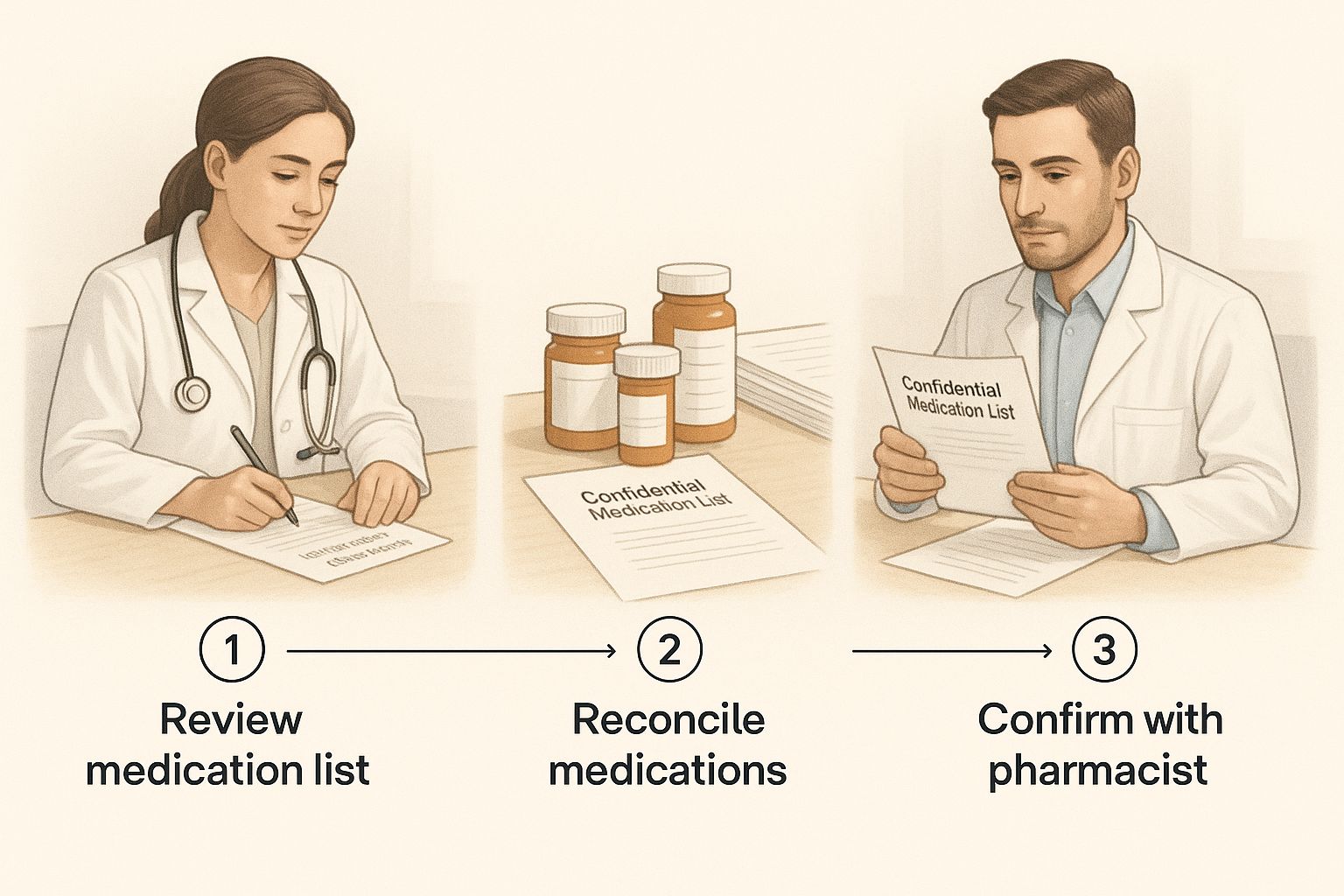
This process shows the effort between clinicians and pharmacists to ensure every prescription is accurate. This is crucial for preventing errors once you are back home.
Arranging for Home Support
Your plan also needs to cover your practical needs for recovery. It is all about thinking through what you will need at home.
Your discharge plan should be reviewed with you and your family. This gives you time to ask questions and confirm you understand every part of it before you leave the hospital.
Arranging for the right support ahead of time makes a big difference. This might include:
- Medical Equipment: Do you need a hospital bed, a walker, or oxygen? Your discharge planner will help get these items delivered to your home.
- Home Health Care: If you need skilled support, like wound care from a Registered Nurse or therapy to regain mobility, these services will be scheduled.
As a nonprofit with over 74 years of experience serving communities like Monterey and San Benito County, we at Central Coast VNA & Hospice partner with hospitals to make sure this support is ready. Our mission is to provide the expert, compassionate care you need to recover safely at home.
Improving Communication for a Safer Transition
Clear communication is the bridge between a messy hospital discharge and a safe return home. Think of it as the final, most important step.
When everyone—the patient, family, and at-home care team—is part of the conversation, the plan is clear. Without that shared understanding, important details can be missed. This is where recovery can get off track.
Speak Up Until It’s Crystal Clear
Never be afraid to ask for things to be explained. If you hear a medical term you don't know or an instruction seems unclear, it is vital to speak up. Your hospital team wants you to succeed at home. Your questions help them give you better guidance.
A great way to make sure you understand is to repeat the instructions back in your own words. This simple method works wonders. It confirms you're on the same page and lets the clinician clear up any confusion. Taking this step is one of the most effective patient engagement strategies you can use.
Know Exactly Who to Call and When
Once you’re home, it can be stressful not knowing who to call with a question. Your discharge plan must include a clear list of names and phone numbers for your doctors and your home health agency.
This list is your safety net. It gives you quick access to professional help when you need it most. This can prevent small issues from becoming big problems.
For people in Monterey, San Benito, Santa Cruz, and South Santa Clara counties, Central Coast VNA & Hospice often becomes that key point of contact. Our Registered Nurses and therapists are in direct contact with your doctors. This creates a seamless link, ensuring your care stays coordinated.
Sadly, communication problems during discharge are a global issue. Even in developed countries, communication gaps can affect the quality of care. This shows the need for well-organized care where everyone has a clear role. You can read more about these international findings on care transitions.
With over 74 years of local, nonprofit service, our mission is to make sure you feel supported and heard. We become your advocate, ensuring your entire care team is on the same page. Open communication helps turn a stressful transition into a confident step toward recovery at home.
How Home Health Care Supports Your Recovery
Leaving the hospital doesn't mean your recovery is over. This transition is a key time when the right support can make all the difference. This is where professional home health care becomes a vital part of your discharge planning from hospital.
For people across Monterey, San Benito, Santa Cruz, and South Santa Clara counties, Central Coast VNA & Hospice is that vital bridge. As a nonprofit with over 74 years of experience in our community, our mission is to bring expert medical care to your home. This support helps you heal safely in the place you want to be most—your own home.
Skilled Support Tailored to You
Home health care is more than just convenient. It's about getting personalized, skilled services that match your recovery needs.
For example, a Registered Nurse can provide expert wound care or help you manage a new medication schedule. A physical therapist can guide you through exercises to rebuild your strength without risking a setback.
This level of professional support lowers the risk of problems that could send you back to the hospital. It brings peace of mind, knowing an expert is checking in, monitoring your progress, and talking with your doctor.
A Continuum of Care That Adapts
As you heal, your needs will change. Your care plan should be able to change with you.
Central Coast VNA & Hospice offers a full Continuum of Care, from home health to palliative and hospice services. This means we can adjust the level of support as you get stronger. We can also bring in more specialized care if your condition becomes more complex.
The entire healthcare industry sees how crucial post-discharge support is. The global market for these services is expected to grow from $288.13 billion in 2024 to $335.86 billion by 2025. This shows how essential it is to support patients after they leave the hospital. You can discover more insights about these transitional care market trends.
When you include home health in your discharge plan, you are creating a safety net of continuous, expert care. This proactive approach empowers you to heal with confidence.
Frequently Asked Questions About Hospital Discharge Planning
Leaving the hospital can feel rushed, and it’s normal to have questions. Getting clear answers is the best way to feel prepared for the transition home. We've put together answers to some of the most common concerns about discharge planning from hospital.
When does discharge planning start?
Effective discharge planning should start within 24 hours of your admission to the hospital. Your healthcare team will begin assessing your needs, your home life, and the support you'll require after you leave. This early approach prevents last-minute stress and ensures services, like home health care from Central Coast VNA & Hospice, are ready for a smooth transition.
What is my role in the discharge plan?
You are the most important person on the discharge planning team. Your role is to speak up—ask questions, share honest information about your home and support system, and voice any concerns you have. Make sure you understand your medications, follow-up appointments, and any diet or activity limits before you go home.
How are home health services paid for?
Home health care is often covered by Medicare, Medi-Cal, and most private insurance plans. It must be prescribed by a physician and be medically necessary for your recovery. The team at Central Coast VNA & Hospice can help you understand your coverage and any potential costs. You can learn more about qualifying for home health care on our website.
What should I do if my condition changes at home?
Your discharge plan should include clear instructions on who to call if your symptoms change or you have questions. It is vital to know this information before you leave the hospital. If you receive home health services from Central Coast VNA & Hospice, you will have access to a Registered Nurse who can assess your condition and contact your doctor.
How can Central Coast VNA & Hospice help after a hospital stay?
For over 74 years, Central Coast VNA & Hospice has helped patients transition safely from the hospital to home in Monterey, San Benito, Santa Cruz, and South Santa Clara counties. Our nonprofit team of Registered Nurses, therapists, and other professionals works with your hospital's discharge planner to create a seamless care experience. We provide the skilled nursing, therapy, and compassionate support you need to recover with confidence at home.
Navigating the transition from hospital to home can feel overwhelming, but you don't have to do it alone. The compassionate team at Central Coast VNA & Hospice is here to provide expert medical care and support every step of the way. Contact us today to learn how we can help you or your loved one recover safely and comfortably at home. Visit us online at https://ccvna.com to learn more.