
Many families think of hospice as something for the last few days of life. This common misunderstanding often means missing out on weeks or even months of incredible support. Choosing to start hospice sooner isn't about giving up.
It's about making a choice to prioritize comfort, dignity, and quality of life. This shift in focus gives the entire family a support system—physically, emotionally, and spiritually—right when it's needed most.
Why Starting Hospice Sooner Makes a Difference
Thinking about hospice can feel overwhelming. Too often, families put off the conversation until a crisis strikes. This can mean losing the chance to manage symptoms and reduce stress.
By looking into hospice care earlier, you give your loved one and your family the gift of time. This means time for expert pain management, emotional support, and meaningful moments together. This guide is here to reframe the conversation around starting hospice sooner: what families should know.
Maximizing Comfort and Quality of Life
When hospice begins early, the care team has more time to know the patient. This allows them to create a personalized care plan that keeps pain and symptoms under control. The result is fewer trips to the emergency room and fewer stressful hospital stays.
Instead of reacting to one crisis after another, the focus shifts to creating a calm environment at home. This approach helps patients stay in a familiar space, surrounded by people they love. It builds a support system that honors their wishes for peace and dignity.
This infographic captures the core benefits of enrolling in hospice sooner.
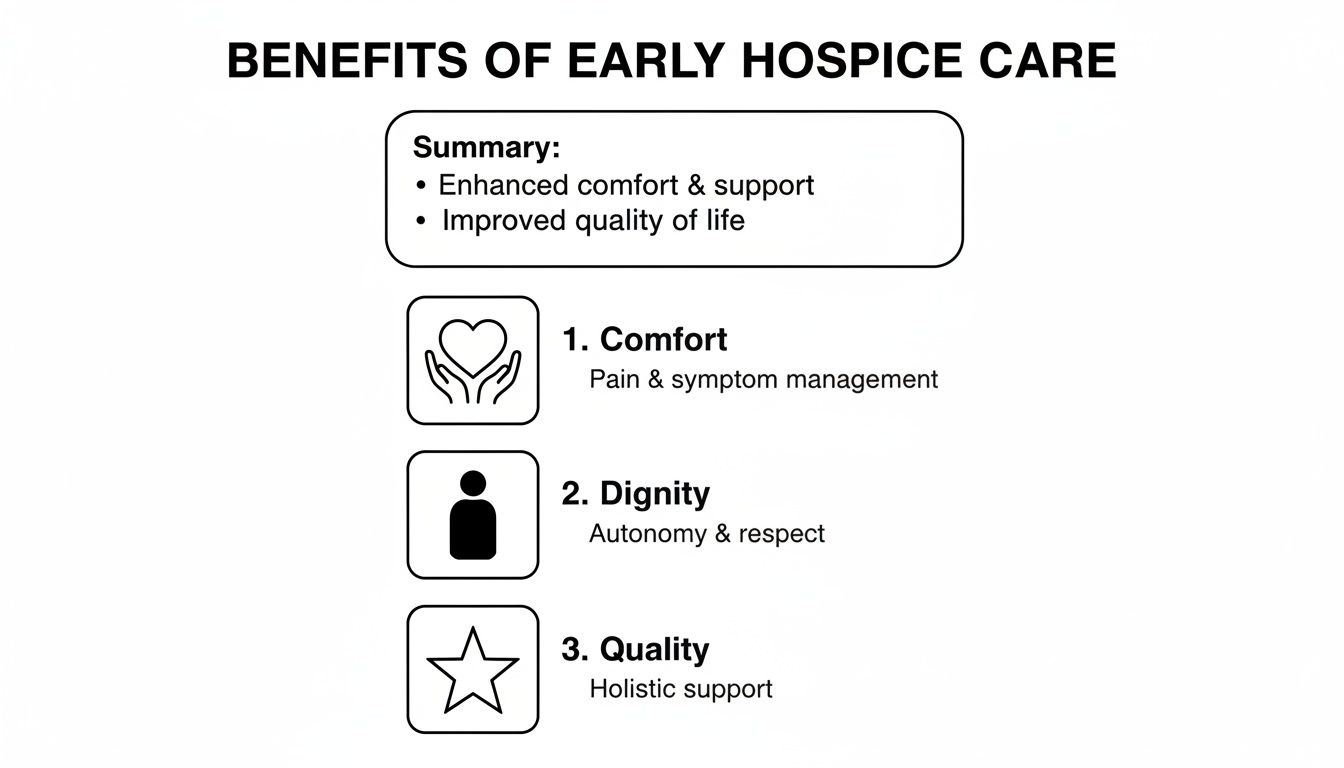
Starting sooner lets the care team build a trusting relationship with the patient and family. A longer period of care also opens the door for important conversations. Families can also explore the legal aspects of planning for a longer hospice journey.
Recognizing the Signs It Might Be Time
Knowing when to consider hospice can feel hard. It’s a decision loaded with emotion. But recognizing the signs early isn’t about giving up—it’s about shifting the focus to comfort and quality of life.
The conversation usually starts when the goal of treatment moves from finding a cure to making the most of the time left. This is the heart of the care we provide at Central Coast VNA & Hospice. It's about helping your loved one live as fully and comfortably as possible.

Key Clinical Indicators to Watch For
While every person's journey is different, there are common physical signs that it might be time to explore hospice. Watching for these trends can help your family make an informed decision. Clear signs include frequent hospitalizations, unmanaged pain, and exhaustion for both the patient and family.
One of the most obvious signs is repeat hospitalizations or trips to the emergency room. If your loved one is constantly in and out of the hospital, their condition may be too difficult to manage with their current treatment.
Other important signs include:
- Unmanaged Symptoms: Pain, shortness of breath, or nausea that won't go away, even with medication.
- Significant Weight Loss: A noticeable drop in weight, often paired with a poor appetite.
- Decline in Function: A clear downturn in their ability to handle daily activities like getting dressed or bathing.
- Increased Fatigue: A growing weakness that forces them to spend most of the day in a chair or bed.
It’s tough to see these changes, but they are important signals. For a deeper look, you can read our guide on when to call hospice.
Quality of Life and Emotional Signs
Just as important as physical signs are changes in emotional state and quality of life. Sometimes, the most telling clues aren't on a medical chart. These shifts affect both the person who is ill and the family members caring for them.
You might notice your loved one withdrawing from hobbies or showing less interest in seeing friends. This isn't a choice; it's often the result of physical and emotional exhaustion. All their energy is being used just to cope.
For families, caregiver burnout is also a key sign. If you feel overwhelmed by managing medications and daily needs, that's a signal that more support is needed. This is where the interdisciplinary team at Central Coast VNA & Hospice can step in, offering relief to families across Monterey and Santa Cruz counties.
The Real Benefits of Earlier Hospice Enrollment
Choosing hospice earlier isn't about giving up. It's about getting more—more time, more comfort, and more support. When families start hospice services sooner, they give their loved one the gift of a better quality of life.
This extra time lets our team build a strong relationship and create a personal care plan. It leads to a more stable environment. Instead of reacting to one crisis after another, our team can proactively manage symptoms and provide consistent support.
Superior Symptom Management and Comfort
More time with the hospice team means better control over pain and other symptoms. It gives our Registered Nurses the chance to adjust medications and teach the family how to manage symptoms. The result is a higher quality of life, allowing your loved one to stay engaged with the people they care about.
With a good plan in place, the focus shifts from just getting through each day to truly living it. At Central Coast VNA & Hospice, we ensure every medical step aligns with the patient's comfort. This helps people remain in the one place they want to be—at home.
Earlier hospice enrollment is associated with measurable improvements in symptom management and caregiver outcomes. Patients who enter hospice with longer lengths of stay receive more visits per week and more continuous symptom-management resources, while their families report lower rates of unmet needs. Read more about these findings on hospice monitoring reports.
Financial and Emotional Relief for Families
The relief that early hospice brings to families is huge, and it’s not just emotional. One of the biggest benefits is financial. The Medicare Hospice Benefit, which covers most of our patients, includes:
- Medications related to the terminal illness.
- Medical equipment like hospital beds and oxygen.
- Medical supplies such as bandages and catheters.
This coverage lifts a huge financial weight off the family’s shoulders. The support also extends to emotional needs. The Central Coast VNA & Hospice team includes a Medical Social Worker and a Chaplain to ensure the entire family feels supported.
The quality of care is boosted by how efficiently our teams work. Understanding the benefits of medical voice charting shows how healthcare providers can spend more time on patient care.
A Structured Support System at Home
The power of starting hospice sooner is having a team in your corner. This team includes a Registered Nurse, a Hospice Aide, a Medical Social Worker, a Chaplain, and trained volunteers. They all work together to create a network of support at home.
This structure prevents the chaotic experience of navigating a late-stage illness alone. You have a professional team on call 24/7 to answer questions and provide hands-on care. For families across Monterey County, San Benito County, Santa Cruz County, and South Santa Clara County, this means you are never alone.
This approach is at the heart of our hospice at home services. By enrolling sooner, you empower your loved one to live their final months with dignity.
How to Start the Hospice Conversation With Your Family
Bringing up the topic of hospice is one of the most difficult talks a family can have. It feels heavy. But it doesn't have to.
The key is to frame the discussion around comfort, dignity, and quality of life—not about giving up. It's about honoring your loved one’s wishes. The best approach is to lead with love and listen more than you talk.
Gentle Ways to Begin the Discussion
Finding the right words can feel impossible. Try easing into the conversation with open-ended questions. This gives your loved one space to share their thoughts without feeling pressured.
Using "I" statements can also soften the talk. For example, saying, "I've been worried about your pain, and I want to be sure we're doing everything to keep you comfortable," places the focus on their well-being.
Here are a few gentle conversation starters:
- "I've been thinking about what you're going through. What are your biggest worries?"
- "If things were to get more difficult, what's most important for you?"
- "I want to make sure we respect your wishes. Have you thought about what you would want if your health changed?"
For more advice, our guide on how to talk to your parents about hospice care is a great resource.
Involving the Medical Team
You don't have to do this alone. Your loved one’s doctor is an essential partner. A doctor can offer a clinical view that helps ground the conversation in facts.
When you talk to the doctor, frame your questions around exploring all available options. This opens the door for the medical team to discuss the full spectrum of care. This can include the benefits of starting hospice sooner.
An informational consultation is not a commitment to begin services. It is an opportunity for families to ask questions, understand the support available, and make a plan that feels right for everyone, without any pressure.
How a No-Obligation Consultation Works
Many people worry that calling a hospice provider locks them in. That isn't true. At Central Coast VNA & Hospice, we offer no-obligation consultations for families across Monterey County, San Benito County, and Santa Cruz County.
Here’s what to expect when one of our Registered Nurses visits you:
- Listen: First, we listen. We want to hear about your family’s needs and health concerns.
- Explain: We'll walk you through how hospice works and what services are included.
- Answer: You'll have the chance to ask anything about our interdisciplinary team.
- Provide: We'll leave you with resources, whether you decide to enroll now or later.
This meeting is about empowering you with knowledge. It’s a conversation about the possibilities for comfort and peace.
Getting Started: Hospice Eligibility and How It's Paid For
The logistics of starting hospice care can feel overwhelming. But many families are surprised to find the requirements are straightforward. Understanding eligibility and payment can clear away major hurdles.
At Central Coast VNA & Hospice, our job is to bring clarity to this journey. We want to demystify the process for families across Monterey, San Benito, and Santa Cruz counties.
The Main Eligibility Guideline
What does it take to qualify for hospice? The main requirement is a clinical one. A person is eligible when two physicians—their doctor and our hospice medical director—agree.
They certify that the person has a life-limiting illness with a life expectancy of six months or less if the illness runs its natural course. It's important to remember this is a guideline, not an exact timeline.
Patients can, and often do, receive hospice support for longer than six months. This is possible as long as they still meet the medical criteria.
How Is Hospice Paid For?
For most families, the cost of healthcare is a worry. The good news is that hospice is designed to lift that financial burden. This ensures compassionate support is available to everyone who needs it.
The main payment source is the Medicare Hospice Benefit. This covers nearly everything related to the terminal diagnosis, including:
- Visits from the Registered Nurse and other care team members.
- Medications for pain and symptom management.
- Medical equipment, like a hospital bed or oxygen.
- Supplies needed for care, such as bandages.
This all-in-one coverage means you can focus on your loved one, not medical bills. It’s a huge part of what makes starting hospice sooner a practical choice for families.
The Medicare Hospice Benefit is designed as a complete package of care. Families aren't billed separately for nursing visits, medications, or equipment related to the hospice diagnosis. This alone removes a massive source of stress.
Besides Medicare, hospice is also covered by Medi-Cal and most private insurance plans. As a nonprofit, Central Coast VNA & Hospice is committed to making sure cost is never a barrier to care. Our team is here to help you understand your specific coverage.
For a more detailed breakdown, learn more about how to pay for hospice care on our website.
Your Local Partner in Compassionate Care on the Central Coast
For families navigating a serious illness across Monterey, San Benito, Santa Cruz, and South Santa Clara counties, the journey can feel isolating. For over 74 years, Central Coast VNA & Hospice has been a dedicated, nonprofit partner in the community. We are your neighbors, here to walk alongside you.
Our care is designed as a seamless continuum. This means your loved one can move from home health to palliative care, and then to hospice, all within one trusted organization. Having a familiar team that understands your family’s history makes all the difference.
A Team That Honors Your Wishes
What sets our care apart is our dedicated, interdisciplinary team. This group of Registered Nurses, Hospice Aides, Medical Social Workers, and Chaplains works together to honor each patient's goals. Our mission is to provide personalized care that centers on comfort and dignity.
Our philosophy is simple: we empower families with education and support, not just services. We believe that when you have clear information, you can make the best decisions for your loved one with confidence and peace of mind.
Having access to this kind of structured support is vital. Globally, the ability to start hospice sooner often depends on established programs. You can read more about the global landscape of hospice access to understand why this matters.
If you are caring for a loved one and wondering when to ask about hospice, start with a conversation. Central Coast VNA & Hospice is here for families across the Central Coast—offering guidance, not pressure, and compassionate care when it’s needed most. You can learn more about why Central Coast VNA & Hospice is the best choice for your family.
Frequently Asked Questions About Starting Hospice Sooner
Does starting hospice mean we’re giving up on our loved one?
Not at all. Starting hospice is about shifting the focus from trying to cure an illness to providing comfort and quality of life. It is a proactive choice to ensure your loved one's final months are lived with dignity and support, rather than in a cycle of hospital visits.
Can a patient leave hospice care after they start?
Yes. A person can stop hospice care at any time if their health improves or they decide to seek other treatments. The Medicare Hospice Benefit is flexible, allowing patients to re-enroll later if their condition changes again.
What professionals are on a hospice care team?
The hospice team provides complete support for the patient and family. At Central Coast VNA & Hospice, our interdisciplinary team includes a Registered Nurse, Hospice Physician, Hospice Aide, Medical Social Worker, Chaplain, and trained volunteers who all work together.
Where is hospice care usually provided?
Hospice care is typically provided wherever the patient calls home. This could be a private residence, an assisted living facility, or a nursing home. Our team serves patients across Monterey County, San Benito County, Santa Cruz County, and South Santa Clara County, bringing care directly to them.
When is the right time to contact a hospice provider for information?
It is never too early to learn about your options. We encourage families to contact us for a no-obligation conversation as soon as a life-limiting illness is diagnosed. This allows you to gather information and make an informed decision without pressure when the time is right.
If you have more questions or want to talk about your family’s specific needs, Central Coast VNA & Hospice is here to listen. Contact us today for a compassionate, no-obligation conversation about how we can support you.