
When families explore long-term in-home care, one of the first questions is always, "How can we afford this?" The answer is usually a mix of different funding sources. These can include private savings, government programs, and insurance benefits.
Most health insurance plans were not designed to cover ongoing personal assistance. Building a realistic financial roadmap is the most important step you can take. This helps make long-term care sustainable for your loved one.
Understanding the Real Cost of In-Home Care

Many families in Monterey County are surprised by the actual cost of in-home care. It is a compassionate goal to help a loved one age at home. But the financial side can be overwhelming without a plan.
The first step is to look beyond simple hourly rates. The true cost depends on the level of support your loved one needs. This can range from a few visits a week to full-time skilled care from a Registered Nurse.
What Does In-Home Care Typically Include?
In-home care is a wide range of support tailored to an individual's needs. Understanding the different levels helps you estimate costs. It also helps you build a budget that works for your family.
Services generally fall into a few main categories:
- Companion Care: This covers basics like help with errands, preparing meals, and light housekeeping. It also provides important social engagement.
- Personal Care: A Hospice Aide or Home Health Aide can help with activities of daily living (ADLs). This includes things like bathing, dressing, grooming, and mobility.
- Skilled Nursing Care: This is provided by a Registered Nurse (RN) or Licensed Vocational Nurse (LVN). It involves medical tasks like wound care, medication administration, and monitoring vital signs.
For many families, the ideal solution is a blend of these services. A family member might handle daily companionship. A professional aide could visit a few times a week for personal care. For those needing advanced medical support, it is helpful to understand what in-home nursing can offer your loved one in Monterey.
Estimated Weekly In-Home Care Costs at a Glance
This table provides estimated weekly costs for different levels of in-home care. The numbers are based on national averages. This can help families see the potential financial commitment.
| Hours of Care Per Week | Average Weekly Cost (Companion Care) | Average Weekly Cost (Home Health Aide) |
|---|---|---|
| 20 Hours | $660 | $700 |
| 44 Hours (Full-Time) | $1,452 | $1,540 |
| Live-in/24-Hour | Varies Greatly | Varies Greatly |
These figures are a starting point. Actual costs can vary based on your location and the specific services required. They show the importance of planning ahead.
Facing the Financial Reality
It is important to approach the cost of care with open eyes. The national average cost for nonmedical in-home care is projected to be around $33 per hour in 2025. This figure can change depending on the state and the level of care needed.
These numbers can seem high. But in-home care is often more manageable and preferred over a nursing facility. The key is to avoid financial missteps, like assuming Medicare will cover all long-term personal needs.
A common mistake is thinking Medicare or health insurance will cover long-term personal care. But Medicare only provides limited coverage for short-term, skilled nursing needs. It does not cover the ongoing help with daily activities most people need.
As a nonprofit with over 74 years of experience, Central Coast VNA & Hospice helps families in Monterey, San Benito, Santa Cruz, and South Santa Clara counties create realistic care plans. Our team can help you understand your insurance coverage. We connect you with resources to build a sustainable support system for your loved one.
Figuring Out Insurance for In-Home Care
One of the biggest challenges families face is figuring out what insurance will pay for. It is a common mistake to assume a health insurance policy covers everything for long-term care at home. When coverage is not there, families are left scrambling for a new financial plan.
Most insurance, including Medicare, was designed for short-term medical problems. It was not built for the ongoing personal support many seniors need. The key is to have realistic expectations from the start.
The Role of Medicare in Home Care
Medicare is the first place most people look for help. While it is a huge help, its role is very specific and limited. Medicare Part A and Part B may cover certain home health services, but only if a doctor certifies the person is "homebound" and needs skilled care.
These services are not designed for long-term support. Think of it this way: Medicare is there to help you recover from an illness, injury, or surgery.
For a limited time, Medicare typically covers things like:
- Skilled Nursing Care: Visits from a Registered Nurse or Licensed Vocational Nurse on an intermittent basis.
- Physical, Occupational, or Speech Therapy: Services to help a patient regain function and independence.
- Medical Social Services: Help for patients dealing with the social and emotional side of their illness.
Here is the critical point: Medicare does not pay for "custodial care." This means help with daily activities like bathing, dressing, or eating if that is the only care you need.
This gap in coverage surprises many families. For a deeper look at the specific rules, you can learn more about the Medicare home care eligibility criteria.
Medi-Cal as a Vital Lifeline
For Californians who meet specific income and asset limits, Medi-Cal can be a true lifeline. Unlike Medicare, Medi-Cal is designed to cover long-term care services for those who qualify.
Programs like In-Home Supportive Services (IHSS) provide funding for personal care. This makes it possible for loved ones to stay home. The eligibility rules for Medi-Cal are complex, but for those who qualify, it is a key funding source.
Private Insurance and Long-Term Care Policies
Most private health insurance plans follow Medicare's model. They cover short-term skilled care but not ongoing personal assistance.
If your loved one has a Long-Term Care Insurance (LTCI) policy, now is the time to read it carefully. These plans are specifically designed to pay for custodial care. But they have their own rules, like waiting periods and daily benefit limits.
At Central Coast VNA & Hospice, our team helps families in Santa Cruz, San Benito, Monterey, and South Santa Clara counties understand their benefits. As a nonprofit provider with over 74 years of experience, we work with Medicare, Medi-Cal, and private insurance. We help you build a care roadmap that is both realistic and compassionate.
Unlocking Government and Veterans Benefits

When families learn that insurance does not cover most long-term personal help, the financial worry can be great. But there is good news. Several government and veterans programs are designed to fill this exact gap.
For many families in Salinas and South Santa Clara County, these benefits are the missing piece of the puzzle. Navigating them can feel complex. But taking the time to understand them is one of the most important things you can do.
Medi-Cal’s Home and Community-Based Services
One of the most powerful tools for affording long-term care in California is Medi-Cal. It offers Home and Community-Based Services (HCBS) waivers. The goal is simple: give people the support they need to live in their own homes instead of institutions.
HCBS waivers can fund a range of services that Medicare will not, including:
- Personal Assistance: Help with daily activities like bathing, dressing, and preparing meals from a certified Home Health Aide.
- Respite Care: Giving family caregivers a much-needed break to rest and recharge.
- Home Modifications: Minor changes like installing grab bars or ramps to make a home safer.
Eligibility depends on both medical needs and financial status. A nonprofit partner like Central Coast VNA & Hospice can walk you through the process. You can also explore our guide that explains how to pay for hospice care, which touches on various funding sources.
Honoring Service Through Veterans Benefits
For veterans and their surviving spouses, the Department of Veterans Affairs (VA) offers benefits that can make a huge difference. These are earned benefits meant to honor their service. Too often, families do not know these resources exist.
The most important program for in-home care is VA Aid and Attendance. This is a monthly, tax-free payment added to a VA pension. It is for veterans who need help with daily activities.
The VA Aid and Attendance benefit provides a large monthly payment to qualifying wartime veterans and their surviving spouses. These funds help cover the costs of in-home care, assisted living, or nursing home services.
To qualify, a veteran must meet service, income, and asset requirements. A doctor must also certify their need for daily assistance. The funds can be used to hire professional support from organizations like ours.
These programs are the foundation of long-term care funding for millions. In fact, according to KFF, Medicaid paid for 59% of all long-term services and supports in the U.S. in 2021. Meanwhile, VA benefits help over 1.5 million veterans fund their care. For federal employees, understanding programs like the Federal Long Term Care Insurance Program is also a critical piece of the planning puzzle.
As a nonprofit with deep roots in the Central Coast community, we help families in Monterey, San Benito, and Santa Cruz counties access every available resource. Our care team can guide you through these options. We help you honor your loved one with the compassionate care they deserve.
Using Private Pay and Long-Term Care Insurance
When you find that public benefits will not cover everything, the next step is looking at private funding. This is a common part of building a care plan. Using your own resources gives you the most control over your loved one’s care.
The key is to use these resources smartly to avoid a financial crisis later. You want to make informed choices that help your savings last. This ensures your loved one gets the compassionate care they need.
The Role of Long-Term Care Insurance
Long-Term Care Insurance (LTCI) is a policy designed to pay for services that regular health insurance does not cover. This usually means help with bathing, dressing, or preparing meals. If your family has an LTCI policy, it can be a powerful tool for affording in-home care.
But these policies have important details you must understand.
- Elimination Period: This is a waiting period, like a deductible. You will have to pay for care out-of-pocket during this time before the policy starts.
- Daily or Monthly Benefit Limit: The policy will only pay up to a set amount each day or month. It is critical to know this number when creating a budget.
- Covered Services: Always check the policy to see exactly what types of care it covers. Most modern policies are flexible.
To get a clear picture of how these policies work, it helps to read a detailed resource like this one on Long Term Care Insurance Explained. It can help you make sense of all the details.
Leveraging Personal Savings and Assets
For many families, personal savings and retirement accounts are the main source of funding for long-term care. This approach, called "private pay," is the most direct way to hire help.
Families typically use a mix of sources:
- Checking and savings accounts
- Retirement funds like a 401(k) or IRA
- Pensions or annuity payments
- Stocks, bonds, and other investments
One of the biggest mistakes we see is waiting until a crisis to figure out the financial picture. Planning ahead gives you the chance to structure your assets. This helps them last as long as possible.
The first step is always to create a realistic budget. For a detailed breakdown of how to approach this, check out our guide on how to fund home health care costs.
Funding Sources for Long-Term In-Home Care
Navigating the different ways to pay for care can feel overwhelming. Here is a quick comparison of the most common funding sources. It shows what they are best for and key things to keep in mind.
| Funding Source | Best For | Key Consideration |
|---|---|---|
| Medicare/Medi-Cal | Short-term, skilled nursing care after a hospital stay (Medicare); low-income individuals (Medi-Cal). | Strict eligibility rules and limited coverage for non-medical, long-term custodial care. |
| Long-Term Care Insurance | Families who planned ahead with a policy to cover custodial and skilled care needs. | Be aware of elimination periods, benefit caps, and specific covered services. |
| Personal Savings/Assets | Maximum flexibility and immediate access to funds for any type of care. | Can deplete savings quickly without a solid budget and long-term financial plan. |
| Reverse Mortgage | Homeowners 62+ who need to access home equity without selling their home. | The loan must be repaid when the homeowner moves out or passes away, impacting inheritance. |
| VA Benefits | Eligible veterans and their spouses who need assistance with daily living activities. | The application process can be lengthy and requires specific service-related criteria. |
Each of these options has its place. Many families use a combination of two or more to create a sustainable plan.
Other Private Funding Strategies
What happens when savings are not enough? Some families explore other financial tools.
One option is a reverse mortgage. This lets homeowners aged 62 and older turn home equity into cash. They do not have to sell their home. The loan is paid back when the homeowner sells the house or no longer lives there.
Another route is a life insurance conversion. This involves selling a life insurance policy for its current cash value. These are complex financial moves, so it is essential to talk with a financial advisor first.
Creating a Sustainable Long-Term Care Plan
Answering "how do families afford in-home care long-term?" requires a plan that is financially and emotionally sustainable. A good care plan is a roadmap that blends professional support with family and community resources.
This approach helps manage costs and prevent caregiver burnout. It ensures your loved one gets consistent, compassionate support. It is about creating a strong network, not relying on a single person or funding source.
The process below shows how families often layer different financial tools. They start with savings before using insurance or home equity.
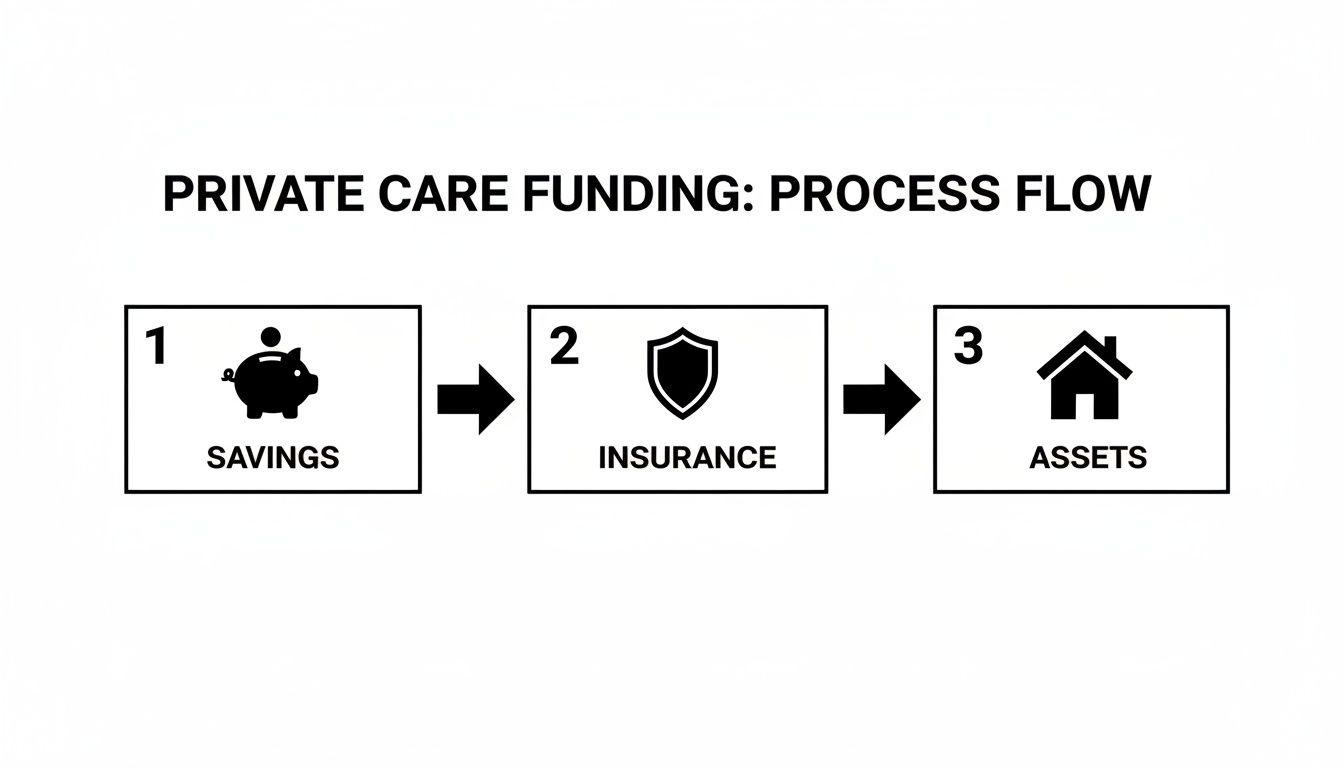
This layered strategy helps create a stable financial base for care as needs change.
Building a Blended Care Team
A sustainable plan combines different roles to meet your loved one’s needs. This is what a blended care team looks like.
Imagine a family member helps with companionship and meals. This personal touch reduces the need for paid help for these tasks.
Then, you can bring in professional support for specific needs:
- A Hospice Aide or Home Health Aide can visit a few times a week to help with bathing, dressing, and mobility.
- A Registered Nurse can manage medications, provide wound care, and oversee the medical side of the plan.
- Community volunteers can offer companionship, giving family caregivers a much-needed break.
This approach makes professional care more affordable. Our guide on in-home support to avoid a nursing home offers more tips on finding this balance.
The Value of a Nonprofit Partner
A local, nonprofit provider like Central Coast VNA & Hospice can make a world of difference. With over 74 years of experience, we help families build a comprehensive plan.
Our team serves Monterey, San Benito, Santa Cruz, and South Santa Clara counties. We help you align your financial reality with your loved one’s care needs. We work with Medicare, Medi-Cal, and private insurance to maximize every benefit.
A key part of sustainability is having one point of contact that understands the entire continuum of care. As needs change, a nonprofit partner can seamlessly transition support from home health to palliative care, and eventually to hospice care. This avoids the stress of starting over with a new organization.
Planning for the Long Haul
A care plan is a living document. You need to revisit it as your loved one's health and financial situation changes.
Regular family meetings are essential. These check-ins allow everyone to discuss what is working and what is not. This proactive communication helps share the emotional and logistical weight of caregiving.
By blending formal and informal support, you create a resilient and affordable system. You ensure your loved one gets high-quality care at home. They are supported by a network of family, community, and trusted professionals.
FAQs: Answering Your Questions About Affording In-Home Care
Here are some of the most common questions families ask about paying for long-term care.
What happens when Medicare or other insurance runs out?
This is a common fear, but it doesn't mean you are out of options. When short-term benefits end, other funding sources are designed to take over. Families often turn to a mix of Long-Term Care Insurance, Medi-Cal for those who qualify, Veterans benefits, or private savings. The key is to create a backup plan before the initial coverage runs out to avoid gaps in care.
How can we start a conversation about money with our parents?
This can be a sensitive topic. Frame the conversation around their wishes, not just their finances. Say something like, “Mom, to honor your wish to stay at home, it would help if we could plan the finances together.” Using "we" and "us" makes it a team effort. Bringing in a neutral expert, like a care coordinator from Central Coast VNA & Hospice, can also make the conversation easier.
What is the very first step we should take?
The most important first step is to get organized. Create a clear picture of your loved one’s needs and financial resources. Gather their health information, a list of daily tasks they need help with, and a basic financial summary including income, savings, and all insurance policies. Having this information in one place empowers you to build a realistic plan.
Is full-time, 24/7 in-home care affordable?
For most families, paying for 24/7 professional care out-of-pocket is not sustainable. A more affordable approach is to create a 24/7 support system. This often involves a creative blend of family members covering nights and weekends, with a professional Home Health Aide providing support during weekday work hours. This blended model makes continuous care much more achievable.
How do we know which government programs we qualify for?
Navigating eligibility for programs like Medi-Cal and VA benefits can be complex. Each has specific income, asset, and medical need requirements. The best approach is to connect with a knowledgeable resource. A local nonprofit agency like Central Coast VNA & Hospice has care teams that can help you understand the criteria, gather the necessary documents, and guide you through the application process for services in Monterey County, San Benito County, and our other service areas.
Figuring out how to pay for long-term care takes compassion, creativity, and a trusted guide. For over 74 years, Central Coast VNA & Hospice has been that guide for families on the Central Coast. If you are in Monterey, San Benito, Santa Cruz, or South Santa Clara County and need help, our team is here.