
When a person chooses hospice care, they are shifting their focus. It's a move away from treatments meant to cure an illness. Instead, it's about a new kind of care centered on comfort, dignity, and quality of life.
The word "hospice" can feel final and frightening. People worry it means care will stop. But hospice is about making the most of the time a person has, comfortably and with dignity.
Understanding the Shift to Hospice Care
Thinking about hospice can feel overwhelming. It’s easy to believe it means giving up, but it is actually the opposite. It’s about taking control and living as well as possible for as long as possible.
The process begins when a doctor certifies that a patient’s illness is life-limiting. The goal of treatment then pivots from finding a cure to ensuring comfort. This shift is not just about medical care; it’s about adding a new layer of support.
As a nonprofit that has served the Central Coast of California for over 74 years, Central Coast VNA & Hospice guides families through this first step. We provide care in Monterey County, San Benito County, Santa Cruz County, and South Santa Clara County.
A Look at Hospice Care Today
Hospice isn't a rare choice anymore. It has become a trusted and beneficial path for end-of-life care. Research shows it helps patients live more peacefully and reduces unnecessary hospital visits.
In fact, this approach is now widely accepted. Over half of all Medicare patients who passed away in 2020 used hospice services. This shows how many families are choosing comfort and dignity at the end of life.
Here’s a simple breakdown of how the goals of care change when moving to hospice.
Hospice Care Focus vs. Curative Care Focus
| Aspect of Care | Curative Care Goal | Hospice Care Goal |
|---|---|---|
| Primary Objective | To cure the disease or prolong life. | To maximize comfort and quality of life. |
| Treatment Approach | Aggressive treatments (e.g., surgery, chemotherapy). | Managing pain and symptoms to relieve suffering. |
| Patient Focus | Primarily on the disease itself. | On the whole person—physical, emotional, and spiritual needs. |
| Family Involvement | The family provides support but is not the focus of care. | The family is part of the unit of care and receives support. |
| Location of Care | Often in a hospital or clinical setting. | Wherever the patient calls home. |
As you can see, hospice isn't about stopping care. It’s about changing the kind of care to align with the patient’s wishes.
What to Expect When You Start
Upon admission, an interdisciplinary team gets to work. This team includes a Registered Nurse, physicians, social workers, Chaplains, Hospice Aides, and volunteers. They create a plan to manage pain and address emotional needs from home.
This coordinated approach reduces stress and prevents last-minute trips to the hospital. It allows patients to live peacefully in a familiar place.
Making an Informed Decision
A common misstep is waiting too long to start hospice. Many families think it’s only for the last few days of life. This delay can lead to unmanaged pain, stress, and missed opportunities for meaningful time together.
It is better to consider hospice earlier when curative treatments are no longer helping. It is helpful to understand when to call hospice so you can make the most of the support available. Taking time to understand tools like a Texas Durable Power of Attorney for Health Care can also clarify decision-making.
If you're in Monterey, Salinas, Hollister, or Santa Cruz and are unsure if it's time for hospice, talk to a Central Coast VNA & Hospice team member. We can guide you with compassion—no pressure, just answers. Call 831-372-6668 or visit ccvna.com.
Your Initial Hospice Admission Visit
So, you’ve made a referral and are ready to explore hospice care. What happens next? The first step is a gentle visit from one of our Registered Nurses.
We come to you, whether that's a home in Salinas or a facility in Santa Cruz. This meeting is a compassionate conversation designed to put your family at ease. The nurse will explain our services, listen to your worries, and answer your questions.
What to Expect During the Visit
During this first meeting, the Registered Nurse will walk you through the necessary paperwork. They explain every form in simple, easy-to-understand terms. We want you to feel confident and informed.
This meeting is about putting you and your loved one back in control. The goal is to build a personalized plan of care that honors the patient's wishes. We will talk about everything from symptom management to spiritual support.
This simple graphic shows how the process begins.
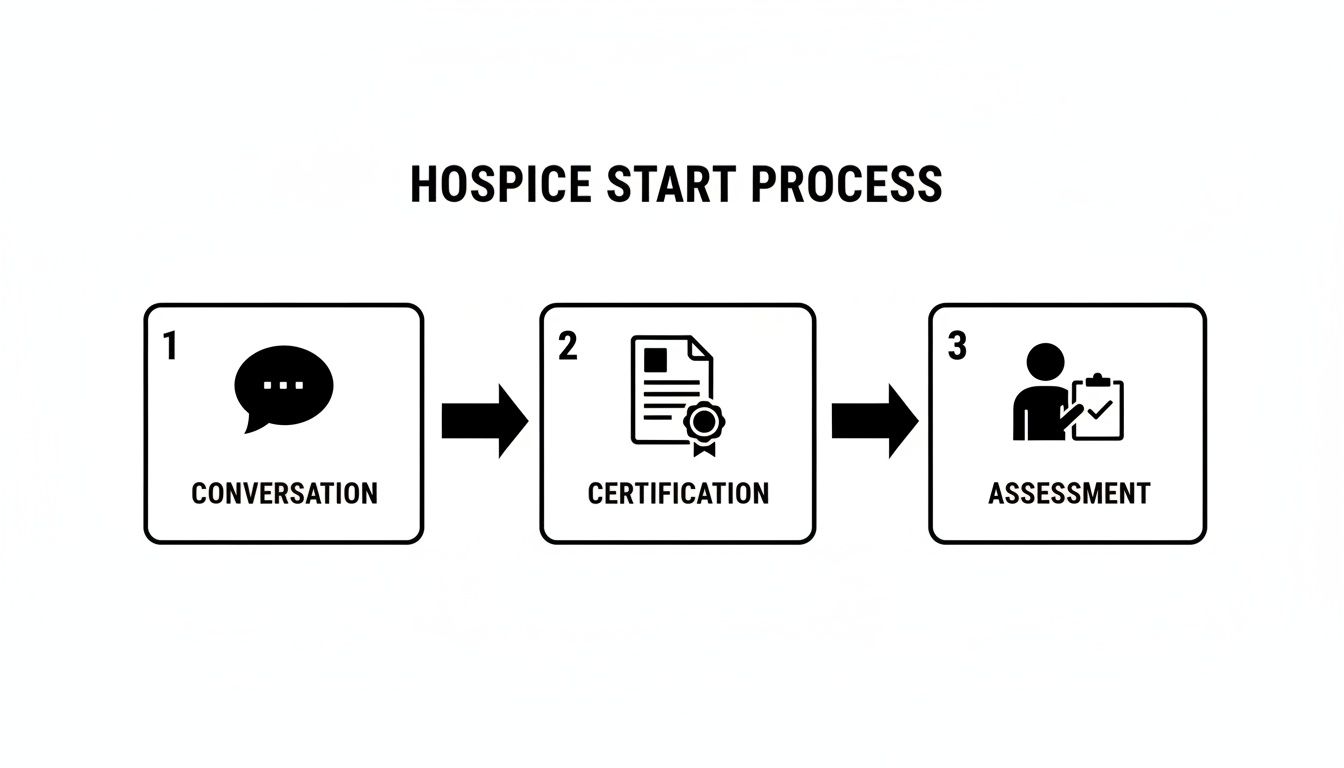
Starting hospice is a structured journey. It begins with open communication and leads to a personalized assessment.
Creating Your Personalized Care Plan
Everything we gather during the admission visit becomes the foundation for the care plan. This is a living guide that we can adjust as needs change.
Your care plan will outline things like:
- Medical Care: How we will manage pain, schedule medications, and deliver medical supplies.
- Personal Care: A schedule for visits from a Hospice Aide to help with tasks like bathing.
- Emotional and Spiritual Support: Plans for visits from a Medical Social Worker and Chaplain.
- Coordination with Your Doctor: How our team will work with the patient's primary physician.
A well-crafted plan acts as a roadmap for our entire team. It ensures everyone understands the patient's goals and is working together. You can learn more about how we develop a hospice care plan that fits your family's needs.
At Central Coast VNA & Hospice, our mission is to make this transition smooth. Our team in Monterey County, San Benito County, Santa Cruz County, and South Santa Clara County is ready to help.
Meeting Your Dedicated Hospice Support Team
When starting hospice care, you are no longer walking this path alone. You gain a team of compassionate professionals dedicated to your well-being. This team provides comfort and guidance every step of the way.
At Central Coast VNA & Hospice, this team approach is at the heart of our mission. With over 74 years of service, we've built a care model that honors the whole person.
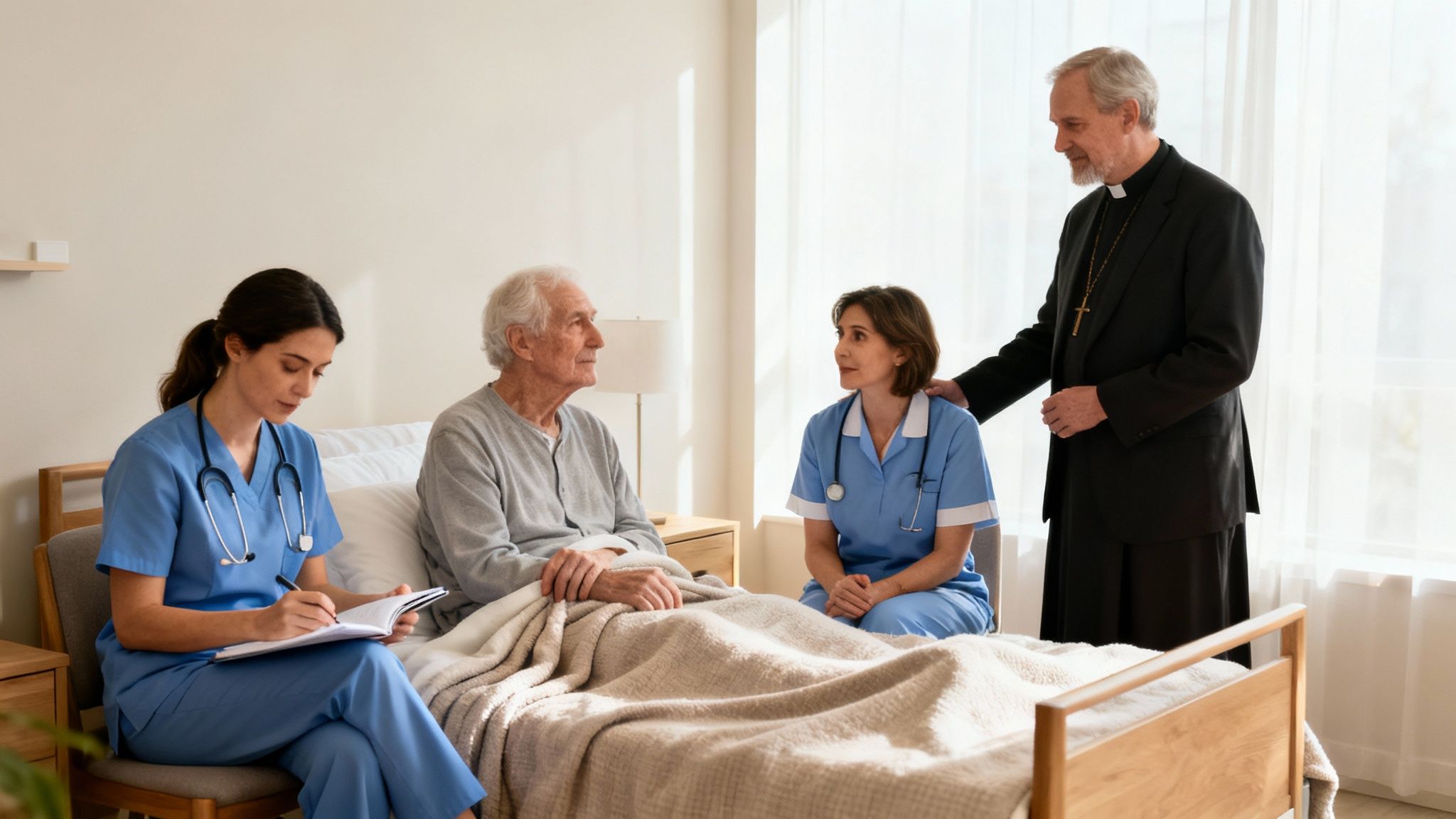
Who Is on Your Hospice Team?
Your hospice team is a group of specialists from different fields. They work together to carry out a personalized care plan.
Your team will typically include:
- Registered Nurse (RN) Case Manager: Your main contact for clinical care.
- Hospice Aide: Provides hands-on personal care like bathing and dressing.
- Medical Social Worker: Offers emotional support to the patient and family.
- Chaplain: Provides spiritual support tailored to your personal beliefs.
- Hospice Physician: Works with your doctor to provide expertise in pain and symptom management.
- Volunteers: Offer companionship, respite, pet therapy, and music therapy.
Starting hospice isn't just about managing an illness. It's about surrounding a person with a complete circle of support.
How Your Team Works Together
Our Central Coast VNA & Hospice team gets right to work. Our Registered Nurses and other team members are available 24/7 to deliver expert pain management and emotional support.
The RN Case Manager leads regular team meetings to discuss the patient's needs. This constant communication ensures your care plan remains effective.
The Role of the Hospice Aide
The Hospice Aide plays an important role in daily comfort. They provide personal care with a gentle touch. This helps patients maintain their hygiene and dignity.
Their presence brings relief to the patient and peace of mind to the family. You can learn more about their specific duties by reading about Hospice Aide responsibilities on our website.
How We Manage Pain and Symptoms
The core promise of hospice care is making patients as comfortable as possible. This is our first focus when someone begins care. It’s a shift from curing an illness to maximizing the quality of every day.
Comfort is more than just managing pain. Patients may also deal with shortness of breath, anxiety, or nausea. Our Registered Nurses and Hospice Physicians are experts at navigating these challenges.
A Comprehensive Approach to Comfort
Getting symptoms under control is a team effort. Your hospice team will oversee all medications related to the illness. This careful management helps patients stay alert and engaged with loved ones.
We also provide all necessary medical equipment to make the home safer. This often includes items like:
- A hospital bed to make resting easier.
- An oxygen concentrator to help with breathing.
- A bedside commode or walker to assist with mobility.
- Wound care supplies and other essential items.
This equipment is typically covered by the Medicare Hospice Benefit. Our team handles everything from ordering to setup, so you don’t have to worry.
We relieve the physical stresses of an illness so a patient can save their energy for what matters. When symptoms are controlled, that energy can go toward creating memories with family.
Around-the-Clock Support and Peace of Mind
One of the most reassuring parts of hospice is knowing that help is always there. Symptoms don’t follow a 9-to-5 schedule. For families in our four-county service area, our 24/7 on-call support is a vital lifeline.
A Central Coast VNA & Hospice Registered Nurse is always just a phone call away. This immediate access provides peace of mind and cuts down on stressful trips to the emergency room. You can learn more about our expert pain and symptom management on our website.
By taking on symptom control, hospice gives families freedom. You can concentrate on being present with your loved one. This is the compassionate care at the heart of our mission.
What Does a Typical Week in Hospice Care Actually Look Like?
When families first hear "hospice," it's natural to wonder how daily life will change. Hospice is not a constant medical presence in the home. It is a flexible schedule of supportive visits designed to fit into your life.
The point is to create a peaceful home environment built around the patient’s wishes. At Central Coast VNA & Hospice, our team works with your family to establish a routine.
The Rhythm of Scheduled Visits
A typical week in hospice is structured around visits from your care team. The frequency of these visits is tailored to the patient's individual needs.
A weekly schedule might look something like this:
- Registered Nurse Visits: A nurse will likely visit two to three times a week to manage symptoms and educate the family.
- Hospice Aide Visits: A Hospice Aide might come two or three times a week to help with personal care like bathing.
- Social Worker and Chaplain Check-ins: These team members schedule regular check-ins, often weekly or bi-weekly.
This structure ensures that professional support is always part of the weekly routine.
It’s So Much More Than Just Medical Support
Beyond clinical care, hospice is about enhancing quality of life. The nonprofit mission of Central Coast VNA & Hospice truly shines here. We offer services that bring joy and comfort to our patients.
To enrich a patient's week, we can arrange for:
- Volunteer Companionship: A trained volunteer can visit, giving family members a break.
- Pet Therapy: Certified therapy animals can bring moments of happiness and calm.
- Music Therapy: A music therapist can use music to help patients find peace.
These are integral parts of the care plan. We weave them into the schedule to help make each day as meaningful as possible.
The 24/7 On-Call Safety Net
While scheduled visits form the backbone of a typical week, a key benefit is access to 24/7 on-call support. Your family is never alone on this journey.
A sudden change in symptoms can be stressful. With hospice, you don't have to wait or rush to an emergency room. A Registered Nurse is always just a phone call away.
This constant availability is a vital safety net. Families in Salinas, Hollister, and throughout our service area can rest easier. This immediate access to care is what makes the hospice experience so supportive.
How Hospice Supports the Entire Family
Hospice care isn’t just for the patient. It’s a circle of support that wraps around the entire family. A life-limiting illness creates stress and uncertainty for everyone.
This comprehensive support is a core part of what happens when someone starts hospice. It transforms a lonely struggle into a shared journey.

Emotional and Spiritual Guidance
Navigating this chapter brings up complex emotions. Our Medical Social Workers are here to help families cope with stress. They can also connect you with helpful community resources.
At the same time, our Chaplains offer spiritual guidance to people of all backgrounds. They are gifted listeners who provide a calming presence. This support is tailored to your unique values.
Support That Continues After Loss
The support from Central Coast VNA & Hospice doesn’t end when a loved one passes away. We know the grieving process is a difficult road.
Our bereavement services are available to families for up to 13 months following a loss. This support includes:
- Individual Grief Counseling
- Support Groups
- Memorial Services
This continuing care ensures that families are never left to navigate loss alone. We also offer programs like respite care for family caregivers to provide them with needed breaks. You can also find other valuable guidance on navigating grief online.
Frequently Asked Questions About Starting Hospice Care
It’s completely normal to have questions when you’re thinking about hospice. Getting clear answers can help replace fear with facts. This empowers you to make the best decision for your loved one.
1. Does starting hospice mean giving up hope?
Not at all. It shifts the definition of hope. Instead of hoping for a cure, the focus turns to hope for comfort, peace, and meaningful moments. Choosing hospice is a decision to put dignity and comfort first.
2. Can a patient leave hospice care?
Yes, absolutely. A patient's condition may improve, or they may decide to try a new treatment. The choice always belongs to the patient and their family. You can stop hospice services at any time and can always return if needed.
3. How is hospice care paid for?
Hospice is a comprehensive benefit covered by Medicare Part A, Medi-Cal, the VA, and most private insurance plans. This coverage is all-inclusive and typically covers team visits, medications, and medical equipment. As a nonprofit, Central Coast VNA & Hospice is committed to providing care to all who are eligible, regardless of ability to pay.
4. Where is hospice care provided?
Hospice care is provided wherever the patient calls home. This could be a private residence, an assisted living facility, or a nursing home. Central Coast VNA & Hospice brings this care directly to patients throughout Monterey, San Benito, Santa Cruz, and South Santa Clara counties.
5. How soon can hospice care start?
Once a referral is made and the patient is certified as eligible, care can begin very quickly. At Central Coast VNA & Hospice, our team can often start care within 24 to 48 hours. Our goal is to provide relief and support to patients and families as soon as possible.
If you still have questions or are wondering if it's the right time to consider hospice, the compassionate team at Central Coast VNA & Hospice is here to help. Contact us today for a pressure-free conversation to get the answers and support your family needs.