
When a loved one needs more help, families often search for "senior care." But what does that term really mean? It can feel overwhelming to sort through options like home care, nursing homes, and therapy.
Getting the terms right is the first step to finding the support you need. Home care is skilled medical care from licensed professionals, ordered by a doctor. Senior care is a broad term for non-medical help, like companionship or assistance with daily tasks.
Understanding the Core Differences in Senior Support
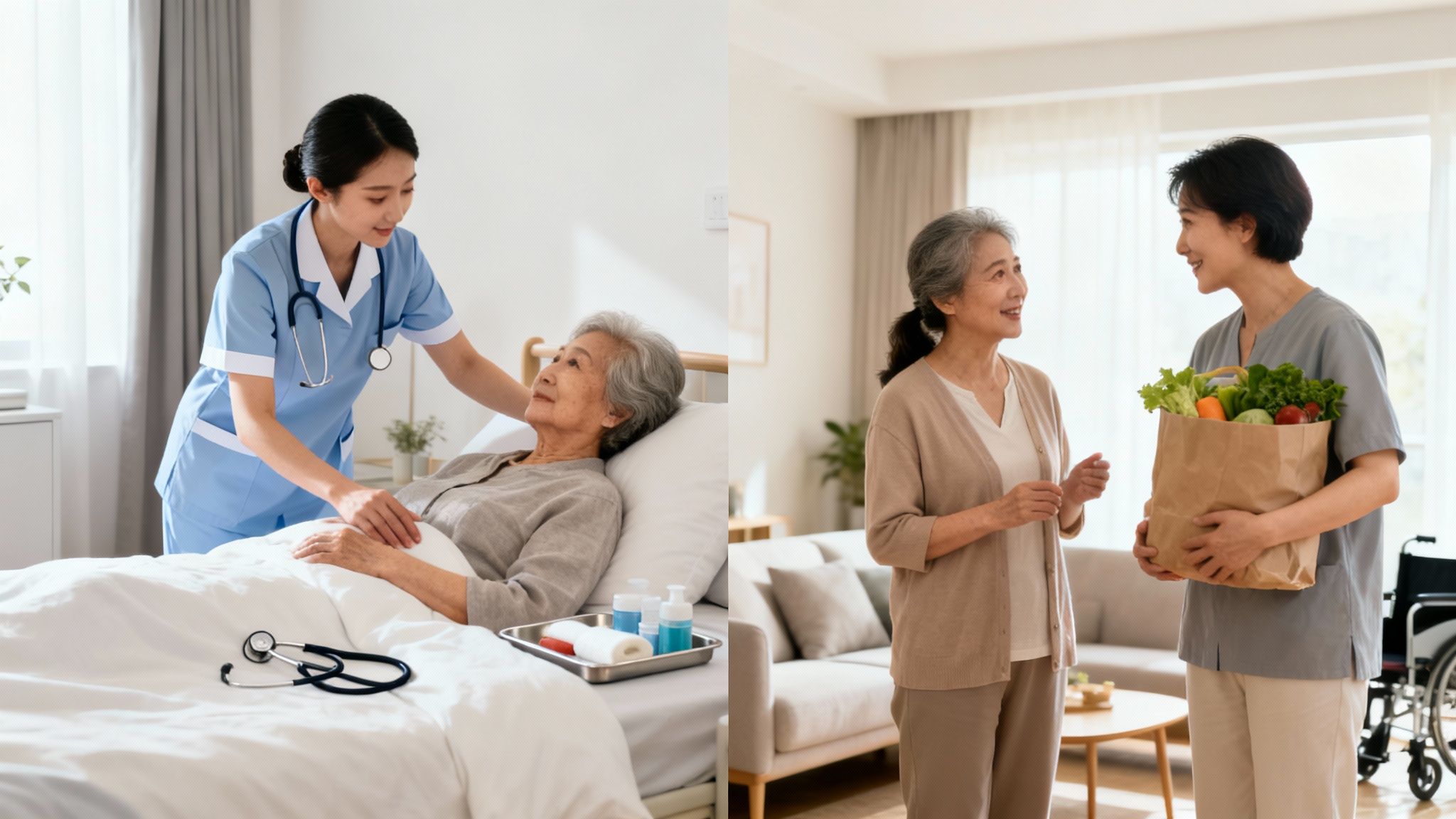
Trying to figure out care options for a family member can be confusing. Many families in Monterey County and surrounding areas search for “senior care” without realizing it covers everything from a few hours of help to 24/7 medical support. Let’s clear things up.
Home care, often called “home health care,” is a specific type of medical service. It helps someone recover from an illness, injury, or surgery at home. A team of licensed clinicians provides this care.
In contrast, "senior care" includes almost any service that helps older adults live safely. This could be non-medical help with cooking and cleaning or even moving to a residential facility. It’s all about assistance with daily life, not clinical treatment.
Home Care vs. Senior Care at a Glance
One option isn’t better than the other; they just serve different purposes. The right choice depends entirely on your loved one’s health needs. Making an informed decision starts with knowing the difference.
This table breaks down the key distinctions.
| Key Aspect | Home Care (Clinical Focus) | Senior Care (Broad Category) |
|---|---|---|
| Primary Goal | To treat a medical condition, aid in recovery, or manage a chronic illness. | To provide support for daily living, ensure safety, and offer companionship. |
| Service Provider | Licensed medical professionals (e.g., Registered Nurses, Physical Therapists). | Non-medical aides, companions, or staff at residential facilities. |
| Common Services | Wound care, medication administration, physical therapy, skilled nursing. | Meal preparation, light housekeeping, transportation, assistance with bathing. |
| Who Prescribes It | A physician's order is required to initiate services. | Typically arranged directly by the family or individual based on need. |
| Payment Source | Often covered by Medicare, Medi-Cal, and private insurance. | Usually paid for privately or with long-term care insurance. |
Think of it this way: if a doctor orders it and a licensed clinician provides it, it’s home health care. If it's about making daily life easier and safer, it falls under the senior care umbrella.
As a nonprofit serving the Central Coast for over 74 years, Central Coast VNA & Hospice specializes in clinical care. Our continuum of home health and hospice services helps families build a care plan that fits their medical needs, so no one feels unprepared.
A Deeper Look at Clinical Home Care Services
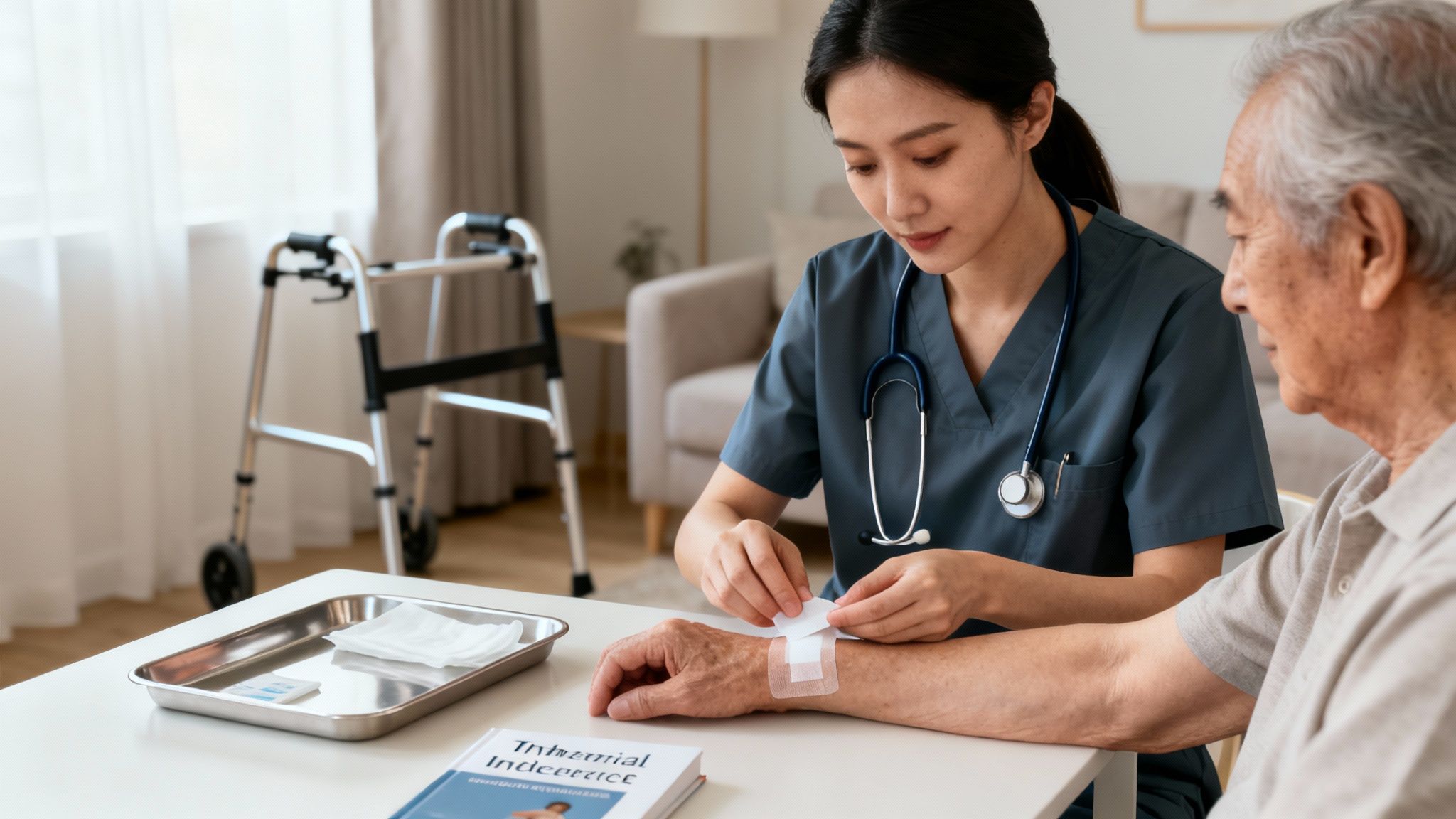
Clinical home care, or home health, is a specific medical service prescribed by a physician. It is not about companionship or errands. It’s about licensed healthcare professionals delivering skilled medical care in a patient's home.
These services are part of a formal care plan, often after a hospital stay or surgery. The goal is recovery, rehabilitation, and helping patients regain independence. For over 74 years, Central Coast VNA & Hospice has provided this expert care to our community.
Who Provides Clinical Home Care
The qualifications of the professionals involved is a major difference between home care and senior care. A team of licensed clinicians delivers home health care. Each person plays a specific role in the patient's recovery.
This team often includes:
- Registered Nurses (RNs) who manage complex needs like wound care, IV therapy, and patient education.
- Physical Therapists (PTs) who guide patients through exercises to rebuild strength and balance after an injury.
- Occupational Therapists (OTs) who help individuals relearn daily activities like dressing or cooking safely at home.
- Speech Therapists (STs) who work on communication or swallowing difficulties, often after a stroke.
- Medical Social Workers who connect families with community resources and provide emotional support.
Real-World Scenarios for Home Care
Let’s look at a few common situations to see how home care works. Imagine a patient in Salinas recovering from joint replacement surgery. A Physical Therapist would help them regain strength and learn to navigate stairs at home.
Here’s another example: a patient in Hollister is newly diagnosed with heart failure. A Registered Nurse from Central Coast VNA & Hospice would visit to monitor vital signs and manage medications. To learn more about this role, see what is skilled nursing care.
According to the Alliance for Home Health Quality and Innovation, patients receiving home health care show significant improvement in their ability to perform daily activities. This highlights its powerful role in rehabilitation.
Nearly 12 million Americans receive home health care services annually. As a mission-driven, nonprofit provider, Central Coast VNA & Hospice ensures this essential care remains accessible in Monterey County, San Benito County, and our other service areas. You can get more insight into these roles by learning about working in home health care as a CNA.
Digging Into the World of Senior Care
While home care focuses on medical needs, "senior care" covers a wide range of non-medical services. It’s designed to support an older adult's safety, comfort, and quality of life. Think of it as help with practical, everyday challenges.
This is often the first place families on the Central Coast look when a loved one starts to struggle. These services are arranged privately and are not prescribed by a doctor. The goal is to provide a helping hand and peace of mind.
What Does Non-Medical Senior Care Actually Look Like?
Non-medical senior care is a flexible spectrum of support. It can be customized to fit a person’s unique needs and preferences. This allows families to build a support system that truly works.
These services generally fall into two categories:
- Companion Care: This focuses on social interaction and help with household tasks. It’s ideal for seniors who are independent but could use company to prevent loneliness or help with errands.
- Personal Care: This involves more hands-on help with Activities of Daily Living (ADLs). A personal care aide can assist with bathing, dressing, and moving around safely.
Many families start by exploring in-home care for seniors to help their loved one stay safely at home.
How Clinical and Non-Medical Care Work Together
It is common for someone to need both skilled medical care and non-medical support. This is where a team approach becomes essential. For instance, a patient in Monterey recovering from a stroke might get physical therapy from a Central Coast VNA & Hospice clinician while a non-medical aide helps them with meals.
By combining services, families can create a complete safety net. The clinical team addresses medical recovery, while a non-medical aide ensures daily life continues smoothly.
As a nonprofit provider with deep roots on the Central Coast, we see how vital this collaboration is. Our clinical teams coordinate with non-medical providers across Salinas, Santa Cruz, and Hollister. We work together to ensure a patient’s care plan covers every need.
How to Choose the Right Level of Care
Choosing the right support for a loved one is a big decision. The best approach is to focus on what they need right now. A clear, step-by-step process helps you make a proactive choice instead of waiting for a crisis.
Start with a simple needs assessment: is the primary need medical or non-medical? If your loved one is recovering from surgery or managing a chronic illness, the answer is medical. In this case, home health care, prescribed by a doctor, is the right path.
If they are medically stable but struggling with daily tasks, their needs are non-medical. These issues are a good fit for senior care services like companion or personal care.
Matching Services to Specific Scenarios
Seeing how these services work in real life makes the choice clearer. Let's look at a few common situations we see with families on the Central Coast.
-
Scenario 1: Post-Surgery Rehabilitation
A Santa Cruz resident is home after a hip replacement. They need help managing pain and learning to use a walker safely.- Correct Choice: Clinical Home Care. A Registered Nurse from Central Coast VNA & Hospice can manage wound care, while a Physical Therapist provides in-home rehab.
-
Scenario 2: Managing a Chronic Condition
An older adult in Salinas with congestive heart failure needs help to stay out of the hospital. They have a complicated medication schedule.- Correct Choice: Clinical Home Care. A skilled nurse can teach them about their condition, monitor vital signs, and work with their doctor.
-
Scenario 3: Early-Stage Dementia Support
Someone in Hollister is physically healthy but showing signs of memory loss. They sometimes forget to eat and can no longer drive safely.- Correct Choice: Non-Medical Senior Care. A companion can offer supervision, prepare meals, and provide transportation to keep them safe and socially connected.
This decision tree helps show the difference between companionship and personal care needs when choosing non-medical senior care.
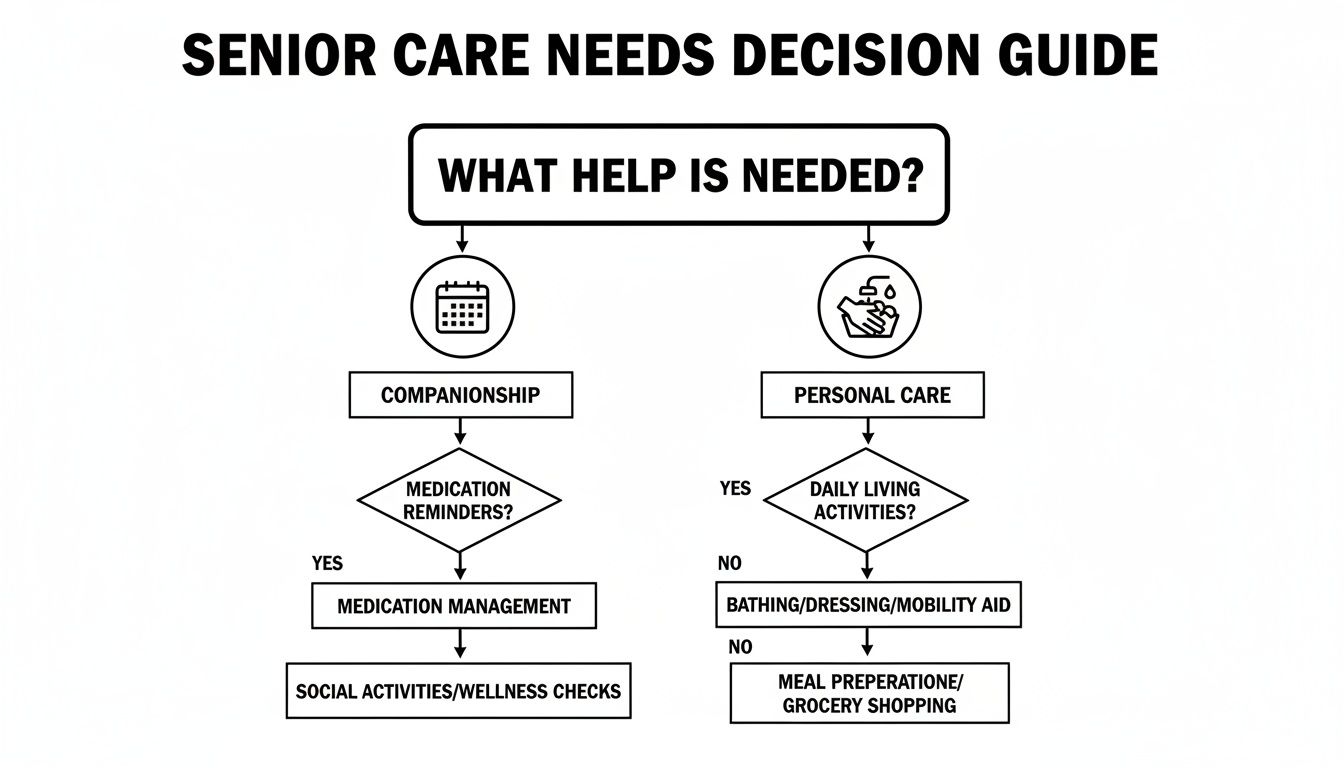
As the flowchart shows, the first step is to figure out the specific type of daily help required. This will determine if social engagement or hands-on assistance is needed.
When Both Types of Care Are Needed
Life is rarely simple, and a person's needs often require a blend of support. A layered approach is important in these cases. The most effective care plans often combine both clinical and non-medical services.
The most successful support systems are built by layering services. A patient can receive skilled nursing from Central Coast VNA & Hospice while also having a non-medical aide assist with meals.
This combination ensures all bases are covered. A licensed clinician handles medical needs, while a non-medical aide supports daily living. This strategy prevents family burnout and creates a complete safety net.
Figuring out the financial side is also a big piece of the puzzle. Exploring resources on topics like Understanding Grants for Senior Citizens can provide valuable insights.
Integrating Services for a Complete Support System
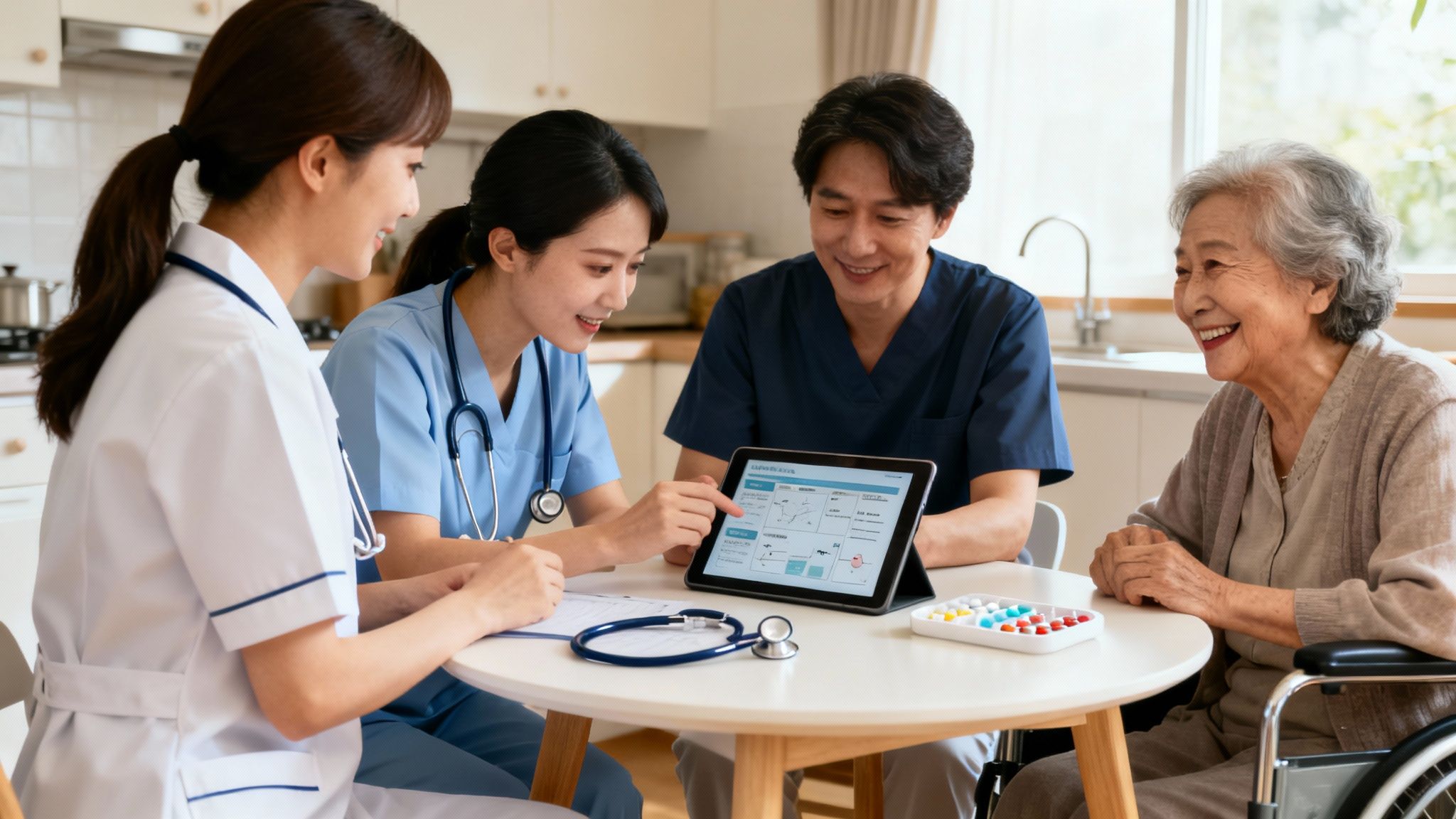
A person’s care needs change over time. The key to effective support is a flexible system that layers services together. This creates a complete safety net at home.
Many families think they must choose between medical and non-medical care. In reality, the best plans often blend both. This ensures clinical needs are managed by professionals while daily needs are also supported.
As the only nonprofit on the Central Coast providing a full continuum of care, Central Coast VNA & Hospice guides families through this journey. Our teams in Monterey, San Benito, Santa Cruz, and South Santa Clara counties create personalized, adaptable care plans.
Building a Personalized Continuum of Care
The path of care is different for everyone. At Central Coast VNA & Hospice, our teams build a pathway of support that evolves with the patient. This ensures the right care is always available without the stress of finding new providers.
Our integrated model might look like this:
- Starting with Home Health: A patient in Salinas might begin with skilled nursing and physical therapy to focus on recovery.
- Transitioning to Palliative Care: If a serious illness progresses, they could move to our specialized palliative home care. This service focuses on managing symptoms and improving quality of life.
- Receiving Hospice Support: Later, if their illness is terminal, they can seamlessly transition to our compassionate hospice care. The focus shifts to comfort and dignity.
This entire journey is managed under one roof by a team that knows your family. This continuity provides great comfort and eliminates confusion.
The Advantage of a Single, Trusted Provider
Figuring out the difference between home care and senior care services is hard enough. Working with a single, mission-driven organization like Central Coast VNA & Hospice offers clear advantages. Our clinicians communicate with each other, ensuring the care plan is perfectly aligned.
With over 74 years of dedicated service, our nonprofit model allows us to focus entirely on the patient. We help families build a comprehensive plan so no one feels alone or unprepared.
Our Registered Nurses might identify when a patient could benefit from palliative support for pain. In the same way, our hospice team can bring in volunteers and bereavement specialists to support the entire family. This cohesive approach ensures nothing is missed.
Your Trusted Partner for Care on the Central Coast
Figuring out senior care options can feel overwhelming, but you don't have to do it alone. For over 74 years, Central Coast VNA & Hospice has been a dedicated nonprofit partner for families across Monterey, San Benito, Santa Cruz, and South Santa Clara counties. We are your neighbors, committed to helping you find the right support.
Our mission is to bring compassionate, high-quality healthcare to your doorstep. Whether you’re in Salinas, Monterey, Hollister, or Santa Cruz, our skilled clinicians are part of this community. Our focus is entirely on our patients' well-being.
Your Local Guide to Senior Care
Understanding the difference between home care and senior care is a huge first step. Our team is here to give you clear, no-obligation guidance. We help families build a care plan that fits their unique situation.
We are the only organization on the Central Coast offering a full continuum of home health, palliative care, and hospice care under one roof. This means we provide seamless support as your loved one's needs change.
Having one integrated team means you have a single, trusted partner. There are no gaps in care, just consistent support from clinicians who know your family. They work together to adjust the plan as needed, giving you peace of mind.
We invite you to learn how Central Coast VNA & Hospice impacts lives across the Central Coast. When you’re ready to explore your options, our team is here to help you move forward with confidence. Contact us today.
Frequently Asked Questions About Home and Senior Care
Figuring out senior support services can be confusing. Here are answers to some common questions we hear from families.
Is Home Care Covered by Medicare?
Yes, but only a specific kind. Skilled home health care—clinical services from a nurse or therapist—is typically covered by Medicare. A doctor must order these services as medically necessary for a patient who is "homebound."
Non-medical senior care, like companionship or meal prep, is usually not covered by Medicare. This type of care is most often paid for out-of-pocket.
Can My Loved One Receive Home Care in an Assisted Living Facility?
Absolutely. A person’s “home” is wherever they live. Our skilled clinicians from Central Coast VNA & Hospice regularly provide home health, palliative, and hospice care to patients in assisted living communities throughout Monterey, San Benito, Santa Cruz, and South Santa Clara counties.
What Is the First Step to Getting Care for My Parent?
Start by talking with your parent's doctor about their health and safety. If they need medical care at home, the doctor can send a referral to a home health agency like ours. You can also call our team directly for guidance.
How Is Palliative Care Different from Home Health or Hospice?
These services represent different points along our continuum of care. Each one has a distinct goal:
- Home Health is doctor-ordered care focused on helping a patient recover from an illness or injury.
- Palliative Care is specialized support focused on relief from the symptoms and stress of a serious illness.
- Hospice Care is for individuals with a terminal illness when comfort and quality of life become the primary goals.
Does Central Coast VNA & Hospice Provide Non-Medical Senior Care?
Central Coast VNA & Hospice is a licensed medical provider specializing in skilled clinical services: home health, palliative care, and hospice care. We do not offer standalone non-medical companion services. However, our Medical Social Workers can connect you with trusted local agencies that provide these services.
At Central Coast VNA & Hospice, our nonprofit mission is to provide compassionate, high-quality healthcare right where you are. If you have more questions or need help building a care plan for your loved one, contact us today. Learn more at https://ccvna.com.