
Choosing hospice care for a parent is a deeply meaningful decision. It requires finding a provider who offers medical skill, compassion, and support for the whole family. For residents in our community, the question, "Who offers the best hospice care for parents near Monterey?" is a personal one.
This guide provides clarity and confidence during this sensitive time. It includes a compassionate checklist to help you review your options.
Our goal is to give you the information needed to select a partner who will honor your parent's wishes. We will explore trusted local organizations and what sets each apart. This guide will help you compare their services effectively.
Below, we’ll look at several key resources to help you find and evaluate care. Each overview includes what the resource offers, a direct link, and a screenshot. We will show you how to find providers, compare quality, and make a choice that feels right.
1. VNA and Hospice
When searching for the best hospice care for parents near Monterey, Central Coast VNA & Hospice (CCVNA) is a top choice. With a 74-year legacy as a nonprofit leader, CCVNA provides compassionate and complete care. Their mission-driven approach ensures every family receives expert medical support and guidance.
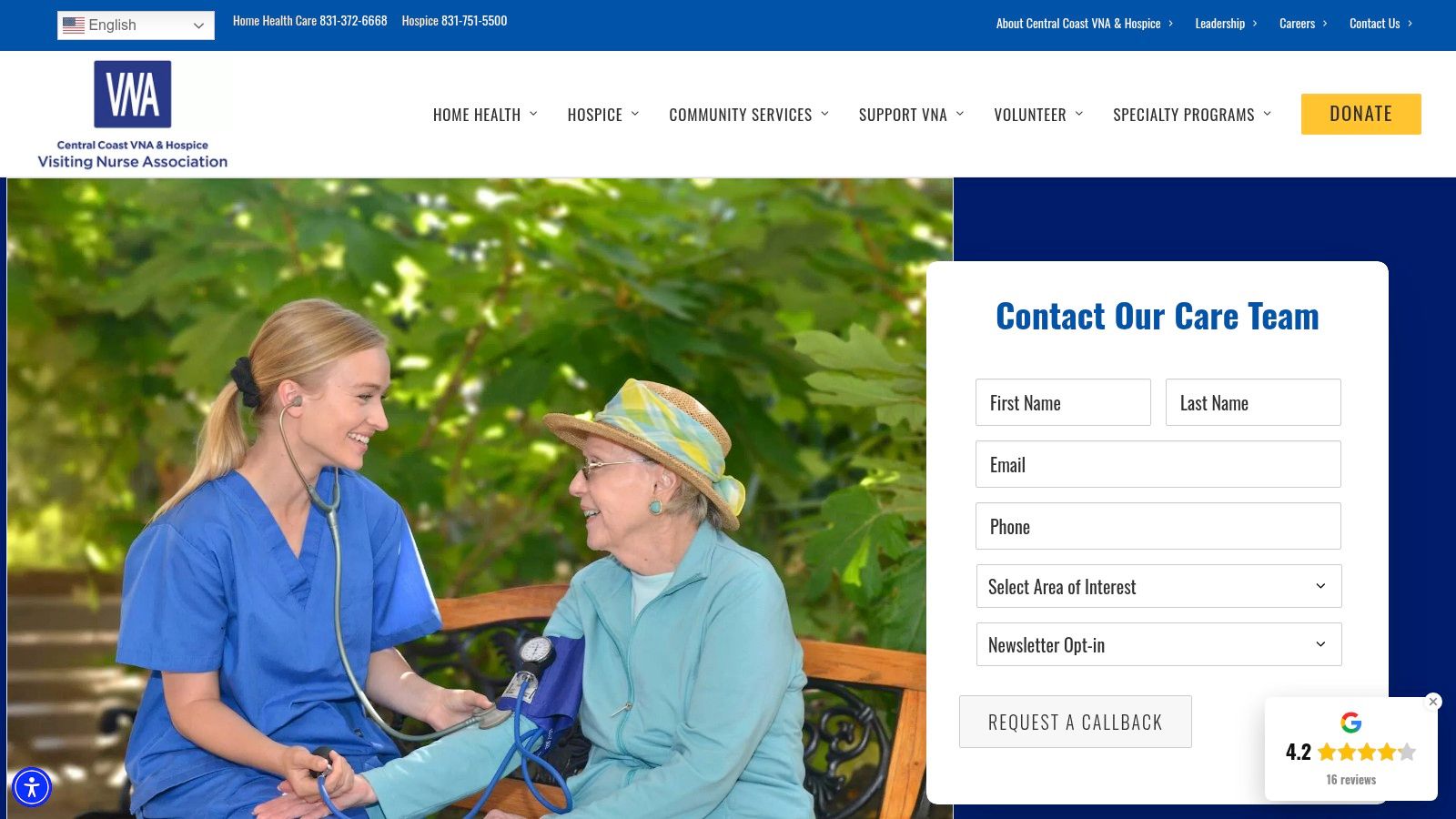
What truly makes CCVNA different is its integrated care model. CCVNA provides home health, palliative care, and hospice care all under one trusted organization. This ensures a smooth transition as your parent's needs change, reducing the stress of finding new providers.
A Compassionate Checklist for Evaluating Providers
CCVNA’s services are designed to treat the whole person, not just the illness. Their team includes a Registered Nurse, Social Worker, Chaplain, and Hospice Aide who create a personal care plan. This approach addresses physical comfort, emotional well-being, and spiritual peace.
Key strengths of the CCVNA model include:
- Continuum of Care: The ability to move from home health to palliative care, and then to hospice, provides stability. This prevents disruptive changes and builds trust with the care team.
- 24/7 Availability: Peace of mind is crucial. CCVNA’s hospice team is available around the clock to manage symptoms and answer urgent questions.
- Expert Symptom Management: The clinical team excels in pain and symptom control. They focus on preserving your parent’s comfort and dignity at home.
- Nonprofit Mission: As a nonprofit, CCVNA’s focus is on patient well-being and community service. They are committed to providing care to all eligible individuals.
Navigating Medicare and Advanced Planning
Understanding the practical side of hospice is important. CCVNA simplifies this by accepting Medicare, Medi-Cal, and private insurance. Their team helps families navigate coverage and understand benefits.
"When my mother needed hospice, the VNA team was a blessing. They not only managed her pain with such skill but also sat with us, explaining Medicare and helping us feel prepared. We felt supported every step of the way." – A Monterey Family.
For those wanting to learn more, CCVNA offers clear guidance on what to expect. This helps prepare your family for the journey ahead.
Website: https://ccvna.com
2. Medicare Care Compare (Hospice)
When deciding on hospice care, objective data is a powerful tool. The official Medicare Care Compare website helps you evaluate Medicare-certified hospices. It offers an unbiased look at providers, making it a key first step.

This free platform allows you to search for hospices by city or ZIP code. You can compare them using quality metrics from the Hospice Quality Reporting Program. This includes feedback from caregivers on communication, support, and pain management.
Key Features and How to Use Them
The website’s main advantage is its impartiality. Every Medicare-certified provider is listed, giving you a full view of your options. This includes providers serving Monterey County, San Benito County, and Santa Cruz County.
- Search and Filter: Enter a city like "Monterey" to see certified providers.
- Compare Quality Scores: Select up to three hospices to compare their quality scores.
- Verify Services: Each profile lists services like routine home care and inpatient respite care.
Pay close attention to the caregiver experience scores. These reflect the real-world experiences of families who have used these services.
Pros and Cons of Medicare Care Compare
Pros:
- Objective Data: Provides unbiased, nationwide data from Medicare.
- Standardized Comparisons: Lets you compare providers using the same metrics.
- Cost-Free Access: The tool is completely free for everyone.
Cons:
- Clinical Interface: The user experience can feel less personal.
- Limited Data for New Providers: Newer hospices may not have full quality scores.
This tool helps you make an informed decision based on official data. Understanding how Medicare covers these services is also vital. You can learn more about how to pay for hospice care to navigate the financial side with clarity.
3. Hospice of the Central Coast (Montage Health/Community Hospital of the Monterey Peninsula)
Having a hospice provider connected to the local health system can simplify the process. Hospice of the Central Coast is the nonprofit program of Montage Health. It is affiliated with the Community Hospital of the Monterey Peninsula.
This provider offers a local advantage for anyone searching for hospice care near Monterey. Because of its hospital connection, care coordination is often more direct. The program serves both Monterey and San Benito counties.
Key Features and How to Use Them
This provider's strength is its integration within the local health system. This ensures continuity of care, which is a comfort to families.
- Integrated Referrals: If your parent is a patient at the hospital, the referral process is direct.
- Local Team: The program provides a dedicated team of nurses, social workers, and chaplains.
- Continuity of Care: The nonprofit health system ensures care is consistent.
When exploring the Montage Health website, you may need to look for patient services. A direct phone call is often the best way to discuss your parent’s needs.
Pros and Cons of Hospice of the Central Coast
Pros:
- Local Hospital Integration: Simplifies referrals and communication.
- Nonprofit Health System Support: Ensures care is mission-driven.
- Direct Enrollment: Families can coordinate enrollment directly with the team.
Cons:
- Limited Online Information: The website may require a phone call for specifics.
- Focused Service Area: Services are mainly in Monterey and San Benito counties.
Hospice of the Central Coast is a strong choice for families who value a trusted local provider. You can learn more by visiting the Montage Health website.
4. Central Coast VNA & Hospice (VNA)
For families seeking a deeply rooted, nonprofit provider, the Central Coast VNA & Hospice (VNA) website is a key resource. Founded in 1951, VNA offers a connection to a team that provides hospice, palliative, and home health services. Their website introduces their mission-driven approach to care.
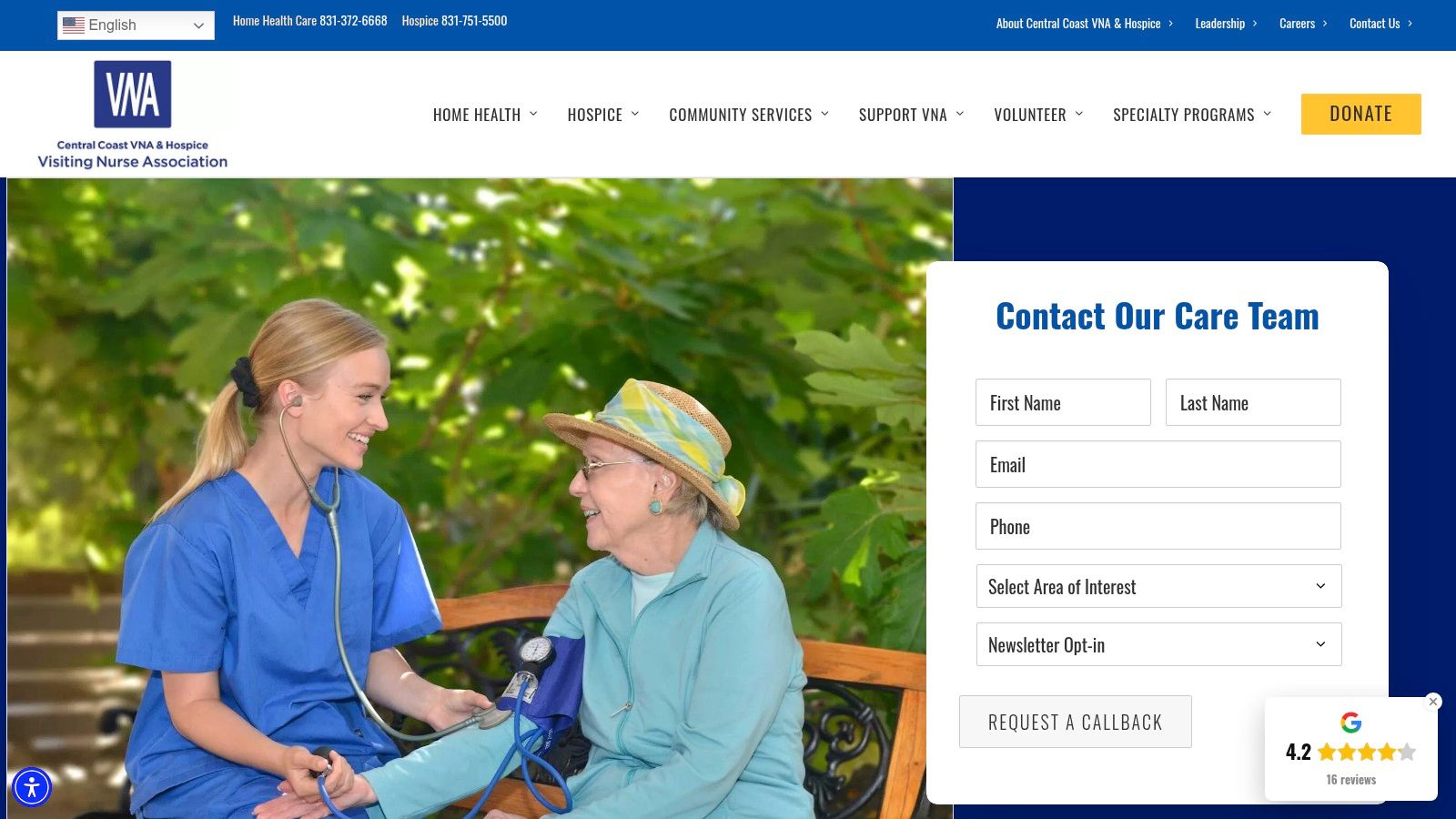
The site clearly outlines its continuum of care. It helps families understand how services can adapt as needs change. The hospice program includes medical care, pain management, and support for patients and loved ones.
"Choosing VNA was the best decision for our family. Their 24/7 support gave us incredible peace of mind. Knowing a compassionate nurse was just a phone call away made all the difference during my father’s last weeks." – A Salinas Family.
Key Features and How to Use Them
The VNA website is designed for easy navigation. It provides a direct line to a nonprofit with over 74 years of history in the community. VNA serves Monterey County, San Benito County, Santa Cruz County, and South Santa Clara County.
- Explore Services: Learn the differences between hospice, palliative, and home health care.
- Access Bereavement Support: Find information on grief support for families.
- Request Service Quickly: Use the online contact form to start a conversation.
- Verify Multilingual Support: The site confirms multilingual staff are available.
When you contact VNA, ask about specialized programs like their Veteran-to-Veteran volunteer service. This shows their commitment to personalized care.
Pros and Cons of Central Coast VNA & Hospice
Pros:
- Deep Community Roots: A long-standing nonprofit with a reputation for compassionate care.
- Comprehensive Support: Offers grief services that go beyond core medical care.
- Continuum of Care: Provides a seamless transition between home health, palliative, and hospice care.
Cons:
- High Demand: Contact them early to ensure timely scheduling.
- Website Is an Overview: Detailed care plans are developed through direct consultation.
The VNA website is the first step toward partnering with a local organization dedicated to comfort. Understanding the need for breaks is also important. You can find information on respite care for family caregivers to support your own well-being.
5. Hospice of Santa Cruz County
For families in northern parts of Monterey County, Hospice of Santa Cruz County offers a specialized, nonprofit option. As a community-based organization, their website looks at services for residents in areas like Salinas and Marina. This resource is helpful for those seeking specialized care and grief support.
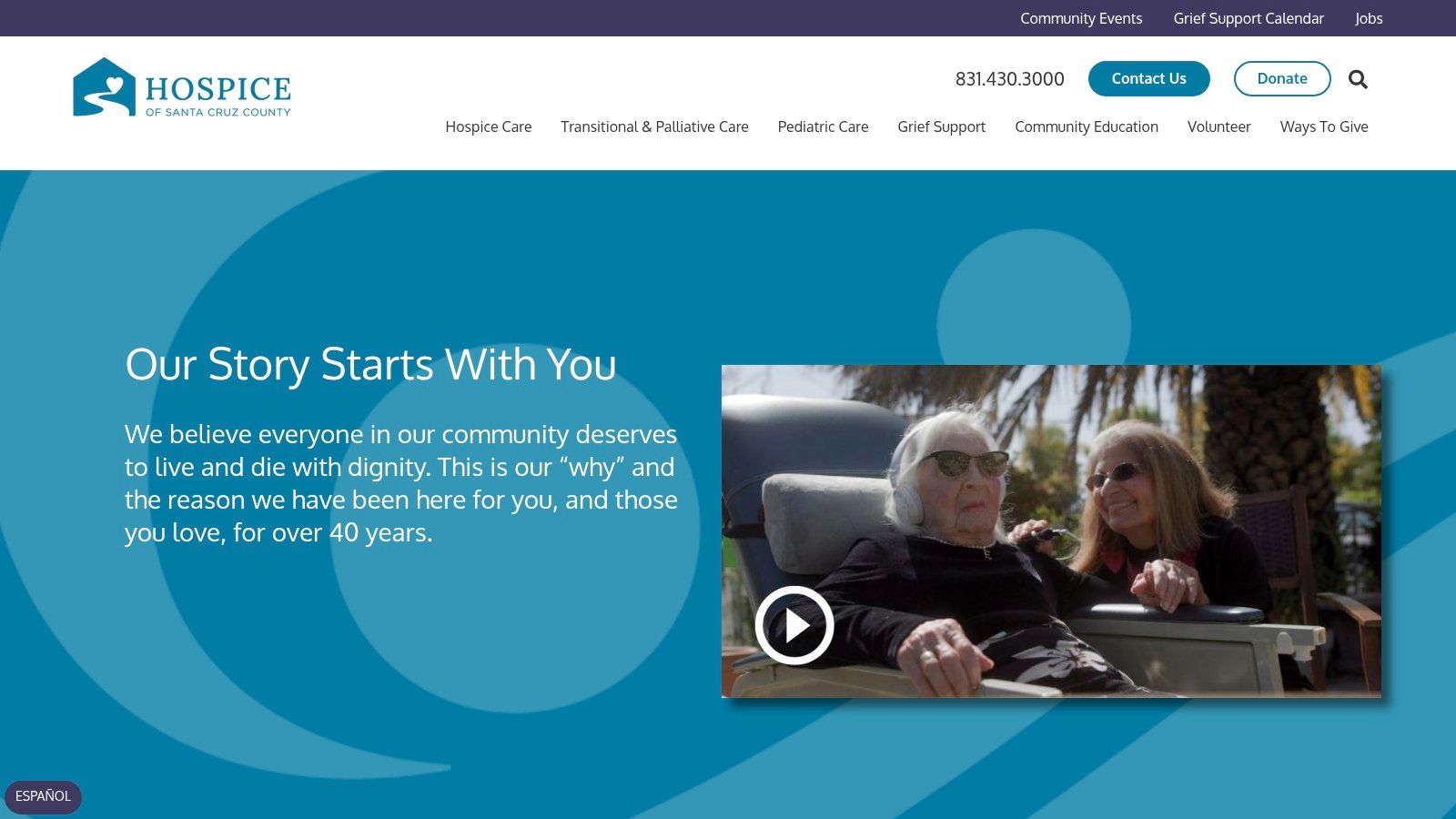
The website is a clear entry point for families exploring end-of-life care. It transparently outlines their service areas. The site emphasizes community and support, making it a strong contender for those in its northern service areas.
Key Features and How to Use Them
This provider’s primary strength is its community integration and special programs. The website makes it easy to explore these unique offerings.
- Review Service Areas: Check the "Who We Serve" section to confirm coverage.
- Explore Specialized Care: Find details on their pediatric hospice and palliative care programs.
- Access Grief Support: The site lists grief support groups and counseling services.
- Easy Contact: Find clear phone numbers and email contacts.
Before calling, browse the "Grief Support" section. This focus on family care shows a provider's compassionate approach.
Pros and Cons of Hospice of Santa Cruz County
Pros:
- Strong Community Support: Offers extensive grief support and caregiver programs.
- Specialized Pediatric Care: One of the few local providers with dedicated pediatric programs.
- Clear Geographic Focus: Ideal for families in Northern Monterey County.
Cons:
- Limited Service Area: Does not cover all of Monterey County.
- Specialized Service Availability: Confirm pediatric care availability by phone.
Hospice of Santa Cruz County's website is an excellent resource for a specific part of the population. Learn more at their official website: https://www.hospicesantacruz.org/.
6. Hospice Giving Foundation – Local Providers Directory
When you need a trusted starting point, the Hospice Giving Foundation’s directory is a valuable resource. This nonprofit offers a list of hospice and palliative care providers serving Monterey County. It simplifies the first step of identifying local agencies.
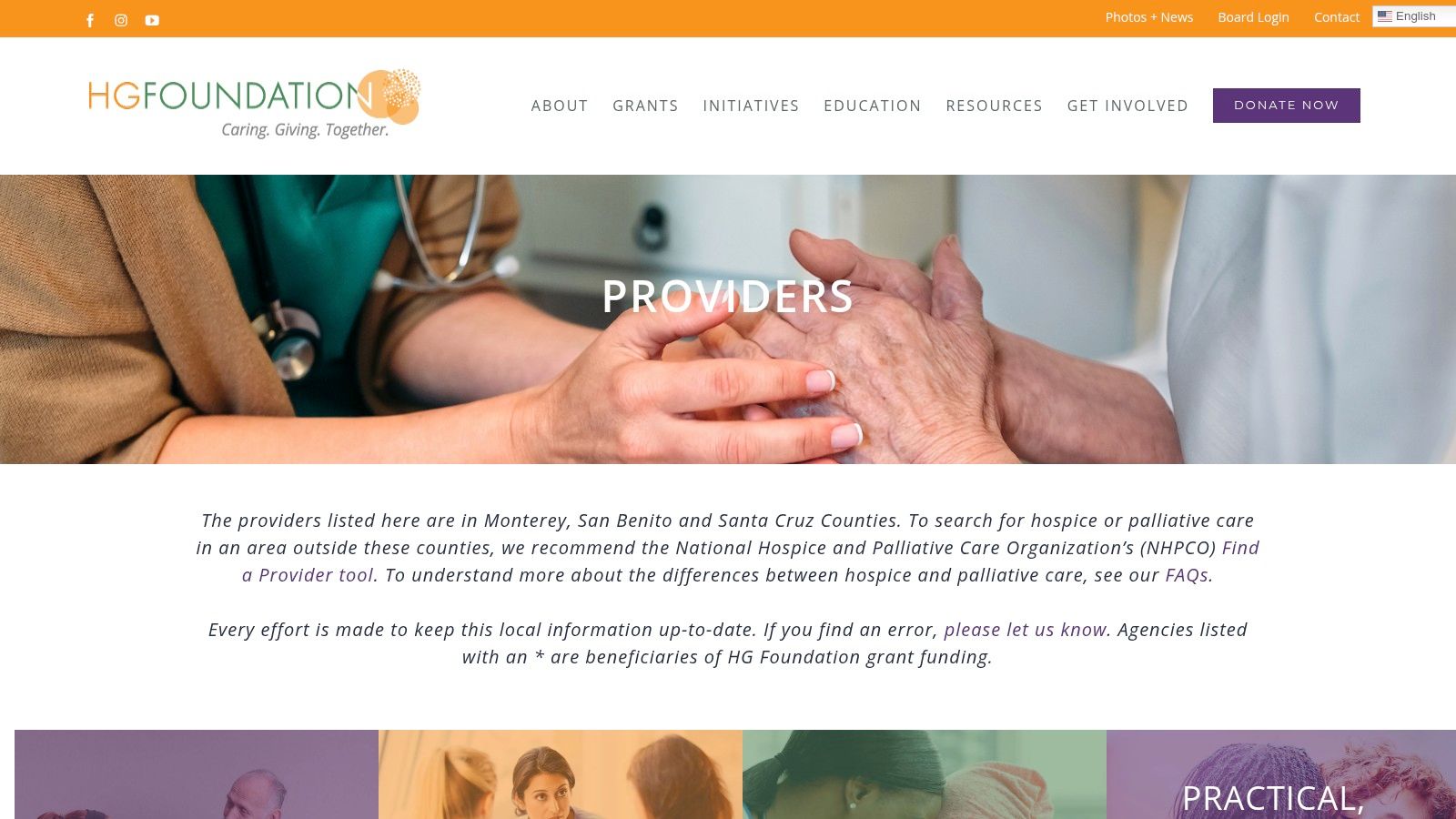
This directory reflects the foundation’s commitment to quality end-of-life care. It provides contact information and links to provider websites. This streamlines the process of finding the best hospice care for parents near Monterey.
Key Features and How to Use Them
The main advantage of this directory is its local focus and simplicity. It cuts through the noise of national search engines.
- Region-Specific Curation: The list is tailored to the Central Coast.
- Comprehensive Care Options: It includes resources for palliative and supportive care.
- Direct Contact Details: Each entry includes phone numbers and websites.
- Foundation Support Indicators: It notes which agencies receive foundation funding.
Use this directory to build your initial list of providers. Then, visit their websites and use a tool like Medicare Care Compare for a complete picture.
Pros and Cons of Hospice Giving Foundation’s Directory
Pros:
- Accurate Local Coverage: Designed for Monterey and surrounding counties.
- Quick and Simple: The layout allows for a fast comparison.
- Free and Trusted: The directory is free and regularly updated.
Cons:
- No Quality Ratings: It does not include patient reviews or quality metrics.
- Requires Further Research: You will need to contact providers for service details.
This directory is a reliable first stop. Emotional and spiritual well-being are as important as medical care. You can learn more about grief support groups to help your family navigate this time.
7. Bridge Home Health & Hospice
For families seeking a provider that integrates home health and hospice, Bridge Home Health & Hospice is a strong local option. With an office in Salinas, this agency serves Monterey County. This approach is helpful when a parent's condition changes, avoiding the need to switch agencies.
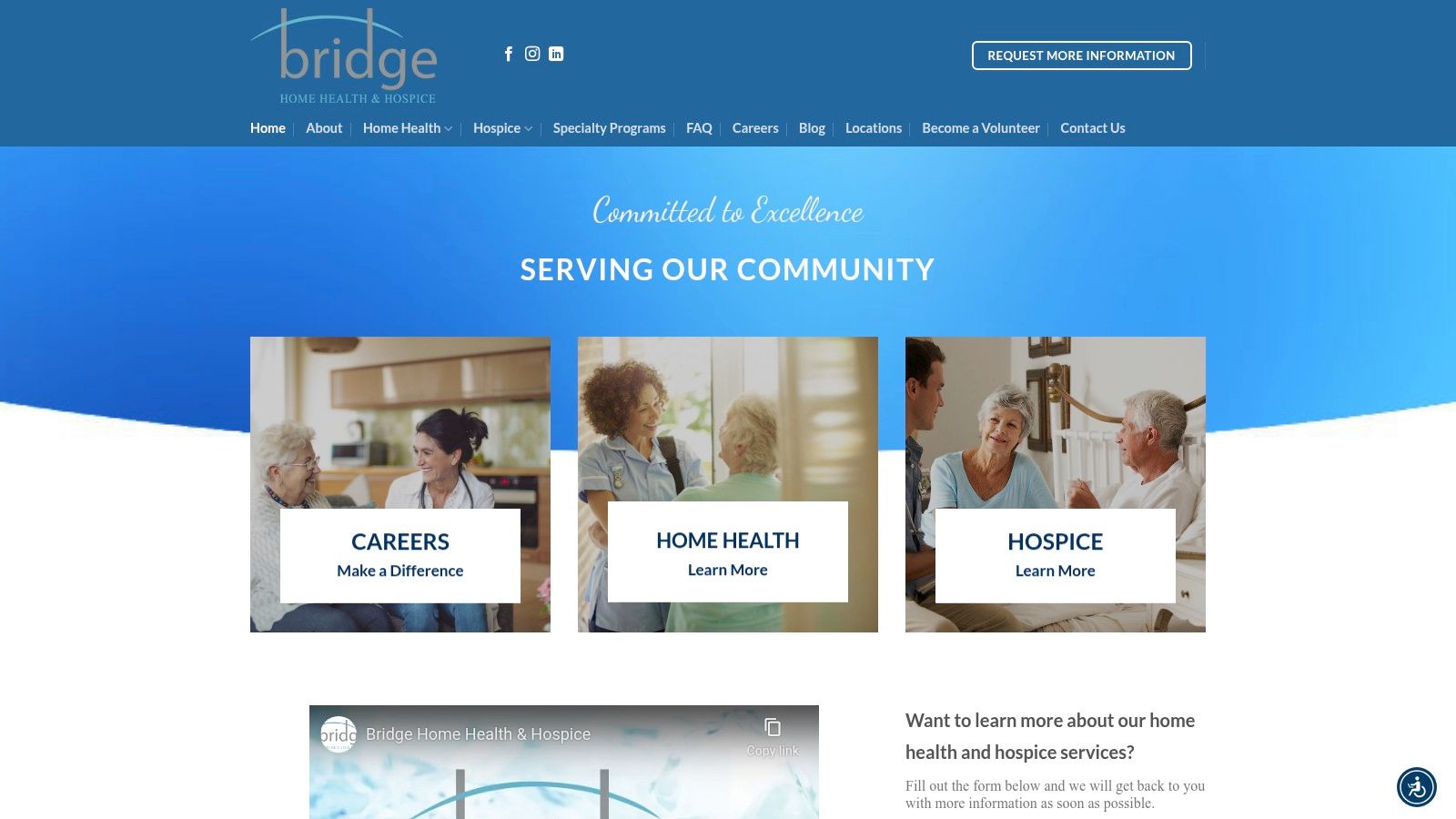
Bridge Home Health & Hospice positions its combined services as a key benefit. Their website has clear contact information for their Central Coast offices. Their focus on responsive coordination makes them a noteworthy choice.
Key Features and How to Use Them
The main advantage of Bridge is its unified service model. Their local presence in Salinas helps with direct communication.
- Integrated Services: The website details how patients can move from home health to hospice.
- Local Intake Process: Contact information for the Salinas office is easy to find.
- Interdisciplinary Team: The provider offers a team that includes social workers and therapists.
When you contact them, ask how the care plan is adjusted when a patient transitions to hospice. This can provide peace of mind about future care.
Pros and Cons of Bridge Home Health & Hospice
Pros:
- Continuity of Care: Combining home health and hospice minimizes disruptions.
- Local Office Presence: A Salinas office allows for better coordination.
- Prompt Referral Response: Helps families get care started sooner.
Cons:
- Website Focus: The site is more focused on home health.
- Limited Public Data: It can be harder to find quality scores.
Bridge offers a practical solution for families who may need hospice in the future. To understand these services better, you can learn more about home health and hospice care.
Taking the Next Step with Confidence
Navigating hospice care for a parent is a personal journey. It requires careful thought and clear understanding. This guide has provided tools to evaluate your options.
The most important takeaway is that you are choosing a partner. This partner will walk alongside your family. Your goal is to find an organization that aligns with your family’s values.
Key Factors to Guide Your Decision
As you move forward, keep these points in mind. They will help you find the best hospice care for your parent’s needs.
- Comprehensive Support: Does the provider offer skilled nursing, emotional counseling, and bereavement support?
- Local Roots and Reputation: A nonprofit like Central Coast VNA & Hospice has deep local ties. Its mission focuses on patient care over profits.
- Accessibility: Is care available 24/7? Compassionate responses are a sign of a quality team.
- Medicare Expertise: The team should confidently explain the Medicare Hospice Benefit.
Choosing the right hospice is an act of love. It ensures your parent’s final chapter is filled with peace and dignity. You do not have to walk this path alone.
Frequently Asked Questions (FAQs)
1. What is the difference between palliative care and hospice care?
Palliative care can be provided at any stage of a serious illness and focuses on symptom relief. Hospice care is for patients with a life expectancy of six months or less and provides comfort care instead of curative treatment. Central Coast VNA & Hospice offers both as part of its continuum of care.
2. Is hospice care only for the last few days of life?
No, hospice care can provide comfort and support for months. According to the National Hospice and Palliative Care Organization (NHPCO), patients and families receive the most benefit when they access hospice care earlier. Early access allows the team to manage symptoms and provide emotional support.
3. Can my parent receive hospice care at home?
Yes, most hospice care is provided in the patient's home. It can also be provided in assisted living facilities or skilled nursing facilities. CCVNA specializes in providing expert hospice care in the comfort of home.
4. Who pays for hospice care?
Hospice care is covered by Medicare, Medi-Cal, and most private insurance plans. The Medicare Hospice Benefit covers nearly all costs related to the terminal illness. The CCVNA team helps families understand their coverage options.
5. What kind of support is available for our family?
Hospice providers like CCVNA offer comprehensive support for the entire family. This includes spiritual care from a Chaplain, emotional support from a Social Worker, and bereavement counseling for up to 13 months after a loved one's passing.
Ready to find compassionate care that honors your parent’s wishes? Discover how VNA and Hospice has supported Monterey County families for over 74 years. Visit our website at VNA and Hospice to learn more about our hospice services and start a conversation today.