
When you step into the role of a family caregiver, you become a lifeline for someone you love. It's a journey of deep dedication, but it also has unique challenges. Reaching out for support for family caregivers is a sign of strength that helps both you and the person you care for.
The Reality of Being a Family Caregiver
Becoming a caregiver often happens slowly. It might start with small tasks like picking up groceries or driving to a doctor's appointment. Soon, these tasks can become a big part of your daily life. It’s a role born from love, but it can feel demanding and isolating.
This guide is here to help. We'll share practical advice and real solutions to help you find balance and avoid burnout. For over 74 years, Central Coast VNA & Hospice has been a nonprofit partner to families across Monterey County, San Benito County, Santa Cruz County, and South Santa Clara County. We support patients and the incredible families who care for them.
Understanding the Scope of Caregiving
The role of a family caregiver is more common than you might think. Many spouses, children, and friends provide essential support behind the scenes. Millions of Americans juggle their own lives with the needs of a loved one.
The numbers are staggering. About 63 million Americans will be family caregivers by 2025. That's nearly one in four adults providing unpaid support. This number has grown by almost 50% since 2015 due to our aging population. You can learn more at AARP.org.
The image below shows the scale of this commitment.
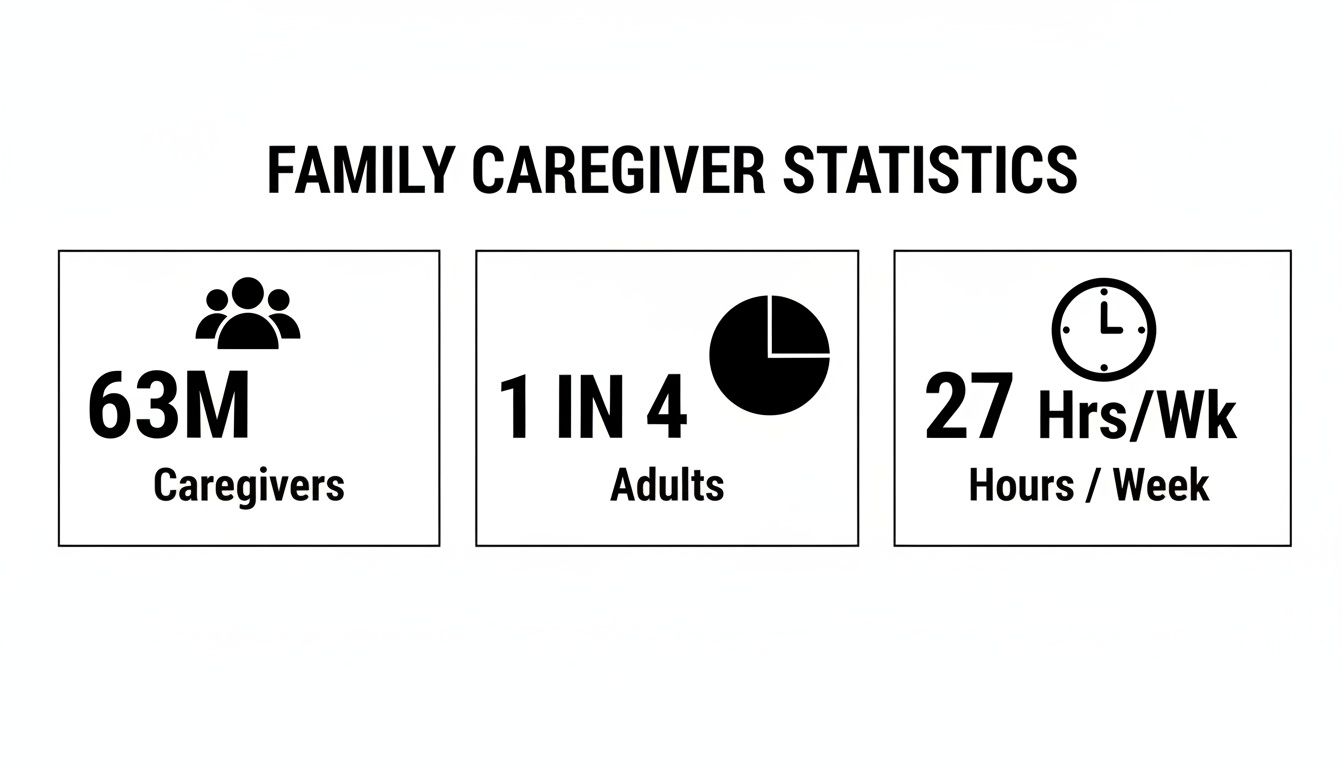
These statistics show that caregiving is a huge, often unpaid job. It touches a large part of our communities.
The Emotional and Physical Toll
Caregiving has rewarding moments, but it also carries a heavy weight. The constant worry and physical demands can lead to serious stress. Research shows family caregivers face higher risks of anxiety, depression, and other health problems.
Nearly 88% of family caregivers report feeling increased anxiety directly related to their duties. Almost three out of four experience significant financial or emotional strain while providing long-term care.
Recognizing your own needs isn’t selfish; it’s essential. To give the best care to your loved one, you must first care for yourself. Acknowledging the emotional toll is the first step toward building a sustainable routine.
How to Recognize Caregiver Burnout Early

Caregiver burnout isn’t a sign of weakness. It’s a natural response to long-term stress. It’s a signal from your body and mind that you’re carrying too much without enough rest.
Spotting the early signs is key to getting relief. Burnout often starts quietly. You might feel a deep exhaustion that sleep doesn't fix.
Emotional and Mental Signs of Burnout
One of the first places burnout shows up is in your emotions. You may feel more irritable or withdrawn than usual. Conversations that were once easy might feel draining.
Losing interest in hobbies is another major red flag. If you’ve stopped making time for things you enjoy, your caregiving duties may be consuming all your energy.
Feeling hopeless or easily overwhelmed can also signal burnout. It means your emotional reserves are low, making it hard to cope with daily pressures.
Understanding when you're nearing your limit is vital. You can learn to recognize the 10 key signs of emotional burnout before they take hold.
Physical Symptoms to Watch For
Burnout isn’t just in your head; it has real physical effects. Chronic stress can show up in your body. It's important to listen to these signals.
Here are some common physical signs to look out for:
- Changes in Sleep: This could be trouble falling asleep, waking up often, or sleeping more but still feeling tired.
- Frequent Aches: Unexplained muscle tension, back pain, or headaches are often tied to stress.
- Lowered Immunity: If you get sick more often, it may be because stress is weakening your immune system.
It's easy to dismiss these symptoms. But when they form a pattern, they point to a deeper issue. For a closer look, read our guide on the five signs it's time to ask for help as a family caregiver.
At Central Coast VNA & Hospice, we know that providing support for family caregivers is as important as patient care. Our teams in Monterey County and Santa Cruz County are here with resources to help. If you see these signs in yourself, remember that help is available.
Finding Practical Support Systems for Relief
Admitting you need help is a huge step. But figuring out where to turn can feel overwhelming. The good news is you’re not alone, and you don’t have to figure it all out yourself.
Real support systems exist right here on the Central Coast. Think of these resources as essential tools in your caregiving toolbox. They are designed to meet different needs.
Central Coast VNA & Hospice provides a range of these services. This ensures you always have a local, nonprofit partner to lean on. Let's look at key options that can make a real difference.
Respite Care for Essential Breaks
One of the best tools for preventing burnout is respite care. This service provides a short-term break for you, the family caregiver. It allows you to rest and recharge.
Even a few hours away can reduce stress. Central Coast VNA & Hospice can arrange for a compassionate Hospice Aide or another trained professional to stay with your loved one. This gives you peace of mind while you take time for yourself.
Emotional and Spiritual Support
The emotional weight of caregiving is immense. It's important to have a safe space to work through your feelings. This is where dedicated emotional and spiritual support can be a lifeline.
Central Coast VNA & Hospice offers services to support your emotional health:
- Medical Social Workers: These professionals are your advocates. They provide counseling and connect you with community resources.
- Chaplains: Our non-denominational chaplains offer spiritual support that respects your family’s beliefs.
Taking care of your mental health is critical. If you're feeling overwhelmed, our guide on how to get real support as a family caregiver offers more strategies.
Professional Care Coordination
Managing a loved one’s illness often feels like a full-time job. You track medications, appointments, and symptoms. Professional care coordination can lift this burden from your shoulders.
Our interdisciplinary teams include Registered Nurses, Hospice Aides, and Medical Social Workers. They work together to manage your loved one's entire care plan. This team-based approach means you have a network of specialists backing you up.
Unpaid family caregivers provide an astonishing $873.5 billion to $1.1 trillion in services annually. This immense contribution often comes at a steep personal cost.
One in five caregivers reports going into debt to manage their duties. This highlights the urgent need for support systems. You can discover more about the economic impact of caregiving and see why asking for help is crucial.
Whether you need respite in Monterey County or skilled nursing in San Benito County, practical help is here. Central Coast VNA & Hospice provides comprehensive support for family caregivers.
Proven Strategies for Managing Daily Challenges
Caring for a loved one involves many daily tasks that can feel overwhelming. Creating a simple, structured routine can help. Having a few strategies can make your duties feel more manageable.
A clear system helps you stay on top of medical needs. It also frees up mental energy. Let's walk through some practical approaches.
Organizing Medical Information and Schedules
Juggling medications and appointments is a big daily hurdle. Disorganization can lead to mistakes and more stress. The key is to create one central hub for everything.
Start with a simple medication schedule. You can use a pill organizer, a whiteboard, or a digital calendar. This visual reminder helps prevent errors. For more tips, check out these expert tips to prevent medication errors at home.
Here are a few other organizational tips:
- Create a Care Binder: Keep all vital documents here, like insurance info, doctor contacts, and medication lists.
- Use a Shared Calendar: A tool like Google Calendar helps coordinate appointments so family can help.
- Prepare for Doctor Visits: Before an appointment, write down your questions to make the most of your time.
Improving Communication and Connection
Clear and compassionate communication is vital when a loved one is seriously ill. It reduces frustration and strengthens your bond. Listen patiently and validate their feelings to build trust.
Sometimes, difficult behaviors arise from pain or fear. Try to respond with empathy. Simple things, like making eye contact and speaking in a calm tone, can help. Communication is especially key when caring for someone at the end of life, and these 5 tips for talking with a loved one that’s terminally ill offer valuable insights.
Your role goes beyond managing tasks. You are providing comfort and presence. Often, these small moments of connection are the most meaningful.
Daily Caregiving Strategy Checklist
| Strategy | Why It Helps | Pro Tip |
|---|---|---|
| Morning Check-In | Sets a positive tone and helps you assess immediate needs. | Keep it light. "How did you sleep?" or "What's on your mind today?" |
| Medication Routine | Prevents errors and creates a predictable structure. | Use a pill organizer and set daily alarms on your phone. |
| Schedule Review | Keeps everyone aware of appointments for the day. | Post a large-print calendar or whiteboard in the kitchen. |
| Plan One Small Joy | Fights monotony and provides something to look forward to. | Watch a favorite show, listen to music, or sit outside for 10 minutes. |
| "Take Five" Breaks | Gives you short moments to step away and recharge. | Even five minutes of quiet time can make a huge difference. |
| Evening Wind-Down | Helps ensure a calm transition to bedtime for better sleep. | Create a simple routine like dimming the lights or reading aloud. |
Putting just a few of these strategies in place can bring calm back into your day. Our teams across Monterey County and San Benito County are here to offer practical support for family caregivers.
How to Ask for Help and Build a Support Network

If you're a family caregiver, asking for help can feel hard. You might worry about being a burden. But reaching out is one of the strongest steps you can take.
Building a support network helps you provide care without burning out. It lets you share the physical and emotional load. This network can be family, friends, and professional services working together.
Starting the Conversation
The secret to getting help is how you ask. A vague "I need help" is hard for people to act on. A better approach is to make clear, direct requests.
Think about specific tasks that would lift a weight off your shoulders. Breaking down your needs into smaller asks feels more manageable for others.
Here are a few ways to frame it:
- "Could you sit with Mom for two hours on Tuesday so I can go to my doctor's appointment?"
- "Would you be able to pick up groceries for us this week?"
- "I'm feeling drained. Could we talk on the phone tonight?"
Being specific takes the guesswork out of it. It empowers people to offer support that makes a difference.
Connecting with Formal Support Systems
Formal support systems offer professional assistance. For families in Monterey County, San Benito County, Santa Cruz County, and South Santa Clara County, Central Coast VNA & Hospice is a key local resource.
Reaching out for professional help is a sign of proactive care planning. It shows your commitment to providing the best support for your loved one.
Services like respite care are built to give you a break. A trained professional, like one of our Hospice Aides, can step in. This gives you peace of mind while you rest. You can learn more about how respite care for family caregivers works.
Building a support network means accepting you can't do this alone. Every bit of help strengthens your ability to provide loving care.
Your Local Partner in Care on the Central Coast
The path of a caregiver is demanding, but you do not have to walk it alone. Here in Monterey, San Benito, Santa Cruz, and South Santa Clara Counties, Central Coast VNA & Hospice is your local, nonprofit partner. We are committed to providing support where you need it most—at home.
For over 74 years, our work has been guided by one belief: to support the entire family. We understand the challenges families face on the Central Coast because we are your neighbors. Our services—from home health and palliative care to hospice—are designed to grow with your family’s needs.
A Legacy of Local, Nonprofit Care
Unlike large, for-profit agencies, our focus is on our community. Our mission is to serve, making sure your family receives high-quality, heartfelt care. We are your trusted local guide for navigating serious illness.
The screenshot below is the first thing you'll see on our website. It's a clear starting point for families looking for help.
We designed our site to be a simple resource when you need it most. The need for this support is growing. This highlights the urgent need for reliable, local help.
Take the First Step Today
We know making that first call can feel overwhelming. That’s why our team is here to listen without judgment. We offer clear, simple guidance. For a deeper look at your options, read our guide on where to turn when a loved one is seriously ill.
Your strength as a caregiver is remarkable. Allowing us to support you is a powerful way to sustain that strength for the road ahead.
If you are caring for someone at home and feeling stretched thin, please don’t wait. Reach out to Central Coast VNA & Hospice today. Learn how our dedicated team can walk alongside you, every step of the way.
Frequently Asked Questions About Caregiver Support
What is respite care?
Respite care provides a short break for family caregivers. A trained professional, like a Hospice Aide from Central Coast VNA & Hospice, steps in to provide care. This allows you to rest, run errands, or attend to your own needs without worry. It is a vital service for preventing burnout.
How can I get help with medical tasks at home?
Managing complex medical needs can be stressful. Our home health and palliative care services can help. A Registered Nurse can visit your home to handle skilled tasks, like wound care, and teach you how to manage them safely. We coordinate directly with your loved one’s doctor.
What kind of emotional support is available for caregivers?
The emotional toll of caregiving is significant. Central Coast VNA & Hospice offers access to Medical Social Workers and non-denominational Chaplains. They provide a safe space to process difficult emotions, learn coping strategies, and connect with community resources.
Who do I talk to about my loved one’s care plan?
We provide a dedicated team, including a Registered Nurse case manager, as your main point of contact. This team approach ensures you always know who to call with questions. Everyone works together to coordinate care and keep communication clear.
How much do these support services cost?
Services like home health, palliative care, and hospice care in Monterey County are often covered by Medicare, Medi-Cal, and most private insurance plans. As a nonprofit, our mission is to provide care to everyone who needs it. Our team will help you understand your benefits and explore all available coverage options.
If you're caring for a loved one and looking for support, Central Coast VNA & Hospice is here for you. Our teams across the Central Coast are ready to provide the compassionate, expert care your family deserves. Contact us today to learn more about our services.