
Imagine receiving hospital-level medical care without ever having to leave the comfort of your home. This is the heart of home health care services: skilled clinical support, ordered by a physician, designed to help you recover from an illness, injury, or surgery right where you feel safest.
This isn't about general household help; it's about targeted medical treatment from professionals like Registered Nurses and therapists who come directly to you. It bridges the gap between a hospital stay and a full, independent recovery.
What Exactly Is Home Health Care?
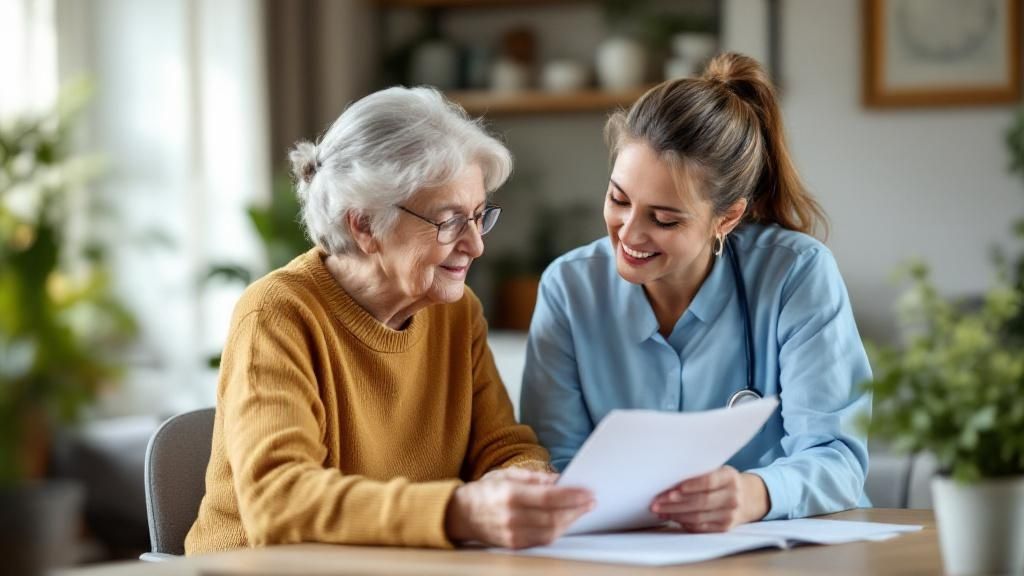
Home health care brings professional medical services right to a person’s front door. It’s a powerful approach that lets people heal in a familiar, comfortable setting while receiving the same quality of clinical expertise they would in a medical facility.
The main goal is to help patients regain their health, improve function, and learn to manage their condition independently. Unlike non-medical home care, which helps with daily chores, home health care is strictly medical and must be prescribed by a physician. It's easy to confuse the two, so let's break down the key differences.
Home Health Care vs. Non-Medical Home Care
| Feature | Home Health Care (Skilled) | Non-Medical Home Care (Personal Care) |
|---|---|---|
| Primary Goal | Clinical treatment and recovery from illness, injury, or surgery. | Assistance with daily living activities (ADLs) and companionship. |
| Services Provided | Skilled nursing, physical/occupational/speech therapy, wound care, medication management. | Bathing, dressing, meal prep, light housekeeping, transportation, errands. |
| Who Provides Care | Licensed clinicians: Registered Nurses (RNs), Physical Therapists (PTs), etc. | Home health aides (HHAs) or personal care assistants (PCAs). |
| Is a Doctor's Order Required? | Yes, it is a prescribed medical service. | No, services are typically arranged and paid for privately. |
| Typical Payer | Medicare, Medicaid, and most private insurance plans. | Private pay (out-of-pocket). Some long-term care insurance may cover it. |
In short, think of home health care as a temporary, medical necessity to help you get better. Non-medical home care is often a longer-term solution for support with everyday life.
As a trusted nonprofit provider with over 74 years of service to the Central Coast, Central Coast VNA & Hospice (CCVNA) sees every day how this skilled approach helps our neighbors avoid rehospitalization. We are proud to serve residents throughout Monterey County, San Benito County, Santa Cruz County, and South Santa Clara County.
The Purpose of Skilled In-Home Care
The purpose of home health care is to focus on recovery and self-management. It is a goal-oriented plan of care that happens over a specific period, where a dedicated team works with you to achieve clear health objectives.
These objectives often include:
- Restoring Function: Helping you regain strength and mobility after surgery or a serious health event like a stroke or heart attack.
- Managing Chronic Illness: Teaching you and your family how to handle conditions like diabetes, COPD, or heart failure to prevent flare-ups.
- Wound Care: Providing specialized treatment for surgical wounds or pressure sores to ensure they heal properly and avoid infection.
- Medication Management: Ensuring you understand your prescriptions and are taking them correctly for the best results.
Home health care empowers patients by bringing expert medical supervision into the home, fostering a supportive environment that is often more conducive to healing and emotional well-being.
This personalized model means a clinician can focus entirely on one patient during a visit. That one-on-one attention ensures your unique needs are met and that your care plan perfectly follows your doctor's orders. By focusing on education and rehabilitation, home health care services give you the tools and confidence to take control of your health journey.
The Team of Experts Who Come to You
When a physician orders home health care, you don't just get a single visitor. You gain an entire team of clinical professionals focused on you and your recovery.
This collaborative team works together closely, communicating constantly to ensure your plan of care is effective. The goal is simple: to help you restore your health and independence in the comfort of your own home.
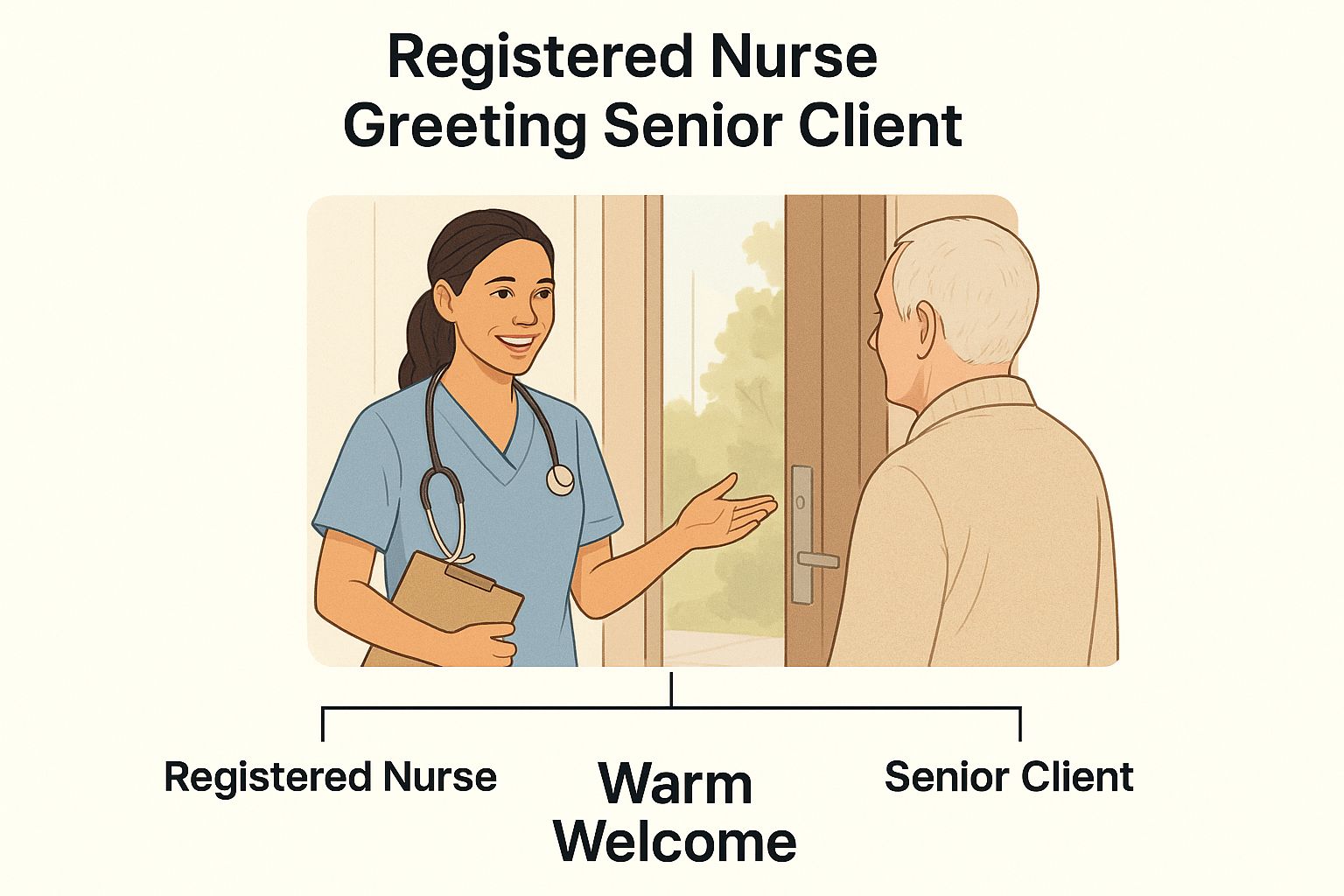
This image represents the warm, professional connection at the heart of the CCVNA model, where clinical excellence meets genuine compassion at your doorstep.
Your Skilled Nursing Team
The heart of your care team is the Registered Nurse (RN) or Licensed Vocational Nurse (LVN). These skilled nurses act as the coordinators of your care plan, working directly with your physician to manage your medical needs.
Their role is both crucial and wide-ranging:
- Medical Assessments: They are your clinical eyes and ears at home, regularly checking your vital signs, assessing your condition, and making sure you're on track with your recovery goals.
- Medication Management: Nurses help you make sense of complex prescriptions, manage schedules, and can administer treatments like IVs or injections.
- Advanced Wound Care: They provide expert care for surgical wounds, pressure ulcers, and other injuries, promoting faster healing and preventing infection.
Your nurse is your primary clinical contact, ensuring every part of your care aligns perfectly with your doctor’s orders. They are your educator, your advocate, and your clinical expert.
The Rehabilitation Specialists
A major part of home health is rebuilding function and independence. This is where your rehabilitation specialists—your therapists—play an essential role in your recovery.
Physical Therapists (PTs)
After a major surgery or illness, getting back on your feet can feel like a monumental task. Physical Therapists are the movement experts who help you safely rebuild your physical abilities. They design personalized exercise programs to improve strength, balance, and mobility, which reduces your risk of falls.
Occupational Therapists (OTs)
While a PT focuses on how your body moves, an Occupational Therapist helps you get back to the "occupations" of daily life. This includes everything from bathing and dressing to cooking a meal. OTs assess your home environment and teach you new, safer ways to accomplish tasks, often introducing adaptive tools to maintain independence.
Speech-Language Pathologists (SLPs)
A stroke, brain injury, or other conditions can impact the ability to communicate or even swallow. Speech-Language Pathologists address these specific challenges. They work with patients to improve speech clarity and help ensure they can swallow food and liquids safely—a critical skill for preventing choking and pneumonia.
Each therapist concentrates on a different piece of your recovery puzzle, but they all share the same goal: helping you live as fully and independently as possible. This team approach ensures you can explore the many home health care benefits in Monterey, CA and see how they fit your unique situation.
Essential Support Services
Beyond hands-on medical care, your team includes professionals who provide vital support for you and your family. Medical Social Workers are an invaluable resource for navigating the emotional and practical hurdles of a health crisis.
They can connect you with critical community resources, such as:
- Meal delivery programs
- Transportation options
- Guidance on long-term care planning
- Counseling services and support groups
This holistic support system ensures you have everything you need to thrive at home. At Central Coast VNA & Hospice, our team approach is built on our 74+ years of experience serving families in Monterey, San Benito, Santa Cruz, and South Santa Clara Counties.
Why Recovering at Home Is Often the Best Medicine

There’s a reason we all know the saying, "There's no place like home." This truth feels especially real when you or a loved one is recovering from an illness or surgery.
While we often think of recovery in purely medical terms, the environment where healing happens plays a huge role. Receiving home health care services in a familiar space does more than just feel good—it can profoundly impact physical and emotional well-being.
A Safer, More Personalized Healing Environment
One of the clearest advantages of recovering at home is safety from infections. Hospitals are filled with dedicated professionals, but by their nature, they are places where germs can spread.
At home, you are in a controlled environment, which dramatically lowers the risk of acquiring an infection that could set back your recovery. On top of that, home health care delivers a level of one-on-one attention that's hard to replicate in a large facility.
Enhancing Independence and Confidence
For most people on the road to recovery, regaining independence is the ultimate goal. Home health care is built to make that happen.
Our clinical team works with you right where you live, helping you learn to navigate your own space with any new physical challenges. It’s practical, real-world guidance that builds confidence and empowers you to become an active partner in your health. Learning effective fatigue management strategies, for example, is a key part of the education our clinicians provide.
Receiving care at home is not just about convenience; it's a strategic approach that prioritizes patient safety, comfort, and personalized support, leading to better outcomes and a stronger sense of well-being.
This isn't just a hunch; the data backs it up. The global home healthcare market was valued at USD 372.9 billion in 2023 and is projected to grow significantly. This growth is fueled by patient demand for comfortable, cost-effective options and the proven success of in-home clinical care. You can read the full research about the growing home healthcare market to see the data for yourself.
To see how this approach can help your family, you can learn more about the specific benefits home health care can offer your loved one in our detailed guide. It is a compassionate and highly effective way to heal.
Navigating Eligibility for Home Health Care
When your doctor recommends skilled medical care at home, it can feel like you're staring at a complex puzzle. But figuring out who qualifies for home health care is more straightforward than you might think.
The good news is that eligibility typically comes down to three main pillars. These are the standard guidelines used by Medicare, which most private insurance plans and Medi-Cal follow as well.
The Three Pillars of Eligibility
Think of these as a simple checklist. To receive home health care, a patient usually needs to meet these three conditions:
- A Doctor's Order is Required: Home health care is a medical service. Therefore, it must be ordered by your physician, who certifies that you need skilled care at home to get better.
- You Need Intermittent Skilled Care: This simply means your recovery requires the specific, trained skills of a clinician—like a Registered Nurse or a Physical Therapist—on a part-time basis.
- You Must Be "Homebound": This is the one that causes the most confusion, but it's not as restrictive as it sounds. Being homebound doesn't mean you can never leave your house.
So, what does being homebound really mean?
The term "homebound" simply means that leaving your home requires a considerable and taxing effort. You can still attend medical appointments, religious services, or occasional special family events, but it is not something you can do easily or often.
This definition is designed with real life in mind. It confirms that the safest, most effective place for you to heal is right at home. For a more detailed breakdown, you can review this helpful guide that further clarifies eligibility for home health and hospice care.
Understanding Coverage and Payment
Once you've confirmed eligibility, the next logical question is, "How is this paid for?" When the criteria are met, home health care services are typically covered 100% by Medicare and also by Medi-Cal and most private insurance plans.
This broad coverage makes it an accessible option for countless people recovering from surgery, illness, or managing a serious health condition. At Central Coast VNA & Hospice, our team helps families navigate these details every day.
As a nonprofit that has served Monterey County, San Benito County, Santa Cruz County, and South Santa Clara County for over 74 years, our mission is to make high-quality medical care accessible. We are here to answer your questions and provide the compassionate, expert support you need.
Your First Steps to Receiving Care at Home
Taking the first step toward getting medical care at home can feel like a big decision, but we've made the process straightforward and supportive. It all begins with a conversation with your physician.
A doctor’s referral is the key that unlocks professional home health care services. Once your doctor determines you need skilled care and sends a referral to Central Coast VNA & Hospice, our team gets to work right away. You can rest assured that your private medical information is always handled with the utmost care using methods for secure HIPAA compliant document sharing.
The Initial Phone Call and Assessment
After we receive the referral, one of our compassionate intake coordinators will give you or your family a call. This first conversation is about getting to know you, confirming details, and scheduling your first in-home visit from a Registered Nurse (RN).
This initial meeting is a comprehensive, collaborative discussion where we take the time to listen. The nurse will review your medical history, go over your doctor’s orders, and most importantly, talk with you about your personal goals for recovery.
This first visit is where your personalized Plan of Care begins to take shape. We believe care is most effective when it is built with you, not just for you, respecting your individual goals and values.
Our nurse works hand-in-hand with you, your family, and your doctor to create a detailed roadmap for your recovery.
Building Your Personalized Plan of Care
Your personalized Plan of Care is the blueprint for your health journey at home. It clearly outlines every aspect of the support you will receive.
This detailed plan specifies:
- Specific Services Needed: Whether you require skilled nursing, physical therapy, or other specialized support.
- Visit Frequency: How often our clinicians will visit, based on a careful assessment of your medical needs.
- Clear Health Goals: The specific outcomes we'll work together to achieve, like improving your mobility or managing a complex medication schedule.
From that first phone call to the final details of your care plan, every step is designed to be clear and reassuring. If you’re ready to learn more, you can explore our full range of home health care services in Monterey, CA and see how we can help.
Why Central Coast Families Trust CCVNA
Choosing a partner for your health at home is a deeply personal decision. You need a team you can count on—one that sees you as a person, not a patient file.
For over 74 years, families all along the Central Coast have placed that trust in Central Coast VNA & Hospice (CCVNA). Because we are a nonprofit, mission-driven organization, our only focus is your well-being.
A Legacy of Local, Compassionate Care
For more than seven decades, we've been woven into the fabric of Monterey County, San Benito County, Santa Cruz County, and South Santa Clara County. We aren’t just a company that serves these communities; we are a part of them.
This long-standing presence gives us a genuine understanding of the needs of our region. Our home health care services are built on this local insight, ensuring the support you receive is not only clinically excellent but also feels right for your life here.
Our Unique Continuum of Care
Health needs evolve, and that's why we offer a seamless Continuum of Care. This means we provide a full range of support—home health, palliative care, and hospice care—under one trusted roof.
This integrated approach means your care is always coordinated, no matter how your needs change. It provides incredible peace of mind, as your care team already knows you, your story, and what matters most.
- Home Health: Helping you recover your strength after a hospital stay, surgery, or illness.
- Palliative Care: Providing comfort and managing symptoms for serious, ongoing illnesses.
- Hospice Care: Offering compassionate, holistic support at the end of life.
Knowing you can move smoothly between these services with the same familiar team provides a steady, comforting presence during times that can feel uncertain. When you choose CCVNA, you're choosing a partner for every part of your health journey.
A Mission That Puts You First
As a nonprofit, our bottom line is the health and well-being of the families we serve. Every dollar is reinvested into our programs, staff training, and community to make our home health care services even better.
More people are choosing to receive medical support at home. According to the National Hospice and Palliative Care Organization (NHPCO), nearly 300,000 Medicare beneficiaries were receiving home health services at any given time in 2021 (MedPAC, 2023). As this demand grows, choosing a provider with a proven, nonprofit heart ensures your care will always be the top priority. You can discover more insights about the global home healthcare market to understand its growth.
When you choose CCVNA, you’re not just picking a provider. You’re becoming part of a community of care that has earned the trust of generations.
Frequently Asked Questions About Home Health Care
1. How is home health care different from hospice care?
Home health care is focused on recovery and rehabilitation after an illness, injury, or surgery. In contrast, hospice care is comfort-focused care for individuals with a life-limiting illness when a cure is no longer the goal.
2. How long will I receive home health care services?
The duration of care depends on your physician-ordered plan of care and your progress toward specific health goals. Services continue as long as there is a medical need for skilled care to help you improve and regain independence.
3. Can my family be involved in my care plan?
Absolutely. We strongly encourage family involvement, as it leads to better outcomes. Our clinicians collaborate with you and your designated family members to create and update the plan of care together.
4. What happens if my health condition changes during care?
Our clinical team continuously assesses your condition. If your needs change, your Registered Nurse will communicate directly with your physician to adjust your plan of care, ensuring you always receive the right level of support.
5. Is CCVNA a licensed and accredited agency?
Yes, Central Coast VNA & Hospice is fully licensed by the State of California and accredited by The Joint Commission. This accreditation reflects our commitment to meeting the nation’s highest standards for quality healthcare and patient safety.
Do you have more questions or feel ready to talk about your family's unique situation? The compassionate team at Central Coast VNA & Hospice is here to listen and provide the support you deserve. Contact us today to learn more about our home health care services.