
When a loved one is recovering from an illness or managing a chronic condition, you may think a hospital is the only option for medical care. However, that is not always the case. Skilled nursing at home offers a powerful alternative, bringing clinical expertise into the comfort of a person’s own home.
This care is delivered by licensed professionals like Registered Nurses, providing compassionate support where patients feel most at ease.
What Does Skilled Nursing at Home Really Mean?
Skilled nursing at home is a specific type of medical care that licensed health professionals provide inside a patient's residence. This is clinical care prescribed by a doctor to help someone recover from surgery, heal from an injury, or manage a complex health issue. It is not about assistance with daily chores.
It helps to think about the difference this way: personal home care focuses on life’s necessities, like preparing meals or running errands. Skilled nursing, on the other hand, is like having a member of the hospital's clinical team come to your home to handle medical needs.
For families across Monterey County, San Benito County, Santa Cruz County, and South Santa Clara County, understanding this distinction is key. It ensures your loved one gets the right level of support to heal safely and live as independently as possible.
Comparing Skilled Nursing and Personal Care
To make it even clearer, let's break down how these two types of care differ. One is medical in nature, while the other provides non-medical support for daily living.
| Feature | Skilled Nursing at Home (CCVNA) | Personal Care / Companion Care |
|---|---|---|
| Type of Services | Medical treatments like wound care, IV therapy, injections, medication management, and patient education. | Non-medical help with daily activities like bathing, dressing, meal prep, light housekeeping, and errands. |
| Provider Qualifications | Provided by licensed medical professionals like Registered Nurses (RNs) or Licensed Vocational Nurses (LVNs). | Provided by individuals who may have some training but are not licensed medical professionals. |
| Typical Patient Needs | Patients recovering from surgery, managing a chronic illness (e.g., heart failure, COPD), or needing complex medical procedures at home. | Seniors needing help to live safely at home, individuals with disabilities, or those needing companionship and basic assistance. |
As you can see, the choice between them really comes down to the specific, doctor-ordered needs of the patient.
Medical Expertise in a Familiar Setting
The purpose of skilled nursing at home is to deliver medical care that would otherwise require a stay in a clinical facility. It’s a vital service for anyone who wants to recover surrounded by the familiarity and comfort of their own home.
This isn't a niche preference. In fact, a study by the National Hospice and Palliative Care Organization (NHPCO) found that 88% of adults prefer to receive end-of-life care in their homes (NHPCO, 2022).
This image really highlights the core components of skilled nursing care at home.
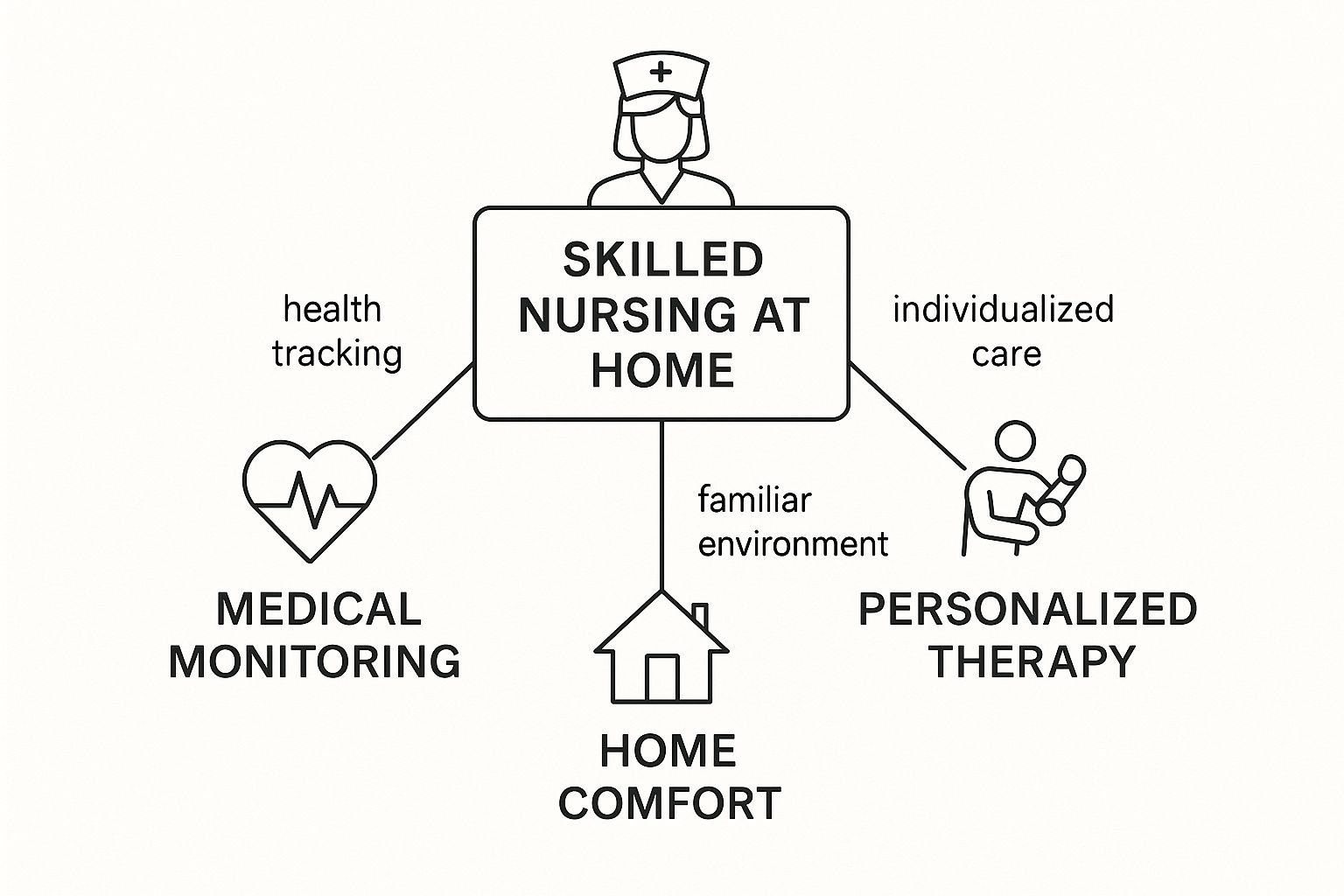
It’s about blending that crucial medical monitoring and therapy with the healing environment of home, creating a complete support system for recovery.
The Central Coast VNA & Hospice Approach
For more than 74 years, Central Coast VNA & Hospice has been this region's trusted nonprofit provider for these essential services. Our mission is to offer compassionate, high-quality medical care that honors every person’s wish for independence and comfort. Our team of Registered Nurses and other licensed professionals works directly with your physician to build a personalized care plan.
This personalized plan might include services like:
- Wound Care: Carefully dressing and watching over surgical wounds or pressure sores to prevent infection and help them heal properly.
- IV Therapy and Injections: Administering medications, fluids, or nutrition through an IV, a task that absolutely requires a licensed professional.
- Disease Management: Teaching patients and their families how to manage long-term conditions like diabetes, heart failure, or COPD.
- Post-Surgical Care: Monitoring vital signs, managing pain, and ensuring a safe and steady recovery after being discharged from the hospital.
By bringing this level of professional care into the home, we help people avoid frustrating and costly readmissions to the hospital and get back on their feet faster. It puts patients back in the driver's seat of their own recovery journey.
This focus on empowerment is crucial for helping people help seniors live at home safely and with dignity. Because of our deep local roots and nonprofit status, CCVNA's focus will always be on the health of the communities we are proud to serve.
Who Benefits Most from In-Home Skilled Nursing?
Skilled nursing at home is a powerful service designed for people who need medical care but can receive it safely outside of a hospital. It acts as a bridge, connecting the clinical support of a hospital to the healing environment of home. This service is vital for helping people transition after a hospital stay and manage chronic illnesses.
It's especially valuable for those recovering from a major medical event. Being in a familiar, comfortable space can make a world of difference, often improving well-being and speeding up the healing process.
Patients Recovering from Surgery or Injury
One of the most common reasons for skilled nursing at home is for support after surgery or a serious injury.
Imagine a grandfather in Monterey County who just had joint replacement surgery. A Registered Nurse from Central Coast VNA & Hospice can visit him at home instead of him facing a long rehab stay.
This nurse would provide critical post-op care, including:
- Wound Care: Changing dressings, watching for any signs of infection, and making sure the surgical site is healing properly.
- Pain Management: Coordinating with his doctor to manage pain effectively, which is key to being able to participate in physical therapy.
- Mobility Support: Helping him move safely and guiding him through exercises to regain strength and prevent complications like blood clots.
This direct, professional support at home can make recovery smoother and helps prevent setbacks. For families, it offers peace of mind to know a medical expert is monitoring their loved one’s progress.
Individuals Managing Chronic Health Conditions
For people living with long-term illnesses, skilled nursing at home is a game-changer. It provides the steady medical oversight and education they need to manage complex conditions. This empowers them to stay in control of their own health.
Take, for instance, a mother in San Benito County recently diagnosed with diabetes. A skilled nurse can offer personalized support in her own kitchen, helping her build the confidence to manage it all. The same goes for someone with a chronic heart condition or COPD, as regular monitoring can help them avoid frequent hospital trips.
These services fundamentally shift healthcare from being reactive to proactive. By catching potential issues early and teaching people how to effectively manage their own health, skilled nursing helps them live fuller, more stable lives right where they want to be—at home.
The need for this kind of long-term support is on the rise. It's estimated that two out of three older adults with disabilities already get their long-term care services at home. This highlights a significant shift toward home-based medical care. You can explore more about these trends and the growing importance of home-based support.
Patients with Complex Medical Needs
Sometimes, a person’s medical needs are too complex for family to handle safely. Skilled nursing at home bridges this gap, bringing high-level medical treatments into the home.
This includes care for patients who need:
- IV Therapy: Receiving antibiotics, hydration, or nutrition through an intravenous line.
- Catheter or Ostomy Care: Managing and maintaining catheters or ostomy bags to prevent infections and keep the patient comfortable.
- Specialized Injections: Administering medications that demand precise dosages and techniques.
For people in Santa Cruz County or South Santa Clara County facing these challenges, having a provider like Central Coast VNA & Hospice means they can receive these treatments at home. It’s all about ensuring every person can get the expert care they need, wherever they call home.
What’s Included in a Skilled Nursing Plan?
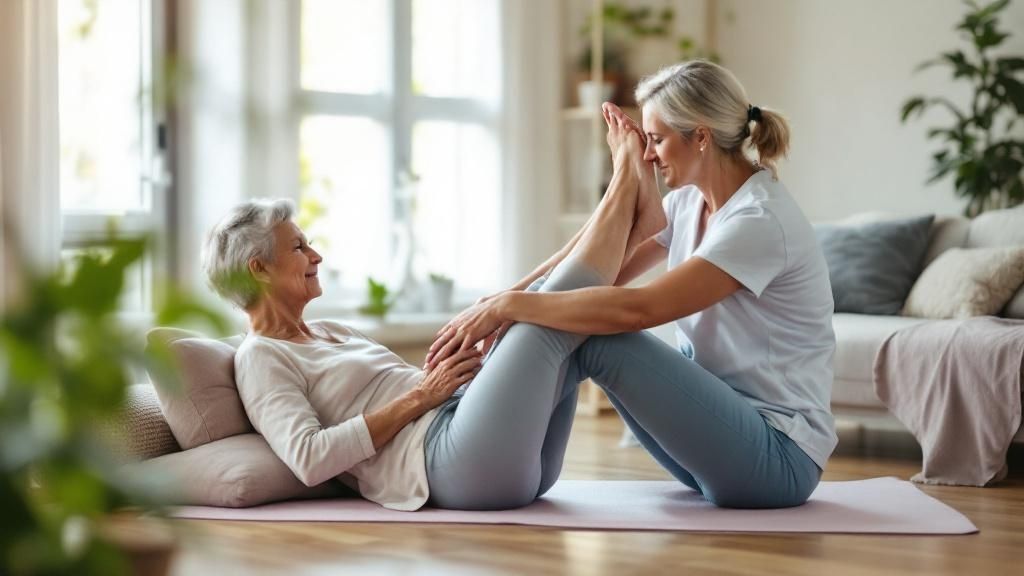
When a doctor orders skilled nursing at home, they prescribe a personalized roadmap for recovery. This is a dynamic plan of care focused on helping someone heal and regain independence at home.
At Central Coast VNA & Hospice, our nonprofit mission is about more than just checking boxes. Our Registered Nurses see themselves as partners in health, empowering patients and families. Every service is delivered with a focus on healing the whole person.
Expert Wound Care for Safer Healing
Proper wound care is essential after surgery or a hospital stay and is a cornerstone of skilled nursing. A skilled nurse is trained to assess a wound, clean it with sterile techniques, and apply the right dressings.
Why is this so critical? An infected wound can lead to serious complications, prolonging recovery and even causing rehospitalization. By managing wounds expertly at home, our nurses help patients across Monterey and Santa Cruz counties heal safely.
Medication Management and Education
Juggling multiple prescriptions can be overwhelming and dangerous, especially with new medications after a hospital stay. A skilled nurse brings clarity and safety, ensuring medications are taken correctly and watching for side effects. They also teach the patient and family what each drug is for.
This service is about empowerment, not just dispensing pills. It helps a patient in San Benito County understand their treatment. That knowledge reduces medication errors and gives patients confidence to take an active role in their health.
A skilled nursing plan transforms a confusing medication schedule into a clear, manageable routine, ensuring safety and promoting patient independence. This proactive approach is a hallmark of high-quality skilled nursing at home.
Advanced Clinical Interventions
Many medical treatments that once required a hospital can now be performed safely at home by a licensed professional. This allows people to remain where they feel most comfortable. These advanced services showcase the clinical expertise a home health agency can provide.
Our skilled nurses at CCVNA are proficient in various complex clinical tasks, including:
- IV Therapy and Injections: Administering IV antibiotics, hydration, and other vital medications as prescribed.
- Catheter and Ostomy Care: Providing meticulous care to prevent infections while ensuring patient comfort and dignity.
- Disease-Specific Education: Teaching patients and families how to manage chronic conditions like heart failure, COPD, or diabetes.
Many of our care plans now also incorporate advanced remote patient monitoring systems for an extra layer of oversight. These tools let our team keep a close eye on patients in South Santa Clara County and beyond. This helps us catch potential problems before they become emergencies.
By bringing this high level of clinical skill into the home, we help people avoid rehospitalization and maintain their quality of life. Learn more about our comprehensive home health care services and how they can support your family's recovery.
Understanding Your Compassionate Home Health Team
Effective skilled nursing at home is a team effort. Real recovery is built on the expertise of dedicated professionals who work together to support a patient's journey back to health. This team approach ensures that every part of a person’s well-being is addressed with expert care.
At Central Coast VNA & Hospice, our model is built on this idea. For over 74 years, our nonprofit, mission-driven team has provided this integrated support. We know recovery is about more than just healing; it’s about restoring confidence and function for families across Monterey County, San Benito County, and our entire service area.
Who Is on Your Home Health Team?
Your home health team is a group of specialists, each with a unique skill set, all coordinated by a Registered Nurse. They work closely with each other and your doctor to create a seamless care experience. Think of them as a personal support system focused on one goal: your loved one’s successful recovery at home.
The professionals involved will depend on the patient's individual needs as outlined in their physician-ordered plan of care. This ensures the care is always personalized and effective.
Here’s a look at the key professionals who may be part of your compassionate care team:
- Physical Therapists (PTs): These experts focus on restoring mobility and strength. They help patients regain the ability to walk safely, climb stairs, and get in and out of bed.
- Occupational Therapists (OTs): OTs help patients relearn essential activities of daily living. This could mean adapting the home or teaching new techniques for tasks like dressing or bathing.
- Speech-Language Pathologists (SLPs): Following a stroke, SLPs work with patients to recover their ability to speak, understand language, or swallow safely.
- Medical Social Workers (MSWs): These professionals provide crucial emotional and social support. They connect families with community resources and help with advance care planning.
- Hospice Aides: Under the supervision of a Registered Nurse, Hospice Aides provide essential personal care to support comfort and dignity.
This interdisciplinary approach is the cornerstone of high-quality home health care. It guarantees that care is holistic, addressing not just the medical diagnosis but the entire person and their environment.
A Coordinated Approach to Care
The real magic of a home health team is its coordination. Team members are in constant communication, sharing updates and adjusting the care plan as needed. For example, a Physical Therapist might notice a patient is discouraged and can pass that to the Medical Social Worker for emotional support.
This coordinated effort is managed meticulously. A key part of a competent home health team is maintaining accurate patient records. Exploring advancements like specialized medical documentation software shows how modern teams manage this task, ensuring every detail is tracked.
This level of collaboration prevents fragmented care and ensures a smooth journey. Our deep local roots in Santa Cruz County and South Santa Clara County mean we are intimately familiar with local resources.
When you choose Central Coast VNA & Hospice, you get an entire team of advocates. Explore our home health care in Monterey to see how we support families like yours.
How to Navigate Medicare for Home Health Services
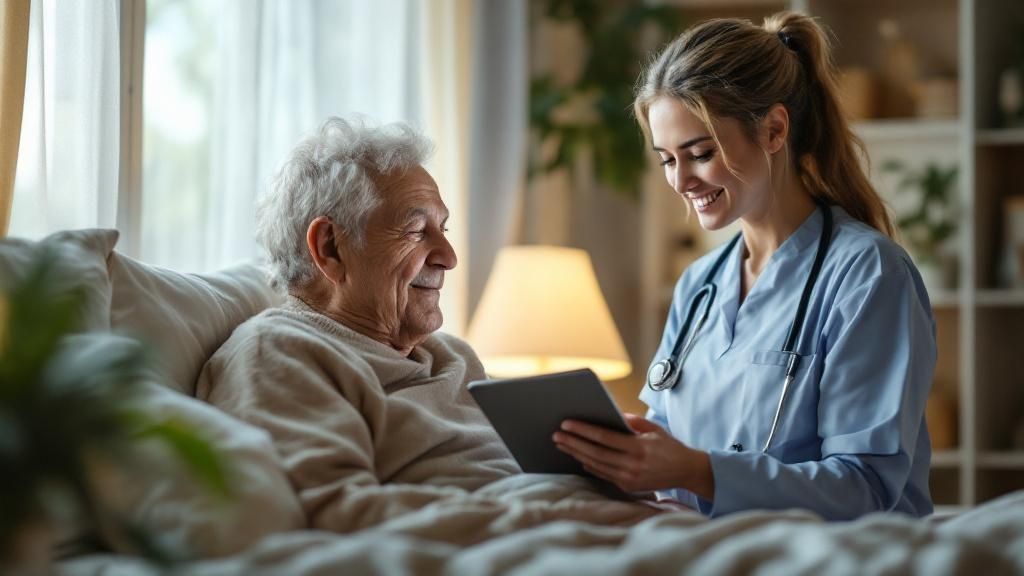
Figuring out the financial side of healthcare can be stressful. For many families, Medicare is the key to getting essential skilled nursing at home, but its rules can feel like a maze. The good news is that with the right guide, the process is far less intimidating.
At Central Coast VNA & Hospice, our nonprofit mission is to help families in Monterey County and surrounding communities get the care they’re entitled to. We believe in empowering you with clear, compassionate information so you can make confident choices.
What Does Medicare Require for Coverage?
For Medicare to cover skilled nursing care at home, a few specific conditions must be met. The official language might sound formal, but the ideas are straightforward.
First, a doctor must certify that the patient needs this medical care and create an official plan of care. After that, the patient needs to meet two main conditions:
- Be considered "homebound": This doesn't mean you're a prisoner in your home. It means leaving takes a considerable and taxing effort due to illness or injury.
- Need "intermittent" skilled care: This means the care needed is from a licensed professional, like a Registered Nurse or therapist, on a part-time basis.
We work directly with your doctor to ensure all criteria are properly documented, lifting that burden from your shoulders. For a deeper dive, check out our guide on qualifying for home health care to see the specifics.
Understanding Key Terms in Plain Language
The term “homebound” often trips people up, but Medicare’s definition is practical. Someone can still be considered homebound if they leave for doctor’s appointments, religious services, or an occasional trip to the barber. The key is that leaving home is a significant challenge.
“Intermittent skilled need” refers to medical tasks that only a licensed professional can perform safely. This includes wound care, IV therapy, or injections.
Think of it this way: Medicare’s goal is to provide the necessary medical support to help someone recover or stabilize in the most appropriate and cost-effective setting. For many, that setting is their own home.
This focus on home-based care is more important than ever. The global skilled nursing market is expected to grow significantly, fueled by the growing population of older adults needing specialized support. You can learn more about the global trends in skilled nursing care to see what’s driving this change.
As the trusted nonprofit provider for the Central Coast for over 74 years, we are here to help you through this. Our teams are committed to clarifying your options and helping you access every benefit you deserve.
Choosing the Right Central Coast Home Health Agency
Deciding on a provider for skilled nursing at home is a critical healthcare choice. It’s not just about clinical services; it’s about inviting someone into your home during a vulnerable time. You need a relationship based on trust, reliability, and genuine compassion.
Making the right choice starts with knowing what to ask. Any agency worth considering should be transparent and ready to answer your questions clearly.
Key Questions to Ask Any Home Health Agency
Think of this process as an interview. Your goal is to assess their qualifications, processes, and philosophy of care. This will help you find a perfect match for your family's needs.
Here are the essential questions that should guide your conversation:
- Accreditation and Licensing: Is the agency Medicare-certified and licensed by the state? This is the baseline requirement for meeting federal health and safety standards.
- Staff Credentials and Training: Who exactly will be coming into your home? Ask about the qualifications of their Registered Nurses and other clinicians.
- Emergency Preparedness: What happens if there's a medical emergency? A good agency will have a clear protocol for a rapid and effective response.
- Communication Practices: How will the clinical team keep you and the doctor in the loop? A solid communication plan shows respect for your role in the care journey.
- Personalized Care Planning: How is the plan of care created and adjusted? The best care should be a collaborative effort including the patient, family, and doctor.
Finding the right partner means looking beyond clinical skills. You want an agency that shows a deep commitment to compassionate, patient-centered support. This is the difference between simply receiving services and feeling truly cared for.
The Central Coast VNA & Hospice Difference
For families in Monterey County, San Benito County, Santa Cruz County, and South Santa Clara County, CCVNA has been that trusted partner for generations. As a local nonprofit with over 74 years of service, our mission is focused on our community’s well-being, not profits.
Our deep roots and mission-driven purpose are what truly set us apart. We don’t just provide care; we build lasting relationships founded on trust and respect. We ensure every patient receives care that is not only clinically excellent but also delivered with warmth and genuine compassion.
Choosing an agency is a big decision. For more in-depth advice, you can review our guide on finding the best home health agency for seniors to help you move forward with confidence.
Contact Central Coast VNA & Hospice today to learn more about our commitment to your family’s health and peace of mind.
Frequently Asked Questions About Skilled Nursing at Home
Exploring in-home medical care is a big step, and it’s normal to have questions. Getting clear, straightforward answers brings confidence and peace of mind. We've gathered some common questions we hear about skilled nursing at home to help you.
Here at Central Coast VNA & Hospice, our mission is to empower you with information. As a trusted nonprofit serving the Central Coast for over 74 years, we believe in transparent and compassionate guidance.
How is skilled nursing different from hospice care?
While both involve expert medical care at home, they serve different purposes. Skilled nursing focuses on recovery and rehabilitation after an illness, surgery, or injury. The goal is to help a person heal and regain independence.
Hospice care, on the other hand, is for individuals with a life-limiting illness when a cure is no longer the focus. Hospice care aims to provide comfort, manage symptoms, and ensure the best possible quality of life.
How long can my loved one receive skilled nursing services?
The duration of skilled nursing care depends on medical need, not a set schedule. Services continue as long as a physician's plan of care documents a need for professional medical support.
As your loved one recovers, visits may decrease. The service ends when health goals are met, their condition stabilizes, or they no longer need a licensed clinician for their care.
What does 'homebound' mean for Medicare purposes?
The term "homebound" can be confusing. For Medicare, it means leaving home requires a considerable and taxing effort due to illness or injury.
A person can still be homebound even if they leave for medical appointments, religious services, or occasional short trips. The key factor is the difficulty of leaving home, not a strict rule against it.
Can our family doctor request services from CCVNA?
Yes, absolutely. A referral from a physician is required to start any skilled nursing service. This ensures the care is medically necessary and fits into the patient's overall health plan.
We have a long history of working closely with doctors throughout Monterey County, San Benito County, Santa Cruz County, and South Santa Clara County. These partnerships create a coordinated team approach to recovery.
What if my loved one’s needs change during care?
Health needs can change, and our team is built to adapt. During every visit, our clinicians are constantly assessing the patient's condition.
If they improve, we work with their doctor to adjust the care plan. If needs become more complex, we modify the plan to provide more support. This might lead to a conversation about transitioning to a different level of care, like palliative or hospice services, ensuring they always have the most appropriate support.
For over 74 years, Central Coast VNA & Hospice has been the trusted nonprofit provider of in-home medical care for our communities. If you have more questions or believe your family could benefit from our services, please reach out.