
For many families, aging in place means helping a loved one stay in their own home. But it is much more than that. It is a promise to help them live safely and independently in a place full of memories. This journey often puts you in new roles, like care coordinator and safety expert.
The True Meaning of Aging in Place for Your Family

Many families in Monterey and Santa Cruz Counties want to honor a loved one's wish to stay home. It is a strong desire. In fact, AARP found that 75% of adults aged 50 and older want to remain in their homes as they get older.
But making this wish a safe reality takes work. Aging in place is not a single decision. It is an ongoing process of changing a home and support system to meet new needs. It is about finding a balance between your loved one's freedom and the need to manage health issues.
Beyond the Simple Definition
To understand aging in place, you have to look deeper. It brings a new set of tasks that most families do not think about until a crisis happens.
Suddenly, you may find yourself taking on several new jobs:
- Care Coordinator: You schedule doctor visits, manage medications, and talk to healthcare providers.
- Safety Inspector: You learn to spot dangers like loose rugs, poor lighting, or slippery floors to prevent falls.
- Financial Planner: You figure out what Medicare or private insurance covers and what the family needs to pay for.
- Emotional Supporter: You offer comfort and help your loved one handle the emotional changes that come with aging.
This journey is rewarding, but it can also be very demanding. The key is to build a support network before you need it.
Aging in Place Hopes Versus Family Realities
It is normal to have an ideal idea of what aging in place will look like. However, families must be realistic about the daily work of caregiving. This table can help you prepare.
| Common Hope | Practical Reality for Families |
|---|---|
| "Mom will be happy and independent in her own home." | Independence often requires a lot of support, like managing pills, making meals, and getting to appointments. |
| "The house is fine; it's where she's always lived." | A familiar home can have new risks. It may need changes like grab bars, ramps, or better lighting to prevent falls. |
| "We'll save money by avoiding a nursing home." | Home care, home changes, and medical supplies can add up. It is important to plan for these costs. |
| "Our family can handle everything ourselves." | Caregiving is a long journey. Relying only on family can lead to burnout, stress, and difficult relationships. |
| "We'll figure it out as we go." | Waiting for a crisis to make a plan is stressful. Planning for care, money, and legal matters ahead of time is much better. |
Facing these realities does not mean aging in place is impossible. It just means that planning and support are necessary for success.
For families on the Central Coast, this does not have to be overwhelming. As a nonprofit provider with deep local roots, Central Coast VNA & Hospice has helped families with these plans for over 74 years. By working with experts who know the healthcare system in Monterey, San Benito, Santa Cruz, and South Santa Clara Counties, you can get the right support at the right time.
You can learn more about the different types of in-home care for seniors that can make aging in place a safe and positive experience.
Navigating the Daily Demands of At-Home Support
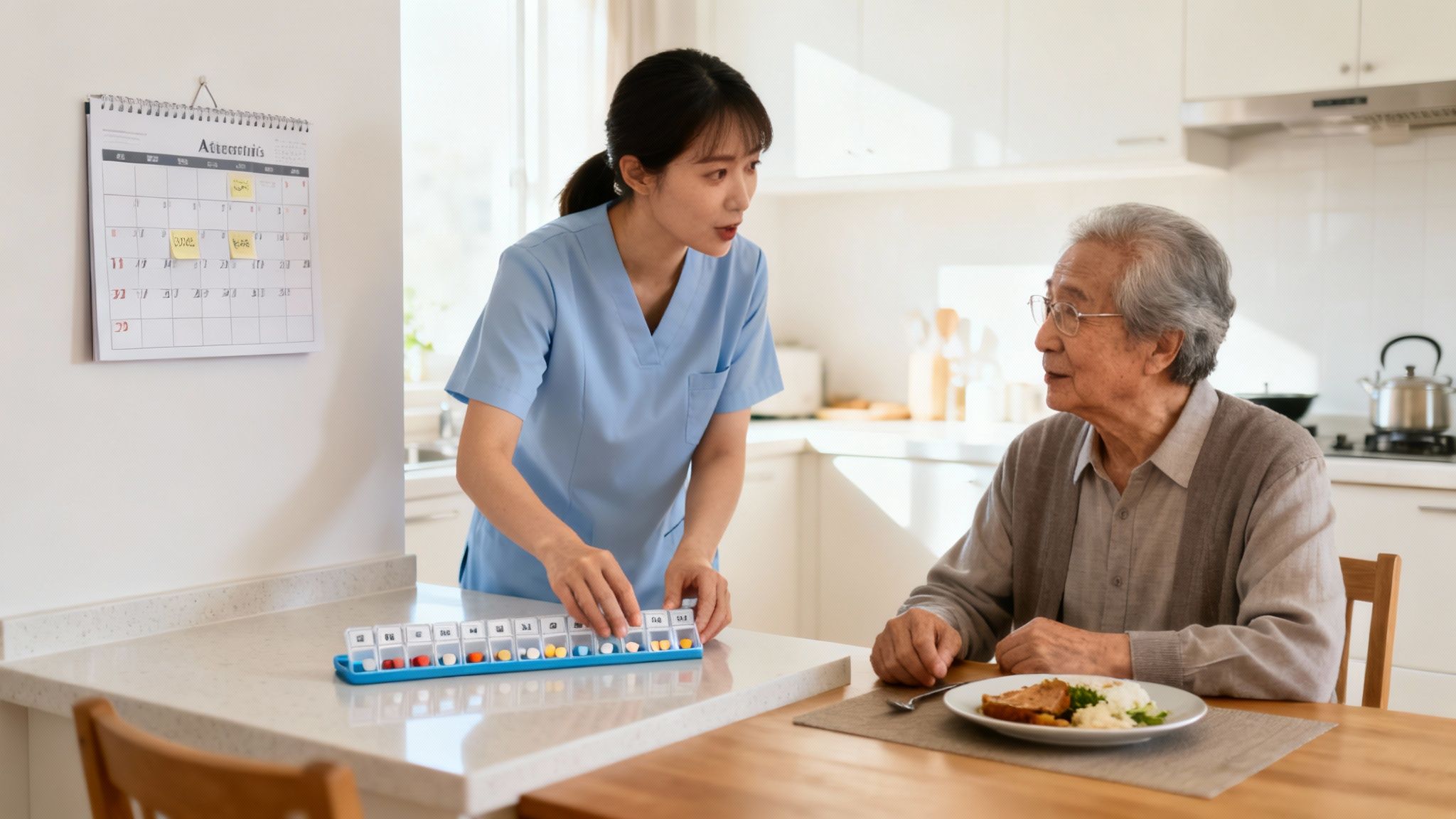
Supporting a loved one at home is more than just keeping them company. It involves hands-on tasks that take time, patience, and emotional energy every day.
Families in communities like Salinas and Hollister quickly learn that caregiving is not just one role—it is many. It also requires a new set of skills you might not have expected to learn.
You will likely help with two main types of daily needs. The first is Activities of Daily Living (ADLs), which are basic self-care tasks. The second is Instrumental Activities of Daily Living (IADLs), which are more complex tasks needed to live alone.
What Caregiving Actually Looks Like Day-to-Day
To understand what aging in place means for your family, it helps to see what these duties look like. Your daily routine might include a mix of the following:
- Personal Care (ADLs): This could mean helping with bathing, dressing, or using the toilet. These are private moments that require kindness and trust.
- Mobility (ADLs): You may help your loved one get from the bed to a chair, walk safely, or get in and out of the car.
- Meal Preparation (IADLs): This is more than just cooking. It includes grocery shopping, planning meals for special diets, and sometimes helping with eating.
- Medication Management (IADLs): Handling multiple prescriptions and correct doses can be one of the most stressful parts of caregiving.
- Transportation (IADLs): Driving to doctor’s visits, physical therapy, or the pharmacy can become a regular part of your week.
Each of these tasks adds up. Soon, many family members find that caregiving has become a part-time or even full-time job.
Research shows how big this commitment is. You can learn more about the impact of caregiving on families here.
The Unspoken Risk: Family Burnout
When one or two people handle all these duties, caregiver burnout is a real risk. Burnout is a state of complete physical, emotional, and mental tiredness. It happens when you try to do too much for too long without enough help.
You might feel overwhelmed, worried, or easily annoyed. This is not a sign that you do not care. It is a sign that you need more support.
This is why it is so important to understand the reality of aging in place. When you see the full picture, you can plan for help before you reach a breaking point.
You Don't Have to Do This Alone
You are not meant to carry this weight all by yourself. Central Coast VNA & Hospice offers professional home health services to share the load. Our skilled clinicians, including Registered Nurses and therapists, can manage complex medical needs at home.
For example, a Registered Nurse can handle wound care, IVs, and a complex medication schedule. This ensures your loved one gets expert medical care. This frees you up to be a son, daughter, or spouse again. Check out our guide on 5 expert tips to prevent medication errors at home for more.
Working with a trusted nonprofit provider like us means you are bringing a team of caring experts into your circle. It lets your family focus on love and support.
Making Your Home a Safe Haven for a Loved One
A safe and easy-to-use home is the foundation for aging in place. When your loved one’s home supports their changing needs, they can keep their independence. This means taking a practical look at the home to find and fix common dangers.
This is not about bubble-wrapping the house. It is about making smart changes that make a real difference. The main goals are to prevent falls, improve lighting, and make it easy to move around.
Practical Steps for a Safer Home
Creating a safer home often starts with the highest-risk areas: the bathroom, hallways, and stairs. A few thoughtful changes can greatly lower the chance of an accident.
- In the Bathroom: This room is a common place for falls. Installing grab bars near the toilet and in the shower is a must. Add non-slip mats and think about a shower chair for extra stability. A walk-in shower for seniors can be a great upgrade.
- In Hallways and Living Areas: Clear paths are very important. Remove clutter, secure loose rugs, or get rid of them. Make sure electrical cords are tucked away so no one can trip.
- On the Stairs: Strong handrails on both sides of the stairs are essential. Make sure the lighting is bright over the stairs. Consider adding non-slip strips to each step.
There is often a gap between wanting to stay home and being able to do it safely. Nearly 95% of people over 60 have at least one chronic condition. This creates a growing need for skilled support at home.
The Role of Technology in Home Safety
Today's technology also gives us powerful tools to improve safety. These devices can provide peace of mind when you cannot be there.
A medical alert system is a great place to start. It lets your loved one call for help with the push of a button. Other helpful tools include automatic stove shut-off devices and motion-activated night lights.
For families, what aging in place really means is creating layers of support. Combining home changes with smart technology creates a strong system for independence and safety.
Professional Guidance for Your Unique Home
Figuring out the right changes on your own can be hard. Every home is different, and so is every person’s health. This is where getting professional advice is so valuable for families in Monterey County.
At Central coast VNA & Hospice, our Physical and Occupational Therapists are experts in home safety. They visit your loved one’s home to do a full safety check. This is not a generic checklist. It is a personal review based on your loved one's health and home layout.
Our therapists give professional advice made just for your family. Their expert guidance helps you spend your time and money on the changes that will help the most. For more tips, our guide on preventing falls in the home offers more practical advice.
Building a Support System Before a Crisis Happens
Most families wait to create a care plan until a crisis happens, like after a fall. This approach leads to rushed, stressful decisions.
The real key to successful aging in place is to plan ahead. It is about building a strong support system before you need it.
Thinking ahead gives you time to understand the different types of care. This is often called the Continuum of Care. It is a series of services that can change as your loved one's needs change over time.
When families in Salinas and Hollister understand this model, they can get the right care at the right time. This helps avoid the stress of emergency planning.
This diagram shows how home safety is a basic part of that planning.
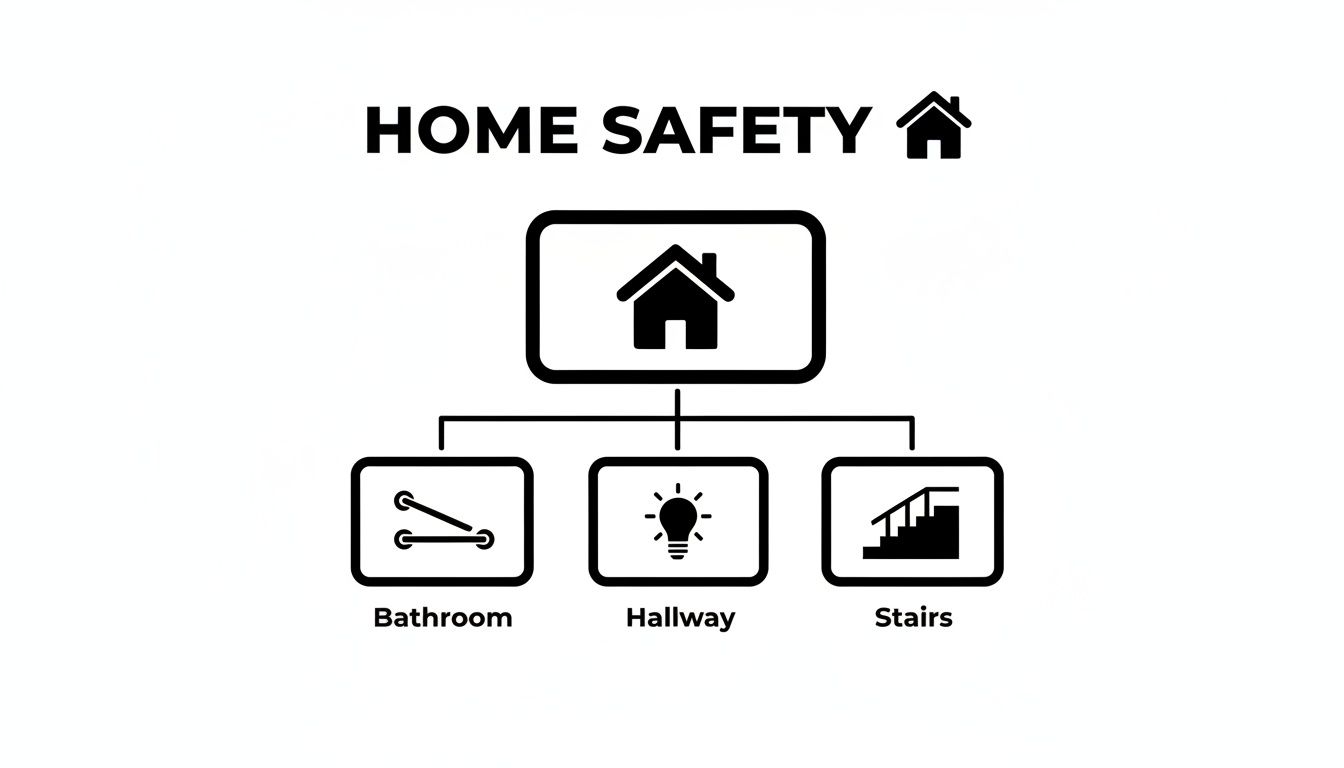
As you can see, simple safety measures are key first steps in creating a secure home.
Understanding the Layers of In-Home Care
So, what does aging in place look like when medical needs arise? It means knowing who to call. The continuum of care has three main parts that provide full support at home.
- Home Health Care: This is skilled medical care from licensed professionals like a Registered Nurse or a Physical Therapist. It is often for recovery after a hospital stay or for managing a new health problem.
- Palliative Care: This is special support for someone with a serious illness. The goal is to improve quality of life by managing pain and stress. Palliative care can be given at the same time as treatments meant to cure an illness.
- Hospice Care: This is comfort care for people near the end of life. When treatments to cure an illness are no longer working or wanted, hospice focuses on comfort and dignity. A full team supports the patient and family.
How These Services Work Together
Imagine a loved one in Monterey County is recovering from pneumonia. They might start with home health care for nursing and therapy at home. As they recover, they may still have trouble breathing from a chronic condition.
This is a good time to add palliative care. The team can help manage their breathing problems and make them more comfortable. This helps avoid future trips to the hospital.
Later, if their condition gets worse, the family can smoothly move to hospice care. This ensures they get comfort and dignity at home, with the people they love.
As the only provider on the Central Coast offering this full range of care, Central Coast VNA & Hospice ensures your loved one gets steady support from a team they trust as their needs change.
This continuum of care prevents gaps in support and reduces family stress. Knowing where to turn next provides great peace of mind. You can also learn about respite care for family caregivers to see how you can get needed breaks.
The True Costs: Navigating the Financial and Emotional Landscape
When a family chooses aging in place, they often talk about home changes and care schedules. But the real journey includes managing big financial and emotional costs. Understanding these costs is key to a plan that works for everyone.
Talking honestly about these costs early on helps prevent problems later. It ensures everyone feels supported.
The Financial Side of Aging in Place
One of the biggest mistakes families make is thinking insurance will cover everything. Programs like Medicare and Medi-Cal are important, but you need to know what they do and do not cover.
- What Medicare Actually Covers: Medicare's home health benefit is for short-term, skilled care. It covers things like a Registered Nurse visit for wound care or a Physical Therapist to help you get stronger.
- The Big Coverage Gap: What Medicare does not pay for is long-term custodial care. This is the non-medical, daily help with bathing, dressing, and making meals that is often needed most.
This gap means families often have to pay for ongoing help out of pocket. In some cases, financial safety nets can help fund long-term care, similar to how Long Term Disability (LTD) benefits in Canada support individuals, though rules vary.
Families in Monterey and Santa Cruz Counties who plan for these costs are better able to provide steady care without a financial crisis.
The Emotional Weight on Families
Beyond money, aging in place has a deep emotional weight. Family members often feel a mix of love, duty, guilt, and stress. It is a journey with rewarding moments, but also big challenges.
Caregiving is an act of deep love, but it asks a lot of the person giving care. Admitting the emotional cost is the first step toward building a strong support system for the whole family.
These feelings are just as real as the financial costs. Burnout or frustration can happen, no matter how much you love the person you are caring for. Pushing these feelings away can harm relationships.
Finding Support for Everyone Involved
This is where a complete care model makes a difference. At Central Coast VNA & Hospice, our 74+ years of service have taught us that supporting a patient means supporting their family. Our nonprofit, mission-driven approach goes beyond just medical care.
Our team includes professionals who are here for the family’s well-being:
- Medical Social Workers: These team members are experts at connecting families with community resources. They help with confusing insurance questions and difficult family talks.
- Chaplains: Our chaplains offer spiritual and emotional support to people of all beliefs. They provide a caring ear for both patients and family members.
By caring for the whole person—and the whole family—we help you manage all the costs of aging in place. This support helps you find balance and focus on what matters most.
Your Local Partner in Compassionate Home Care
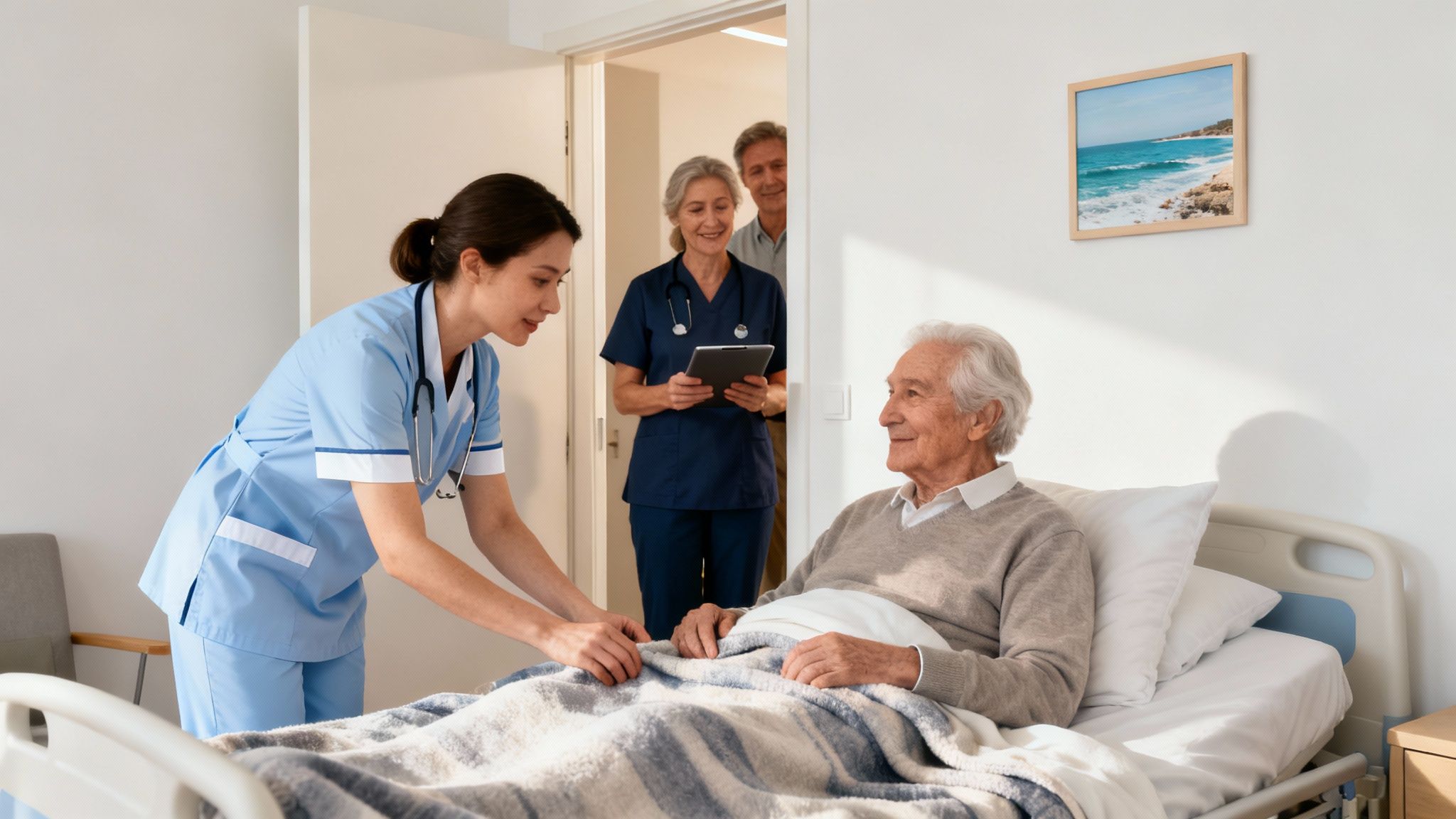
The journey of aging in place is a team effort. Your family does not have to do it alone. For over 74 years, Central Coast VNA & Hospice has been a trusted local partner for families in Monterey, Santa Cruz, San Benito, and South Santa Clara Counties. We are part of this community, and we are here to offer the compassionate guidance you need.
Our services create a full continuum of care, delivered in your loved one’s home. From skilled nursing and therapy to palliative and hospice support, our expert clinicians empower your family. We help you create a plan that honors your loved one’s wishes while keeping them safe.
A Growing Need for Local Support
The wish to age at home is a global trend. By 2050, the world's population of people aged 65 and older is expected to grow. You can learn more about this global demographic trend and what it means for communities.
At Central Coast VNA & Hospice, our nonprofit mission is to ensure professional, compassionate support is always available on the Central Coast. We don’t just treat patients—we help families coordinate care, create safety plans, and stay involved every step of the way.
If you’re helping a loved one age in place in Monterey, Santa Cruz, Salinas, or Hollister, you don’t have to do it alone. Our guide to expert aging-in-place services near you in Monterey can give you more specific information.
Contact Central Coast VNA & Hospice today to learn how our dedicated team can help you build a successful aging-in-place plan.
Frequently Asked Questions About Aging in Place
Thinking about aging in place brings up many questions. Having clear, honest answers helps families feel ready. Here are some of the most common questions we hear from families on the Central Coast.
When Is the Right Time to Plan for Aging in Place?
The best time to start planning for aging in place is long before a medical crisis happens. Planning early gives you time for calm talks about what your loved one wants for their future. This proactive approach lets you research support options and make home changes without the stress of an emergency.
Does Medicare Cover All In-Home Care Services?
This is a very important point. Medicare does not cover all types of in-home care. Medicare's home health benefit is for short-term, skilled services like nursing care after a hospital stay. It does not pay for 24-hour care or long-term help with daily tasks like bathing and dressing. Our team at Central Coast VNA & Hospice can help you understand what your insurance covers.
What Is the Difference Between Home Health and Palliative Care?
It is easy to confuse these two services. Home Health Care is focused on recovery. It brings clinical experts like a Registered Nurse or Physical Therapist to you to help you heal after an illness or surgery. Palliative Care is focused on comfort. It provides relief from symptoms and stress for someone with a serious illness and can be given at any stage of an illness.
How Can Our Family Avoid Caregiver Burnout?
Avoiding caregiver burnout is necessary for a successful aging-in-place plan. The key is to accept that you cannot do it all alone. Set realistic limits, and lean on professional support, like the services from Central Coast VNA & Hospice. Regular family meetings can also help you share the duties and talk openly.
What if a Loved One's Needs Become Too Great to Manage at Home?
Sometimes, a person's medical needs become too much to manage safely at home. When this happens, it is not a failure. It is a natural change in the care journey. Our team at Central Coast VNA & Hospice can help your family with a gentle transition to a different level of care. This may include our compassionate hospice services, which focus on comfort and dignity.
For over 74 years, Central Coast VNA & Hospice has been the community’s trusted, nonprofit partner, helping families through every stage of care. Contact us today to learn more about how our home health, palliative, and hospice services can support your family.