
When families ask, "How do I get help at home if insurance doesn’t cover everything?" the answer can feel overwhelming. This question often comes up when a loved one needs support, but coverage is limited or ends too soon. Families are left wondering: “Who fills in the gaps?”
It’s a journey that involves understanding your loved one's needs and exploring financial aid like Medi-Cal or VA benefits. It also means connecting with local nonprofits that can help. For families on the Central Coast, Central Coast VNA & Hospice is an essential guide for this exact challenge.
The Reality of Home Care Insurance Gaps
Discovering that insurance or Medicare won't cover all the in-home support your loved one needs can be jarring. Many families are shocked to find a gap between what insurance pays for and what is needed for safe living at home.
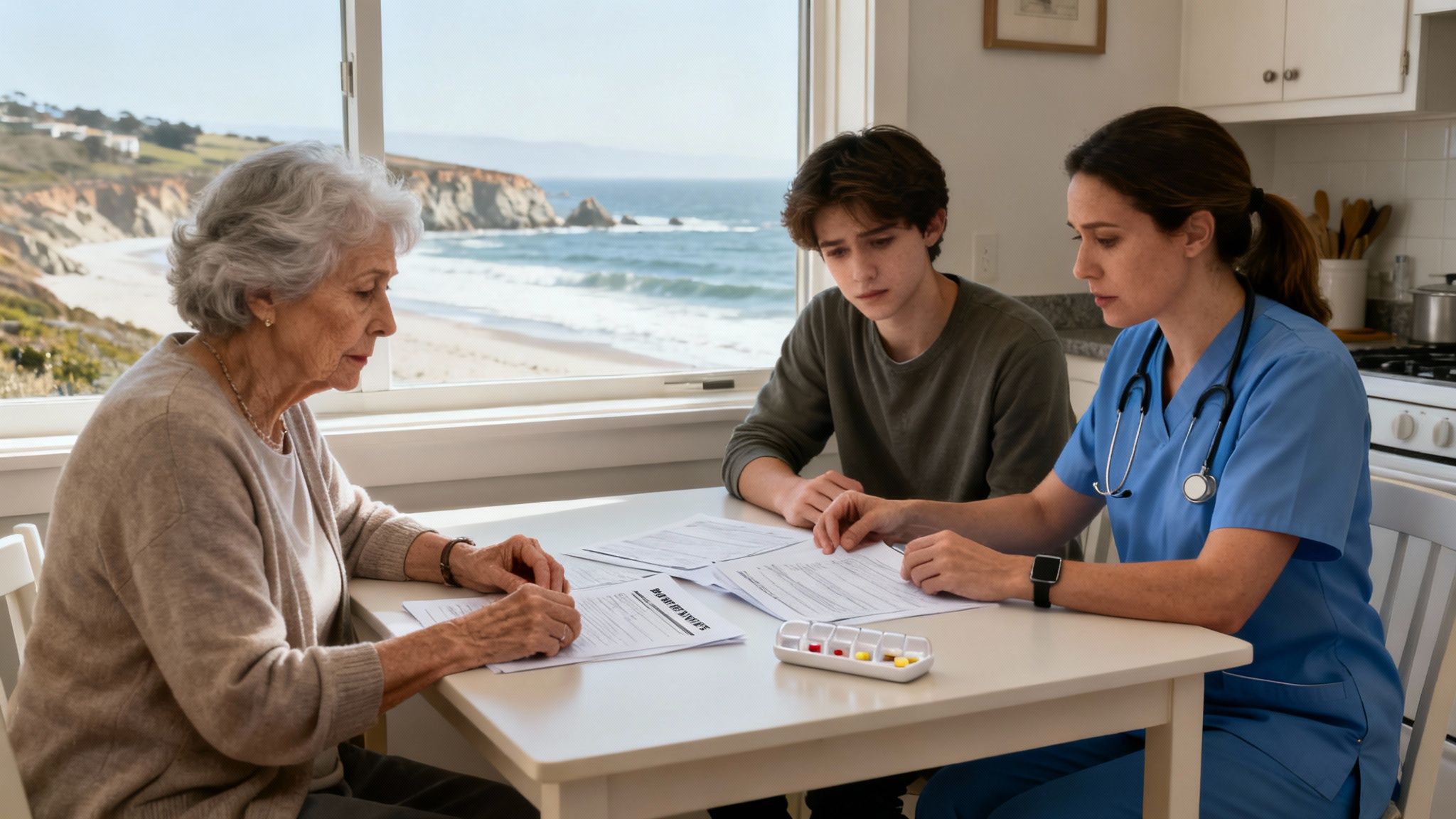
This gap exists because most plans, including Medicare, cover skilled medical care. This is care a doctor deems medically necessary, like short-term visits from a Registered Nurse. You can learn more in our guide on Medicare home care eligibility.
What Insurance Often Excludes
The problem arises when a person needs help with Activities of Daily Living (ADLs). Insurance usually calls this "custodial" care and does not cover it. Yet, these tasks make aging in place possible.
So what's left out? A lot.
- Personal Assistance: Help with bathing, dressing, and grooming.
- Companionship: Social interaction to fight loneliness.
- Household Help: Cooking, light housekeeping, and errands.
- Respite for Family: Giving a family caregiver a much-needed break.
Most older adults want to stay home as they age. In fact, 75% of adults over 50 say they want to remain in their homes. But nearly 95% have at least one chronic condition, requiring more care than insurance fully covers.
The table below shows what insurance typically handles versus what often needs other funding.
Home Health Insurance Common Coverage Gaps
| Type of Care | Typically Covered by Insurance | Often Requires Other Funding |
|---|---|---|
| Skilled Nursing | Wound care, IV therapy, medication management by an RN. | Medication reminders, transportation to appointments. |
| Therapy | Physical, occupational, or speech therapy post-injury or illness. | General exercise assistance, mobility support around the house. |
| Personal Care | Very limited, only if part of a skilled care plan. | Help with bathing, dressing, grooming, and toileting. |
| Household Support | Not covered. | Meal preparation, light housekeeping, laundry, shopping. |
| Companionship | Not covered. | Social interaction, safety supervision, accompanying to events. |
Understanding this difference is the first step toward finding a sustainable care solution.
A Common Scenario in Monterey County
Let's look at a real-world example. Imagine a family in Salinas whose father is recovering from a fall. His insurance covers a physical therapist twice a week and a nurse to check his vitals. But who helps him get to the bathroom at night or ensures he eats nutritious meals?
This is the gap where families feel the most pressure. The skilled medical needs are met, but the daily support for safety and quality of life is not. This leaves family members trying to fill in the blanks, often at great personal and financial cost.
At Central Coast VNA & Hospice, we see this all the time. Our role is to help families in Monterey, San Benito, Santa Cruz, and South Santa Clara counties build a complete circle of support. We help you understand these gaps and find solutions.
Creating a Clear and Actionable Care Plan
Before looking for funding, you need a map of the required help. A detailed care plan is that critical first step. It helps you understand your loved one's needs and communicate them to agencies.
Many people assume home health care covers everything from bathing to companionship. But medical home health is often short-term and clinical. Non-medical needs, like personal care or respite, may not be included.
This is why a thorough assessment is vital. You should plan early for how to supplement medical home health with local resources. Consider family caregiving schedules, adult day programs, and local volunteer support.
Evaluating the Full Spectrum of Needs
An effective care plan looks at the whole person. It ensures their safety, comfort, and emotional well-being are covered. Break down the needs into key categories to make it less overwhelming.
Grab a notepad and ask specific questions:
- Medical and Skilled Needs: Do they need wound care? Can they manage medications correctly? Do they need monitoring for a chronic condition?
- Personal Care Needs: Do they need help with bathing or dressing? Can they get to the bathroom safely?
- Household and Daily Living: Can they prepare nutritious meals? What about housekeeping, laundry, or grocery shopping?
- Social and Emotional Support: Are they lonely? Would companionship or community activities improve their quality of life?
This assessment is more than a checklist. It is a document that paints a clear picture of daily life. This plan helps organizations connect you with the right resources.
How a Professional Assessment Provides Clarity
Figuring this out alone can be daunting for families on the Central Coast, from Santa Cruz to Hollister. An expert assessment from a provider like Central Coast VNA & Hospice can make all the difference.
Our team of Registered Nurses and Medical Social Workers can conduct a professional evaluation in the home. This isn't just about finding problems; it's about providing a clear, actionable plan. We help you set priorities and build a solid support system.
Finding Financial Aid for In-Home Care
Once you know what care is needed, the next question is how to pay for it. The answer often lies beyond your traditional insurance policy.
Thankfully, several other funding sources are available. Many are specific to residents on California's Central Coast. Navigating these programs can feel complex, but you don't have to do it alone.
Exploring Government and State Programs
Several government programs help cover long-term care at home. For many families, these options are a lifeline.
Here are a few important programs to explore:
- Medi-Cal: California's Medicaid program offers initiatives for long-term care. The In-Home Supportive Services (IHSS) program can pay for non-medical help for eligible low-income seniors.
- VA Benefits: Veterans and their surviving spouses may qualify for benefits like Aid and Attendance. This pension supplement can be used to pay for in-home care.
- Area Agency on Aging (AAA): Your local AAA is a great resource. They often manage grants that provide support for seniors, including respite care, meal delivery, and transportation.
The first step is to break down the care plan into medical, personal, and household needs. This helps match the right need to the right funding source.
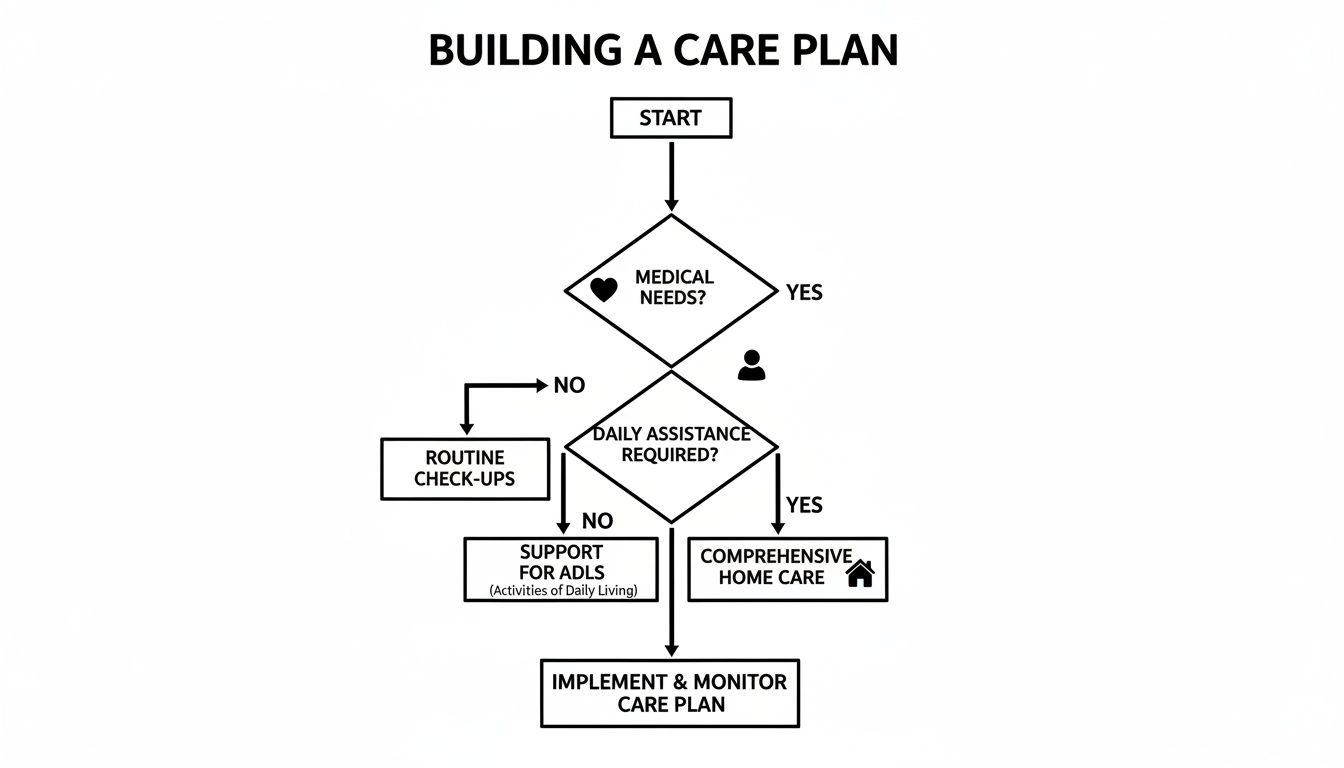
Separating these needs makes it easier to find programs designed for each type of care.
Tapping Into Disease-Specific and Nonprofit Aid
Beyond government aid, many foundations offer financial help for specific illnesses. Groups like the Alzheimer's Association or the American Cancer Society often have grants or local programs.
For those facing serious financial strain, looking into financial hardship grants can also provide relief.
This is where a mission-driven organization can be a powerful ally. Central Coast VNA & Hospice doesn’t just provide skilled nursing. Our team guides families through the entire care journey, helping you plan and coordinate services.
Because of our nonprofit status, our mission-driven support can include services like volunteer help and bereavement care. Learn more about how families can afford in-home care long-term in our guide.
Here’s a summary of some available programs.
Potential Funding Sources for Home Care
| Funding Source | Who It Typically Helps | What It May Cover |
|---|---|---|
| Medi-Cal (IHSS) | Low-income seniors and adults with disabilities in California. | Personal care (bathing, dressing), household help, meal prep. |
| VA Benefits (Aid & Attendance) | Eligible veterans and their surviving spouses. | Monthly pension supplement to pay for in-home care services. |
| Area Agency on Aging | Seniors in a specific geographic area (e.g., Monterey County). | Respite care, meal delivery, transportation, information services. |
| Disease-Specific Foundations | Individuals with specific diagnoses like Alzheimer's, ALS, or cancer. | Grants for care, equipment, or respite for caregivers. |
| Nonprofit Home Care Agencies | Community members, often regardless of ability to pay. | Skilled nursing, therapy, and support services on a sliding-fee scale. |
These programs exist to help families bridge the financial gap. Our Medical Social Workers at Central Coast VNA & Hospice are experts at this. They can help you identify which programs your family may qualify for and assist with applications.
Tapping Into Local Community and Nonprofit Support
When insurance falls short, money is only one part of the solution. The most meaningful support can come from people in your own community. Local and nonprofit resources can fill critical gaps in care.
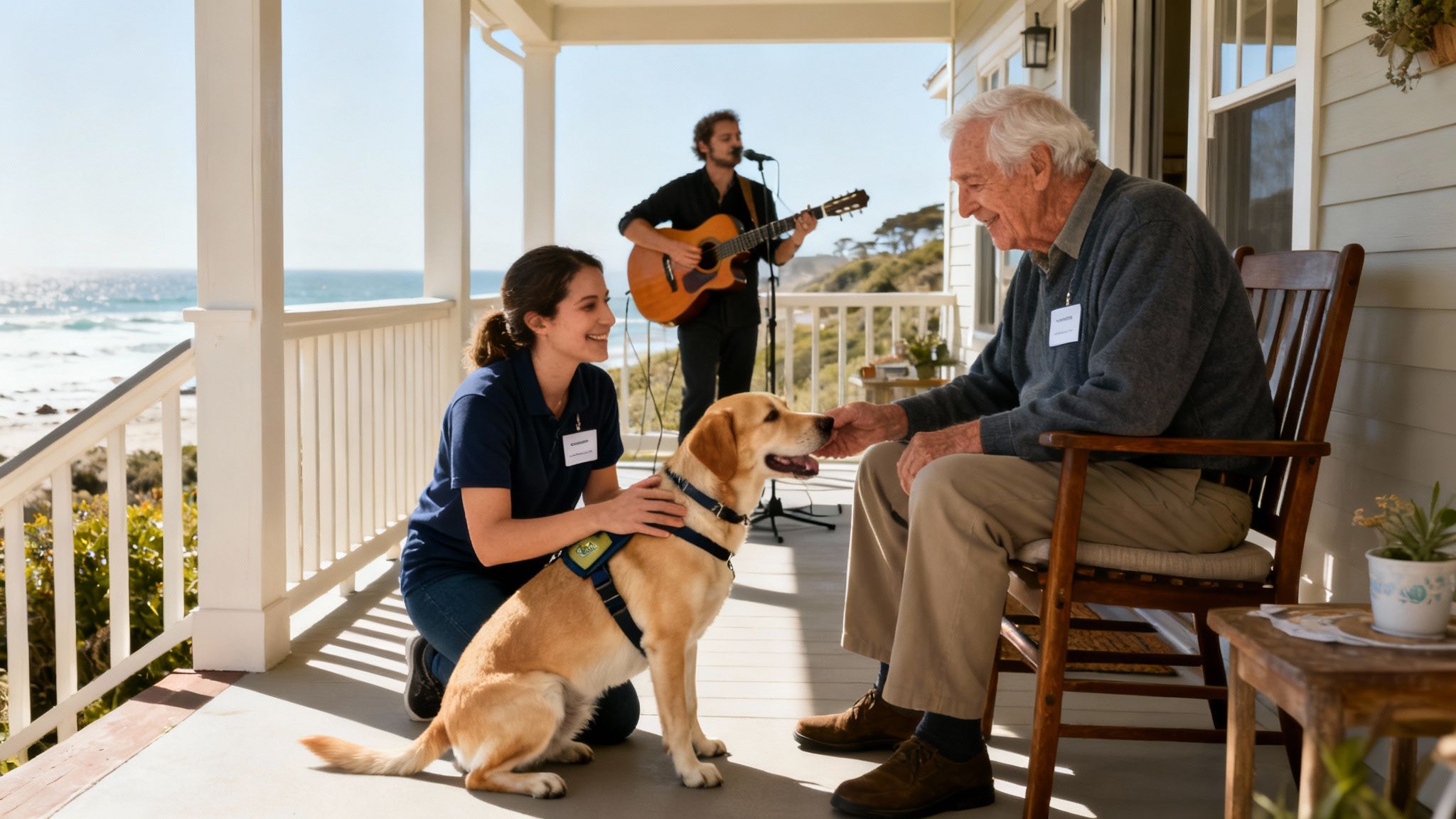
We advise families to plan ahead. Think about blending skilled medical home health with community resources. Central Coast VNA & Hospice offers care coordination and can connect families to resources like veteran support, music therapy, or grief services.
Finding Community-Based Services
Across the Central Coast, from Santa Cruz to Hollister, a network of organizations offers support insurance rarely covers. These programs improve quality of life and help people stay safe at home.
It’s worth looking into these options:
- Local Senior Centers: Many run adult day programs with social activities, meals, and health monitoring. This combats isolation and gives family caregivers a break.
- Volunteer Services: Local nonprofits and faith-based groups often have volunteers who help with companionship, errands, or rides to appointments.
- Respite Care Grants: Some community organizations offer grants or low-cost respite services, giving family members a chance to rest. Find more advice on how to get real support as a family caregiver on the Central Coast.
These services are often funded by community donations and grants. This makes them accessible regardless of ability to pay. To learn how these organizations operate, you can explore the diverse sources of funding for nonprofits.
The Nonprofit Advantage at Central Coast VNA & Hospice
As a nonprofit serving our community for over 74 years, Central Coast VNA & Hospice is part of this local support network. Our mission-driven approach means we offer services that go beyond what’s medically billable.
Our own volunteer programs are a perfect example. We provide specialized services like pet therapy, music therapy, and bereavement support for families. These are all funded by the generosity of our community.
These programs are an essential part of our holistic care model. They address emotional and spiritual needs, providing comfort and connection. This commitment ensures families in Monterey, San Benito, and Santa Cruz counties receive comprehensive, compassionate support.
How Central Coast VNA & Hospice Bridges the Gap
Trying to arrange care when insurance falls short is like solving a puzzle with missing pieces. Central Coast VNA & Hospice can help. We are not just a medical provider; we are a partner here to guide your family.

Our team-based approach means every need—medical, emotional, or spiritual—gets attention. We bring all the support you need under one roof.
A Continuum of Compassionate Care
At Central Coast VNA & Hospice, we offer a continuum of care that adapts to your loved one's changing needs. A patient can move smoothly between our services without the stress of finding new providers.
Our services are designed to work together:
- Home Health: Our skilled nurses and therapists help patients recover from surgery or manage chronic conditions at home.
- Palliative Care: For those with a serious illness, our palliative team relieves symptoms and boosts quality of life.
- Hospice Care: When the time is right, our hospice team provides compassionate end-of-life care focused on comfort and dignity.
This integrated model ensures consistent, high-quality care every step of the way. See the difference we make by reading about how Central Coast VNA & Hospice impacts lives across the Central Coast.
Our Nonprofit Mission in Action
As a nonprofit with over 74 years of local roots, our commitment goes beyond what's billable. Thanks to community donations, we provide essential support that insurance does not cover. This can include volunteer visits, family bereavement counseling, and specialized therapies.
Our mission is to ensure every eligible person receives the care they deserve, regardless of their financial situation. We are here to help you understand your options and build a plan that works.
If you’re in Monterey, Hollister, Santa Cruz, or Salinas, our team can help. We can help you understand what your insurance covers and what your options are when it doesn’t. Call us at (831) 372‑6668 to speak with a care coordinator about in-home care planning.
Frequently Asked Questions About Funding Home Care
Navigating home care funding can be confusing. Below are answers to common questions we hear from families.
What should I do if my insurance denies a claim for home health care?
First, don't panic. Read the denial letter to understand the reason for the refusal. You have a right to appeal the decision.
Next, reach out to your provider, like Central Coast VNA & Hospice. Our team can provide medical documentation to build a stronger case. You can also contact California's HICAP (Health Insurance Counseling & Advocacy Program) for free help.
Does Medicare ever pay for long-term personal care at home?
Generally, no. Medicare does not cover long-term custodial or personal care. This includes help with daily tasks like bathing, dressing, or preparing meals.
Medicare covers short-term, skilled care prescribed by a doctor. For long-term personal care, you'll need to look at other funding routes. You can learn more in our resources on how to pay for hospice care.
Are there specific programs for veterans in Monterey County?
Yes. The Department of Veterans Affairs (VA) has programs to help veterans pay for in-home care. The most well-known are the Aid and Attendance or Housebound benefits.
These programs can provide a monthly stipend to eligible veterans and their surviving spouses. Central Coast VNA & Hospice can connect you with VA social workers and other resources to help secure these benefits.
How can a nonprofit like CCVNA help if I can’t afford care?
Our mission is to provide care to everyone in our community who needs it, regardless of ability to pay. Our focus is on the patient's well-being, not the bottom line.
Because of generous community donations, we can sometimes offer services on a sliding-fee scale. Our Medical Social Workers are experts at finding financial assistance and community resources to build a care plan that fits your family's budget.
What is the difference between medical home health and private-duty care?
Understanding this distinction is very important. They sound similar but are very different.
- Medical Home Health: This is the skilled, clinical care that Central Coast VNA & Hospice provides. It includes services like nursing and physical therapy prescribed by a doctor. This is often covered by Medicare and other insurance.
- Private-Duty Care: This refers to non-medical services like personal care, meal prep, and companionship. This type of care is typically paid for directly by the family.
The journey to find the right in-home support can be complex, but you don't have to do it alone. Central Coast VNA & Hospice is here to bring clarity and compassionate guidance to families in Monterey, San Benito, Santa Cruz, and South Santa Clara counties. Contact us today to learn more about your options at https://ccvna.com.