

Not Just for the Final Days: The Real Benefits of Starting Hospice Early
When most families hear the word "hospice," they often picture the final few days of life. They may see it as a last resort when all other options are gone. This is one of the biggest and most common misconceptions in healthcare.
Waiting too long can cause needless stress. It also leads to missed opportunities for peace and comfort. The truth is, choosing hospice is not about giving up. It is about choosing to improve the quality of the life that remains.
Rethinking When Hospice Care Should Begin
The idea that hospice is a last-minute decision can rob patients of valuable support. Real hospice care is designed to provide expert symptom management and emotional peace. It gives families meaningful time together long before the final days arrive.
As a nonprofit serving Monterey County and surrounding areas for over 74 years, Central Coast VNA & Hospice has seen this firsthand. We know that an earlier start helps patients live as fully and comfortably as possible. This approach is rooted in our deep community ties and mission-driven care.
This is not just a local observation. Studies show that early hospice support improves well-being for both the patient and their family. Yet, many families wait too long. According to the National Hospice and Palliative Care Organization (NHPCO), half of hospice patients receive care for fewer than 17 days, even when they were eligible for months.
Thinking about hospice early is like seeking support for your mental health. It is always better to get help before a crisis hits. Understanding the importance of seeking support proactively is key for both body and mind.
Shifting From Crisis to Comfort
Waiting until a patient is in crisis forces families to make hard decisions under pressure. When you explore hospice options sooner, you move from crisis management to a proactive plan. This plan focuses on comfort and dignity.
This shift in timing allows for:
- Better Symptom Control: A dedicated team can manage pain and other symptoms before they become severe.
- Emotional and Spiritual Support: Chaplains and Medical Social Workers have time to build trusting relationships.
- Reduced Hospitalizations: Consistent, expert care at home helps prevent stressful emergency room visits.
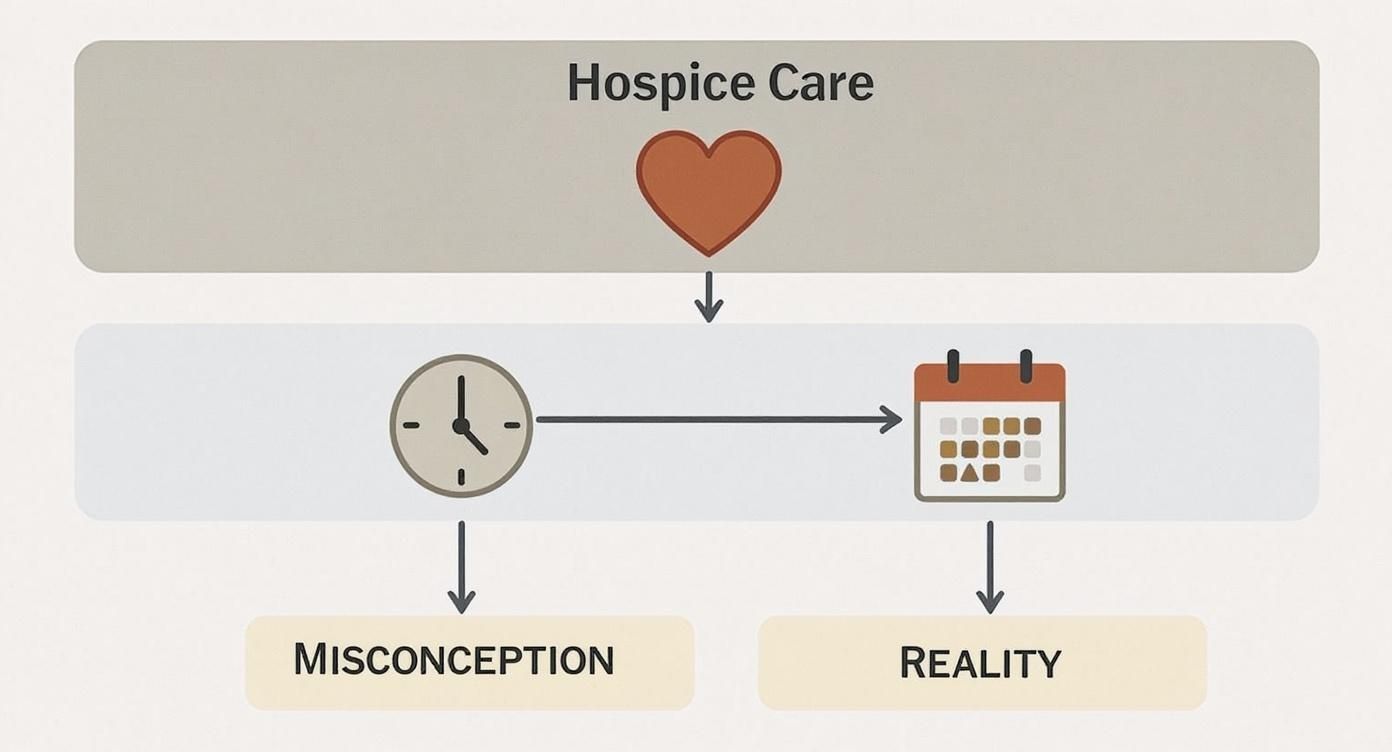
The table below shows the difference between waiting too long and starting early. It is a complete change in perspective.
Hospice Timing: A Shift in Perspective
| Aspect of Care | Misconception (Late Referral) | Reality (Early Referral) |
|---|---|---|
| Focus of Care | Crisis management in the last days. | Proactive comfort and quality of life for months. |
| Symptom Control | Reactive; treating severe, urgent symptoms. | Proactive; preventing symptoms from getting worse. |
| Family Experience | Rushed, stressful, full of difficult decisions. | Supported, calm, and focused on meaningful time. |
| Emotional Support | Little time to build trust or process grief. | Strong relationships built with the care team. |
| Patient Outcome | Often involves chaotic final days and ER visits. | A peaceful, dignified journey with fewer crises. |
As you can see, the experience is completely different. An early start transforms the end-of-life journey. It becomes a supported, peaceful process instead of a medical crisis.
It is also important to know how different types of care fit together. To learn more, read our guide on the differences between palliative and hospice care.
A Holistic Approach to Living Well
Hospice is more than just medical support. It is a complete philosophy for living well. Here at Central Coast VNA & Hospice, our team works together to care for the whole person and their family.
Choosing hospice early is not about focusing on the final days. It is about making all the days leading up to them as full and meaningful as possible. This approach brings together a team of specialists to address every aspect of a person's well-being.
Your Interdisciplinary Care Team
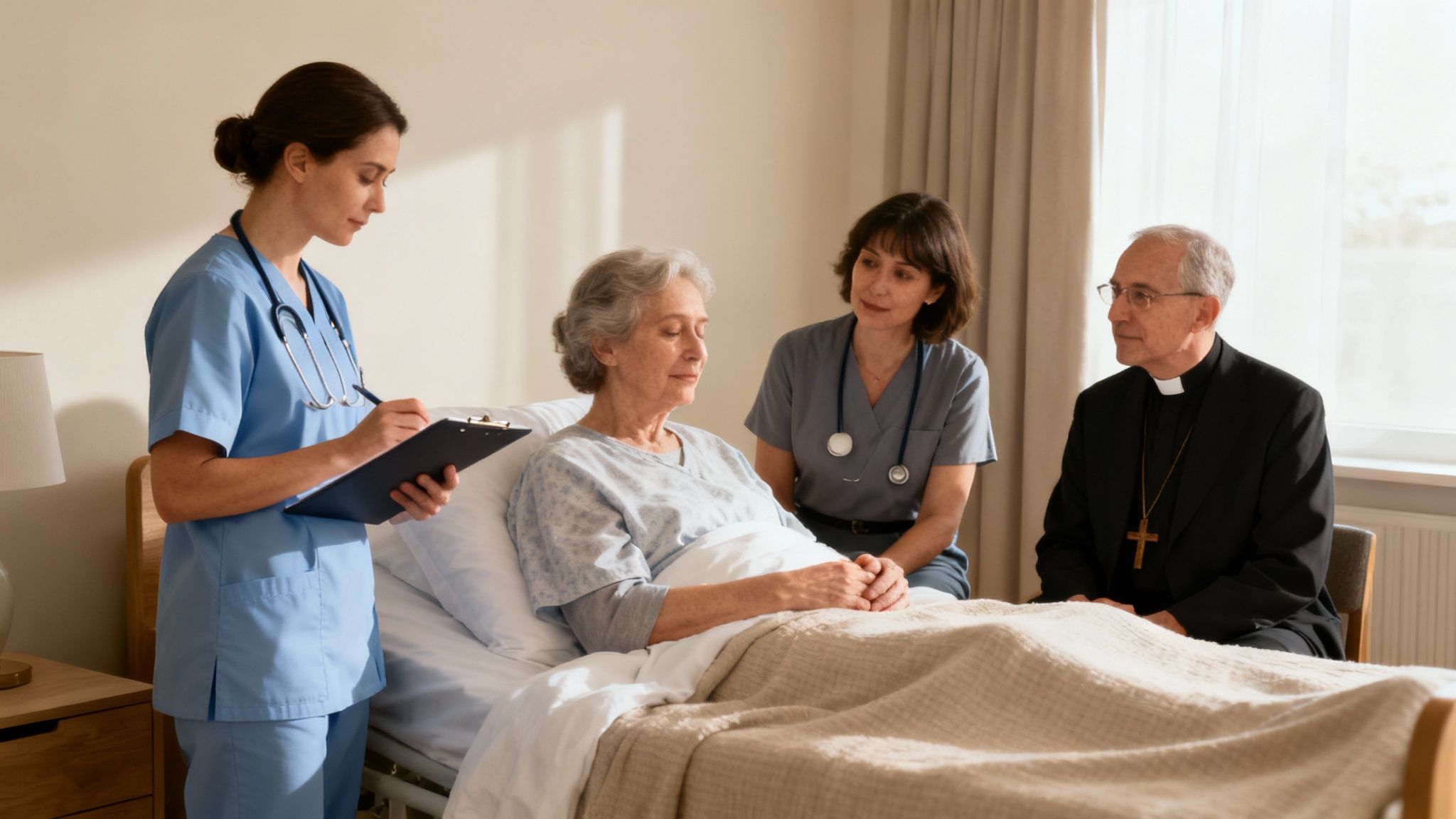
When you choose hospice care in Monterey County or our other service areas, you get a partner for your journey. Our nonprofit team is made up of caring professionals. They coordinate everything to meet your loved one’s unique needs.
This dedicated team includes:
- Registered Nurses who are experts in managing pain and other difficult symptoms.
- Hospice Aides who provide gentle, hands-on help with daily personal care.
- Medical Social Workers who help families navigate tough decisions and find resources.
- Chaplains who offer spiritual support that respects each family’s personal beliefs.
"Early access to hospice care gives patients and their families the opportunity to receive the full benefit of hospice care. The support of this team helps prevent the need for hospitalizations and supplements the care family... are providing for the patient, preventing burnout and improving the patient and family’s quality of life."
Building a Foundation of Trust
Starting hospice early allows these important relationships to grow. A Medical Social Worker has time to help you with paperwork without rushing. A volunteer can provide a break so you can rest.
This kind of support is similar to what patients receive in palliative care. You can learn more about the benefits of palliative care in our guide. We look for every opportunity to provide comfort, which can include therapies like massage for seniors comfort care.
Tangible Benefits of Earlier Hospice Enrollment
Choosing hospice sooner delivers clear advantages that have more to do with living well. Waiting until the final days means missing out on support that reduces stress. An earlier start gives us the time to build a compassionate plan together.
One immediate benefit is getting ahead of symptoms. Our team of Registered Nurses can manage pain, shortness of breath, and anxiety before they become severe. This is a core part of our approach to pain and symptom management.
This proactive care helps your loved one avoid exhausting trips to the emergency room. It means they can remain in the familiar comfort of their own home. It is all about preserving dignity and a sense of normalcy.
Reducing Financial and Emotional Burdens
Beyond physical comfort, there are practical benefits. Research shows that earlier hospice enrollment leads to better symptom control and fewer ER visits. It also reduces the emotional and financial strain on families.
This approach significantly reduces caregiver burnout. The weight of caring for a seriously ill loved one can be overwhelming. As a nonprofit serving Monterey County, San Benito County, Santa Cruz County, and South Santa Clara County, we step in to provide relief.
By sharing the responsibilities of care with our professional team, families can shift their focus from the stress of managing a crisis to making the most of their precious time together.
Our team provides medical, practical, and emotional support for the whole family. If you'd like to see the numbers, you can read the full research on early palliative care cost savings.
Creating More Meaningful Moments
The most important benefit of starting hospice early is adding more life to those days. It is the gift of better time. When pain is managed and stress is lifted, everyone can focus on what matters.
An earlier start makes room for:
- Meaningful Conversations: Families have the space to share stories and express love.
- Personal Goals: Our team helps patients achieve personal wishes, like sitting in their garden.
- Lasting Peace: Knowing your loved one is comfortable provides a sense of calm.
This is the real purpose of hospice care from Central Coast VNA & Hospice. We help patients live as well as they can, for as long as they can. It is not about giving up; it is about enriching the time that remains.
How Early Hospice Empowers Family Caregivers
Taking care of a seriously ill loved one is a huge responsibility. Families often juggle medical tasks and provide emotional support. The pressure can lead to anxiety and burnout, which 88% of caregivers report.
This is where starting hospice early truly helps. It wraps the entire family in a system of support. At Central Coast VNA & Hospice, our nonprofit mission means that caring for you, the family, is part of our promise.
Building Confidence and Reducing Helplessness
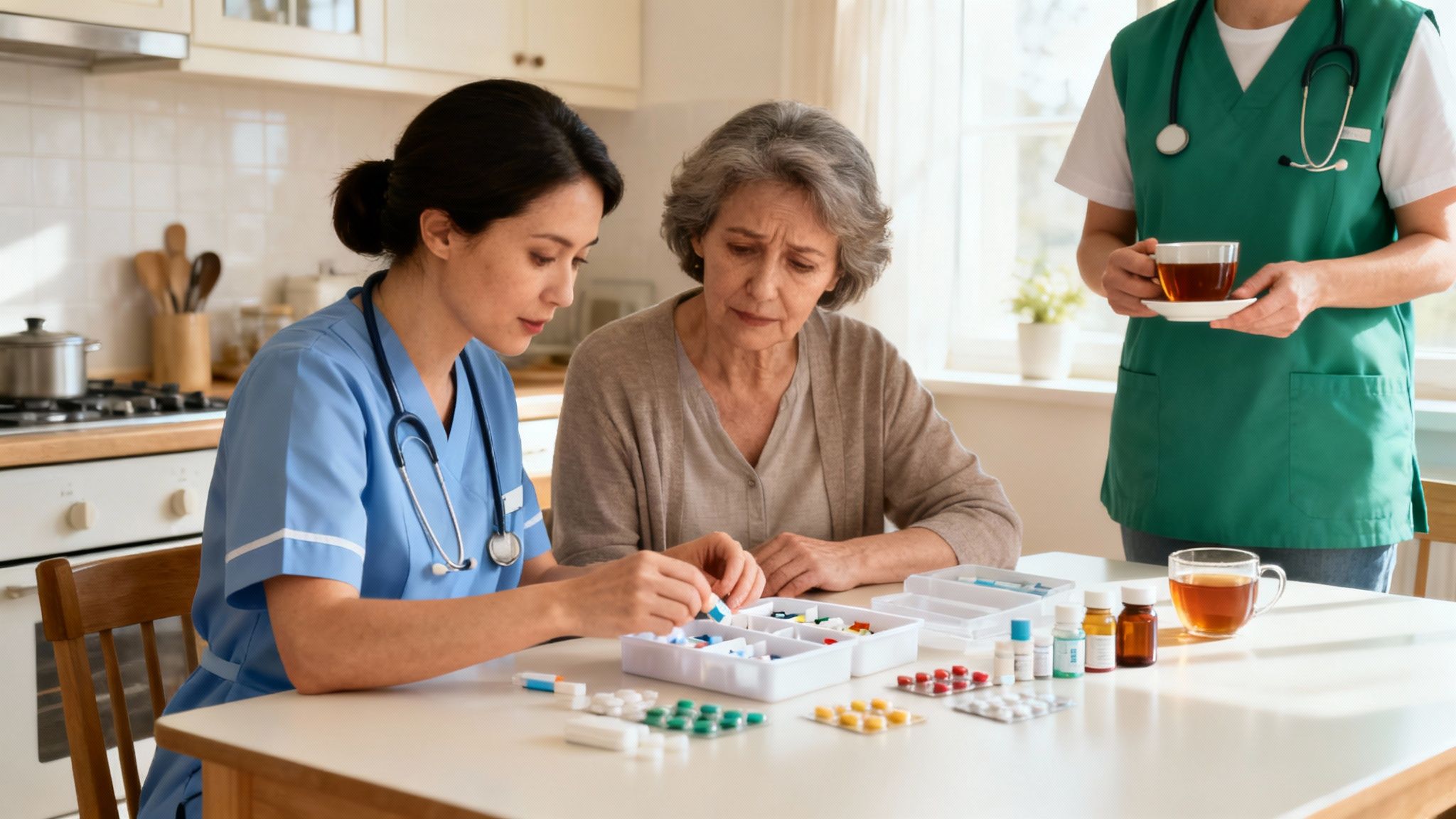
One of the hardest parts of being a caregiver is feeling unprepared. Early hospice enrollment provides the education and training you need to feel confident. Our compassionate professionals guide you.
Our team can teach you how to:
- Manage Medications: We show you how to give medications to keep your loved one comfortable.
- Provide Personal Care: Our Hospice Aides demonstrate safe and gentle techniques for daily activities.
- Recognize New Symptoms: You will learn what to watch for and know you can call our team 24/7.
A family in Santa Cruz County recently shared how lost they felt. Once our team started visiting, they said the burden was lifted. They had partners they could trust, which allowed them to simply be a family again.
Support for Your Own Well-being
You cannot pour from an empty cup. Caregiver burnout is a real risk. Our hospice services are designed to provide relief before you reach that point.
We offer support to help you rest, including respite care. This is when a team member steps in, giving you time for a break. You can learn more about how respite care for family caregivers helps.
Our Medical Social Workers and Chaplains also provide emotional support just for you. Our support continues with bereavement counseling for up to 13 months after your loved one’s passing. You are never alone.
Recognizing When It Is Time to Consider Hospice
Knowing when to explore hospice is a difficult conversation. Many people wait for a doctor to bring it up. But you can be a loving advocate for your loved one by understanding the signs yourself.
Remember, reaching out to Central Coast VNA & Hospice for information is not a commitment. It is a step toward understanding all your options. Our nonprofit team is here to provide guidance without any pressure.
Common Signs to Look For
Every person’s journey is unique. But there are common signs that a shift to comfort care may be the right path. If you notice several of these signs, it may be time to learn more about hospice.
Here are a few indicators families often see:
- Frequent Hospitalizations: A cycle of ER visits or hospital stays in the last six months.
- Increasing Difficulty with Daily Activities: A decline in their ability to handle tasks like bathing or dressing.
- Uncontrolled Symptoms: Persistent pain, shortness of breath, or fatigue that hurts their quality of life.
- Significant Weight Loss: Unexplained weight loss, often paired with a loss of appetite.
To help you, we've organized these signs into a checklist. This can help you decide if a conversation about hospice is appropriate.
| Category | Observable Signs & Symptoms |
|---|---|
| Medical Status | Frequent ER visits or hospital stays (e.g., more than 2 in 6 months) |
| Current treatments are causing more side effects than benefits | |
| Chronic infections that are not responding to antibiotics | |
| Physical Decline | Progressive, unintentional weight loss (e.g., more than 10% of body weight) |
| Noticeable difficulty with breathing, even while resting | |
| Increased weakness, fatigue, and sleeping more often | |
| Worsening pain, nausea, or other symptoms that are hard to control | |
| Functional Decline | Needing much more help with daily activities (bathing, dressing, eating, walking) |
| Spending most of the day in a chair or bed | |
| Increased confusion, memory loss, or disorientation | |
| A significant decline in the ability to speak or communicate |
Seeing one or two of these signs may not mean it is time for hospice. But if you check off several boxes, it is a strong sign that it's time to gather more information. This is about ensuring your loved one is comfortable, not about giving up.
A Shift Toward Earlier Referrals
Thankfully, there's a growing understanding that hospice is not just for the final few days. The data reflects this positive shift. According to the National Hospice and Palliative Care Organization (NHPCO), the average length of stay in hospice care is now 92.6 days for Medicare patients.
This shows that families and doctors see the benefits of starting comfort care sooner. In fact, nearly 52% of Medicare beneficiaries who died in 2020 received hospice services. You can learn more by exploring some of these hospice care trends and statistics.
Exploring hospice is about ensuring your loved one can live as well as possible, for as long as possible. A simple informational call can provide clarity and peace of mind.
If you are still unsure, our guide on when to call hospice provides more helpful information. If your loved one wants to stop aggressive treatments and focus on comfort, that is the most important sign.
Take the Next Step with Our Compassionate Team
Choosing hospice is not about giving up. It is a brave decision to take control and fill life's final chapter with dignity and comfort. It is about making the journey ahead peaceful, not chaotic.
As a local nonprofit with deep roots in Monterey, San Benito, Santa Cruz, and South Santa Clara counties, we have walked this path with countless families. We understand this is a difficult conversation. That’s why we invite you to start with a talk, with no pressure or strings attached.
Reaching out is a sign of strength and love. Let us help you navigate this journey with confidence and peace of mind, so your focus can remain where it belongs: on your loved one.
The real gift of starting hospice early is the quality time it gives back to your family. We are here to help you make the most of every moment. Give us a call at (831) 372-6668 or learn more about our hospice care services.
Answering Your Questions About Starting Hospice Early
Deciding on hospice care is a big step, and it is normal to have questions. We have put together answers to the concerns we hear most often from families in our community. We hope this gives you the confidence to make the best choice for your loved one.
Does starting hospice mean we are giving up hope?
Not at all. Starting hospice is about redefining hope. The focus shifts from a cure to the hope for comfort and quality of life. It is a choice to make sure your loved one's remaining time is as peaceful as possible.
Can a patient still see their regular doctor?
Yes, absolutely. Central Coast VNA & Hospice works closely with your loved one’s primary doctor. The doctor your family trusts remains a vital part of the care team, and we keep them fully informed.
Is hospice care only provided in a special facility?
This is a common myth. The vast majority of hospice care happens right where the patient calls home. This could be a private house, an assisted living community, or a nursing home in Monterey County or our other service areas.
Who pays for hospice care?
Hospice is a fully covered benefit under Medicare Part A, Medi-Cal, and most private insurance plans. As a nonprofit organization, Central Coast VNA & Hospice is also committed to providing care for everyone in our community, regardless of their ability to pay.
What if my loved one's condition improves?
Hospice care is not a one-way street. If a patient's condition gets better or they decide to try a new treatment, they can be discharged from hospice at any time. They can always return to hospice support later if they need it again. The choice always belongs to the patient and their family.
Exploring hospice is a proactive step toward ensuring comfort, dignity, and peace of mind. The team at Central Coast VNA & Hospice is here to answer all your questions with no pressure or obligation. Contact us today to learn more about how we can support your family.

7 signs you’ve found the right hospice for your parent
Choosing hospice care for a parent is a profound and challenging decision. It is a journey filled with complex emotions and important questions. You want to ensure your parent receives comfort, dignity, and respect.
With so many options, how can you be sure you are making the right choice? Finding a compassionate partner for this journey is crucial. This guide will help you select the right care team with confidence.
For over 74 years, Central Coast VNA & Hospice has guided families through this process. Our nonprofit, mission-driven approach focuses on quality of life and peace. We believe end-of-life care should be a testament to a life well-lived.
Drawing from our experience in Monterey County, San Benito County, Santa Cruz County, and South Santa Clara County, we have identified key signs of exceptional care. This list details the "7 signs you’ve found the right hospice for your parent." It will help you find a trusted partner to honor your parent's final wishes.
1. The Team Shows Genuine Compassion and Patient-Centered Care
The most important sign is the presence of genuine, heartfelt compassion. The right hospice team creates a warm, supportive atmosphere. Your parent should feel seen, heard, and valued as an individual.
This patient-centered care approach means the team prioritizes your parent’s wishes. Their dignity and emotional well-being are just as important as their medical needs.

What Genuine Compassion Looks Like
Genuine compassion is shown through small, meaningful actions. It’s a Registered Nurse remembering your mother’s love for classical music. It’s a Hospice Aide discussing your father’s time in the service.
A compassionate team also honors family traditions and spiritual needs. They might adjust visit schedules for prayer times or arrange a specific ritual. These personal touches create a peaceful end-of-life experience.
How to Spot True Patient-Centered Care
Identifying authentic compassion requires careful observation. Here are a few practical tips:
- Observe Interactions: Watch how staff members interact with patients. Do they make eye contact, listen actively, and speak with a warm tone?
- Ask About Motivation: Ask team members why they work in hospice. Their answers often reveal a deep commitment to compassionate care.
- Assess Your Parent’s Comfort: After an initial meeting, ask your parent how they felt. A good team will make them feel safe and respected.
- Pay Attention to Details: Notice if the team asks about your parent’s hobbies and life stories. This focus on the whole person is a key sign of patient-centered care.
2. Comprehensive Pain and Symptom Management
A cornerstone of quality hospice is a comprehensive approach to managing pain. The goal is to maximize comfort and ensure your parent lives with dignity. A top-tier team has expertise in controlling symptoms like shortness of breath, nausea, and anxiety.
What Comprehensive Management Looks Like
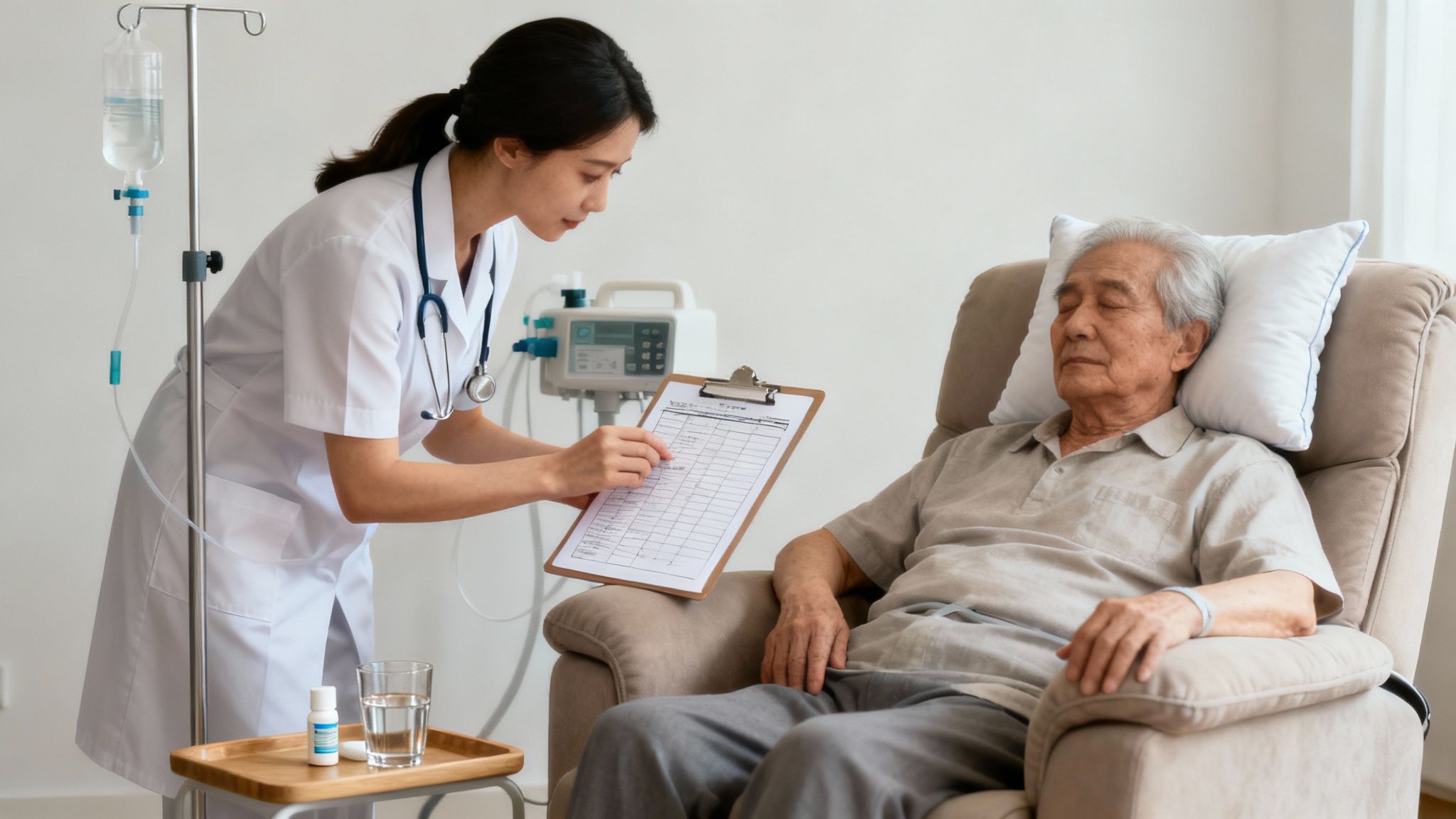
Effective symptom management is proactive, not just reactive. It combines medications with non-pharmaceutical therapies. For example, a team might manage shortness of breath with low-dose opioids, oxygen, and relaxation techniques.
This approach also means the team anticipates needs. They ensure medications are delivered on time, even on weekends. They have plans for patients who cannot swallow pills, using alternatives like patches or liquids.
How to Evaluate Symptom Management Expertise
Assessing a hospice’s ability to manage symptoms requires asking specific questions. Here are a few tips:
- Ask About Their Philosophy: Inquire about their overall approach to pain control. Do they believe in staying ahead of the pain?
- Discuss Specific Scenarios: Describe a potential symptom and ask how they would manage it. This reveals their practical knowledge.
- Inquire About After-Hours Support: Ask how crises are handled outside of business hours. A quality provider has a 24/7 on-call system with nurses who can respond promptly.
- Request Examples: Ask them to share general examples of how they managed complex symptom cases. Their confidence is a key indicator.
3. Strong Communication and Transparency with Family
The third sign is a commitment to strong, transparent communication. Navigating end-of-life care is an emotional journey. The right hospice team acts as a guiding partner, ensuring you are informed and prepared.
They translate complex medical details into clear, understandable language. They also foster an environment where questions are always welcome.
What Strong Communication Looks Like
Strong communication is consistent, proactive, and honest. It looks like a hospice nurse providing weekly check-in calls. It is a Social Worker explaining the signs that indicate your parent may be entering their final days.
This transparency includes being upfront about what hospice can and cannot do. A trustworthy team will set realistic expectations. Good communication is a two-way street; understanding how to improve communication can strengthen your interactions.
How to Spot True Transparency
Clear communication is a skill you can assess from your first interaction. Use these tips to gauge a hospice's commitment to keeping you informed:
- Ask About Their Process: Inquire about their standard communication methods. Do they offer a designated primary contact person?
- Discuss After-Hours Support: Establish a clear protocol for handling after-hours emergencies. Ask how you should report urgent concerns.
- Clarify Care Plan Reviews: Ask how often the team reviews your parent’s care plan. Most importantly, ask how family input is included.
- Request Written Information: A transparent organization will gladly provide written materials. This could include summaries of care meetings or medication information.
4. An Interdisciplinary Team with Multiple Specialties
A crucial indicator is a commitment to a comprehensive, team-based approach. The end of life involves complex emotional, spiritual, and social needs. The best providers assemble a team of specialists to provide holistic care.
This team works together to support your parent and your entire family.

What an Interdisciplinary Team Looks Like
This model goes beyond basic nursing. It brings together a physician, Registered Nurse, Social Worker, Chaplain, Hospice Aide, and trained volunteers. Each professional contributes their unique expertise to a coordinated plan.
For example, the nurse manages pain medication while the Social Worker helps with financial questions. A Chaplain might offer spiritual comfort, and a volunteer provides companionship. This team-based care at Central Coast VNA & Hospice ensures all needs are met.
How to Spot True Team-Based Care
A collaborative team is more than just a list of services. Here are a few ways to assess their approach:
- Ask About Communication: Inquire how the team members communicate with one another. A quality hospice has regular team meetings to discuss each patient.
- Request an Initial Team Meeting: Ask if you can meet with key members, like the nurse and Social Worker. This helps gauge their collaborative spirit.
- Inquire About Specialized Support: If your parent has unique needs, ask how the hospice provides access to specialists.
- Discuss Family Support: A strong team recognizes that hospice is for the family, too. Ask about the bereavement support and counseling services available.
5. Flexibility in Care Settings and Responsive to Individual Preferences
A key sign is a provider’s willingness to adapt to your family’s unique needs. The right hospice understands that care is not one-size-fits-all. They offer flexibility in where and how care is delivered.
This ensures your parent’s autonomy and preferences are respected. This adaptability shows they prioritize your parent’s comfort over rigid routines.
What Flexibility and Responsiveness Look Like
A responsive hospice team works with you to honor what matters most. This might mean allowing your father’s beloved cat to stay in his room. It could also mean arranging support so your mother can attend a family event.
This approach extends to personal environments. A flexible provider will accommodate family members who wish to stay overnight. They also help personalize a room with familiar photos and furnishings.
How to Spot True Flexibility
Evaluating a hospice’s adaptability requires asking direct questions. Here are a few tips to guide your assessment:
- Ask About Care Locations: A flexible provider will offer various hospice care options, including care at home or in a facility. Inquire how they support transitions if needs change.
- Discuss Visiting Policies: Ask about their policies on visiting hours and the presence of children or pets. Their answers reveal their commitment to keeping families together.
- Inquire About Personalization: During a tour, look for signs of personal touches. Ask if you can bring in items like a favorite quilt or photos.
- Clarify Family Involvement: Ask how your family can participate in daily care. A patient-centered hospice welcomes your involvement.
6. A Realistic and Honest Approach to Prognosis
Navigating end-of-life conversations requires honesty and compassion. The sixth sign is when the care team communicates a realistic prognosis with clarity. They avoid both false hope and bleak pessimism.
This balanced approach helps your family make informed decisions. It also allows you to prepare emotionally and align care goals.
What a Balanced Prognosis Looks Like
A realistic approach does not mean giving up hope. Instead, it helps redefine hope from a cure to comfort and meaningful time. They provide clear information while preserving a sense of peace.
For example, a hospice physician might say, “Based on your father’s disease progression, his time is likely in weeks to months. Our goal is to ensure he is comfortable and you have quality time together.” This honesty allows families to plan and focus on what matters.
How to Spot an Honest and Realistic Approach
Identifying a team that handles these conversations well requires listening. Here are some tips to evaluate their communication style:
- Ask Direct Questions: Don't hesitate to ask for a clear prognosis. Ask, “What changes should we anticipate?”
- Observe Their Language: Do they use gentle yet direct language? A good team acknowledges uncertainty while providing professional assessments.
- Inquire About Updates: Ask how the team communicates changes in your parent's condition. A reliable hospice will have a clear process for keeping the family informed.
- Assess Their Willingness to Discuss Tough Topics: The right team will not shy away from difficult conversations. They create a safe space for you to ask about the dying process itself.
7. A Strong Track Record, Credentials, and Positive Reputation
The final sign is a proven history of excellence. A reputable provider will have the proper licenses and a positive reputation. This track record reflects a commitment to quality and compassionate care.
A strong reputation is built on years of trusted service. It indicates the organization is well-regarded by families, hospitals, and physicians.
What a Strong Reputation Looks Like
A hospice with a strong track record invests in its team. You might see team members with specialized credentials, like a Certified Hospice and Palliative Nurse. A hospice that has served the community for over 74 years, like CCVNA, shows stability.
These organizations are often transparent about their performance. According to the National Hospice and Palliative Care Organization (NHPCO), over 1.72 million Medicare beneficiaries received hospice services in 2020 (NHPCO, 2021). Reputable agencies often share their family satisfaction data publicly.
How to Verify a Hospice’s Reputation
Verifying a hospice’s credentials is a crucial step. Here are a few practical ways to do your research:
- Check Licensing and Complaints: Visit your state’s health department website to confirm the hospice is licensed.
- Verify Accreditation: Look for accreditation from organizations like The Joint Commission. This signifies a commitment to the highest standards.
- Read Online Reviews: Search for reviews on Google and other forums to see what other families have experienced.
- Ask for Professional Opinions: Ask your parent's physician or hospital for recommendations. They often have firsthand experience with local hospices.
- Inquire About Staff: Ask about staff longevity and required training. This shows an investment in expertise.
Your Trusted Partner in Compassionate Care
Choosing a hospice for your parent is a decision rooted in love. You desire a peaceful, dignified, and comfortable journey for them. Navigating this path requires a partner who provides expert medical care and genuine compassion.
By focusing on the 7 signs you’ve found the right hospice for your parent, you can make a confident decision. These signs are the foundation of quality end-of-life care.
Key Takeaways for Your Family's Journey
Let’s quickly revisit the essential markers of an exceptional hospice provider:
- Genuine Compassion: The staff sees your parent as a person.
- Expert Symptom Control: They have a proven plan for managing discomfort.
- Clear Communication: Your family is informed, involved, and heard.
- A Full Team: An interdisciplinary group works together.
- Flexibility: Care adapts to your parent’s needs and wishes.
- Honest Guidance: They provide realistic information without false hope.
- Strong Reputation: The community trusts them, and their credentials are solid.
You are no longer just looking for a service. You are seeking a trusted ally who will walk alongside you and your parent.
For over 74 years, Central Coast VNA & Hospice has been that ally for families. We serve Monterey, San Benito, Santa Cruz, and South Santa Clara counties. As a local nonprofit, our mission is driven by community, not profit.
Our team embodies these seven signs every day. We understand this journey intimately and are here to help your family navigate it with grace. Contact us today to learn more about our hospice care in Monterey County and surrounding areas.
Ready to take the next step? Learn how VNA and Hospice provides compassionate, team-based care that aligns with these seven essential signs. Visit our website at VNA and Hospice or contact us today to discover how we can support your parent and family.
Frequently Asked Questions (FAQs)
1. What is the difference between palliative care and hospice care?
Palliative care can be provided at any stage of a serious illness and can be given alongside curative treatments. Hospice care is for individuals with a life-limiting illness and a prognosis of six months or less, focusing on comfort and quality of life when curative treatment is no longer an option.
2. How is hospice care paid for?
Hospice care is typically covered by Medicare, Medicaid, and most private insurance plans. As a nonprofit, Central Coast VNA & Hospice provides care to all eligible patients, regardless of their ability to pay.
3. Can my parent receive hospice care at home?
Yes, most hospice care is provided in the patient's home. Central Coast VNA & Hospice specializes in home-based care, but services can also be provided in skilled nursing facilities or assisted living communities.
4. What does the hospice interdisciplinary team include?
Our team includes a Hospice Physician, Registered Nurses, Hospice Aides, Medical Social Workers, Chaplains, and trained volunteers. They work together to create a personalized care plan that addresses physical, emotional, and spiritual needs.
5. How often will the hospice team visit?
The frequency of visits is based on the patient's individual needs and the care plan. Visits from Registered Nurses and Hospice Aides are scheduled regularly, and the entire team is available 24/7 for support.
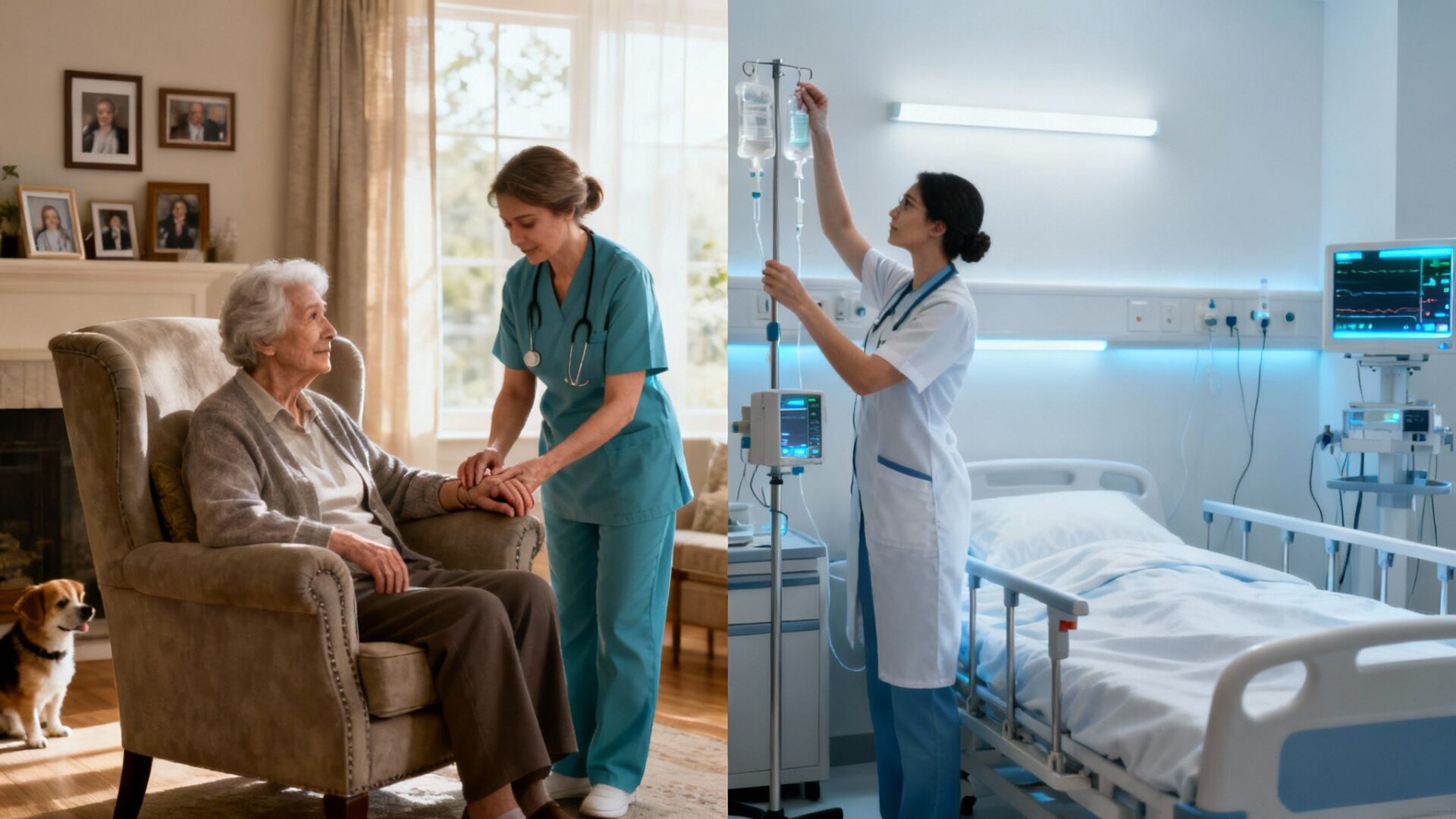
Hospital or Home? What to Know When Deciding Where Your Loved One Receives End-of-Life Care
When facing a serious illness, the choice for care often comes down to a powerful question: home or hospital? On one hand, home care offers comfort, dignity, and personal connection. On the other, hospital care provides intense medical support when symptoms are too difficult to manage otherwise.
The right decision rests on balancing your loved one's medical needs with their desire for peace in a familiar setting. This guide helps you understand the options so you can make a choice that honors their wishes.
Making the Right Choice for Your Loved One
Choosing between a hospital and home is one of the most important decisions a family can make. It is a personal journey that requires you to weigh clinical needs against emotional well-being. At Central Coast VNA & Hospice, our nonprofit mission is to make sure this choice is guided by compassion, clarity, and respect.
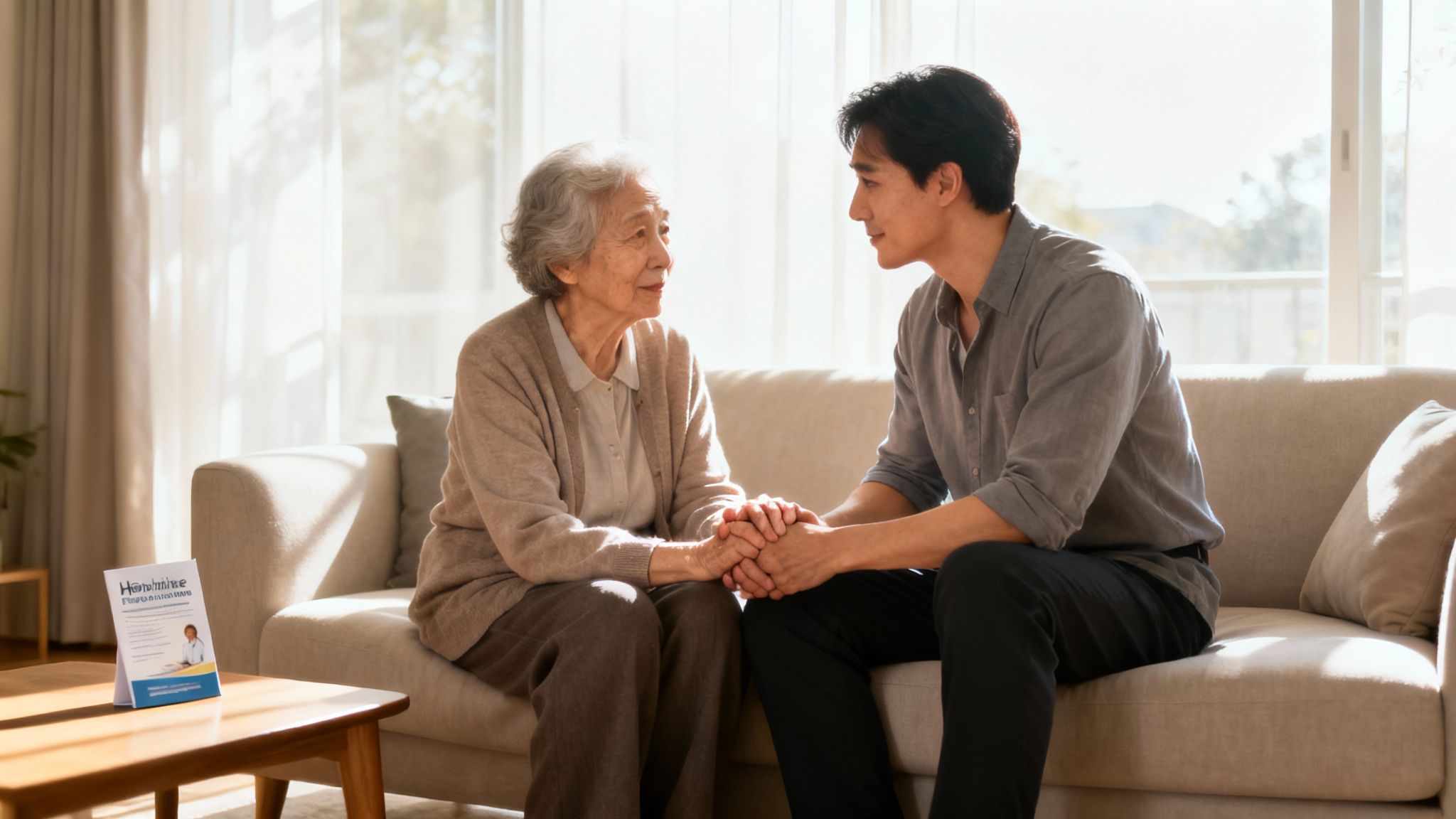
This decision can feel overwhelming, especially during a stressful time. Many families default to the hospital because it seems like the only place for expert medical care. But many don't realize that professional in-home hospice and palliative support can bring high-quality care right into their living room.
Quick Guide: Hospital vs. Home End-of-Life Care
To get started, it helps to understand the main differences between the two environments. While every situation is unique, this overview can help guide your family's conversations.
| Factor | Hospital Care | Home Care (with Hospice/Palliative Support) |
|---|---|---|
| Environment | Clinical and institutional, with set schedules and visiting hours. | Familiar, comfortable, and personalized to the patient's routines. |
| Primary Goal | Aggressive treatment and stabilization of acute medical crises. | Comfort, symptom management, and maximizing quality of life. |
| Family Role | Families are often visitors and advocates within a structured system. | Families are central partners in the care circle, with hands-on support. |
| Daily Life | Governed by hospital protocols, including meals and staff shifts. | Directed by the patient and family's preferences and daily rhythms. |
| Emotional Support | Focused on the patient's immediate medical needs; support can be limited. | Integrated emotional and spiritual support for the entire family. |
This choice is part of a bigger conversation about how we approach the end of life. Most people prefer to die at home, but hospital deaths remain common. In 2021, about 50% of deaths across OECD countries happened in hospitals, which is very different from what most people say they want. You can read the full research about these end-of-life preferences to learn more.
As a trusted community partner with over 74 years of service in Monterey County, San Benito County, Santa Cruz County, and South Santa Clara County, we are here to help you explore every option. Understanding end-of-life care planning is the first step toward honoring your loved one’s wishes with dignity.
Comparing Clinical Support and Symptom Management
One of the biggest concerns for families is making sure their loved one gets expert medical care. The choice between the hospital and home often comes down to one question: How will symptoms like pain or breathing trouble be managed?
Hospitals are built for immediate, intense medical action. Home care offers a different, more personal model of clinical support. Many people think a hospital is the only place for serious medical oversight, but choosing home doesn’t mean sacrificing quality care; it means shifting the focus to comfort.
How Medical Care Differs in Each Setting
In a hospital, the environment is designed for 24/7 acute care. The main goal is usually stabilization. This setting is critical when symptoms are severe and require immediate, intensive procedures.
Home hospice and palliative care, on the other hand, operate from a different philosophy. Instead of aggressive treatment, the goal is to maximize comfort and quality of life. An interdisciplinary team from Central Coast VNA & Hospice brings expert medical care into the patient’s home, creating a plan that aligns with their personal wishes.
At home, the clinical focus shifts from curing the disease to healing the person. Care is tailored to manage symptoms, allowing the patient to live as comfortably as possible in a familiar environment.
This personal approach ensures that every medical decision honors the patient's goals. When weighing your options, getting a clear picture of what to expect from hospice care is essential.
Expert Symptom Control in a Home Environment
A common fear is that pain and other symptoms can't be managed well at home. In reality, specialized in-home care providers excel at this. At Central Coast VNA & Hospice, our team is specially trained in advanced symptom control.
Our team includes:
- Registered Nurses who are experts in pain management and regularly assess the patient to adjust medications and treatments.
- Hospice Aides who provide hands-on personal care and help with daily tasks, reporting any changes to the nursing team.
- 24/7 On-Call Support from a clinical professional, giving families in Monterey County peace of mind that help is just a phone call away.
This team works with the patient’s physician to create a complete plan. For example, a patient struggling with breathing might receive an oxygen concentrator and medications at home. A Registered Nurse would then teach the family how to manage those symptoms, which can prevent stressful emergency room visits.
Access to Medication and Medical Equipment
Another key piece of the puzzle is getting the right supplies. In-home hospice services streamline this process, lifting a major burden from families.
Under the hospice benefit, most services, medications, and equipment related to the terminal illness are fully covered. Central Coast VNA & Hospice coordinates the delivery and setup of everything needed, including:
- A hospital bed for comfort and safety
- An oxygen machine to help with breathing
- Walkers, wheelchairs, or other mobility aids
- All necessary medications for pain and symptom relief
This coordination means families don’t have to run around getting prescriptions or bulky equipment. The care team handles these details, freeing up families to focus on spending meaningful time together. Our dedication to pain and symptom management ensures your loved one gets effective relief right where they are most comfortable.
The Impact of Environment on Emotional Well-Being
When thinking about end-of-life care, medical needs are only part of the story. The environment plays a huge role in a person’s emotional and spiritual state. A hospital is built for clinical treatment, but a home is where life happens, filled with memories and comfort.
The atmosphere in a hospital can often feel sterile and impersonal. The bright lights, beeping machines, and unfamiliar faces can be unsettling for someone in a vulnerable state.

Home, on the other hand, is a sanctuary. It’s where a favorite blanket is always within reach and the family pet can curl up on the bed. These are powerful anchors that ground a person in their own story, preserving their sense of identity and dignity.
Finding Peace in Familiar Surroundings
Being at home can reduce anxiety for the patient and the entire family. There are no restrictive visiting hours or limits on who can be there. This freedom allows for spontaneous, meaningful moments, like sharing a quiet morning coffee or having grandchildren visit.
This flexibility is a key difference when deciding on care. The ability for family to be present creates a continuous circle of support. It shifts the focus from navigating hospital rules to simply being together.
At home, the rhythm of life doesn’t stop for a diagnosis. Instead, care is woven into daily routines, allowing for moments of normalcy that are often impossible in a clinical setting.
Globally, there's a big gap between where people want to spend their final days and where they actually do. A meta-analysis found that hospital deaths account for about 63% worldwide, while home deaths are only around 37%. You can discover more insights about these place-of-death findings to better understand this trend.
Integrated Emotional and Spiritual Support at Home
At Central Coast VNA & Hospice, we know that emotional and spiritual needs are just as vital as physical ones. Our care model at home is designed to be truly supportive. As a nonprofit serving Monterey, San Benito, Santa Cruz, and South Santa Clara counties, our mission extends to the entire family.
Our team includes professionals who focus on emotional well-being:
- Medical Social Workers help families navigate complex emotions, guide difficult conversations, and connect them with community resources.
- Chaplains offer non-denominational spiritual support that honors each family’s unique beliefs and cultural traditions.
By caring for the emotional and spiritual health of both the patient and their family, we can help them find peace and strength. To learn more, you can learn what to expect from hospice care with CCVNA. Choosing home care means choosing an environment where every part of a person’s well-being is honored.
Understanding Daily Life and Family Roles
When deciding between a hospital or home, it's easy to focus on medical details. But the practical, day-to-day realities are where the heart of the decision lies. The setting you choose will shape daily routines and family involvement.
In a hospital, family members often become visitors. Your time is structured around the hospital's schedule, with fixed visiting hours and clinical rounds. This environment can create distance and make it hard to preserve the natural rhythm of family life.
Opting for care at home with support from Central Coast VNA & Hospice changes that dynamic. Family members are no longer visitors; you become central partners in care. The focus shifts to creating a supportive, loving environment where your loved one’s comfort guides every day.
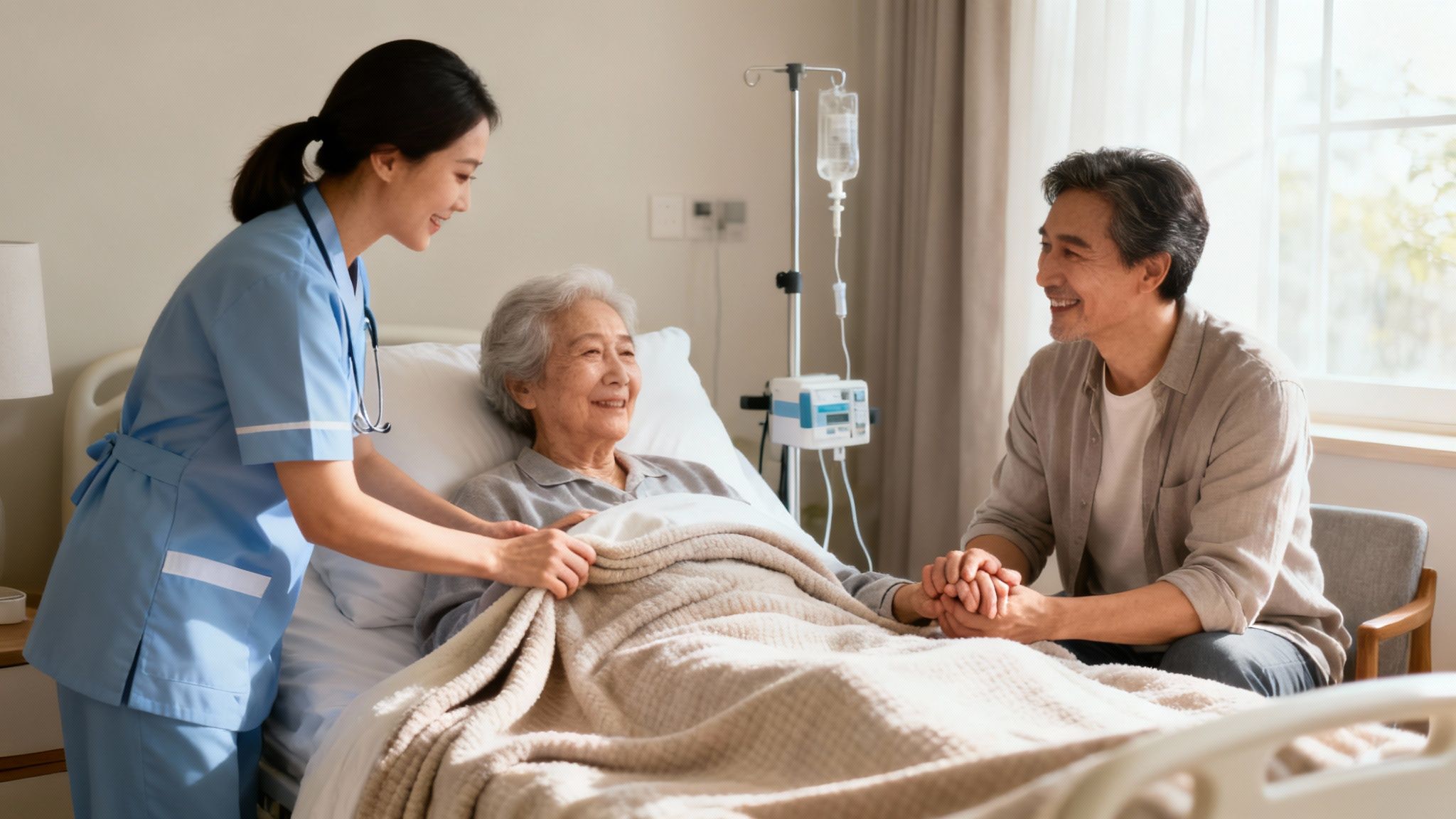
The Family's Role Supported by Professionals
One of the biggest worries we hear from families about in-home care is the fear of being overwhelmed. But with professional hospice support, you are never alone.
Central Coast VNA & Hospice provides an interdisciplinary team to empower your family, not burden it. This team includes:
- Registered Nurses who educate you on medications and symptom management.
- Hospice Aides who assist with personal care like bathing and dressing.
- Medical Social Workers and Chaplains who offer expert guidance for everyone in the family.
Our team's support allows you to step back from being a hands-on caregiver and return to your most important role: a spouse, a child, or a grandchild. We manage the clinical tasks so you can focus on creating meaningful memories.
This support is also flexible. For families who need a break, we offer dedicated respite care for family caregivers, providing short-term relief while ensuring your loved one receives continuous, professional care.
A Day in the Life: Hospital vs Home Care
The ability to maintain a sense of normalcy is a powerful benefit of home care. A hospital’s schedule is rigid, but at home, life can continue on your family’s terms.
This table breaks down some of the day-to-day differences.
| Daily Aspect | In a Hospital Setting | At Home with CCVNA Support |
|---|---|---|
| Meals | Restricted to hospital menus and set mealtimes. | Your loved one can enjoy favorite home-cooked meals whenever they wish. |
| Daily Schedule | Dictated by staff shifts, medical rounds, and facility protocols. | Flexible and centered around your loved one’s personal preferences. |
| Visitors | Limited by visiting hours and the number of people allowed. | Friends and family can visit freely, creating a warm circle of support. |
| Personal Comforts | Limited to a few personal items in an unfamiliar room. | Surrounded by cherished belongings, photos, pets, and their own bed. |
| Family Traditions | Difficult to maintain activities like holiday meals or daily rituals. | Families can continue traditions, preserving a sense of connection. |
Ultimately, choosing where your loved one receives care is about honoring their life and wishes. For families across Monterey County, San Benito County, Santa Cruz County, and South Santa Clara County, our nonprofit mission is to make dignified, compassionate care at home a reality.
Navigating Costs and Insurance Coverage
Thinking about money is the last thing anyone wants to do during a stressful time. Financial concerns shouldn't add to the weight your family is carrying. The good news is that exceptional care is often more accessible than people think.
Many families worry about how to pay for hospice, but the financial side is usually simpler than dealing with long hospital stays.
In a hospital, families often face confusing co-pays and unexpected bills. Home hospice, however, is a comprehensive benefit. In most cases, it’s covered 100% by Medicare, Medi-Cal, and most private insurance plans.
Understanding the Hospice Benefit
The hospice benefit was designed to lift the financial burden from families. For eligible patients, there are often no out-of-pocket costs for services related to their terminal illness.
This all-inclusive coverage typically provides:
- All professional services from the hospice team, including Registered Nurses, Hospice Aides, and Medical Social Workers.
- Medical equipment needed for comfort at home, like a hospital bed or oxygen.
- Medications for pain and symptom management related to the diagnosis.
- 24/7 clinical support—a team is always just a phone call away.
This decision tree helps show how straightforward hospice costs can be with insurance.
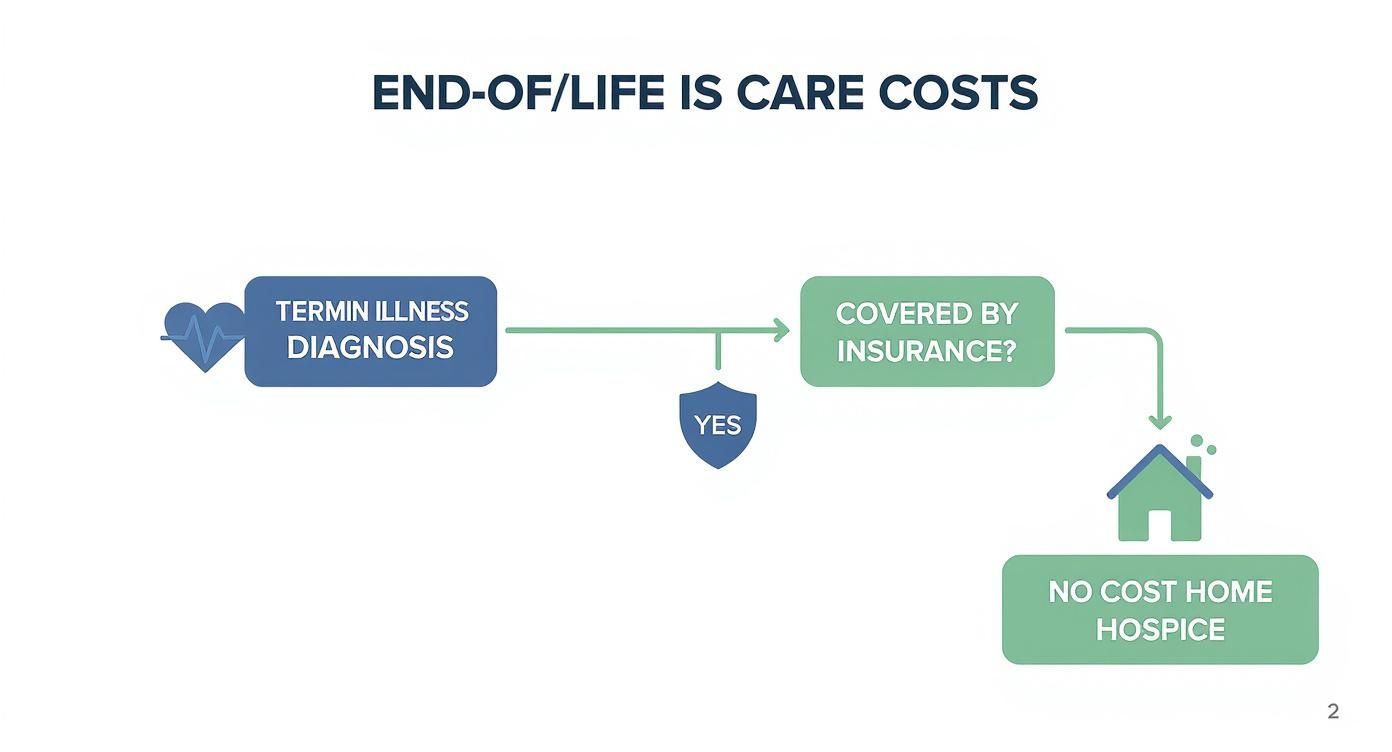
The biggest takeaway is that for most insured families, choosing hospice at home removes many of the financial worries of long-term hospital care. We explain this further in our guide on how to pay for hospice.
The Value of a Nonprofit Provider
As a nonprofit, mission-driven organization, Central Coast VNA & Hospice is dedicated to caring for everyone who needs us, regardless of their ability to pay. Our focus is on the patient and their family, never on profit. This has been at the heart of our 74+ years of service to Monterey County and our surrounding communities.
Choosing a nonprofit provider like CCVNA means you are partnering with an organization whose main goal is to deliver compassionate care. We are here to serve our community and ensure that financial barriers do not stand in the way of comfort and peace.
Globally, it's estimated that over 19 million adults need palliative care, but only about 14% receive it. For more detailed information, you can also explore resources on Medicare coverage for end-of-life care.
Making the Right Choice: Home vs. Hospital
Deciding between the hospital or home for end-of-life care is not a one-size-fits-all choice. The best path is deeply personal. It depends on your loved one’s medical needs, their wishes, and what your family hopes this chapter will feel like.
This isn't about a "good" or "bad" option. It’s about matching the environment to the most important goal, whether that’s intensive medical management or deep comfort.
When Home Hospice Is the Right Call
For most families, the main goal at the end of life is to maximize comfort and make sure their loved one feels safe and loved. Home hospice, with the guidance of a dedicated team like Central Coast VNA & Hospice, is designed for this.
Consider choosing home hospice when:
- Comfort is the highest priority. Your loved one’s main wish is to be free from pain in familiar surroundings, not to continue aggressive treatments.
- Family connection is key. You want the freedom for family and friends to visit anytime, without hospital limits.
- Personal routines bring peace. Maintaining normalcy with favorite meals, music, or pets is important for your loved one's emotional health.
- The prognosis is clear. A doctor has confirmed a life expectancy of six months or less, and the focus has shifted to quality of life.
Choosing home care is a powerful statement. It says that your loved one’s final chapter will be defined by personal connection and peace, not by clinical procedures.
When a Brief Hospital Stay Might Be Needed
While home is where most patients want to be, sometimes a short hospital stay is needed. This is not a failure of home care, but a temporary step to manage a crisis before returning home.
A hospital might be the right choice for a short period if:
- A severe symptom crisis happens. This could be a sudden spike in pain or severe shortness of breath that the home care team cannot stabilize at home.
- Complex medical procedures are required. Certain interventions may only be available in a hospital setting.
In these situations, the goal is always stabilization. As soon as the crisis is under control, the patient can almost always transition safely back home in Monterey County or San Benito County. The Central Coast VNA & Hospice team helps coordinate everything to ensure a smooth return home.
Frequently Asked Questions (FAQs) About End-of-Life Care
1. Can my loved one get the same level of pain control at home as in a hospital?
Yes. Our hospice team, which includes a Registered Nurse and the patient's physician, creates a personalized care plan. We bring all necessary medications and equipment for pain and symptom management directly to the home and provide 24/7 on-call clinical support.
2. What happens if there’s a medical emergency in the middle of the night?
You are never alone. Central Coast VNA & Hospice provides 24/7 on-call support from a clinical professional. A Registered Nurse is always available to provide guidance over the phone or make a home visit if needed.
3. Will my family be overwhelmed with caregiving responsibilities at home?
No, you will have a full support team. A Hospice Aide assists with personal care like bathing, and a Registered Nurse teaches you how to manage symptoms. This allows your family to focus on providing emotional support and spending quality time together.
4. How much does hospice care at home cost?
For eligible patients, hospice is a fully covered benefit under Medicare, Medi-Cal, and most private insurance plans. This means there are typically no out-of-pocket costs for services, medications, or medical equipment related to the terminal diagnosis.
5. How do we know when it’s the right time to consider hospice?
Hospice is for anyone with a life-limiting illness and a prognosis of six months or less. The best time to start the conversation is before a crisis occurs, allowing for thoughtful, unhurried decisions. Contact us for a no-obligation consultation to see if hospice is right for your family.
If you're wondering whether home care is right for your family, we’re here to guide you. Contact Central Coast VNA & Hospice at 831‑372‑6668 or visit our website to learn more about our in-home hospice and palliative care services.
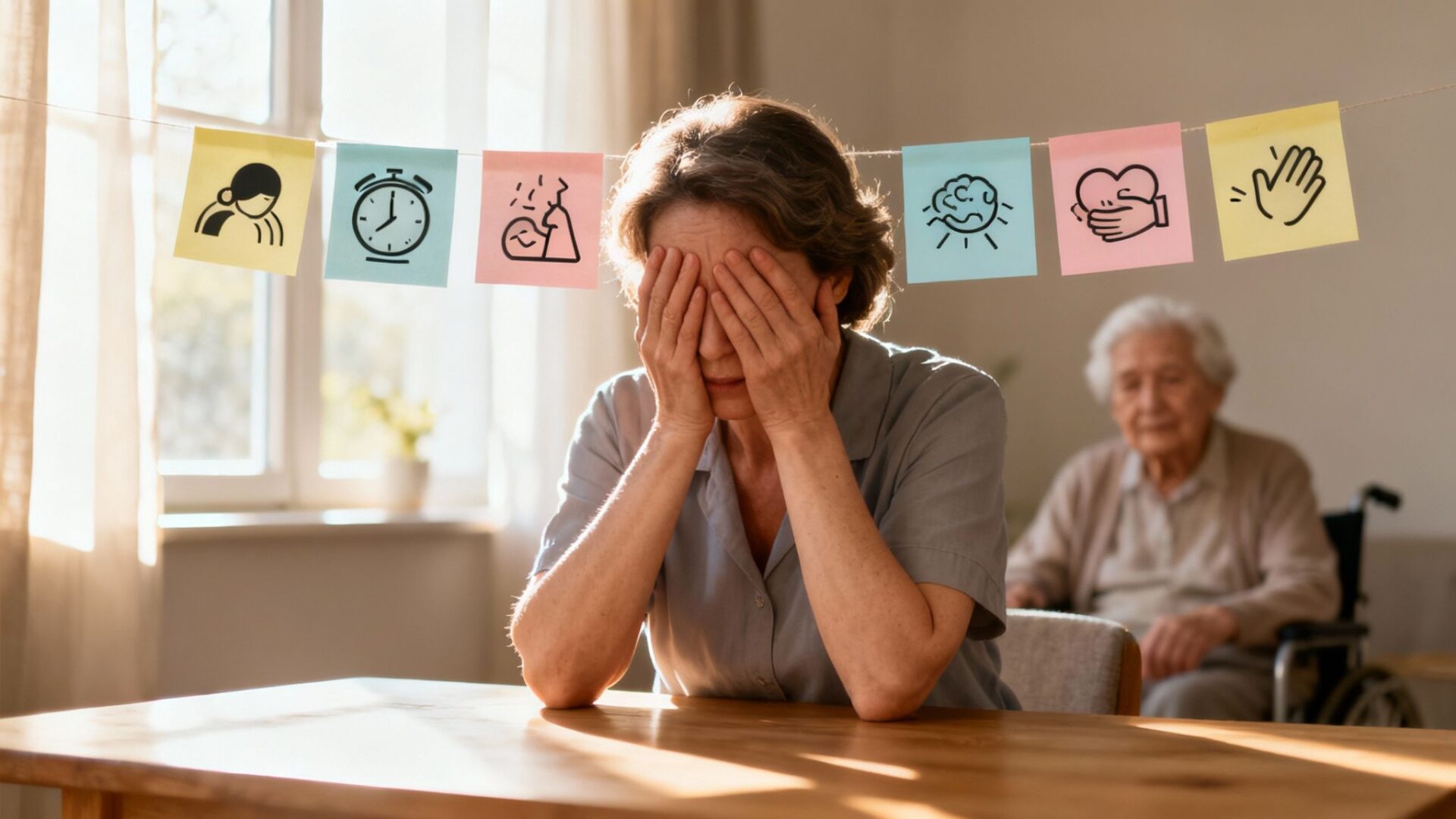
Burnout Is Real: 5 Signs It’s Time to Ask for Help as a Family Caregiver
As a family caregiver on California’s Central Coast, one often juggles medications, appointments, and daily care tasks. This devotion can come at a high cost to one’s own well-being.
Research shows 88% of caregivers report increased anxiety, and 71% cite emotional or financial strain (Q4 2025 Report). Recognizing true burnout matters for both health and safety.
Central Coast VNA & Hospice is a nonprofit with 74+ years of local roots in Monterey County, San Benito County, Santa Cruz County, and South Santa Clara County. Their home health nursing, palliative care at home, and hospice care in Monterey County wraparound model supports both patients and families.
1. Physical and Emotional Exhaustion
When even a full night’s sleep does not recharge you, it is more than tiredness—it is a warning. Chronic exhaustion drains energy, blurs thinking, and dims motivation.

“Chronic caregiver exhaustion is a state that doesn’t improve with rest, signaling your resources are used faster than they can refill.”
Real-World Scenario:
A daughter who cares for her mom with COPD naps in her car between appointments and relies on fast food because she’s too tired to cook.
Actionable Steps:
- Keep an energy journal to track sleep and mood for one week.
- Block 5–10 minutes each day for deep breathing or a quiet break.
- Learn about respite care options for family caregivers to give yourself a reliable rest period.
2. Increased Irritability and Mood Changes
Small frustrations can trigger big reactions when burnout starts. Heightened impatience, snapping at loved ones, or mood swings signal emotional overload.
“Persistent irritability is a symptom of a nervous system overloaded by chronic stress.”
Real-World Scenario:
A son caring for his dad with dementia feels guilty after yelling about repeated questions.
Actionable Steps:
- Pause and take three slow breaths when you feel anger rising.
- Note what times or tasks trigger frustration and plan a brief break then.
- Visit how to reduce daily stress for quick coping techniques.
3. Social Withdrawal and Isolation
Missing favorite hobbies and skipping social invites can feel normal when time is tight. Over time, this isolation cuts off a key support system.
“Social withdrawal shows caregiving demands are crowding out essential joy and support.”
Real-World Scenario:
A wife who cares for her stroke-recovery husband skips her book club because she “has no time.”
Actionable Steps:
- Schedule a 15-minute call with a friend and protect that time like an appointment.
- Try a short walk with a neighbor or a quick video chat when leaving home is hard.
- Join a caregiver support group for shared understanding and relief.
4. Neglect of Personal Health and Self-Care
Putting off doctor visits or skipping meals because caregiving takes priority puts both parties at risk. Self-neglect is a clear sign of burnout.
“Failing to care for one’s own health signals the caregiving load has become unsustainable.”
Real-World Scenario:
A man with diabetes caring for his wife forgets to check his blood sugar and misses insulin doses.
Actionable Steps:
- Book your own medical check-ups first each month and use respite care to attend.
- Ask about telehealth for quick check-ins or prescription refills.
- Review tips for family caregivers for practical self-care strategies.
5. Loss of Hope and Sense of Purpose
When caregiving feels endless and efforts seem meaningless, it can erode one’s optimism. Persistent hopelessness is a crisis that needs help right away.
“A loss of hope is a psychological crisis that requires immediate support.”
Real-World Scenario:
A husband caring for his terminally-ill wife thinks, “If it ends, my life will return to normal.”
Actionable Steps:
- If having thoughts of harming self or others, call or text 988 for the Suicide & Crisis Lifeline.
- Schedule time with a mental health professional or explore grief counseling for families.
- Find ways to rediscover a sense of purpose outside caregiving.
How Central Coast VNA & Hospice Supports the Whole Family
Central Coast VNA & Hospice offers an interdisciplinary model that cares for both patients and families. Services include:
- Home health nursing for skilled in-home care.
- Palliative care at home to manage symptoms and improve comfort.
- Hospice care in Monterey County with 24/7 clinician availability.
- Respite support so caregivers can rest without worry.
- Bereavement counseling and volunteer companions for emotional care.
With 74+ years of nonprofit service in Monterey, San Benito, Santa Cruz, and South Santa Clara counties, CCVNA helps lighten your load so you can focus on connection.
Call to Action
If you’re feeling overwhelmed, contact Central Coast VNA & Hospice to learn how their compassionate team can support your whole family. Visit VNA and Hospice to schedule a free in-home assessment today.
Frequently Asked Questions
1. What is caregiver burnout?
Caregiver burnout is a state of physical, emotional, and mental exhaustion caused by prolonged caregiving stress. It can lead to depression, health issues, and reduced quality of care.
2. How can I get respite care in Monterey County?
Central Coast VNA & Hospice offers respite care. Contact their office or visit their respite care page to arrange in-home support from skilled clinicians.
3. Are support groups helpful for caregivers?
Yes. Support groups connect you with others who understand your challenges. They offer emotional relief, practical tips, and a sense of community.
4. Can I use telehealth for my own medical appointments?
Many providers offer phone or video visits. Telehealth can help you keep up with routine check-ups and manage chronic conditions without leaving home.
5. When should I seek professional mental health help?
If you notice persistent hopelessness, thoughts of self-harm, or severe mood swings, seek help right away. Call 988 in an emergency or contact a mental health professional as soon as possible.
6. How does palliative care at home help reduce caregiver stress?
Palliative care focuses on symptom management, pain relief, and emotional support. This reduces the caregiving workload and allows families to spend more quality time together.
7. What should I expect from a free in-home assessment?
A Registered Nurse will visit your home to evaluate care needs, discuss goals, and create a personalized plan. There is no cost for this assessment.
Hospice Isn’t What You Think: Separating Fact from Fiction
For many families on the Central Coast, the word "hospice" can feel heavy. It often brings up feelings of fear or defeat.
Let’s clear the air and tackle the biggest myth head-on. Hospice is not about giving up. Far from it, it's a compassionate philosophy of care centered on improving quality of life. The goal is to make every day as comfortable and dignified as possible.
Hospice Fact vs. Fiction Quick Guide
Before we dive deeper, let's look at the most common myths. This table cuts through the confusion. It offers a clear, factual view of hospice care.
| Common Myth | The Reality of Hospice Care |
|---|---|
| Hospice is a place you go to die. | Hospice is a service that comes to you, wherever you call home. |
| It means you've given up hope. | It redefines hope, shifting the focus to quality of life and comfort. |
| It’s only for the last few days of life. | It's for anyone with a life-limiting illness and can provide support for months. |
| You lose control over your care. | It’s patient-centered, honoring your wishes and personal goals. |
Seeing the facts laid out like this helps shift the perspective. It moves from fear to empowerment. Now, let’s explore what this philosophy of care truly looks like.
Understanding What Hospice Care Really Is
If you think hospice signals the end of hope, you’re not alone. But this is a profound misunderstanding. In reality, hospice helps redefine hope.
The focus shifts from curing an illness to living as fully and comfortably as possible. This specialized care supports individuals with a life-limiting illness. It provides expert symptom management and deep emotional support in the familiar surroundings of home.
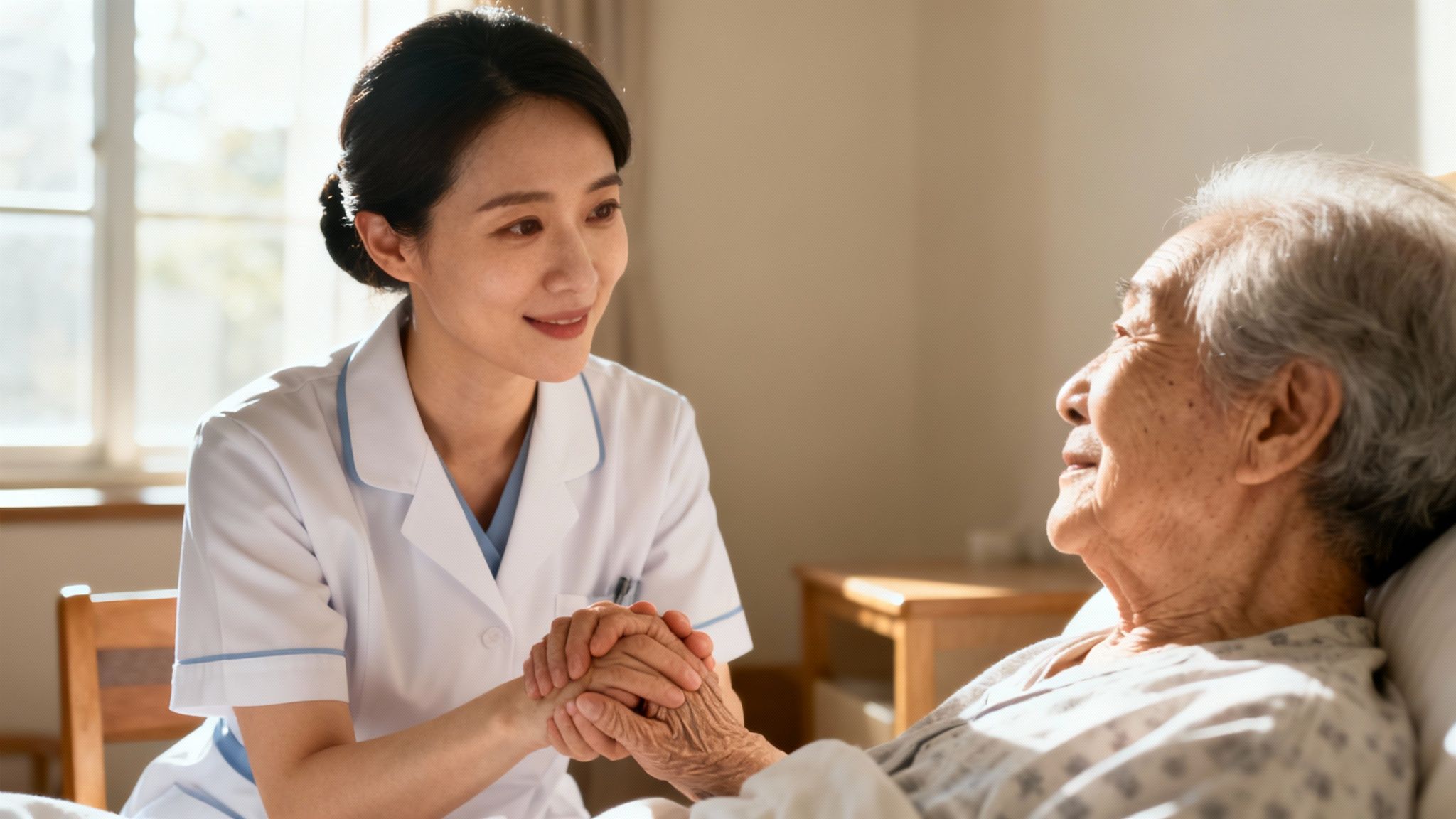
As a nonprofit organization with over 74 years of local experience, Central Coast VNA & Hospice has walked alongside countless families. We serve Monterey County, San Benito County, Santa Cruz County, and South Santa Clara County. Our approach is built on adding life to a person's days, not just counting them.
A Team-Centered Approach to Comfort
Choosing hospice is about gaining a dedicated team of professionals. They work together to support both the patient and their loved ones. This team is designed to address physical, emotional, and spiritual needs.
Your hospice team will typically include:
- Registered Nurses who are experts at managing pain and other difficult symptoms.
- Hospice Aides who provide gentle assistance with personal care and daily activities.
- Medical Social Workers who offer emotional support and help connect families with community resources.
- Chaplains who provide spiritual guidance, respecting all faiths and beliefs.
This collaborative model ensures care is truly holistic. It addresses the whole person, not just the disease. To get a deeper look, explore our guide on what hospice care really is.
Hospice is not a place you go to; it is a service that comes to you. It’s about surrounding a patient with support, managing symptoms, and honoring their wishes to live with dignity and peace.
Understanding this truth helps families make informed, confident decisions. It transforms a path once viewed with fear into a journey supported by compassion. Hospice empowers patients to focus on what matters most: quality time with loved ones.
Why Hospice Is Not Just for the Final Days
One of the most damaging myths about hospice care is that it's only for the last hours or days of life. This misunderstanding makes families wait. This delays crucial support and adds stress to a difficult time.
Let's be clear: hospice isn't about giving up. It's about improving the quality of the time that's left.
The official guideline is that hospice is for someone with a life-limiting illness and a prognosis of six months or less. When care starts closer to that six-month mark, the benefits are profound. It gives everyone time to manage symptoms, build trust with the care team, and focus on what truly matters.
The Benefits of Starting Care Sooner
Putting off the hospice conversation means missing out on months of compassionate support. Sadly, half of hospice patients receive care for 17 days or less because of delayed decisions. At Central Coast VNA & Hospice, our goal is to help families in Santa Cruz County understand that timely hospice care in Monterey County can make life better for months, not just days.
When hospice begins earlier, families experience:
- Better Symptom Control: Our Registered Nurses are experts in managing pain, making your loved one more comfortable.
- Stronger Emotional Support: Our Social Workers and Chaplains provide emotional and spiritual guidance for the entire family.
- Reduced Family Stress: The hospice team offers education and hands-on support, easing the strain on family.
- More Meaningful Time: Once symptoms are controlled, families can focus on each other and create positive memories.
Research shows that patients on hospice may even live longer than those who forgo it, especially when enrolled early. This highlights how effective symptom management and emotional support can improve overall well-being.
Waiting for a crisis to consider hospice often means losing the opportunity for peaceful, planned, and dignified care. The true value of hospice is unlocked when it becomes part of the journey, not just the destination.
Knowing when to make the call can feel overwhelming, but you don't have to figure it out alone. Learning the key signs can empower you to start the conversation sooner. You can learn more about when to call hospice in our helpful guide.
How Hope and Treatment Evolve with Hospice
A common fear is that choosing hospice means giving up hope and all medical treatment. This misunderstanding keeps families from getting the comfort they need. But the truth is, hospice isn’t about losing hope; it’s about redefining it.
Hope is an essential part of being human. At the end of life, hope can transform. Hope for a cure might shift into hope for comfort, peace, and meaningful moments. It becomes hope for a day without pain or for one more laugh with family.
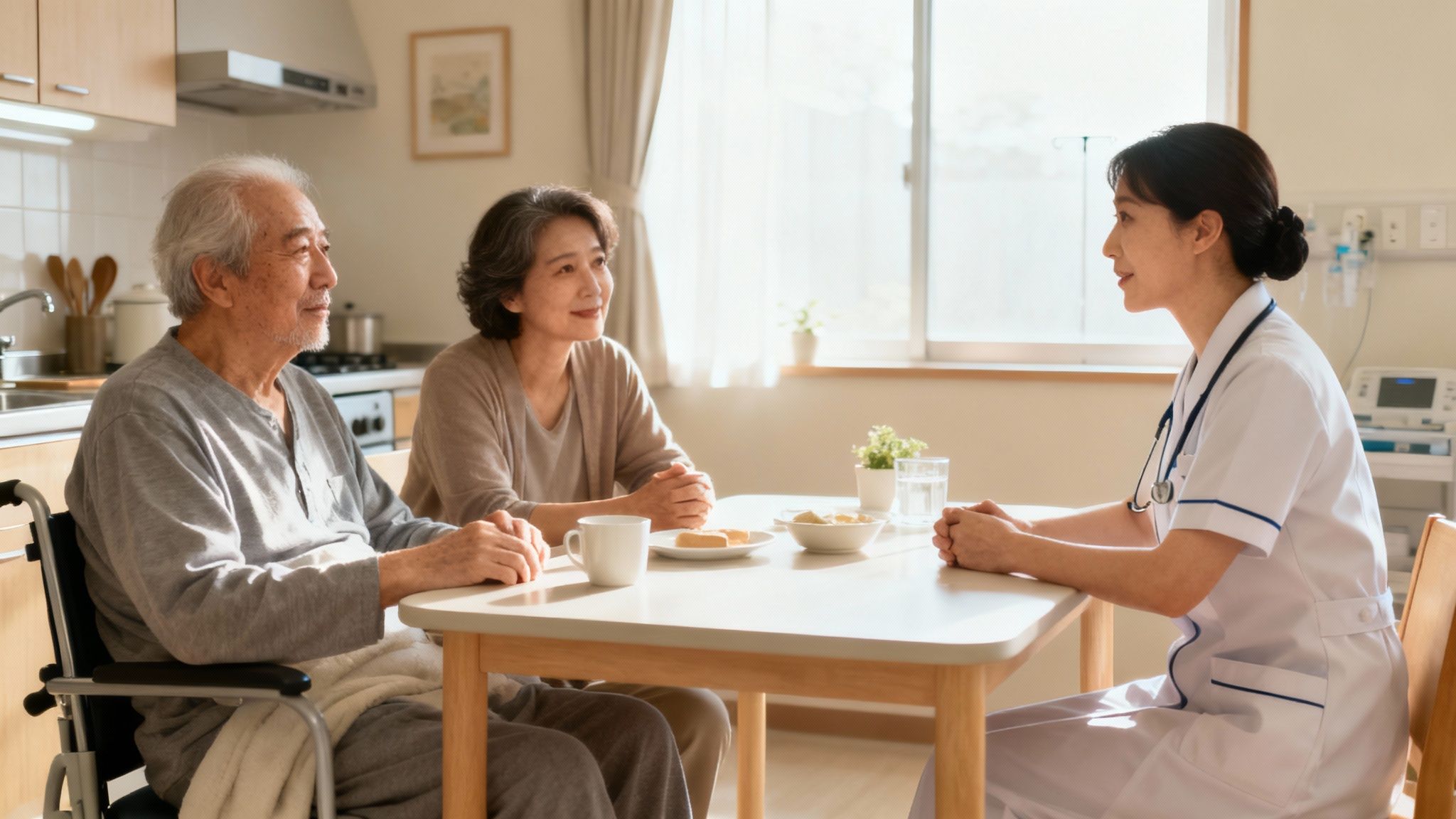
Treatment Continues with a Focus on Comfort
Let's clear up one of the biggest myths. You do not have to stop all medications to be on hospice. The focus of hospice is no longer on curative treatments for the primary illness. However, it absolutely continues to manage other conditions to keep the patient comfortable.
A patient’s care plan is adjusted to align with these new goals. For example:
- Someone with terminal cancer can continue taking daily medication for diabetes or high blood pressure if it contributes to their well-being.
- A patient with end-stage heart disease might receive antibiotics for a urinary tract infection to prevent discomfort.
- Medications to manage anxiety, depression, or shortness of breath are essential parts of comfort care.
The core mission is to improve quality of life. The compassionate team at Central Coast VNA & Hospice works with each patient and family. Together, we create a personalized plan that honors your loved one’s wishes and puts their comfort first.
A Partnership in Care and Decision-Making
Far from taking control away, hospice empowers patients. Their goals are at the center of every conversation. Hospice is a true partnership. Your family and our team decide together which treatments add comfort and which ones might add a burden.
Hope in hospice is not the absence of treatment. It is the presence of a dedicated team committed to ensuring every day is lived as fully and comfortably as possible, according to the patient’s own wishes.
This shift allows families in our service areas to move their energy away from stressful appointments. They can focus on what really matters: spending quality time together. It’s a transition from fighting an illness to embracing life with a different kind of support.
Receiving Hospice Care in the Comfort of Home
Many people hear "hospice" and picture a specific building. This is a common misunderstanding. The reality is much more reassuring.
Hospice isn't a place you go to. It's a philosophy of care that comes directly to you, wherever you call home. This specialized support can be delivered in a private house, an assisted living community, or a nursing home. Being in a familiar setting helps people maintain a sense of normalcy and peace.
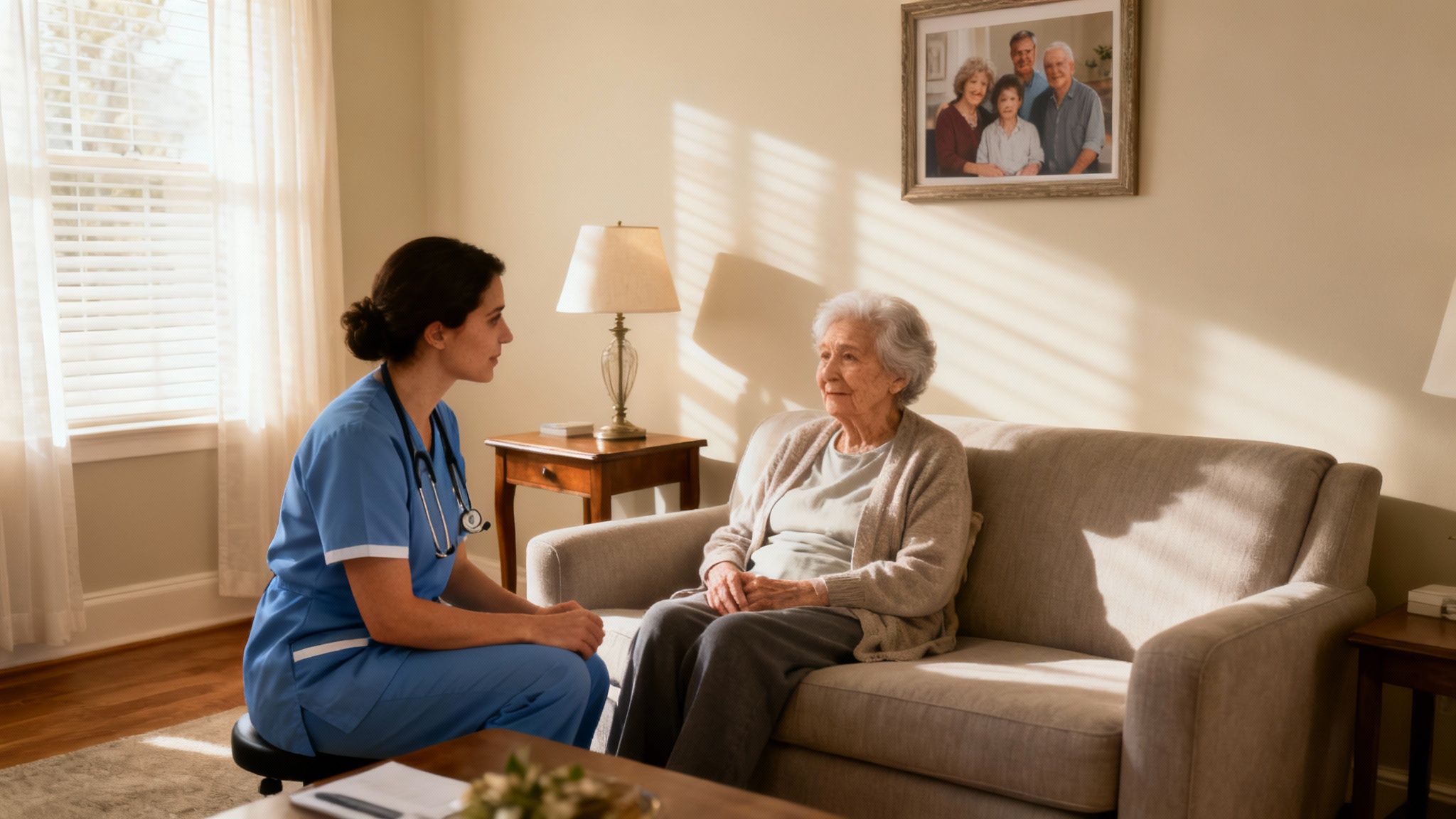
Bringing Comprehensive Support to You
At Central Coast VNA & Hospice, our team brings this entire circle of support to your doorstep. Our model is built to be patient-focused. We coordinate everything you need in the comfort of your home.
This is a whole team of dedicated professionals who visit regularly:
- Registered Nurses are there to manage symptoms and provide expert medical oversight.
- Chaplains offer spiritual comfort tailored to your personal beliefs and values.
- Social Workers provide crucial emotional support and connect your family with helpful community resources.
- Hospice Aides offer gentle, hands-on assistance with personal care.
Understanding the role of a Certified Nursing Assistant (CNA) gives you a window into the compassionate, hands-on support patients receive. To learn more about how we bring this care to families, you can learn about our in-home hospice care.
Hospice care is not about moving to a new facility. It’s about bringing a dedicated team of medical, emotional, and spiritual experts to support you in the place you know and love best.
The preference for receiving care at home is a major trend. For families across Monterey, San Benito, Santa Cruz, and South Santa Clara counties, this home-centered model ensures care is personal and dignified. It is always focused on what matters most to you.
Distinguishing Palliative Care from Hospice Care
It’s easy to get palliative care and hospice care mixed up. But knowing the difference is crucial for getting the right support.
Here’s a simple way to think about it: all hospice care is palliative, but not all palliative care is hospice. Palliative care is an extra layer of support. It provides relief from symptoms and stress of any serious illness, no matter the prognosis. You can receive palliative care while still pursuing treatments to cure your condition.
How Palliative Care Acts as a Bridge
Here at Central Coast VNA & Hospice, we see palliative care as a helpful bridge. It introduces comfort-focused support early on. This allows families in Monterey and San Benito counties to get help much sooner. This approach can then create a smooth transition to hospice care if and when the time is right.
Palliative care is all about adding to your current treatment plan to improve your quality of life. Hospice is a specific type of palliative care for when the focus shifts entirely to comfort.
Sadly, access to this kind of support isn't universal. A recent global study found that only 14% of countries have an advanced level of palliative care development. This highlights a huge need for better access and training.
Palliative care is a vital part of the healthcare journey. For a more detailed breakdown, you can read our guide on palliative care versus hospice care. Getting clear on these options helps your family make informed decisions.
Making an Informed Choice for Your Family
Throughout this guide, we've separated myths from facts to show that hospice isn’t what you think. It is an empowering choice focused on living as well as possible, for as long as possible. The journey is about getting comprehensive support for the patient and the entire family.
As a nonprofit, mission-driven organization, Central Coast VNA & Hospice has one priority. It's the well-being of the communities we've served for over 74 years. Our focus is on families right here in Monterey, San Benito, Santa Cruz, and South Santa Clara counties.
Your Next Steps Toward Peace of Mind
Don’t wait for a crisis to start asking questions. Learning about your options early brings calm and clarity. Understanding the financial side is also part of planning. We can help you figure out how to pay for hospice care.
We know every family’s situation is unique. We invite you to have a compassionate, no-obligation conversation with one of our local experts. We’re here to listen, answer your questions, and help you understand how our continuum of care can support you.
Making an informed choice begins with a simple conversation. Gaining clarity now is a gift you can give yourself and your loved ones, replacing uncertainty with confidence and support.
This is a time for comfort and dignity, not confusion. By reaching out, you’re taking a brave step toward ensuring your loved one’s wishes are honored with compassionate, expert care on the Central Coast.
Frequently Asked Questions About Hospice Care
Making decisions about hospice care is a significant step. It is natural to have questions. Getting clear, honest answers is the best way to feel confident.
We've gathered some of the most common questions we hear from families. This will help you separate fact from fiction.
Can I Keep My Own Doctor if I Enroll in Hospice?
Yes, absolutely. The Central Coast VNA & Hospice team works hand-in-hand with your primary care physician. We consider your doctor a vital part of your care team. Your trusted doctor can continue to guide your medical plan. We coordinate closely with them to honor your personal wishes.
Who Pays for Hospice Care?
Hospice is a benefit covered by Medicare, Medi-Cal, and most private insurance plans. This coverage is all-inclusive. It typically pays for the care team's services, medical equipment, and medications related to the terminal illness. As a nonprofit, Central Coast VNA & Hospice cares for everyone who is eligible, regardless of their ability to pay.
What if a Patient's Condition Improves?
Hospice is not a one-way street. If a patient's health gets better and their prognosis changes, they can be discharged from hospice care. It happens more often than you might think. The patient can then go back to curative treatment. If needed, you can always re-enroll in hospice later.
Does Hospice Provide 24/7 In-Home Staff?
Hospice care is built around regular, scheduled visits from your dedicated team. This includes a Registered Nurse, Hospice Aide, and Social Worker. While we don't place staff in the home 24/7, we provide 24/7 on-call support for any urgent needs or medical questions.
How Does Hospice Support the Family?
Supporting the entire family is at the heart of what we do. Our team provides education to help you know what to expect. We also offer emotional and spiritual support from our Social Workers and Chaplains. Our support continues after a loved one passes, with bereavement counseling for up to 13 months.
When is the right time to contact hospice?
The right time to contact hospice is when you or a loved one is diagnosed with a life-limiting illness. An early conversation allows you to learn about your options before a crisis occurs. It gives you time to make decisions that align with your wishes for comfort and quality of life.
What is palliative care at home?
Palliative care at home is specialized medical care focused on relieving symptoms and stress from a serious illness. It can be provided alongside curative treatment. The goal is to improve the quality of life for both the patient and their family in the comfort of their own home.
Have questions about hospice? You’re not alone. Speak with a compassionate expert from Central Coast VNA & Hospice today at 831‑372‑6668 or explore our services at ccvna.com.
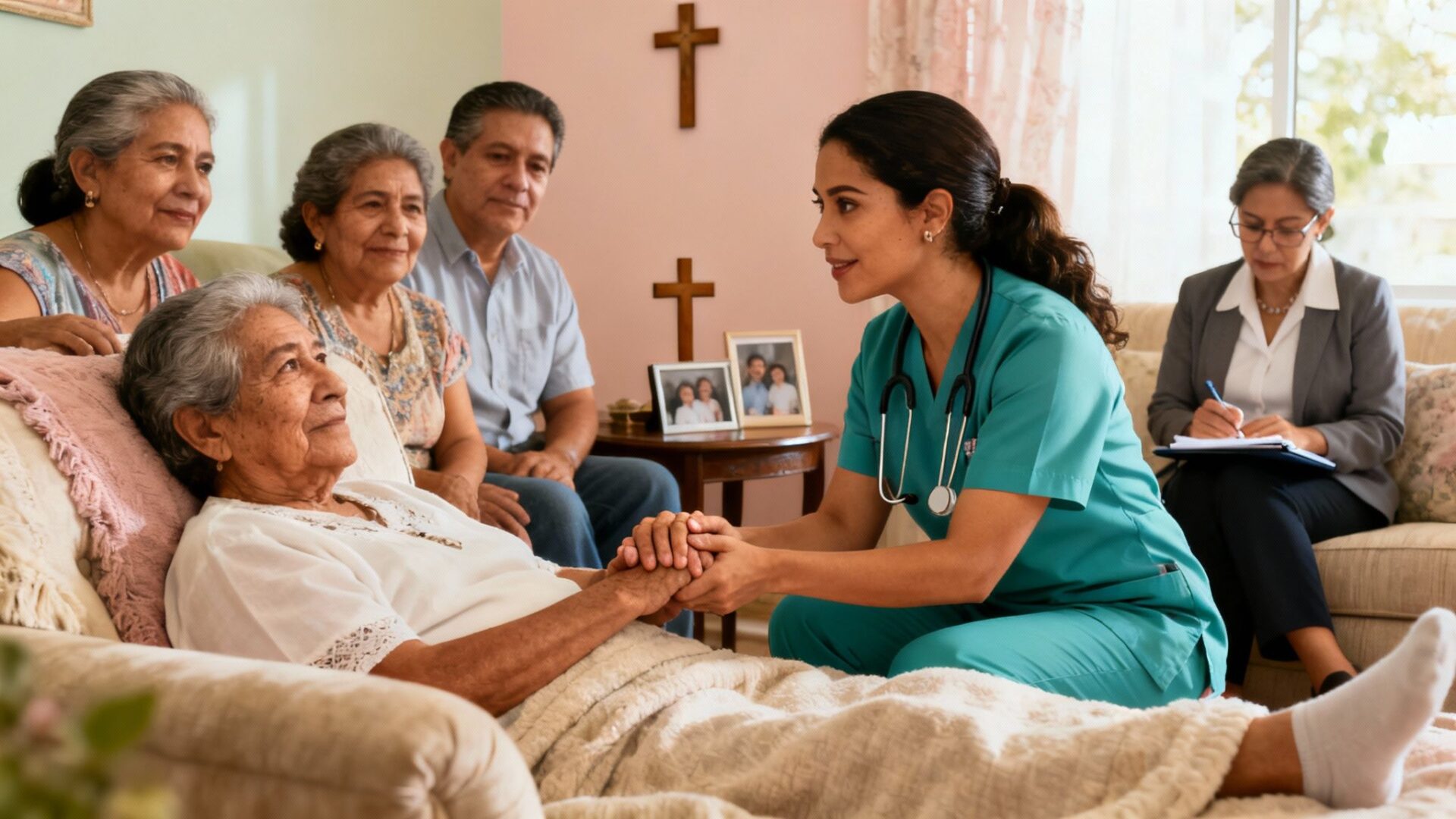
Compassion Without Barriers: Culturally Inclusive Hospice Guidance for Latino Families
Starting a conversation about hospice care can feel difficult. But it is one of the most important talks you can have to honor your loved ones. It ensures they experience dignity and peace.
For Latino families, this means providing comfort that respects deep values. These values include familismo (the central role of family) and respeto (respect for elders). It is important to remember that hospice is not about giving up. It is about adding quality of life to every day that remains.
Welcoming Latino Families to the Hospice Conversation
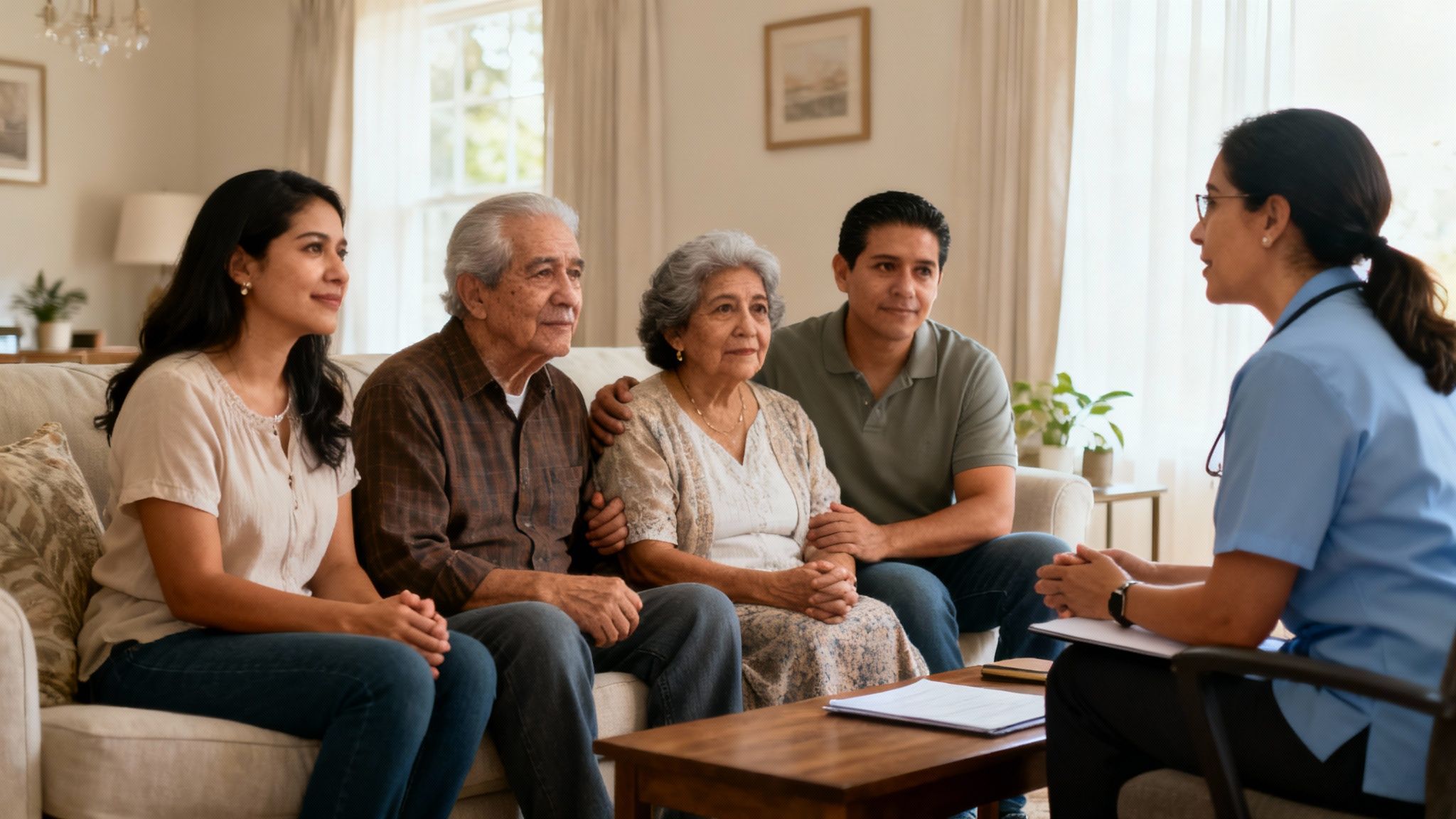
For many in the Latino community, talking about end-of-life care brings up many emotions. It is natural to feel unsure when these topics come up. Understanding what hospice offers can turn fear into a feeling of empowerment for your family.
Hospice care is not about ending treatment. It is a shift in focus toward comfort, peace, and dignity when a cure is no longer the goal. This approach puts the patient and family at the center of every decision. It makes sure their wishes are heard and honored.
Honoring Family Values and Traditions
Quality hospice care recognizes that every family is unique. For Latino families, this often means understanding a few key principles. A compassionate hospice team respects these important values.
- Family-Centered Decisions: Important choices are often made together, with input from multiple family members. A good hospice team will work with the entire family to create a care plan everyone understands.
- Respect for Elders (Respeto): Honoring the wisdom of older family members is a cornerstone of the culture. Hospice care is designed to preserve dignity and ensure your loved one's voice is the most important one.
- Spiritual and Emotional Support: Faith can be a powerful source of comfort. Hospice teams include chaplains and social workers who can coordinate with your family’s priest or spiritual advisor.
At Central Coast VNA & Hospice, we believe that providing compassion without barriers means meeting you where you are. For over 74 years, our nonprofit mission has been to serve the diverse communities of Monterey County, San Benito County, Santa Cruz County, and South Santa Clara County.
What Does Hospice Care Look Like?
Hospice is a circle of support that comes to your home. It is a team approach that includes a Registered Nurse, a Hospice Aide, a Social Worker, and a Chaplain. They all work together to manage symptoms and provide comfort.
The goal is to allow your loved one to live their final months with peace and quality of life. They can be surrounded by the people who matter most. Choosing hospice is a decision to embrace comfort. You can explore our guide on what hospice care is to learn more.
Bridging Communication Gaps in End-of-Life Discussions
Conversations about end-of-life care are never easy. They can feel technical, which is the last thing a family needs. This is especially true when cultural values like familismo (family-centeredness) and respeto (respect) are key.
Finding the right words is hard enough without a language barrier. This is why having a care team that can speak Spanish is a necessity. It is the only way to ensure every family member’s voice is heard and understood.
Speaking from the Heart, in Your Own Language
When a loved one is seriously ill, you should not have to translate your fears and questions. A Registered Nurse or Social Worker who speaks Spanish can immediately put everyone at ease. It allows the conversation to flow naturally.
At Central Coast VNA & Hospice, our team includes Spanish-speaking clinicians. We serve families throughout Monterey County and neighboring communities. We also provide professional translation to ensure communication is always clear and compassionate.
A lack of understanding about end-of-life options is a hurdle for many. According to a national survey, Hispanic respondents were far more likely to say they had 'never heard of' palliative care. This gap is tied to communication barriers and a lack of culturally relevant information.
Turning Difficult Talks into Meaningful Connections
Imagine a family gathering to talk about their father’s care plan. Instead of a doctor using complex terms, a Spanish-speaking hospice nurse sits with them. She listens as each person shares their hopes and fears.
This culturally sensitive approach accomplishes several key things:
- It Honors the Family Unit: The conversation includes everyone, reinforcing the value of familismo.
- It Preserves Dignity: The patient is addressed with respeto, ensuring their voice is the most important one.
- It Clarifies Misconceptions: The team can gently clear up myths about hospice, explaining it as a choice for comfort.
Some practices are exploring multilingual AI solutions to help reduce misunderstandings. This technology can support clear communication in healthcare.
True compassion means listening with an open heart. When we can speak to you in your language, we build a bridge of trust that makes all the difference.
Clear and empathetic communication is the foundation of inclusive hospice care. It turns a stressful process into a supportive journey. Central Coast VNA & Hospice is dedicated to providing families with the information they need. You can read more about our commitment to healthcare access for Spanish-speaking families.
Integrating Cultural Values and Family Dynamics
Your family's traditions and beliefs deserve to be at the heart of any care plan. True compassion in hospice is about honoring the values that bring comfort and meaning to your family. For many Latino families, this means embracing core principles that shape every decision.
At Central Coast VNA & Hospice, our approach is built on respect for these traditions. We know that for families here in Monterey and San Benito Counties, healthcare is a family affair. This understanding guides everything we do.
Embracing Familismo and Group Decision Making
In Latino culture, the concept of familismo is powerful. It places the family at the center of life, especially during illness. Decisions are rarely made by one person alone.
The whole family unit comes together to talk through options. Our hospice team is experienced in facilitating these important family meetings. We ensure everyone has a chance to ask questions and share their thoughts.
The Importance of Personalismo
Another core value is personalismo, which emphasizes warm, personal relationships. Trust is everything, and it starts with a genuine connection. Our clinicians, many of whom are Spanish-speaking, take time to know you and your family.
This is about creating a safe, comfortable space where you feel heard. When a Registered Nurse from Central Coast VNA & Hospice visits your home, they are a trusted partner. They are not just a clinician.
This infographic shows how our team works to honor family traditions and beliefs.
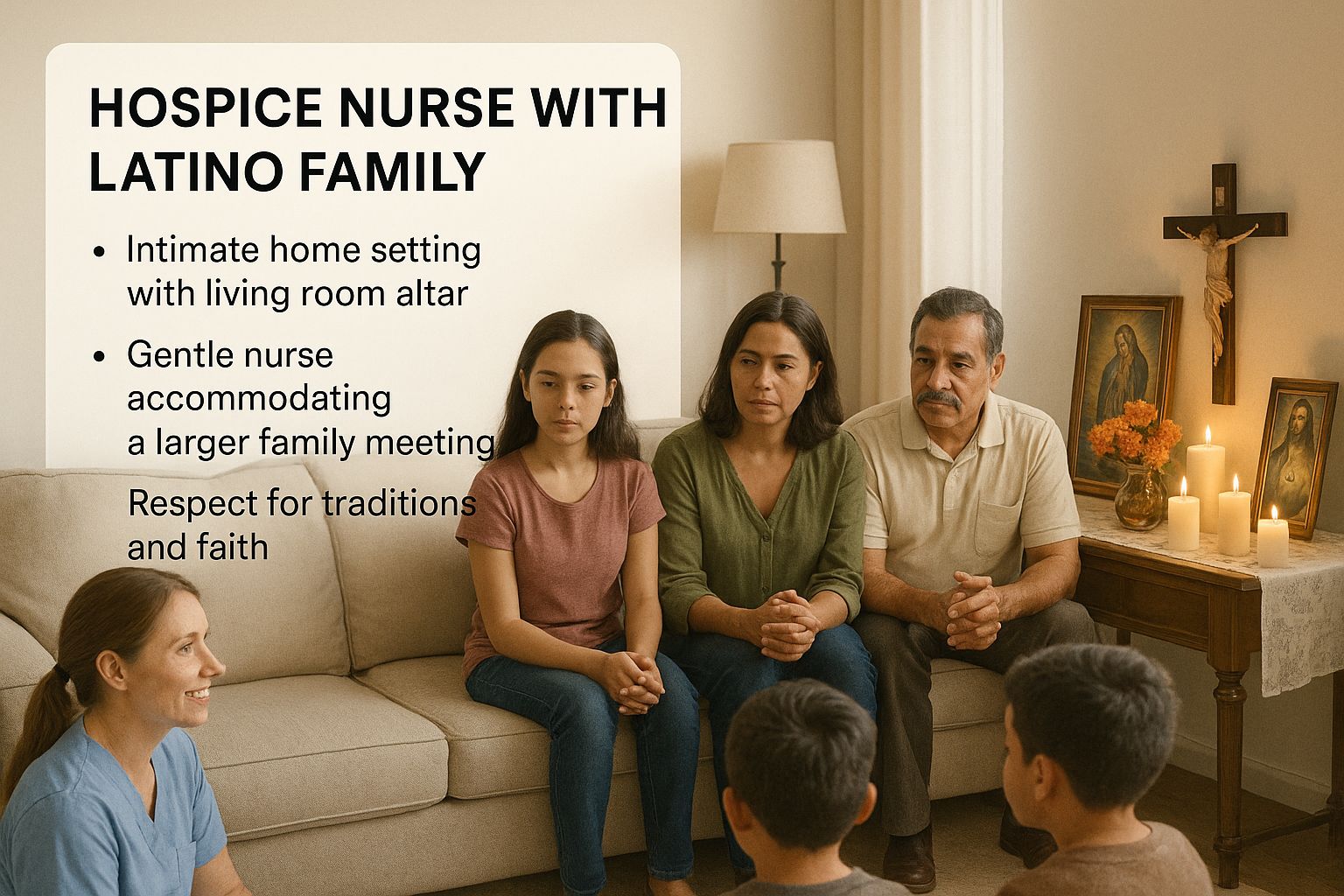
As you can see, culturally inclusive care fits into family life. It respects both personal relationships and sacred traditions.
Honoring Faith and Spirituality
Faith often provides strength and comfort during the end-of-life journey. For many Latino families, religious traditions are woven into the experience of illness. These practices are essential for spiritual peace.
Our hospice team is committed to supporting your spiritual needs. We understand the importance of coordinating with your family's priest, pastor, or other spiritual advisors.
At Central Coast VNA & Hospice, our Chaplains support people of all faiths. Their role is to provide comfort, listen without judgment, and honor the spiritual practices that are meaningful to you.
This collaboration ensures your spiritual care is seamless and aligned with your beliefs. The goal is to create an environment where faith is actively supported. Learn more about our commitment to spiritual care in hospice.
Here is a quick look at how a hospice team can support key Latino cultural values.
How Hospice Can Honor Your Family's Values
| Cultural Value | What It Means for Your Family | How Your Hospice Team Can Help |
|---|---|---|
| Familismo | The family unit is the primary source of support and decision-making. Important health choices are made together, not by the individual alone. | By facilitating family meetings, providing clear information to everyone involved, and respecting a designated family spokesperson. |
| Personalismo | Trust is built through warm, personal, and respectful relationships rather than formal, institutional ones. You want to know the people caring for your loved one. | By assigning consistent care team members who take time to connect, listen, and build genuine rapport with the entire family. |
| Respeto | Respect for elders and authority figures is paramount. This includes showing deference and courtesy to older family members and healthcare providers. | By addressing family members with respect, actively listening to elders' wisdom and concerns, and communicating with politeness and humility. |
| Fe y Espiritualidad (Faith & Spirituality) | Religious faith and spiritual rituals provide immense comfort, hope, and meaning, especially during difficult times. | By coordinating with priests or pastors, accommodating religious ceremonies, and offering chaplaincy services that honor your specific beliefs. |
By integrating these cultural values, we provide hospice care that feels supportive and familiar. It is about making sure your family’s traditions are celebrated as part of providing compassionate care.
Overcoming Common Barriers to Hospice Care
Even when a family sees the benefits of hospice, real-world worries can get in the way. Concerns about cost, insurance confusion, and fears about immigration status are valid. Addressing these questions with clear, honest answers is the first step.
Many families are relieved to find out that hospice care is typically fully covered. This support is a standard benefit under Medicare Part A, Medi-Cal, and most private insurance plans. As a local nonprofit serving Monterey, San Benito, Santa Cruz, and South Santa Clara Counties for over 74 years, we are committed to caring for everyone, regardless of their ability to pay.
Our mission is simple. No family should walk this path alone because of financial hardship.
Addressing Financial and Insurance Questions
The thought of medical bills can cause stress. The good news is that hospice coverage is designed to lift that weight. When a patient enrolls in hospice, their insurance plan generally covers a wide range of services.
This coverage usually includes things like:
- Medical Equipment: Hospital beds, oxygen, walkers, and other items are provided.
- Medications: All medications related to the terminal illness and for managing symptoms are covered.
- Supplies: Things like bandages, catheters, and other medical supplies are included.
- Clinical Team Visits: Regular in-home visits from the Registered Nurse, Hospice Aide, Social Worker, and Chaplain are part of the plan.
Hospice allows families to focus on sharing time together without the pressure of bills. Many common worries come from misinformation. You can learn more by disproving hospice care myths to calm any concerns.
Your energy should be focused on your loved one’s comfort, not on figuring out complicated medical bills. Our team is here to help you understand your benefits and get the care you deserve.
Immigration Status and Confidentiality
For some families, a big fear is that seeking medical care could affect their immigration status. It is critical to understand that your medical information is confidential and protected by law. Seeking any healthcare, including hospice, has no impact on immigration proceedings.
At Central Coast VNA & Hospice, our number one priority is your family’s well-being. Every member of our team is bound by strict privacy rules like HIPAA. We work to create a safe space where you can receive care without fear.
Fears about immigration status, finances, and language are major reasons for the care gap. According to the National Hospice and Palliative Care Organization (NHPCO), Hispanic patient enrollment in hospice has risen, but these barriers still prevent many from seeking care (NHPCO, 2023).
Our promise is to provide compassionate care to everyone in our Central Coast communities. We believe everyone deserves dignity, comfort, and peace at the end of life.
Your Culturally Inclusive Hospice Team
Hospice care is a dedicated, compassionate team that supports your entire family. They make sure every need—physical, emotional, and spiritual—is met with respect. Knowing who is on this team can make the journey feel more supportive.
At Central Coast VNA & Hospice, we build our teams with professionals who have deep expertise. They also have a genuine heart for the communities they serve. Let's walk through the core members of your hospice team.
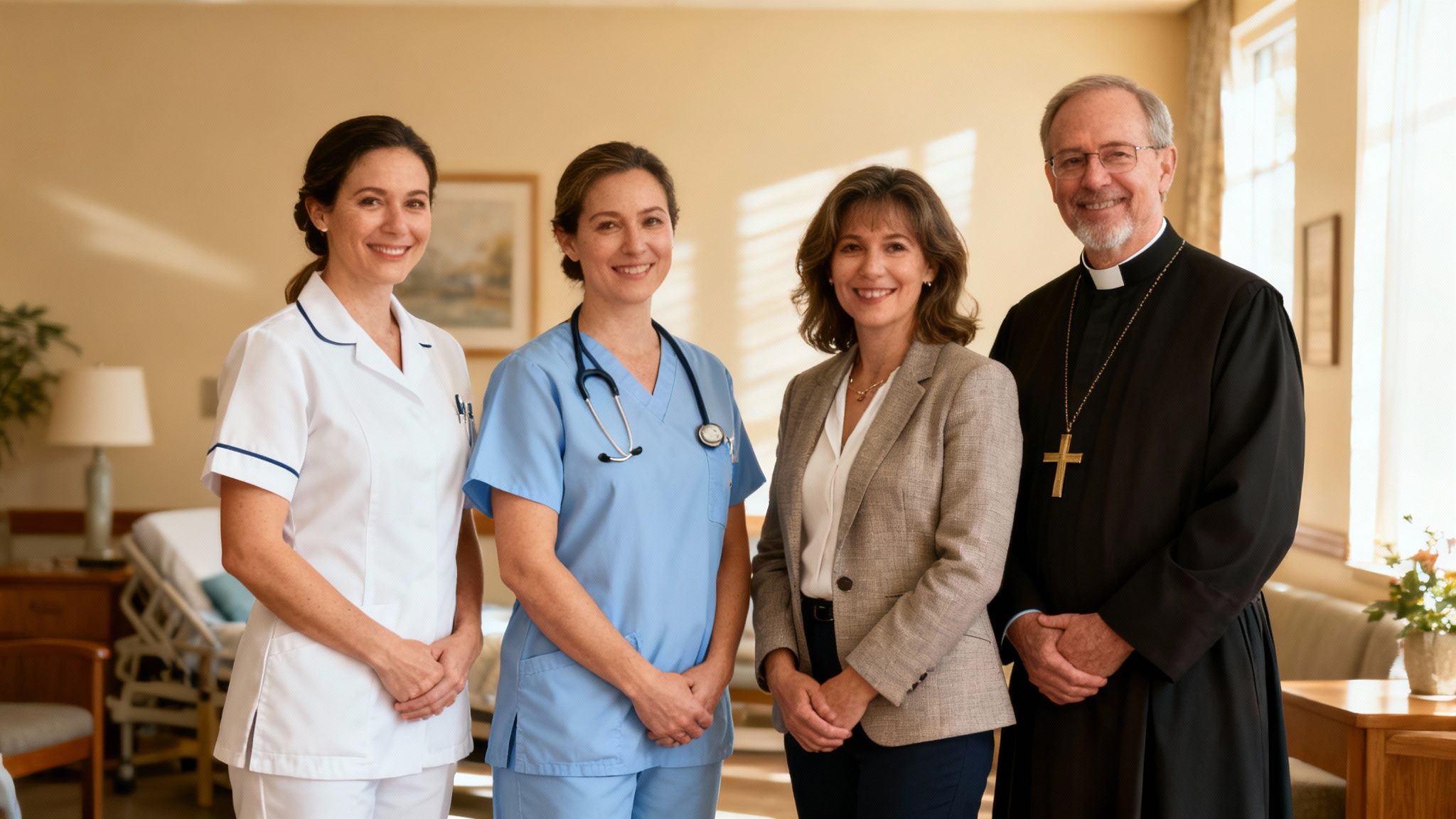
The Registered Nurse
Your Registered Nurse (RN) is the main clinical point person for your family. They are experts in managing pain and other symptoms. The RN makes regular home visits to check on your loved one and provide education to the family.
The RN also becomes a trusted guide. They listen to your concerns and answer questions in plain language. For Spanish-speaking families, an RN who communicates in your language builds immediate trust.
The Hospice Aide
Hospice Aides provide essential, hands-on personal care with respect. They help with daily activities like bathing, dressing, and grooming. Their gentle support helps preserve a person's dignity and eases the physical demands on the family.
The presence of a Hospice Aide can be a great relief. It allows family members to step back from caregiving duties. They can focus on spending precious time together.
The Social Worker
The healthcare system can be confusing. The Social Worker is your family’s advocate and resource navigator. They connect you with support systems, from financial aid to community resources.
A Social Worker who understands cultural dynamics is invaluable. They can help with paperwork and facilitate family meetings. Their goal is to reduce stress so your family can be present for one another.
Scenario in Action: A family in Santa Cruz County feels overwhelmed by their mother's health and Medi-Cal forms. The CCVNA Social Worker, who is bilingual, sits with them and explains each section in Spanish. At the same time, the team’s Chaplain offers a prayer, providing spiritual comfort.
Streamlining behind-the-scenes work helps our teams focus on you. New tools are automating healthcare documentation. This gives clinicians more time for direct patient and family engagement.
The Chaplain
Spiritual peace is a vital part of end-of-life care. The Chaplain on the hospice team offers support to people of all faiths and beliefs. Their role is to listen with an open heart and offer comfort that aligns with your values.
Our Chaplains are here to:
- Listen without judgment to fears, hopes, and reflections.
- Offer prayers or readings that are meaningful to your family.
- Coordinate with your family’s priest, pastor, or spiritual advisor.
- Help facilitate conversations about forgiveness, legacy, and peace.
This team provides compassion without barriers. They ensure your family feels supported in every possible way on this important journey.
Frequently Asked Questions About Hospice Care
Navigating hospice can feel overwhelming. To help your family feel more prepared, we have answered the most common questions we hear from Latino families in our community. Our goal is to offer clear, straightforward information.
1. Does choosing hospice mean we are giving up hope?
Not at all. This is a common misconception. Choosing hospice is not about giving up; it is about shifting the focus of care to comfort and quality of life. It is an active choice to give your loved one a final journey that is as peaceful and meaningful as possible.
2. Can my family's priest or spiritual advisor be involved?
Absolutely. We know faith is a cornerstone of strength for many families. Our hospice team, including our Chaplains, will work hand-in-hand with your family's spiritual advisors. We support your traditions to ensure your spiritual needs are fully met.
3. What if my loved one only speaks Spanish?
Communication is key to compassionate care. At Central Coast VNA & Hospice, we have Spanish-speaking clinicians on our team. We also use professional translation services to ensure every conversation is clear and comfortable.
4. Is hospice care only for the last few days of life?
This is another common myth. Hospice can provide support for months, and many families wish they had called sooner. A person is eligible for hospice when a doctor believes they have a life expectancy of about six months or less if the illness runs its course. Starting early gives the family more time to benefit from the full range of support.
5. How much does hospice care cost?
Hospice is a fully covered benefit under Medicare, Medi-Cal, and most private insurance plans. This is comprehensive coverage that includes visits from the care team, medications, and medical equipment. As a nonprofit organization, Central Coast VNA & Hospice is committed to providing care to everyone, regardless of their ability to pay.
At Central Coast VNA & Hospice, our mission is to provide care that respects your family's values with clarity and compassion. We have been a trusted local nonprofit serving Monterey County, San Benito County, Santa Cruz County, and South Santa Clara County for over 74 years.
Aprenda más sobre el cuidado de hospicio en su idioma. Llame al 831-372-6668 para hablar con un miembro de nuestro equipo o visite https://ccvna.com para ver nuestros servicios en español.
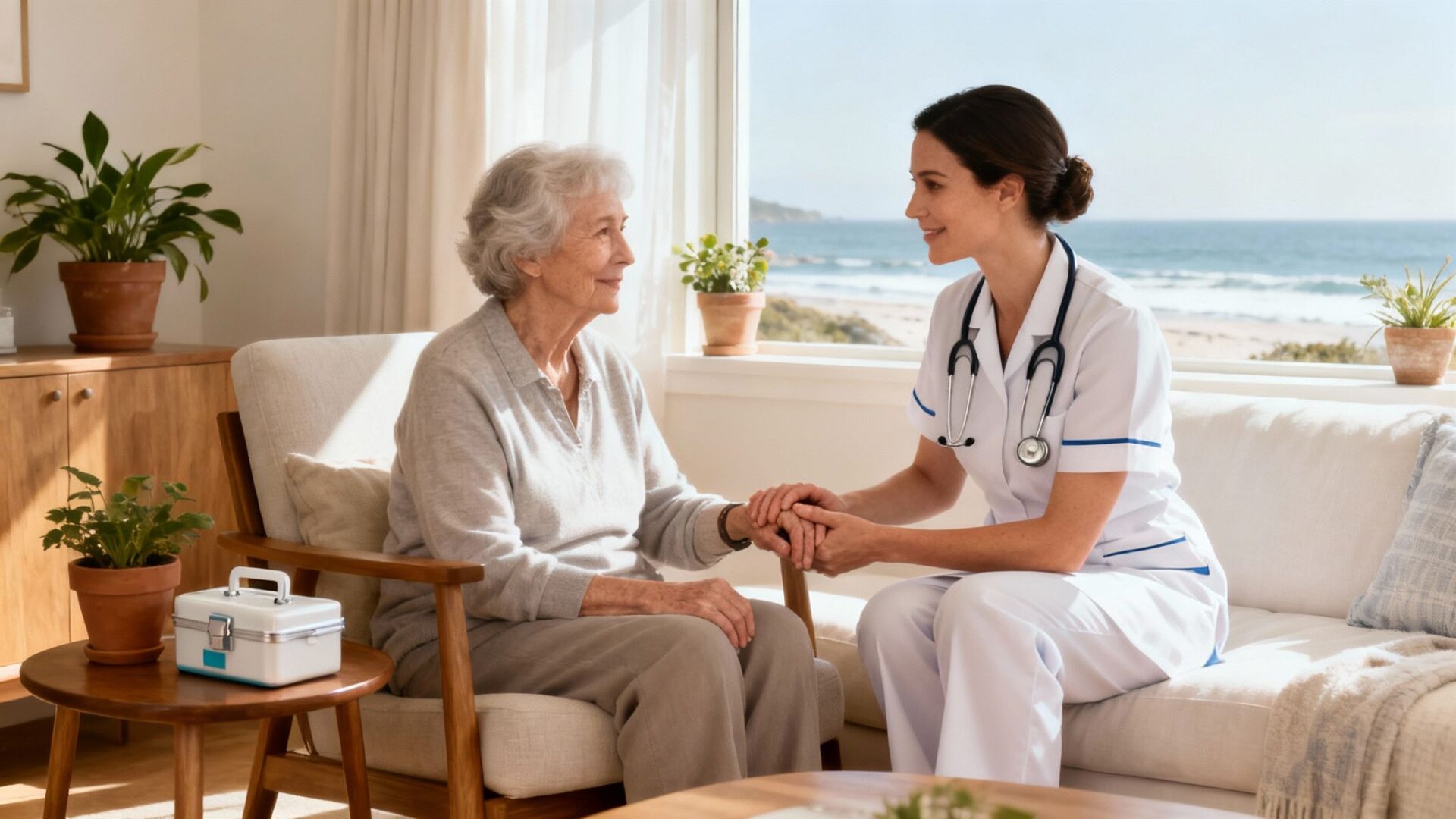
Is In-Home Nursing Right for Your Loved One in Monterey?
Deciding if in-home nursing is the best choice for your loved one in Monterey involves balancing their medical needs with their wish to stay comfortable at home. For many families, having a skilled nurse visit is the perfect solution. It combines professional medical care with the healing environment of home.
This choice depends on clinical needs, personal wishes, and the family's ability to help. It's a significant decision, but you don't have to make it alone.
Making the Right Choice for Care in Monterey County
Choosing care for a family member is a big, emotional decision. It can feel overwhelming, but our goal is to bring you clarity and confidence. With over 74 years of nonprofit service, Central Coast VNA & Hospice is a trusted part of the Monterey, San Benito, Santa Cruz, and South Santa Clara communities.
First, it's important to understand what "in-home nursing" really means. This is not the same as personal care assistance. We are talking about skilled medical services delivered by a Registered Nurse or another licensed professional.
This option is a great fit for someone who needs clinical oversight but is safe and comfortable staying right where they belong—at home.
Clarifying Your Loved One’s Needs
How do you know if skilled nursing at home is the best move? It helps to think through a few key areas.
- Medical Requirements: Does your loved one need complex wound care after surgery? Are they managing a chronic illness like COPD or diabetes that requires a professional eye?
- Personal Comfort: Where would they be happiest? For many, the idea of recovering in their own bed, surrounded by their own things, is incredibly healing.
- Family Dynamics: What does the support system look like? A nurse provides medical care during visits, but families often help with meals and companionship in between.
Thinking through these questions builds a clear picture. As you prepare the home, a complete guide to integrating mobility aids and patient safety technology can help you understand what equipment keeps your loved one safe.
Quick Guide to In-Home Nursing vs Other Care Options
Here is a quick comparison of common care options available to families on the Central Coast. This can help you see where skilled in-home nursing fits in.
| Care Option | Primary Focus | Best For Patients Who... | Provided By |
|---|---|---|---|
| Skilled In-Home Nursing | Medical care, treatment, and clinical oversight. | Need post-hospital care, wound management, or chronic disease monitoring at home. | Registered Nurses (RNs), LVNs |
| Personal Care/Home Aide | Non-medical assistance with daily living activities. | Need help with bathing, dressing, meal prep, and companionship. | Certified Home Health Aides (CHHAs) |
| Assisted Living Facility | Supportive housing with some personal care services. | Are mostly independent but need help with some daily tasks and prefer a social setting. | Facility staff, aides |
| Skilled Nursing Facility | 24/7 intensive medical care and rehabilitation. | Require round-the-clock nursing care and supervision that can't be managed at home. | RNs, LVNs, Therapists |
This table is just a starting point. Every family's situation is unique, and the best choice often involves a blend of services.
At Central Coast VNA & Hospice, our team is here to help you navigate these big decisions with compassion. To see how we put this into practice, you can learn more about why Central Coast VNA is the best choice for home health care on the Central Coast.
When In-Home Nursing is Medically Appropriate
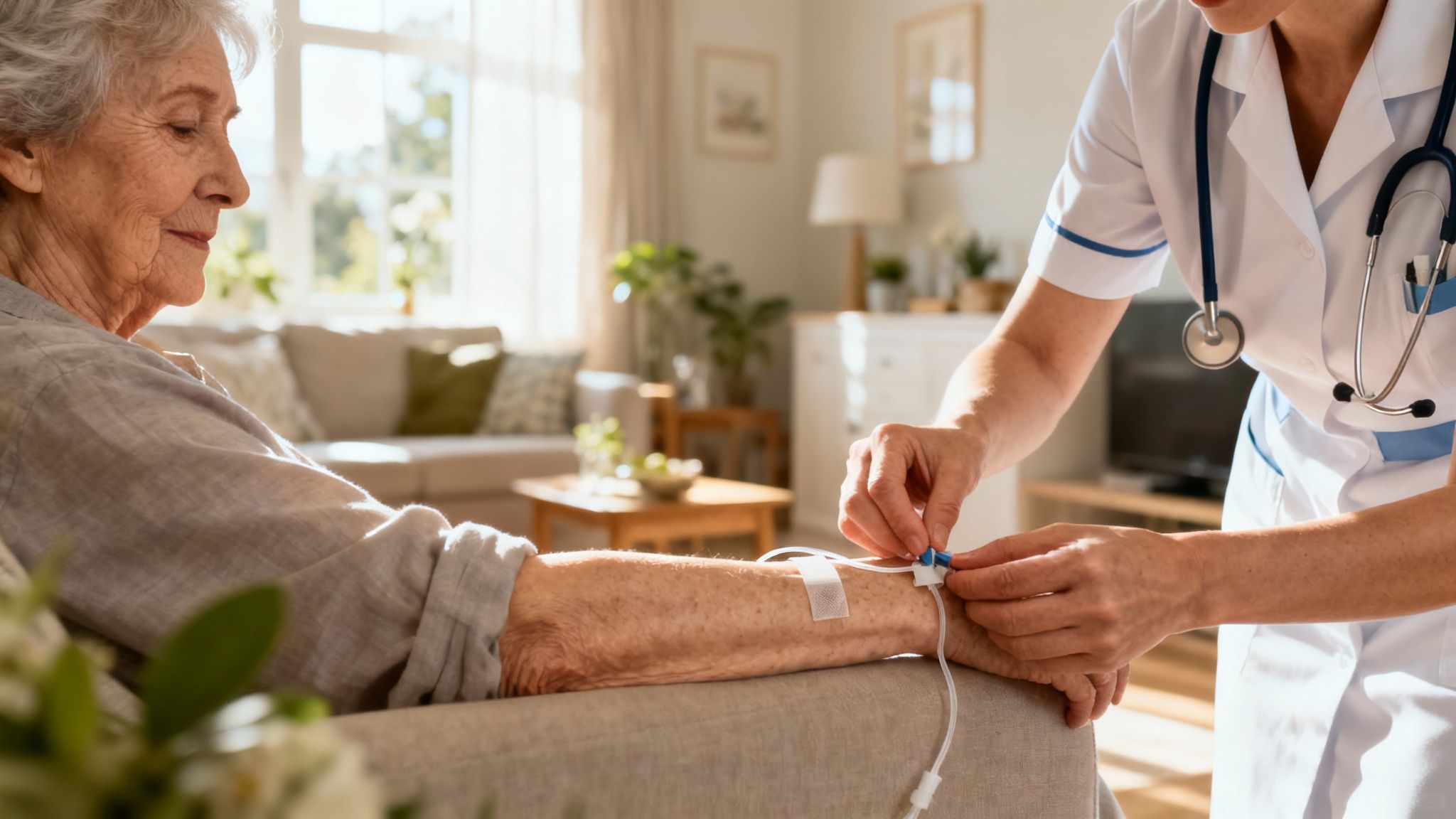
Sometimes, the conversation shifts from what is convenient to what is medically needed. This is often when families realize a loved one’s health requires a level of skill they cannot provide. The main goal is to keep them safe and help them heal at home.
For families here in Monterey County, spotting these clinical needs is the first step. A Registered Nurse from Central Coast VNA & Hospice will work with your loved one’s doctor. This teamwork ensures the care at home lines up perfectly with the physician's orders.
Real-World Scenarios from Our Monterey Experience
Certain health events almost always need a licensed nurse. With decades of local experience, we have seen how professional nursing makes a life-changing difference.
Here are a few common scenarios we see in Monterey and Santa Cruz counties:
- Post-Surgical Recovery: After a major surgery, a patient needs a professional to manage wound care, control pain, and watch for infection. A skilled nurse is trained to handle dressings and spot potential problems before they become serious.
- Chronic Disease Management: Conditions like COPD, diabetes, or heart failure need constant, careful attention. A nurse can monitor vital signs, manage medications, and teach the family how to handle symptoms day-to-day.
- Complex Medical Treatments: Some treatments, like IV therapy, cannot be done safely by an untrained person. A Registered Nurse is essential for managing these treatments at home, making sure they are done correctly.
Skilled in-home nursing is especially important for complex recoveries, like navigating post-heart surgery complications, where professional oversight is key.
For many patients, professional in-home nursing is the key factor in preventing hospital readmissions. According to the Alliance for Home Health Quality and Innovation, high-quality home health care can reduce the risk of rehospitalization by up to 25% (AHHQI, 2018).
The Role of a Physician’s Assessment
To start skilled home health services, a physician’s order is required. This confirms that the care is medically necessary. Our Registered Nurses coordinate directly with your loved one’s doctor to assess their condition.
This team approach creates a plan that supports both physical recovery and emotional well-being. Understanding what skilled nursing care is can turn uncertainty into a confident decision.
It Takes a Team: How CCVNA Delivers Whole-Person Home Health Care
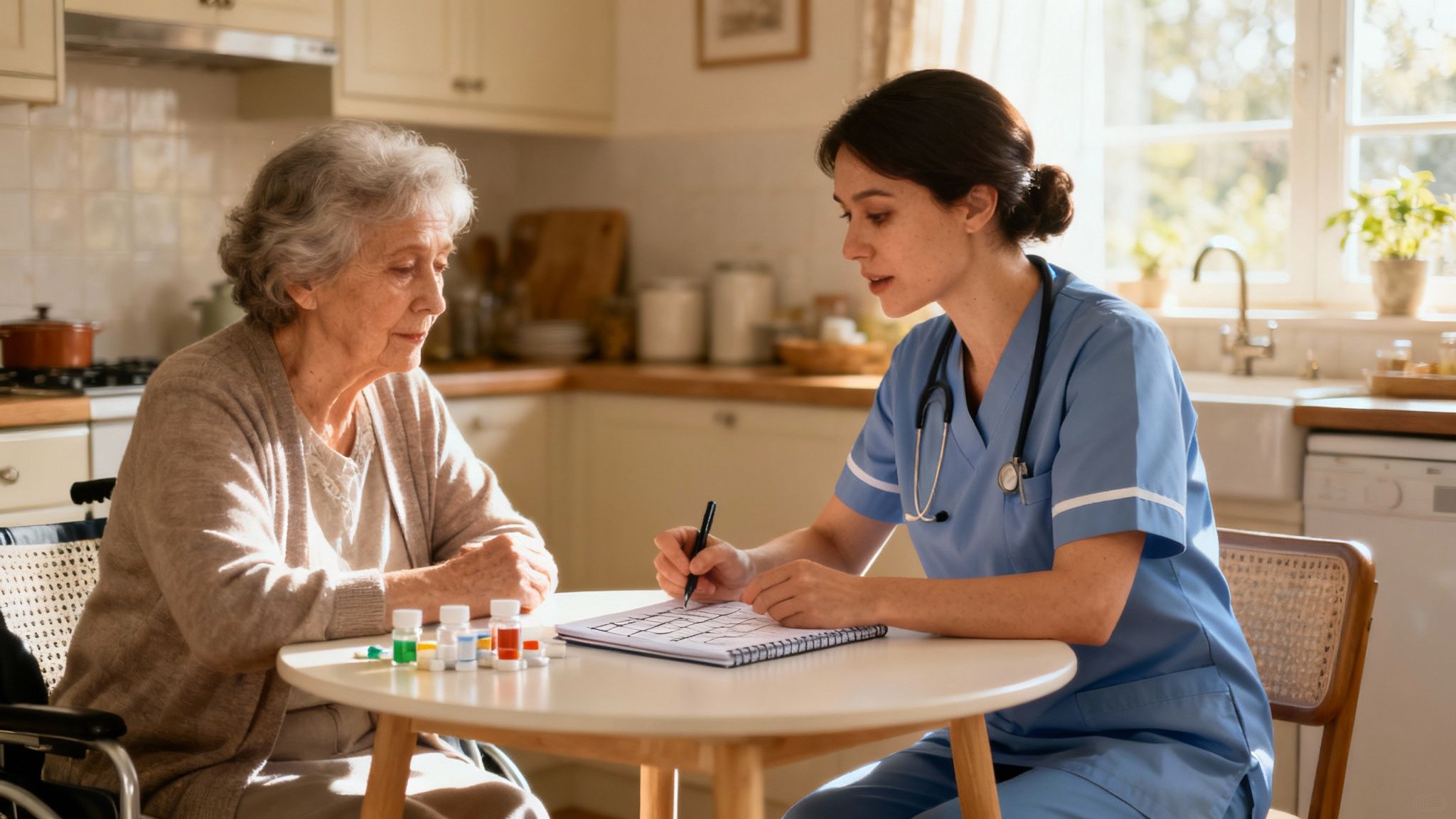
Exceptional care in Monterey is a team effort. At Central Coast VNA & Hospice, our Registered Nurses coordinate the care plan. They are backed by a whole team of professionals working together.
This team approach ensures we look at every angle of your loved one's well-being. We see the whole person, not just a medical issue. This philosophy has guided our nonprofit for over 74 years.
Your Dedicated Care Team
Choosing CCVNA means you get access to a full circle of specialists. Each person brings a unique skill to create a complete support system.
- Registered Nurses (RNs): They manage the overall medical care plan, from wound care and medication administration to patient education. They are the central point of coordination with your physician.
- Physical Therapists (PTs): These experts help restore mobility and strength. A PT might help your loved one regain balance to prevent falls or learn to walk safely at home.
- Occupational Therapists (OTs): An OT’s goal is to improve a person’s ability to handle daily activities. They provide practical solutions so your loved one can manage tasks like dressing or bathing more independently.
- Medical Social Workers (MSWs): Our MSWs are compassionate guides. They connect families with community resources, help with advance care planning, and offer emotional support.
When a Registered Nurse visits your home, they bring the wisdom of this entire team. Everyone communicates to ensure the care plan aligns with your loved one's goals.
Our mission as a nonprofit is to treat the whole person, not just the illness. By integrating therapies and social work with skilled nursing, we empower patients to live with dignity and independence at home.
This team-based care provides coordinated support for healing at home. It ensures that any challenge is met with professional, compassionate expertise. This is our promise at Central Coast VNA & Hospice.
A Monterey-Specific Checklist to Evaluate Care Needs
Making the call about in-home nursing is a big decision. To help, we've put together a checklist for families in Monterey County. It can help you have important conversations and see your loved one's situation clearly.
Answering these questions honestly will help you decide if our skilled services are the right fit. This process should feel manageable, not stressful.
Monterey Care Needs Evaluation Checklist
Use this checklist to guide your family's conversation. It will help you see where support is most needed.
| Assessment Area | Key Questions to Ask | In-Home Nursing May Be Right If... |
|---|---|---|
| Medical Complexity | Do they need wound care, injections, or IV infusions? Are they managing multiple prescriptions or a new diagnosis? | ...they require clinical oversight to manage complex symptoms, prevent medication errors, or need skilled procedures at home. |
| Surgical Recovery | Have they recently been discharged from the hospital? Do they need help monitoring vitals or incision sites? | ...they need a professional to track recovery, manage pain, and prevent complications like infections for a smooth transition home. |
| Mobility & Safety | Have they fallen recently, or are you worried about their risk of falling? Do they struggle to get up from a chair or walk safely? | ...they would benefit from a home safety evaluation and a Physical Therapist's help to improve balance, strength, and confidence. |
| Chronic Conditions | Are they living with an illness like heart failure, COPD, or diabetes that needs ongoing monitoring? | ...a Registered Nurse can provide education, monitor their condition, and coordinate with their doctor to prevent hospital readmissions. |
| Emotional State | Have you noticed them becoming more withdrawn or anxious? Are they showing signs of depression? | ...the consistent, compassionate presence of a nurse can provide vital emotional support, reassurance, and a therapeutic connection. |
Walking through these points helps you build a full picture of your loved one's needs.
Diving Deeper into the Decision
Let’s break down a few of these areas a bit more.
Medical and Medication Management
How complex is their medical care? If they are keeping track of multiple prescriptions, a Registered Nurse can be a lifesaver. They can prevent dangerous drug interactions and handle medications that require injections.
This is a critical piece of the puzzle. You can get a better sense of what to look for by reviewing these 5 warning signs that elderly parents need home health care.
Mobility and Home Safety
Next, look at their physical stability and home safety. Has there been a recent fall? A skilled professional can perform a home safety assessment and coordinate with a Physical Therapist.
Think about how they move around each day. These are clear signs that professional support is needed to prevent a serious injury.
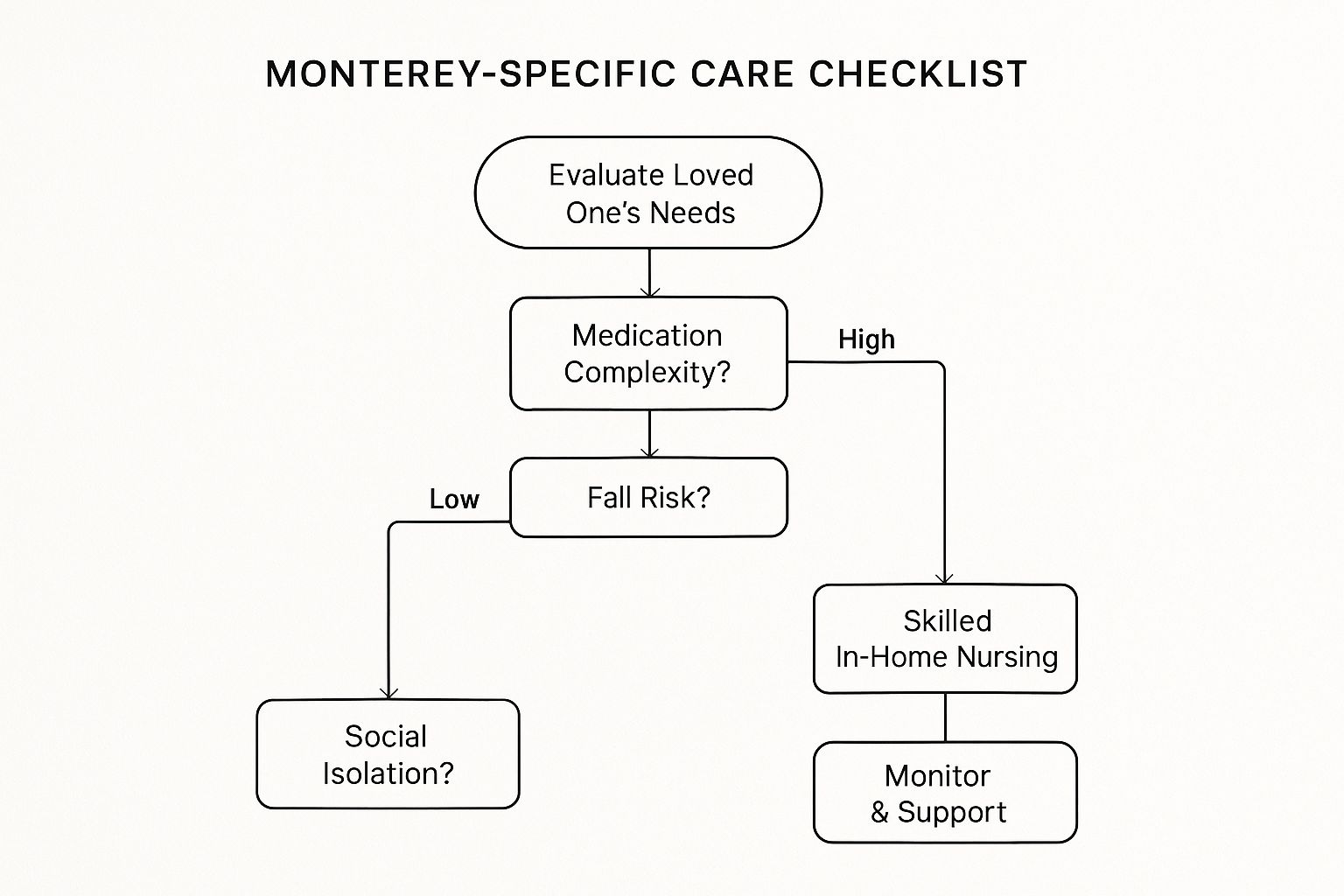
When medical or safety needs are high, skilled in-home nursing is often the clearest solution.
Emotional and Social Well-being
Finally, never underestimate their emotional health. Do they seem lonely or show signs of depression? A consistent, compassionate nursing professional offers more than medical care—they offer a vital human connection.
A key benefit of in-home nursing is the therapeutic relationship that develops. Our nurses become trusted advocates, providing reassurance to both the patient and their family.
This checklist is a starting point. By considering each area, you can answer the question, "is in-home nursing right for your loved one in Monterey?" with more confidence.
Insights from Our Nurses: What Families Often Overlook
Our Registered Nurses have served families across Monterey County for decades. They have seen what truly makes a difference in a patient’s recovery. Some of the most powerful factors are the ones families might overlook.
One of the biggest is the emotional comfort of being in a familiar place. Healing isn't just physical. Recovering in your own bed, surrounded by cherished memories, can dramatically reduce stress.
The Power of One-on-One Education
In a facility, patient education can feel rushed. At home, our nurses have time for focused, one-on-one instruction. This is a game-changer.
We can walk you through medication schedules and teach you to recognize important symptoms. This direct education empowers families, turning fear into confidence. You can explore what a home care nurse does in more detail.
Keeping You Out of the Hospital
A huge goal of in-home nursing is to break the cycle of rehospitalization. Our nurses are trained to spot potential problems early, before they become emergencies.
"We often hear from families that having a nurse visit regularly gave them peace of mind. It's that professional set of eyes that catches small changes in a patient's condition, allowing for quick intervention that prevents another trip to the hospital." - Insight from a Central Coast VNA & Hospice Nurse
This proactive approach helps stabilize health and promotes independence. It’s about managing conditions at home to avoid the disruption of hospital stays.
Understanding the Costs and Value of In-Home Nursing
When thinking about care, cost is always part of the conversation. Understanding the financial piece helps families in Monterey County make a confident choice.
Many families are relieved to learn that skilled home health services are often covered by Medicare, Medi-Cal, and many private insurance plans. This coverage can make professional nursing care at home an accessible option. You can learn more about how to fund home health care costs on our website.
Looking Beyond the Hourly Rate
When weighing options in Monterey, it's easy to focus on hourly numbers. You can see local home care cost trends from care.com, but that figure only tells part of the story.
The real value is in preventing expensive hospital stays and emergency room visits. This proactive, personalized care delivers benefits you can't put a price tag on.
- Staying Out of the Hospital: A Registered Nurse who monitors your loved one catches issues early, often stopping a costly hospital readmission.
- Improving Day-to-Day Life: The comfort of recovering in a familiar space is priceless and leads to better outcomes.
- Empowering Patients and Families: One-on-one time with a nurse gives families the skills to manage their loved one's health with confidence.
A Mission-Driven Approach to Care
As a nonprofit, our bottom line is patient well-being, not profit margins. For over 74 years, our focus has been on serving the Central Coast community with compassion.
This means you can trust that our recommendations are based on one thing: what is truly best for your loved one’s health and recovery.
Frequently Asked Questions About In-Home Nursing
Making decisions about care brings up many questions. Here are clear answers to questions we often hear from families in Monterey County.
How is a home health care plan created?
It begins with a doctor's order confirming that skilled nursing is medically necessary. Then, one of our Registered Nurses schedules a detailed in-home assessment. The nurse works with the patient, family, and doctor to create a personalized care plan.
What happens during the first nursing visit?
The first visit builds a trusting relationship. Our Registered Nurse will review your loved one's medical history, do a physical assessment, and organize their medications. They will also walk you through the care plan and answer all your questions.
Can a Registered Nurse provide palliative or hospice care at home?
Yes. Our Registered Nurses are at the heart of our palliative and hospice care teams. They are experts in managing pain and other symptoms, focusing on comfort and dignity at home. This is a core part of our Continuum of Care, from home health to end-of-life support.
How do I know if my loved one is ready for in-home nursing?
Knowing when it's time for help often comes down to noticing key changes. Have they been hospitalized recently? Are they struggling with medications? Have they had a fall? If you see these signs, it's the perfect time to discuss professional support at home.
Why choose Central Coast VNA & Hospice?
As a nonprofit with over 74 years of local service, our focus is on our mission, not on profits. We serve Monterey, San Benito, Santa Cruz, and South Santa Clara counties. We invest our resources back into compassionate care and our dedicated clinical teams.
Many home care agencies face challenges with low wages, which can affect care quality. You can learn more about the local efforts to support Monterey's essential home care workers here. Our nonprofit structure allows us to rise above these issues.
If you still have questions, the team at Central Coast VNA & Hospice is here to guide you.
Contact us today to talk about your family's needs.
Who Offers the Best Hospice Care for Parents Near Monterey?
Choosing hospice care for a parent is a deeply meaningful decision. It requires finding a provider who offers medical skill, compassion, and support for the whole family. For residents in our community, the question, "Who offers the best hospice care for parents near Monterey?" is a personal one.
This guide provides clarity and confidence during this sensitive time. It includes a compassionate checklist to help you review your options.
Our goal is to give you the information needed to select a partner who will honor your parent's wishes. We will explore trusted local organizations and what sets each apart. This guide will help you compare their services effectively.
Below, we’ll look at several key resources to help you find and evaluate care. Each overview includes what the resource offers, a direct link, and a screenshot. We will show you how to find providers, compare quality, and make a choice that feels right.
1. VNA and Hospice
When searching for the best hospice care for parents near Monterey, Central Coast VNA & Hospice (CCVNA) is a top choice. With a 74-year legacy as a nonprofit leader, CCVNA provides compassionate and complete care. Their mission-driven approach ensures every family receives expert medical support and guidance.
What truly makes CCVNA different is its integrated care model. CCVNA provides home health, palliative care, and hospice care all under one trusted organization. This ensures a smooth transition as your parent's needs change, reducing the stress of finding new providers.
A Compassionate Checklist for Evaluating Providers
CCVNA’s services are designed to treat the whole person, not just the illness. Their team includes a Registered Nurse, Social Worker, Chaplain, and Hospice Aide who create a personal care plan. This approach addresses physical comfort, emotional well-being, and spiritual peace.
Key strengths of the CCVNA model include:
- Continuum of Care: The ability to move from home health to palliative care, and then to hospice, provides stability. This prevents disruptive changes and builds trust with the care team.
- 24/7 Availability: Peace of mind is crucial. CCVNA’s hospice team is available around the clock to manage symptoms and answer urgent questions.
- Expert Symptom Management: The clinical team excels in pain and symptom control. They focus on preserving your parent’s comfort and dignity at home.
- Nonprofit Mission: As a nonprofit, CCVNA’s focus is on patient well-being and community service. They are committed to providing care to all eligible individuals.
Navigating Medicare and Advanced Planning
Understanding the practical side of hospice is important. CCVNA simplifies this by accepting Medicare, Medi-Cal, and private insurance. Their team helps families navigate coverage and understand benefits.
"When my mother needed hospice, the VNA team was a blessing. They not only managed her pain with such skill but also sat with us, explaining Medicare and helping us feel prepared. We felt supported every step of the way." – A Monterey Family.
For those wanting to learn more, CCVNA offers clear guidance on what to expect. This helps prepare your family for the journey ahead.
Website: https://ccvna.com
2. Medicare Care Compare (Hospice)
When deciding on hospice care, objective data is a powerful tool. The official Medicare Care Compare website helps you evaluate Medicare-certified hospices. It offers an unbiased look at providers, making it a key first step.
This free platform allows you to search for hospices by city or ZIP code. You can compare them using quality metrics from the Hospice Quality Reporting Program. This includes feedback from caregivers on communication, support, and pain management.
Key Features and How to Use Them
The website’s main advantage is its impartiality. Every Medicare-certified provider is listed, giving you a full view of your options. This includes providers serving Monterey County, San Benito County, and Santa Cruz County.
- Search and Filter: Enter a city like "Monterey" to see certified providers.
- Compare Quality Scores: Select up to three hospices to compare their quality scores.
- Verify Services: Each profile lists services like routine home care and inpatient respite care.
Pay close attention to the caregiver experience scores. These reflect the real-world experiences of families who have used these services.
Pros and Cons of Medicare Care Compare
Pros:
- Objective Data: Provides unbiased, nationwide data from Medicare.
- Standardized Comparisons: Lets you compare providers using the same metrics.
- Cost-Free Access: The tool is completely free for everyone.
Cons:
- Clinical Interface: The user experience can feel less personal.
- Limited Data for New Providers: Newer hospices may not have full quality scores.
This tool helps you make an informed decision based on official data. Understanding how Medicare covers these services is also vital. You can learn more about how to pay for hospice care to navigate the financial side with clarity.
3. Hospice of the Central Coast (Montage Health/Community Hospital of the Monterey Peninsula)
Having a hospice provider connected to the local health system can simplify the process. Hospice of the Central Coast is the nonprofit program of Montage Health. It is affiliated with the Community Hospital of the Monterey Peninsula.
This provider offers a local advantage for anyone searching for hospice care near Monterey. Because of its hospital connection, care coordination is often more direct. The program serves both Monterey and San Benito counties.
Key Features and How to Use Them
This provider's strength is its integration within the local health system. This ensures continuity of care, which is a comfort to families.
- Integrated Referrals: If your parent is a patient at the hospital, the referral process is direct.
- Local Team: The program provides a dedicated team of nurses, social workers, and chaplains.
- Continuity of Care: The nonprofit health system ensures care is consistent.
When exploring the Montage Health website, you may need to look for patient services. A direct phone call is often the best way to discuss your parent’s needs.
Pros and Cons of Hospice of the Central Coast
Pros:
- Local Hospital Integration: Simplifies referrals and communication.
- Nonprofit Health System Support: Ensures care is mission-driven.
- Direct Enrollment: Families can coordinate enrollment directly with the team.
Cons:
- Limited Online Information: The website may require a phone call for specifics.
- Focused Service Area: Services are mainly in Monterey and San Benito counties.
Hospice of the Central Coast is a strong choice for families who value a trusted local provider. You can learn more by visiting the Montage Health website.
4. Central Coast VNA & Hospice (VNA)
For families seeking a deeply rooted, nonprofit provider, the Central Coast VNA & Hospice (VNA) website is a key resource. Founded in 1951, VNA offers a connection to a team that provides hospice, palliative, and home health services. Their website introduces their mission-driven approach to care.
The site clearly outlines its continuum of care. It helps families understand how services can adapt as needs change. The hospice program includes medical care, pain management, and support for patients and loved ones.
"Choosing VNA was the best decision for our family. Their 24/7 support gave us incredible peace of mind. Knowing a compassionate nurse was just a phone call away made all the difference during my father’s last weeks." – A Salinas Family.
Key Features and How to Use Them
The VNA website is designed for easy navigation. It provides a direct line to a nonprofit with over 74 years of history in the community. VNA serves Monterey County, San Benito County, Santa Cruz County, and South Santa Clara County.
- Explore Services: Learn the differences between hospice, palliative, and home health care.
- Access Bereavement Support: Find information on grief support for families.
- Request Service Quickly: Use the online contact form to start a conversation.
- Verify Multilingual Support: The site confirms multilingual staff are available.
When you contact VNA, ask about specialized programs like their Veteran-to-Veteran volunteer service. This shows their commitment to personalized care.
Pros and Cons of Central Coast VNA & Hospice
Pros:
- Deep Community Roots: A long-standing nonprofit with a reputation for compassionate care.
- Comprehensive Support: Offers grief services that go beyond core medical care.
- Continuum of Care: Provides a seamless transition between home health, palliative, and hospice care.
Cons:
- High Demand: Contact them early to ensure timely scheduling.
- Website Is an Overview: Detailed care plans are developed through direct consultation.
The VNA website is the first step toward partnering with a local organization dedicated to comfort. Understanding the need for breaks is also important. You can find information on respite care for family caregivers to support your own well-being.
5. Hospice of Santa Cruz County
For families in northern parts of Monterey County, Hospice of Santa Cruz County offers a specialized, nonprofit option. As a community-based organization, their website looks at services for residents in areas like Salinas and Marina. This resource is helpful for those seeking specialized care and grief support.
The website is a clear entry point for families exploring end-of-life care. It transparently outlines their service areas. The site emphasizes community and support, making it a strong contender for those in its northern service areas.
Key Features and How to Use Them
This provider’s primary strength is its community integration and special programs. The website makes it easy to explore these unique offerings.
- Review Service Areas: Check the "Who We Serve" section to confirm coverage.
- Explore Specialized Care: Find details on their pediatric hospice and palliative care programs.
- Access Grief Support: The site lists grief support groups and counseling services.
- Easy Contact: Find clear phone numbers and email contacts.
Before calling, browse the "Grief Support" section. This focus on family care shows a provider's compassionate approach.
Pros and Cons of Hospice of Santa Cruz County
Pros:
- Strong Community Support: Offers extensive grief support and caregiver programs.
- Specialized Pediatric Care: One of the few local providers with dedicated pediatric programs.
- Clear Geographic Focus: Ideal for families in Northern Monterey County.
Cons:
- Limited Service Area: Does not cover all of Monterey County.
- Specialized Service Availability: Confirm pediatric care availability by phone.
Hospice of Santa Cruz County's website is an excellent resource for a specific part of the population. Learn more at their official website: https://www.hospicesantacruz.org/.
6. Hospice Giving Foundation – Local Providers Directory
When you need a trusted starting point, the Hospice Giving Foundation’s directory is a valuable resource. This nonprofit offers a list of hospice and palliative care providers serving Monterey County. It simplifies the first step of identifying local agencies.
This directory reflects the foundation’s commitment to quality end-of-life care. It provides contact information and links to provider websites. This streamlines the process of finding the best hospice care for parents near Monterey.
Key Features and How to Use Them
The main advantage of this directory is its local focus and simplicity. It cuts through the noise of national search engines.
- Region-Specific Curation: The list is tailored to the Central Coast.
- Comprehensive Care Options: It includes resources for palliative and supportive care.
- Direct Contact Details: Each entry includes phone numbers and websites.
- Foundation Support Indicators: It notes which agencies receive foundation funding.
Use this directory to build your initial list of providers. Then, visit their websites and use a tool like Medicare Care Compare for a complete picture.
Pros and Cons of Hospice Giving Foundation’s Directory
Pros:
- Accurate Local Coverage: Designed for Monterey and surrounding counties.
- Quick and Simple: The layout allows for a fast comparison.
- Free and Trusted: The directory is free and regularly updated.
Cons:
- No Quality Ratings: It does not include patient reviews or quality metrics.
- Requires Further Research: You will need to contact providers for service details.
This directory is a reliable first stop. Emotional and spiritual well-being are as important as medical care. You can learn more about grief support groups to help your family navigate this time.
7. Bridge Home Health & Hospice
For families seeking a provider that integrates home health and hospice, Bridge Home Health & Hospice is a strong local option. With an office in Salinas, this agency serves Monterey County. This approach is helpful when a parent's condition changes, avoiding the need to switch agencies.
Bridge Home Health & Hospice positions its combined services as a key benefit. Their website has clear contact information for their Central Coast offices. Their focus on responsive coordination makes them a noteworthy choice.
Key Features and How to Use Them
The main advantage of Bridge is its unified service model. Their local presence in Salinas helps with direct communication.
- Integrated Services: The website details how patients can move from home health to hospice.
- Local Intake Process: Contact information for the Salinas office is easy to find.
- Interdisciplinary Team: The provider offers a team that includes social workers and therapists.
When you contact them, ask how the care plan is adjusted when a patient transitions to hospice. This can provide peace of mind about future care.
Pros and Cons of Bridge Home Health & Hospice
Pros:
- Continuity of Care: Combining home health and hospice minimizes disruptions.
- Local Office Presence: A Salinas office allows for better coordination.
- Prompt Referral Response: Helps families get care started sooner.
Cons:
- Website Focus: The site is more focused on home health.
- Limited Public Data: It can be harder to find quality scores.
Bridge offers a practical solution for families who may need hospice in the future. To understand these services better, you can learn more about home health and hospice care.
Taking the Next Step with Confidence
Navigating hospice care for a parent is a personal journey. It requires careful thought and clear understanding. This guide has provided tools to evaluate your options.
The most important takeaway is that you are choosing a partner. This partner will walk alongside your family. Your goal is to find an organization that aligns with your family’s values.
Key Factors to Guide Your Decision
As you move forward, keep these points in mind. They will help you find the best hospice care for your parent’s needs.
- Comprehensive Support: Does the provider offer skilled nursing, emotional counseling, and bereavement support?
- Local Roots and Reputation: A nonprofit like Central Coast VNA & Hospice has deep local ties. Its mission focuses on patient care over profits.
- Accessibility: Is care available 24/7? Compassionate responses are a sign of a quality team.
- Medicare Expertise: The team should confidently explain the Medicare Hospice Benefit.
Choosing the right hospice is an act of love. It ensures your parent’s final chapter is filled with peace and dignity. You do not have to walk this path alone.
Frequently Asked Questions (FAQs)
1. What is the difference between palliative care and hospice care?
Palliative care can be provided at any stage of a serious illness and focuses on symptom relief. Hospice care is for patients with a life expectancy of six months or less and provides comfort care instead of curative treatment. Central Coast VNA & Hospice offers both as part of its continuum of care.
2. Is hospice care only for the last few days of life?
No, hospice care can provide comfort and support for months. According to the National Hospice and Palliative Care Organization (NHPCO), patients and families receive the most benefit when they access hospice care earlier. Early access allows the team to manage symptoms and provide emotional support.
3. Can my parent receive hospice care at home?
Yes, most hospice care is provided in the patient's home. It can also be provided in assisted living facilities or skilled nursing facilities. CCVNA specializes in providing expert hospice care in the comfort of home.
4. Who pays for hospice care?
Hospice care is covered by Medicare, Medi-Cal, and most private insurance plans. The Medicare Hospice Benefit covers nearly all costs related to the terminal illness. The CCVNA team helps families understand their coverage options.
5. What kind of support is available for our family?
Hospice providers like CCVNA offer comprehensive support for the entire family. This includes spiritual care from a Chaplain, emotional support from a Social Worker, and bereavement counseling for up to 13 months after a loved one's passing.
Ready to find compassionate care that honors your parent’s wishes? Discover how VNA and Hospice has supported Monterey County families for over 74 years. Visit our website at VNA and Hospice to learn more about our hospice services and start a conversation today.
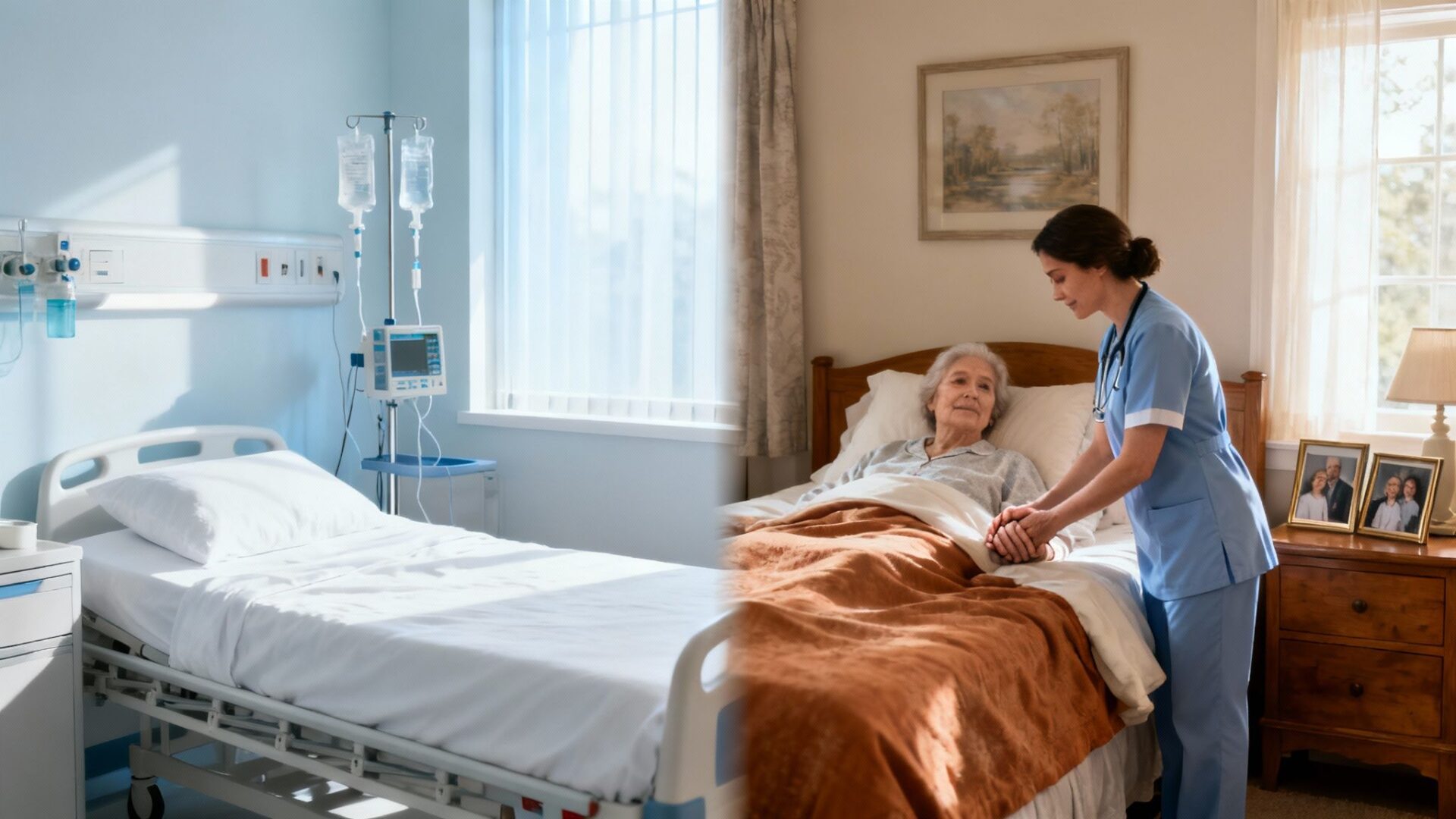
Hospital vs. Hospice: What’s Best for End-of-Life Care?
Choosing between hospital and hospice care is a deeply personal decision. The two paths have different goals. Hospital care aims to cure illness and prolong life with aggressive treatment.
Hospice care shifts the focus to maximizing comfort and quality of life. This happens when a cure is no longer the main goal. Choosing hospice is not giving up; it is a choice to live the final months with dignity and support.
Understanding Your End-of-Life Care Options
When a serious illness progresses, the path forward isn't always clear. The decision between hospital treatments and hospice can feel overwhelming. The first step is to understand the core philosophy behind each option.
This guide brings clarity to families in Monterey County, San Benito County, Santa Cruz County, and South Santa Clara County. Central Coast VNA & Hospice is a local, nonprofit provider with over 74 years of community service. We help you navigate these sensitive decisions with expert, compassionate care.
This chart helps show the different priorities of hospital care versus hospice care.
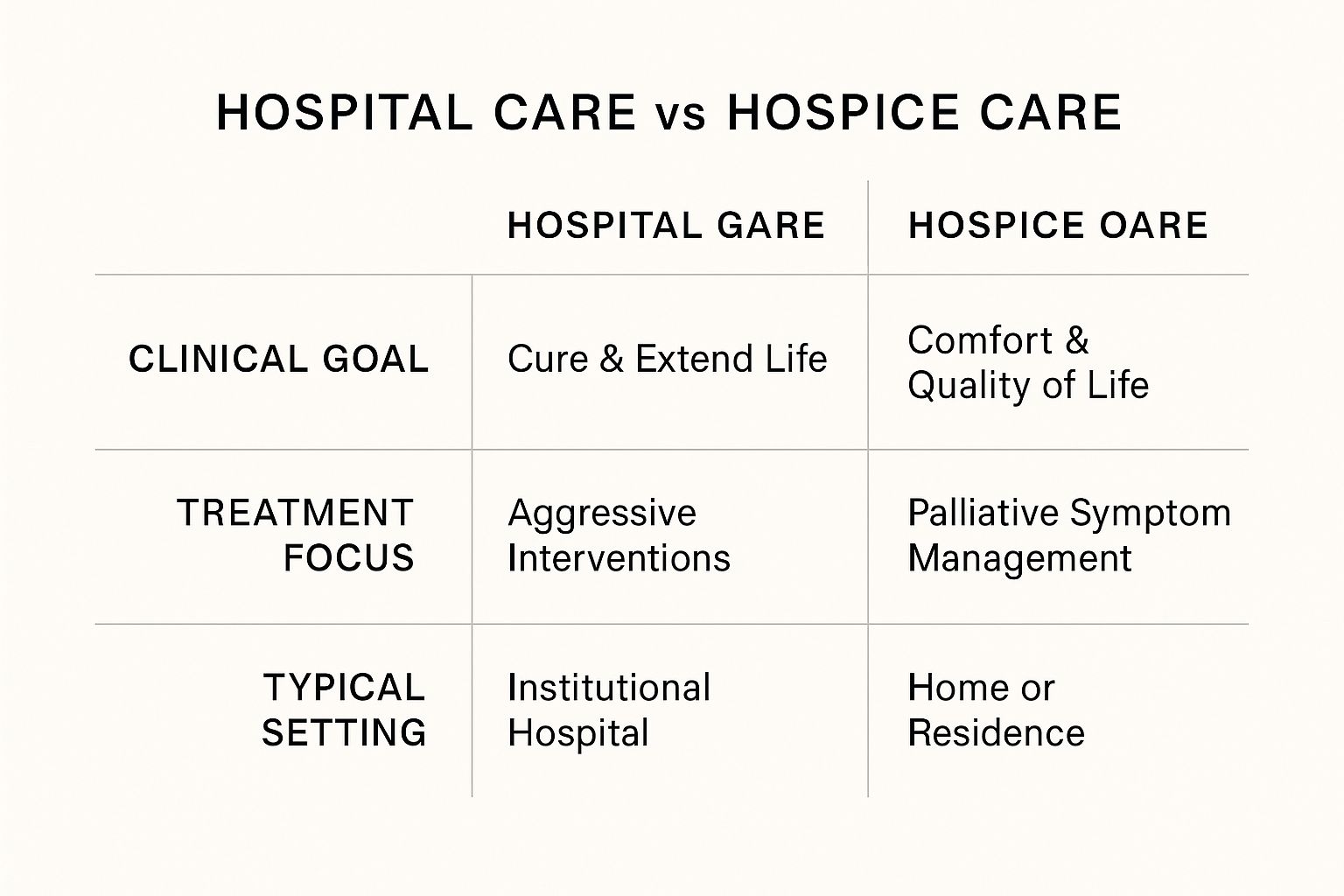
As you can see, the two approaches prioritize different outcomes. This directly impacts a person's daily experience and environment.
Hospital vs. Hospice at a Glance
To quickly understand the core differences, this table breaks down the two approaches.
| Care Aspect | Hospital Care | Hospice Care |
|---|---|---|
| Primary Goal | Cure the illness and prolong life. | Manage symptoms and maximize comfort. |
| Typical Location | Clinical setting (hospital). | Patient's home or a home-like facility. |
| Treatment Approach | Aggressive and curative (e.g., surgery, chemo). | Palliative (comfort-focused) care. |
While both provide medical expertise, the philosophy guiding that expertise is what truly sets them apart.
Key Distinctions in Care Philosophy
The choice comes down to what matters most to the patient in their final chapter.
- Hospital care is centered on curative treatment. Medical teams use every tool available, from surgery to intensive care, to fight the disease. This path is ideal when a cure or significant recovery is still considered possible.
- Hospice care begins when the focus shifts from curing the illness to caring for the person. The priority becomes comfort, peace, and emotional well-being. Hospice allows the illness to take its natural course, free from aggressive medical interventions.
Defining Success Differently
In a hospital, success is measured by clinical outcomes like better lab results or stabilized vital signs. It’s an environment built for recovery.
Hospice defines success by the patient's quality of life. Is their pain managed? Are they receiving emotional support? You can learn more about preparing for these talks in our guide on end-of-life care planning.
Comparing Clinical Goals and Medical Treatment
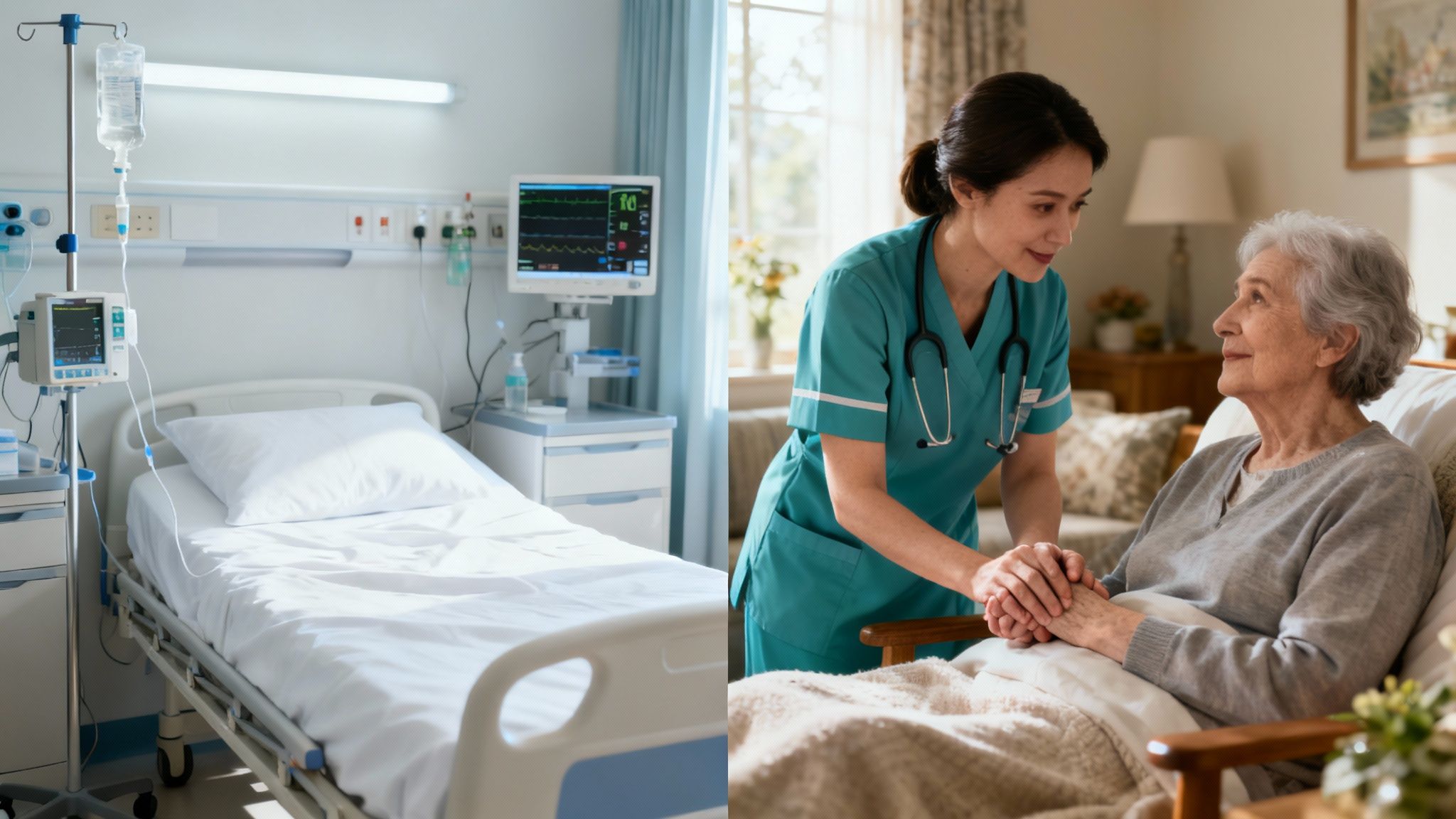
The biggest difference between hospital and hospice care is their core mission. In a hospital, the entire team focuses on curing disease and extending life. This means pursuing aggressive treatments.
Hospice care redefines what "success" looks like. When a cure is no longer likely, the focus shifts to caring for the whole person. Hospice ensures a patient's final chapter is lived with comfort, dignity, and peace.
The Shift from Curative to Comfort Care
A hospital medical plan is built around curative treatments like surgery or chemotherapy. The goal is to buy the patient more time.
Hospice care follows a different philosophy. The hospice team, led by a physician and supported by a Registered Nurse and Hospice Aide, provides expert symptom management. This isn't giving up; it's changing the goal to quality of life.
“Our philosophy at Central Coast VNA & Hospice is that every individual deserves to live their final days with dignity and comfort. We craft personalized care plans with our hospice physicians to manage symptoms aggressively, so patients can focus on meaningful time with their loved ones, not on their pain.”
Crafting a Personalized Comfort Plan
Medical treatment in hospice is deeply personal. It centers on the patient's specific symptoms and wishes. The goal is to control pain, nausea, and other distressing symptoms.
The interdisciplinary hospice team creates a plan that may include:
- Pain Management: Using medications to keep the patient as comfortable as possible.
- Symptom Control: Addressing issues like fatigue and breathing difficulties.
- Medical Equipment: Providing a hospital bed or oxygen for use at home.
- Personal Care: Assisting with daily activities like bathing to maintain dignity.
This focus on comfort often allows patients to remain in their homes in places like Monterey County and Santa Cruz County. By providing 24/7 on-call support, hospice reduces the need for stressful emergency room visits. This breaks the cycle of hospital dependency. For more details, explore what palliative care and hospice are.
How Medical Roles Change
In a hospital, doctors and nurses focus on executing a treatment plan to combat disease.
In hospice, the team works with the patient and family to honor their wishes. A hospice physician from Central Coast VNA & Hospice oversees the care plan. A Registered Nurse makes regular visits to manage symptoms and educate the family.
Emotional and Spiritual Support for the Whole Family
The end-of-life journey is an emotional and spiritual experience for the patient and their loved ones. A hospital's focus is medical intervention, which can feel impersonal.
Hospice care provides holistic support, placing emotional and spiritual well-being at the center of its mission. Central Coast VNA & Hospice operates on the philosophy that the family is part of the unit of care.
A Team Dedicated to the Whole Family
A hospital patient might have a brief visit from a social worker or chaplain. Hospice offers an entire interdisciplinary team to support the patient and their loved ones.
This team includes:
- Medical Social Workers: Professionals who help families manage stress and find resources.
- Chaplains: Spiritual guides who honor each family’s unique beliefs and traditions.
- Bereavement Specialists: Counselors who provide grief support for up to a year.
Our nonprofit mission is to create a peaceful, supportive atmosphere. We believe this is best achieved in the familiar comfort of home.
Honoring Patient Wishes and Providing Peace of Mind
Studies show that most patients prefer to die at home. Yet, hospitals remain a common place of death. Hospice bridges this gap.
By bringing expert care into the home, we make it a safe option. This allows a patient's final wishes to be honored. For some, this support is supplemented by the non-medical end-of-life care provided by death doulas.
Spiritual Care Tailored to Individual Beliefs
Spiritual distress can show up as fear or a loss of meaning.
"Our role is to listen deeply and walk alongside families, providing a compassionate presence without judgment. We help them find sources of comfort and meaning, whether that comes from faith, nature, music, or simply sharing stories."
Spiritual support in hospice is not about pushing religion. Chaplains from Central Coast VNA & Hospice are trained to meet people where they are. Learn more about our approach to spiritual care in hospice.
Navigating the Financial Costs of Care
The financial side of end-of-life care is a major source of stress. A long hospital stay can lead to a mountain of medical bills. Every test and procedure adds up.
This financial pressure comes at the worst possible time. Understanding the financial differences between hospital and hospice care is important.
The Comprehensive Hospice Benefit
Hospice provides great financial relief. For patients who qualify, hospice care is typically covered 100% by Medicare. This benefit is also mirrored by Medicaid and most private insurance plans.
This all-inclusive coverage is designed to remove money as a barrier. Families can focus on spending meaningful time together.
The Medicare hospice benefit is comprehensive, covering:
- The entire hospice team: All visits from the Registered Nurse, Hospice Aide, Social Worker, and Chaplain.
- Medical equipment: A hospital bed, oxygen, or wheelchair delivered at no cost.
- Medications: All prescriptions for managing pain and symptoms.
- Medical supplies: Items like bandages and catheters.
At Central Coast VNA & Hospice, our nonprofit mission is to ensure that financial stress never stands in the way of high-quality, compassionate care. Our team helps families in Monterey County and surrounding areas access these benefits so they can focus on their loved one.
Comparing Hospital and Hospice Costs
Hospital care operates on a fee-for-service model. Every blood test and scan is a separate line item on the bill. Out-of-pocket costs can be staggering.
Hospice is usually paid through a per diem rate. This single daily rate covers all services, equipment, and medications. For those planning ahead, policies like critical illness insurance can also offer support.
As a local nonprofit serving the Central Coast for over 74 years, we are committed to making care accessible. We walk families through the insurance process. You can find out more in our guide on how to pay for hospice care.
How Environment Shapes the End-of-Life Experience
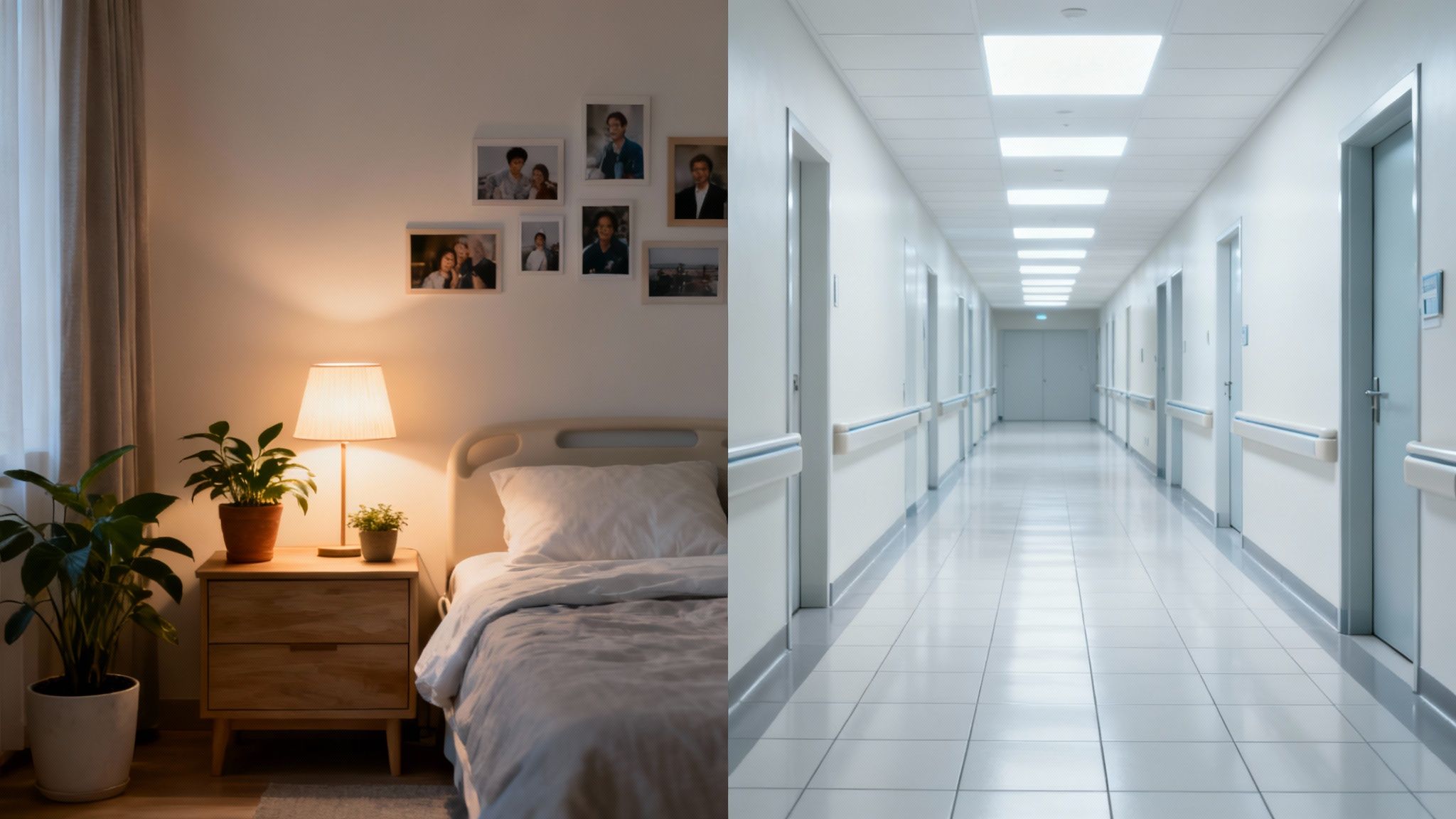
Where a person spends their final days shapes their sense of peace. A hospital is an institutional environment built for medical intervention. It can lack personal space.
Hospice care operates on a different philosophy: comfort is best found in familiar surroundings. Our services are brought to wherever a patient calls home. This could be a private home in Monterey or an assisted living facility in Santa Cruz County.
The Power of Familiarity and Autonomy
Being at home gives a person a sense of control. They can be surrounded by memories and welcome loved ones without visiting hours. This can reduce anxiety for the patient and family.
At Central Coast VNA & Hospice, this principle is the bedrock of our care. We empower patients to remain where they feel most secure.
“A person’s home is their sanctuary. Our goal is to bring expert medical care into that sanctuary, adapting to their needs rather than forcing them to adapt to an unfamiliar clinical setting. It’s about honoring their life, right where they lived it.”
Reducing Hospital Dependency with 24/7 Support
One of the biggest fears for families is a medical crisis at night. This anxiety often drives people to the emergency room.
Hospice care is designed to eliminate that fear. Central Coast VNA & Hospice provides 24/7 on-call nursing support. This gives families a direct line to a Registered Nurse at any time. This immediate access helps manage symptoms at home and prevents most ER visits.
The Global Need for Home-Based Care
While we have robust hospice services on the Central Coast, this is not a global reality. According to the World Health Organization, only about 14% of people who need palliative care currently receive it. You can learn more about these global care disparities.
This data underscores the importance of organizations like ours. We are dedicated to ensuring everyone in our community has access to comfort and dignity.
Our philosophy is simple: end-of-life care should revolve around the patient’s life. By enabling them to stay in their cherished surroundings, we help preserve their identity.
Deciding When It Is Time for Hospice
Knowing when to shift from curative treatments to hospice care is a profound decision. It is a choice rooted in love.
The technical requirement for hospice is simple. A doctor must certify that a patient has a life-limiting illness with a prognosis of six months or less. But that is only one part of a bigger picture.
Recognizing the Signs
You may see signs that the burdens of treatment outweigh the benefits. These shifts can indicate it is time to talk about comfort care.
Look for these key changes:
- Frequent Hospitalizations: A revolving door of ER visits can be exhausting.
- Declining Function: A drop in the ability to handle daily activities like walking or eating.
- Increasing Symptoms: Pain, shortness of breath, or fatigue become harder to manage.
The Value of Early Conversations
Waiting for a crisis makes these decisions harder. Advance care planning is very important. Talking openly about end-of-life wishes gives everyone clarity.
These conversations are about values, not just medical directives. Exploring when to call hospice sooner allows you to take full advantage of the support hospice provides.
It is also important to remember that end-of-life needs are not just for cancer. The National Hospice and Palliative Care Organization (NHPCO) notes that many people receive hospice for heart disease, dementia, and lung disease (NHPCO, 2021).
Palliative Care as a Bridge
Sometimes, a person needs help with symptoms but is not ready for hospice. This is where palliative care acts as a vital bridge. It can be provided alongside curative treatments.
At Central Coast VNA & Hospice, we see palliative care as an extra layer of support. It helps manage the physical and emotional burdens of a serious illness, giving patients and families in Monterey County and San Benito County the strength to navigate their healthcare journey.
This service can ease the transition long before hospice becomes the right path. Our goal is to empower you with the right information and support.
FAQs: Your Questions About Hospice and Hospital Care
Navigating end-of-life decisions brings up many questions. Here are answers to some common questions we hear from families in Monterey County.
1. Can a patient still see their primary doctor in hospice?
Yes. A patient’s relationship with their primary care physician is important. We honor that connection. Central Coast VNA & Hospice works in partnership with a patient's chosen doctor. Our hospice physician complements their care, not replaces it.
2. Who is the primary carer in hospice at home?
A family member or close friend usually steps into the role of primary carer. This person handles the patient's day-to-day needs. Our job at Central Coast VNA & Hospice is to empower that individual with training, resources, and 24/7 on-call support.
3. What happens if a patient’s condition improves?
If a patient's health stabilizes, they can be discharged from hospice care. This is a wonderful outcome. The patient can go back to pursuing curative treatment. They can re-enroll in hospice later if needed.
4. Can you be in hospice and still go to the hospital?
The goal of hospice is to manage symptoms at home. Our 24/7 on-call support is designed to handle medical issues before they become emergencies. If a symptom becomes too severe, the hospice team might arrange a short hospital stay for symptom control, but the goal remains comfort, not cure.
5. Do I have to give up all medical treatments in hospice?
You agree to shift away from curative treatments for your terminal illness. You do not give up medical care. You continue to receive treatments focused on comfort, such as medications for pain and therapies to improve quality of life.
Making the right choice for end-of-life care is a profound act of love. If you have more questions or want to understand how our continuum of care can support your family, the compassionate team at Central Coast VNA & Hospice is here to help. Contact us today to learn more about our services in Monterey County, San Benito County, Santa Cruz County, and South Santa Clara County. https://ccvna.com
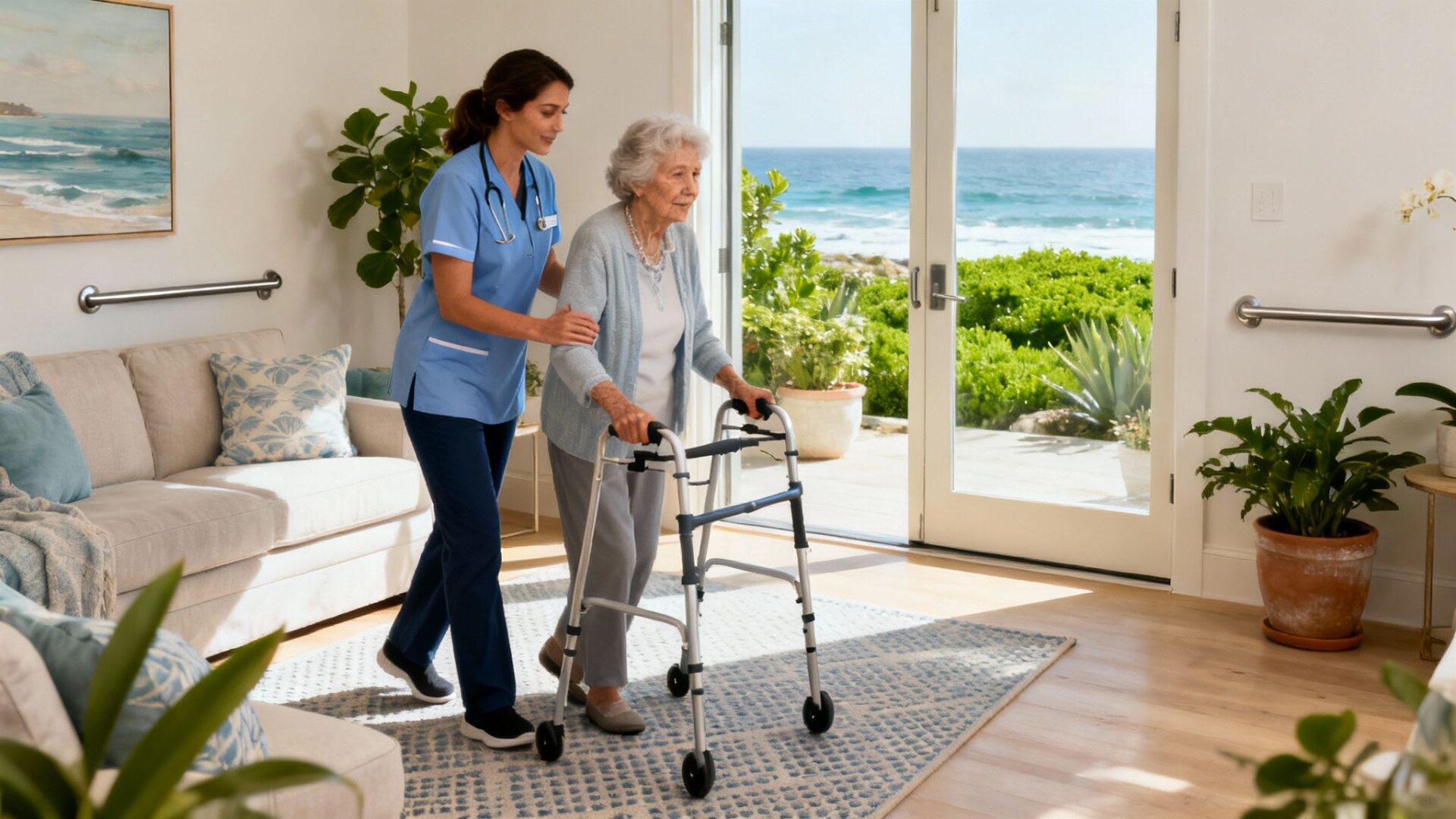
How VNA Helps Seniors Live Safely at Home in Monterey
For over 74 years, families in Monterey have asked a key question. How can we help our loved ones live safely at home? Central Coast VNA & Hospice offers an answer built on decades of nonprofit care.
We bring expert clinical support right to your door. Our team creates a partnership with you. We develop a personal safety plan that helps seniors thrive at home.
Your Trusted Partner for Aging Safely in Monterey County
Most families want their senior loved ones to keep their independence. Central Coast VNA & Hospice (CCVNA) makes this possible. We deliver expert, compassionate care at home.
As a local nonprofit, our focus is on patient well-being. We have deep roots in the community.
We know that every senior is different. Our teams include Registered Nurses and Physical Therapists. They create individual care plans to manage health and prevent emergencies.
Our clinical teams help manage chronic conditions like heart failure and diabetes. This lowers the risk of a hospital visit. It also gives families the confidence to handle health challenges.
This visual shows our process. It combines our history of service with expert teams. Together, they create personalized care that supports seniors in Monterey County.
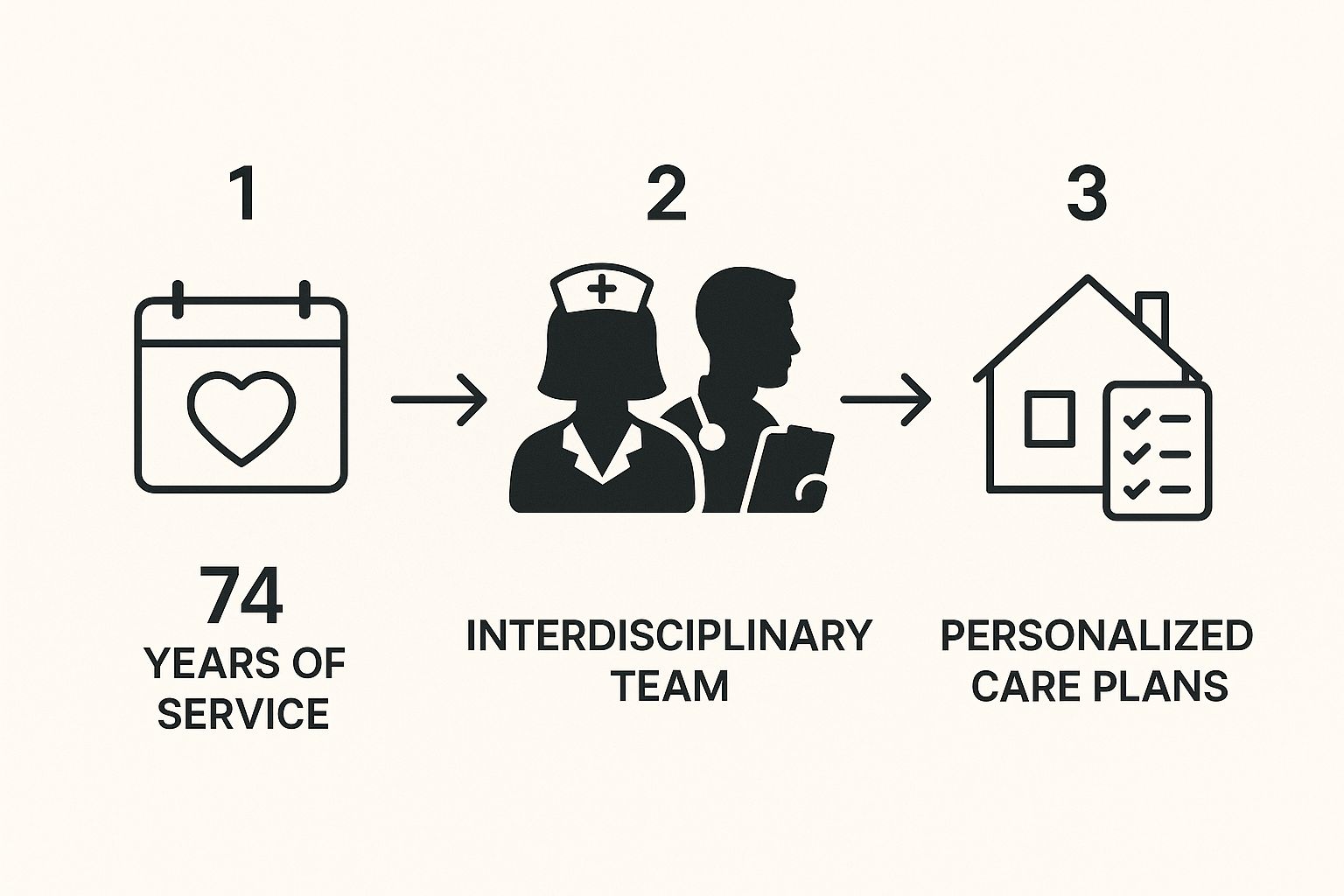
Here is a summary of how our services create a safer home.
How VNA Services Promote Senior Safety at Home
| VNA Service | How It Enhances Safety |
|---|---|
| Skilled Nursing | Manages chronic diseases, provides wound care, and educates on medications to prevent hospital readmissions. |
| Physical Therapy | Improves strength, balance, and mobility to significantly reduce the risk of falls—a leading cause of injury. |
| Occupational Therapy | Teaches new ways to perform daily tasks and recommends home modifications to make the environment safer. |
| Speech Therapy | Addresses swallowing issues to prevent choking and helps with communication to ensure needs are met. |
| Medical Social Work | Connects families with community resources and support systems, reducing stress. |
| Home Health Aides | Provides hands-on help with personal care, ensuring daily needs are met safely and with dignity. |
Each service works together. They form a complete safety net. This allows seniors to live confidently at home.
A Legacy of Community-Focused Care
Our commitment serves Monterey, San Benito, Santa Cruz, and South Santa Clara counties. It is backed by a 74-year history of helping our neighbors.
Founded in 1951, Central Coast VNA & Hospice has been a leader in home-based healthcare. Our clinicians made around 86,000 patient care visits in 2022 alone. This shows the vital role we play in helping seniors live safely at home.
Safe aging at home means having a trusted clinical partner. It means knowing a team of experts is there to anticipate needs. They manage symptoms and provide support before a crisis happens.
This dedication is why families turn to us. Learn more about why Central Coast VNA is the best choice for home health care on the Central Coast. Our nonprofit status ensures every decision is made with the patient’s best interest at heart.
Building a Personalized Home Safety Strategy
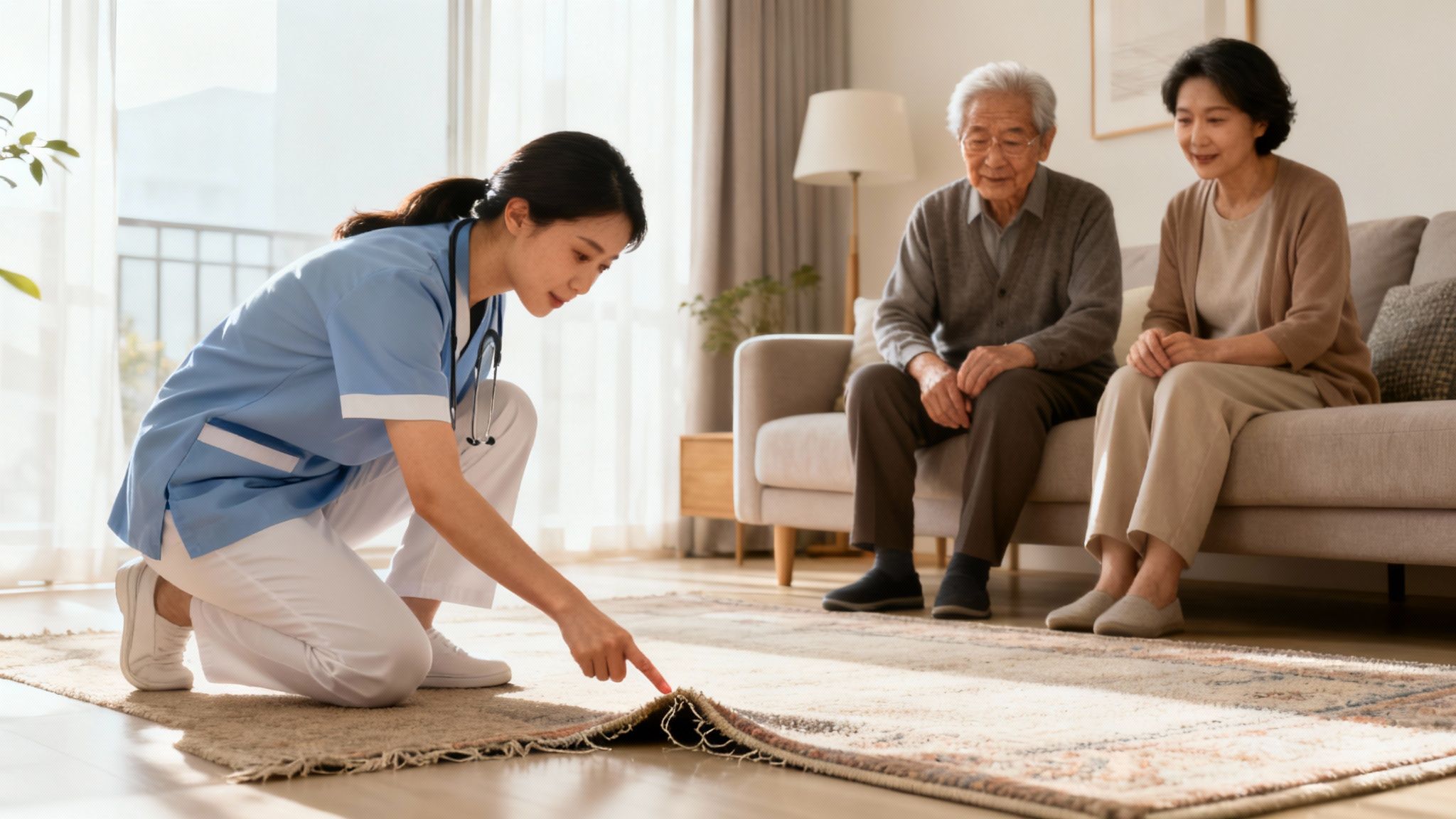
True safety at home requires a personal plan. It starts with understanding a person’s living space and daily habits. Central Coast VNA & Hospice focuses on creating a practical safety strategy from our first visit.
Our approach is hands-on and collaborative. We develop safety plans with seniors and their families, not just for them.
A Clinician's Eye for Detail
A cozy part of a home can sometimes be a risk for an older adult. Our clinicians are trained to spot these hidden hazards. This is a key part of how VNA helps seniors live safely at home in Monterey.
For example, our Physical Therapist may see a loose rug on a hardwood floor. They see it as a serious tripping hazard. They will then work with the family to suggest simple fixes, like using non-slip tape.
A Registered Nurse might notice the hallway to the bathroom is too dim. Poor lighting is a major cause of nighttime falls. A simple suggestion is to add brighter bulbs or nightlights.
These small observations are the building blocks of a custom safety plan. Our team sees the home through a clinical lens. This turns everyday items into opportunities for better safety.
Collaborative Planning for Practical Solutions
A safety plan only works if it is practical. We involve the senior and their family in every step. We listen to their concerns and respect their wishes for their home.
A personalized safety strategy is a conversation. It balances clinical advice with the senior's comfort and dignity.
This partnership ensures our suggestions are realistic. We focus on simple changes that make a real difference.
Our safety planning often includes:
- Identifying Fall Risks: We pinpoint hazards like cluttered walkways or unsafe bathrooms. Learn more in our guide on preventing falls in the home.
- Recommending Modifications: We may suggest installing grab bars in the shower or improving lighting.
- Assessing All Potential Hazards: We encourage families to use an essential home fire safety checklist to protect against fire risks.
This approach builds a strong foundation for independent living. It is grounded in the trust we have earned over decades of nonprofit care.
Expert Clinical Care That Prevents Emergencies
Many emergencies that send seniors to the hospital are preventable. Proactive care is at the heart of how VNA helps seniors live safely at home in Monterey. We focus on getting ahead of a crisis.
Our skilled care teams help manage health conditions and build strength. This helps seniors avoid hospital stays. They can enjoy stability and confidence in their own homes.
Preventing Medication Errors and Falls
Medication mistakes and falls are two of the biggest risks for seniors. Our clinicians tackle these issues with practical, hands-on strategies. This has been a core part of our compassionate care for over 74 years.
For example, a Registered Nurse may see many confusing prescription bottles. The nurse can sit down with the patient to organize them into a labeled weekly pill minder. This simple action ensures the right doses are taken at the right times.
A Physical Therapist can also create a personal exercise plan. They guide the senior through balance and strength exercises in their living room. This builds physical strength and the confidence to move around more freely. Learn more in our guide to skilled nursing at home.
Managing Chronic Conditions Proactively
Proactive management is vital for seniors with conditions like heart failure or diabetes. Our specialized programs empower seniors and their families. They learn to recognize early warning signs to prevent an emergency.
Proactive care is about more than treating symptoms. It is about teaching and building a partnership. This helps seniors feel confident managing their health at home.
Our clinicians work to create stability. This might include:
- Heart Failure Management: Teaching a patient to check their weight daily to spot fluid retention.
- Diabetes Education: Helping a senior monitor blood sugar and make smart food choices.
- COPD Support: Showing a patient breathing techniques to manage shortness of breath.
This focused support helps seniors maintain their health. It reduces the chance of a sudden decline.
This need for home care is growing. According to state projections, Monterey County's senior population is expected to grow significantly by 2060. This highlights the importance of nonprofit home health services for our community.
We're Here For Your Family, Too
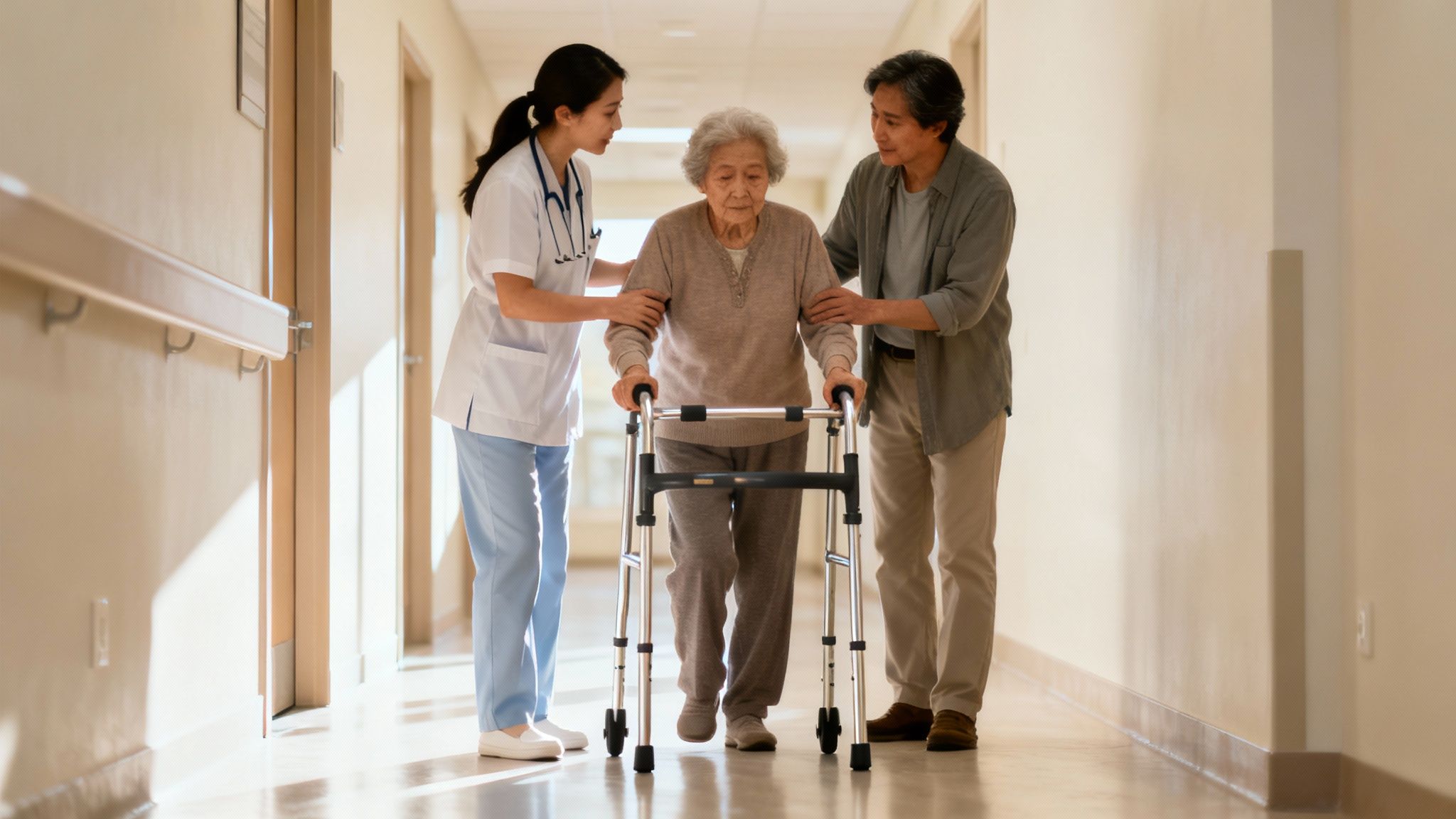
Keeping a loved one safe at home is a team effort. Family members are the most important players on that team.
At Central Coast VNA & Hospice, our care includes the entire family. We empower you with the knowledge and skills to help.
Our approach is hands-on and practical. A clinician might show a family member how to safely help a loved one move from a chair to a walker. This training turns family members into confident partners in care.
Building a Confident Support System
Support is also about knowing what to watch for. This includes subtle changes in a loved one’s health.
Our Registered Nurses explain the early warning signs of a worsening condition. For someone with heart failure, this could be sudden swelling in the legs. This knowledge helps families know when to call us, preventing a crisis.
When families feel educated and supported, they become an extension of the clinical team. This partnership creates a stronger safety net for everyone.
This focus on education is part of every home visit. It is an approach we have prioritized for over 74 years. It is rooted in our nonprofit, mission-driven philosophy.
The Role of Medical Social Workers
The emotional side of providing care can be overwhelming. Our Medical Social Workers connect families with community resources. This can include meal delivery services or local support groups in Monterey County.
This support is critical for preventing burnout. According to the AARP, about one in five Americans are family caregivers (AARP, 2020). Our Medical Social Workers offer emotional support and practical solutions.
By supporting the family, we help ensure your loved one is surrounded by a strong circle of care. It is also helpful to understand the benefits of respite care for family caregivers for when you need a break.
A Continuum of Compassionate Care
Choosing a home health partner comes down to trust. At Central Coast VNA & Hospice, we have spent 74 years earning that trust. Our mission is to put the well-being of our patients first.
Because we are mission-driven, we focus on what matters. We help people live safely and with dignity at home.
A Seamless Journey of Support
Our seamless Continuum of Care provides relief for families. A person's health needs can change. We offer a full range of services, from home health to palliative and hospice care.
This integrated approach provides stability. Here is how it works:
- A patient might start with our home health team after a hospital stay.
- Later, they may need more support and transition to our palliative care program.
- When the time comes, they can move to our hospice care team, all within the same trusted VNA family.
The real gift is continuity. As a patient’s needs change, their care team evolves with them. Families find peace of mind knowing they are supported by familiar faces who understand their history.
This is how we help seniors live safely at home in Monterey. We are more than a provider; we are a long-term partner in your family’s health. We promise to deliver the right care at the right time.
If your loved one could benefit from this support, please reach out. Contact us today to learn more about our services.
Frequently Asked Questions
1. How do I know if my loved one qualifies for VNA home health services?
A doctor must first determine a medical need for skilled care at home, such as nursing or therapy. The patient also needs to be "homebound," which means leaving home requires a major effort. Our team works with your doctor to confirm eligibility.
2. Who is on a VNA interdisciplinary team?
Our teams include various healthcare professionals who work together. A team may include a Registered Nurse, Physical Therapist, Occupational Therapist, Speech-Language Pathologist, Medical Social Worker, and a Home Health Aide. This ensures all of your loved one's needs are met.
3. How do you create a personalized care plan?
The process begins with an in-depth assessment in the patient’s home. We then collaborate with the patient, family, and physician to create a plan. This plan outlines specific goals for managing health, preventing falls, and regaining independence.
4. How does VNA support family members?
Family support is central to our mission. Our clinicians provide education and hands-on training to help you feel confident between visits. Our Medical Social Workers also connect families with community resources to reduce stress.
5. How often will a VNA clinician visit?
The frequency of visits depends on the doctor's orders and the patient's medical needs. Someone recovering from surgery might need daily visits at first. A person with a chronic condition may only need visits a few times a week. We adjust the schedule as your loved one's needs change.
At Central Coast VNA & Hospice, we are committed to being your trusted partner in health. If you have more questions or feel your loved one could benefit from our compassionate, expert care, please contact us today at https://ccvna.com.