
When facing a serious illness, the choice for care often comes down to a powerful question: home or hospital? On one hand, home care offers comfort, dignity, and personal connection. On the other, hospital care provides intense medical support when symptoms are too difficult to manage otherwise.
The right decision rests on balancing your loved one's medical needs with their desire for peace in a familiar setting. This guide helps you understand the options so you can make a choice that honors their wishes.
Making the Right Choice for Your Loved One
Choosing between a hospital and home is one of the most important decisions a family can make. It is a personal journey that requires you to weigh clinical needs against emotional well-being. At Central Coast VNA & Hospice, our nonprofit mission is to make sure this choice is guided by compassion, clarity, and respect.
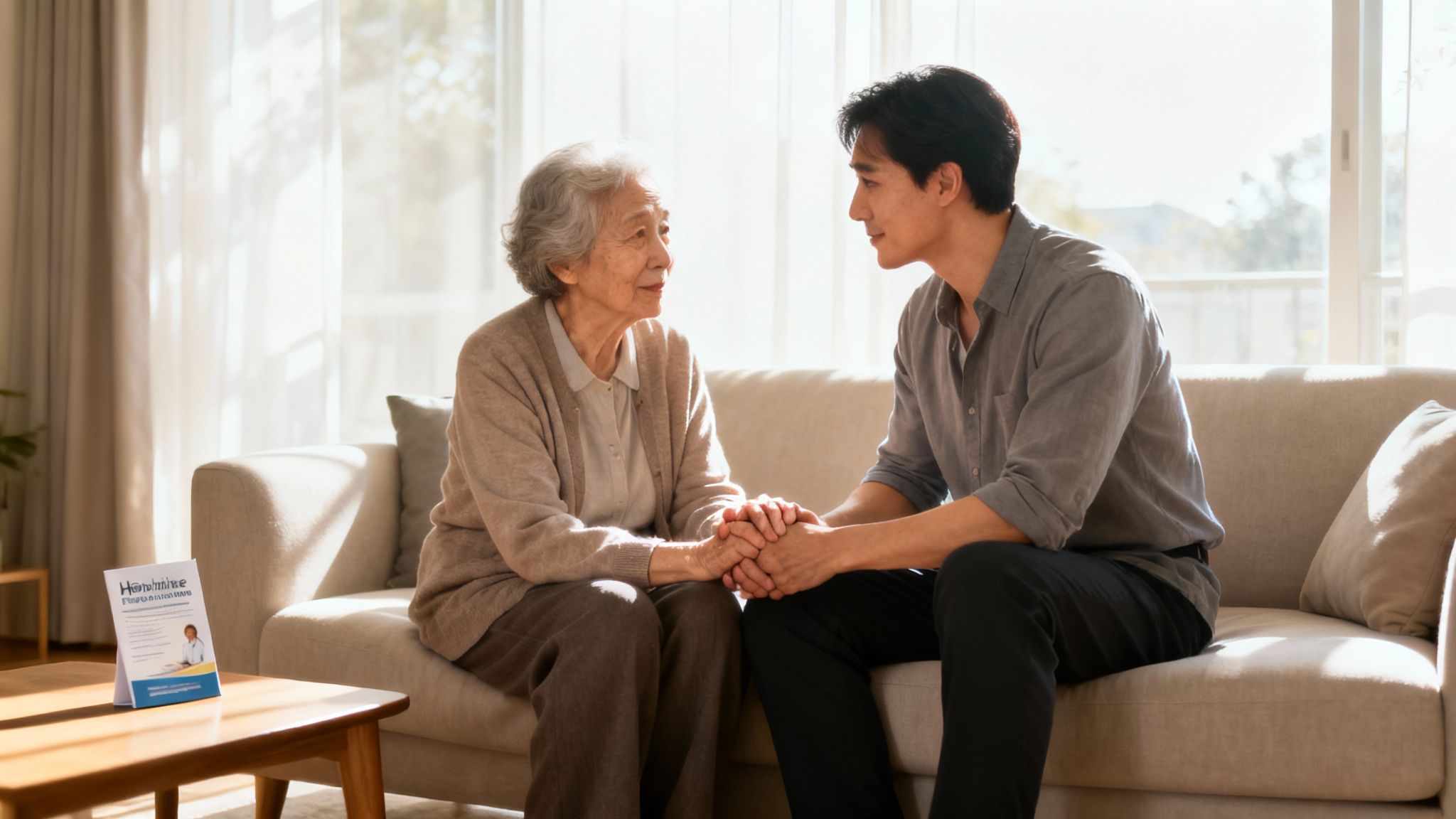
This decision can feel overwhelming, especially during a stressful time. Many families default to the hospital because it seems like the only place for expert medical care. But many don't realize that professional in-home hospice and palliative support can bring high-quality care right into their living room.
Quick Guide: Hospital vs. Home End-of-Life Care
To get started, it helps to understand the main differences between the two environments. While every situation is unique, this overview can help guide your family's conversations.
| Factor | Hospital Care | Home Care (with Hospice/Palliative Support) |
|---|---|---|
| Environment | Clinical and institutional, with set schedules and visiting hours. | Familiar, comfortable, and personalized to the patient's routines. |
| Primary Goal | Aggressive treatment and stabilization of acute medical crises. | Comfort, symptom management, and maximizing quality of life. |
| Family Role | Families are often visitors and advocates within a structured system. | Families are central partners in the care circle, with hands-on support. |
| Daily Life | Governed by hospital protocols, including meals and staff shifts. | Directed by the patient and family's preferences and daily rhythms. |
| Emotional Support | Focused on the patient's immediate medical needs; support can be limited. | Integrated emotional and spiritual support for the entire family. |
This choice is part of a bigger conversation about how we approach the end of life. Most people prefer to die at home, but hospital deaths remain common. In 2021, about 50% of deaths across OECD countries happened in hospitals, which is very different from what most people say they want. You can read the full research about these end-of-life preferences to learn more.
As a trusted community partner with over 74 years of service in Monterey County, San Benito County, Santa Cruz County, and South Santa Clara County, we are here to help you explore every option. Understanding end-of-life care planning is the first step toward honoring your loved one’s wishes with dignity.
Comparing Clinical Support and Symptom Management
One of the biggest concerns for families is making sure their loved one gets expert medical care. The choice between the hospital and home often comes down to one question: How will symptoms like pain or breathing trouble be managed?
Hospitals are built for immediate, intense medical action. Home care offers a different, more personal model of clinical support. Many people think a hospital is the only place for serious medical oversight, but choosing home doesn’t mean sacrificing quality care; it means shifting the focus to comfort.
How Medical Care Differs in Each Setting
In a hospital, the environment is designed for 24/7 acute care. The main goal is usually stabilization. This setting is critical when symptoms are severe and require immediate, intensive procedures.
Home hospice and palliative care, on the other hand, operate from a different philosophy. Instead of aggressive treatment, the goal is to maximize comfort and quality of life. An interdisciplinary team from Central Coast VNA & Hospice brings expert medical care into the patient’s home, creating a plan that aligns with their personal wishes.
At home, the clinical focus shifts from curing the disease to healing the person. Care is tailored to manage symptoms, allowing the patient to live as comfortably as possible in a familiar environment.
This personal approach ensures that every medical decision honors the patient's goals. When weighing your options, getting a clear picture of what to expect from hospice care is essential.
Expert Symptom Control in a Home Environment
A common fear is that pain and other symptoms can't be managed well at home. In reality, specialized in-home care providers excel at this. At Central Coast VNA & Hospice, our team is specially trained in advanced symptom control.
Our team includes:
- Registered Nurses who are experts in pain management and regularly assess the patient to adjust medications and treatments.
- Hospice Aides who provide hands-on personal care and help with daily tasks, reporting any changes to the nursing team.
- 24/7 On-Call Support from a clinical professional, giving families in Monterey County peace of mind that help is just a phone call away.
This team works with the patient’s physician to create a complete plan. For example, a patient struggling with breathing might receive an oxygen concentrator and medications at home. A Registered Nurse would then teach the family how to manage those symptoms, which can prevent stressful emergency room visits.
Access to Medication and Medical Equipment
Another key piece of the puzzle is getting the right supplies. In-home hospice services streamline this process, lifting a major burden from families.
Under the hospice benefit, most services, medications, and equipment related to the terminal illness are fully covered. Central Coast VNA & Hospice coordinates the delivery and setup of everything needed, including:
- A hospital bed for comfort and safety
- An oxygen machine to help with breathing
- Walkers, wheelchairs, or other mobility aids
- All necessary medications for pain and symptom relief
This coordination means families don’t have to run around getting prescriptions or bulky equipment. The care team handles these details, freeing up families to focus on spending meaningful time together. Our dedication to pain and symptom management ensures your loved one gets effective relief right where they are most comfortable.
The Impact of Environment on Emotional Well-Being
When thinking about end-of-life care, medical needs are only part of the story. The environment plays a huge role in a person’s emotional and spiritual state. A hospital is built for clinical treatment, but a home is where life happens, filled with memories and comfort.
The atmosphere in a hospital can often feel sterile and impersonal. The bright lights, beeping machines, and unfamiliar faces can be unsettling for someone in a vulnerable state.

Home, on the other hand, is a sanctuary. It’s where a favorite blanket is always within reach and the family pet can curl up on the bed. These are powerful anchors that ground a person in their own story, preserving their sense of identity and dignity.
Finding Peace in Familiar Surroundings
Being at home can reduce anxiety for the patient and the entire family. There are no restrictive visiting hours or limits on who can be there. This freedom allows for spontaneous, meaningful moments, like sharing a quiet morning coffee or having grandchildren visit.
This flexibility is a key difference when deciding on care. The ability for family to be present creates a continuous circle of support. It shifts the focus from navigating hospital rules to simply being together.
At home, the rhythm of life doesn’t stop for a diagnosis. Instead, care is woven into daily routines, allowing for moments of normalcy that are often impossible in a clinical setting.
Globally, there's a big gap between where people want to spend their final days and where they actually do. A meta-analysis found that hospital deaths account for about 63% worldwide, while home deaths are only around 37%. You can discover more insights about these place-of-death findings to better understand this trend.
Integrated Emotional and Spiritual Support at Home
At Central Coast VNA & Hospice, we know that emotional and spiritual needs are just as vital as physical ones. Our care model at home is designed to be truly supportive. As a nonprofit serving Monterey, San Benito, Santa Cruz, and South Santa Clara counties, our mission extends to the entire family.
Our team includes professionals who focus on emotional well-being:
- Medical Social Workers help families navigate complex emotions, guide difficult conversations, and connect them with community resources.
- Chaplains offer non-denominational spiritual support that honors each family’s unique beliefs and cultural traditions.
By caring for the emotional and spiritual health of both the patient and their family, we can help them find peace and strength. To learn more, you can learn what to expect from hospice care with CCVNA. Choosing home care means choosing an environment where every part of a person’s well-being is honored.
Understanding Daily Life and Family Roles
When deciding between a hospital or home, it's easy to focus on medical details. But the practical, day-to-day realities are where the heart of the decision lies. The setting you choose will shape daily routines and family involvement.
In a hospital, family members often become visitors. Your time is structured around the hospital's schedule, with fixed visiting hours and clinical rounds. This environment can create distance and make it hard to preserve the natural rhythm of family life.
Opting for care at home with support from Central Coast VNA & Hospice changes that dynamic. Family members are no longer visitors; you become central partners in care. The focus shifts to creating a supportive, loving environment where your loved one’s comfort guides every day.
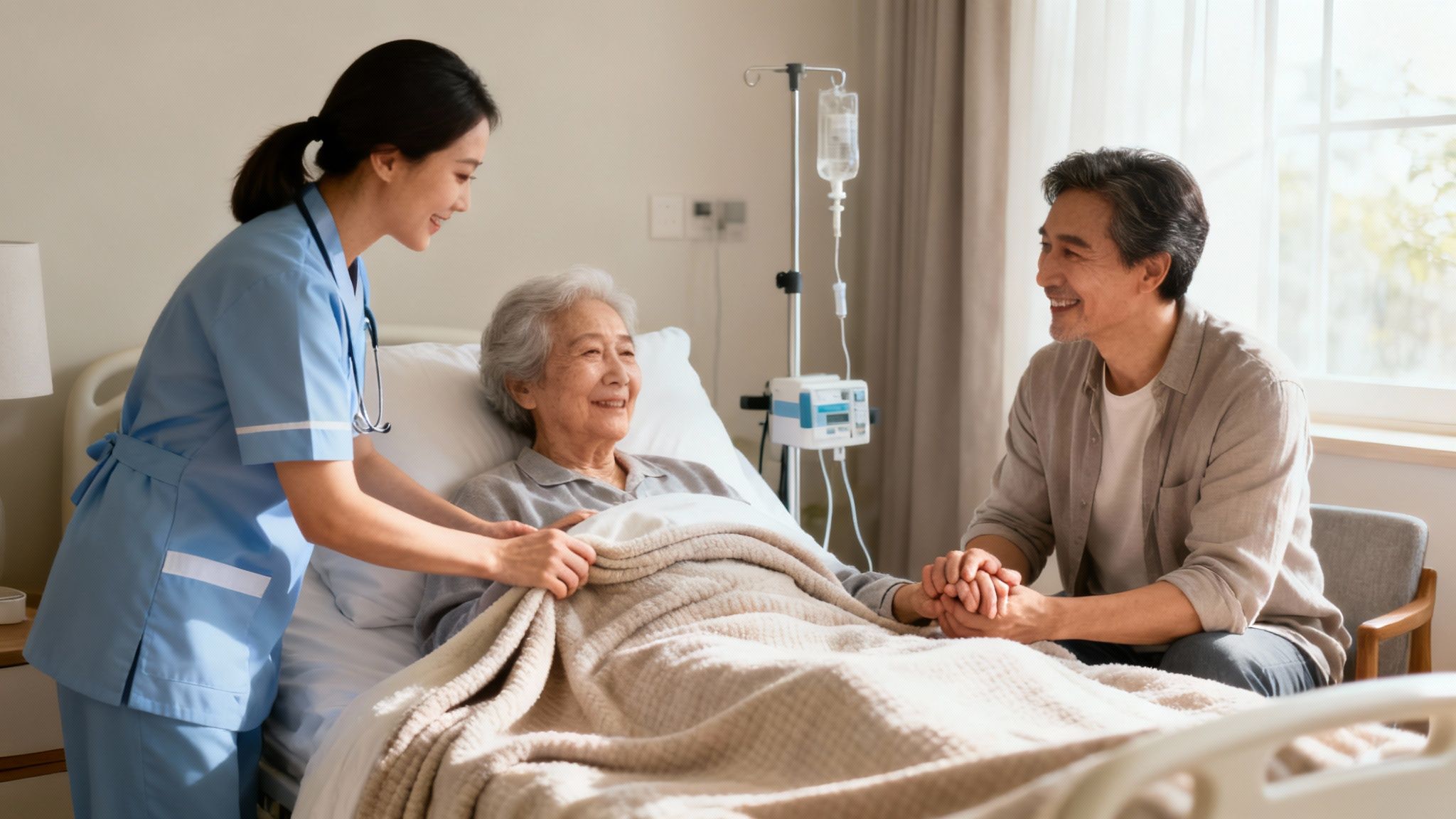
The Family's Role Supported by Professionals
One of the biggest worries we hear from families about in-home care is the fear of being overwhelmed. But with professional hospice support, you are never alone.
Central Coast VNA & Hospice provides an interdisciplinary team to empower your family, not burden it. This team includes:
- Registered Nurses who educate you on medications and symptom management.
- Hospice Aides who assist with personal care like bathing and dressing.
- Medical Social Workers and Chaplains who offer expert guidance for everyone in the family.
Our team's support allows you to step back from being a hands-on caregiver and return to your most important role: a spouse, a child, or a grandchild. We manage the clinical tasks so you can focus on creating meaningful memories.
This support is also flexible. For families who need a break, we offer dedicated respite care for family caregivers, providing short-term relief while ensuring your loved one receives continuous, professional care.
A Day in the Life: Hospital vs Home Care
The ability to maintain a sense of normalcy is a powerful benefit of home care. A hospital’s schedule is rigid, but at home, life can continue on your family’s terms.
This table breaks down some of the day-to-day differences.
| Daily Aspect | In a Hospital Setting | At Home with CCVNA Support |
|---|---|---|
| Meals | Restricted to hospital menus and set mealtimes. | Your loved one can enjoy favorite home-cooked meals whenever they wish. |
| Daily Schedule | Dictated by staff shifts, medical rounds, and facility protocols. | Flexible and centered around your loved one’s personal preferences. |
| Visitors | Limited by visiting hours and the number of people allowed. | Friends and family can visit freely, creating a warm circle of support. |
| Personal Comforts | Limited to a few personal items in an unfamiliar room. | Surrounded by cherished belongings, photos, pets, and their own bed. |
| Family Traditions | Difficult to maintain activities like holiday meals or daily rituals. | Families can continue traditions, preserving a sense of connection. |
Ultimately, choosing where your loved one receives care is about honoring their life and wishes. For families across Monterey County, San Benito County, Santa Cruz County, and South Santa Clara County, our nonprofit mission is to make dignified, compassionate care at home a reality.
Navigating Costs and Insurance Coverage
Thinking about money is the last thing anyone wants to do during a stressful time. Financial concerns shouldn't add to the weight your family is carrying. The good news is that exceptional care is often more accessible than people think.
Many families worry about how to pay for hospice, but the financial side is usually simpler than dealing with long hospital stays.
In a hospital, families often face confusing co-pays and unexpected bills. Home hospice, however, is a comprehensive benefit. In most cases, it’s covered 100% by Medicare, Medi-Cal, and most private insurance plans.
Understanding the Hospice Benefit
The hospice benefit was designed to lift the financial burden from families. For eligible patients, there are often no out-of-pocket costs for services related to their terminal illness.
This all-inclusive coverage typically provides:
- All professional services from the hospice team, including Registered Nurses, Hospice Aides, and Medical Social Workers.
- Medical equipment needed for comfort at home, like a hospital bed or oxygen.
- Medications for pain and symptom management related to the diagnosis.
- 24/7 clinical support—a team is always just a phone call away.
This decision tree helps show how straightforward hospice costs can be with insurance.
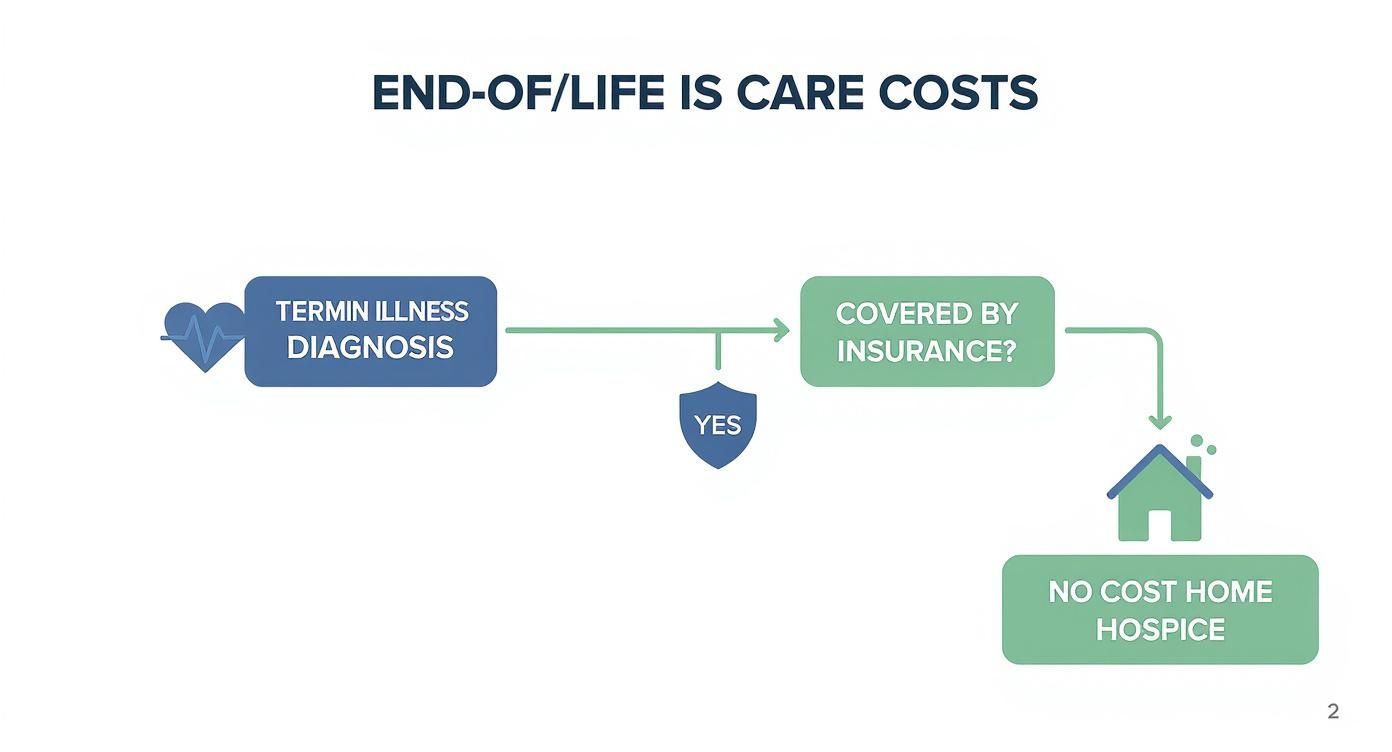
The biggest takeaway is that for most insured families, choosing hospice at home removes many of the financial worries of long-term hospital care. We explain this further in our guide on how to pay for hospice.
The Value of a Nonprofit Provider
As a nonprofit, mission-driven organization, Central Coast VNA & Hospice is dedicated to caring for everyone who needs us, regardless of their ability to pay. Our focus is on the patient and their family, never on profit. This has been at the heart of our 74+ years of service to Monterey County and our surrounding communities.
Choosing a nonprofit provider like CCVNA means you are partnering with an organization whose main goal is to deliver compassionate care. We are here to serve our community and ensure that financial barriers do not stand in the way of comfort and peace.
Globally, it's estimated that over 19 million adults need palliative care, but only about 14% receive it. For more detailed information, you can also explore resources on Medicare coverage for end-of-life care.
Making the Right Choice: Home vs. Hospital
Deciding between the hospital or home for end-of-life care is not a one-size-fits-all choice. The best path is deeply personal. It depends on your loved one’s medical needs, their wishes, and what your family hopes this chapter will feel like.
This isn't about a "good" or "bad" option. It’s about matching the environment to the most important goal, whether that’s intensive medical management or deep comfort.
When Home Hospice Is the Right Call
For most families, the main goal at the end of life is to maximize comfort and make sure their loved one feels safe and loved. Home hospice, with the guidance of a dedicated team like Central Coast VNA & Hospice, is designed for this.
Consider choosing home hospice when:
- Comfort is the highest priority. Your loved one’s main wish is to be free from pain in familiar surroundings, not to continue aggressive treatments.
- Family connection is key. You want the freedom for family and friends to visit anytime, without hospital limits.
- Personal routines bring peace. Maintaining normalcy with favorite meals, music, or pets is important for your loved one's emotional health.
- The prognosis is clear. A doctor has confirmed a life expectancy of six months or less, and the focus has shifted to quality of life.
Choosing home care is a powerful statement. It says that your loved one’s final chapter will be defined by personal connection and peace, not by clinical procedures.
When a Brief Hospital Stay Might Be Needed
While home is where most patients want to be, sometimes a short hospital stay is needed. This is not a failure of home care, but a temporary step to manage a crisis before returning home.
A hospital might be the right choice for a short period if:
- A severe symptom crisis happens. This could be a sudden spike in pain or severe shortness of breath that the home care team cannot stabilize at home.
- Complex medical procedures are required. Certain interventions may only be available in a hospital setting.
In these situations, the goal is always stabilization. As soon as the crisis is under control, the patient can almost always transition safely back home in Monterey County or San Benito County. The Central Coast VNA & Hospice team helps coordinate everything to ensure a smooth return home.
Frequently Asked Questions (FAQs) About End-of-Life Care
1. Can my loved one get the same level of pain control at home as in a hospital?
Yes. Our hospice team, which includes a Registered Nurse and the patient's physician, creates a personalized care plan. We bring all necessary medications and equipment for pain and symptom management directly to the home and provide 24/7 on-call clinical support.
2. What happens if there’s a medical emergency in the middle of the night?
You are never alone. Central Coast VNA & Hospice provides 24/7 on-call support from a clinical professional. A Registered Nurse is always available to provide guidance over the phone or make a home visit if needed.
3. Will my family be overwhelmed with caregiving responsibilities at home?
No, you will have a full support team. A Hospice Aide assists with personal care like bathing, and a Registered Nurse teaches you how to manage symptoms. This allows your family to focus on providing emotional support and spending quality time together.
4. How much does hospice care at home cost?
For eligible patients, hospice is a fully covered benefit under Medicare, Medi-Cal, and most private insurance plans. This means there are typically no out-of-pocket costs for services, medications, or medical equipment related to the terminal diagnosis.
5. How do we know when it’s the right time to consider hospice?
Hospice is for anyone with a life-limiting illness and a prognosis of six months or less. The best time to start the conversation is before a crisis occurs, allowing for thoughtful, unhurried decisions. Contact us for a no-obligation consultation to see if hospice is right for your family.
If you're wondering whether home care is right for your family, we’re here to guide you. Contact Central Coast VNA & Hospice at 831‑372‑6668 or visit our website to learn more about our in-home hospice and palliative care services.