
As a family caregiver on California’s Central Coast, one often juggles medications, appointments, and daily care tasks. This devotion can come at a high cost to one’s own well-being.
Research shows 88% of caregivers report increased anxiety, and 71% cite emotional or financial strain (Q4 2025 Report). Recognizing true burnout matters for both health and safety.
Central Coast VNA & Hospice is a nonprofit with 74+ years of local roots in Monterey County, San Benito County, Santa Cruz County, and South Santa Clara County. Their home health nursing, palliative care at home, and hospice care in Monterey County wraparound model supports both patients and families.
1. Physical and Emotional Exhaustion
When even a full night’s sleep does not recharge you, it is more than tiredness—it is a warning. Chronic exhaustion drains energy, blurs thinking, and dims motivation.

“Chronic caregiver exhaustion is a state that doesn’t improve with rest, signaling your resources are used faster than they can refill.”
Real-World Scenario:
A daughter who cares for her mom with COPD naps in her car between appointments and relies on fast food because she’s too tired to cook.
Actionable Steps:
- Keep an energy journal to track sleep and mood for one week.
- Block 5–10 minutes each day for deep breathing or a quiet break.
- Learn about respite care options for family caregivers to give yourself a reliable rest period.
2. Increased Irritability and Mood Changes
Small frustrations can trigger big reactions when burnout starts. Heightened impatience, snapping at loved ones, or mood swings signal emotional overload.

“Persistent irritability is a symptom of a nervous system overloaded by chronic stress.”
Real-World Scenario:
A son caring for his dad with dementia feels guilty after yelling about repeated questions.
Actionable Steps:
- Pause and take three slow breaths when you feel anger rising.
- Note what times or tasks trigger frustration and plan a brief break then.
- Visit how to reduce daily stress for quick coping techniques.
3. Social Withdrawal and Isolation
Missing favorite hobbies and skipping social invites can feel normal when time is tight. Over time, this isolation cuts off a key support system.
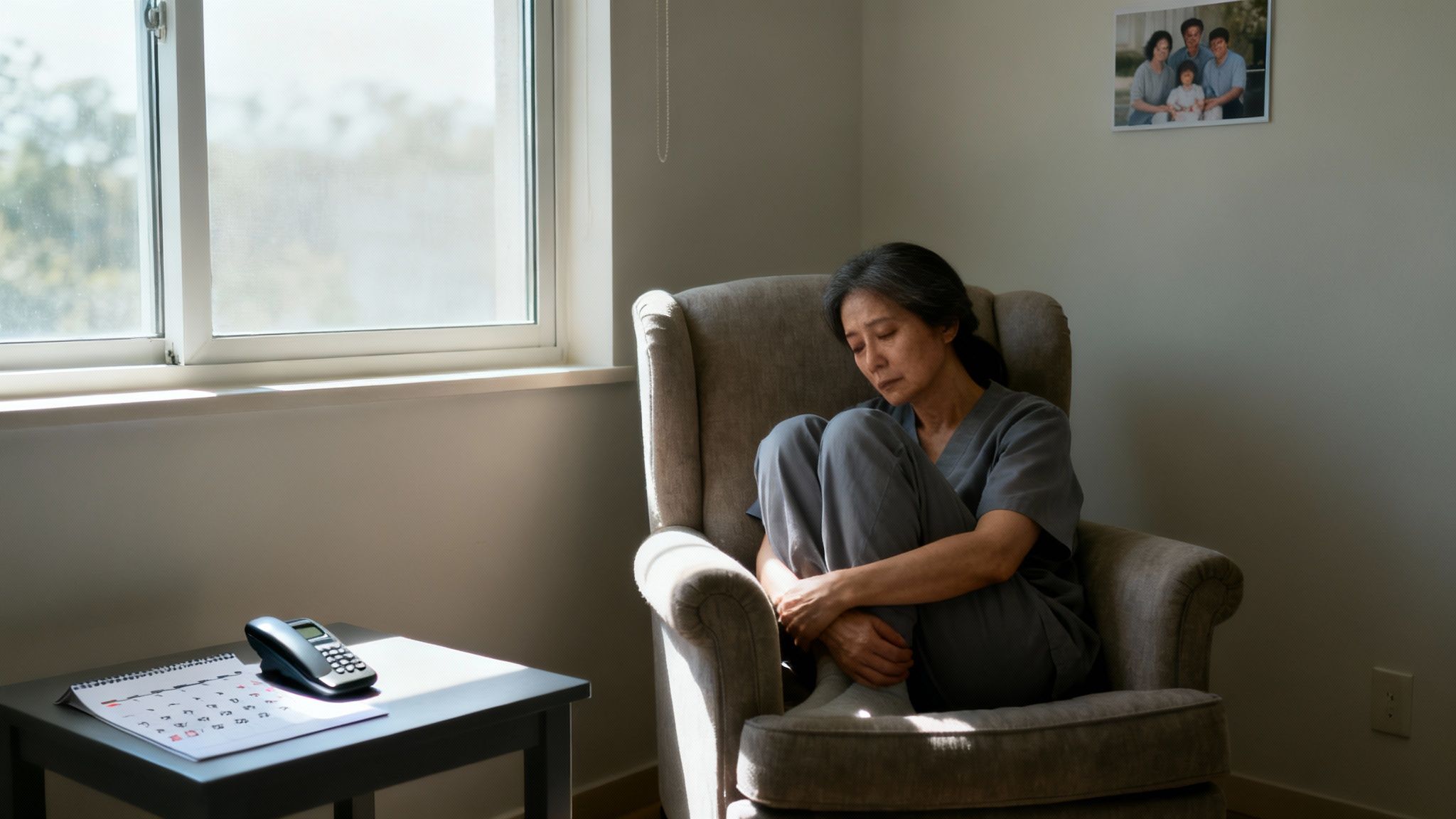
“Social withdrawal shows caregiving demands are crowding out essential joy and support.”
Real-World Scenario:
A wife who cares for her stroke-recovery husband skips her book club because she “has no time.”
Actionable Steps:
- Schedule a 15-minute call with a friend and protect that time like an appointment.
- Try a short walk with a neighbor or a quick video chat when leaving home is hard.
- Join a caregiver support group for shared understanding and relief.
4. Neglect of Personal Health and Self-Care
Putting off doctor visits or skipping meals because caregiving takes priority puts both parties at risk. Self-neglect is a clear sign of burnout.
“Failing to care for one’s own health signals the caregiving load has become unsustainable.”
Real-World Scenario:
A man with diabetes caring for his wife forgets to check his blood sugar and misses insulin doses.
Actionable Steps:
- Book your own medical check-ups first each month and use respite care to attend.
- Ask about telehealth for quick check-ins or prescription refills.
- Review tips for family caregivers for practical self-care strategies.
5. Loss of Hope and Sense of Purpose
When caregiving feels endless and efforts seem meaningless, it can erode one’s optimism. Persistent hopelessness is a crisis that needs help right away.
“A loss of hope is a psychological crisis that requires immediate support.”
Real-World Scenario:
A husband caring for his terminally-ill wife thinks, “If it ends, my life will return to normal.”
Actionable Steps:
- If having thoughts of harming self or others, call or text 988 for the Suicide & Crisis Lifeline.
- Schedule time with a mental health professional or explore grief counseling for families.
- Find ways to rediscover a sense of purpose outside caregiving.
How Central Coast VNA & Hospice Supports the Whole Family
Central Coast VNA & Hospice offers an interdisciplinary model that cares for both patients and families. Services include:
- Home health nursing for skilled in-home care.
- Palliative care at home to manage symptoms and improve comfort.
- Hospice care in Monterey County with 24/7 clinician availability.
- Respite support so caregivers can rest without worry.
- Bereavement counseling and volunteer companions for emotional care.
With 74+ years of nonprofit service in Monterey, San Benito, Santa Cruz, and South Santa Clara counties, CCVNA helps lighten your load so you can focus on connection.
Call to Action
If you’re feeling overwhelmed, contact Central Coast VNA & Hospice to learn how their compassionate team can support your whole family. Visit VNA and Hospice to schedule a free in-home assessment today.
Frequently Asked Questions
1. What is caregiver burnout?
Caregiver burnout is a state of physical, emotional, and mental exhaustion caused by prolonged caregiving stress. It can lead to depression, health issues, and reduced quality of care.
2. How can I get respite care in Monterey County?
Central Coast VNA & Hospice offers respite care. Contact their office or visit their respite care page to arrange in-home support from skilled clinicians.
3. Are support groups helpful for caregivers?
Yes. Support groups connect you with others who understand your challenges. They offer emotional relief, practical tips, and a sense of community.
4. Can I use telehealth for my own medical appointments?
Many providers offer phone or video visits. Telehealth can help you keep up with routine check-ups and manage chronic conditions without leaving home.
5. When should I seek professional mental health help?
If you notice persistent hopelessness, thoughts of self-harm, or severe mood swings, seek help right away. Call 988 in an emergency or contact a mental health professional as soon as possible.
6. How does palliative care at home help reduce caregiver stress?
Palliative care focuses on symptom management, pain relief, and emotional support. This reduces the caregiving workload and allows families to spend more quality time together.
7. What should I expect from a free in-home assessment?
A Registered Nurse will visit your home to evaluate care needs, discuss goals, and create a personalized plan. There is no cost for this assessment.