
Knowing when to call hospice is a deeply personal decision, one that families often face during an incredibly challenging time. There isn't a single, perfect moment. It generally arrives when the focus of care needs to shift from searching for a cure toward prioritizing comfort, dignity, and quality of life.
This decision isn't about giving up. It is about embracing a new kind of support, one centered on helping your loved one live their final chapter as fully and peacefully as possible.
The Right Time for Hospice: An Overview

Figuring out when to call hospice starts with understanding it’s a philosophy of care, not just a physical place. It signals a transition toward managing symptoms and making sure someone is as comfortable as they can be. This often occurs when curative treatments are no longer working or are no longer wanted.
As a nonprofit organization with over 74 years of service to the Central Coast of California, we’ve walked this path with countless families. Central Coast VNA & Hospice guides those in Monterey County, San Benito County, Santa Cruz County, and South Santa Clara County with empathy and experience. Our role is to bring clarity and reassurance, reminding you that you do not have to navigate this alone.
Shifting Goals from Cure to Comfort
One of the clearest signs it might be time for hospice is a change in the goals of care. This often happens after trying many different treatments. It can also occur when difficult side effects overshadow any potential benefits.
This shift often looks like this:
- A patient expresses a desire to stop treatments and be at home.
- The main goal becomes managing pain, shortness of breath, or other symptoms.
- Priorities change to simply spending quality time with family and friends.
Making this transition is a courageous step. It honors a person’s wishes for their final months and empowers them to define what a good quality of life means to them.
Choosing hospice care is about redefining hope. It shifts from hope for a cure to hope for comfort, peace, and meaningful moments. It ensures a person’s final journey is lived with dignity and on their own terms.
A Continuum of Supportive Care
Hospice is a crucial part of the full spectrum of care, often following services like home health or palliative care. While palliative care can be introduced at any stage of a serious illness, hospice is for those with a life expectancy of six months or less if the illness runs its natural course. You can learn more about what hospice care is and how it works.
At Central Coast VNA & Hospice, our dedicated team—including Registered Nurses, Hospice Aides, Social Workers, and Chaplains—collaborates to provide truly holistic support. We manage physical symptoms while also offering emotional and spiritual guidance for the entire family.
Recognizing the Medical Signs for Hospice Care
Figuring out if it's the right time for hospice care can be a confusing, emotional process. It helps to understand that it’s not about a single symptom, but a larger pattern of physical signs. When you see this bigger picture, it becomes much clearer for families and doctors to know when to call hospice.
One of the best-known benchmarks for hospice is a prognosis of six months or less to live, assuming the illness runs its natural course. It's crucial to see this not as a rigid deadline but as a clinical guideline certified by a physician. It is a way of saying the disease has reached a point where the focus should shift to comfort.
A Pattern of Decline
A key indicator is a clear and often rapid decline in a person's overall health, even with ongoing medical treatment. This isn't just a few bad days; it's a consistent downward trend. Often, family members are the first to notice it.
This decline can show up in several ways:
- Recurrent Hospitalizations: Frequent ER visits or hospital admissions for the same condition is a strong signal. It suggests the underlying illness is getting harder to manage with traditional treatments.
- Significant Weight Loss: When a loved one loses weight without trying, along with a drop in appetite, it shows the body is struggling.
- Increased Weakness and Fatigue: You might notice your loved one is spending much more time asleep or resting. Even small tasks can feel completely exhausting.
Taken together, these signs point to a body that's working much harder with less to show for it. It's a signal that the current medical approach might no longer meet your loved one's real needs.
Uncontrolled Symptoms
Another critical sign is the presence of persistent symptoms that curative treatments cannot get under control. When the main goal must shift entirely to easing discomfort, hospice care is the most compassionate choice. This specialized care is designed to provide relief and make each day better.
Common uncontrolled symptoms include:
- Chronic and severe pain that is difficult to manage
- Persistent shortness of breath, even while resting
- Constant nausea, vomiting, or diarrhea
- Difficulty swallowing or refusing to eat
When these symptoms become the primary focus, the expert symptom management that a hospice team provides is invaluable. For a deeper look, you can review our guide on how you know when hospice is needed.
The decision to call hospice often comes when curative treatments are no longer working, and the primary goal becomes managing symptoms. It’s a choice that affirms a person’s right to comfort and dignity.
At Central Coast VNA & Hospice, our team of Registered Nurses works hand-in-hand with your physician to assess these signs. We offer a coordinated approach for patients across Monterey County, San Benito County, Santa Cruz County, and South Santa Clara County.
The growing understanding of hospice's value is mirrored in global healthcare. According to the National Hospice and Palliative Care Organization (NHPCO), over 1.72 million Medicare beneficiaries received hospice services in 2020 (NHPCO, 2021). This reflects a real shift driven by a greater appreciation for how hospice improves quality of life.
The Human Side of Hospice Readiness

Beyond medical charts, the decision of when to call hospice is deeply personal. It’s a choice that comes from quiet conversations and the slow realization that the definition of a "good day" has changed. These signs are just as valid as any lab result.
This readiness is often a subtle shift in a loved one’s perspective and in a family’s capacity to cope. Recognizing these emotional cues is a crucial part of the journey. The team at Central Coast VNA & Hospice is here to help you listen for these signs with empathy and support.
Listening for a Shift in Wishes
One of the most powerful signs it might be time for hospice is when a patient expresses a desire to change their care's focus. These statements can be direct or subtle. They all point to a wish for peace over struggle.
You might hear things like:
- “I’m just so tired of going to the hospital.”
- “I just want to be home, in my own bed.”
- “These treatments are making me feel worse, not better.”
When someone you love voices a desire to stop aggressive treatments, it is a courageous act of self-advocacy. It's a clear statement about what matters most to them now: comfort, dignity, and quality of life. Honoring that wish is one of the most compassionate things a family can do.
Recognizing the Toll on Family Members
A serious illness doesn't just impact one person; it touches the entire family. The physical, emotional, and logistical demands can become immense. This can lead to burnout for those providing care.
The decision to seek hospice support is not just for the patient; it is an act of care for the whole family. It provides essential relief, guidance, and a new layer of support when you need it most.
When family members feel overwhelmed and exhausted, it’s a clear signal that the current situation is unsustainable. Calling hospice brings in an expert team to share that burden. Our Registered Nurses manage symptoms, our Hospice Aides assist with personal care, and our Social Workers and Chaplains offer emotional and spiritual support.
Beyond the emotional toll, families often navigate practical matters, like what to do with a loved one's belongings. Resources like A Guide to Downsizing for Seniors can offer helpful guidance during this sensitive time.
At Central Coast VNA & Hospice, we've supported families throughout Monterey, San Benito, Santa Cruz, and South Santa Clara counties for over 74 years. Our local, nonprofit mission is to help you navigate these crucial conversations with grace.
How Hospice Eligibility and Referrals Work
Figuring out the logistics of hospice can feel overwhelming, especially during an emotional time. The process is much more straightforward than most people think. Once you understand how eligibility and referrals work, you and your family can make timely, informed decisions.
The main guideline for hospice eligibility, set by Medicare, is a life-limiting illness with a prognosis of six months or less, assuming the disease runs its natural course. It’s important to see this as a clinical guideline, not a countdown. Many patients receive hospice care for well over six months as long as a physician recertifies that they meet the criteria.
The Referral Process
While a physician is often the one to make a formal hospice referral, you do not have to wait for them to bring it up. As a patient or family member, you have every right to start the conversation yourself. You can even call a hospice provider directly to ask questions.
This infographic breaks down common triggers that lead to a conversation about a hospice referral.
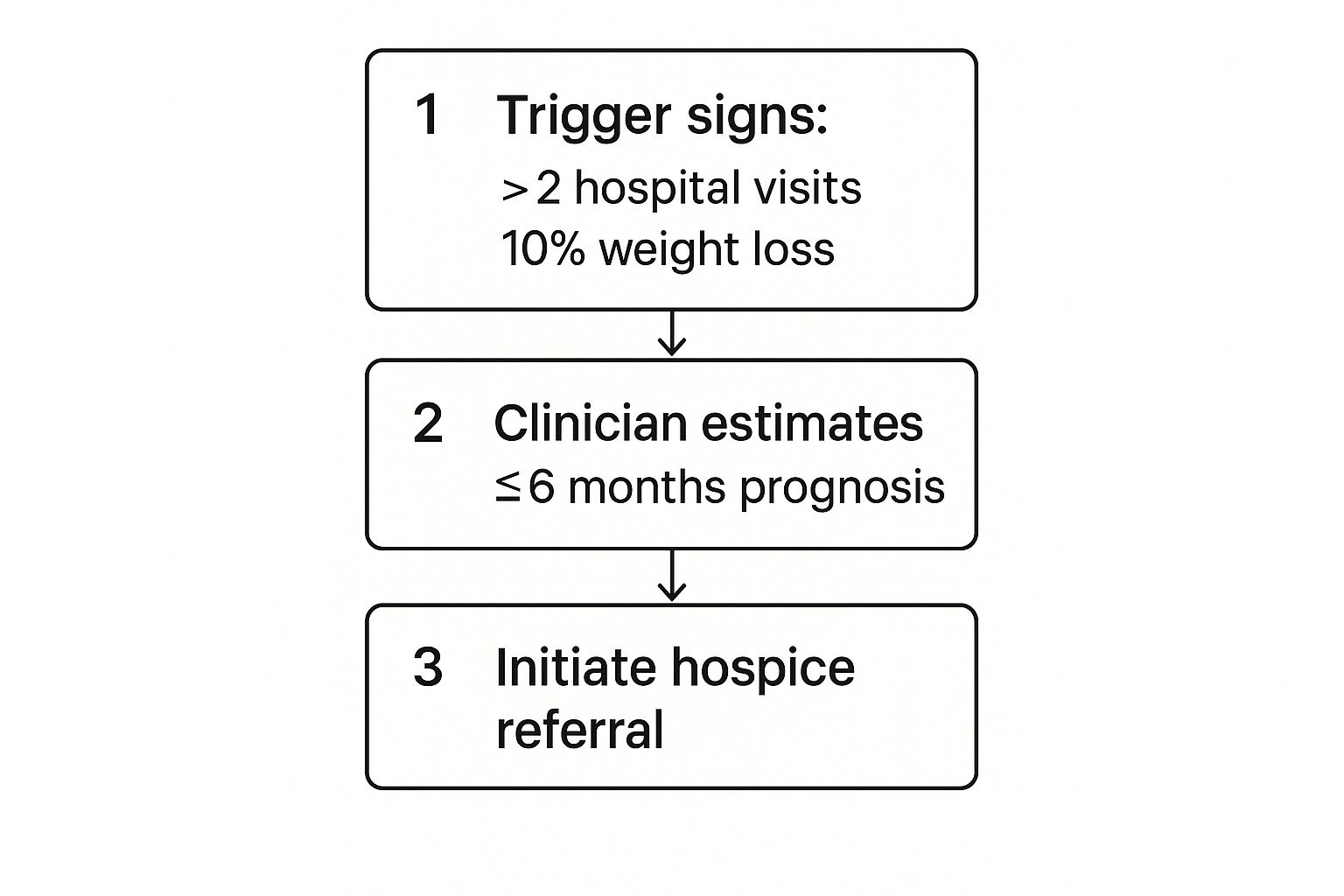
A physical decline—like repeat hospital stays or noticeable weight loss—often prompts a clinical assessment. That assessment can then lead to a hospice referral. It’s a helpful visual for understanding the typical path from recognizing the signs to getting care started.
How an Admission Works
Here at Central Coast VNA & Hospice, our process starts the moment you call. We offer a no-cost, no-obligation informational visit. A member of our team can meet you and your family right at home.
During this visit, we will:
- Listen to your specific needs and concerns.
- Explain the services our team provides.
- Answer any questions you have about care, insurance, or support.
If you decide to move forward, our admissions team coordinates everything with your physician. We handle the paperwork and communication needed to confirm eligibility and create a personalized plan of care. This reflects our nonprofit mission to serve our communities in Monterey, San Benito, Santa Cruz, and South Santa Clara counties. You can learn more by exploring our guide on hospice eligibility requirements.
The Powerful Benefits of Calling Hospice Sooner

Of all the things we hear from the families we serve, one sentiment comes up more than any other: "We wish we had called sooner." This feeling gets to the heart of a major misunderstanding about hospice. Many believe it’s only for the last few days of life.
The truth is, hospice is a comprehensive system of support designed to improve comfort for weeks or even months. The question of when to call hospice isn't about timing an ending. It's about starting a new chapter of care focused on living with dignity.
Enhancing Quality of Life
When hospice is brought in early, the positive effects are immediate and long-lasting. The team’s first goal is to stabilize the patient's condition and get symptoms under control. This allows them to enjoy more good days.
This proactive approach helps break the cycle of late-night emergency room visits and stressful hospital stays. Instead of reacting to crises, the hospice team works to prevent them. A Registered Nurse can adjust pain medication before it becomes unbearable, or a Hospice Aide can help with daily tasks to save a patient’s energy for what really matters.
"Hospice is not about waiting for the end. It's about providing the expert care and support that allow a person to live as fully and comfortably as possible, for as long as possible."
A Collaborative Team Approach to Care
The real strength of hospice comes from its interdisciplinary team. It's a group of professionals who work together to address every part of a person's well-being. At Central Coast VNA & Hospice, this team is the backbone of our mission-driven, nonprofit care.
Your dedicated team includes:
- Registered Nurses who are experts in managing pain and other difficult symptoms.
- Hospice Aides who offer gentle, hands-on help with personal care, preserving dignity.
- Social Workers who provide emotional support and help families navigate tough decisions.
- Chaplains who offer spiritual guidance that respects the patient’s own beliefs.
- Volunteers who bring companionship and give family members a much-needed break.
This team is in constant communication, ensuring the plan of care adapts to a patient’s changing needs. It's an integrated support system that wraps around the entire family.
Ensuring Wishes Are Honored
Calling hospice sooner gives everyone the gift of time. Time for meaningful conversations. Time to make sure a loved one's final wishes are clearly understood and respected.
When a person is comfortable and not in a crisis, they can think more clearly about what they want. This clarity is empowering. It allows the family to make choices that truly align with their loved one's values.
With over 74 years of service in Monterey, San Benito, Santa Cruz, and South Santa Clara counties, Central Coast VNA & Hospice is committed to helping families have these crucial conversations. Our entire focus is on providing hospice care with comfort and dignity, helping ensure the journey is peaceful.
The global preference for this patient-centered approach is growing. Much of this growth comes from a rising preference for home-based care. This allows people to remain in the familiar, comforting surroundings they know and love.
How to Start the Hospice Conversation
Bringing up the topic of hospice takes courage, love, and sensitivity. For many families, just figuring out when to call hospice is tough. Starting the actual conversation can feel like the biggest hurdle.
The secret is to shift the focus. Instead of talking about loss, frame the discussion around your loved one’s goals, their comfort, and what they want for their life right now. This change empowers them and makes it clear their voice is the most important one.
You do not need all the answers before you begin. The goal is to open the door to a different kind of support.
Gentle Ways to Begin the Talk
How you approach this conversation can make all the difference. It's best to use gentle, open-ended questions. This creates a safe space for your loved one to share what they are truly feeling.
Here are a few ways you could start:
- Focus on their comfort: "I’ve noticed you’ve been struggling with pain lately. I was reading about care that focuses on making you more comfortable at home. Would you be open to hearing about it?"
- Center their wishes: "What is most important to you right now? I want to make sure we’re honoring your wishes, and I’m here to support you in whatever you decide."
- Discuss avoiding the hospital: "I know how tiring those hospital visits have become. There are options that could help us manage everything at home. Can we talk about what that might look like?"
If you'd like more ideas, we have detailed advice on how to talk to your parents about hospice care.
Take the Next Step with Confidence
Please know you are not alone on this journey. As a nonprofit organization that has served the Central Coast for over 74 years, Central Coast VNA & Hospice is here to offer clarity and unwavering support. The most powerful step you can take is simply asking for information.
An informational consultation is not a commitment to hospice. It is an opportunity to ask questions, understand your options, and gain peace of mind from a team that has guided thousands of local families through this process.
We invite you to reach out for a no-obligation conversation. Our team is ready to answer your questions and explain how our compassionate care model can support your family in Monterey County, San Benito County, Santa Cruz County, or South Santa Clara County.
Let us help you take the next step. Learn more about our hospice care in Monterey County and other service areas at ccvna.com/hospice-care or call us today.
Frequently Asked Questions About Hospice Care
Navigating the journey to hospice care often brings up many questions. It's completely normal to feel uncertain. Below, we’ve gathered some of the most common questions we hear from families in Monterey, San Benito, Santa Cruz, and South Santa Clara counties to give you clear answers.
Does choosing hospice mean we are giving up hope?
Not at all. Choosing hospice is about redefining hope, not abandoning it. The focus shifts from the hope of a cure to the hope for comfort, peace, and making the most of the time you have left together.
Can a patient still see their regular doctor?
Yes, absolutely. Your family physician is a crucial part of the care team. Central Coast VNA & Hospice works in close partnership with your loved one’s primary physician to create and manage the plan of care together.
What if a patient lives longer than six months?
The six-month prognosis is a guideline for Medicare eligibility, not an expiration date. Patients can receive hospice care from Central Coast VNA & Hospice for as long as they meet the medical criteria, which a physician re-evaluates periodically.
Is hospice care only for cancer patients?
No, this is a common misconception. Today, hospice serves people with any life-limiting illness, including advanced heart, lung, or kidney disease, Alzheimer’s, dementia, ALS, and other end-stage chronic conditions.
How much does hospice care cost?
Hospice is a fully covered benefit under Medicare Part A, Medi-Cal, and most private insurance plans. As a nonprofit, Central Coast VNA & Hospice is committed to providing care to everyone who is eligible, regardless of their ability to pay.
Where is hospice care provided?
Hospice care is provided wherever the patient calls home. This can be a private residence, an assisted living facility, or a nursing home. The goal is to bring comfort and support to the patient in a familiar environment.
Walking through a serious illness is one of life's greatest challenges, but you don't have to do it alone. The compassionate team at Central Coast VNA & Hospice is here to provide expert care and support for your entire family.
Contact us today to learn more about our services or to schedule a no-obligation informational visit. Visit us online at https://ccvna.com.