
When most families hear the word "hospice," they often picture the final few days of life. They may see it as a last resort when all other options are gone. This is one of the biggest and most common misconceptions in healthcare.
Waiting too long can cause needless stress. It also leads to missed opportunities for peace and comfort. The truth is, choosing hospice is not about giving up. It is about choosing to improve the quality of the life that remains.
Rethinking When Hospice Care Should Begin
The idea that hospice is a last-minute decision can rob patients of valuable support. Real hospice care is designed to provide expert symptom management and emotional peace. It gives families meaningful time together long before the final days arrive.
As a nonprofit serving Monterey County and surrounding areas for over 74 years, Central Coast VNA & Hospice has seen this firsthand. We know that an earlier start helps patients live as fully and comfortably as possible. This approach is rooted in our deep community ties and mission-driven care.
This is not just a local observation. Studies show that early hospice support improves well-being for both the patient and their family. Yet, many families wait too long. According to the National Hospice and Palliative Care Organization (NHPCO), half of hospice patients receive care for fewer than 17 days, even when they were eligible for months.
Thinking about hospice early is like seeking support for your mental health. It is always better to get help before a crisis hits. Understanding the importance of seeking support proactively is key for both body and mind.
Shifting From Crisis to Comfort
Waiting until a patient is in crisis forces families to make hard decisions under pressure. When you explore hospice options sooner, you move from crisis management to a proactive plan. This plan focuses on comfort and dignity.
This shift in timing allows for:
- Better Symptom Control: A dedicated team can manage pain and other symptoms before they become severe.
- Emotional and Spiritual Support: Chaplains and Medical Social Workers have time to build trusting relationships.
- Reduced Hospitalizations: Consistent, expert care at home helps prevent stressful emergency room visits.
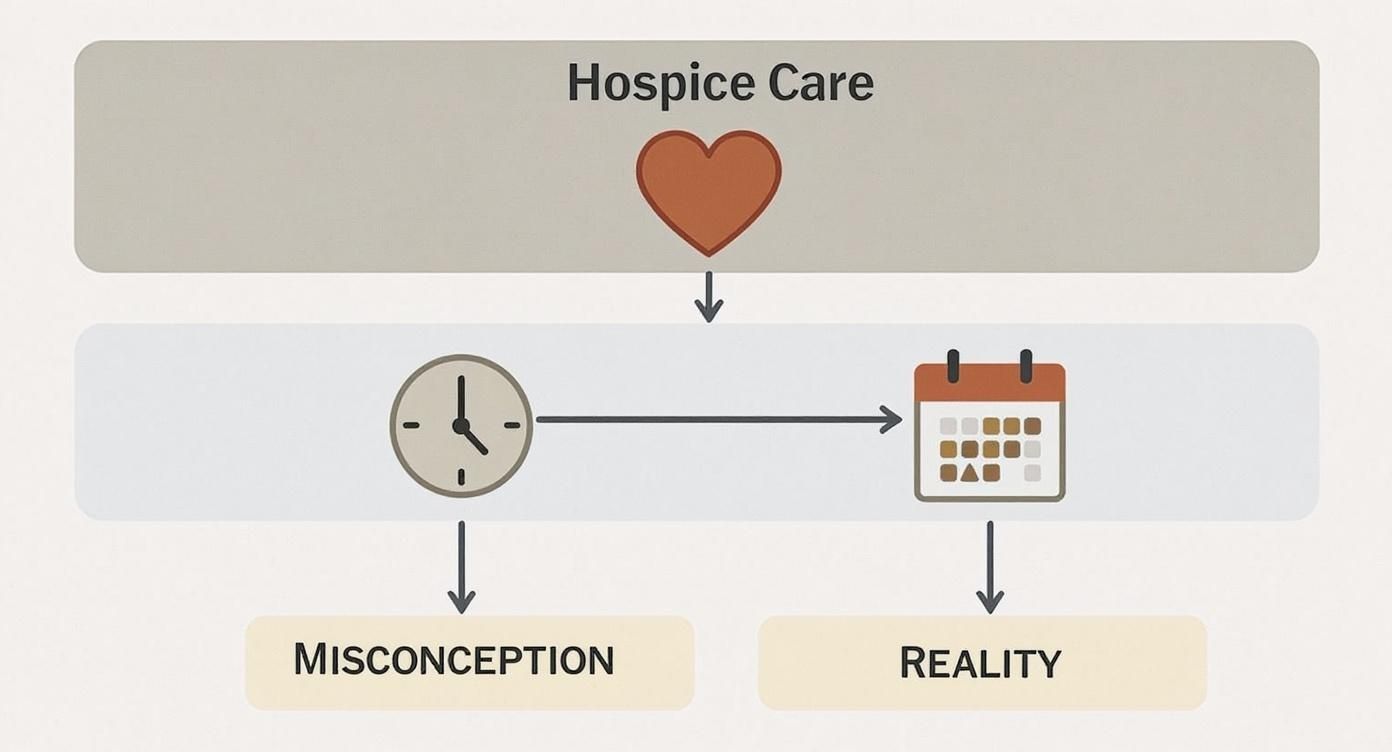
The table below shows the difference between waiting too long and starting early. It is a complete change in perspective.
Hospice Timing: A Shift in Perspective
| Aspect of Care | Misconception (Late Referral) | Reality (Early Referral) |
|---|---|---|
| Focus of Care | Crisis management in the last days. | Proactive comfort and quality of life for months. |
| Symptom Control | Reactive; treating severe, urgent symptoms. | Proactive; preventing symptoms from getting worse. |
| Family Experience | Rushed, stressful, full of difficult decisions. | Supported, calm, and focused on meaningful time. |
| Emotional Support | Little time to build trust or process grief. | Strong relationships built with the care team. |
| Patient Outcome | Often involves chaotic final days and ER visits. | A peaceful, dignified journey with fewer crises. |
As you can see, the experience is completely different. An early start transforms the end-of-life journey. It becomes a supported, peaceful process instead of a medical crisis.
It is also important to know how different types of care fit together. To learn more, read our guide on the differences between palliative and hospice care.
A Holistic Approach to Living Well
Hospice is more than just medical support. It is a complete philosophy for living well. Here at Central Coast VNA & Hospice, our team works together to care for the whole person and their family.
Choosing hospice early is not about focusing on the final days. It is about making all the days leading up to them as full and meaningful as possible. This approach brings together a team of specialists to address every aspect of a person's well-being.

Your Interdisciplinary Care Team
When you choose hospice care in Monterey County or our other service areas, you get a partner for your journey. Our nonprofit team is made up of caring professionals. They coordinate everything to meet your loved one’s unique needs.
This dedicated team includes:
- Registered Nurses who are experts in managing pain and other difficult symptoms.
- Hospice Aides who provide gentle, hands-on help with daily personal care.
- Medical Social Workers who help families navigate tough decisions and find resources.
- Chaplains who offer spiritual support that respects each family’s personal beliefs.
"Early access to hospice care gives patients and their families the opportunity to receive the full benefit of hospice care. The support of this team helps prevent the need for hospitalizations and supplements the care family… are providing for the patient, preventing burnout and improving the patient and family’s quality of life."
Building a Foundation of Trust
Starting hospice early allows these important relationships to grow. A Medical Social Worker has time to help you with paperwork without rushing. A volunteer can provide a break so you can rest.
This kind of support is similar to what patients receive in palliative care. You can learn more about the benefits of palliative care in our guide. We look for every opportunity to provide comfort, which can include therapies like massage for seniors comfort care.
Tangible Benefits of Earlier Hospice Enrollment
Choosing hospice sooner delivers clear advantages that have more to do with living well. Waiting until the final days means missing out on support that reduces stress. An earlier start gives us the time to build a compassionate plan together.
One immediate benefit is getting ahead of symptoms. Our team of Registered Nurses can manage pain, shortness of breath, and anxiety before they become severe. This is a core part of our approach to pain and symptom management.
This proactive care helps your loved one avoid exhausting trips to the emergency room. It means they can remain in the familiar comfort of their own home. It is all about preserving dignity and a sense of normalcy.
Reducing Financial and Emotional Burdens
Beyond physical comfort, there are practical benefits. Research shows that earlier hospice enrollment leads to better symptom control and fewer ER visits. It also reduces the emotional and financial strain on families.
This approach significantly reduces caregiver burnout. The weight of caring for a seriously ill loved one can be overwhelming. As a nonprofit serving Monterey County, San Benito County, Santa Cruz County, and South Santa Clara County, we step in to provide relief.
By sharing the responsibilities of care with our professional team, families can shift their focus from the stress of managing a crisis to making the most of their precious time together.
Our team provides medical, practical, and emotional support for the whole family. If you'd like to see the numbers, you can read the full research on early palliative care cost savings.
Creating More Meaningful Moments
The most important benefit of starting hospice early is adding more life to those days. It is the gift of better time. When pain is managed and stress is lifted, everyone can focus on what matters.
An earlier start makes room for:
- Meaningful Conversations: Families have the space to share stories and express love.
- Personal Goals: Our team helps patients achieve personal wishes, like sitting in their garden.
- Lasting Peace: Knowing your loved one is comfortable provides a sense of calm.
This is the real purpose of hospice care from Central Coast VNA & Hospice. We help patients live as well as they can, for as long as they can. It is not about giving up; it is about enriching the time that remains.
How Early Hospice Empowers Family Caregivers
Taking care of a seriously ill loved one is a huge responsibility. Families often juggle medical tasks and provide emotional support. The pressure can lead to anxiety and burnout, which 88% of caregivers report.
This is where starting hospice early truly helps. It wraps the entire family in a system of support. At Central Coast VNA & Hospice, our nonprofit mission means that caring for you, the family, is part of our promise.

Building Confidence and Reducing Helplessness
One of the hardest parts of being a caregiver is feeling unprepared. Early hospice enrollment provides the education and training you need to feel confident. Our compassionate professionals guide you.
Our team can teach you how to:
- Manage Medications: We show you how to give medications to keep your loved one comfortable.
- Provide Personal Care: Our Hospice Aides demonstrate safe and gentle techniques for daily activities.
- Recognize New Symptoms: You will learn what to watch for and know you can call our team 24/7.
A family in Santa Cruz County recently shared how lost they felt. Once our team started visiting, they said the burden was lifted. They had partners they could trust, which allowed them to simply be a family again.
Support for Your Own Well-being
You cannot pour from an empty cup. Caregiver burnout is a real risk. Our hospice services are designed to provide relief before you reach that point.
We offer support to help you rest, including respite care. This is when a team member steps in, giving you time for a break. You can learn more about how respite care for family caregivers helps.
Our Medical Social Workers and Chaplains also provide emotional support just for you. Our support continues with bereavement counseling for up to 13 months after your loved one’s passing. You are never alone.
Recognizing When It Is Time to Consider Hospice
Knowing when to explore hospice is a difficult conversation. Many people wait for a doctor to bring it up. But you can be a loving advocate for your loved one by understanding the signs yourself.
Remember, reaching out to Central Coast VNA & Hospice for information is not a commitment. It is a step toward understanding all your options. Our nonprofit team is here to provide guidance without any pressure.
Common Signs to Look For
Every person’s journey is unique. But there are common signs that a shift to comfort care may be the right path. If you notice several of these signs, it may be time to learn more about hospice.
Here are a few indicators families often see:
- Frequent Hospitalizations: A cycle of ER visits or hospital stays in the last six months.
- Increasing Difficulty with Daily Activities: A decline in their ability to handle tasks like bathing or dressing.
- Uncontrolled Symptoms: Persistent pain, shortness of breath, or fatigue that hurts their quality of life.
- Significant Weight Loss: Unexplained weight loss, often paired with a loss of appetite.
To help you, we've organized these signs into a checklist. This can help you decide if a conversation about hospice is appropriate.
| Category | Observable Signs & Symptoms |
|---|---|
| Medical Status | Frequent ER visits or hospital stays (e.g., more than 2 in 6 months) |
| Current treatments are causing more side effects than benefits | |
| Chronic infections that are not responding to antibiotics | |
| Physical Decline | Progressive, unintentional weight loss (e.g., more than 10% of body weight) |
| Noticeable difficulty with breathing, even while resting | |
| Increased weakness, fatigue, and sleeping more often | |
| Worsening pain, nausea, or other symptoms that are hard to control | |
| Functional Decline | Needing much more help with daily activities (bathing, dressing, eating, walking) |
| Spending most of the day in a chair or bed | |
| Increased confusion, memory loss, or disorientation | |
| A significant decline in the ability to speak or communicate |
Seeing one or two of these signs may not mean it is time for hospice. But if you check off several boxes, it is a strong sign that it's time to gather more information. This is about ensuring your loved one is comfortable, not about giving up.
A Shift Toward Earlier Referrals
Thankfully, there's a growing understanding that hospice is not just for the final few days. The data reflects this positive shift. According to the National Hospice and Palliative Care Organization (NHPCO), the average length of stay in hospice care is now 92.6 days for Medicare patients.
This shows that families and doctors see the benefits of starting comfort care sooner. In fact, nearly 52% of Medicare beneficiaries who died in 2020 received hospice services. You can learn more by exploring some of these hospice care trends and statistics.
Exploring hospice is about ensuring your loved one can live as well as possible, for as long as possible. A simple informational call can provide clarity and peace of mind.
If you are still unsure, our guide on when to call hospice provides more helpful information. If your loved one wants to stop aggressive treatments and focus on comfort, that is the most important sign.
Take the Next Step with Our Compassionate Team
Choosing hospice is not about giving up. It is a brave decision to take control and fill life's final chapter with dignity and comfort. It is about making the journey ahead peaceful, not chaotic.
As a local nonprofit with deep roots in Monterey, San Benito, Santa Cruz, and South Santa Clara counties, we have walked this path with countless families. We understand this is a difficult conversation. That’s why we invite you to start with a talk, with no pressure or strings attached.
Reaching out is a sign of strength and love. Let us help you navigate this journey with confidence and peace of mind, so your focus can remain where it belongs: on your loved one.
The real gift of starting hospice early is the quality time it gives back to your family. We are here to help you make the most of every moment. Give us a call at (831) 372-6668 or learn more about our hospice care services.
Answering Your Questions About Starting Hospice Early
Deciding on hospice care is a big step, and it is normal to have questions. We have put together answers to the concerns we hear most often from families in our community. We hope this gives you the confidence to make the best choice for your loved one.
Does starting hospice mean we are giving up hope?
Not at all. Starting hospice is about redefining hope. The focus shifts from a cure to the hope for comfort and quality of life. It is a choice to make sure your loved one's remaining time is as peaceful as possible.
Can a patient still see their regular doctor?
Yes, absolutely. Central Coast VNA & Hospice works closely with your loved one’s primary doctor. The doctor your family trusts remains a vital part of the care team, and we keep them fully informed.
Is hospice care only provided in a special facility?
This is a common myth. The vast majority of hospice care happens right where the patient calls home. This could be a private house, an assisted living community, or a nursing home in Monterey County or our other service areas.
Who pays for hospice care?
Hospice is a fully covered benefit under Medicare Part A, Medi-Cal, and most private insurance plans. As a nonprofit organization, Central Coast VNA & Hospice is also committed to providing care for everyone in our community, regardless of their ability to pay.
What if my loved one's condition improves?
Hospice care is not a one-way street. If a patient's condition gets better or they decide to try a new treatment, they can be discharged from hospice at any time. They can always return to hospice support later if they need it again. The choice always belongs to the patient and their family.
Exploring hospice is a proactive step toward ensuring comfort, dignity, and peace of mind. The team at Central Coast VNA & Hospice is here to answer all your questions with no pressure or obligation. Contact us today to learn more about how we can support your family.