
When a loved one comes home from the hospital or needs help managing a serious health issue, their medical needs can be complex. This is where skilled nursing care comes in. It’s a specific kind of medical support, ordered by a doctor, that brings the expertise of a licensed professional—like a Registered Nurse or a physical therapist—right into the home.
Think of it as bringing a hospital's clinical team to your loved one's bedside. It's not about general help; it's about providing hospital-level medical care to help them heal, manage their condition, and regain their independence safely.
What Does Skilled Nursing Care Include?
This specialized care focuses squarely on a patient’s direct medical needs. Every care plan is tailored to the individual, but the services usually involve a few key areas.
- Medical Services: This can include everything from wound care for surgical sites or pressure sores to administering IV medications and injections. A big part of it is also educating patients and their families on how to manage complex conditions like diabetes or heart failure.
- Rehabilitation Services: Physical, occupational, and speech therapy are all forms of skilled care. The goal is to help your loved one restore function, improve mobility, and regain communication skills after an illness or injury.
- Monitoring and Support: A skilled nurse is always keeping a close eye on the patient’s condition. They monitor vital signs, manage symptoms, and make sure the recovery plan is working, catching any potential problems before they become serious.
This image helps show how these different services work together to create a complete circle of care.
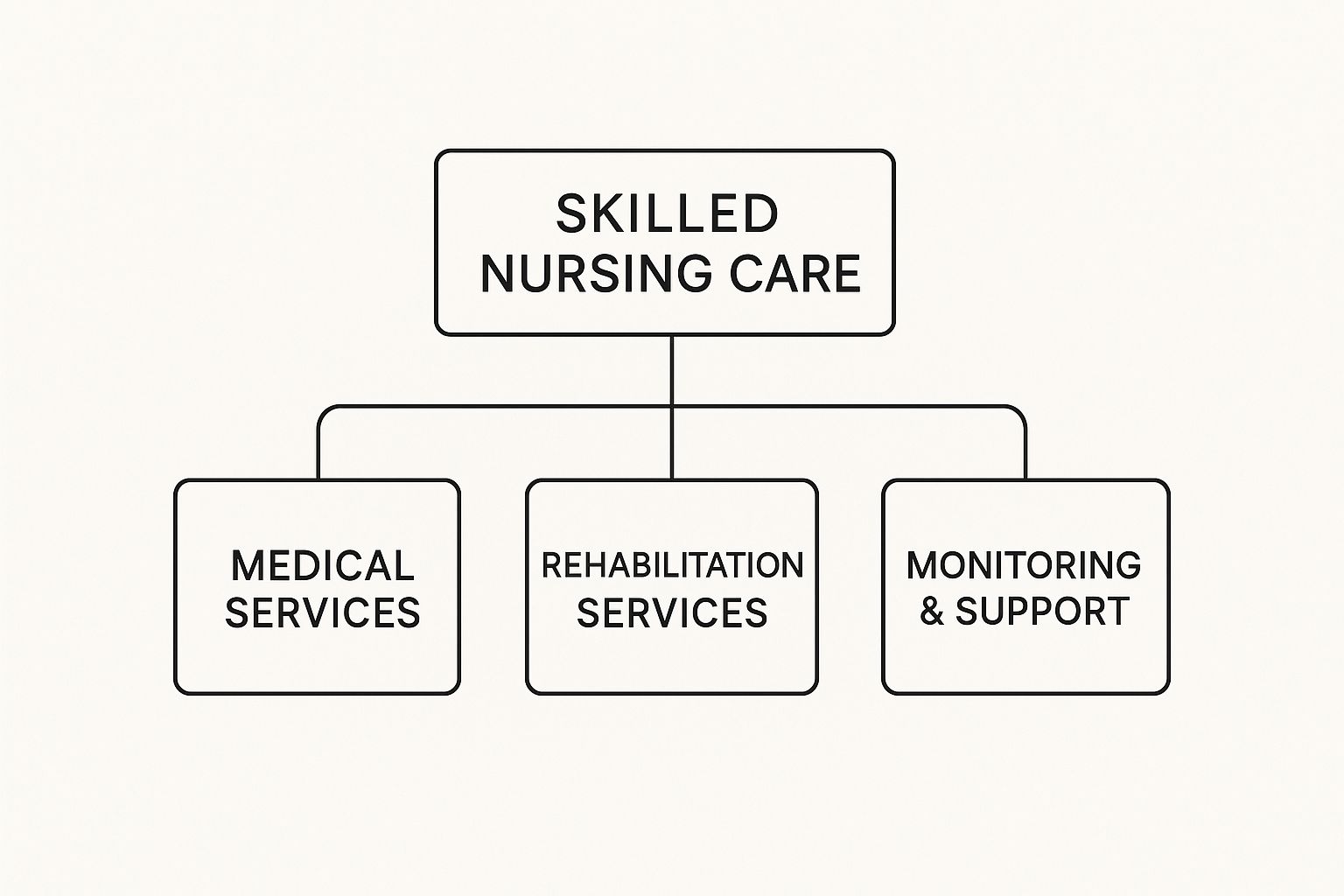
As you can see, skilled nursing isn't just one thing. It's a combination of hands-on medical treatment, rehabilitative therapies, and constant, careful oversight.
It's also important to understand how skilled nursing differs from personal or custodial care, which focuses on non-medical daily tasks.
Skilled Nursing Care vs. Personal Care at a Glance
This table breaks down the key differences to help you see which type of care might be right for your family's situation.
| Care Aspect | Skilled Nursing Care (Provided by CCVNA) | Personal or Custodial Care (Not provided by CCVNA) |
|---|---|---|
| Primary Goal | To treat a medical condition, aid recovery, and restore independence. | To assist with activities of daily living (ADLs) and provide companionship. |
| Who Provides It | Licensed medical professionals (e.g., Registered Nurses, Physical Therapists). | Non-medical personnel, home health aides, or personal care assistants. |
| Required | Must be prescribed by a physician as medically necessary. | Does not require a doctor's order; based on personal need. |
| Example Services | Wound care, IV therapy, medication management, injections, rehabilitation. | Bathing, dressing, meal preparation, light housekeeping, transportation. |
| Insurance Coverage | Often covered by Medicare, Medi-Cal, and private insurance. | Typically paid for out-of-pocket, though some long-term care insurance may cover it. |
Understanding this distinction ensures your loved one gets the right level of support for their specific needs. It's about matching clinical expertise to medical needs versus help with daily life.
For over 74 years, Central Coast VNA & Hospice has been the trusted, nonprofit provider of these essential medical services at home. We proudly serve communities across Monterey, San Benito, Santa Cruz, and South Santa Clara counties. Our compassionate teams are dedicated to making sure your loved one receives the expert care they need to heal safely, right where they feel most comfortable. You can learn more about our specific approach on our skilled nursing at home services page.
What Does Skilled Nursing Care Actually Involve?
When a doctor prescribes skilled nursing care, they're ordering much more than just a helping hand. They’re calling for a specific set of medical services that can only be performed by a licensed professional, like a Registered Nurse (RN) or a therapist. Think of it as bringing a hospital's clinical expertise right to your doorstep.
At Central Coast VNA & Hospice, our teams are dedicated to delivering these crucial services with both precision and genuine compassion. The entire goal is to boost your health, stop complications before they start, and get you back on your feet, safely and independently, in the comfort of your own home.
Advanced Medical and Wound Care
After a hospital stay, one of the most pressing needs is often professional care for surgical wounds or other complex health issues. Our clinical teams are experts at managing these situations to speed up healing and keep infections at bay.
- Complex Wound Care: This isn't just changing a bandage. A Registered Nurse carefully cleans surgical incisions, pressure ulcers, or other serious wounds, applies fresh dressings, and watches for any sign of infection to make sure everything is healing correctly.
- Intravenous (IV) Therapy: When you need medication, antibiotics, or hydration delivered directly into your bloodstream, our nurses are trained to safely manage IV lines at home.
- Catheter and Ostomy Care: We provide expert management for urinary catheters or ostomies. Our teams also teach patients and their families proper hygiene and care techniques to prevent complications.
Comprehensive Medication Management
Juggling a handful of new prescriptions after a hospital stay can feel overwhelming and is often a source of dangerous mistakes. Skilled nursing brings a sense of order and safety to this critical task. A Registered Nurse makes sure the right pills are taken at the right times and educates you and your family on why each medication is needed and what side effects to look for.
This direct oversight is a cornerstone of safe recovery at home. It helps prevent harmful drug interactions and ensures your treatment plan works as intended.
Rehabilitative Therapies for Independence
Getting back to your daily routine means rebuilding strength and function. That’s where skilled therapeutic services come in. They’re designed to help you regain your independence and improve your quality of life without you ever having to leave your house.
These therapies aren’t just a list of exercises. They are personalized programs, crafted by licensed professionals, to rebuild the specific skills you need to live safely and confidently on your own.
Each therapy targets a different aspect of recovery:
- Physical Therapy (PT): Helps you improve strength, balance, and the ability to walk after a major surgery, an injury, or an illness like a stroke.
- Occupational Therapy (OT): Focuses on restoring your ability to handle daily activities, like getting dressed, making a meal, or bathing safely.
- Speech Therapy (ST): Assists with recovering communication skills or overcoming swallowing difficulties that can happen after a stroke or other neurological conditions.
The demand for these specialized services is growing rapidly. In fact, the skilled nursing facility market is projected to hit around USD 414.74 billion in 2025 and continue climbing. For many families here in Monterey County and Santa Cruz County, getting this level of support at home is a much better alternative. You can learn more in our guide on in-home support to avoid a nursing home.
Qualifying for Skilled Nursing Care at Home
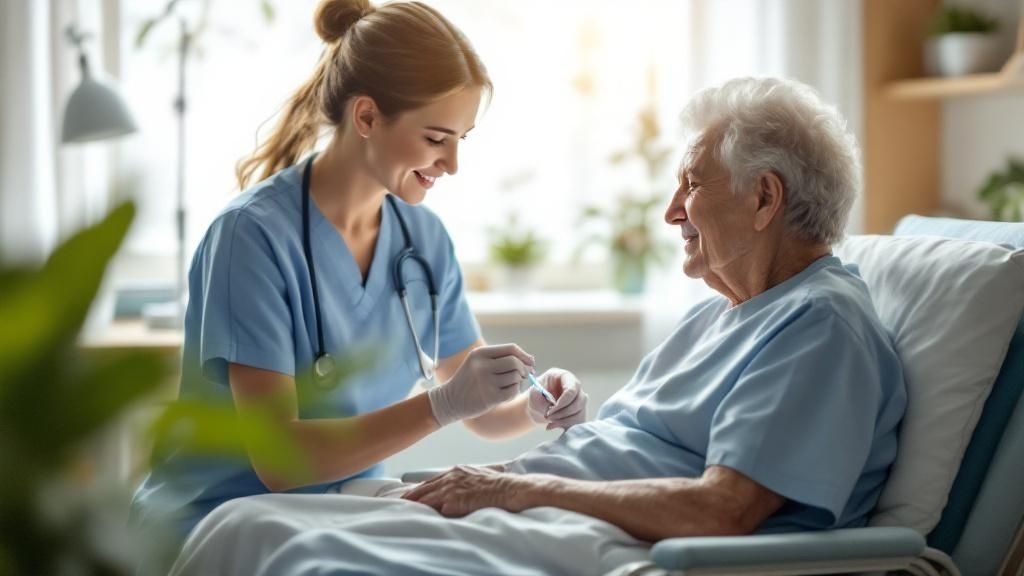
Trying to figure out healthcare requirements can feel overwhelming, especially when you're already focused on helping a loved one recover. We get it. Understanding who qualifies for skilled nursing care at home is the first step toward empowering your family to make confident decisions.
This level of specialized support isn't for everyone. It’s specifically designed for patients who have a clear, documented medical need for clinical expertise right in their own home.
The journey to receiving skilled care at home almost always starts with a visit to the doctor. A physician needs to certify that intermittent services from a licensed professional, like a Registered Nurse or a physical therapist, are medically necessary to treat an illness or injury. Think of this formal doctor's order as the key that unlocks the door to home health services.
Who Is Typically Eligible?
Eligibility often comes down to specific medical events or conditions that demand ongoing professional oversight. One of the core requirements is that patients are considered homebound. This doesn’t mean they’re bedridden, but that leaving home requires a considerable and taxing effort. The goal is to ensure that bringing medical care to them is the safest and most effective path to recovery.
Common scenarios where someone would qualify include:
- Post-Surgical Recovery: Patients coming home after a major operation, like a joint replacement or heart surgery, frequently need professional wound care, medication management, and physical therapy to get back on their feet.
- Management of Chronic Illness: People living with complex conditions like heart failure, COPD, or diabetes can need a skilled nurse to manage symptoms, provide crucial education, and help prevent trips back to the hospital.
- Recovery from a Major Medical Event: After a stroke, heart attack, or a serious infection, a patient often requires a blend of nursing care and rehabilitative therapies to regain function and independence.
- Advanced Wound Care: Some wounds, such as non-healing surgical sites, pressure ulcers, or diabetic sores, demand the expertise of a nurse to promote healing and ward off infection.
A key principle here is medical necessity. The care must be directly related to treating a specific health problem, not for general help with daily activities. The focus is always on helping the patient get better, maintain their current condition, or slow its decline.
At Central Coast VNA & Hospice, our team is here to guide families in Monterey County, San Benito County, Santa Cruz County, and South Santa Clara County through these requirements. We work closely with your physician to confirm that home health is the right choice and to build a plan of care that meets all medical and insurance criteria.
We know that understanding the specifics can bring a lot of peace of mind. For a more detailed look at the criteria, we invite you to review our guide on qualifying for home health care. Our goal is to make this process as clear and stress-free as possible for you and your family.
Why Choose Skilled Nursing at Home?
There’s a reason we say, “There’s no place like home.” It’s more than just a saying; it’s a fundamental truth about where we feel most secure and comfortable. When you’re recovering from a major health event like an illness or surgery, that feeling of being in your own space, surrounded by familiar things, isn't just a comfort—it's a powerful part of the healing process.
This is where skilled nursing care at home really shines. It takes that inherent power of your home environment and combines it with expert medical support, creating the ideal setting for recovery.
The Real Advantages of Healing at Home
The benefits aren't just about feeling good, though that’s a huge part of it. The clinical outcomes often speak for themselves. Patients who recover at home tend to heal faster and face a much lower risk of infection compared to being in a hospital or other facility. The one-on-one attention from a dedicated nurse means your care is focused entirely on you, without the constant interruptions of a busy hospital floor.
But healing is never just a physical journey. Your mental and emotional state plays a massive role. The stress and confusion of a sterile, unfamiliar place can actually slow you down, while the peace and quiet of home can help you get back on your feet much faster.
This is the philosophy that drives everything we do here at Central Coast VNA & Hospice. Our clinicians are here to provide more than just medical treatment; they deliver compassionate care that supports your body, mind, and spirit. It’s an approach that empowers you to regain your independence and confidence.
The whole point of home health is to blend top-tier clinical care with the profound, therapeutic benefits of being home. It’s about creating a safe, supportive space where you can heal on your own terms, surrounded by the people and places you love.
A Choice That’s Both Practical and Compassionate
Beyond the clear emotional and medical upsides, choosing skilled nursing at home is often a very practical decision for families. For those who are eligible, Medicare frequently covers these services, which can lift a significant financial weight during an already stressful time. It makes high-quality care accessible when it's needed most.
As we get older, the risk of disability and chronic conditions increases, making long-term support essential. Right now, about 2 out of 3 older adults with disabilities get the long-term skilled care they need right in their own homes. This shift shows how much we’ve come to recognize home as the preferred setting for care. If you're interested in the numbers, this in-depth look at long-term care trends offers more detail.
Every day at Central Coast VNA & Hospice, we see how home-based care truly uplifts patients and their families. By bringing expert medical support into the home, we help people all across Monterey County and our neighboring communities live with more dignity, more independence, and a better quality of life.
How Skilled Nursing Connects Your Healthcare Journey
A healthcare journey is rarely a straight line. It often zigs and zags, with needs that change over time. Skilled nursing care at home isn’t just another service; think of it as a vital bridge that connects the different stages of your health, making sure the path forward is as smooth and supportive as possible.
For many families, this journey kicks off after a hospital stay. A loved one comes home, but they still need medical attention to recover from a surgery or learn to manage a new diagnosis. This is where skilled nursing steps in, providing the clinical expertise needed for a safe transition back to daily life.
But what happens when a health condition becomes a long-term reality? This is where having a true continuum of care makes all the difference.
A Seamless Path Forward with One Trusted Partner
Let’s walk through an example. Imagine a patient is recovering from a serious heart condition. In the beginning, they receive home health care services from a Central Coast VNA & Hospice Registered Nurse. That nurse helps manage medications, monitors symptoms, and educates the family to prevent another trip to the hospital.
As time goes on, the patient’s condition stabilizes, but it’s still a chronic challenge. Their needs might shift away from active recovery toward long-term symptom management. At this point, they can smoothly transition to our palliative care program, often with the same trusted organization. The focus of the care changes, but the compassionate team they already know and trust remains by their side.
This seamless transition is one of the greatest strengths of choosing a comprehensive provider.
With a single, mission-driven partner like Central Coast VNA & Hospice, your family avoids the stress of finding new providers at each stage. Your history, preferences, and goals are already understood, creating a foundation of trust and continuity.
Eventually, if the illness progresses and the focus shifts entirely to comfort and quality of life, a patient can transition to hospice care. Once again, this happens under the umbrella of the same dedicated team, ensuring dignity and peace through the final chapter of life. For families in Monterey and San Benito counties, this integrated approach simplifies what can be a very complex and emotional process.
Understanding the Broader Need for Skilled Care
The need for this kind of connected, ongoing support is growing. As our population ages, more people are managing complex and chronic health conditions at home. North America currently leads the skilled nursing market, partly due to its large elderly population—a group expected to grow from 52 million in 2018 to nearly 95 million by 2060.
For over 74 years, Central Coast VNA & Hospice has been that nonprofit partner for our communities. We are the only provider on the Central Coast offering this full spectrum of home health, palliative, and hospice care. By connecting every step of your healthcare journey, we provide stability and compassionate support when your family needs it most.
Your Trusted Partner for Health on the Central Coast
When you're dealing with a health challenge, making decisions can feel overwhelming. The first step toward peace of mind is simply understanding your options. Skilled nursing care brings that expert medical support right to your bedside, creating the best possible environment for recovery, managing symptoms, and rediscovering your independence. It’s a model that perfectly blends clinical excellence with the undeniable comfort of being home.
For over 74 years, Central Coast VNA & Hospice has been a steadfast, nonprofit partner for families here on the Central Coast. Our roots run deep in Monterey County, San Benito County, Santa Cruz County, and South Santa Clara County. We're committed to providing a full spectrum of care, from home health to palliative and hospice services, so you always have a familiar team to rely on.
Choosing a healthcare partner is a decision built on trust. By offering the full continuum of home-based care, we provide consistent, familiar support that evolves with your needs, ensuring you never have to walk the path alone.
If you believe skilled nursing or our other home health care services in Monterey, CA could help you or a loved one, we’re here to talk. Contact us today to speak with a compassionate professional who can guide you through the next steps.
Frequently Asked Questions About Skilled Nursing Care

Navigating the world of home health can feel overwhelming, and it's completely normal to have questions. We've gathered some of the most common things families ask when they're first exploring what is skilled nursing care. Our goal is to give you clear, straightforward answers to help you feel confident in your decisions.
How is skilled nursing care different from what a Hospice Aide does?
This is an important distinction. The biggest difference comes down to the type of care and the professional license of the person providing it.
Skilled nursing care involves specific medical tasks that, by law, can only be performed by a licensed professional like a Registered Nurse (RN) or a physical therapist. These services, like wound care or IV therapy, must be ordered by a doctor to treat a specific medical condition.
A Hospice Aide, on the other hand, provides essential non-medical, personal care to help with Activities of Daily Living (ADLs). This could be helping with bathing, getting dressed, or preparing meals. While vital for comfort and dignity, these tasks don't require a medical license.
Is skilled nursing care at home covered by Medicare?
Yes, in most situations it is. For individuals who qualify, Medicare Part A and/or Part B will cover intermittent skilled nursing care right in your home.
To be eligible, a patient must be under a doctor's care, and that doctor has to certify that the skilled services are medically necessary. The patient also needs to be considered "homebound," which means it takes a considerable and taxing effort to leave the house. Here at Central Coast VNA & Hospice, we regularly work with Medicare, Medi-Cal, and many private insurance plans to make sure you can access the care you need.
How long can someone receive skilled nursing care at home?
There's no one-size-fits-all answer here. The duration of care depends entirely on the patient’s specific needs and the plan of care their doctor has approved. Skilled nursing is a focused period of care to help someone recover from an illness, injury, or surgery.
Care is provided for as long as it's medically necessary. For instance, someone recovering from a joint replacement might get physical therapy for several weeks. A patient with a complex wound might need nursing visits until it has fully healed. Your care plan is reviewed regularly and adjusted as your condition changes.
What happens if my condition improves or declines?
Your care plan is a living document, not something set in stone. It's designed to adapt right along with your health needs. The Central Coast VNA & Hospice clinical team is always monitoring your progress.
If your condition improves, services might be reduced or you could be discharged from home health care with a new plan for managing on your own. If your condition declines or new needs arise, we'll update your care plan. This might involve a smooth transition to our palliative or hospice care programs to ensure you always have the most appropriate support.
How do I start the process of getting skilled nursing care?
It all starts with a conversation with your doctor. A physician must first determine that skilled nursing care is medically necessary and then provide a referral or an order for the services.
Once we receive that referral, a clinician from Central Coast VNA & Hospice will schedule a visit to your home to conduct an initial assessment. This helps us fully understand your unique situation and work with your doctor to build a personalized plan of care. If you are in Monterey, San Benito, Santa Cruz, or South Santa Clara County, we are here to guide you.
What is the continuum of care at Central Coast VNA & Hospice?
The continuum of care refers to our ability to provide a seamless transition between different levels of care as a patient's needs change. It typically progresses from home health to palliative care, and then to hospice care if needed.
This approach means you can stay with one trusted, nonprofit organization throughout your healthcare journey. Our teams work together, ensuring your care is consistent, compassionate, and always aligned with your goals. It provides stability for families across the Central Coast.
For over 74 years, Central Coast VNA & Hospice has been providing compassionate, expert care to families across our community. If you have more questions or you're ready to talk about your needs, please contact us today. Let us be your trusted partner on your healthcare journey. Learn more at https://ccvna.com.