
Palliative care is specialized medical support focused on one thing: providing relief from the symptoms and stress of a serious illness. The main goal is to improve the quality of life for both the patient and their family. It's important to know that this care can be provided right alongside curative treatments.
What Exactly Is Palliative Care?

When someone is diagnosed with a serious illness, the medical journey often focuses on curing the disease. But what about the day-to-day struggle with pain, fatigue, and emotional toll? This is where palliative care steps in, offering an essential extra layer of support.
Think of it as a supportive scaffolding built around your primary medical treatments. It doesn't replace your doctor's plan; it strengthens it by focusing on your comfort and well-being. This specialized care is right for any age and at any stage of a serious illness.
The heart of palliative care is relieving symptoms like pain, shortness of breath, fatigue, nausea, and anxiety. When these symptoms are controlled, patients often feel stronger and better able to tolerate ongoing medical treatments.
A Team-Based Approach to Your Comfort
One of the greatest benefits of palliative care is the dedicated team that rallies around you. This group works in close partnership with you, your family, and your other doctors. At Central Coast VNA & Hospice, our expert team includes:
- Registered Nurses who are experts in managing complex symptoms.
- Medical Social Workers to provide emotional support and help you find community resources.
- Chaplains who offer spiritual guidance that respects your personal beliefs and values.
This collaborative approach ensures your physical, emotional, and spiritual needs are all addressed. For families in Monterey County, San Benito County, Santa Cruz County, or South Santa Clara County, our nonprofit brings over 74 years of local, mission-driven experience right to your home.
Palliative Care at a Glance
| Core Principle | What It Means for Patients and Families |
|---|---|
| Symptom Management | Actively treating pain, nausea, fatigue, and other physical discomforts. |
| Whole-Person Care | Addressing emotional, social, and spiritual needs, not just the physical illness. |
| Patient-Centered Goals | Your values and preferences guide all care decisions. What matters to you, matters to us. |
| Family Support | Offering resources and emotional support for family members and those assisting with care. |
| Team Collaboration | Your primary doctor works alongside a palliative team for seamless, coordinated care. |
This table shows how palliative care wraps a comprehensive layer of support around you and your loved ones. It can also be helpful to understand how this support changes as your needs evolve. Our guide on the 4 stages of palliative care offers more insight.
Ultimately, palliative care is about adding life to your days, not just days to your life. It empowers you to maintain independence and find comfort, dignity, and peace.
Improving Your Overall Quality of Life

One of the most profound impacts of palliative care is how it improves your day-to-day life. This specialized support goes far beyond treating an illness. The goal is to help you live as fully and comfortably as possible, on your own terms.
It all starts with managing symptoms effectively. By tackling persistent issues like pain, fatigue, and nausea, palliative care can help you regain energy and strength. This renewed physical wellness directly lifts your emotional state, easing feelings of stress.
A Focus on Living Well
Imagine a patient in Santa Cruz County who loves spending time with their grandchildren but has been too exhausted. With a palliative care plan from Central Coast VNA & Hospice, their symptoms are controlled. Suddenly, they can enjoy those precious family moments again—a powerful boost to their spirit.
This is the essence of palliative care at home. It’s about focusing on what truly matters to you and helping you achieve those personal goals. At its heart, palliative care is about living, not just about the illness.
Creating a Supportive Environment
As a mission-driven, nonprofit organization, we see the whole person, not just a diagnosis. Our Registered Nurses and Medical Social Workers build a circle of support that nurtures your well-being. This person-centered philosophy is one of the top 3 benefits of palliative care families appreciate most.
This support also extends to your home environment. Feeling safe and comfortable is essential for recovery and peace of mind. Considering practical home modifications for seniors aligns with the palliative goal of maximizing independence and quality of life.
Expert Management of Pain and Symptoms

A cornerstone of palliative care is mastering the physical burdens of a serious illness. This is more than managing pain. It’s about providing compassionate relief for all symptoms that sap your energy and comfort.
At Central Coast VNA & Hospice, we see symptom control as both a science and an art. Our experienced Registered Nurses work with your own doctors to craft a tailored care plan. We focus on not just obvious pain, but also other difficult symptoms that often arise.
This specialized support is becoming more essential than ever. The global palliative care market, valued at USD 15.11 billion, is expected to nearly double by 2033. This growth reflects the increasing need for this level of expert care, which you can learn more about from Straits Research.
A Holistic and Personalized Approach
Your palliative care journey starts with a conversation. Our team listens to understand how your illness affects you and what matters most. From there, we build a plan combining medical treatments with supportive therapies for optimal relief.
We frequently help people manage common, yet debilitating, symptoms like:
- Persistent pain that disrupts daily life and sleep.
- Deep fatigue or weakness that makes it hard to get through the day.
- Shortness of breath and other breathing difficulties.
- Nausea, vomiting, or a loss of appetite.
- Anxiety, depression, and trouble sleeping.
Our aim is to find the right balance—effective solutions with the fewest side effects. This ensures your treatment supports your overall well-being.
Your Local Experts in Palliative Care at Home
For our neighbors in San Benito County and South Santa Clara County, Central Coast VNA & Hospice brings clinical expertise to your doorstep. Our team becomes your partner, ready to adjust your care plan as your needs evolve. We ensure you always have the right support at the right time.
This proactive, compassionate approach defines palliative care. By easing the physical strain, we help you save energy for what’s important. If you are struggling with symptoms, contact us today.
Emotional Support for Patients and Families
A serious illness sends ripples through an entire family, creating new stress and uncertainty. That is why a powerful benefit of palliative care is how it wraps support around everyone involved. When the family feels supported, the patient does, too.
At Central Coast VNA & Hospice, our team is built for this. It includes compassionate Medical Social Workers and Chaplains who create a safe space for families. Here, you can work through complex emotions and face difficult decisions as a team.
Guidance Through Difficult Conversations
Facing a serious diagnosis brings tough questions about the future. Our team helps facilitate these crucial conversations, ensuring the patient’s wishes are heard and respected. This guidance is especially valuable for advance care planning.
We also connect families with practical community resources across Monterey County and our service areas. This support helps lift the logistical and financial burdens of a long-term illness. This complete focus helps families feel more united and less overwhelmed.
A Partner for the Whole Family
The pressure of providing care for a loved one can take a serious toll. Our team offers counseling and support aimed at family members, helping them protect their own well-being. This proactive support is a hallmark of the care we've provided on the Central Coast for over 74 years.
Our goal is simple: to make sure no one feels alone. This family-centered support is also a key part of our continuum of care. To learn more, read about what hospice care involves in our detailed guide.
How Palliative Care Works With Other Treatments
One of the biggest myths about palliative care is that you must give up on curative treatments. That’s simply not true. In reality, palliative care partners with your primary medical treatments, making them more effective.
Think of your main doctor—like an oncologist or cardiologist—as the pilot of your treatment plane. The palliative care team from Central Coast VNA & Hospice is your expert co-pilot. We fly alongside you, managing turbulence from symptoms and stress so the pilot can focus on the destination.
A Seamless Partnership For Better Care
This collaborative approach keeps everyone on the same page. Our team of Registered Nurses and Medical Social Workers communicates directly with your other doctors. This partnership ensures coordinated care plans that center on your personal goals.
You don't have to choose between curing your illness and feeling comfortable. Palliative care adds an extra layer of support that complements and strengthens your main treatment plan. According to the National Hospice and Palliative Care Organization (NHPCO), patients receiving this care often report higher satisfaction and better symptom management.
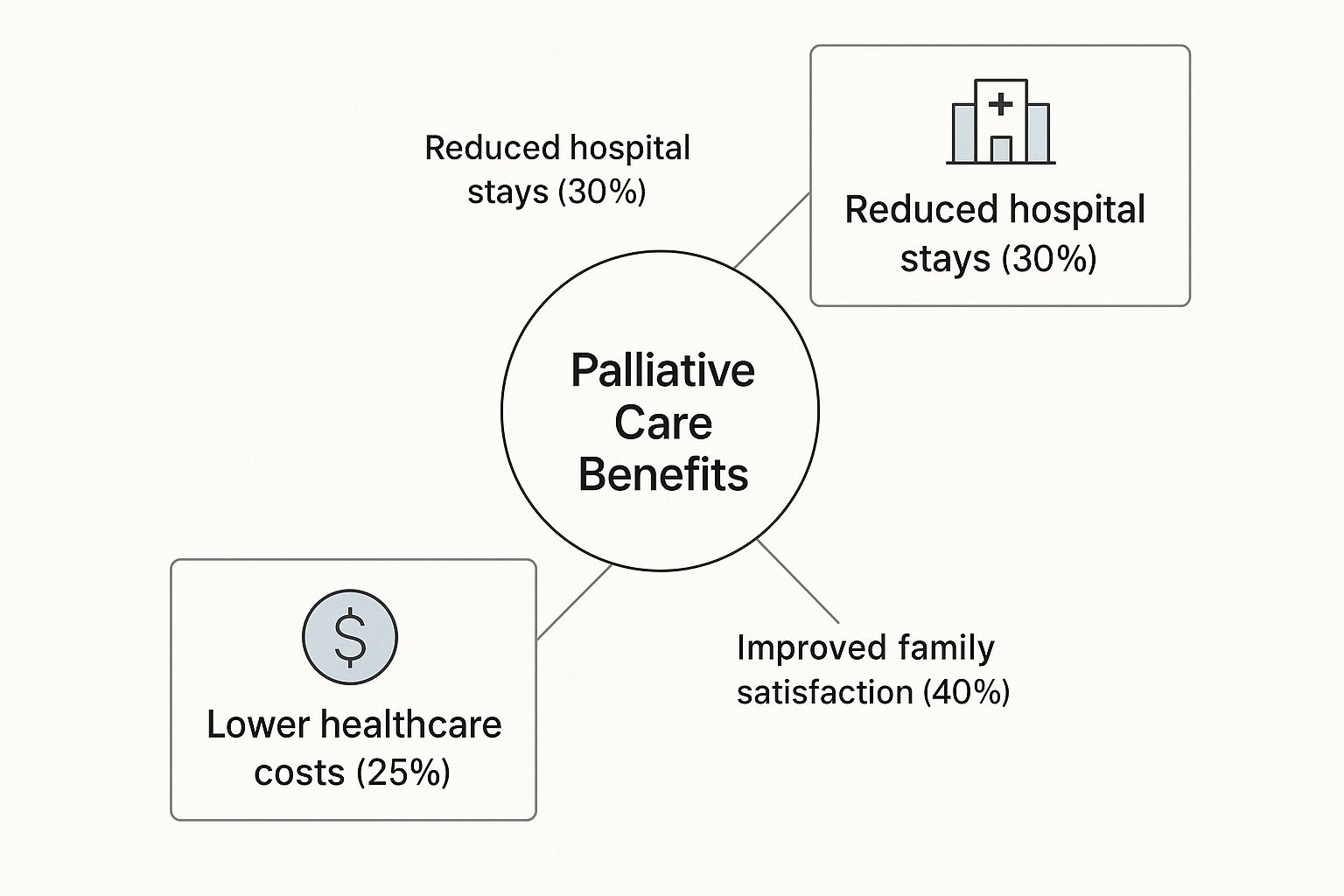
As you can see, this coordinated support has a real, measurable impact. It helps patients remain comfortable at home and ensures families feel more supported.
Understanding The Continuum Of Care
At Central Coast VNA & Hospice, we provide a full Continuum of Care, including home health, palliative services, and hospice. This is a unique advantage for families in Monterey County, San Benito County, and our other service areas. You can receive palliative support for months or even years while continuing treatments.
Should your goals of care shift, our integrated system ensures a smooth transition to hospice care. You can explore our guide on how to know if palliative care is the right choice for a loved one. This seamless support means you always have the right level of care from a trusted team.
When Should You Consider Palliative Care?
Knowing when to ask for an extra layer of support is a huge step. Many people think palliative care is only for the end of life, but that’s a common misconception. The truth is, it’s never too early to consider it.
Palliative care is designed to help at any point after a serious diagnosis. Its goal isn't about the end of a journey, but about improving your quality of life right now. It can be provided even while you receive treatments to fight your illness.
We often see patients with illnesses like cancer, heart failure, COPD, dementia, Parkinson's disease, and kidney failure. If the daily realities of your illness are getting in the way of your life, palliative care could make a real difference.
Signs It Might Be Time for a Consultation
So, how do you know when it’s the right time? Frequent hospital stays or ER visits are strong indicators that symptoms aren't being managed well at home. This is a clear sign that palliative care at home could help.
The need for this support is growing. Globally, the demand for palliative care jumped by 74% between 1990 and 2021. This is a direct result of the rise in long-term illnesses that benefit from this focused approach, as you can learn more about the growing global demand for palliative care00458-9/fulltext).
To help you think it through, ask yourself these questions:
- Is pain or discomfort keeping me from enjoying my daily life?
- Am I struggling with side effects from my medical treatments, like constant fatigue or nausea?
- Do I feel overwhelmed, stressed, or anxious about my illness?
- Are my family members showing signs of distress or burnout?
- Are uncontrolled symptoms leading to frequent ER visits?
If you answered yes to any of these, it’s a good time to talk about the benefits of palliative care. The next step is simple: speak with your doctor or contact Central Coast VNA & Hospice directly. Our team can help you live better, starting today.
Frequently Asked Questions About Palliative Care
Navigating healthcare options can feel overwhelming when facing a serious illness. Getting clear, straightforward answers is the first step toward feeling more in control. Here are some of the most common questions our team at Central Coast VNA & Hospice receives.
1. What is the main difference between palliative care and hospice care?
This is a very common question. Palliative care can begin at any point during a serious illness, even while you are actively pursuing a cure. Hospice care is for someone who is no longer seeking curative treatment and has a life expectancy of six months or less.
2. Can I keep my own doctor if I receive palliative care?
Absolutely. Your palliative care team from Central Coast VNA & Hospice works alongside your trusted doctors. We partner with your primary care physician and any specialists to ensure your care plan reflects what matters most to you.
3. How do I get a referral for palliative care?
Getting started is often easier than people think. You can speak with your doctor about the symptoms you're experiencing and ask for a palliative care consultation. You can also contact us at Central Coast VNA & Hospice directly to discuss if our services are a good fit.
4. Does choosing palliative care mean I am giving up?
Not at all; it's the opposite. Palliative care is about giving you the strength to keep going by managing symptoms and side effects. This support is provided right alongside treatments like chemotherapy, radiation, or surgery so you can continue fighting your illness.
5. Is palliative care only for people with cancer?
No. While it is a great help for many with cancer, palliative care is for anyone with a serious, long-term illness. This includes heart failure, COPD, kidney disease, Alzheimer's or dementia, Parkinson's disease, and many others.
For even more answers, we've put together a comprehensive resource. You can explore our dedicated palliative care FAQs page for additional information.
If you believe palliative care could benefit you or a loved one in Monterey, San Benito, Santa Cruz, or South Santa Clara County, contact Central Coast VNA & Hospice today. Our compassionate team is here to answer your questions and help you live better. Learn more about our services at https://ccvna.com.