
Navigating loss is a deeply personal journey, and finding the right support can make a significant difference. The path through grief is unique for everyone. However, connection with others who understand can provide comfort, validation, and a sense of community. This guide is designed to help you find the best grief support groups near me, whether you prefer in-person meetings, online communities, or specialized programs.
This resource simplifies the search by compiling a comprehensive list of reputable organizations. We will explore each option in detail, providing practical information to help you make an informed choice. As a nonprofit healthcare provider with over 74 years of service to the Central Coast, Central Coast VNA & Hospice understands the importance of compassionate support during difficult times.
As part of navigating loss, many individuals also seek ways to commemorate their loved ones. If you are considering this, you can find meaningful memorial plaque wording examples for a lasting tribute. Our primary goal, however, is to connect you with immediate support systems that honor your unique journey toward healing.
1. Bereavement & Grief Counseling by Central Coast VNA & Hospice
Central Coast VNA & Hospice (CCVNA) offers Bereavement & Grief Counseling services that are deeply integrated and compassionate. This program is an exceptional starting point for anyone in Monterey County, San Benito County, Santa Cruz County, or South Santa Clara County searching for “grief support groups near me.” It stands out by embedding support within a trusted, nonprofit healthcare framework that has served the community for over 74 years.
<img src="https://cdn.outrank.so/2cc13dec-bac6-4c8a-8b1c-c3d8875ce757/screenshots/d0c4a07e-3b3a-448c-bc35-0ab9c4b2a5c6.jpg" alt="Bereavement & Grief Counseling“>
The program’s core strength lies in its flexible and comprehensive approach. It recognizes that grief is a highly personal journey. CCVNA offers multiple avenues for support to meet individuals where they are.
Key Strengths and Features
CCVNA’s model provides a holistic support system delivered by a dedicated team. This team includes professionals like Registered Nurses, Chaplains, and Hospice Aides who care for the whole person.
- Hybrid Support Model: Participants can choose between in-person and virtual 'New Beginnings' support groups. This flexibility ensures accessibility for those with mobility or transportation challenges.
- Individualized Counseling: For those who prefer a one-on-one setting, personalized grief counseling is available. This allows for focused guidance tailored to unique circumstances.
- Integrated Healthcare Continuum: A key differentiator is its connection to CCVNA’s broader services. Support is seamlessly linked with our home health, palliative, and hospice care, providing continuous emotional and practical assistance.
- Trusted, Nonprofit Foundation: As a mission-driven organization, the focus is entirely on community well-being, not profit. This ensures a safe, respectful, and compassionate environment for all participants.
Practical Considerations
These services are primarily available to residents of California’s Central Coast. While virtual options offer flexibility, the in-person support and integrated care are geographically specific. To get started, visit the website for the most current meeting schedules and contact information. You can learn more about their available Bereavement and Grief Support Groups.
- Website: https://ccvna.com/bereavement-grief-counseling-monterey/
- Format: In-person and virtual groups, plus individual counseling.
- Access: Services are localized to the Central Coast of California (Monterey, San Benito, Santa Cruz, and South Santa Clara Counties).
2. GriefShare
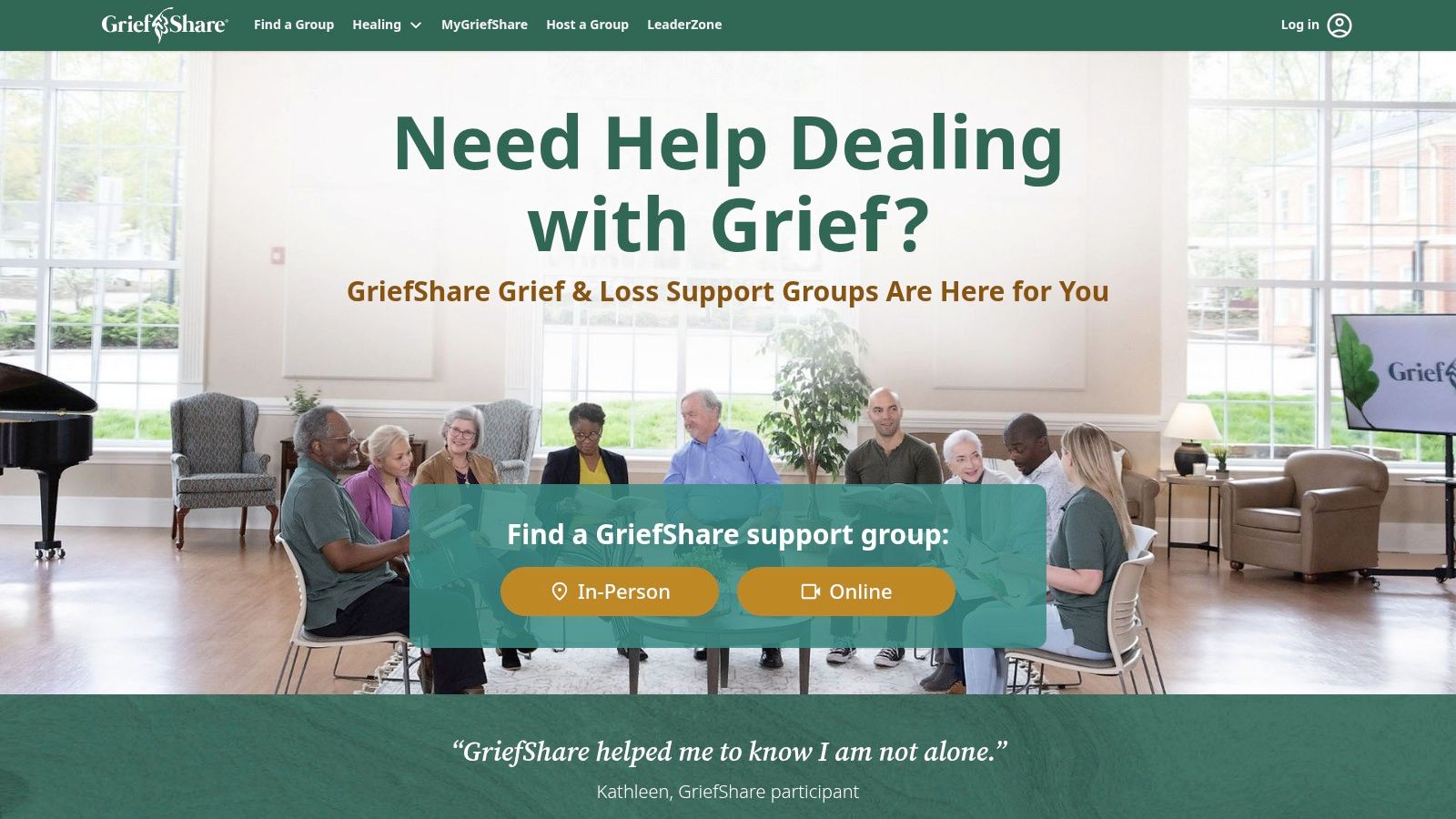
GriefShare offers a distinctly structured approach to bereavement support. It is an excellent choice for individuals who benefit from a clear, curriculum-based path. Its nationwide network hosts groups that follow a consistent 13-week program, often in local churches.
The program is designed to be comprehensive. It integrates video seminars with grief experts, supportive group discussions, and personal workbook exercises for reflection.
What to Expect and How to Use It
GriefShare combines expert-led content with peer support. Each session focuses on a specific topic relevant to the grief journey. To find a group, use the "Find a Group" tool on their website by entering your city or zip code. Most groups charge a small one-time fee, typically around $20, which covers the cost of a personal workbook.
Pros and Cons
- Pros: The structured 13-week curriculum provides a clear roadmap. Its nationwide availability makes it one of the most accessible in-person options.
- Cons: The faith-based, Christian-oriented perspective may not be suitable for everyone. The 13-week commitment can be a challenge for some schedules.
Website: https://www.griefshare.org/
3. The Compassionate Friends
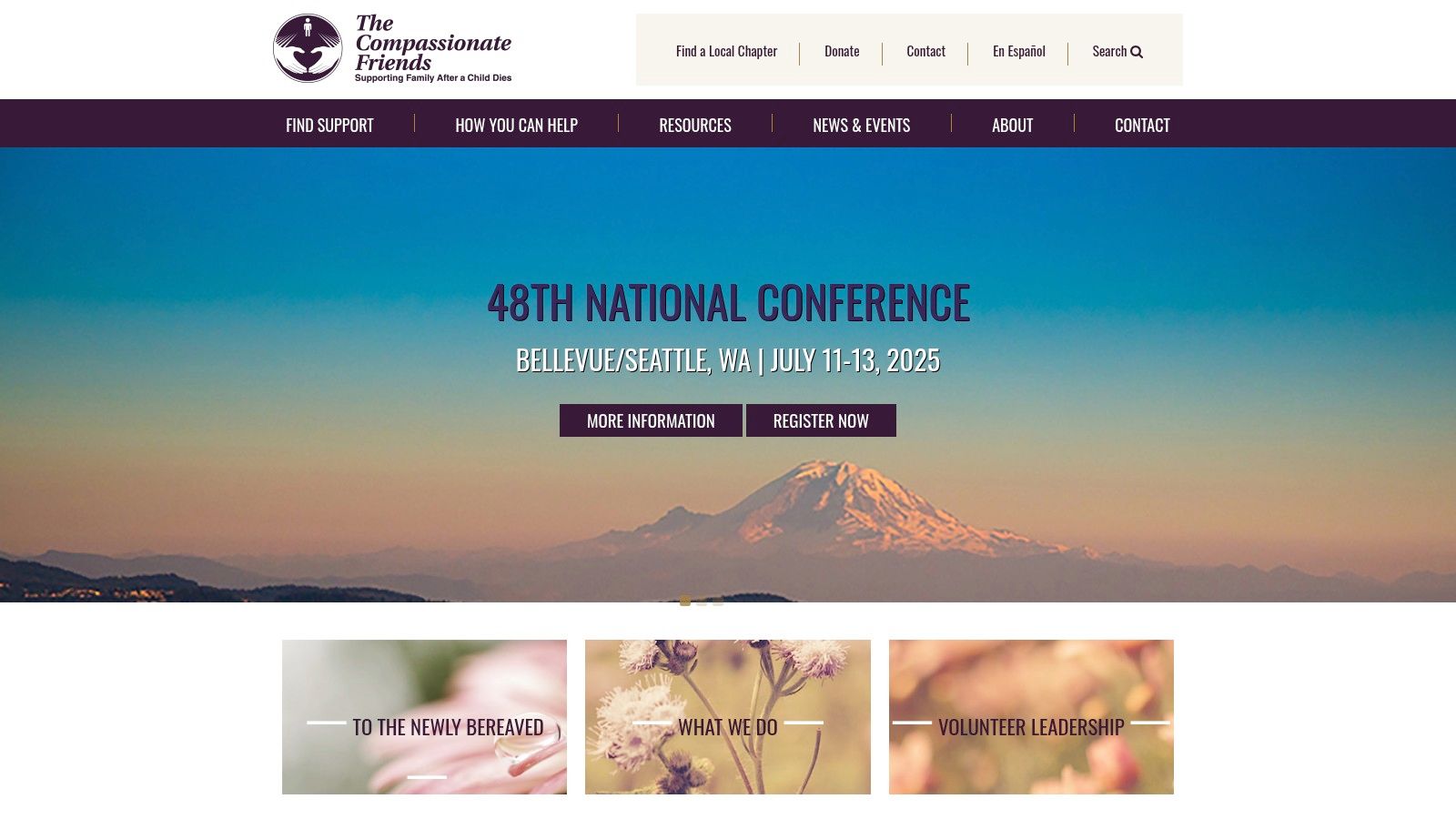
The Compassionate Friends provides highly specialized support for a uniquely painful type of loss: the death of a child. This focus makes it an invaluable resource for parents, grandparents, and siblings. The organization offers a robust nationwide network of local chapters.
This network extends beyond in-person meetings. It includes a strong online presence with private Facebook groups and virtual support communities, ensuring accessibility for everyone.
What to Expect and How to Use It
The Compassionate Friends is a peer-led organization, meaning meetings are facilitated by bereaved parents. To locate support, the website’s "Find Support" tool allows you to search for grief support groups near me by state or zip code. All meetings and online resources are offered free of charge.
Pros and Cons
- Pros: The specific focus on child loss creates a uniquely safe space. Support is available for the entire family, including siblings and grandparents.
- Cons: Its specialization means it is not a resource for other types of losses. The peer-led model may not be ideal for those seeking professional, therapist-led counseling.
Website: https://www.compassionatefriends.org/
4. Hospice Foundation of America
The Hospice Foundation of America (HFA) serves as a vital educational resource and directory. It is a powerful starting point for anyone seeking grief support. HFA provides a broad, comprehensive look at bereavement care, connecting individuals with various local resources.
HFA’s strength lies in its dual focus on direct support and grief education. The organization offers an extensive library of articles, books, and webinars that help individuals understand loss.
What to Expect and How to Use It
The HFA website is like a well-curated library of grief resources. To find help, you can navigate to their "Grief & Loss" section, which features a directory for finding grief support groups near me. Because the groups listed are independent, their formats and costs vary. The site is completely free to use.
Pros and Cons
- Pros: The comprehensive directory provides access to a wide variety of local groups. Its extensive educational materials are excellent for learning about the grieving process.
- Cons: The platform acts as a directory, so you must research and contact individual groups yourself. The quality of support can vary between listed organizations.
For those in Monterey County and surrounding areas, local providers like Central Coast VNA & Hospice can offer more direct, hands-on support to complement the resources found through HFA.
Website: https://hospicefoundation.org/Grief-%281%29/Support-Groups
5. HealGrief
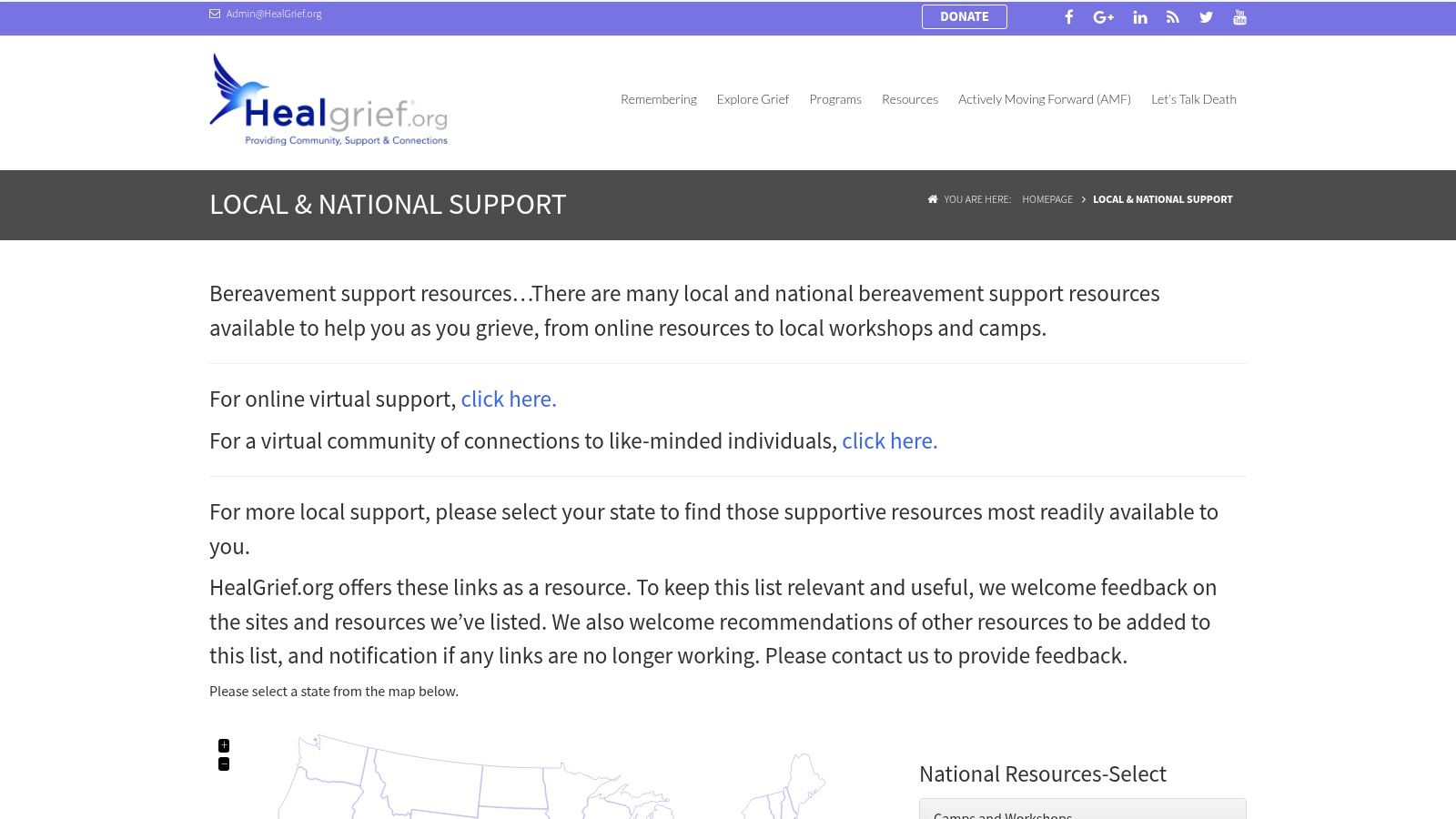
HealGrief functions as a comprehensive digital hub connecting individuals with a wide array of grief support resources. It excels by offering an interactive and user-friendly directory. This includes everything from virtual support groups to educational articles.
This approach ensures that whether you need immediate virtual connection or local in-person meetings, you can find it in one place. Its modern interface simplifies the search for help during an often overwhelming time.
What to Expect and How to Use It
HealGrief stands out with its interactive map, a key feature for those searching for grief support groups near me. By entering your location, you can visually explore local resources. The platform also hosts its own virtual support groups, providing immediate connection. Access to the directory and most resources is completely free.
Pros and Cons
- Pros: The user-friendly interface and interactive map make finding local help straightforward. It offers a diverse mix of support, from virtual groups to articles.
- Cons: The availability of hyper-local resources can vary by region. The sheer volume of options might feel overwhelming to some users initially.
For those on the Central Coast, organizations like Central Coast VNA & Hospice provide dedicated local support that complements the broad resources found on platforms like HealGrief.
Website: https://healgrief.org/grief-support-resources/
6. The Dinner Party
The Dinner Party redefines grief support for a younger generation. It is designed specifically for 20-, 30-, and 40-somethings who have experienced the death of a close loved one. This unique model fosters candid conversations about loss among peers navigating similar life stages.
The platform’s core philosophy is that healing can happen through peer connection in a comfortable, informal environment. The emphasis is on lived experience rather than expert guidance.
What to Expect and How to Use It
Joining The Dinner Party involves filling out an application on their website to be matched with a local or virtual table. Tables are self-organized and peer-led, gathering for potluck-style dinners. To find grief support groups near me through their platform, you sign up and wait to be connected with a host in your area.
Pros and Cons
- Pros: The peer-to-peer model is highly relatable for young adults. Its informal, dinner-party format creates a relaxed atmosphere.
- Cons: It is specifically for young adults, so it is not a fit for all age groups. Availability can be limited in certain geographic areas.
Website: https://www.thedinnerparty.org/
7. Tragedy Assistance Program for Survivors (TAPS)
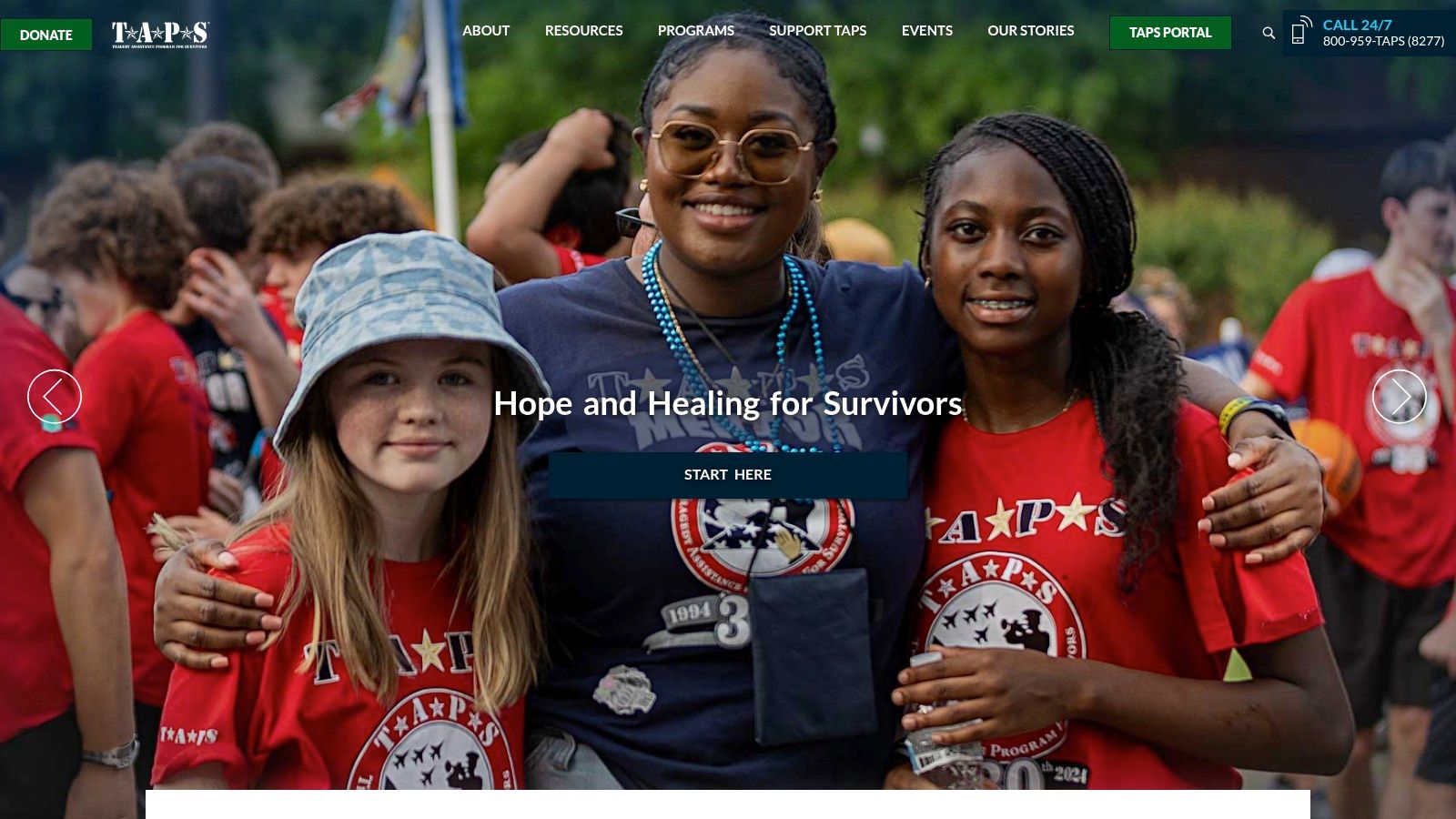
TAPS provides essential, specialized support for those grieving a military service member. The organization offers peer-based emotional support and dedicated programs tailored to the challenges faced by military families. This focus creates a deeply understanding and safe environment for healing.
The program's strength lies in its multi-layered approach. This includes a 24/7 National Military Survivor Helpline, a peer mentor program, and national seminars.
What to Expect and How to Use It
TAPS is entirely free for military survivors. The first step is often calling the 24/7 helpline or visiting the website to request a peer mentor. For in-person connections, you can search for TAPS Care Groups and events held across the country.
Pros and Cons
- Pros: Highly specialized support for the unique grief of military families. The 24/7 helpline offers immediate assistance. All services are offered at no cost.
- Cons: Services are exclusively for those grieving a military-related death. It is not a suitable resource for the general public.
For veterans and their families on the Central Coast, organizations like Central Coast VNA & Hospice provide compassionate care that honors military service. Discover more on the community services page.
Website: https://www.taps.org/
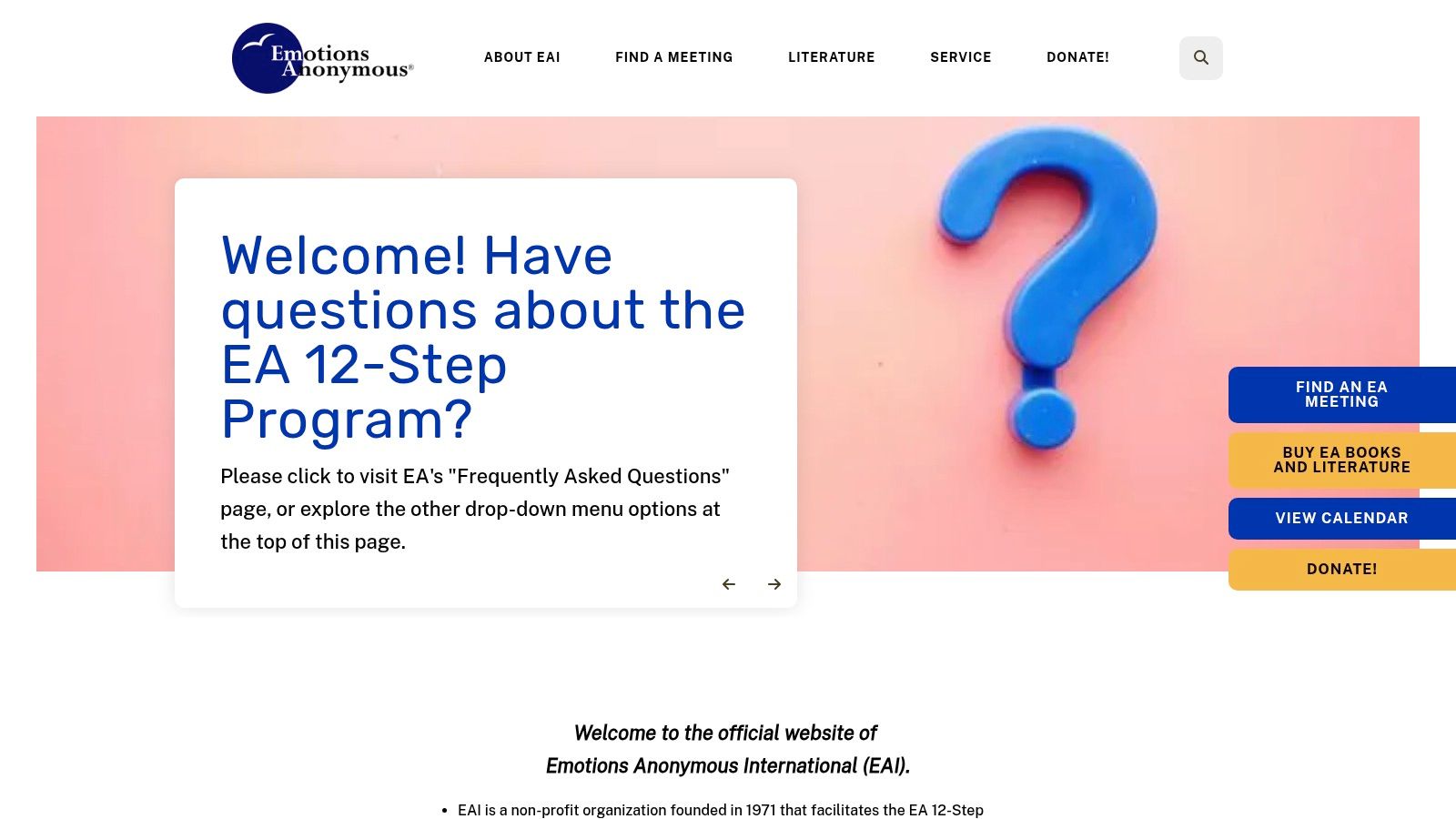
8. Emotions Anonymous
Emotions Anonymous (EA) offers a familiar and effective 12-step program. It is designed to help individuals achieve better emotional health, including coping with grief. This fellowship provides a safe space where members can share experiences.
The program's strength lies in its focus on emotional well-being as a whole. This can be helpful for individuals whose bereavement triggers a wide range of emotions.
What to Expect and How to Use It
Emotions Anonymous meetings are built on anonymity and mutual respect. To find a group, visit their website and use the "Find a Meeting" feature. There are no fees or dues required for membership.
Pros and Cons
- Pros: The structured 12-step program offers a proven system for emotional management. Meetings are widely available, and there are no fees.
- Cons: The 12-step model includes a spiritual component that may not align with everyone's beliefs. It is a peer-led support system, not a substitute for professional therapy.
Website: https://emotionsanonymous.org/
9. Lifestance Health
Lifestance Health offers a clinical, therapy-based framework for grief support. It is ideal for individuals seeking guidance from licensed mental health professionals. Lifestance provides access to credentialed counselors and therapists who specialize in bereavement.
This model is particularly beneficial for those experiencing complex or prolonged grief. The ability to choose between individual sessions and group settings allows for a personalized care plan.
<img src="https://cdn.outrank.so/2cc13dec-bac6-4c8a-8b1c-c3d8875ce757/screenshots/635c9211-2b5f-4985-bfbc-cfcd795994d9.jpg" alt="A screenshot of the Lifestance Health grief counseling page, showing a welcoming image and a clear call-to-action to find a therapist.”>
What to Expect and How to Use It
Lifestance Health operates like a traditional healthcare provider. After an initial consultation, you will be matched with a therapist who fits your specific needs. To get started, use their website's provider search tool. Lifestance accepts most major insurance plans.
Pros and Cons
- Pros: Sessions are led by licensed mental health professionals. They offer flexible formats, including in-person and virtual therapy. Accepting insurance makes counseling more financially accessible.
- Cons: The availability of specific grief groups can vary by location. For those without adequate insurance, the cost can be a barrier.
Website: https://lifestance.com/services/grief-counseling/
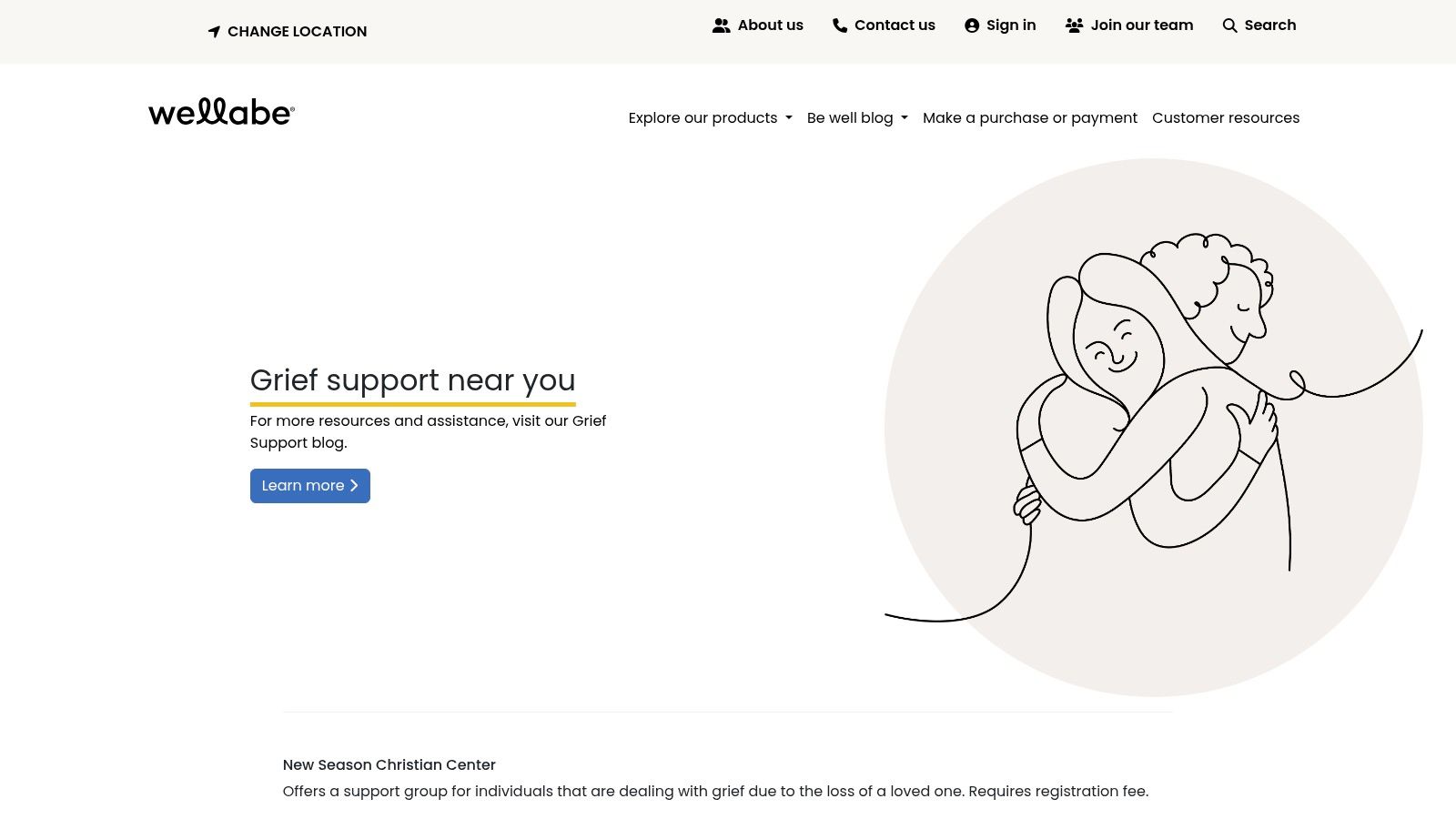
10. Wellabe Grief Support Lookup
Wellabe Grief Support Lookup acts as a powerful and user-friendly directory. It connects individuals to bereavement services across the United States. It simplifies the initial search process for those navigating loss.
The platform's strength lies in its extensive listings and filtering capabilities. It allows you to quickly find both in-person and virtual groups, counseling, and other resources.
What to Expect and How to Use It
Using Wellabe is straightforward. Visit the website and use the search tool to enter your location, which pulls up a list of local resources. Its filters help you narrow your search for grief support groups near me. Since it is a directory, the platform is completely free to use.
Pros and Cons
- Pros: The platform is free, easy to navigate, and offers diverse support options. Its regularly updated listings ensure the information is reliable.
- Cons: As a directory, it requires you to do the follow-up work of contacting organizations. The quality of listed services can vary by location.
Website: https://www.wellabe.com/grief-support-lookup
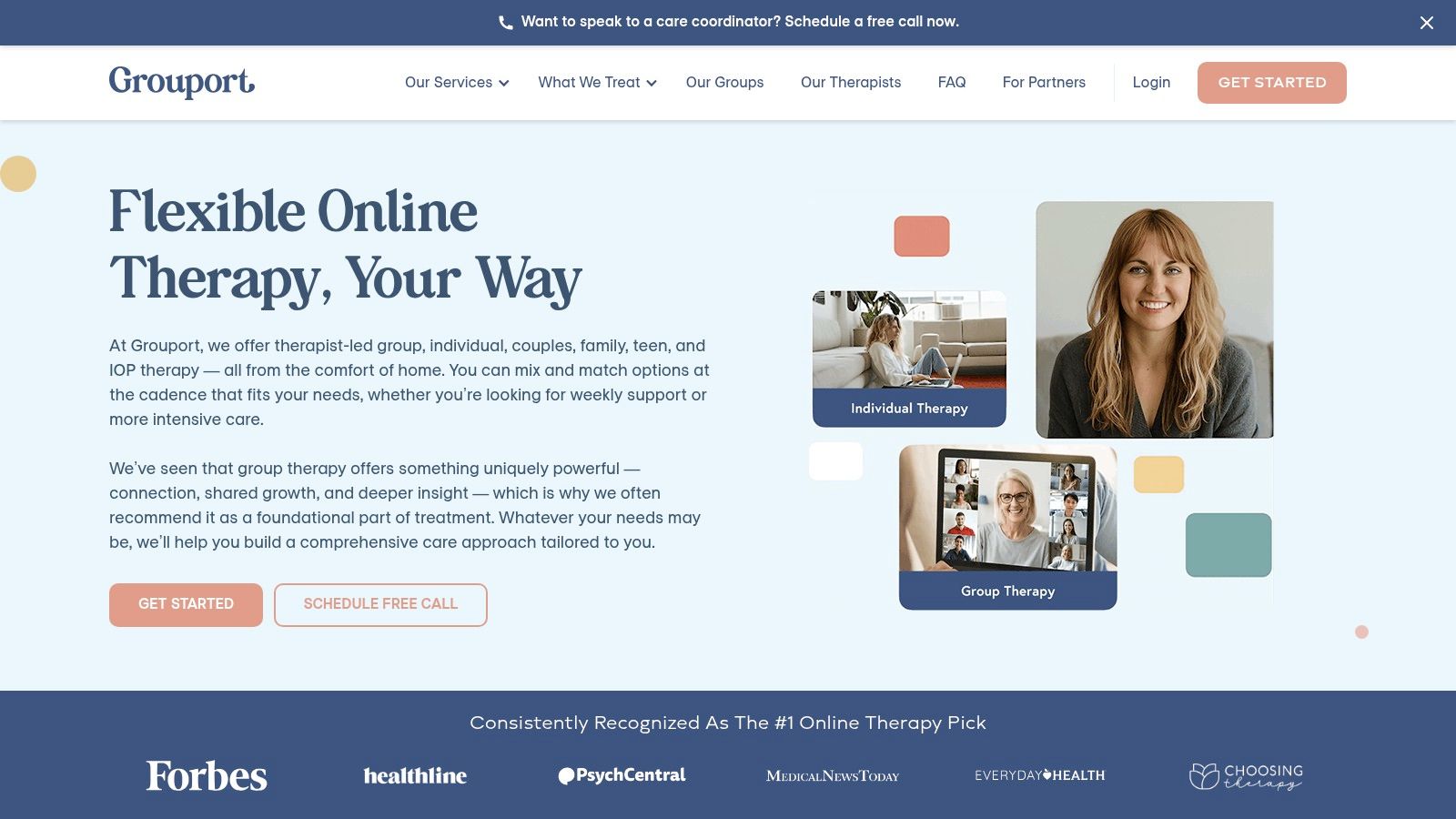
11. Grouport Therapy
Grouport Therapy modernizes grief support by moving professionally-led group therapy online. It provides access to licensed therapists who guide each session. This model is ideal for those who want professional guidance combined with the shared experience of a support group.
This platform offers a vital service for individuals who face barriers to in-person meetings. It blends the convenience of telehealth with the connection that comes from sharing a journey.
What to Expect and How to Use It
Grouport Therapy delivers a clinical approach. To begin, you complete a brief online questionnaire and get matched with a suitable group. This makes finding professional grief support groups near me an immediate possibility, regardless of location. The service is fee-based but may be covered by some insurance plans.
Pros and Cons
- Pros: Sessions are led by licensed therapists. The online format provides excellent accessibility and convenience.
- Cons: Services are only available in select states. As a therapeutic service, it involves fees, and insurance coverage can vary.
For those seeking comprehensive support, organizations like Central Coast VNA & Hospice provide a continuum of services that can work alongside therapeutic options.
Website: https://www.grouporttherapy.com/
12. Carson's Village
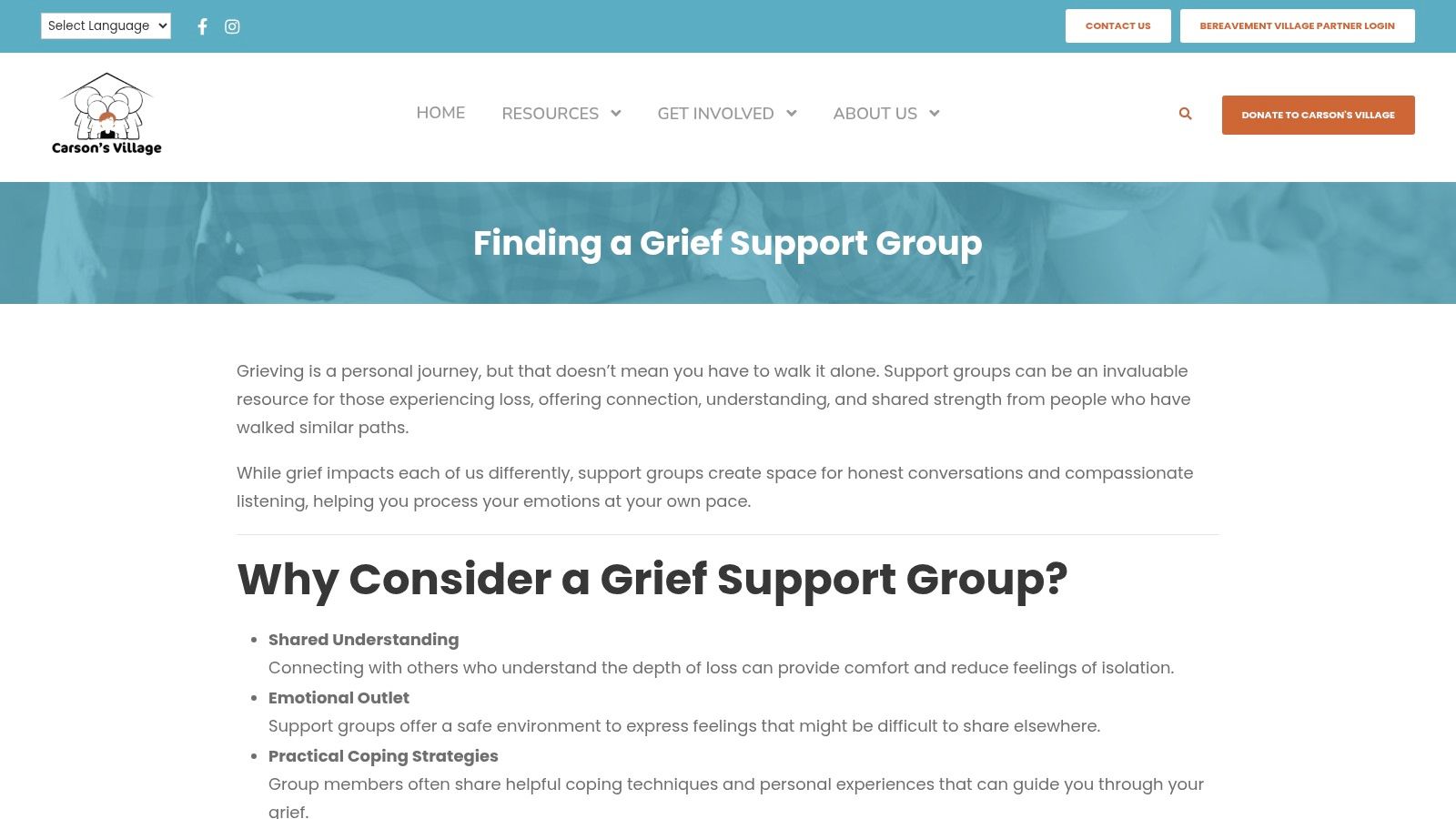
Carson's Village acts as a compassionate and practical starting point for families. It functions as a resource hub, helping you find and vet the right support for your needs. Its user-friendly design simplifies what can be an overwhelming process.
The platform's strength lies in its educational approach. It offers clear guidance on what to look for in a support group.
What to Expect and How to Use It
Carson's Village excels as an informational aggregator. To begin, navigate to their "Finding a Grief Support Group" page and use the interactive map. Clicking on your state reveals a curated list of organizations. All resources on the site are provided completely free of charge.
Pros and Cons
- Pros: The interactive map is an intuitive tool for finding local options. It provides excellent educational content on how to choose a group. Access is completely free.
- Cons: It is a directory, not a direct provider. You will need to do additional research and contact the listed organizations yourself.
Website: https://carsonsvillage.org/resource/finding-a-grief-support-group/
Choosing the Right Grief Support For You
Finding the right support is a crucial and empowering step toward healing. Your search for "grief support groups near me" is often the first, most courageous act, and it's one you do not have to take alone. As you review the options, think about what kind of environment would feel most comforting.
Consider these factors when making your choice:
- Type of Loss: Are you grieving a spouse, parent, or child? Specialized groups like The Compassionate Friends offer a level of understanding that can be deeply validating.
- Format: Do you prefer in-person meetings in Monterey County? Or does the flexibility of an online group like Grouport Therapy better suit your needs?
- Structure: Do you thrive with a structured program like GriefShare? Or do you prefer an informal, peer-led discussion like The Dinner Party?
There is no "one-size-fits-all" solution. The best resource is the one that aligns with your emotional needs and provides a safe space for you to express your feelings without judgment.
Your Path Forward with Local, Compassionate Care
As a cornerstone of the Central Coast for over 74 years, Central Coast VNA & Hospice understands that comprehensive care extends beyond medical treatment. Our mission-driven, nonprofit approach ensures that support continues for families even after a patient has passed. Our bereavement programs are a vital part of our continuum of care, offering a gentle landing place for those navigating the complexities of loss.
We are here not just for our patients, but for the entire community we serve across Monterey, San Benito, Santa Cruz, and South Santa Clara Counties. At Central Coast VNA & Hospice, our professional team—including Registered Nurses, Chaplains, and Hospice Aides—is dedicated to supporting you with expertise and compassion.
If you or someone you know is coping with loss, our compassionate team is here to help. Contact us today to learn more about our local grief support services and how we can support you.
Frequently Asked Questions (FAQs)
1. What is the difference between grief counseling and a support group?
Grief counseling is typically one-on-one therapy led by a licensed mental health professional. A support group is a gathering of peers with shared experiences, often facilitated by a trained peer or professional, to offer mutual comfort and validation. Central Coast VNA & Hospice offers both individual counseling and group support.
2. How do I know if I'm ready for a grief support group?
There is no "right" time, but if you feel isolated in your grief and wish to connect with others who understand, it may be a good time to explore a group. Many people find comfort in sharing their story and hearing from others who are navigating a similar path.
3. Are there free grief support groups available near me?
Yes, many nonprofit and community-based organizations offer free grief support groups. Resources like The Compassionate Friends, TAPS, and many groups listed on directories like HealGrief and Wellabe are available at no cost.
4. Can I join a virtual grief support group if I don't live on the Central Coast?
Absolutely. Many organizations, such as Grouport Therapy and The Dinner Party, offer virtual groups that allow you to connect with others from anywhere. While CCVNA's services are focused on the Central Coast, these national platforms provide excellent online alternatives.
5. How does CCVNA’s nonprofit status benefit its grief support services?
As a mission-driven nonprofit, Central Coast VNA & Hospice reinvests all resources back into patient care and community programs. This means our primary focus is on providing high-quality, compassionate support to families in Monterey County and surrounding areas, rather than on generating profit.
6. How long does grief last, and how long should I attend a support group?
Grief is a highly individual process with no set timeline. Some people attend a support group for a specific period, like a 13-week program, while others find comfort in ongoing monthly meetings. The goal is to use the support for as long as it feels helpful to you. According to the National Hospice and Palliative Care Organization (NHPCO), providing bereavement support is a core component of hospice care, recognizing that grief is a long-term journey (NHPCO, 2021).
7. How can Central Coast VNA & Hospice help my family?
Central Coast VNA & Hospice provides a full continuum of care, from home health and palliative services to hospice care. Our support extends to the entire family, offering bereavement counseling and support groups to help loved ones navigate loss in our service areas of Monterey, San Benito, Santa Cruz, and South Santa Clara Counties.