
When a family loses someone they love, figuring out how to move forward can feel overwhelming and isolating. Grief counseling for families is a specific kind of support created to help everyone navigate this incredibly difficult time together. It provides a safe, guided space where each person can share what they're feeling, understand how others are grieving, and start to piece back together a sense of family connection.
How Family Grief Counseling Creates a Path for Healing
Losing a loved one impacts the entire family unit, but every single person experiences that loss differently. A young child’s confusion is different from a teenager's withdrawal, which is different from an adult’s heavy sense of responsibility. These different reactions can create silent gaps between family members right when they need each other the most.
You can think of a family as a ship caught in a storm. Grief counseling, led by professionals like our Chaplains and Medical Social Workers, acts like a skilled navigator, helping everyone on board work together to keep the ship from breaking apart.
This process isn't about making the sadness disappear. It’s about learning how to carry the weight of the loss in a healthy way, as a team. A professional bereavement counselor is a neutral guide who can help open up lines of communication that may have been shut down by pain or confusion.
Building a Foundation for Shared Support
The main goal here is to build mutual understanding and empathy. In a counseling session, families learn to see and respect that there's no “right” or “wrong” way to grieve.
A counselor might lead the family in activities designed to help them:
- Share memories of the person they lost in a way that feels healing, not just painful.
- Put words to difficult emotions without fear of judgment.
- Understand how grief looks different depending on a child's or teen's age and developmental stage.
- Create new family traditions or rituals that honor their loved one’s memory and place in the family.
The illustration below highlights the key goals of this supportive journey.
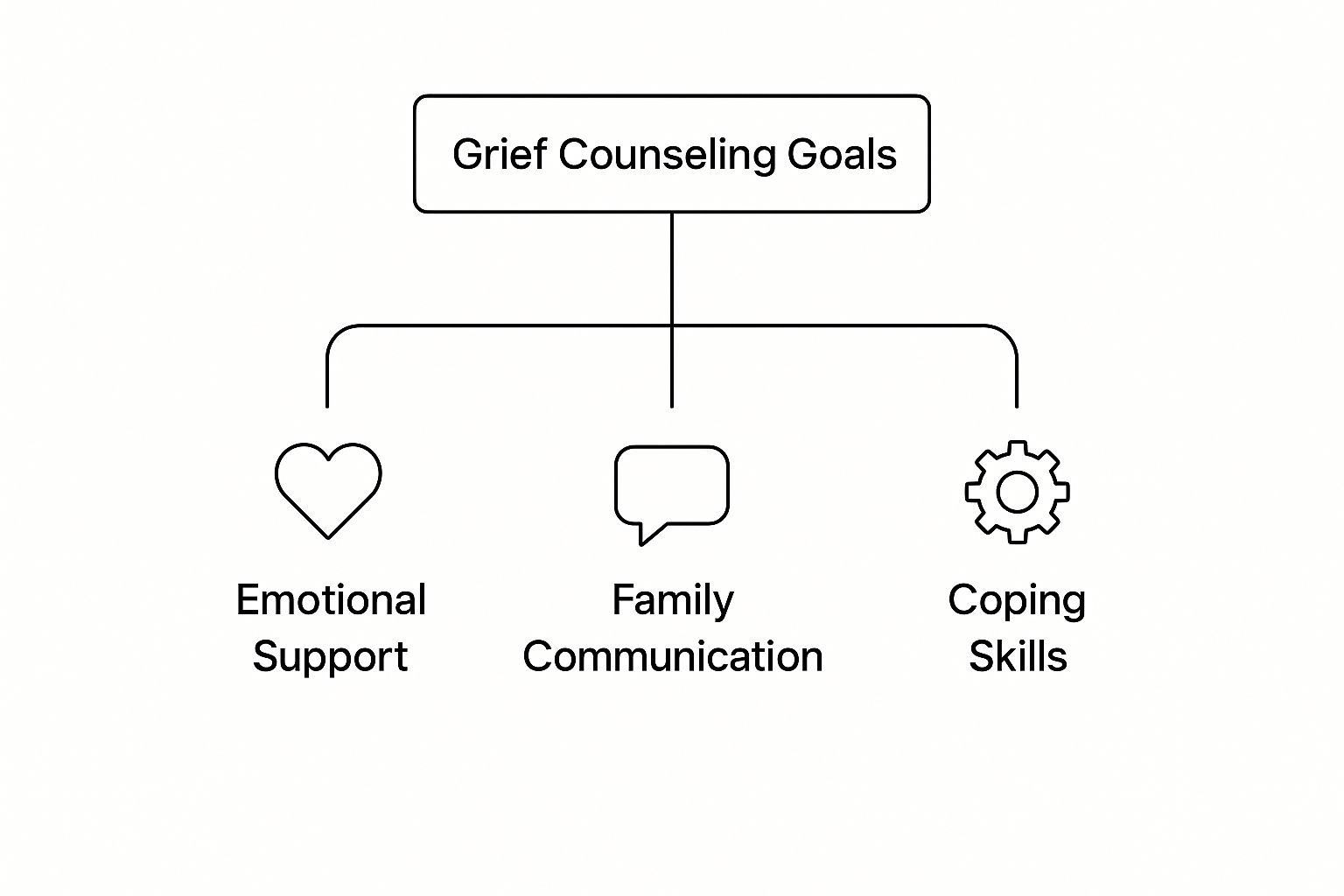
To make it clearer, here’s a quick summary of what family grief counseling focuses on.
Key Aspects of Family Grief Counseling
| Aspect | Description |
|---|---|
| Shared Healing Space | Creates a safe, neutral environment where all family members feel comfortable expressing themselves. |
| Guided Communication | A professional counselor facilitates open and honest conversations, helping to bridge emotional gaps. |
| Understanding Differences | Helps family members recognize and validate each other’s unique grieving styles and timelines. |
| Honoring Memory | Focuses on developing healthy ways to remember the loved one and integrate their memory into the family's future. |
| Developing Coping Skills | Equips the family with practical tools to manage grief triggers and support one another long-term. |
By working on these core areas, a family can begin to find a new sense of balance and support. Central Coast VNA & Hospice, a nonprofit with over 74 years of service to the Central Coast, knows how vital this journey is. We offer resources like our monthly grief support group for South Monterey County residents to help our community find its way through loss.
Why Shared Grief Support Is So Important
When a family loses someone they love, the experience can test their very foundation. Sometimes, a shared loss brings people closer together. Other times, it creates painful, silent distances that can be hard to bridge.
This is where professional grief counseling for families becomes so vital. It steps into that delicate space to address the entire web of relationships shaken by grief. Without a shared place to heal, unspoken expectations and clashing coping styles can strain even the strongest family bonds, leading to misunderstandings and deep feelings of isolation.
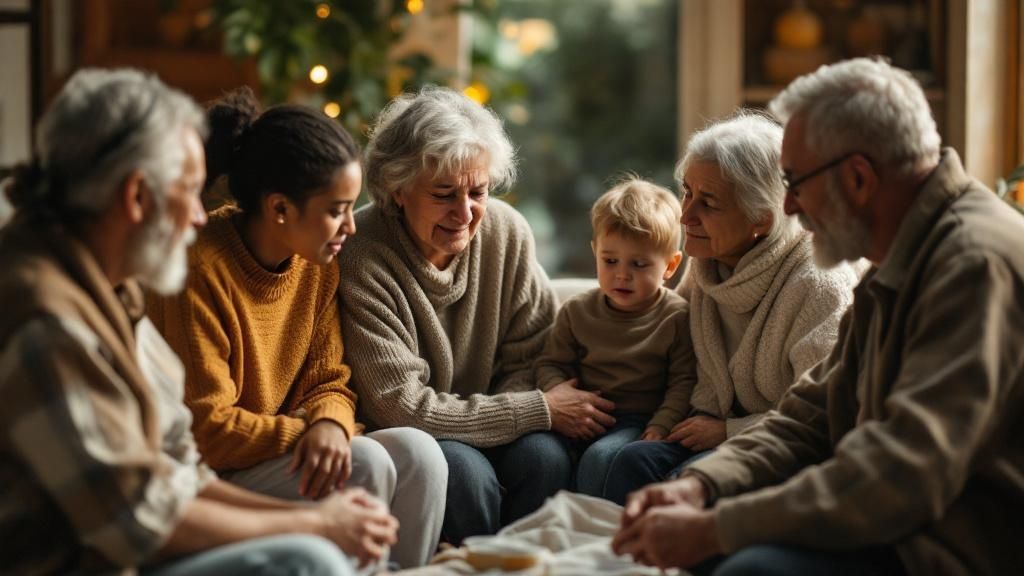
Think of a family as the crew of a ship caught in a terrible storm. A grief counselor is like a skilled navigator, one who can steady the ship and guide the crew to work together, facing the overwhelming waves as a single, unified team. This professional guidance ensures that every person’s voice is heard and valued—from a grieving child to an older adult—helping the family find its way back to solid ground, together.
Navigating Different Grieving Styles
There’s no right or wrong way to grieve. Every single person experiences loss on their own timeline and in their own way. One family member might need to talk things out constantly, while another might retreat into silence to process their feelings. Both are completely normal responses.
The trouble starts when these different styles are misinterpreted. One person’s silence can look like they don’t care, while another’s openness can seem overly emotional. This friction is the last thing a family needs when connection is what matters most.
A counselor helps the family understand and make room for these unique grieving styles by:
- Creating a safe space where everyone can express their true feelings without fear of judgment.
- Teaching family members how to communicate what they need from each other in a clear, healthy way.
- Validating each person's unique experience of the loss, reminding them that their feelings are legitimate.
This process helps stop resentment from building up and ensures every member of the family feels seen, heard, and supported by the people who mean the most to them.
Preventing Long-Term Complications
When grief isn't processed in a healthy way, it can fester and lead to lasting emotional problems. Family grief counseling is a powerful therapeutic tool designed to help families manage this intense distress and adjust to their new reality.
The importance of this is highlighted by the formal recognition of Prolonged Grief Disorder (PGD). This condition occurs when grief remains so intense and debilitating that it interferes with daily life. According to the American Psychiatric Association (APA), about 1 in 10 bereaved adults are at risk for developing PGD (APA, 2022).
By facing grief as a unit, families build a foundation of mutual support that can prevent these more severe outcomes from taking hold. It’s a proactive step toward protecting the long-term well-being of every single family member.
At Central Coast VNA & Hospice, our mission-driven services recognize just how important this shared journey is. Our professional team provides the guidance families in Monterey County, San Benito County, Santa Cruz County, and South Santa Clara County need to navigate loss together. You can learn more about our bereavement and grief support groups and see how we help families find their way back to healing.
The Unique Benefits of Grieving as a Family Unit
While grief is a deeply personal journey, there are powerful advantages to navigating it alongside your family. Thinking about grief counseling for families isn't just about "getting help"; it's a proactive step that can strengthen the very core of your family for years to come.
When a family heals together, they learn to speak the same emotional language. This creates a supportive home where vulnerability is met with compassion, not confusion or judgment.

Fostering Lifelong Communication Skills
One of the most profound benefits of grieving as a unit is the way it improves family-wide communication. A skilled counselor helps each person find the words for their needs and teaches everyone how to listen with genuine empathy.
These are not temporary fixes for getting through the immediate loss. They are tools that will help you resolve future conflicts and deepen your relationships for a lifetime.
Like the Japanese art of kintsugi, where broken pottery is mended with gold, counseling doesn’t hide the cracks. Instead, it highlights them, making the piece stronger and more beautiful. Family grief counseling helps mend the fractures caused by loss, reinforcing your family’s bonds with a newfound strength and understanding.
This focus on open communication is something we see in our other supportive care models as well. In fact, many families discover that learning to discuss difficult topics is also one of the key benefits of palliative care, as it improves everyone's quality of life by getting them on the same page.
Grieving together teaches a family that every emotion is valid and that every person’s experience matters. This shared validation reduces feelings of isolation and creates a powerful sense of unity.
Creating New Rituals and Continuing Bonds
A central part of family grief counseling is finding healthy, meaningful ways to honor the person you’ve lost. This often means creating new family rituals that keep their memory alive in a positive and comforting way.
These rituals can be simple or elaborate, but their purpose is profound. They provide a structured way for the family to connect with their loved one’s memory and with each other.
Some examples we’ve seen work beautifully include:
- Planting a memorial garden where each family member can contribute something special.
- Holding a yearly "memory night" on their birthday to share favorite stories or look through photos.
- Creating a "memory box" filled with items that represent the person and adding to it over time.
- Cooking their favorite meal together and sharing what made that dish so special to everyone.
Activities like these can transform a source of deep pain into a foundation for collective strength. They ensure the person you lost remains an integral part of your family’s ongoing story. By participating in grief counseling for families, you give your family the chance to grow stronger and more connected through the process of healing together.
What to Expect in a Family Counseling Session
Taking that first step toward grief counseling for families can feel huge, and frankly, a little scary. Knowing what a session actually looks like can take away a lot of that uncertainty. The whole point is to create a safe, supportive space with a compassionate professional who truly gets the tangled mess of shared loss.
It’s a judgment-free zone where every single voice matters. Think of your counselor as a neutral guide, not a referee. One of the first things they'll do is work with your family to set some simple ground rules for your conversations. This is key to building the trust you need for honest talk, even when things get emotional.
A Gentle and Guided Process
Once everyone feels safe, the real work of exploring your family's unique needs can begin. There’s no rigid script or one-size-fits-all agenda. The process is flexible and moves at your family's own pace, because healing can only be gently guided.
So, what might you actually do in a session? It could involve a few different things:
- Guided Discussions: The counselor might ask gentle questions to get people talking about their loved one and what this loss has been like for them personally.
- Memory-Sharing Exercises: Sometimes, activities are focused on remembering the good times, helping families celebrate the life that was lived.
- Collaborative Problem-Solving: Your counselor will help the family pinpoint specific struggles—like communication breakdowns or clashing coping styles—and then work together to find healthier ways forward.
The entire process is built around your family. The goal is to move forward together, making sure that even the quietest person in the room is heard and that everyone's grief is seen as valid and important.
A Growing Recognition of Support
We're seeing a much greater understanding of just how vital this kind of specialized support is. The global grief counseling market was recently valued at around $4.0 billion and is expected to grow significantly by 2032.
That kind of growth shows a real shift in public awareness about mental health and the need for accessible support when families are grieving. You can explore more about these trends and the expanding accessibility of grief support.
At Central Coast VNA & Hospice, our professional team, including our Chaplains and Medical Social Workers, is specifically trained to lead families through this process with skill and genuine empathy. We're here to provide this support for families across Monterey County, San Benito County, and our other service areas. You should never have to walk this path alone.
How Central Coast VNA & Hospice Supports Families
For more than 74 years, Central Coast VNA & Hospice has been more than just a healthcare provider. We are a mission-driven nonprofit woven right into the fabric of our communities. With deep roots in Monterey County, San Benito County, Santa Cruz County, and South Santa Clara County, our commitment is to provide compassionate care that goes far beyond the purely medical.
When a family is healing after a loss, we firmly believe they should never have to walk that path alone. This is exactly why we offer dedicated bereavement services as a core part of our continuum of care. Our support for families continues long after their loved one has passed, because we know that grief is a long journey, not a single event.

Comprehensive Bereavement Support for Your Family
At Central Coast VNA & Hospice, our professional Chaplains and Medical Social Workers are specially trained to guide families through the tough, tangled emotions of grief. They lead individual, group, and family counseling sessions that create a safe, supportive space for healing and honest communication. This professional support is a vital piece of how we care for the whole family.
We understand that the need for a helping hand doesn't just stop when hospice services do.
As a testament to our long-term commitment, Central Coast VNA & Hospice provides bereavement support services to the families of our hospice patients for up to 13 months after a loved one's passing. This ensures your family has a consistent, compassionate resource to lean on as you navigate the difficult months ahead.
This kind of long-term support is becoming more essential than ever as a society. We're finally starting to truly recognize the importance of mental health during the grieving process, helping families find the compassionate care they deserve.
How to Access Our Grief Support Services
Getting help from our grief counseling for families is a straightforward and gentle process. If your loved one received care from our team, our bereavement coordinators will proactively reach out to you and offer support. Of course, you are always welcome to contact us directly at any time to connect with our compassionate team.
Our goal is simple: to remove any barriers and make it easy for families to get the help they need, right here in the communities we've been serving for decades. This integrated approach to healing is central to our philosophy. To see how this fits into our broader services, you can learn more about our complete approach to hospice care.
We are here to support your family every step of the way.
Frequently Asked Questions About Family Grief Counseling
Deciding to look for support is a big step, and it's completely normal to have questions. We've put together some straightforward, reassuring answers to the things families ask us about most when considering grief counseling. Our hope is to give you the clarity you need to feel confident as you move toward healing.
Every family's path through grief is different. Let's walk through some of the practical and emotional parts of starting counseling, so you can get a better feel for what to expect.
1. Is grief counseling only for a crisis?
No, not at all. While counseling is a lifeline during a crisis, it’s just as powerful as a proactive tool to improve communication and build resilience. The right time to seek support is simply when you feel your family needs it.
2. How can we get our teenager to participate?
Getting a teenager on board can be a challenge. Our counselors know how to create a non-judgmental space where teens feel heard, not forced to talk. Framing it as a way for the family to get stronger together often helps.
3. What if some family members are resistant to counseling?
It’s incredibly common for some family members to be hesitant. Suggesting one introductory session, with no pressure to commit, can make a difference. Our team has experience navigating these delicate family dynamics with patience and compassion.
4. How long does family grief counseling last?
There’s no set timeline. The length of counseling depends entirely on your family’s unique needs and healing process. As part of our deep commitment to the community, Central Coast VNA & Hospice makes bereavement services available for up to 13 months after a loved one on our hospice service passes away.
5. Is this type of counseling affordable?
As a nonprofit organization, Central Coast VNA & Hospice provides bereavement support to the families of our hospice patients as a core part of our mission-driven care. We are committed to making sure compassionate, professional support is accessible to those who need it in Monterey County, San Benito County, Santa Cruz County, and South Santa Clara County. We encourage families to contact us today to learn about the support available.
6. What kind of professionals provide this counseling?
At Central Coast VNA & Hospice, grief counseling and bereavement support are provided by our specially trained Chaplains and Medical Social Workers. These compassionate professionals are skilled in guiding families through the complexities of loss and helping them find a path toward healing together.
Walking through grief is one of the hardest things a family can do, but you don’t have to do it by yourselves. The compassionate team at Central Coast VNA & Hospice is here to offer professional guidance and a supportive presence every step of the way. To learn more about our comprehensive continuum of care, from home health to hospice care, please contact us today.