
When you are a family caregiver, your role is built on profound love and dedication. It is also one of the most demanding jobs anyone can have. That is where respite care for family caregivers comes in; it is a professional, short-term break designed to give you a chance to breathe.
Think of it as a strategic timeout in a marathon. It’s not about quitting; it’s about resting, recharging, and returning to your loved one with renewed energy and focus.
Why Respite Care Is Essential for Family Caregivers

Taking on the responsibility of caring for a loved one is a deeply meaningful commitment. The constant physical and emotional demands can lead to exhaustion and burnout, which ultimately affects your own health and well-being. This is why respite care is not a luxury; it’s a vital part of any sustainable, long-term care plan.
Respite care is a partnership. It ensures your loved one continues to receive excellent support from a qualified professional while you take much-needed time for yourself. This could mean finally getting to a doctor's appointment, running errands without watching the clock, or simply resting.
To help clarify what respite care entails, here is a quick look at its core components.
Understanding Respite Care at a Glance
| Concept | Description |
|---|---|
| Purpose | To provide a planned, short-term break for family caregivers. |
| Primary Benefit | Prevents caregiver burnout, reduces stress, and improves the well-being of both the caregiver and the care recipient. |
| For the Loved One | Ensures continuous, professional care in a safe and supportive environment from skilled clinicians. |
| Providers | Typically offered by home health agencies, adult day centers, or residential facilities. |
Ultimately, respite care is about creating a healthier, more balanced caregiving dynamic for everyone involved.
The Growing Need for Caregiver Support
The role of the family caregiver is more common than ever. Recent data reveals there are now 63 million adults serving as unpaid caregivers in the United States, a significant increase from a decade ago. Despite this, many do not seek the professional help they need.
While 39% of caregivers believe respite care would be helpful, only 13% actually use these services, often due to concerns about trust or cost. Learn more about the challenges facing modern caregivers on homehealthcarenews.com.
This gap highlights a critical need. Prioritizing your own well-being through respite is not selfish; it’s essential for preventing burnout and allows you to continue providing the best possible care for your loved one.
A Partner You Can Trust on the Central Coast
Choosing a respite provider you can trust is the most important step. For over 74 years, Central Coast VNA & Hospice has been a steadfast, nonprofit partner for families across Monterey County, San Benito County, Santa Cruz County, and South Santa Clara County. Our mission is rooted in providing compassionate, expert care that supports both patients and their families.
As a mission-driven organization, we understand the immense pressures family caregivers face. Our team of skilled professionals, including Registered Nurses and Hospice Aides, delivers care with the same dignity and respect you provide. We work with you to create a respite plan that brings peace of mind, knowing your loved one is in capable and caring hands.
Ready to find support? Contact us today to learn how our respite services can help you and your family.
Recognizing the Signs You Need a Break

It’s surprisingly easy to become so wrapped up in your loved one’s needs that you miss the warning signs in yourself. Seeing the subtle signals of burnout is the first, most crucial step toward preventing it from taking over. Think of these signs not as failures, but as your body’s way of asking for help.
Taking care of someone is a massive responsibility, and it's a role more people are stepping into every year. According to the Population Reference Bureau, the number of family caregivers helping older adults with daily life jumped by 32% in just a decade—from 18.2 million in 2011 to 24.1 million in 2022 (PRB, 2023). You can read more about trends in family caregiving on prb.org.
These feelings are incredibly common, but they're also clear indicators that you need to make your own well-being a priority. Acknowledging them is not weakness; it’s a sign of real strength.
Physical and Emotional Indicators of Burnout
Caregiver stress has a way of creeping up on you. The changes are often gradual, so you might not even notice them at first, but they can build until they feel overwhelming.
One of the most common signs is a deep, persistent exhaustion—both emotional and physical. This isn't just feeling tired after a long day. It is a bone-deep weariness that a full night's sleep cannot seem to touch.
Another tell-tale sign is finding yourself more irritable or impatient than usual. This shift in mood is often a direct result of chronic stress.
Changes in Social Behavior and Personal Health
When burnout sets in, you might find yourself pulling away from the people and activities you used to love. Withdrawing from your social life is a common coping mechanism, but it often leads to isolation and loneliness.
Keep an eye out for these shifts in your behavior:
- Declining social invitations more often than you accept them.
- Losing interest in hobbies or passions that used to bring you joy.
- Feeling disconnected from friends and family, even when you’re together.
Perhaps the most telling sign is when you start neglecting your own health. This can look like skipping your own doctor's appointments, eating poorly, or letting your exercise routine slide. When your focus is entirely on someone else, it is all too easy for your own needs to fall to the bottom of the list.
If any of this sounds familiar, it is a clear signal that you need a break. Looking into respite care for family caregivers is a proactive step you can take to protect your health so you can continue providing the best possible support. For more guidance, you might find these tips for family caregivers from our team helpful.
Exploring Different Types of Respite Care

When you start looking into respite care for family caregivers, you’ll find that support is not a one-size-fits-all solution. It is more like a menu of options you can tailor to your family’s unique situation, your loved one's comfort, and the kind of break you truly need.
Knowing what’s available helps you make a choice that gives you real peace of mind. Whether you need a few hours to handle errands or a full week to genuinely unplug and recharge, there is a form of respite care that can fit the bill.
In-Home Respite Care
In-home respite care is easily one of the most popular and flexible choices. It’s exactly what it sounds like: a professional comes right to your home. This allows your loved one to stay in a familiar, comfortable space, which is incredibly reassuring.
A skilled professional, like a Hospice Aide from a trusted agency like Central Coast VNA & Hospice, can step in to help with a whole host of needs. The care is personalized, fitting right into your loved one’s existing routine.
This type of support often covers:
- Personal Care: Help with bathing, getting dressed, and grooming.
- Companionship: Simply being there for a chat, reading aloud, or doing light activities together.
- Meal Preparation: Making sure your loved one gets nutritious meals.
- Medication Reminders: Keeping them on track with their medication schedule.
This is a fantastic option for caregivers who need regular, scheduled breaks.
Out-of-Home Respite Options
For some families, a change of scenery is a welcome thing. Out-of-home respite care provides safe, supervised, and engaging environments that can offer new opportunities for social connection.
There are two main types of out-of-home respite:
- Adult Day Centers: Think of these as community-based group programs with a planned schedule. They offer a great chance for your loved one to socialize and receive necessary health services.
- Residential Facilities: When you need a longer break, you can arrange a short-term stay for your loved one at a place like an assisted living facility or a nursing home. This is often called "in-patient respite" and is a key part of the Medicare Hospice Benefit, covering up to five consecutive days of care.
Both of these give caregivers a more substantial break, all while knowing their loved one is in a professional and safe setting. For families navigating more complex health issues, learning about the benefits of palliative care can also show how these services all fit together.
Flexible Durations for Every Need
Respite care is built to be flexible. Breaks can last just a few hours or go on for several weeks—whatever you need. A couple of hours each week might be all it takes to make it to your own appointments or meet a friend for coffee.
An overnight stay can provide a full 24-hour period to catch up on much-needed sleep. Longer stretches, like a weekend or an entire week, open the door for a real vacation or dedicated time to focus on other family priorities. Here at Central Coast VNA & Hospice, we help families in Monterey County and San Benito County find the right type of care to restore balance.
How to Access and Fund Respite Care
Figuring out the logistics of respite care—how to find it, how to pay for it—can feel like taking on a second job. But with a clear roadmap, you can find the break you need without all the guesswork.
Thankfully, you have more options than you might think. From government programs to private insurance, there are several ways to cover the expense of respite care for family caregivers. The trick is figuring out which path makes the most sense for your family.
Navigating Funding and Eligibility
Talking about money and insurance can be draining, but breaking it down into smaller pieces makes it much more manageable. Each funding source has its own set of rules, so a little bit of homework upfront goes a long way.
Here are the most common ways families fund respite care:
- Medicare: If your loved one is already receiving hospice care, the Medicare Hospice Benefit can be a huge help. It covers temporary in-patient respite care in a Medicare-approved facility for up to five consecutive days.
- Medicaid (Medi-Cal in California): Many states offer Medicaid waivers designed to help low-income individuals access services like respite care. These waivers can often be used for in-home help or short-term stays in a care facility.
- Long-Term Care Insurance: Smart long-term care insurance planning is a game-changer for many families. If your loved one has a policy, many plans include a specific benefit for respite services.
- Private Pay: For families who are able, paying directly for services offers the most freedom. You can choose the exact type and amount of care you want without having to navigate strict eligibility rules.
Thinking about your options? This side-by-side look at in-home versus facility-based respite care can help you weigh the pros and cons.
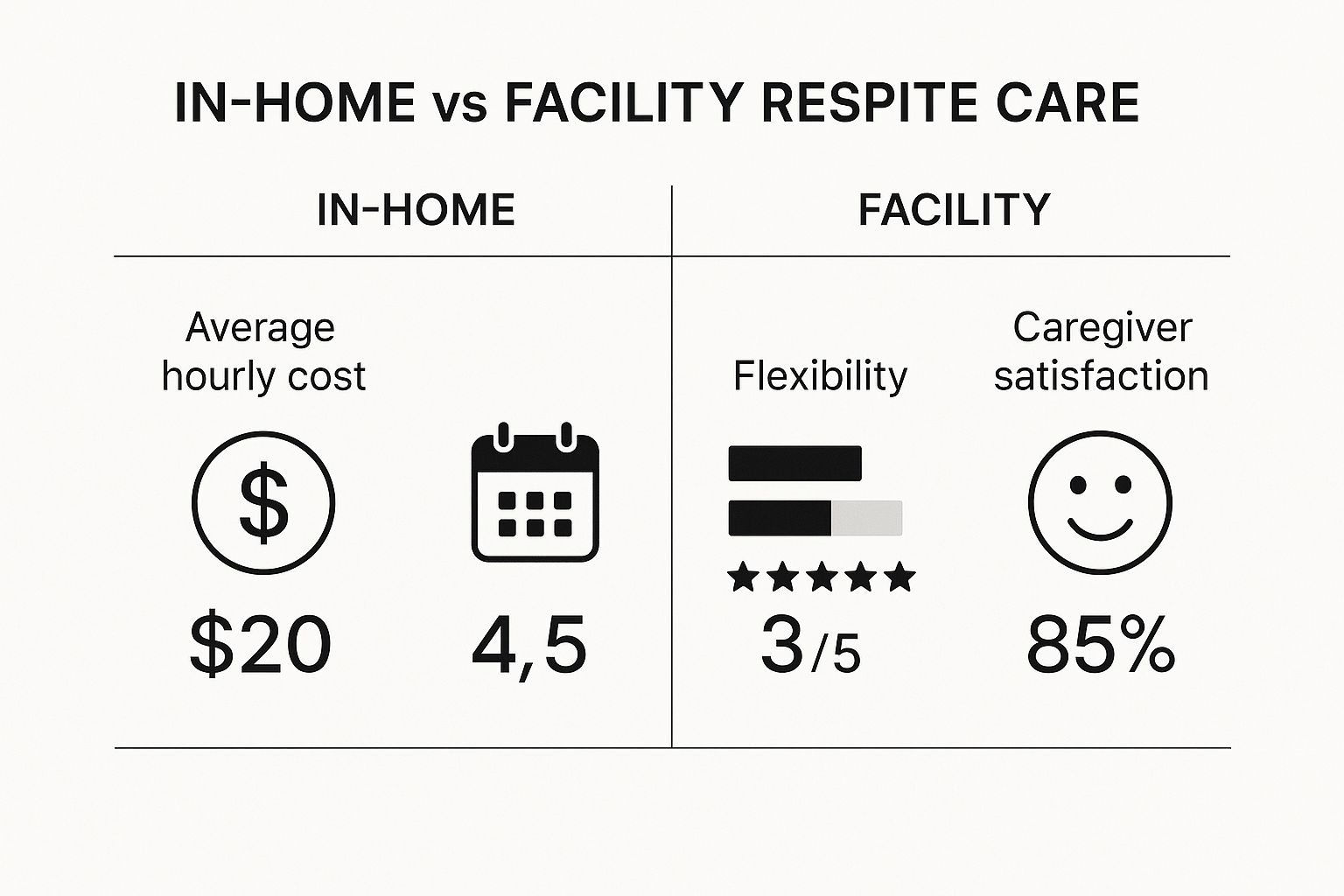
As you can see, both choices have unique strengths. In-home care might be more flexible and familiar, while a facility can offer a different level of support. It all comes down to what fits your family’s needs and budget.
Comparing Respite Care Funding Options
To make things even clearer, here’s a table breaking down the key funding sources.
| Funding Source | Who Might Be Eligible | Key Considerations |
|---|---|---|
| Medicare | Hospice patients needing a short-term break for their primary caregiver. | Limited to 5 consecutive days in an approved facility. |
| Medicaid (Medi-Cal) | Low-income seniors and individuals with disabilities, via state waivers. | Eligibility is state-specific and based on income/assets. |
| Long-Term Care Insurance | Individuals with an active long-term care policy. | Coverage and benefits vary widely by policy. |
| Private Pay | Anyone who chooses to pay for services out-of-pocket. | Offers maximum flexibility but requires personal financial resources. |
Each path has its own map, but knowing the landscape helps you choose the right direction for your family.
Finding a Reputable Local Provider
Once you have a handle on funding, the next big step is finding a provider you can truly trust. Especially when searching for respite care in Monterey County, look for an organization with deep roots in the community and a reputation built on compassionate, professional care.
When you work with a trusted, local nonprofit like Central Coast VNA & Hospice, you are not just hiring a service. You are partnering with a team that is accountable to the community it serves. A local provider understands the unique challenges and resources in the area and can connect you with a whole network of support.
For over 74 years, we have been a part of the Central Coast community, offering a full continuum of care that includes skilled home health care services, palliative care, and hospice. Our team of Registered Nurses, Chaplains, and Hospice Aides is here for families throughout Monterey, San Benito, Santa Cruz, and South Santa Clara counties.
If you’re ready to find a respite solution that works for you, please reach out. We are here to help you navigate the journey.
Preparing for a Successful Respite Experience
To really get the most out of respite care for family caregivers, a little bit of prep work can make all the difference. Taking a few simple steps beforehand ensures you get true peace of mind and your loved one has a smooth transition. It is all about setting everyone up for success so the experience feels comfortable and confident from the start.
The main goal is to make the handover feel seamless. When you provide clear information and talk to your loved one about what to expect, you build a foundation of trust with the professional care provider. This simple act of preparation can turn what might be an anxious time into a positive, reassuring experience.
Creating a Detailed Care Summary
Think of this as the "quick start guide" for your loved one. A simple, organized summary helps the respite provider—like a Hospice Aide from Central Coast VNA & Hospice—get up to speed on your loved one’s needs and preferences right away. You do not have to write a novel; just cover the essentials.
Make sure your summary includes:
- Medication Schedule: List every medication, the dosage, and the exact time it needs to be given. Be sure to note any special instructions, like whether a pill needs to be taken with food.
- Dietary Needs: Detail any food allergies, specific dietary restrictions (like low-sodium or soft foods), and even a few favorite snacks or drinks.
- Daily Routines: Outline their typical day. What time do they wake up? When are meals? Is there a regular nap time? Familiar routines provide a powerful sense of comfort.
- Emergency Contacts: Keep a clear list of key phone numbers. Include your own, another family member's, and the primary doctor's number.
This simple document is one of the most powerful tools you have for ensuring a great respite break. It gives the professional the information they need to provide truly personalized and compassionate support.
Emotionally Preparing Your Loved One
Change can be unsettling, especially for someone who finds comfort in a consistent routine. Talking with your loved one about the upcoming respite break ahead of time can make a world of difference. It helps to frame it positively—as a chance for them to have a nice visit with a new, friendly person while you take a little break.
If you can, try to arrange a brief meet-and-greet between your loved one and the respite professional before the first official session. This simple step can turn a stranger into a familiar face, which can do wonders to reduce any anxiety. Most importantly, reassure them that you are taking this time for yourself so you can come back as a better, more energized caregiver for them.
Making the Most of Your Break
Your time off is precious. The temptation to spend every free moment catching up on chores or running errands is strong, but try to resist. This is your chance to focus on your own well-being. A break is not really a break if you just switch from one to-do list to another.
Plan to do things that will actually restore you. Consider activities like:
- Connecting with friends over a long, unhurried lunch.
- Spending time in nature, whether it's a walk on the beach or just sitting in a local park.
- Picking up a hobby you’ve had to put on the back burner.
- Simply resting with a good book and a cup of tea, with zero interruptions.
Central Coast VNA & Hospice is here to help families across Monterey and San Benito counties get the support they need. Our continuum of care, including our specialized home care services, is designed to support the entire family. We want to make sure you have the resources to care for yourself, too.
How CCVNA Supports Families on the Central Coast
When you’re caring for a loved one, you know it’s a job that touches every part of your life. At Central Coast VNA & Hospice, we understand that. For over 74 years, our nonprofit team has been more than just a healthcare provider; we have become a trusted partner for families across Monterey, San Benito, Santa Cruz, and South Santa Clara Counties.
We see respite care for family caregivers as a core part of our mission. It’s not an add-on service—it’s a fundamental piece of our promise to deliver compassionate, holistic support that wraps around the entire family. Think of it as a built-in support system, designed to give you the strength and space you need at every step of your journey.
A Continuum of Compassionate Support
As your loved one's health needs change, the support you receive should change right along with them. Our model is built for that flexibility. We weave respite care into each of our core services, from home health to palliative care to hospice, so you can get the break you need, right when you need it most.
- Home Health: While our skilled Registered Nurses and therapists help your loved one recover from surgery or manage a new diagnosis through our skilled home health care services, we can provide respite to lift the weight of daily caregiving.
- Palliative Care: Our focus here is on improving quality of life and managing difficult symptoms. Respite gives you a chance to recharge, so you have the energy to be present and supportive.
- Hospice Care: Respite is a formal benefit included in hospice. Our dedicated team of Chaplains, Hospice Aides, and nurses provides expert, gentle care, giving you complete peace of mind to step away. You can learn more about our Medicare-certified hospice care services and how this vital support works for families.
Caring for the caregiver is just as important as caring for the patient. A rested, supported family caregiver is better equipped to handle the emotional and physical demands of their role, which leads to better outcomes for everyone.
Your Local, Nonprofit Partner in Care
Choosing a respite provider means placing your trust in someone else's hands—we understand how significant that is. As a community-based nonprofit, our only mission is to serve the families of the Central Coast with integrity and heart.
Our professional team lives here. We are your neighbors, and we are committed to providing the same dignified, expert care we would want for our own families.
If you’re a family caregiver feeling the strain of your responsibilities, you are not alone. Central Coast VNA & Hospice is here to help you find balance.
Frequently Asked Questions About Respite Care
Even after you understand what respite care is and how to find it, it's completely normal to have more questions. Making decisions about a loved one’s care is a huge responsibility. You want to feel confident you are making the right choice, and that comes from getting all the information you can.
To help with that, our team at Central Coast VNA & Hospice put together answers to the questions we hear most often from families just like yours. Our goal is to give you direct, compassionate answers that clear up any doubts and help you take the next step.
Will my loved one feel abandoned if I use respite care?
This is one of the most common worries we hear, and it comes straight from the heart. The best way to think about respite care is as something you are doing for both of you. It’s not about abandoning them; it’s about refueling so you can be a better, more patient, and more present caregiver for the long haul.
Gently explaining that a friendly, professional helper will be visiting can make a world of difference. An introductory meeting before the first real session also helps ease everyone into the new routine. Many families are pleasantly surprised to find their loved ones actually enjoy the new company and a change of pace.
How do I know I can trust the respite provider?
Trust is everything. The surest way to build that trust is by working with an established, reputable agency with deep roots in the community, like Central Coast VNA & Hospice. With over 74 years of service here on the Central Coast, our reputation is built on accountability and genuine compassion.
When you're vetting a potential provider, ask specific questions about their team. How do they screen professional team members like Hospice Aides? What kind of ongoing training do they receive? Choosing a licensed, insured, and nonprofit organization adds another layer of security and peace of mind.
What if my loved one has complex medical needs?
This is where a professional provider truly shines, especially one that is part of a comprehensive agency like CCVNA. Our respite services are an extension of our home health, palliative, and hospice programs. That means our clinical team is trained and comfortable managing a wide range of health challenges.
Before care starts, a Registered Nurse will typically conduct a thorough initial assessment. This visit allows us to create a very detailed and personalized care plan. This plan becomes the playbook for our Hospice Aides, ensuring they are fully prepared to manage medications, assist with mobility, and handle any other specific medical needs safely and competently.
Is respite care only for end-of-life situations?
Absolutely not. While respite is a formal benefit and a key part of hospice care, it’s a service available to any family caregiver who needs support. Your loved one's prognosis or life expectancy does not matter.
Think of it as a proactive tool you can use at any point during a long-term illness, a chronic condition, or even a tough recovery period. The real goal is to prevent caregiver burnout and support the health of the entire family. It is about making caregiving sustainable for the journey, whatever stage you are in.
How often can I use respite care services?
The simple answer is: as often as you need it. The frequency of respite care is incredibly flexible because every family’s situation is different. There is no one-size-fits-all schedule.
Some families just need a few hours a week to run errands or go to a doctor’s appointment. Others might arrange for care over several consecutive days to take a much-needed vacation. A care coordinator from an agency like Central Coast VNA & Hospice can help map out a schedule that works for your family in Monterey County or the surrounding areas.
At Central Coast VNA & Hospice, we are deeply committed to supporting the dedicated family caregivers in our community. If you’re feeling stretched thin, please remember you don’t have to carry this weight all by yourself.