
Supporting Your Family: 5 Ways Family Caregivers Can Avoid Burnout in 2026
Caring for a loved one is a profound act of love. But in 2026, the pressures on family caregivers are higher than ever. With increasing demands, the role can quickly lead to exhaustion and burnout.
This guide provides practical solutions. We will explore 5 ways family caregivers can avoid burnout in 2026. You will learn how to find respite, use technology, and build a support network.
The journey of caring for someone with a chronic illness can feel overwhelming. But you are not alone. Help is closer than you think, right here on California's Central Coast.
1. Embrace Respite as a Necessity, Not a Luxury
In 2026, family caregiver stress is at an all-time high. One of the best ways to combat this stress is respite care. Many caregivers wait too long to ask for help, viewing a break as a luxury.
Respite provides temporary, professional relief. It gives you time to rest and recharge without guilt. Respite isn't a luxury—it’s essential for your well-being.
How to Implement Respite Care
Integrating respite into your routine is a proactive step. It allows a trained professional, such as a Central Coast VNA & Hospice Aide or Registered Nurse, to provide support while you focus on your needs.
- Schedule It Like an Appointment: Block out regular time for respite on your calendar. Consistency is key, whether it's a few hours a week or a full day once a month.
- Start Small: Begin with short respite periods of an hour or two. This helps your loved one build trust with the visiting professional from CCVNA.
- Be Intentional: Use your break for activities that truly restore you. This could be a doctor's visit, lunch with a friend, or simply a quiet walk.
Know When to Ask for Help
The best time to arrange for respite care is before you feel overwhelmed. Common signs of caregiver burnout include sleep loss, irritability, and feeling overwhelmed. If you’re nodding yes, it’s time to talk with a professional.
Central Coast VNA & Hospice offers compassionate professionals who provide a range of services. This includes personal care and symptom management. To learn more, explore our hospice care services.
When planning your break, consider these practical tips for planning a stress-free vacation. By embracing respite, you preserve your ability to care for the person who depends on you.
2. Implement Structured Boundaries and Self-Care Routines
In the demanding world of family caregiving, it is easy to lose your personal identity. Setting structured boundaries is a key strategy to prevent burnout in 2026. This means treating your well-being with the same seriousness as your care schedule.

Creating boundaries is an act of self-preservation. It enables you to provide better, more sustainable care. It involves defining when your duties start and end and carving out time for yourself.
How to Implement Boundaries and Self-Care
A proactive approach to scheduling personal time is critical. Build self-care directly into your weekly plan. Setting clear routines is fundamental, and a resource like a realistic stay-at-home mom daily schedule can offer useful ideas.
- Establish 'Caregiving Hours': If possible, define a block of time for your primary tasks. Communicate these hours kindly but firmly to your loved one and other family members.
- Schedule Self-Care: Block out time for a weekly dinner with friends or 30 minutes of reading. Treat these appointments as seriously as a doctor's visit.
- Delegate Specific Tasks: Identify duties that others can handle, like picking up prescriptions. Assigning these tasks frees up your mental and physical energy.
When to Reinforce Your Boundaries
Set boundaries before resentment and exhaustion take over. If you find yourself consistently canceling personal plans or feeling irritable, it is time to act. Protecting your time allows you to be a more present caregiver.
Central Coast VNA & Hospice can provide the professional support needed to make these boundaries a reality. Our in-home palliative care and hospice services can manage complex symptoms. For more ideas on managing pressure, explore these tips on how to reduce daily stress.
3. Leverage Technology and Smart Home Solutions
In 2026, digital tools can ease the load of caregiving. Technology and smart home solutions are practical aids that can automate monitoring and enhance safety. For family caregivers, these tools reduce the need for constant hands-on help.

This approach allows your loved one to maintain independence while being monitored. From automated medication dispensers to fall detection sensors, these solutions provide peace of mind. Leveraging them is a key strategy for a more manageable caregiving journey.
How to Implement Technology
Integrating technology into a care plan should be a gradual process. The goal is to introduce tools that solve specific problems without being overwhelming.
- Start with One Solution: Begin with a single device that addresses the most pressing need. This could be a medication reminder app or a wearable device with fall detection.
- Prioritize User-Friendliness: Choose devices with simple interfaces that your loved one can use. Voice-activated assistants like Amazon Alexa are great for medication reminders.
- Coordinate with Family: Use shared digital calendars and care apps. This keeps all family members and the professional care team informed.
When to Use Smart Home Solutions
Technology is most effective when used proactively to prevent crises. If you worry about falls, missed medications, or safety, it is time to explore tech support. These tools create a safety net, reducing caregiver anxiety.
These tools are helpful for individuals with mobility or cognitive challenges. Remote monitoring systems allow you to check in visually via a secure camera. To learn more about adapting a home for safety, review these tips to help seniors live at home safely.
4. Build and Engage a Support Network
The saying "it takes a village" is especially true in caregiving. In 2026, isolation is one of the greatest threats to a family caregiver's well-being. Building a support network is a powerful way to combat loneliness.

A support network includes family, friends, and professionals. Relying on this circle prevents the weight of care from falling on one person. You're not alone—help exists in your community.
How to Implement Support Networks
Creating a network transforms caregiving from a solitary duty into a shared responsibility. It requires intentional effort, but the returns are immeasurable.
- Create a Family Care Team: Ask family and friends to join a care team. Hold meetings to delegate specific tasks, like grocery shopping or providing companionship.
- Explore Professional Support Groups: Connect with organizations like the Family Caregiver Alliance. These groups offer a safe space to share experiences with others who understand.
- Leverage Community Resources: Many local churches and community centers offer caregiver support. These can provide practical help like meal delivery or transportation.
When to Seek Network Support
The best time to build your network is before a crisis hits. If you feel isolated or overwhelmed, it is a clear sign to expand your support system. Help is available in Monterey County, San Benito County, and Santa Cruz County.
Central Coast VNA & Hospice can be a cornerstone of your network. Our Social Workers help families find community resources, while our Chaplains provide spiritual comfort. To learn more, explore our guide on building your support network.
5. Pursue Professional Training and Stress Management Education
Navigating caregiving without the right knowledge can be overwhelming. Investing in formal training and stress management education builds confidence. This approach transforms caregiving from a role of anxiety to one of empowerment.
This is about acquiring practical skills. From safe lifting to understanding medications, these skills make daily tasks less daunting. Learning stress-reduction methods also equips you to manage emotional demands.
How to Implement Training and Education
Education reduces anxiety. Central Coast VNA clinicians educate families early and often. This empowers them to make confident, informed decisions with dignity.
- Start with Condition-Specific Knowledge: Seek programs tailored to your loved one’s health condition. Look for resources from groups like the Alzheimer's Association or American Heart Association.
- Master Emergency Skills: Basic certifications like First Aid and CPR provide confidence. You can handle unexpected situations calmly and effectively.
- Practice Stress Management Daily: Enroll in a course like Mindfulness-Based Stress Reduction (MBSR). Practice these techniques for a few minutes each day to build emotional resilience.
When to Seek Educational Support
The best time to seek training is at the beginning of your journey. But it is never too late to learn new skills. If you feel anxious about making a mistake, education can provide significant relief.
Consider how to sign up for a CPR class in Monterey to feel more prepared. By arming yourself with knowledge, you are better equipped to handle challenges with skill and grace.
Your Partner in Care on the Central Coast
Navigating family caregiving can feel isolating, but you are not alone. The strategies in this article offer a roadmap for preventing burnout. By embracing respite, setting boundaries, using technology, and building a network, you create a sustainable foundation for well-being.
Asking for help is a sign of strength, not failure. Recognizing your limits and reaching out is the most loving action you can take. For over 74 years, Central Coast VNA & Hospice has been a steadfast, nonprofit partner for families.
Our mission-driven organization serves Monterey County, San Benito County, Santa Cruz County, and South Santa Clara County. Our continuum of care, from home health to palliative and hospice, is designed to support the whole family. If you’re caring for a loved one and feel stretched thin, our trusted services can support you both.
Don't wait for burnout to take hold. Discover how VNA and Hospice can provide the essential respite, expert clinical care, and emotional support your family needs. Contact us today to learn how our trusted services can help you avoid caregiver burnout in 2026.
Frequently Asked Questions (FAQs)
1. What are the most common signs of caregiver burnout?
Common signs include persistent fatigue, sleep problems, increased irritability, social withdrawal, and feeling hopeless or overwhelmed. Recognizing these signs early is the first step toward getting help.
2. How can Central Coast VNA & Hospice help my family?
As a nonprofit serving the Central Coast for over 74 years, CCVNA provides a continuum of care including home health, palliative care, and hospice. Our teams offer medical support, symptom management, emotional and spiritual counseling, and respite for family caregivers.
3. What is respite care?
Respite care is a short-term break for caregivers. A professional, like a Hospice Aide from CCVNA, steps in to provide care, allowing you to rest, run errands, or attend to your own health needs.
4. Where does Central Coast VNA & Hospice provide services?
We are a local, community-based organization serving Monterey County, San Benito County, Santa Cruz County, and South Santa Clara County.
5. How do I know when it’s time to ask for professional help?
If you are struggling to manage your loved one’s symptoms, feeling constantly exhausted, or your own health is suffering, it is time to ask for help. Contact Central Coast VNA & Hospice for a no-obligation consultation to explore your options.

Hospice vs. Palliative Care: What Families Really Need to Know
When a loved one is facing a serious illness, you will hear two terms: palliative care and hospice care. They may sound similar, but they are very different. Understanding the difference is a key step for your family.
Here is the simplest way to think about it. Palliative care helps with comfort and symptom relief at any stage of a serious illness. This happens even while someone is getting treatment to cure their illness.
Hospice care is a special type of palliative care for the end of life. It is usually for someone with a life expectancy of six months or less who is no longer seeking a cure.
Understanding the Two Paths of Comfort Care
For families in Monterey County, San Benito County, Santa Cruz County, and South Santa Clara County, getting these terms right is important. It helps you make confident healthcare choices. Both paths improve quality of life, but they start at different times.
Confusing the two can cause stress. It might also prevent your loved one from getting the right support at the right time.
Palliative care is a layer of support that can start on the day of diagnosis. It works with a patient’s doctors to manage pain, side effects, and stress. Hospice is a focused type of care for when goals change from curing an illness to maximizing comfort.
At Central Coast VNA & Hospice, we have served our community for over 74 years. Our nonprofit mission is to guide families with clear, compassionate information.
Palliative Care vs. Hospice Care at a Glance
This simple table helps show the main differences. It breaks down the purpose of each service.
| Care Aspect | Palliative Care | Hospice Care |
|---|---|---|
| Timing of Care | Can begin at diagnosis, at any stage of illness. | Begins when a cure is no longer the goal, typically with a prognosis of six months or less. |
| Treatment Goals | To relieve symptoms and stress from a serious illness while you continue active treatment. | To provide comfort, dignity, and quality of life when the illness is no longer curable. |
| Curative Treatment | Provided alongside curative treatments (e.g., chemotherapy, dialysis). | Patients are no longer seeking curative treatments for their terminal illness. |
| Who Provides Care | A specialized team that works with your other doctors. | An interdisciplinary team including a Registered Nurse, Hospice Aide, Social Worker, and Chaplain. |
This comparison is often a helpful first step. For more details, our guide on "What is palliative care?" is a great resource. Central Coast VNA & Hospice is here to guide you, no matter where you are on your journey.
Comparing the Goals of Palliative and Hospice Care
Definitions are a good start. But understanding the heart behind each type of care is what really helps families. Knowing the main purpose helps you see which path fits your loved one’s wishes.
The biggest difference is not just about timing. It is about the entire philosophy of care.
Palliative Care Aims for Comfort During Treatment
Palliative care is all about improving quality of life. Its goal is to add an extra layer of support that works alongside curative treatments. The team focuses on managing difficult symptoms so patients feel stronger.
Imagine a patient in Monterey County getting chemotherapy. The treatment is needed, but it causes nausea and fatigue. This is a perfect time for palliative care at home.
A palliative care team would work with the oncologist to:
- Manage tough side effects of treatment.
- Provide emotional support to cope with stress.
- Coordinate care between all the different doctors.
In this case, the goal is not to replace treatment. It is to make treatment more tolerable. The patient keeps fighting their illness with a dedicated team focused on their comfort.
Hospice Care Aims for Peace at the End of Life
Hospice care shifts its focus to providing peace, comfort, and dignity. This happens when a cure is no longer the goal. This is not about giving up; it’s about choosing to prioritize the quality of time that is left.
For a patient in Hollister with end-stage heart failure, hospice is a great option. The Central Coast VNA & Hospice team, which includes a Registered Nurse and Hospice Aide, focuses entirely on comfort at home.
The goals of care would be:
- Expert Pain and Symptom Control: Making sure the patient is free from pain or other distressing symptoms.
- Emotional and Spiritual Support: A Social Worker and Chaplain help the patient and family find peace.
- Practical Assistance: Offering help with personal care and giving guidance to family.
The hospice mission is to ensure a person's final months are spent with dignity. The focus moves from adding more days to life to adding more life to the days that are left. Understanding these goals helps families make decisions. Contact Central Coast VNA & Hospice to learn how we align care with your goals.
Who Qualifies for Palliative and Hospice Services
Knowing who is eligible for each type of care is very important. Palliative care and hospice have different qualifications. This helps families find the right support at the right time.
Palliative care has broad eligibility. It is available to any patient at any age and at any stage of a serious illness. This could be cancer, heart failure, COPD, or dementia.
A person can start palliative care when they are diagnosed. They can get it alongside treatments like chemotherapy. The main qualifier is having a serious illness that causes symptoms and stress.
Hospice Care Has More Specific Requirements
Hospice care has more defined rules. It is for people who are nearing the final phase of their illness.
To qualify for hospice, a doctor must certify two things:
- The patient has a terminal illness. This means the condition is not curable.
- The patient likely has a prognosis of six months or less to live if the illness runs its natural course.
The six-month timeframe is a guideline, not a strict limit. Patients can be on hospice longer and be recertified if they still meet the criteria. The main decision is shifting the focus from cure to comfort. You can learn more in our guide on hospice eligibility requirements.
This chart helps show the main question that guides the choice.
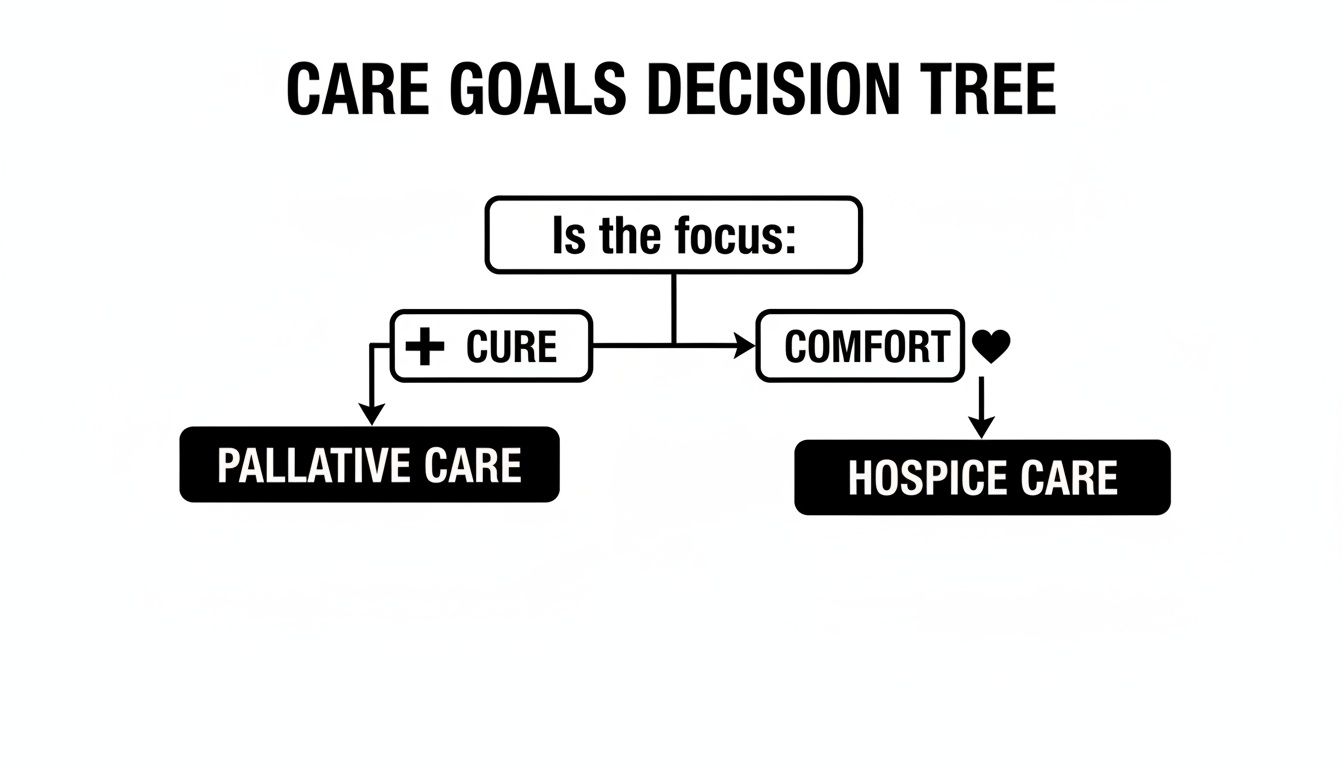
If someone is still seeking a cure, palliative care can help. If the focus is on comfort, hospice is the right path.
Choosing Quality of Life Is Not Giving Up
Many families feel the word "hospice" means giving up. We see it differently. Choosing hospice is a powerful decision to prioritize quality of life, dignity, and peace.
It’s about managing pain and having meaningful moments with loved ones at home. This choice empowers patients to live their final months on their own terms. Hope for a cure may change to hope for a peaceful day or living without pain.
Navigating these choices can feel hard, but you are not alone. Our team at Central Coast VNA & Hospice serves families across Monterey, San Benito, Santa Cruz, and South Santa Clara counties. We can walk you through the options in a compassionate, no-obligation conversation.
Comparing Services Offered By Each Care Team
When choosing between palliative care and hospice, look at the services each team provides. Both focus on comfort, but the teams are structured differently. This helps families understand which is the right fit.
Think of palliative care as an extra layer of support. The team works with your regular doctors to help manage a serious illness while you continue treatment.
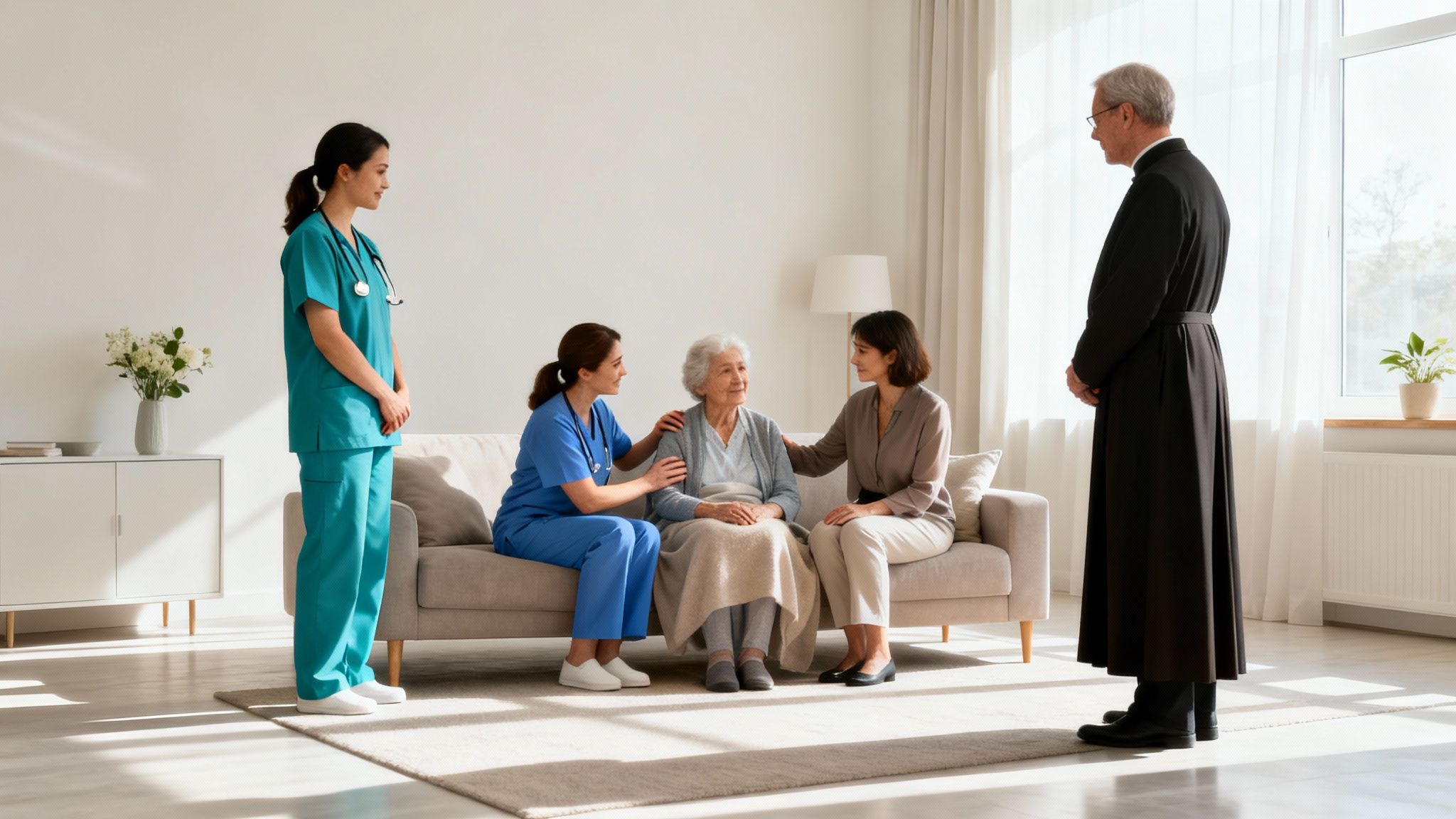
Hospice care, on the other hand, provides a complete team for the patient and family. When comfort becomes the main focus, the hospice team manages everything related to the terminal illness.
The Palliative Care Team And Its Services
The palliative care team is designed to add to your medical care, not replace it. The team has special expertise in symptom control and emotional support.
Here’s what to expect from a palliative care team at home:
- Expert Symptom Management: The team is skilled at treating tough symptoms like pain, nausea, and anxiety.
- Support for Medical Decisions: Palliative care specialists help you understand treatment options and talk about your goals.
- Care Coordination: The team connects you, your family, and all your doctors to reduce stress and confusion.
With this support, patients often feel stronger and more in control. This can make it easier to continue curative treatments.
The Hospice Care Team And Its Services
When the focus shifts from cure to comfort, the hospice team offers a more complete approach. For over 74 years, Central Coast VNA & Hospice has provided this nonprofit, mission-driven care.
Our hospice team is a group of professionals who provide physical, emotional, and spiritual support. Hospice is a philosophy of care that honors the whole person. It also provides a strong support system for the family.
Services Offered by Palliative and Hospice Teams
This table compares the support you can expect from our palliative and hospice care programs.
| Service Provided | Palliative Care | Hospice Care |
|---|---|---|
| Symptom & Pain Management | Yes, core service to improve comfort during curative treatment. | Yes, primary focus of all care provided by the team. |
| Medical Decision Support | Yes, helps patients and families align treatment with personal goals. | Yes, guides conversations around end-of-life preferences and comfort. |
| Emotional & Social Support | Provided by palliative specialists and social workers as needed. | Yes, a core component delivered by a dedicated Medical Social Worker. |
| Spiritual Care | Can be arranged upon request. | Yes, a dedicated Chaplain provides non-denominational support. |
| Personal Care (Bathing) | Not typically included; focuses on medical and emotional support. | Yes, a Hospice Aide provides hands-on assistance with daily activities. |
| 24/7 On-Call Nurse | Varies; often coordinated through the primary physician's office. | Yes, a Registered Nurse is always available for urgent needs. |
| Medical Equipment & Meds | Not covered; paid through regular insurance. | Yes, all medications, supplies, and equipment related to the terminal illness are covered by the hospice benefit. |
| Bereavement Support | Not included; focuses on the patient's current care journey. | Yes, grief support is provided to the family for up to 13 months. |
As you can see, the hospice team is designed to meet the complex needs at the end of life. To learn more, read our guide on what to expect from hospice care.
How Insurance and Medicare Cover Care Costs
Money worries should not get in the way of compassionate care. For families on the Central Coast, from Salinas to Santa Cruz, understanding insurance coverage brings peace of mind. The payment for these two types of care is quite different.
Most families are relieved to find that palliative care is covered like other medical services.
How Palliative Care Is Paid For
Palliative care is usually covered by Medicare Part B, Medicaid, and most private insurance plans. It’s treated as a specialist visit, so your plan's deductibles and co-pays will likely apply.
Our team at Central Coast VNA & Hospice can help you understand your coverage. We work with your insurance provider to make sure you get this support without financial stress.
The Comprehensive Medicare Hospice Benefit
Hospice care is covered differently—and often, more completely. The Medicare Hospice Benefit is a plan that covers almost all costs related to the terminal illness. This is an important point for families.
The Medicare Hospice Benefit was designed to remove the financial burden from families at the end of life. It allows everyone to focus on comfort and quality time together.
This all-inclusive benefit covers:
- The full services of the hospice team, including the Registered Nurse, Hospice Aide, Social Worker, and Chaplain.
- All medications needed for pain and symptom management.
- Medical supplies and equipment, such as a hospital bed or oxygen.
- 24/7 on-call support for urgent needs.
For most families, this means no out-of-pocket costs for hospice care. Statistics show that in 2022, only 49.1% of Medicare decedents accessed hospice care, highlighting a need for greater awareness.
For a detailed look at this benefit, you can review our guide on how to pay for hospice care. Our team is always here to help you navigate your coverage.
Navigating Your Journey on the Continuum of Care
A serious illness is a journey with changing needs. A care plan must be flexible enough to change with the person. This is why the continuum of care is so important for families on the Central Coast.

Many families find they start at one point and move to another level of support. That process should feel smooth and reassuring.
From Home Health to Hospice with One Trusted Team
Central Coast VNA & Hospice is the only nonprofit provider in our region offering the full range of home-based care. Our unique model means your family can be supported by one familiar team through every stage. This continuity is a source of great comfort.
Here is a common journey:
- Starting with Home Health: A person in Santa Cruz County is discharged from the hospital. Our home health team, including a skilled Registered Nurse, helps them recover safely at home.
- Transitioning to Palliative Care: Over time, their chronic condition gets worse. They can then transition to our palliative care program for expert symptom control and support.
- Moving to Hospice Care: Eventually, the illness reaches an advanced stage. They can then move smoothly into our hospice program with the same organization they trust.
The greatest benefit of a continuum of care is stability. Instead of searching for new providers, families have a consistent, compassionate partner who knows their story.
Seamless Support for Families in Monterey and San Benito Counties
This seamless approach prevents the stress of starting over with new healthcare teams. For families from Monterey to Hollister, this means one phone number and one trusted resource.
Whether your loved one needs recovery support or end-of-life care, our continuum ensures they get the right care at the right time. By providing home health and hospice care under one roof, we build lasting relationships based on trust.
Frequently Asked Questions About Palliative and Hospice Care
Navigating a serious illness brings many questions. You deserve clear, honest answers. We have gathered some of the most common questions to give you the clarity you need.
1. What is the main difference between palliative care and hospice?
Palliative care can be provided at any stage of a serious illness, alongside curative treatments, to manage symptoms. Hospice care is for patients with a life expectancy of six months or less who are no longer seeking a cure and want to focus on comfort.
2. Can we still see our own doctors?
Yes. With palliative care, our team works with your regular doctors. With hospice care, our hospice physician manages the terminal illness, but you can always stay in touch with your longtime doctor for support.
3. Does choosing hospice mean giving up hope?
Not at all. It means redefining hope. Hope shifts from a cure to goals like living without pain, having meaningful conversations, and enjoying quality time with family.
4. Can a patient stop hospice care?
Yes. A patient can leave hospice care at any time if their condition improves or they decide to seek curative treatment again. They can return to hospice later if they still meet the eligibility criteria.
5. Where is care provided?
Both palliative and hospice care are most often provided wherever the patient calls home. This can be a private home, assisted living facility, or nursing home. Our teams at Central Coast VNA & Hospice serve Monterey County, San Benito County, Santa Cruz County, and South Santa Clara County.
The journey of a serious illness is challenging, but you don't have to navigate it alone. With over 74 years of nonprofit service to the Central Coast, Central Coast VNA & Hospice provides a complete continuum of care—from home health to palliative to hospice—all with one compassionate, trusted team. If you are not sure what care is needed, our team will help guide you.
Contact us today to start a no-obligation conversation about what matters most to your family. Learn more about our mission and services at https://ccvna.com.
A Guide to Aging in Place Care Services on the Central Coast
Most people want to spend their later years in their own home. Aging in place is the term for making that wish a reality. It means having the right support to live safely and independently.
Think of it as gaining a team to help you live life on your terms. Professional aging in place services bring expert support to your home. This helps turn your preference into a long-term plan.
A Proactive Choice for a Better Future
Many families wait for a crisis to think about home-based care. This could be a fall, a sudden illness, or a hospital stay. But the best outcomes happen when planning is done ahead of time.
Exploring your options early lets you create a flexible plan. It makes any future transition smooth and stress-free. This approach gives peace of mind to you and your family.
The goal of aging in place isn't just about staying at home. It's about thriving at home. It is about keeping your dignity and freedom in a familiar place.
The Continuum of Care: A Pathway for Every Need
Understanding the continuum of care is key to aging in place. This concept ensures that as your health needs change, your care can change too. You can often get this support without leaving your house.
This seamless path is designed to meet you where you are. It typically includes:
- Home Health: This is skilled medical care from Registered Nurses and therapists. It's perfect for recovery after surgery or managing a new diagnosis.
- Palliative Care: This is an extra layer of support. It focuses on relieving symptoms and stress from a serious illness.
- Hospice Care: When the focus shifts to comfort, hospice provides compassionate care. It supports both the patient and their family.
Central Coast VNA & Hospice is a nonprofit with over 74 years of experience. We provide this entire continuum of care. We serve communities in Monterey County, San Benito County, Santa Cruz County, and South Santa Clara County.
Our mission is to ensure you get the right care at the right time. Learning about in-home care for seniors is a great first step. It helps secure a comfortable and independent future at home.
Understanding Your Home Based Clinical Care Options
Figuring out home based clinical care can seem complex. But it is often more straightforward than it appears. Professional services fall into three main categories.
Each category gives a specific kind of support. Understanding these options helps you build a care plan with confidence. Central Coast VNA & Hospice offers this seamless care.
This allows patients in Monterey County and nearby areas to move between levels of support. They can do this from the comfort of their home. It is all about having the right team by your side.
This diagram shows the principles that guide great aging-in-place care.
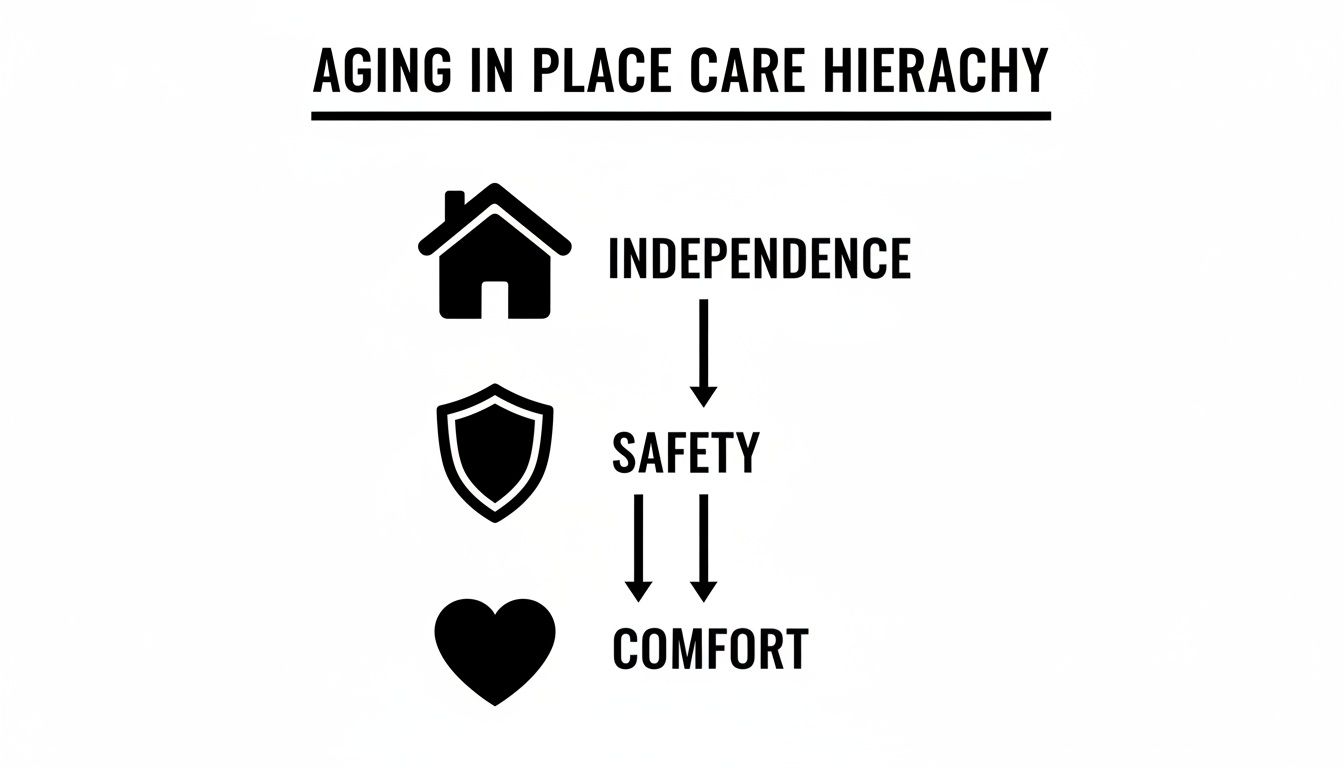
The goal is to build a foundation of safety and comfort. This makes long-term independence possible.
Comparing Home Health, Palliative, and Hospice Care
Let's break down how these services differ. Each one plays a unique role in a person’s care journey.
| Service Type | Primary Goal | Who It's For | Example Scenario |
|---|---|---|---|
| Home Health Care | Recovery & Rehabilitation | Patients recovering from an illness, surgery, or injury who need skilled medical care to get back on their feet. | After knee replacement surgery, a Physical Therapist visits to help with exercises and a Registered Nurse checks the incision site. |
| Palliative Care | Symptom Management & Quality of Life | Patients living with a serious, chronic illness who need help managing symptoms and stress, often alongside curative treatment. | A patient undergoing chemotherapy receives care to manage nausea and fatigue, helping them tolerate their treatments better. |
| Hospice Care | Comfort & Dignity | Patients with a terminal illness (typically a prognosis of 6 months or less) when curative treatment is no longer an option or desired. | In the final months of life, a team provides pain management, emotional support, and spiritual care to ensure peace and comfort. |
Each service is designed to meet you where you are. It provides the exact level of clinical support you need.
Home Health Care for Recovery and Rehabilitation
Home Health Care is skilled medical support ordered by a doctor. It helps someone recover from an illness, injury, or surgery. This care is from licensed professionals like Registered Nurses and Physical Therapists.
For example, someone home from the hospital after knee surgery needs help. A Physical Therapist would visit to rebuild strength. A Registered Nurse might also visit to manage wound care and give medications.
The main goal is always rehabilitation and a return to independence. You can learn more about our specific https://ccvna.com/home-health-care-services/ and how they support recovery.
Palliative Care for Symptom Management
Palliative Care is for people with a serious illness. Its purpose is to relieve symptoms and stress. It improves quality of life for both the patient and their family.
Many people think palliative care is the same as end-of-life care. This is a common misunderstanding.
Palliative Care can be provided at any age and at any stage of a serious illness. It can be delivered right alongside curative treatment.
Imagine someone going through cancer treatment. Their palliative care team focuses on managing side effects like pain and nausea. This support helps them feel stronger and continue with their treatments.
Hospice Care for Comfort and Dignity
Hospice Care is for people nearing the end of their life. When treatments to cure an illness stop, the focus shifts to comfort. Hospice helps a person’s final months be as peaceful as possible.
The hospice team includes a doctor, Registered Nurses, Hospice Aides, and Chaplains. They work together to manage pain and other symptoms. They also provide emotional and spiritual support to the family.
For over 74 years, Central Coast VNA & Hospice has served families. We provide this care in San Benito County, Santa Cruz County, and South Santa Clara County.
Technology is also making care more accessible. The rise of comprehensive telehealth services means expert help can happen from your living room. The desire to stay home is a powerful trend worldwide.
The Real Benefits Of Receiving Professional Care At Home
Bringing professional clinical care into the home is a personal choice. It is often rooted in a desire for comfort and better health. The true advantages of aging in place care services go far beyond convenience.
This approach creates a supportive environment where people can thrive. Care is shaped around an individual's needs and preferences. It is like having a clinical plan designed just for you.
Promoting Better Health And Independence
Home-based care has a big impact on a person’s health and independence. Healing in a familiar setting reduces stress. This often leads to a faster and more comfortable recovery.
Staying home also lowers the risk of exposure to infections. This is a key benefit for anyone with a weaker immune system. Our focus at Central Coast VNA & Hospice is on creating a safe healing space.
We work hard at reducing hospital readmissions on the Central Coast.
Professional home health care empowers individuals by helping them regain strength and manage their conditions effectively. It fosters a profound sense of autonomy.
This desire to stay home is very common. According to the AARP, nearly 90% of adults over 65 want to stay in their current home as they age (AARP, 2021). Home-based care is becoming the new standard.
Providing Peace Of Mind For The Whole Family
Home care helps the entire family. Knowing your loved one gets expert attention brings great relief. It lets family members focus on providing love and emotional support.
This support system also helps prevent family member burnout. Professional respite care services offer needed breaks. This ensures family can recharge and continue their supportive roles.
For over 74 years, Central Coast VNA & Hospice has supported families. We serve people across Monterey County, San Benito County, and nearby areas. Our nonprofit, mission-driven approach means every decision puts the patient first.
How To Proactively Plan For Aging In Place
Successful aging in place is the result of careful planning. Waiting for a health crisis can lead to stress and fewer choices. Taking steps now empowers you and your family.
Think of it as creating a roadmap for the future. This approach gives you time to explore options calmly. That preparation brings peace of mind to everyone.
Assessing Current And Future Needs
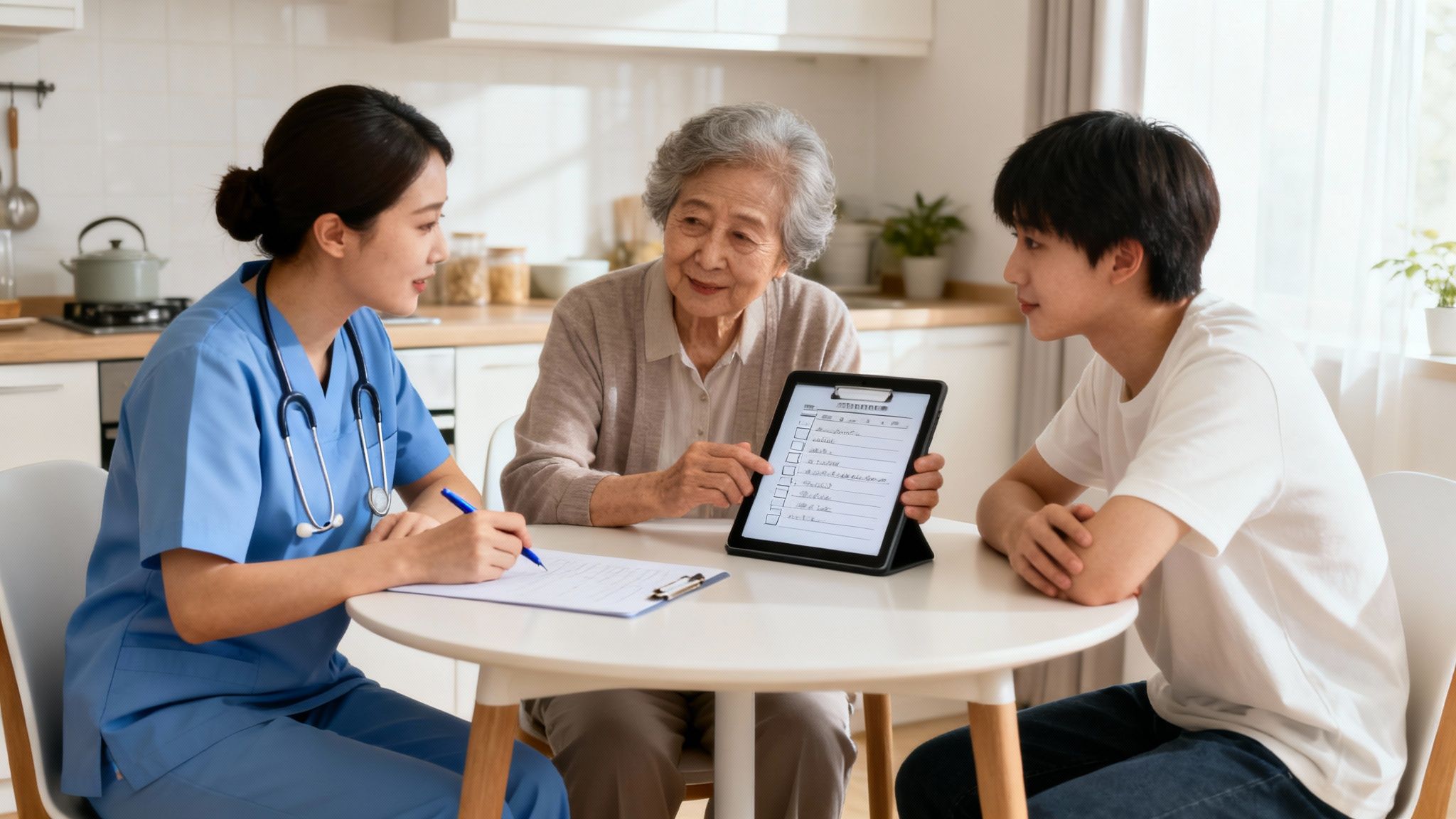
The first step is a conversation about current abilities. It is about finding areas where extra support could make a difference. Looking at Activities of Daily Living (ADLs) can help.
- Activities of Daily Living (ADLs): These are basic self-care tasks. Think about bathing, dressing, eating, and moving around.
- Instrumental Activities of Daily Living (IADLs): These are more complex tasks. This includes managing money, making meals, and taking medicines.
Thinking through these tasks helps clarify what support might be needed. It also opens the door to discussing "what if" scenarios.
Evaluating Home Safety And Modifications
A safe home is the foundation of aging in place. Simple changes can greatly reduce risks like falls. Over one in four older adults has a fall each year, but many are preventable.
Start by walking through the home to spot common hazards. Look for loose rugs, poor lighting, or cluttered paths. These are often easy fixes with a big impact.
A key part of proactive planning is transforming the living space from a potential obstacle course into a safe haven. Small changes are powerful tools for preserving independence.
Our skilled clinicians at Central Coast VNA & Hospice can help. Our Physical and Occupational Therapists can do a home safety check. You can also start by reviewing our guide on preventing falls in the home.
Navigating Financial And Insurance Options
Understanding how to pay for care is a critical piece of the puzzle. The good news is that many professional aging in place care services are covered. This is especially true when a doctor says they are medically necessary.
Here’s a general overview of what that looks like:
- Medicare: Medicare Part A and B often cover home health services. This is for patients who are "homebound" and need skilled care.
- Private Insurance: Many private health insurance plans also offer benefits. Contact your provider to understand your policy.
Our team at Central Coast VNA & Hospice is here to help families. We serve Monterey County, San Benito County, and other areas. We can help you check coverage and understand your benefits.
Getting Started With Central Coast VNA & Hospice
Taking that first step is simple. Anyone can make a referral to us. This includes a patient, a family member, or a doctor.
Once you reach out, we talk with your physician. We get the necessary orders for care. Then, we schedule a visit to create a personal care plan.
Contact us today to begin the conversation.
Your Trusted Partner For Aging In Place On The Central Coast
Choosing a partner for aging in place care is a personal decision. A local, nonprofit provider offers a different path. For over 74 years, Central Coast VNA & Hospice has served our community.
Our mission is to serve people, not to generate profit. Our roots are deep in Monterey County, San Benito County, Santa Cruz County, and South Santa Clara County. We are your neighbors.
A Legacy Of Compassionate, Connected Care
As a nonprofit, our focus is on delivering exceptional care. We reinvest our resources back into patient services. This allows us to offer a seamless continuum of care.
This integrated approach means you get consistent, high-quality support. You won’t have to learn a new system. Your team adapts right alongside you.
Learn more about why Central Coast VNA is the best choice for home health care.
When you choose a nonprofit provider with deep community roots, you are choosing a partner. Their success is measured by your family’s well-being.
Innovative Models For Modern Needs
The world of home-based care is always improving. We stay at the forefront of that progress. There is a clear shift toward services that help people stay at home.
You can discover more insights about these aging service trends. Central Coast VNA & Hospice embodies this same spirit. Our long history is built on meeting the modern needs of our community.
Start The Conversation Today
Planning for the future can feel overwhelming. You don’t have to do it alone. Our compassionate team is here to answer your questions.
We can walk you through your options. Let us help you create a plan that brings peace of mind.
Contact us today to speak with a member of our team. Let us show you how our legacy of care can support your goal of living safely at home.
Frequently Asked Questions About Aging in Place Care
It is natural to have questions when exploring professional care at home. Getting clear answers is the first step toward feeling confident. Here are some common questions we hear from families.
1. What does "aging in place" mean?
Aging in place means living in your own home safely and independently as you get older. It involves having the right support services to manage health needs. This allows you to stay in a familiar environment.
2. How do I know which home care service is right for me?
The right service depends on your main health goal. Home Health is for recovery after an illness or surgery. Palliative Care helps manage symptoms of a serious illness. Hospice Care provides comfort when a cure is no longer the focus.
3. Are these services covered by Medicare?
Yes, in many cases, they are. Medicare Part A and B often cover Home Health services if a doctor orders them. The Medicare Hospice Benefit provides comprehensive coverage for end-of-life care.
4. What is the difference between home care and Home Health Care?
"Home care" is usually non-medical help, like meal prep or companionship. "Home Health Care" is skilled medical care from licensed clinicians. Central Coast VNA & Hospice provides Home Health Care.
5. How do we get started with Central Coast VNA & Hospice?
Getting started is simple. Anyone—a patient, family member, or doctor—can contact us. We will then coordinate with your physician to create a personalized care plan.
6. What are the first steps to make a home safer?
Start by removing trip hazards like loose rugs and cords. Improve lighting in hallways and bathrooms. Installing grab bars in the shower is another easy change that makes a big difference.
Planning for the future can feel overwhelming, but you do not have to do it alone. The compassionate team at Central Coast VNA & Hospice is here to answer your questions. Contact us today to learn how our 74+ years of nonprofit service can support your family's goal of living safely and independently at home.
Inside Hospice Care at Home: A Family’s Guide
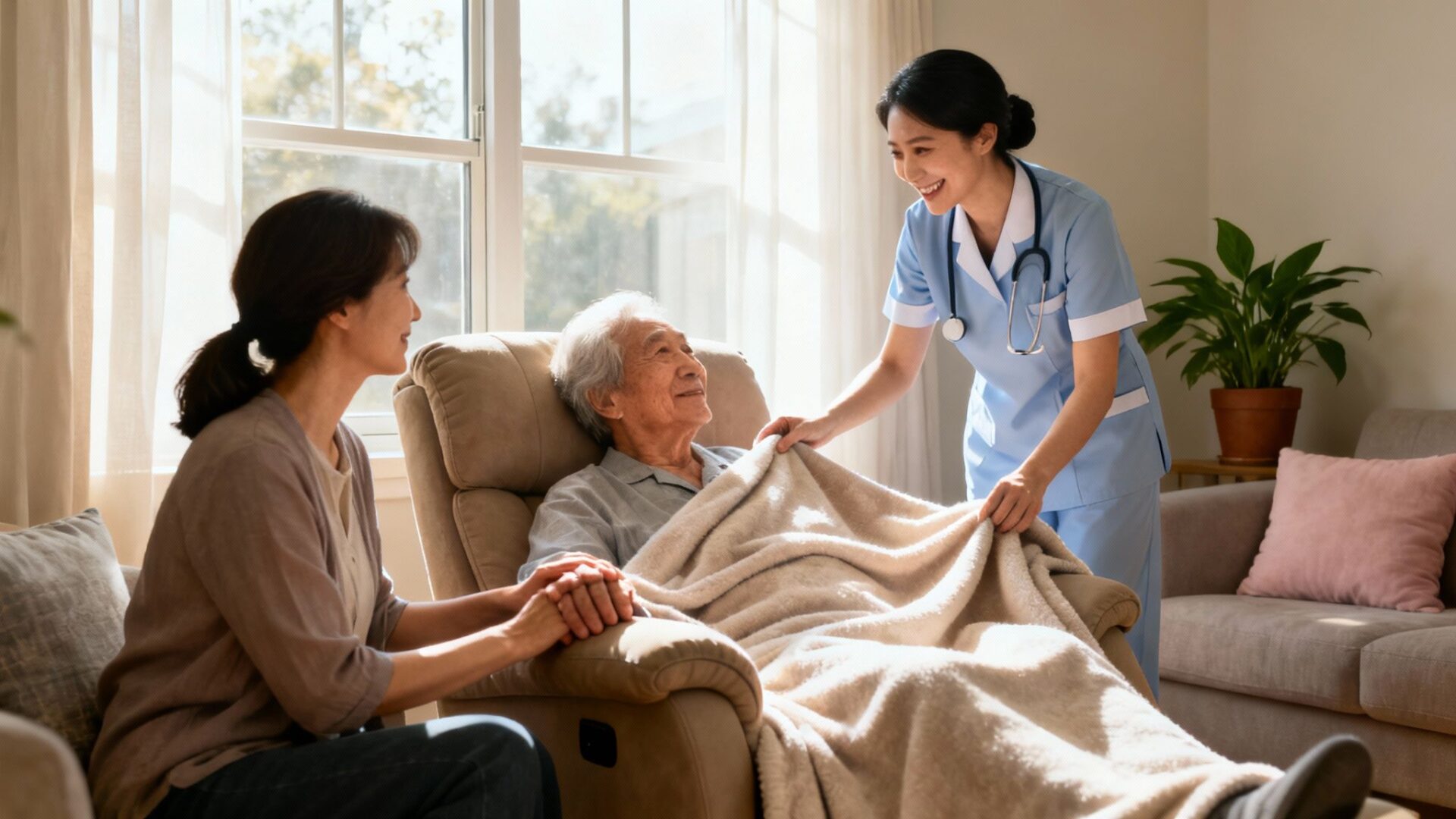
When facing end-of-life decisions, many families feel overwhelmed. Choosing hospice care at home is not about giving up. It is a compassionate choice to prioritize comfort, dignity, and quality of life.
This decision allows your loved one to stay in the familiar peace of their own home. It brings an entire support system directly to your family.
What Hospice Care at Home Really Means
Starting hospice care shifts the focus from curing an illness to caring for the whole person. It means bringing a specialized team into the home to manage symptoms and provide support. This frees you up to share more meaningful moments with your loved one.
For over 74 years, Central Coast VNA & Hospice has served families with this compassionate care model. As a trusted local nonprofit, we bring comfort to homes across Monterey County, San Benito County, Santa Cruz County, and South Santa Clara County.
A Philosophy of Comfort and Support
Hospice at home is more than a service; it is a philosophy. It creates a complete circle of support for both the patient and the family. Every physical, emotional, and spiritual need is met with dignity.
This support system includes:
- Expert Symptom Management: A dedicated Registered Nurse works with your loved one’s doctor to control pain and other symptoms.
- Emotional and Spiritual Guidance: Our Social Workers and Chaplains help your family find peace, respecting all personal beliefs.
- Practical Assistance: Hospice Aides provide gentle, hands-on help with personal tasks like bathing and dressing.
- Comprehensive Coordination: We handle the delivery of medical equipment and medications right to your home, reducing your stress.
This table gives a clear overview of what in-home hospice care includes.
Hospice Care at Home At a Glance
| Care Aspect | What It Means for Your Family |
|---|---|
| Location of Care | Your loved one remains in the comfort and familiarity of their own home. |
| Medical Team | A skilled team, including a Registered Nurse, Social Worker, and Hospice Aide, visits regularly. |
| Symptom Control | We focus on managing pain, nausea, anxiety, and other symptoms to maximize comfort. |
| Emotional Support | Counselors and Chaplains are available for both the patient and family members. |
| Medication & Equipment | All necessary medications, supplies, and equipment are delivered to your home. |
| 24/7 On-Call Help | A Registered Nurse is always available by phone to answer questions or provide guidance. |
| Family Caregiver Support | We provide education, respite, and emotional support to help you in your role. |
| Bereavement Care | Grief support is offered to the family for up to 13 months after a loved one's passing. |
Hospice is a holistic system designed to support everyone involved. It honors the final chapter of life with peace and dignity.
Choosing hospice at home is not just a decision about location; it's about how the final chapter of life will feel. It’s about the familiar view from a window, the comfort of a favorite chair, and the presence of family—all supported by a team of caring professionals.
With Central Coast VNA & Hospice, your family is never alone. Our team is on-call 24/7 for answers and reassurance. This ensures your loved one’s final days are as peaceful as possible. You can learn more about what hospice care is and how it helps families like yours.
The First Steps: How Hospice Begins at Home
One of the biggest questions families ask is, “How do we start?” The process is gentle and reassuring. It begins with a simple conversation.
A referral for hospice care can come from a doctor, a hospital, or a family member. Your first call is a warm, confidential conversation to ask questions.
Your First Call with Our Team
When you reach out, our team listens carefully. We ask about your loved one’s health, comfort goals, and worries. This call gives you a clear picture of how we can help.
There is no pressure or obligation. Our only goal is to provide the information you need. To help guide your thoughts, you can learn more about the right time to call hospice.
The infographic below captures the philosophy behind starting hospice. It's about reframing care, choosing comfort, and getting support.
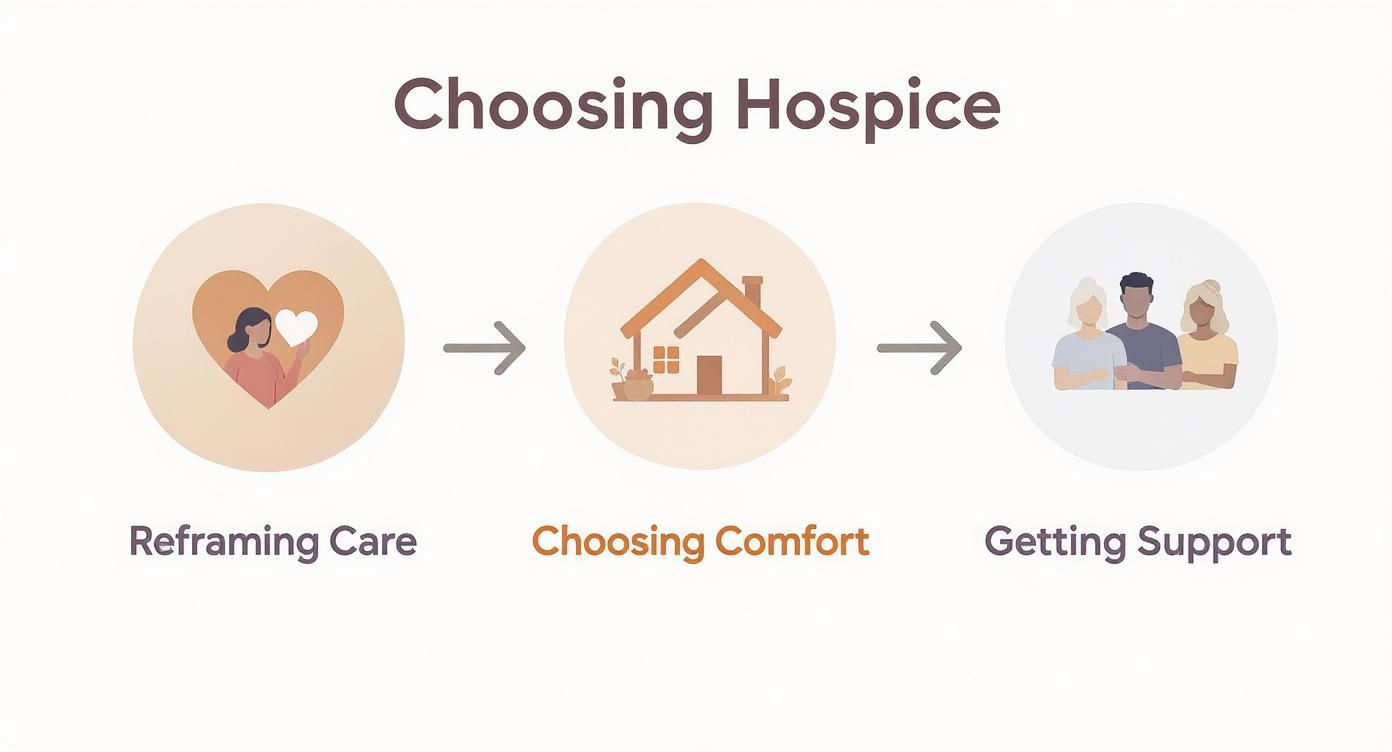
Starting hospice is a positive choice to prioritize quality of life. It brings a dedicated care team right into your home.
The First Visit: A Conversation About Comfort
After the call, we schedule our first visit. A compassionate Central Coast VNA Registered Nurse comes to your home. This is a heartfelt conversation about your loved one’s wishes.
Our Registered Nurse will listen to you and your family. This conversation is the foundation of the personalized care plan we build together.
Getting Everything in Place
One of the greatest reliefs for families is that we handle all the logistics. Central Coast VNA & Hospice coordinates everything needed for care at home. This reduces stress for the entire family.
We take care of it all:
- Medical Equipment: If your loved one needs a hospital bed or oxygen, we arrange delivery to your door.
- Medications: We work with your pharmacy to get all hospice-related medications delivered.
- Supplies: We provide necessary medical supplies, from bandages to personal care items.
Our team ensures your home is fully equipped for comfort from day one. This allows your family to focus on spending quality time together.
Your Hospice Team: The Caring Faces Who Visit Your Home
Inviting a care team into your home is a big step. At Central Coast VNA & Hospice, our interdisciplinary team members are compassionate local experts. They work together to meet your loved one’s physical, emotional, and spiritual needs.
The strength of hospice care at home lies in this teamwork. Let's introduce the caring faces you will get to know.

The Registered Nurse
The Registered Nurse (RN) is the central coordinator of your loved one’s care. During visits, the RN assesses symptoms, manages medications, and communicates with your family’s doctor. They are your main point of contact and are available 24/7 for on-call support.
The RN also educates your family. They teach you what to expect and how to provide comfort. Their steady, reassuring presence makes a difference during uncertain times.
The Hospice Aide
Our Hospice Aides are the heart of hands-on comfort care. They assist with personal tasks while preserving your loved one's dignity. Their gentle support helps your loved one feel clean and comfortable.
Hospice Aides provide assistance with daily routines like:
- Bathing, dressing, and grooming
- Changing bed linens
- Offering light help with moving in bed
Their warm companionship brings relief to patients and families. You can learn more about the responsibilities of a Hospice Aide.
Hospice is not just a service; it's a team of people who show up for your family. It’s the Registered Nurse who listens, the Hospice Aide who offers a gentle touch, and the Social Worker who helps you find the right words.
The Social Worker and Chaplain
End-of-life care is about more than physical comfort. Our Medical Social Workers provide crucial emotional support for the entire family. They can help you navigate difficult conversations and the stress of this journey.
A Social Worker also connects you with practical community resources. They can guide you with advance care planning and financial questions.
Our Chaplains offer spiritual care that respects all beliefs and backgrounds. They provide a comforting presence and help your loved one and family find peace. This support is available to everyone, regardless of their spiritual views.
Our Dedicated Volunteers
Our trained Volunteers are an essential part of the team. They offer the simple gift of companionship. A volunteer might sit and read with your loved one, giving you a much-needed break.
This entire team works in harmony. Their visits are coordinated to provide seamless support without feeling intrusive.
A Typical Day: Managing Comfort at Home
Families often wonder what daily life will look like with hospice. A common worry is, “Will our home turn into a hospital?” The answer is no. The goal is to create a peaceful, familiar environment.
The rhythm of at-home hospice is a gentle flow of support. We create a coordinated schedule of visits that respects your family’s privacy.
The Rhythm of Care Visits
The frequency of visits is based on your loved one’s needs. In the beginning, the Registered Nurse may visit once or twice a week. Visits can become more frequent if needs change.
A Hospice Aide might visit several times a week for personal care. The Social Worker and Chaplain schedule visits based on your family’s desire for support.
Managing Symptoms for a Peaceful Day
A central goal of hospice is making sure your loved one is free from pain. Our Registered Nurses are experts in symptom management. They work with your doctor to find the right balance of medications and therapies.
Effective symptom management often includes:
- Controlling Pain: We use medications to keep pain at a comfortable level.
- Easing Anxiety: We can provide medications and calming techniques to reduce restlessness.
- Addressing Other Discomforts: We also manage symptoms like nausea or difficulty breathing.
Our team arranges for all necessary medical equipment and medications to be delivered. This removes a huge weight from your shoulders. This process is detailed in our guide to inside hospice care at home.
The Family’s Role in Daily Comfort
You provide the love and familiarity that no one else can. Our job is to support you in that role, never to replace you.
We empower you by teaching practical skills, like how to:
- Recognize subtle signs of discomfort.
- Administer medications safely between nurse visits.
- Provide simple comfort measures, like repositioning pillows.
Your presence is often the most powerful comfort of all. Simply sitting with your loved one, reading a book, or sharing quiet moments can bring immense peace. We are here to manage the medical complexities so you can focus on being present.
Our team actively works to prevent family burnout. With over 74 years of local service, Central Coast VNA & Hospice is your partner every step of the way.
Emotional and Spiritual Support for the Whole Family
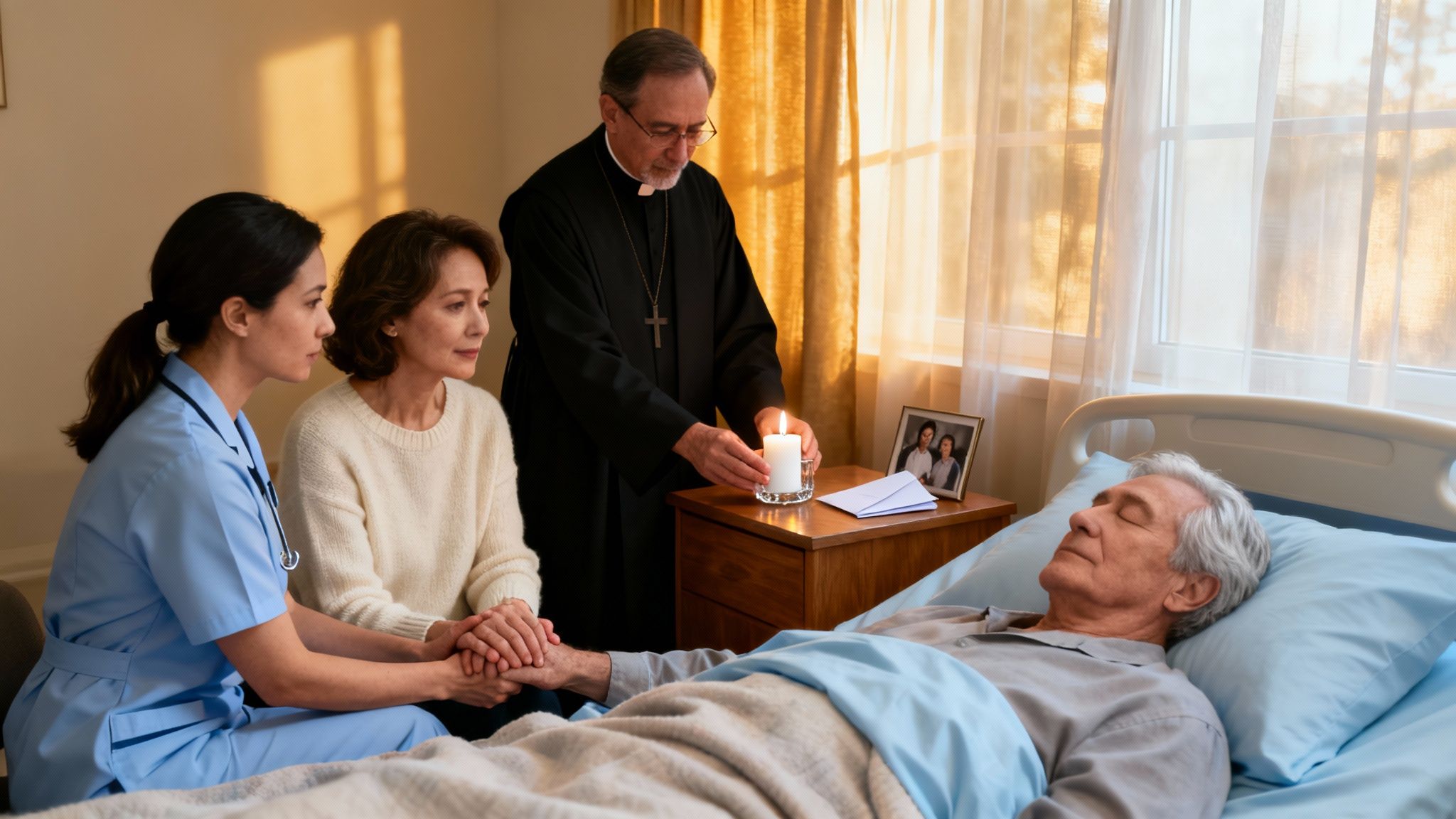
Hospice care is about more than physical symptoms. It focuses on caring for the whole person and the entire family. The end-of-life journey is filled with complex emotions, and our team ensures no one walks this path alone.
We provide deep emotional and spiritual resources. This holistic approach brings comfort not just to the body, but to the heart and mind as well.
Guiding You Through Difficult Conversations
Our Medical Social Workers are compassionate guides. They create a safe space for you to talk about your fears and challenges. They can help with tough family conversations, making sure everyone feels heard.
A Social Worker’s support is both emotional and practical. They can help with:
- Navigating complex family dynamics and improving communication.
- Coping with the emotional toll of this journey.
- Connecting you to community resources for extra support.
- Assisting with advance care planning.
Our team is here to provide the deep compassion needed during this time. You can learn more about what emotional support truly means for families.
Finding Peace and Meaning with Spiritual Care
Spiritual well-being is a deeply personal part of this journey. Our Chaplains offer gentle, non-denominational spiritual support. They listen without judgment and provide a comforting presence when it’s needed most.
This care is not about religion; it is about honoring the human spirit. Our Chaplains meet you where you are, helping you find peace. You can learn more about our approach to spiritual care in hospice.
Our Commitment Continues with Bereavement Support
Our promise to care for your family does not end when your loved one passes away. Grief is a long and personal journey. Central Coast VNA & Hospice provides dedicated bereavement support for up to 13 months.
We believe that caring for a family means supporting them through the entire arc of their experience—before, during, and long after their loved one’s passing. Our bereavement services are a testament to that enduring commitment.
This support can include individual counseling, support groups, and resources. We are here for you, offering a steady hand as you begin to heal.
Frequently Asked Questions About Hospice Care at Home
Is hospice care only for the last few days of life?
No, this is a common myth. According to the National Hospice and Palliative Care Organization (NHPCO), hospice is for anyone with a life-limiting illness and a prognosis of six months or less if the illness runs its natural course. Starting early provides more time for symptom management and relationship-building with the care team.
Will we still see our regular doctor?
Yes, absolutely. Your loved one's primary doctor remains a key part of the care team. Our team at Central Coast VNA & Hospice works closely with them to ensure the care plan aligns with their medical guidance.
How is hospice at home paid for?
Hospice care is a comprehensive benefit fully covered by Medicare, Medi-Cal, and most private insurance plans. This coverage typically includes visits from the care team, medications, and medical equipment related to the hospice diagnosis. Our team can help you understand your specific coverage.
What happens if there is a crisis in the middle of the night?
You are never alone. Central Coast VNA & Hospice provides 24/7 on-call support from a Registered Nurse. You can call anytime, and a Registered Nurse will assist you over the phone or make a home visit if needed, preventing stressful trips to the emergency room.
What does the first hospice visit at home feel like?
The first visit is a gentle, compassionate conversation, not a clinical assessment. A Registered Nurse will sit down with your family to listen to your loved one's wishes, understand their symptoms, and learn what a "good day" looks like for them. This discussion forms the basis of a personalized care plan.
Does choosing hospice mean we are giving up hope?
Not at all. It redefines hope. Hope shifts from a cure to what is most meaningful right now. It becomes hope for a day without pain, for quiet family moments, and for a peaceful, dignified journey.
At Central Coast VNA & Hospice, we are here to walk alongside you with compassion and expertise. If you have more questions or want to talk about your family’s situation, we invite you to have a personal, no-obligation conversation with our team.
Contact us today to learn how our 74+ years of nonprofit service to the Central Coast community can support your family. https://ccvna.com
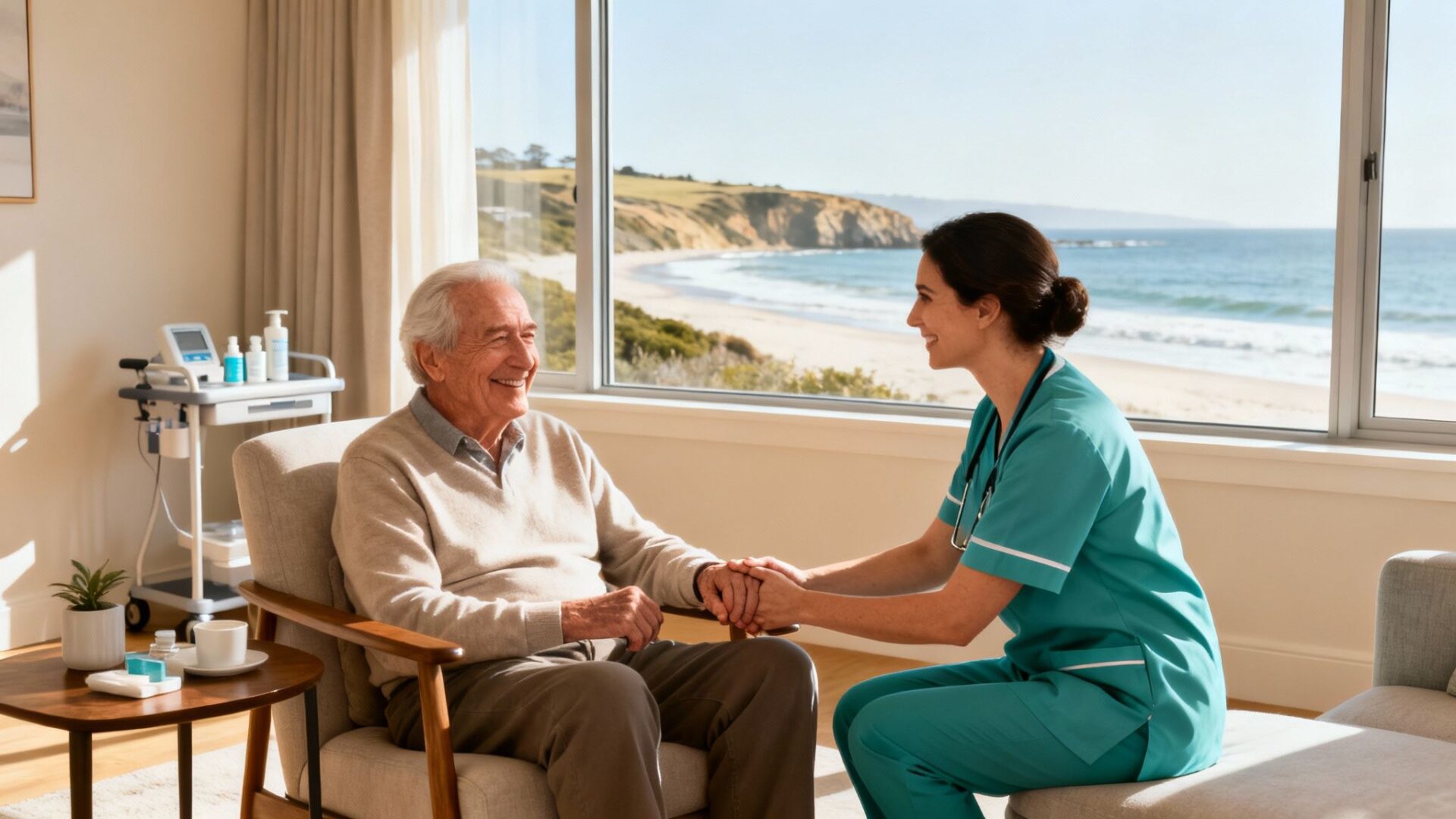
A Compassionate Guide to Senior Elderly Care Services on the Central Coast
Making decisions about care for an older family member can feel overwhelming. You are not alone on this journey.
These services provide medical and personal support to help older adults live safely and with dignity. They are helpful when recovering from an illness or managing a long-term condition. The goal is simple: provide the right care at the right time.
Your Compassionate Guide to Senior Care
Finding the right support for an aging loved one is a very important journey for a family. It is a path filled with questions and big decisions. This guide is here to bring clarity to families on California's Central Coast.
Senior care is not a one-size-fits-all solution. It is a spectrum of services that can adapt as health needs change. We'll walk you through this spectrum, from temporary medical support at home to comfort-focused care.
A Local Partner You Can Trust
For families in Monterey County, San Benito County, Santa Cruz County, and South Santa Clara County, a local partner makes a big difference. Central Coast VNA & Hospice has been a cornerstone of our community for over 74 years.
As a mission-driven nonprofit, our focus has always been on delivering compassionate, high-quality care. Our commitment is to the people we serve. We believe every individual deserves expert medical care with dignity, in the comfort of their own home.
This deep history means we understand the unique needs of our neighbors. We're not just another healthcare provider; we're part of the community. When you need help figuring out where to turn when a loved one is seriously ill, our local team is here to help.
Understanding the Continuum of Care
The best senior care services work together in a continuum of care. Think of it as a connected pathway that allows support to change as a person’s health changes. This approach ensures your loved one receives consistent care from a team they know and trust.
This guide will help you understand:
- The different types of services: From home health to palliative and hospice care.
- How they connect: So you can anticipate future needs.
- Who they are for: To help you find the right starting point for your family.
Our goal is to empower you with straightforward information. By the end of this guide, you will have a clearer picture of the options available. This will help you make the best choice for your family.
Understanding the Spectrum of Senior Care Options
Figuring out senior care can feel like learning a new language. The terms can sound similar but mean very different things. To find the right support, you need to understand the purpose of each type of care.
Choosing the right path starts with knowing your options. This flowchart gives you a clear visual of the senior care journey. It helps you see the steps from recognizing a need to making an informed choice.
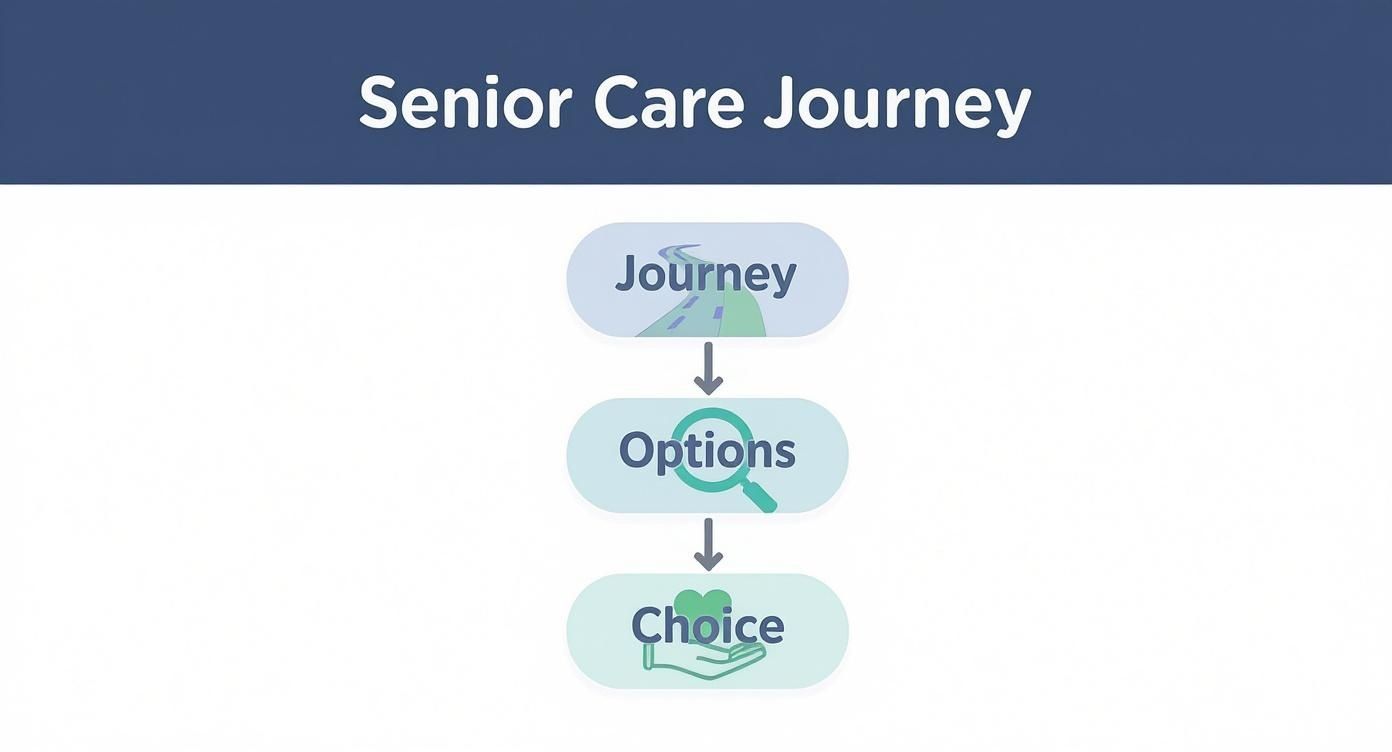
This is a process. It moves from a general starting point toward specific solutions. These solutions put your loved one’s well-being first.
To help you get started, here is a quick comparison of the primary senior care services. This table gives you a clear, at-a-glance understanding of what each service does.
Senior Care Services At-a-Glance
| Service Type | Primary Goal | Who It's For | Provided By (CCVNA) |
|---|---|---|---|
| Home Health | Medical recovery and rehabilitation at home after an illness, injury, or surgery. | Patients needing short-term, skilled medical care prescribed by a doctor. | Yes |
| Palliative Care | Relieve symptoms and stress from a serious, chronic illness to improve quality of life. | Anyone with a serious illness, at any stage, often alongside curative treatments. | Yes |
| Hospice Care | Provide comfort, dignity, and peace at the end of life when a cure is no longer the goal. | Individuals with a life expectancy of 6 months or less. | Yes |
| Home Care Aide | Assistance with daily living activities like bathing, dressing, and meal prep. | Seniors who need non-medical help to live safely and independently at home. | Yes |
| Respite Care | Provide short-term relief for primary caregivers. | Family caregivers who need a temporary break from their duties. | Yes |
| Care Coordination | Plan, coordinate, and monitor care services to meet a person's needs. | Families needing help navigating the healthcare system and managing multiple services. | Yes |
Now let's explore the three core medical services—Home Health, Palliative, and Hospice—in more detail. Understanding these is key to making confident decisions.
Home Health Care: Your Recovery Coach
Home Health Care is skilled, short-term medical support provided in a patient's home. It is prescribed by a doctor to help someone recover from an illness, injury, or hospital stay. This is not about long-term daily assistance; it’s about targeted medical help.
Imagine a loved one returning home after surgery. They are not sick enough for the hospital, but not strong enough to be alone. Home health care acts as a bridge, bringing a professional medical team to them.
The goal is to help patients regain their independence. Services often include:
- Skilled Nursing: A Registered Nurse can manage medications, dress wounds, and teach the family about the condition.
- Physical Therapy: This helps restore strength, balance, and mobility.
- Occupational Therapy: This focuses on helping people perform daily activities safely.
- Speech Therapy: This helps patients recovering from a stroke who need to regain communication skills.
At Central Coast VNA & Hospice, our professional teams work with your doctor to create a recovery plan. This service helps keep patients safe and comfortable at home.
Palliative Care: Your Symptom Relief Team
Palliative care is often misunderstood, but its purpose is simple. It aims to improve the quality of life for anyone with a serious illness. It focuses on relief from symptoms and stress from conditions like cancer or heart failure.
Palliative care can be provided alongside curative treatments. It does not mean you are giving up. Instead, it adds an extra layer of support to manage pain and fatigue.
Palliative care is about living as well as possible, for as long as possible. It addresses the whole person—body, mind, and spirit.
For example, someone undergoing chemotherapy might receive palliative care to manage nausea. Our palliative care team in Monterey County and surrounding areas coordinates with your doctors. We make sure your comfort is a top priority.
Hospice Care: Your Comfort-Focused Team
Hospice Care is a special kind of care for individuals in the final chapter of life. It is chosen when curative treatments are no longer working. The focus shifts to comfort, peace, and dignity.
This compassionate approach is for people with a life expectancy of six months or less. Hospice care is provided by a dedicated team. This team includes a doctor, nurse, social worker, chaplain, and Hospice Aides.
Hospice affirms life and views dying as a natural process. The team provides everything needed to keep the patient comfortable, often in their own home. You can learn more about how our expert teams provide both home health and hospice care.
Why Comprehensive Elderly Care Is More Important Than Ever
If you are looking into senior care options, you are not alone. Families all over the country are trying to find the best support for their loved ones. The need for compassionate, skilled elderly care is growing faster than ever.
This is a major shift in how we approach healthcare for older adults. This growing demand is pushing the industry to get better. It must be more focused on providing dignified support.
A Growing Need for Specialized Support
People are living longer. With longer lives often come more complex health needs. Chronic conditions like heart disease or diabetes become more common and require professional management.
The market for elderly care services was valued at USD 1.2 trillion in 2023. It is projected to more than double by 2032. This growth is fueled by the rising number of adults over 60 worldwide. You can learn more about the growth of the senior care market.
This means care providers have to be more adaptable and skilled than ever before.
Adapting to the Needs of the Central Coast
This global shift impacts our communities here on the Central Coast. For families in Monterey County, San Benito County, Santa Cruz County, and South Santa Clara County, having access to quality care is a necessity. It is about finding a stable, forward-thinking healthcare partner.
As a nonprofit with over 74 years of local service, Central Coast VNA & Hospice has evolved to meet the needs of our neighbors. Our mission is to provide the expert care our community deserves, right here at home.
We have seen how the needs of local families have changed. In response, we built our continuum of care. This ensures a seamless connection between home health, palliative care, and hospice.
The Focus on Holistic Well-being
Modern senior care has moved beyond just treating medical symptoms. Today, it is about supporting the whole person. This includes their physical comfort, emotional state, and personal dignity.
For example, preventing falls is a huge part of elderly care. Professionals use various balance assessment tests for elderly to keep seniors safe at home. A holistic approach includes:
- Pain and Symptom Management: Using expert techniques to ensure physical comfort.
- Emotional and Spiritual Support: Offering resources like social workers and chaplains.
- Family Involvement: Educating and supporting family members throughout the care journey.
This complete approach ensures every aspect of a person’s well-being is addressed. Central Coast VNA & Hospice is dedicated to this model of care.
How Senior Care Services Are Typically Funded
Figuring out how to pay for senior care can be stressful. Let's break down the common funding options in simple terms. This will help you feel empowered with the right information.
Navigating insurance rules is complex, but you don't have to do it alone. Our team at Central Coast VNA & Hospice is here to help families understand their coverage. That way, you can focus on what really matters—your loved one.
Understanding Medicare Coverage
For most Americans aged 65 and older, Medicare is their primary health insurance. It is a key source of funding for certain types of senior care. It's important to know what it does and does not cover.
Generally, Medicare Part A and Part B will cover home health care services. This is only if a doctor certifies they are medically necessary for a homebound patient. It also covers hospice care almost entirely for those with a terminal illness.
Medicare's hospice benefit is very comprehensive. It is designed to cover medical care, equipment, and medications related to the terminal illness.
What Medicare typically won’t cover is long-term custodial care. This includes non-medical help with daily activities. You can learn more in our guide on understanding Medicare home care eligibility.
The Role of Medi-Cal and Private Insurance
Beyond Medicare, other funding sources play a big part for families. Knowing how they fit in can open up more care options.
Medi-Cal, California's Medicaid program, can also cover home health and hospice services. It often works with Medicare to pay for costs that Medicare doesn’t cover. This depends on a person's income and eligibility.
Private insurance plans vary widely in their coverage. Some policies offer solid benefits for home health or palliative care. The best first step is to call the insurance provider to get a clear answer.
At Central Coast VNA & Hospice, our team works with a variety of payers, including:
- Medicare and Medi-Cal
- Central California Alliance for Health
- Blue Shield and other private insurance plans
We coordinate with these providers to sort out benefits and simplify the process. We serve patients in Monterey County, San Benito County, Santa Cruz County, and South Santa Clara County.
Navigating the Financial Journey
The financial part of arranging senior care should not stop you from getting support. As a local nonprofit with over 74 years of service, our mission is to ensure everyone has access to care.
Our team is here to walk you through funding options. We will answer your questions and help you secure benefits.
The Comfort and Rise of Home-Based Care
The phrase ‘home sweet home’ has stood the test of time for a reason. More seniors and their families are choosing to receive care in their own homes. This trend is driven by benefits for both physical recovery and emotional well-being.

When someone can stay at home, they hold onto independence and dignity. Surrounded by personal memories, people often feel more comfortable and in control. This can lead to better outcomes.
Why More Families Choose Care at Home
For many families, the advantages of receiving care at home are clear. It offers a personalized setting where care plans can be adapted to a person’s lifestyle. This approach helps reduce the stress that can come with hospital stays.
Here are a few of the biggest benefits:
- Enhanced Comfort and Security: Being in a familiar space provides emotional comfort.
- Greater Independence: Patients can stick to their own schedules and routines.
- Reduced Risk of Infection: Limiting exposure to hospital environments lowers risk.
- Stronger Family Involvement: It is easier for family and friends to visit.
At Central Coast VNA & Hospice, our mission is built around this person-centered model. It aligns with the desire to keep loved ones safe where they belong. You can learn more in this guide to in-home care for seniors.
Technology Making Home Care More Effective
Modern healthcare technology is making professional medical care at home more effective. Technologies that were once only in hospitals are now used to support patients in their living rooms.
This shift is backed by a strong trend toward home-based solutions. Projections show that home care services are on track to become a significant part of the elderly care market. Innovations like telehealth are becoming key tools in managing senior health from home.
With tools like telehealth consultations, our Registered Nurses can connect with patients and their doctors remotely. This allows for quick check-ins without a stressful trip to an office.
This blend of compassionate support and modern technology ensures families on the Central Coast receive high-quality care. It empowers patients in our service areas to manage their health from home.
How to Choose the Right Senior Care Provider for Your Family
Picking the right care provider for your family is a big decision. It's about finding a true partner in care. You deserve to feel completely confident in your choice.
Think of this process as getting to know an organization's character. Start by asking about their story, their mission, and their connection to the Central Coast community.

Key Factors to Consider
As you begin looking at providers, certain qualities stand out. A solid foundation built on trust and a complete range of services are signs of a reliable partner.
Here is what you should be looking for:
- Nonprofit, Mission-Driven Status: A nonprofit organization reinvests resources back into patient care and community programs. Central Coast VNA & Hospice operates this way, so our focus is always on your family.
- Deep Community Roots: How long have they been here? A provider with 74+ years of service has built a legacy of trust.
- Full Continuum of Care: Does the agency offer home health, palliative care, and hospice? An organization that provides a seamless transition between services ensures consistent care from a team you know.
Questions to Ask Potential Providers
Once you have a shortlist, it's time to dig deeper with some specific questions. The answers you get will tell you about their commitment to quality and safety. Having questions prepared makes these conversations more productive.
Make sure to ask things like:
-
What are the qualifications of your clinical staff?
You want to hear about skilled professionals like Registered Nurses, licensed physical therapists, and certified Hospice Aides. This ensures your loved one is in expert hands. -
How do you create and manage personalized care plans?
Ask how they involve the patient and family in crafting a plan. Great care respects personal wishes and health goals. -
What are your protocols for emergencies and after-hours support?
Health issues do not stick to a 9-to-5 schedule. Knowing there's a clear plan and 24/7 support offers peace of mind.
Understanding how a team prepares for emergencies is vital. The skills they possess, like CPR, are fundamental. This guide on online CPR certification for healthcare providers offers insight into expected medical training. You can learn more by reading our guide on finding the best home health agency for seniors.
Frequently Asked Questions (FAQs)
It is normal to have questions when exploring senior care. Here are some of the most common questions we hear on the Central Coast. We hope these clear, straightforward answers help you.
1. Can my loved one get different types of care from the same organization?
Yes, and it's often the best approach. Choosing a provider that offers a full spectrum of services, like Central Coast VNA & Hospice, creates a continuum of care. This allows a person to move smoothly from home health to palliative care, and then to hospice if needed.
This consistency is a relief for families. You build a relationship with a trusted team that understands your loved one’s health history.
2. How do we know when it's time for hospice?
This is a personal question, but there are clear guideposts. Hospice is for someone with a life-limiting illness who is expected to have six months or less to live. At this point, the focus shifts from curing the illness to maximizing comfort.
Consider hospice when medical treatments feel like more of a burden than a benefit. We encourage families to have this conversation with their doctor sooner rather than later.
3. What's the real difference between palliative care and hospice?
This is a very common question. Palliative care can be provided at any stage of a serious illness, even while you’re receiving curative treatments. Its goal is to relieve symptoms and stress.
Hospice is a specific type of palliative care for the final stage of life. Both are about comfort, but they apply at different points in a person's health journey.
4. Is home health care only for people coming home from the hospital?
While many people start home health care after a hospital stay, it is not the only time it's used. A doctor might also order home health for someone whose chronic condition, like COPD, has flared up.
It can also be a proactive tool. A doctor might prescribe it for a patient who needs skilled nursing to manage health at home.
5. What does being a nonprofit provider mean for our family?
As a nonprofit, our mission is our bottom line—not profit margins. For over 74 years, Central Coast VNA & Hospice has put every resource back into patient care and staff training. Our decisions are guided by what’s best for the families we serve in our local counties.
This commitment means we provide high-quality care to everyone who needs it. Our long history is a testament to our dedication to our Central Coast communities.
Your journey to finding the right care starts with a simple conversation. The compassionate team at Central Coast VNA & Hospice is here to listen, answer your questions, and guide you with expert advice. Contact us today to learn more about our senior elderly care services.
Planning for Peace: 5 Reasons to Start Hospice Conversations Early in 2026
Facing a serious illness is a difficult journey for patients and families. Many people wait to talk about hospice care until the very end. But planning ahead is a loving act that helps ensure a person’s final months are lived with dignity and comfort.
In 2026, talking about hospice sooner can make the end-of-life experience much better. These talks are not about giving up. They are about gaining control and focusing on what matters most: quality of life and time with loved ones.
Central Coast VNA & Hospice has provided compassionate care for over 74 years in Monterey, Santa Cruz, San Benito, and South Santa Clara Counties. Our nonprofit team helps families navigate these important conversations. This guide explains five key reasons to start talking about hospice early.
1. Early Conversations Improve Quality of Life
One of the best reasons to discuss hospice early is to improve a person's quality of life. Many families wait too long. They often start hospice in the final days of a person's life.
Studies show that starting hospice sooner leads to better symptom control. It also means fewer trips to the hospital. This gives patients and families a more peaceful experience. Starting hospice earlier in 2026 means more time to focus on comfort and connection.
Conversations Today Create Clarity Tomorrow
Advance care planning does not have to be stressful. When families talk early about goals and care preferences, they avoid making decisions in a crisis. It helps ensure a person's wishes are known and respected.
These conversations allow a patient to be part of the decision-making process. They can share what is important to them. This provides a clear roadmap for healthcare providers and loved ones to follow. To learn more, you can find out more about advance care planning and its benefits.
Key documents can formalize these wishes:
- Advance Directive: This outlines what medical treatments you would or would not want.
- Durable Power of Attorney for Health Care: This names a trusted person to make medical decisions for you if you cannot.
While specific laws like a living will and power of attorney in Texas vary by state, the concepts are the same in California. Central Coast VNA & Hospice serves families in Monterey County, San Benito County, and nearby areas. Our team can help you understand these important steps.
2. Misconceptions Can Be Cleared Up with Education
Myths about hospice often prevent people from getting the care they need. Some people think hospice means "giving up." Others believe it is only for the last few days of life.
In reality, hospice is comfort care for the final months of a serious illness. It works alongside a person’s goals and wishes. Hospice helps patients live as fully as possible by managing pain and symptoms.

Palliative Care as a Bridge
Early conversations can also introduce palliative care. This is specialized medical care that focuses on relief from symptoms and stress. It can be provided at any stage of an illness, even alongside treatments meant to cure.
Palliative care adds an extra layer of support. It addresses the whole person, not just the disease. To understand more, you can learn what palliative care really means for families today.
The skilled clinicians at Central Coast VNA & Hospice help families understand their options. We offer compassionate, informed discussions. These talks can happen long before a patient is ready for hospice, clearing up confusion and providing peace of mind.
3. Caregiver Burnout Can Be Prevented with Early Support
Family members often wait until they are exhausted before they ask for help. Caring for a loved one with a serious illness is demanding. Early hospice involvement can prevent this burnout.
Hospice care brings more than just medical support from a Registered Nurse or Hospice Aide. It provides emotional, spiritual, and practical help. This includes respite services, which give family members a much-needed break.
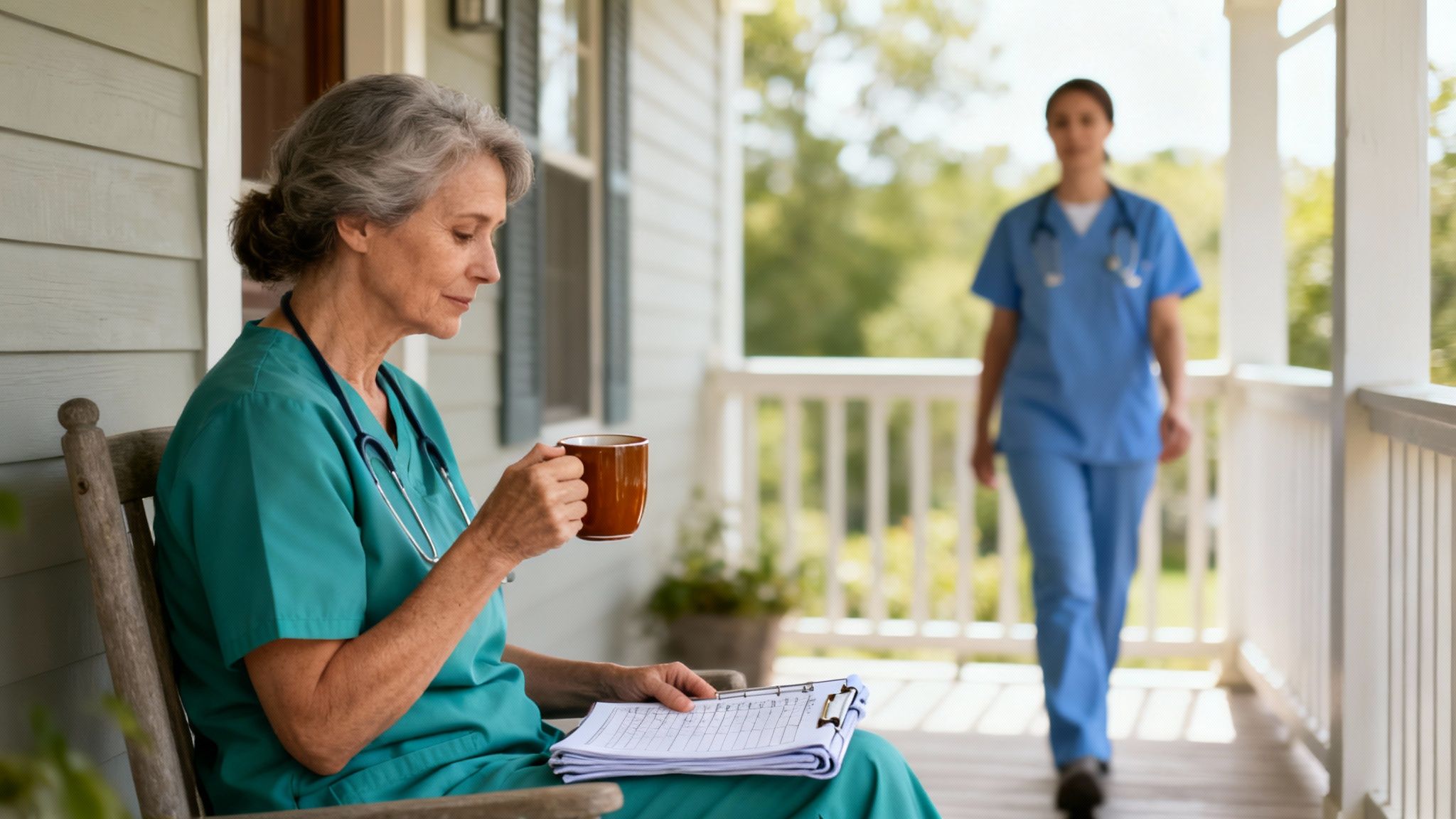
A Team-Based Approach to Care
Central Coast VNA & Hospice provides an interdisciplinary team. This team includes a Registered Nurse, Social Worker, Chaplain, and Hospice Aide. They work together to create a circle of support around the patient and family.
This team approach eases the pressure on loved ones. According to the National Hospice and Palliative Care Organization (NHPCO), families who use hospice report higher satisfaction with end-of-life care (NHPCO, 2021). You can explore respite care for family caregivers to see how this vital resource works.
4. Hospice Isn’t a Place—It’s Personalized Care at Home
A common barrier to hospice is the idea that it happens in a facility. Many people do not want to leave their homes. The good news is that hospice is not a place; it is a philosophy of care.
Central Coast VNA & Hospice provides expert in-home hospice care. We serve families across Monterey County, Santa Cruz County, San Benito County, and South Santa Clara County. This means patients can remain in familiar, comfortable surroundings.
Comfort and Support, 24/7
This comfort-first approach allows for care that is tailored to each person. Our team is available 24/7 to answer questions and manage symptoms. This constant support reduces emergency room visits and gives families peace of mind.
Being at home allows patients to be surrounded by the people and things they love. It helps them maintain a sense of normalcy and control. Our goal is to bring expert, compassionate care to wherever a patient calls home.
5. Early Talks Allow Time for Meaningful Closure
Starting hospice conversations early in 2026 gives the priceless gift of time. When a patient’s symptoms are managed, they have more energy. This energy can be used to focus on what truly matters.
This time allows for meaningful conversations and relationship closure. Patients can share stories, express love, and say goodbye in a calm, unhurried way. Families can create lasting memories together.
Support for the Entire Family
Hospice care also includes support for the family’s emotional and spiritual needs. Our Social Workers and Chaplains help families navigate this difficult time. This support continues even after a loved one has passed.
Central Coast VNA & Hospice offers bereavement services for up to 13 months. This helps families heal. You can learn more about healing with hospice bereavement services and the resources available to families. You can also learn more about hospice eligibility requirements to plan ahead.
Start the Conversation with Compassion
Talking about end-of-life care is never easy. But it is one of the most loving and empowering things you can do for someone you care about. Early conversations ensure a person’s final chapter is lived with dignity and peace.
These discussions shift the focus from crisis to comfort. They allow the full benefits of hospice to be realized. This includes excellent symptom management and support for the entire family.
If someone in your family is facing a serious illness, the team at Central Coast VNA & Hospice is here to help. Contact us today to learn how our home-based hospice services can bring comfort and clarity. We have proudly served Monterey, Santa Cruz, Hollister, and surrounding communities for over 74 years.
Frequently Asked Questions (FAQs)
1. When is the right time to start talking about hospice?
The best time is before a medical crisis. Starting the conversation soon after a serious diagnosis allows for thoughtful planning and ensures the patient can share their wishes while they are able to.
2. Does choosing hospice mean we are giving up?
No, hospice is not about giving up. It is about shifting the focus of care from curing the illness to maximizing comfort and quality of life, allowing the patient to live as fully as possible.
3. Where is hospice care provided?
Hospice care is most often provided in the comfort of a person's own home. Central Coast VNA & Hospice brings expert medical, emotional, and spiritual support directly to patients in Monterey, Santa Cruz, San Benito, and South Santa Clara Counties.
4. Who is on the hospice care team?
The hospice team is an interdisciplinary group that typically includes a Registered Nurse, Hospice Aide, Social Worker, and Chaplain. They work together with the patient's doctor to provide complete support.
5. What is the difference between palliative care and hospice care?
Palliative care can be provided at any stage of a serious illness, alongside curative treatments, to manage symptoms. Hospice care is for patients with a life expectancy of six months or less who are no longer seeking curative treatment.
Is your family navigating a serious illness? The compassionate team at Central Coast VNA & Hospice is here to provide expert guidance and support right in your home. Learn more about how our continuum of home health, palliative, and hospice care can bring comfort and clarity to you and your loved ones. To help start your own discussions, you may find these essential questions to ask your loved ones useful.

7 Signs It’s Time to Consider Palliative Care: A Guide for Families
It’s a conversation many families hesitate to start. Often, they wait until a health crisis forces a difficult decision. The topic of palliative care can feel overwhelming, clouded by myths and uncertainty.
However, understanding the signs it’s time to consider palliative care is one of the most empowering steps you can take. This is for a loved one living with a serious illness.
This type of care is not about giving up. It is about adding an expert layer of support focused on comfort, dignity, and quality of life. Palliative care is specialized medical care that helps relieve symptoms like pain, shortness of breath, and stress.
It can be provided at any age and at any stage of an illness. It often happens alongside treatments meant to cure.
Unfortunately, many families wait too long to explore this option. Misconceptions and emotional hesitation are major reasons families delay reaching out. This delay can limit access to comfort and guidance at a crucial time.
This guide will walk you through seven clear signs that it might be time to start a conversation about palliative care. It offers clarity for families in Monterey County, San Benito County, Santa Cruz County, and South Santa Clara County.
1. Decline in Functional Status and Daily Self-Care
One of the most noticeable signs is a steady decline in a person’s ability to manage their own daily needs. These are often called Activities of Daily Living (ADLs). ADLs are basic tasks like bathing, dressing, eating, and moving from a bed to a chair.
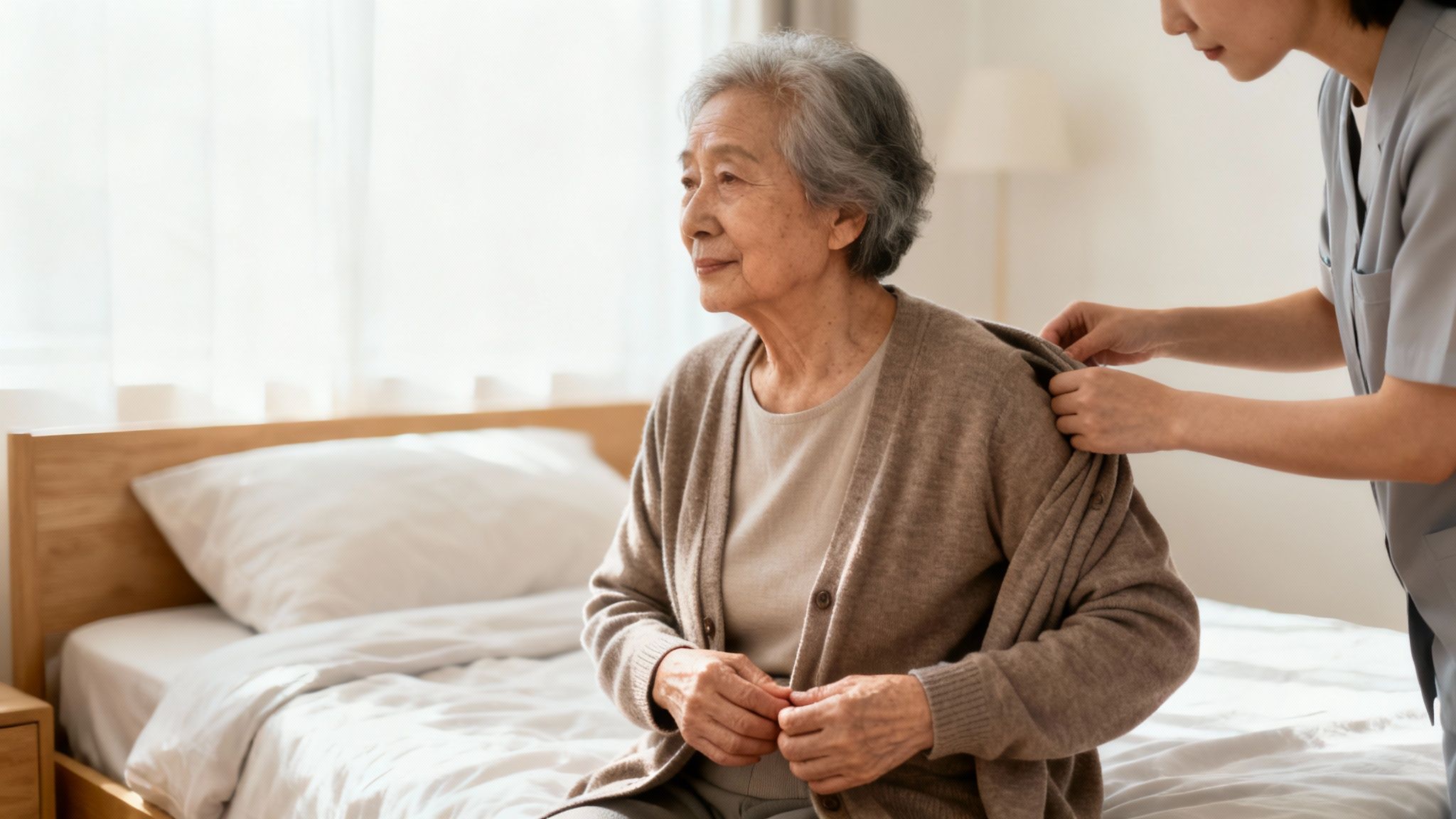
As a serious illness gets worse, it can take away the strength needed for these tasks. This decline shows that the illness is becoming a greater burden. The focus of care may need to shift toward comfort and quality of life.
Why This Sign Matters
Losing the ability to perform ADLs affects more than just the body. It impacts a person’s independence and emotional well-being. This can be frustrating for both the individual and their family.
Recognizing this change early is key. It signals a chance to bring in extra support. Palliative care teams are experts at managing symptoms that make self-care difficult.
What to Look For
Keep an eye out for clear, ongoing changes. A person who once dressed themselves with ease may now struggle with buttons.
Other examples include:
- A person with advanced COPD who becomes too breathless to shower alone.
- An individual with dementia who needs full help with using the toilet.
- A cancer patient who stays in a bed or wheelchair for most of the day.
When multiple daily tasks become hard at once, it’s a strong sign the illness is becoming overwhelming.
Next Steps: What You Can Do
If you see a steady decline, talk to a healthcare provider. Ask specific questions like, "We’ve noticed it's much harder for Mom to get dressed. Could palliative care help manage her symptoms to make this easier?"
Introducing support at home can make a big difference. Discover how Central Coast VNA helps seniors live safely at home in Monterey through skilled assistance.
2. Uncontrolled Symptoms Despite Treatment
Another key sign is having symptoms that don’t get better, even with treatment for the disease. These can include ongoing pain, shortness of breath, nausea, or extreme fatigue. When these issues interfere with quality of life, it signals a need for a new approach.

This situation shows that the symptoms have become as big a problem as the disease itself. Palliative care specializes in relieving this distress and improving daily life. This happens whether or not curative treatments are still being used.
Why This Sign Matters
Poorly controlled symptoms are physically and emotionally draining. They can lead to frequent emergency room visits, hospital stays, and a great deal of suffering. This constant battle can cause feelings of hopelessness for patients and families.
Palliative care teams are experts in symptom control. They use advanced methods to address even the toughest symptoms. Their work adds a crucial layer of support focused on comfort.
What to Look For
Pay attention to symptoms that stay the same or get worse over time. Documenting how often and how severe they are can help doctors understand the situation.
Examples include:
- A cancer patient having pain that breaks through their regular pain medication.
- A person with advanced heart failure who is short of breath even while resting.
- Someone getting chemotherapy who struggles with nausea that affects their ability to eat.
When a symptom resists standard treatment, a palliative specialist’s expertise is needed.
Next Steps: What You Can Do
If your loved one struggles with stubborn symptoms, talk to their healthcare team. Ask, "His pain isn't getting better with the current plan. Could a palliative care specialist offer other options?"
Central Coast VNA & Hospice provides expert pain and symptom management to help patients in Monterey and surrounding counties live more comfortably. Addressing these symptoms is a key step in providing compassionate care.
3. Worsening Confusion or Cognitive Decline
A sudden or steady decline in a person's mental clarity is another important sign. This can show up as confusion (delirium), worsening memory, or trouble communicating. It often signals that an illness is getting worse or causing other problems.
These mental changes can be upsetting for everyone. They make it hard to discuss care preferences and maintain a meaningful connection. A shift in mental status is a critical sign that specialized care is needed to ensure comfort.
Why This Sign Matters
Cognitive decline affects a person’s ability to be part of their own care. When confusion sets in, conversations about goals of care become difficult. This leaves families to guess what their loved one would have wanted.
Palliative care teams are skilled in managing the causes of delirium, which can sometimes be fixed. Even when the decline is due to a condition like advanced dementia, the team can provide strategies to reduce agitation and support families.
What to Look For
It’s important to know the difference between delirium (sudden confusion) and dementia (a slow decline). Look for specific changes such as:
- A person with an infection who suddenly becomes very confused.
- A patient with advanced dementia who stops speaking or recognizing family.
- Someone with cancer that has spread to the brain who has personality changes.
- An individual who experiences "sundowning," or increased confusion in the evening.
Noticing these changes early allows for quick action.
Next Steps: What You Can Do
If you see a worrisome change in a loved one's mental state, contact their doctor right away. Be ready to describe what you are seeing. Ask, "We've noticed Dad is much more confused lately. Would a palliative care consultation help us manage it?"
The compassionate teams at Central Coast VNA & Hospice guide families through these conversations. Learn more about our palliative care services and how we can provide support.
4. Repeated Hospital Stays or Emergency Room Visits
Frequent trips to the hospital or emergency room (ER) is one of the clearest signs. This pattern often means a chronic illness is becoming harder to manage at home. Each hospital stay is a crisis that adds physical and emotional stress.
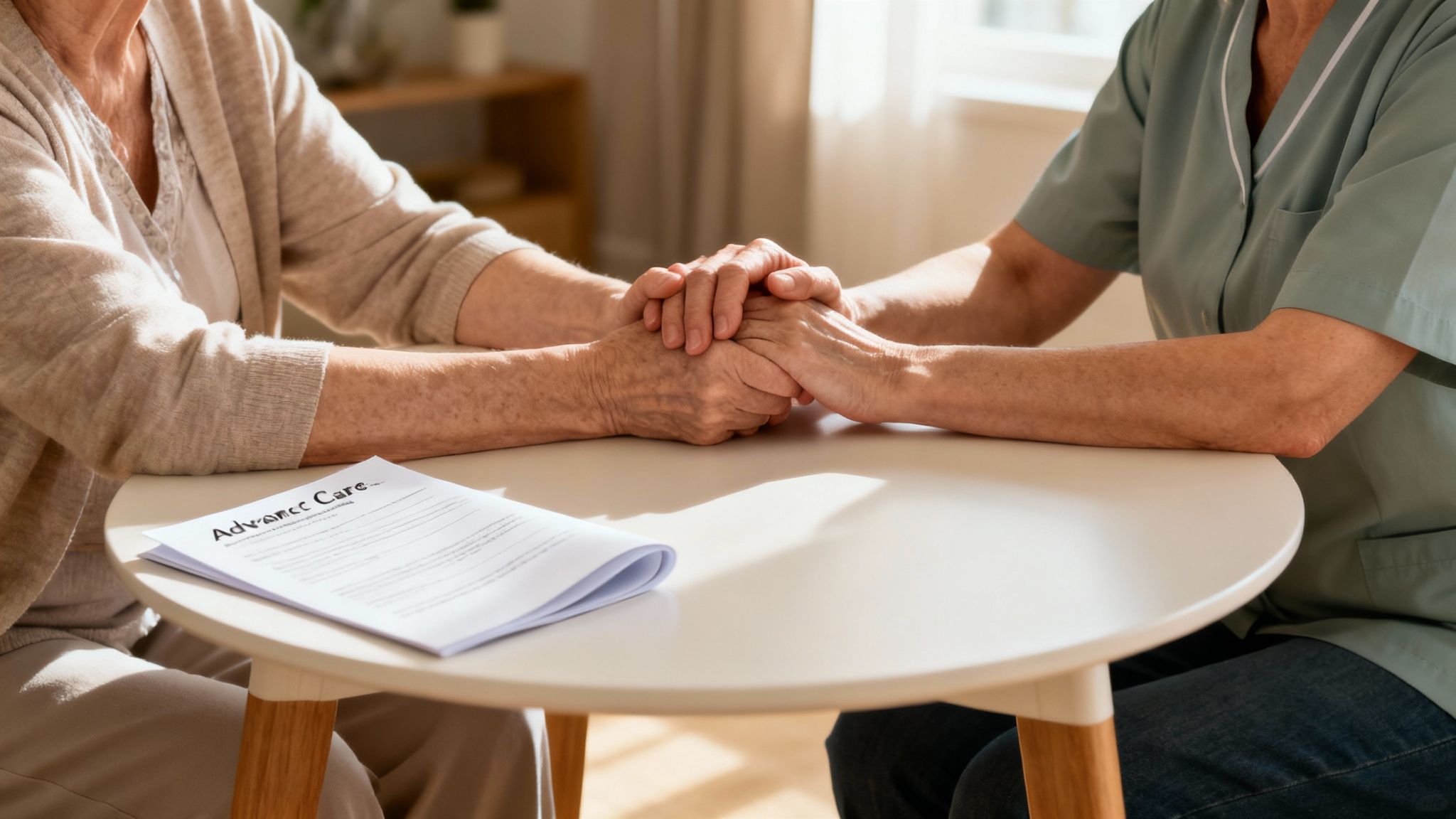
Frequent hospitalizations are a strong indicator that the burdens of the disease and its treatments are outweighing the benefits. Introducing palliative care can help break this cycle. It shifts the focus to managing symptoms at home.
Why This Sign Matters
Repeated hospital stays are exhausting for patients and families. This cycle can create a sense of fear, where every flare-up leads to another ER visit. It’s a crucial time to ask if there is a better way to provide support.
Palliative care teams specialize in managing complex symptoms outside of the hospital. By addressing issues like pain and breathlessness proactively, they can often prevent the crises that lead to readmissions. This helps patients remain in the comfort of their own home.
What to Look For
Pay attention to how often and why hospital visits happen over the last six to twelve months. A clear pattern often appears.
Specific examples include:
- A heart failure patient admitted several times in six months for fluid overload.
- An individual with advanced COPD who has visited the ER three times in four months for breathing issues.
- A cancer patient needing frequent hospital stays to manage pain or treatment side effects.
This pattern shows that the current approach is reactive, not proactive.
Next Steps: What You Can Do
If you or a loved one are in a cycle of hospitalizations, it's time to talk about palliative care. Ask the doctor, "We've been to the hospital four times this year. Would a palliative care team help us manage these symptoms at home?"
Specialized in-home support can dramatically improve quality of life. Learn more about how VNA is reducing hospital readmissions on the Central Coast with expert, compassionate care.
5. A Score Showing Severe Functional Decline
While families notice physical changes, doctors use special tools to measure how an illness affects a person. These are called performance status scales. A low score on these scales is a clear clinical sign it’s time to consider palliative care.
These scales are not just numbers. They tell a story about the illness. When a person is mostly bedbound or needs help with all basic needs, it means the disease burden is high. This data helps shift the focus to comfort.
Why This Sign Matters
Performance scales give the healthcare team, patient, and family a common language. They offer clear evidence that the illness is advanced. This information is key for making good decisions about future care.
Palliative care specialists use this information to align care with what matters most to the patient. If someone's functional status is low, continuing with demanding treatments might cause more harm than good. Instead, palliative care can focus on managing symptoms to maximize comfort.
What to Look For
These scores are given by clinicians, but families can see the behaviors that lead to them. A low score reflects a person's general state, not just one bad day.
For example, a patient with advanced cancer who can no longer get out of bed without help would have a score indicating a need for palliative support. The same is true for an individual with end-stage heart failure who is too weak for any self-care.
Next Steps: What You Can Do
If you believe your loved one's physical ability has declined this much, ask their doctor about their performance status. You can ask, "Given their current physical state, would a palliative care consultation be appropriate to help us manage symptoms?"
Central Coast VNA & Hospice starts with these honest conversations. We ensure families get the physical, emotional, and spiritual support they need, without waiting for a crisis. Learn about our approach to palliative care and how we serve families in Monterey, Salinas, Hollister, and nearby areas.
6. Saying "No More Treatment" or Asking for Comfort
Perhaps the most direct sign comes from the person with the illness. When a patient says they want to stop treatments meant to cure and focus on quality of life, it is a key moment. This wish deserves immediate respect and attention.
This statement is a powerful expression of personal values. It shows a readiness to shift the goals of care from fighting the disease to living as comfortably as possible. Honoring these wishes is the foundation of patient-centered care.
Why This Sign Matters
A person’s own words about their care goals are the most important guide. Hearing statements like, "I'm done with chemo, I just want to be comfortable," signals that the burden of treatment has become too heavy.
Ignoring these wishes can lead to unwanted treatments that cause needless suffering. Palliative care aligns medical support with these stated goals. It ensures the focus remains on comfort, dignity, and what the patient calls quality of life.
What to Look For
These statements can be direct or sometimes more quiet. Patients need a safe space to speak honestly without being judged.
Look for expressions such as:
- A patient declining appointments, saying, “I want to spend my energy on my family, not in a hospital.”
- A spouse with a healthcare proxy stating, “He wouldn’t want to live like this. He was clear about wanting comfort-focused care.”
- An individual asking their doctor, “What are my options if I don’t want to do this anymore?”
Writing down these statements helps ensure the whole healthcare team understands the patient's wishes.
Next Steps: What You Can Do
If you or your loved one are expressing these feelings, it’s a clear signal to discuss palliative care. Schedule a goals-of-care conversation with the primary doctor. Ask, "We’ve been talking about what’s most important now. How can we make comfort the main focus?"
This shift does not mean "giving up." It is a refocusing of energy toward peace and well-being. Understanding what comfort care truly involves can help families make this change with confidence.
7. A Doctor’s Estimate of a Limited Lifespan
A doctor’s clinical judgment that a person has a limited time to live is a direct sign. This prognosis, often within one to two years, is a critical point where care goals may shift. The focus can move from aggressive treatments to prioritizing comfort and quality of life.
A limited prognosis isn't about giving up. It's about adding a layer of support to make the time remaining as meaningful as possible. It opens the door for honest talks about what is most important to the person and their family.
Why This Sign Matters
Receiving a limited prognosis can feel overwhelming, but it also provides a chance to plan. It allows families to have important conversations and ensure care aligns with their values. This is when palliative care can have the biggest impact.
Nearly 60% of people who could benefit from palliative care never receive it, often because they weren't informed early enough. But those who do get early care experience better symptom control and more meaningful time with loved ones. Introducing a palliative team at this stage helps manage symptoms before they become a crisis.
What to Look For
This sign is based on a doctor's assessment, but it often follows clear patterns in a disease’s progression. Families should be aware of these patterns.
- A cancer patient whose disease has spread, leading a doctor to estimate a survival of 8-12 months.
- An individual with progressive heart failure who is not a candidate for a transplant.
- A person with Stage 4 kidney disease who decides not to start dialysis.
These situations often lead a doctor to ask the “surprise question”: "Would I be surprised if this person died in the next year?" If the answer is "no," it is a strong sign that palliative care should be discussed.
Next Steps: What You Can Do
If a doctor has shared a limited prognosis, it is the right time to start a conversation about palliative care. Ask questions focused on quality of life, such as, "How can palliative care help us manage symptoms and make the most of our time?"
It's also helpful to know the difference between palliative care and hospice. While both focus on comfort, hospice is for those with a prognosis of six months or less. You can learn more about when to call hospice to understand the differences.
Your Next Step: Starting the Conversation
Recognizing these signs can feel difficult. It often marks a big shift in your family’s journey. However, acknowledging these changes is a courageous step toward ensuring your loved one gets the most compassionate care possible.
Many families wait until a crisis hits to discuss palliative care. This leads to stressful, rushed decisions in a hospital. Early talks, however, allow for a thoughtful approach to managing pain, stress, and other symptoms.
Turning Observation into Action
Moving forward requires gentle persistence and clear communication. Your role is to be an advocate for comfort and dignity.
Here are your next steps:
- Write Down Your Observations: Before the next doctor’s appointment, note specific examples of the signs you’ve seen. This gives the medical team a clear picture.
- Use ‘I’ Statements: When talking to your loved one, approach the subject with empathy. You could say, “I’m worried about your pain, and I want to make sure we’re doing everything to help you feel comfortable.”
- Prepare Questions for the Doctor: Go to the appointment with a list. Ask things like, “Could palliative care help manage these symptoms at home?” or “How can we best support the goal of quality of life?”
Planning for the Future
When a prognosis is limited, talks often turn to future medical and legal decisions. It's crucial for families to understand what a Power of Attorney entails. This document names who will make healthcare choices if a patient cannot.
At Central Coast VNA & Hospice, our mission is to guide families through these moments. For over 74 years, our nonprofit has served communities across Monterey County, San Benito County, Santa Cruz County, and South Santa Clara County. As a local, mission-driven provider, our team of Registered Nurses, Social Workers, and Chaplains provides support right at home.
If you’re unsure whether it’s time to ask about care options, Central Coast VNA & Hospice is here to help. We serve Monterey, Santa Cruz, Salinas, Hollister, and surrounding communities with compassion and clarity. Contact us to start the conversation.
Frequently Asked Questions (FAQs)
1. What is the difference between palliative care and hospice care?
Palliative care can be given at any stage of a serious illness, alongside curative treatments. Hospice care is for individuals with a life expectancy of six months or less, when curative treatments have stopped. Both focus on comfort and quality of life.
2. Can you receive palliative care at home?
Yes, palliative care is often provided at home. Central Coast VNA & Hospice specializes in bringing this supportive care to patients in Monterey County and surrounding areas, allowing them to remain in a comfortable, familiar setting.
3. Does accepting palliative care mean we are giving up?
Not at all. Palliative care is an extra layer of support that works with your current medical team. The goal is to improve quality of life by managing symptoms, which can help patients feel strong enough to continue with their primary treatments.
4. Who is part of a palliative care team?
A typical team includes a palliative care doctor or nurse practitioner, a Registered Nurse, a Social Worker, and a Chaplain. This team works together to address the physical, emotional, and spiritual needs of the patient and their family.
5. How do I ask our doctor about palliative care?
Start by sharing your observations. You can say, "I've noticed [symptom or change], and I've read that palliative care can help. Could we have a consultation to see if it would be a good fit for us?"
If you see these signs and believe your loved one could benefit from an added layer of support, reach out to our compassionate team at VNA and Hospice. We are here to help you navigate your options and provide comfort, dignity, and care at home.
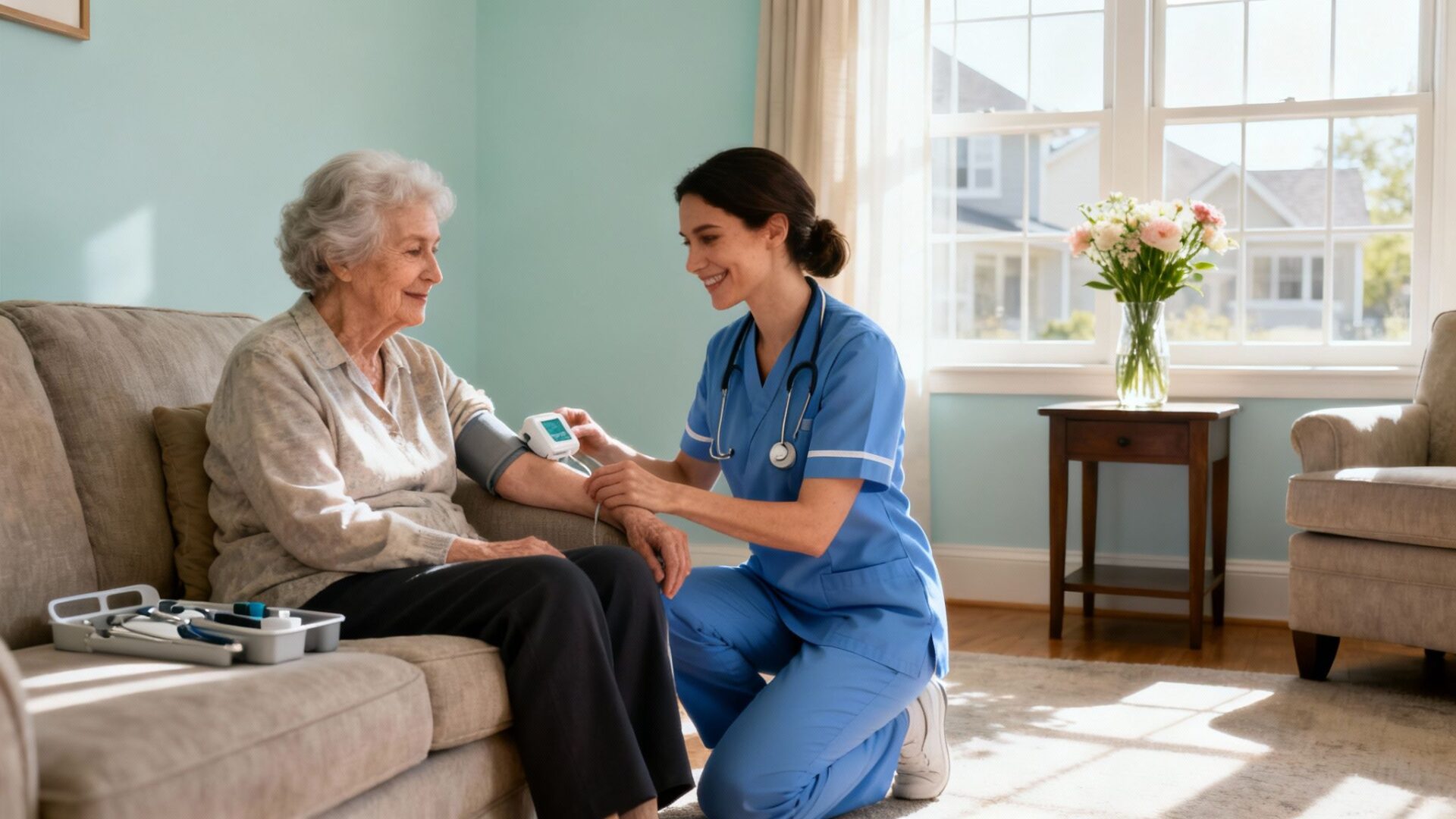
Your Skilled Nursing Care Home Guide
When a doctor mentions skilled nursing care, many people think of a nursing home. But this expert medical care can often be delivered in your own home. This approach helps people recover where they feel most comfortable.
What Is Skilled Nursing Care at Home?

Skilled nursing care at home is a type of home health service. It involves medical care from licensed health professionals like Registered Nurses. This is different from personal assistance, as it is prescribed by a doctor.
This care helps a patient recover from surgery, illness, or injury. It is also vital for managing complex, long-term health problems. It's like bringing the hospital's expertise into your living room.
Instead of moving to a new place, a team of professionals comes to you. For over 74 years, Central Coast VNA & Hospice has provided this care. We help people in Monterey County and San Benito County live with dignity.
Key Aspects of At-Home Skilled Care
This care focuses on medical needs that only trained clinicians can handle. It bridges the gap between a hospital stay and returning to daily life. The goal is to improve a patient's condition or prevent it from getting worse.
Here are the main parts of this care:
- Medical Treatments: A Registered Nurse can provide wound care, IV therapy, and injections.
- Disease Management: Clinicians help patients manage chronic conditions like diabetes or heart failure.
- Rehabilitative Therapy: Therapists work with patients to rebuild strength and restore mobility.
- Personalized Care Plans: Each plan is created with the patient’s doctor to meet specific health goals.
The need for long-term care is growing. According to one report, the global market was $1.1 trillion in 2022. It is also estimated that about 70% of people over 65 will need some form of long-term care.
For families on the Central Coast, in-home skilled nursing means dedicated, one-on-one attention. Our compassionate team is part of the local community. It helps patients heal in a familiar, comforting environment.
As a nonprofit, mission-driven provider, CCVNA wants to make high-quality care accessible. It is important to understand all of your options. To learn more, check out our guide on what is skilled nursing care.
Why Choose In-Home Skilled Nursing Over a Facility?
Choosing where a loved one receives care is a big decision. While nursing homes are important, in-home care offers unique benefits. It supports both physical recovery and emotional well-being.
The biggest benefit is being at home. Healing in a familiar place can reduce stress. This can create a positive mindset that helps speed up recovery.
The Power of One-on-One Attention
In a nursing home, staff often care for many patients at once. With in-home skilled nursing, the focus is on one person.
When a Registered Nurse from Central Coast VNA & Hospice visits, their attention is 100% on your loved one. This dedicated care is hard to find in a large facility.
This focused attention leads to better results:
- Truly Custom Care Plans: Our clinicians can adjust the care plan in real-time for the best results.
- Stronger Patient-Provider Bonds: Trust builds quickly when the same team provides consistent care.
- Catching Problems Early: Our nurses can spot small changes in a patient's condition before they become big issues.
Comparing Skilled Nursing at Home vs. Nursing Home Facility
Here is a side-by-side look at the two options to help you see the differences.
| Feature | Skilled Nursing at Home (CCVNA) | Residential Nursing Home Facility |
|---|---|---|
| Environment | Familiar, comfortable, and private home setting. | Institutional setting with shared spaces and a structured schedule. |
| Caregiver Attention | Dedicated, one-on-one care during each visit. | Staff care for multiple residents simultaneously. |
| Family Involvement | Family can be present and actively involved in care. | Involvement is often limited to visiting hours and scheduled updates. |
| Independence & Comfort | Maximizes independence and personal comfort. | Daily life is more regimented and less personalized. |
| Infection Risk | Lower risk of exposure to infections. | Higher risk due to the close proximity of many residents. |
| Cost-Effectiveness | Often more affordable as it avoids room and board costs. | Can be very expensive, including costs for lodging and meals. |
The right choice depends on a person's needs and preferences. For many, the benefits of healing at home are clear.
More Than Just Medical Care: The Emotional & Safety Perks
In-home care benefits the entire family. You can be involved in the care process and stay informed. This provides incredible peace of mind.
Safety is also a major factor. At home, there is a lower risk of exposure to infections. This is very important for anyone with a weak immune system.
For families across Monterey, San Benito, Santa Cruz, and South Santa Clara counties, this care makes a big difference. It blends expert medical support, safety, and comfort.
Choosing in-home skilled nursing honors a loved one’s wish to heal in a secure place. It puts the patient’s comfort and dignity first during their recovery journey.
At Central Coast VNA & Hospice, our nonprofit mission drives us. We believe healing happens best at home. Our team is committed to making that a reality for families in our community.
Services Included in Your Care Plan
Skilled nursing care is a specific type of medical care. It can only be done by a licensed professional, like a Registered Nurse. It is a full care plan designed by your doctor and carried out by our team.
This plan is a roadmap for your health. It brings hospital-quality support to you. This approach focuses on your medical needs and overall well-being.
Medical and Clinical Services
The core of a skilled nursing plan is medical care from a Registered Nurse. These professionals bring clinical expertise and compassion to your home. They manage complex health situations and guide your recovery.
Here’s a look at what they do:
- Wound Care Management: Proper wound care is key to preventing infection and helping you heal. Our nurses are experts in caring for all types of wounds.
- Intravenous (IV) Therapy: Our nurses can manage your IV line at home if you need medication or fluids.
- Medication Management and Education: A nurse ensures you take your medicine correctly. They also teach you about side effects.
- Chronic Disease Management: Our team helps you monitor symptoms for conditions like diabetes or COPD. This support helps you stay out of the hospital.
Keeping skin healthy is a big part of our care. To learn more, here is an introductory guide to pressure sores. This focus on prevention is key to how we care for our patients.
Therapeutic and Rehabilitative Support
Getting better is also about rebuilding strength and independence. Our licensed therapists are a vital part of the team. They work with you one-on-one to help you reach your goals.
"True recovery happens when expert medical care is combined with personalized therapy that rebuilds confidence and restores ability. Our goal is to help each patient not just heal, but thrive."
These therapy services help you get back to your daily routine safely:
- Physical Therapy (PT): Helps restore your mobility, strength, and balance.
- Occupational Therapy (OT): Focuses on making daily activities like dressing and bathing easier.
- Speech Therapy (ST): Assists with challenges related to communication or swallowing.
While our nurses manage medical needs, other team members provide hands-on support. To see how these roles work together, you can learn more about personalized home health aide services in Monterey County.
As our population ages, in-home options are more important. The number of Americans aged 65 and older is expected to reach 71 million by 2030. This highlights how critical effective home-based care is.
Who Qualifies for In-Home Skilled Nursing
Understanding healthcare rules can be confusing. The good news is that qualifying for skilled nursing care at home is fairly simple. The rules are designed to make sure people who need medical support can get it.
At Central Coast VNA & Hospice, we provide clear information. We want to help you get the care your loved ones deserve.
It all starts with a doctor’s order. A doctor must decide that skilled medical care is needed. This order is like a prescription for in-home clinical services.
Core Eligibility Criteria
After a doctor confirms the need for care, other rules apply. This is especially true if you use Medicare or Medi-Cal. These standards ensure home health services go to the right patients.
The main qualifications are:
- A Doctor's Order: A doctor must certify the patient needs skilled nursing care or therapy.
- Medical Necessity: The care must be a specific and effective treatment for the patient's condition.
- Being 'Homebound': This Medicare term means leaving home takes a lot of effort. It may require help from another person or a device like a walker.
This chart shows how a doctor’s order is the starting point for qualifying.
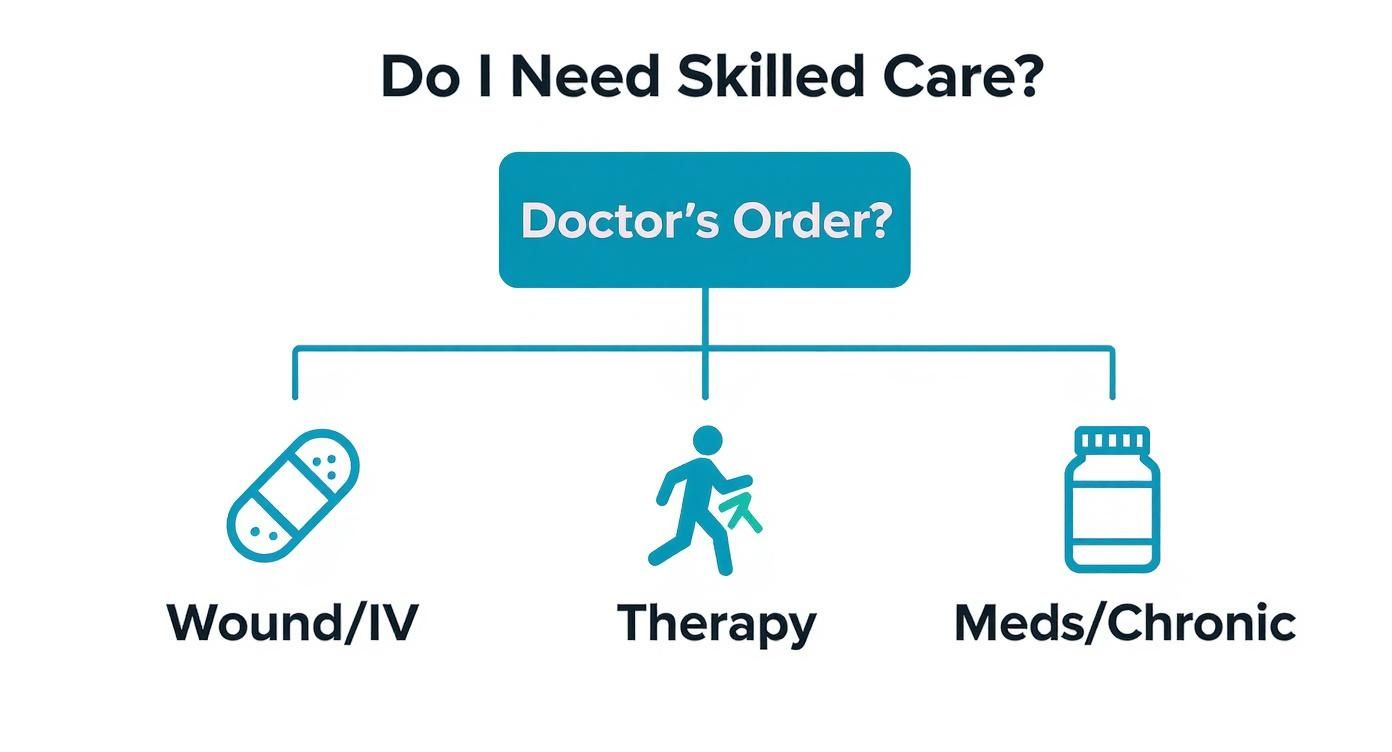
As you can see, the path to care begins when a doctor identifies a medical need.
Understanding the 'Homebound' Status
The term "homebound" can be confusing. It does not mean a person is stuck in bed or can never leave home. Patients can still go to medical appointments or attend special family events.
The main idea is that leaving home is not a simple activity anymore. Understanding this definition is an important part of the process. For more details, you can read our detailed explanation on qualifying for home health care.
Why In-Home Care Is a Critical Option
The demand for quality care is rising. Many nursing homes struggle to keep up. In 2022, a survey found that 84% of nursing homes reported staffing shortages.
This crisis led to 54% of facilities turning away new residents. They simply did not have enough people to provide care.
For families in Santa Cruz County, South Santa Clara County, and across the Central Coast, a reliable in-home skilled nursing option is more important than ever. It provides high-quality medical attention without the worry of facility waitlists.
As a trusted local nonprofit, Central Coast VNA & Hospice is here to meet this need. Our team of Registered Nurses and therapists has provided expert care for over 74 years. If you think your loved one may qualify, the first step is to talk with their doctor.
What to Expect During Your First Visit
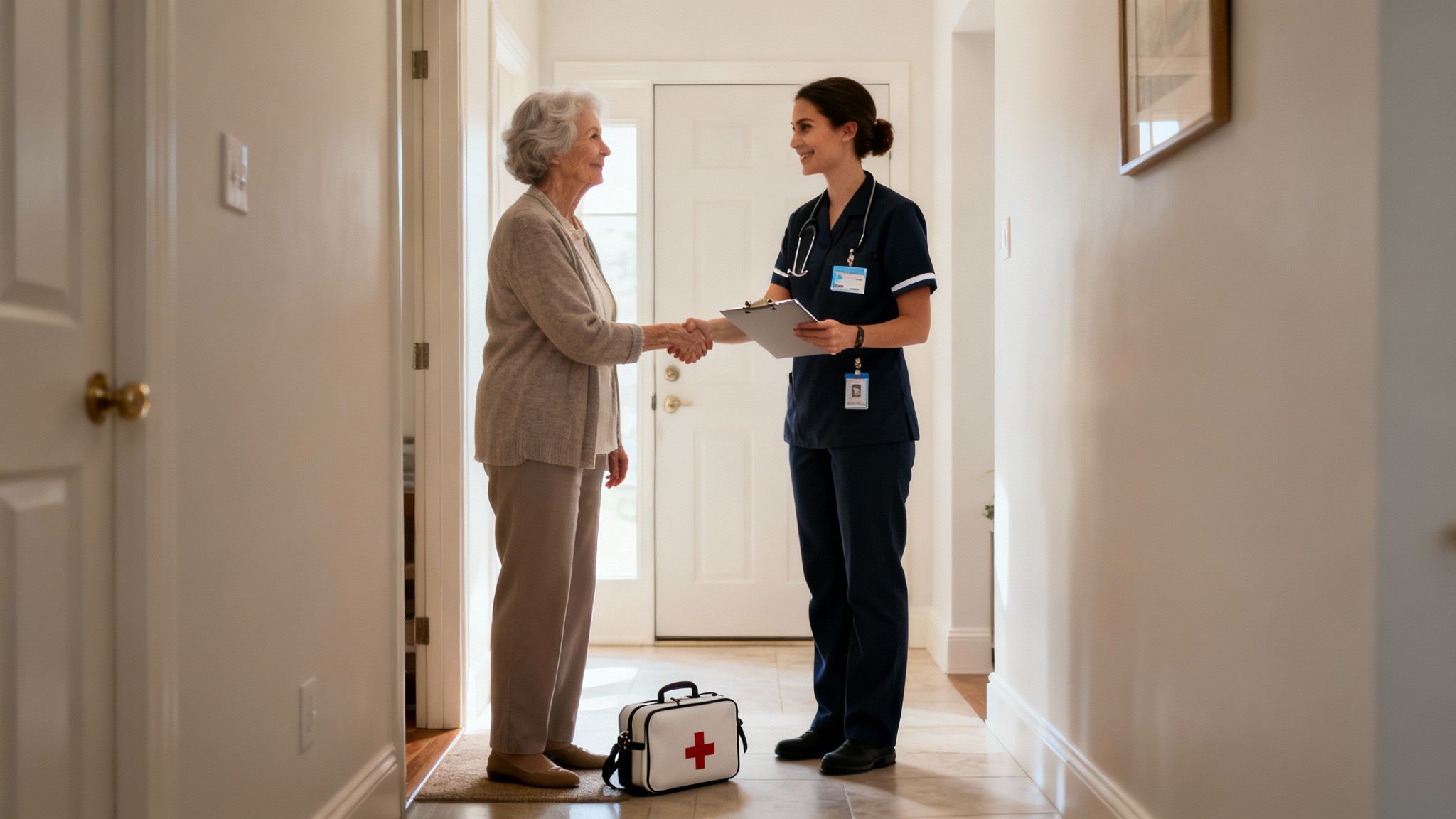
Starting new medical care can feel uncertain. At Central Coast VNA & Hospice, we understand. Our first visit is designed to build trust and confidence from the start.
This first meeting is more than an introduction. It is a joint effort where our Registered Nurse gets to know you. This is the most important step in creating a successful recovery plan.
The Initial Phone Call and Scheduling
Our process starts with a phone call. A coordinator will call to schedule the first visit at a time that works for you. We will confirm your information and answer any questions you have.
This call is our first chance to listen. We want you to feel prepared and comfortable before our Registered Nurse arrives.
Your Comprehensive In-Home Assessment
When the CCVNA Registered Nurse arrives, their goal is to listen and learn. They will do a full health assessment. This includes reviewing your medications and discussing your recovery goals.
This assessment is a partnership. We want to hear what is most important to you.
The visit also includes a safety check of your home. This is to make sure you are safe.
- Safety First: The nurse will look for fall hazards like loose rugs and suggest simple changes.
- Medical Needs: They will find the best spot for medical supplies.
- Emergency Planning: We will review your emergency contacts and create a clear plan.
The first visit is where our commitment to compassionate, patient-centered care comes to life. We promise to see you as a person with unique needs and goals.
Creating Your Personalized Care Plan
The final part of the visit is creating your care plan. The Registered Nurse will work with you, your family, and your doctor. This plan is a roadmap for your care.
It will outline the services you will receive and how often we will visit. From day one, you are an active part of your own care.
For families across Monterey County, San Benito County, Santa Cruz County, and South Santa Clara County, this team approach ensures your care meets your needs. This first visit sets the stage for a trusting relationship.
How CCVNA Delivers Expert Care on the Central Coast
For over 74 years, Central Coast VNA & Hospice has been your neighbor. We are a dedicated part of families' lives across Monterey, San Benito, Santa Cruz, and South Santa Clara counties. As a local nonprofit, our mission is about your well-being.
This community focus shapes how we provide skilled nursing care at home. Our services are brought to you by a team of professionals. Your care is coordinated by Registered Nurses and therapists who work with your doctor.
A Seamless Continuum of Care
Health needs can change. Our continuum of care is built to adapt with you. We are one of the few local organizations providing home health, palliative care, and hospice care.
This structure provides peace of mind. If a patient needs more support, the transition is smooth. You stay with a team you already know and trust.
Our promise is simple: to provide the right level of care at the right time. We offer a full range of services to ensure consistent, compassionate support through every stage of a patient’s journey.
Our team approach means clear communication is key. We focus on strong clinical documentation improvement strategies to keep records accurate. We invite you to learn more about CCVNA’s comprehensive skilled care.
This integrated model is how we deliver expert care. It ensures that no matter what comes next, your family is supported by a familiar, compassionate team. Ready to learn how we can support your family? Contact us today to learn more.
Frequently Asked Questions About Skilled Nursing Care at Home
It is normal to have questions when exploring skilled nursing care at home. We have answered some common questions from families on the Central Coast. Our goal is to give you the clarity you need.
1. What is a skilled nursing care home?
A "skilled nursing care home" is often used to describe a nursing home facility. However, these same skilled nursing services can be provided right in your own house. This allows you to receive expert medical care from Registered Nurses and therapists in a comfortable, familiar setting.
2. How is skilled nursing different from personal care?
Skilled nursing care involves medical tasks that must be performed by a licensed health professional, such as a Registered Nurse. This includes wound care, IV therapy, and medication management. Personal care helps with daily activities like bathing, dressing, and meals, and is often provided by a Home Health Aide.
3. How often will a nurse or therapist visit?
The number of visits depends on the care plan ordered by your doctor. Someone recovering from surgery might need daily visits for wound care. Another person may only need a Registered Nurse to visit a few times a week for physical therapy. The schedule is adjusted as your needs change.
4. Is skilled nursing care at home covered by insurance?
Yes, in most cases. Medicare Part A and Part B often cover these services if you meet the criteria, like being homebound. Many private insurance plans and Medi-Cal also provide coverage. You can learn more about Medicare skilled nursing coverage in our detailed guide.
5. Can a patient get skilled nursing in an assisted living facility?
Yes. A person's home can be an assisted living facility or a board-and-care home. Our clinicians provide the same high level of medical care to residents in these settings. This allows people to get the medical support they need without having to move.
6. How is skilled nursing different from palliative or hospice care?
These services have different goals. Skilled nursing care focuses on recovery and helping patients get better after an illness or surgery. Palliative care aims to improve quality of life by managing symptoms of a serious illness. Hospice care provides comfort and dignity for those nearing the end of life. Central Coast VNA & Hospice offers all three as part of our continuum of care.
If you have more questions or think skilled nursing care at home could be right for your family, the team at Central Coast VNA & Hospice is here to help. With over 74 years of nonprofit service to our community, we are dedicated to providing the expert, compassionate care you deserve. Contact us today to learn more.
Hospice Isn’t Just for the Final Days of Life
It's a common myth that hospice is only for the final few days of life. Many families wait, thinking it’s a last resort. In reality, it’s a support system that can bring comfort and stability for months.
Let's clear up this misconception. Understanding how starting hospice earlier can make a world of difference is the first step.
Rethinking When Hospice Care Should Begin
Hospice care isn’t about waiting for the end. It’s about making the most of the time we have. That often means bringing in a dedicated team before a crisis hits.
Unfortunately, many families are referred to hospice too late. According to the National Hospice and Palliative Care Organization (NHPCO), nearly half of hospice patients received care for 17 days or less in 2020 (NHPCO, 2022). This means they miss out on the full benefits.
When you explore hospice sooner, you give everyone time to breathe. Your loved one can build a trusting relationship with their care team. It also gives that team the ability to manage complex symptoms effectively.
For families, it provides profound peace of mind. You’ll have a team ready to help with:
- Expert symptom relief and pain management.
- Emotional and spiritual support for patients and families.
- Skilled team visits in the comfort of home, helping avoid stressful hospital trips.
Key Advantages of Early Enrollment
Here on the Central Coast, families have a trusted local partner. Central Coast VNA & Hospice brings over 74 years of experience. We serve our communities in Monterey County, San Benito County, Santa Cruz County, and South Santa Clara County.
As a nonprofit provider, our focus is entirely on compassionate, personalized care. We are deeply rooted in the communities we serve. For more than seven decades, our teams have helped neighbors in Salinas, Hollister, and Santa Cruz navigate serious illness.
Our team-based approach brings together Registered Nurses, Hospice Aides, Chaplains, and Social Workers. We create a complete circle of support right in your home. If you’re looking for more specifics, our guide on when to call hospice is a great resource.
The illustration below shows how support changes from early to late enrollment.
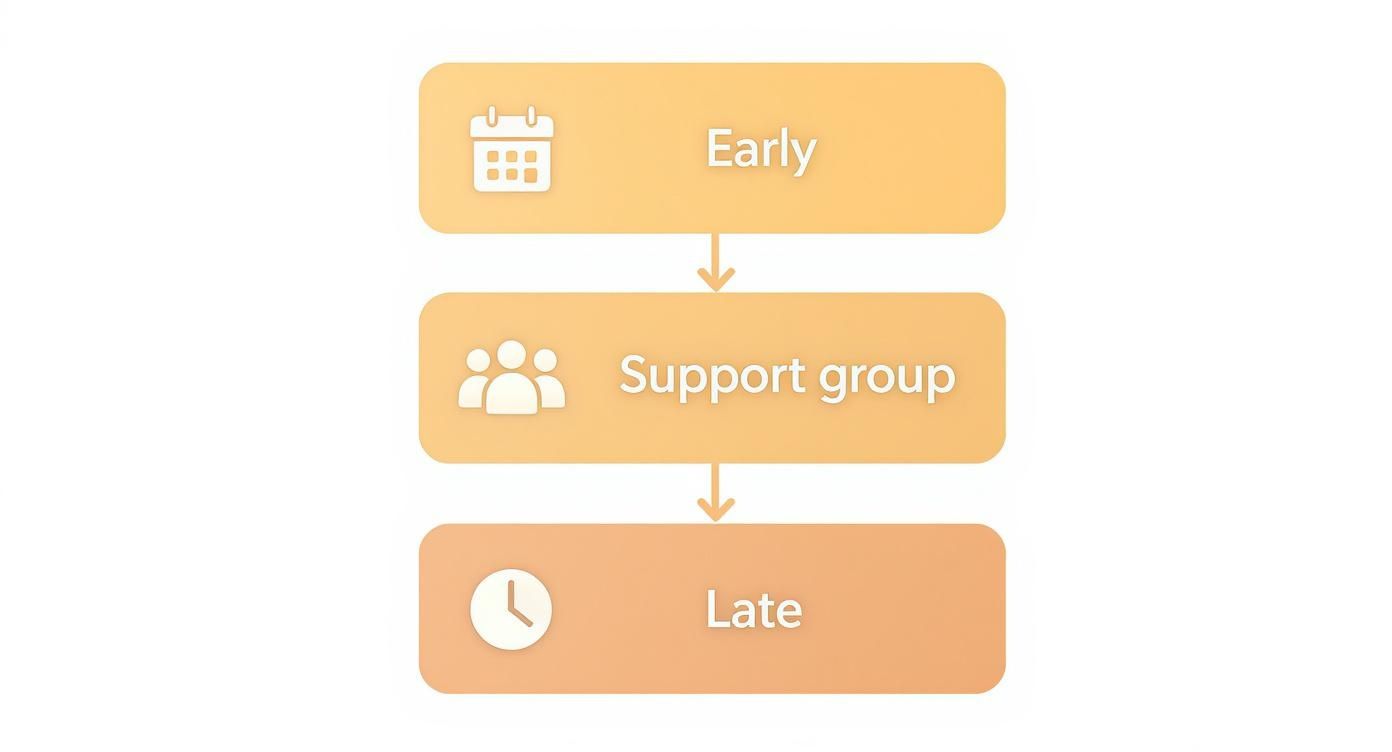
Early hospice enrollment provides steady relief and planning. This contrasts with the urgent, crisis-driven care that comes with waiting.
Choosing hospice earlier means care plans can be thoughtful and evolve over time. Families have space to discuss goals and arrange for equipment without rushing.
Hospice Care Early vs. Late Enrollment
The difference between starting hospice early versus waiting is night and day. This table breaks down what that experience can look like for patients and families.
| Care Aspect | Benefits of Early Enrollment | Challenges of Late Enrollment |
|---|---|---|
| Symptom Management | Proactive, steady relief from pain and other symptoms, leading to fewer flare-ups. | A rush to manage severe pain and symptoms in a crisis, which can be distressing. |
| Family Stress | Consistent guidance and support reduce anxiety and empower family members. | Last-minute planning, difficult decisions, and emotional strain add to a stressful time. |
| Hospital Visits | A dedicated home team helps prevent emergencies, leading to fewer hospitalizations. | Frequent, disruptive trips to the ER often happen when symptoms aren't managed at home. |
Looking into hospice sooner allows families to shift their focus. They can move from crisis management to creating meaningful moments together.
The experienced team at Central Coast VNA & Hospice is here to offer support. A great first step is to discuss the options with a primary physician today.
Understanding When Hospice Is the Right Choice
Deciding on the right time for hospice care is an emotional process. Families in Monterey and Salinas often worry, "Are we choosing this too soon?" The reality is, hospice is an option when a doctor believes a person has a life expectancy of six months or less.
But please, don't get stuck on that number. The six-month timeframe isn't a strict deadline. It's a guideline that opens the door to a different kind of support.
The Shift to Comfort-Focused Care
Choosing hospice marks a significant change in healthcare goals. Instead of hospital stays and treatments aimed at a cure, the priority becomes comfort. We call this comfort care, and it's all about managing symptoms.
This transition allows patients to spend their time in a familiar place. They can be surrounded by the people they love. It’s a proactive decision to live with the highest possible quality of life.
"I had a lot of misconceptions about what hospice care truly was. It wasn’t until we were at our lowest that I knew I had to make the call." — A family member's reflection.
This is a feeling we hear often from families in Monterey County. The decision isn't about giving up. It’s about choosing a path centered on peace and compassionate support.
Who Qualifies for Hospice Care?
A physician will look for specific signs when determining if a patient is ready for hospice. Every person's journey is unique. Learning about them can help you better understand how to know when hospice is needed.
Doctors often consider a combination of factors, including:
- Frequent Hospitalizations: A pattern of recurring trips to the ER or hospital stays.
- Decline in Function: Significant changes in their ability to handle daily activities.
- Increasing Symptoms: Pain, shortness of breath, or fatigue getting worse.
- Significant Weight Loss: Unplanned weight loss can be a sign the body is struggling.
It’s important to remember that hospice is not just for people with cancer. Patients with advanced heart disease, dementia, and COPD can also benefit.
Your Dedicated Care Team at Central Coast VNA & Hospice
When your family chooses Central Coast VNA & Hospice, you welcome a dedicated team into your life. As a nonprofit, our mission is to build a circle of support around the patient and family. This team works together to address physical, emotional, and spiritual needs.
Your family’s dedicated care team will include:
- Registered Nurse: Manages medical care, focusing on pain and symptom control.
- Hospice Aide: Provides gentle, hands-on personal care to ensure comfort and dignity.
- Medical Social Worker: Offers emotional support and helps your family access resources.
- Chaplain: Provides non-denominational spiritual guidance and comfort.
Together, this team provides steadfast, compassionate guidance. For over 74 years, families across the Central Coast have put their trust in us.
The Comprehensive Benefits of Early Hospice Enrollment
Bringing hospice care in earlier unlocks a powerful support system. When care begins weeks or even months before the final days, the focus shifts. It moves from crisis management to creating a stable, comfortable environment.
Instead of reacting to severe symptoms, the hospice team can get ahead of things. This consistent, expert care happens in the comfort of home. It's about giving your loved one more good days.
Better Symptom Management and Fewer Hospitalizations
One immediate benefit of starting hospice sooner is superior symptom control. A Registered Nurse from Central Coast VNA & Hospice will create a personalized care plan. This plan tackles physical discomfort from every angle.
This consistent oversight significantly reduces the need for hospitalizations. That stability improves the patient's well-being. It also brings peace of mind to the entire family.
Emotional and Spiritual Support for the Whole Family
Hospice care isn't just about physical health. It’s about supporting the whole person and their family. The Central Coast VNA & Hospice team includes Medical Social Workers and Chaplains.
They help patients and families navigate complicated feelings. For family members, this support can feel like a lifeline. It helps reduce burnout and provides a safe space to process everything.
Early enrollment isn't about giving up hope; it’s about redefining it. Hope becomes hope for comfort, peace, and more quality time together.
The Full Spectrum of Hospice Services
When a patient enrolls with Central Coast VNA & Hospice, they get access to a full team. You can learn more about what to expect with hospice care in our detailed guide.
Our team provides:
- Expert Medication Management: A Registered Nurse ensures medications keep symptoms under control.
- Personal Care Assistance: A gentle Hospice Aide helps with daily activities.
- Medical Equipment and Supplies: We coordinate delivery of items like a hospital bed or oxygen.
- Grief and Bereavement Support: We offer guidance and counseling for up to a year after a loved one’s passing.
Hospice isn’t just for the last few days. It’s a compassionate choice that prioritizes living as fully as possible.
Distinguishing Between Hospice and Palliative Care
Many families hear "hospice" and "palliative care" used for the same thing. They both aim to provide comfort. But they aren't the same.
Think of palliative care as a supportive layer that can begin at diagnosis. Its focus is on relieving symptoms, pain, and stress. A person can receive palliative care while still pursuing curative treatments.
What Is Palliative Care
Palliative care works alongside a patient's primary doctors. It adds an extra dimension of support. We focus on managing discomfort and making daily life better.
Central Coast VNA & Hospice provides expert palliative care at home. We serve Monterey County, San Benito County, and Santa Cruz County. Our teams collaborate with a patient’s doctors to create a holistic plan.
How Hospice Fits In
So, where does hospice fit in? Hospice is a specific type of palliative care. It's for when the focus shifts away from trying to cure an illness.
Hospice care begins when a doctor believes a patient has six months or less to live. This is when curative treatments are no longer being sought. Simply put, all hospice care is palliative, but not all palliative care is hospice.
An easy way to think about it: Palliative care supports you through a long health journey. Hospice is a specialized program for the final chapter of that journey.
Understanding this distinction is key to making informed choices. Our guide on hospice vs. palliative care offers more information.
By offering both services, Central Coast VNA & Hospice ensures a seamless continuum of care. We can support a family with palliative services early on. If the time comes, we transition them gently to hospice care.
How Medicare and Insurance Cover Hospice Care
Concerns about cost should never stand in the way of care. Many families across Monterey and San Benito counties find relief in learning how accessible hospice is.
The vast majority of hospice care is paid for by the Medicare Hospice Benefit. This coverage is designed to lift the financial burden from families. Once a patient elects this benefit, Medicare covers nearly all costs.
What the Medicare Hospice Benefit Includes
The Medicare Hospice Benefit is all-encompassing. It covers the services of the entire care team. This ensures patients get holistic support without the stress of multiple bills.
This coverage typically includes:
- The full care team: Visits from your Registered Nurse, Hospice Aide, and more.
- Medical equipment: A hospital bed, oxygen, or a wheelchair delivered to the home.
- Medications: Prescription drugs for pain relief and symptom management.
- Medical supplies: Items such as wound care supplies and incontinence products.
This structure ensures families receive complete support. They do not face overwhelming out-of-pocket expenses.
By covering these services, the Medicare Hospice Benefit allows families to concentrate on quality time together. The focus shifts from finances to meaningful moments.
Coverage Beyond Medicare
What if you're not on Medicare? Many other insurance plans provide similar coverage. Most private insurance policies and Medi-Cal offer a hospice benefit.
The team at Central Coast VNA & Hospice can help families understand their specific plan. This includes those in South Santa Clara County. As a nonprofit with over 74 years of service, our mission is to ensure everyone has access to care.
If you have questions, read more about how to pay for hospice care. You can also contact our team for a supportive conversation.
Taking the Next Step with Compassionate Support
Realizing that hospice isn’t just for the final days is a game-changer. It’s the first step toward giving your loved one the best possible care. Learning about your options early empowers you to prioritize comfort and quality of life.
Getting support sooner gives the family room to breathe. Instead of reacting to emergencies, you can focus on being present. You hand off medical complexities to a dedicated team, creating more meaningful moments.
A Compassionate Conversation Awaits
Making decisions about care for a serious illness is overwhelming. You don’t have to do it alone. The team at Central Coast VNA & Hospice is here to offer guidance and answer questions.
Our mission is to help families across Monterey, San Benito, Santa Cruz, and South Santa Clara counties. We want you to navigate this journey with clarity and confidence.
We also know that care extends to the entire family. Our support includes bereavement services like grief counselling services. We continue to offer support for up to a year after a loved one’s passing.
Helping a loved one live well through serious illness starts with knowing your options. Learn more about how Central Coast VNA’s hospice team supports families from the moment care begins.
As a nonprofit with over 74 years of local service, our focus is on providing honorable, effective care. We are here to support you with a gentle, no-pressure conversation.
When you’re ready, we invite you to contact Central Coast VNA & Hospice. Let us help you find the peace of mind that comes from having a trusted partner.
Frequently Asked Questions About Hospice Care
1. Does choosing hospice mean we are giving up?
Absolutely not. Choosing hospice is a decision to shift the goal of care. The focus moves from curing an illness to maximizing comfort, dignity, and quality of life.
2. What if my loved one lives longer than six months?
That's okay. The six-month timeline is a guideline for eligibility, not a strict limit. As long as a physician certifies that the patient meets the criteria, they can remain on hospice care.
3. Can we stop hospice care if we change our minds?
Yes. A patient can choose to stop hospice care at any time. For example, if a patient’s condition improves or a new treatment becomes available, they can disenroll from hospice to pursue that option.
4. Where is hospice care provided?
Most hospice care happens right where the patient calls home. For the families we serve in Monterey County, San Benito County, and Santa Cruz County, this could be a private house, an assisted living community, or a skilled nursing facility.
5. Who pays for hospice care?
Hospice is a fully covered benefit under Medicare Part A. This covers the care team, medications, and medical equipment related to the terminal illness. Most private insurance plans and Medi-Cal also offer similar comprehensive benefits.
The journey through serious illness is never easy, but you don’t have to walk it alone. Central Coast VNA & Hospice is here to provide the compassionate expertise your family deserves, right here on the Central Coast. If you have more questions or feel ready to explore your options, please reach out for a no-pressure conversation. Learn more about our services at https://ccvna.com.

3 Ways to Know It’s Time for Help at Home in 2026
Making the decision to bring professional health services into the home is a significant choice. On the Central Coast, many families wait until a crisis hits before seeking support. This delay in 2026 often comes from wrong ideas about services like palliative and hospice care.
Many people think these services are only for the final days of life. However, getting help earlier from a trusted provider like Central Coast VNA & Hospice leads to a much better quality of life. For over 74 years, our nonprofit mission has been to serve families with compassionate care. We work in Monterey County, San Benito County, Santa Cruz County, and South Santa Clara County.
This guide will show you three clear ways to know it’s time for help at home. Understanding your options is the first step. Consulting a comprehensive guide to home services for the elderly can help. We want to empower you to make good choices for your loved one.
1. Increasing Physical Challenges and Safety Concerns
One of the clearest signs that it's time for help at home is when physical challenges create safety risks. This is more than just slowing down. It means daily activities that were once easy have become hard.
This can turn a familiar home into a place of potential danger. When tasks like bathing, dressing, or making a meal become difficult, it is a sign that professional support is needed. Families are often the first to notice these changes.
They might see more stumbles or falls, or a decline in personal hygiene. These are not small issues. They show that a loved one's home is no longer safe without skilled help.
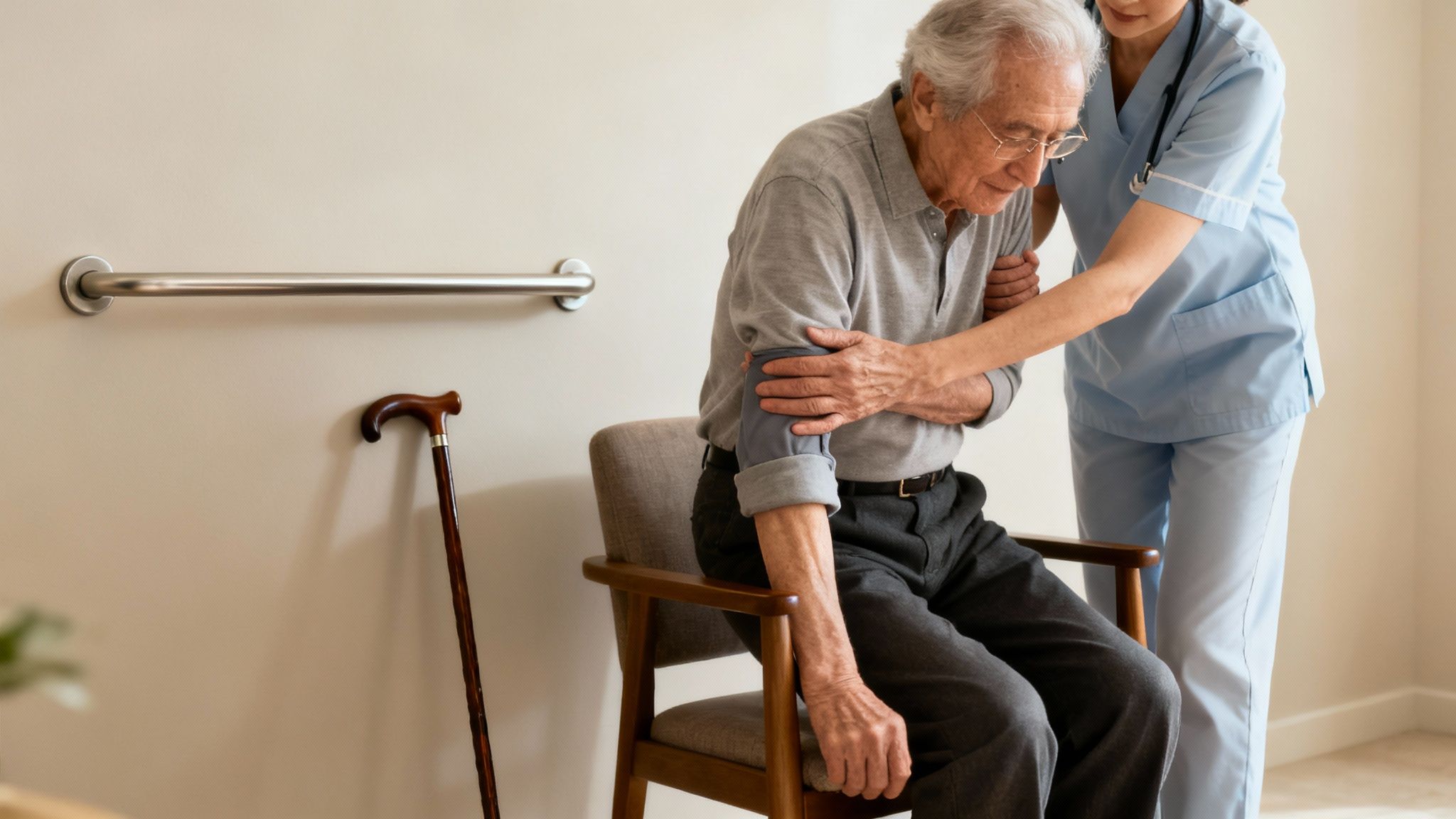
Red Flags to Watch For
Recognizing specific signs is the first step. Look for these changes:
- Difficulty with Mobility: Needing to hold onto furniture to walk or struggling to get up from a chair.
- Decline in Personal Care: Infrequent bathing or wearing dirty clothes. This is often due to physical limits.
- Unexplained Weight Loss: Spoiled food in the fridge or weight loss can mean meal preparation is too hard.
- Medication Mishaps: Forgetting to take pills or taking the wrong doses are serious safety risks.
How Central Coast VNA & Hospice Can Help
When these challenges arise, Central Coast VNA & Hospice provides a team-based approach. Our skilled clinicians work with patients and families in places like Monterey and Salinas. We create a supportive environment at home.
A Registered Nurse can help manage complex medications to prevent emergency room visits. A Physical Therapist can help a patient recover strength and balance after surgery. A Hospice Aide can assist with personal care tasks like bathing and dressing.
Our goal is to help individuals maintain their independence at home for as long as possible. If you are noticing these signs, you can learn more about our home health care services and how we can help.
2. Worsening Chronic Illness and Complex Symptoms
Another clear sign it's time for help is when a chronic illness gets worse. This leads to symptoms that are hard to manage at home. Conditions like heart failure, COPD, or cancer often bring pain, shortness of breath, and fatigue.
Families may feel overwhelmed trying to handle these symptoms alone. Frequent trips to the emergency room or hospital are a strong signal that more support is needed. This is a key moment to consider in-home palliative or hospice care.
Misconceptions often create unnecessary suffering. Many people think accepting hospice means "giving up." In reality, these services are designed to enhance comfort and dignity, often alongside treatment.

Red Flags to Watch For
It's important to recognize when symptoms are becoming unmanageable. Look for these signs:
- Increased Pain or Discomfort: Pain that is no longer controlled by current medications.
- Frequent Hospital Visits: Multiple trips to the ER or hospital admissions in the last few months.
- Significant Decline in Function: Spending most of the day in bed or a chair due to fatigue or weakness.
- Trouble Breathing: Worsening shortness of breath, even while resting.
How Central Coast VNA & Hospice Can Help
Central Coast VNA & Hospice offers expert palliative and hospice care at home. Our teams are skilled in managing complex symptoms to improve quality of life. We serve families across Monterey County, Santa Cruz County, and nearby areas.
For a patient with advancing illness, our Palliative Care team can manage pain and other symptoms. This care can be provided alongside curative treatments. Our goal is to provide relief and support.
When an illness is terminal, our hospice team provides comfort-focused care. Our team includes a Registered Nurse, Hospice Aide, Medical Social Worker, and Chaplain. We work together to support the patient and family. If you see these signs, learn more about our palliative care services.
3. Family Caregiver Burnout and Stress
Sometimes, the clearest sign isn't about the patient, but about their family caregiver. When a spouse or adult child shows signs of exhaustion, it is time for professional support. Caregiving is a demanding role that can lead to burnout.
This exhaustion can be physical, emotional, and mental. A stressed caregiver may struggle to provide safe and effective care. Ignoring caregiver burnout puts both the caregiver and the patient at risk.
Families often say they "wish they'd started sooner" with professional help. Getting support early avoids crisis and regret. It ensures the whole family is cared for. According to the National Hospice and Palliative Care Organization (NHPCO), the average hospice stay is just 17 days, which is much shorter than the six months available (NHPCO, 2021). This shows many wait too long.
Red Flags to Watch For
Recognizing caregiver burnout is essential. Watch for these signs:
- Emotional and Physical Exhaustion: Constant fatigue or feelings of being overwhelmed.
- Withdrawal from Social Life: Losing interest in hobbies and friendships.
- Increased Irritability or Anxiety: Frequent mood swings or impatience.
- Neglecting Personal Health: Skipping their own doctor's appointments or having poor eating habits.
How Central Coast VNA & Hospice Can Help
At Central Coast VNA & Hospice, we support the entire family. Our team-based approach lifts the burden from family members. This allows them to focus on quality time with their loved one.
A Registered Nurse can manage complex medical tasks. A Hospice Aide can assist with personal care, giving the family caregiver a much-needed break. Our Medical Social Workers and Chaplains provide emotional and spiritual support for everyone.
We help families in Hollister, Santa Cruz, and all our service areas. Our support makes caregiving sustainable. You're not alone and can learn how to get real support as a family caregiver on the Central Coast.
Take the Next Step with Confidence
Recognizing these signs is a loving first step. It shows you are ready to find the best support for your family. Waiting for a crisis is not the only option in 2026.
By acting early, you can introduce support that enhances safety and preserves dignity. It's not about giving up. It's about adding a layer of expert care at home. This allows you to shift from being a stressed caregiver back to being a spouse or child.
If you are unsure, just ask. Families in Monterey, Santa Cruz, Salinas, and Hollister can call us. We offer a no-pressure consultation to walk you through your options with compassion.
Your Action Plan for Moving Forward
Navigating this journey requires a clear approach. Here’s what you can do next:
- Start the Conversation: Talk openly with your loved one and family about goals like safety and comfort.
- Document Your Observations: Keep notes of the changes you see to share with healthcare providers.
- Consult with Professionals: Discuss your concerns with your loved one’s doctor.
- Explore Local Resources: Research trusted providers like Central Coast VNA & Hospice.
Making the decision to bring in help is a profound act of love. Our team is here to guide you with expertise and a compassionate heart. We will ensure you feel confident in your decisions every step of the way.
Ready to explore your options with a team that has served the Central Coast for over 74 years? Contact VNA and Hospice for a no-obligation consultation. Learn how our continuum of care can support your family.
Frequently Asked Questions (FAQs)
1. What is the difference between home health, palliative care, and hospice care?
Home health care helps patients recover from surgery, illness, or injury with skilled nursing and therapy. Palliative care focuses on symptom relief for serious illness and can be given alongside curative treatment. Hospice care is for patients with a life-limiting illness, focusing on comfort and quality of life when a cure is no longer the goal.
2. Does accepting hospice care mean we are giving up?
No, this is a common misconception. Hospice care is not about giving up. It is about shifting focus to comfort, dignity, and quality of life. It provides a team of experts to support both the patient and the family.
3. Who pays for home health and hospice services?
Most services are covered by Medicare, Medi-Cal, and private insurance. As a nonprofit organization, Central Coast VNA & Hospice provides care to all eligible patients, regardless of their ability to pay.
4. How early should we contact Central Coast VNA & Hospice?
It is never too early to learn about your options. Many families tell us they wish they had called sooner. Contacting us early allows more time for planning and ensures you get the full benefit of our support.
5. What areas do you serve?
Central Coast VNA & Hospice has served our local communities for over 74 years. We provide care in Monterey County, San Benito County, Santa Cruz County, and South Santa Clara County, including cities like Salinas and Hollister.