
When a serious illness affects your family, you may hear new terms. One of them is "comfort care." But what does that mean for you and your loved ones?
Comfort care is an approach that focuses on relief from symptoms and stress. The main goal is to improve quality of life for the patient and their family.
Understanding the Purpose of Comfort Care

At its heart, comfort care puts the patient's well-being first in every decision. It is all about making sure a person's final days or months are as peaceful as possible. It supports the entire family with relief, dignity, and peace during a difficult time.
This philosophy is the foundation of the support we provide at Central Coast VNA & Hospice. With over 74 years of dedicated service, we have deep roots helping families in our community. We serve Monterey County, San Benito County, Santa Cruz County, and South Santa Clara County.
The Core Principles of This Approach
The main idea behind comfort care is to treat the whole person, not just the disease. This means looking beyond physical symptoms. We address every need to achieve the best possible quality of life.
Here is a quick breakdown of the core principles of comfort care.
Comfort Care at a Glance
| Core Principle | What It Means for Patients and Families |
|---|---|
| Symptom Management | Our team actively works to relieve pain, shortness of breath, and other symptoms to bring peace and rest. |
| Emotional and Spiritual Support | We provide counseling and spiritual guidance from a Chaplain to help patients and families cope. |
| Family-Centered Focus | We support the entire family with education and resources, recognizing they are a key part of the journey. |
| Dignity and Respect | We honor the patient's wishes and values at every stage, ensuring they remain in control of their care. |
This complete approach is what makes comfort care so meaningful. It shifts the focus from fighting an illness to living life with the best support system. As a local, nonprofit provider, we are committed to the well-being of our community.
The True Goals of a Comfort-Focused Plan

Comfort care is not about passively waiting. It is an active plan with clear and meaningful goals. The first goal is to manage pain and other difficult physical symptoms.
This allows a patient to find true rest and relief. But this compassionate approach goes much deeper than just physical wellness. It also addresses the emotional, spiritual, and practical needs of the patient and their family.
Honoring Wishes and Maximizing Independence
A key principle of comfort care is honoring a person’s wishes and values. Our care team works with the patient and family. We create a plan that reflects what is most important to them.
This often means finding ways to maximize their independence for as long as possible. The plan helps patients keep doing things that bring them joy. This could be spending time with family or listening to music.
Comfort care is not about 'giving up.' It is about choosing to live the remaining time with dignity and peace.
The need for this kind of support is large and growing. According to the World Health Organization, an estimated 56.8 million people need palliative care each year (WHO, 2020). To find out more about this specific type of care, you can explore our guide on what is palliative care.
Providing Comprehensive Emotional Support
Beyond managing physical symptoms, a comfort plan provides emotional support. A serious illness can bring fear and anxiety for everyone involved.
At Central Coast VNA & Hospice, our team includes Medical Social Workers and Chaplains. They provide counseling, spiritual guidance, and a reassuring presence. This support extends to the entire family, helping them navigate this challenging journey.
This dedicated support helps families in Monterey County and nearby areas feel less alone. It ensures they have the resources and compassionate guidance needed to focus on their time together.
Determining When Comfort Care Is the Right Choice

Deciding when to shift from cure-focused treatment to comfort care is a tough conversation. It is a decision rooted in love and compassion.
This type of support is not about giving up. It's about changing the goal. The priority becomes easing symptoms to make sure your loved one is as comfortable as possible.
Think of someone with advanced cancer who finds treatments are no longer effective. Or a person with end-stage heart failure who struggles to breathe. For them, comfort care can be a gift, reducing pain and bringing peace.
- Advanced Cancer: When chemotherapy is no longer the path forward, comfort care steps in to manage pain and nausea.
- End-Stage Heart Failure: Medication adjustments and oxygen therapy can help a patient rest peacefully at home.
- Chronic Obstructive Pulmonary Disease (COPD): Breathing support and relaxation techniques can ease anxiety.
- Dementia: Our team is trained to create a soothing environment with gentle routines that reduce agitation.
Determining Eligibility
The conversation about comfort care often begins with a doctor’s recommendation. This is a sign that the focus should shift to well-being.
Eligibility is not just about a diagnosis. It is about how the condition impacts daily life.
The team at Central Coast VNA & Hospice listens to you and your family. We want to understand your wishes and what your loved one wants. From there, we create a clear, understandable plan for care at home.
Steps to Begin Comfort Care
Getting started is simpler than you might think.
- Talk to your doctor about your goals for care.
- Ask for a referral for comfort-focused support from CCVNA.
- Contact us to set up an assessment with our team.
Our guide on when to call hospice can offer more clarity. Choosing comfort care is a powerful decision that prioritizes peaceful moments.
Meet the Interdisciplinary Comfort Care Team
Great comfort care is a team effort. It takes a group of compassionate professionals working together. At Central Coast VNA & Hospice, we call this the interdisciplinary team.
Each person on this team brings unique skills. This ensures that every part of a patient's well-being is addressed. For families across Monterey County, San Benito County, Santa Cruz County, and South Santa Clara County, this brings peace of mind.
Key Members of Your Support System
The comfort care team provides complete support in the patient's home. Every professional plays a role in creating a personalized care plan.
Here are the experts who may be part of your dedicated team:
- Registered Nurse (RN): The RN is often the main point of contact. They are experts in managing symptoms and medications.
- Hospice Aide: These compassionate professionals provide hands-on personal care. They help with daily activities like bathing and dressing to maintain dignity.
- Medical Social Worker: A Medical Social Worker offers emotional support. They also connect families with community resources.
The strength of the team is its ability to see the whole person, not just the illness. This ensures care is personal, respectful, and centered on what matters most.
Additional Layers of Compassionate Care
Our team also includes members focused on spiritual and emotional well-being. This ensures a truly complete approach to care.
A Chaplain is available to provide non-denominational spiritual support. They offer guidance and a listening ear to patients and families from all backgrounds.
We also have trained volunteers who offer companionship and respite for families. They might read to a patient or simply sit with them, providing a comforting presence.
Together, this team delivers the mission-driven care Central Coast VNA & Hospice has provided for over 74 years. This is part of our Continuum of Care, guiding families from home health to palliative care to hospice.
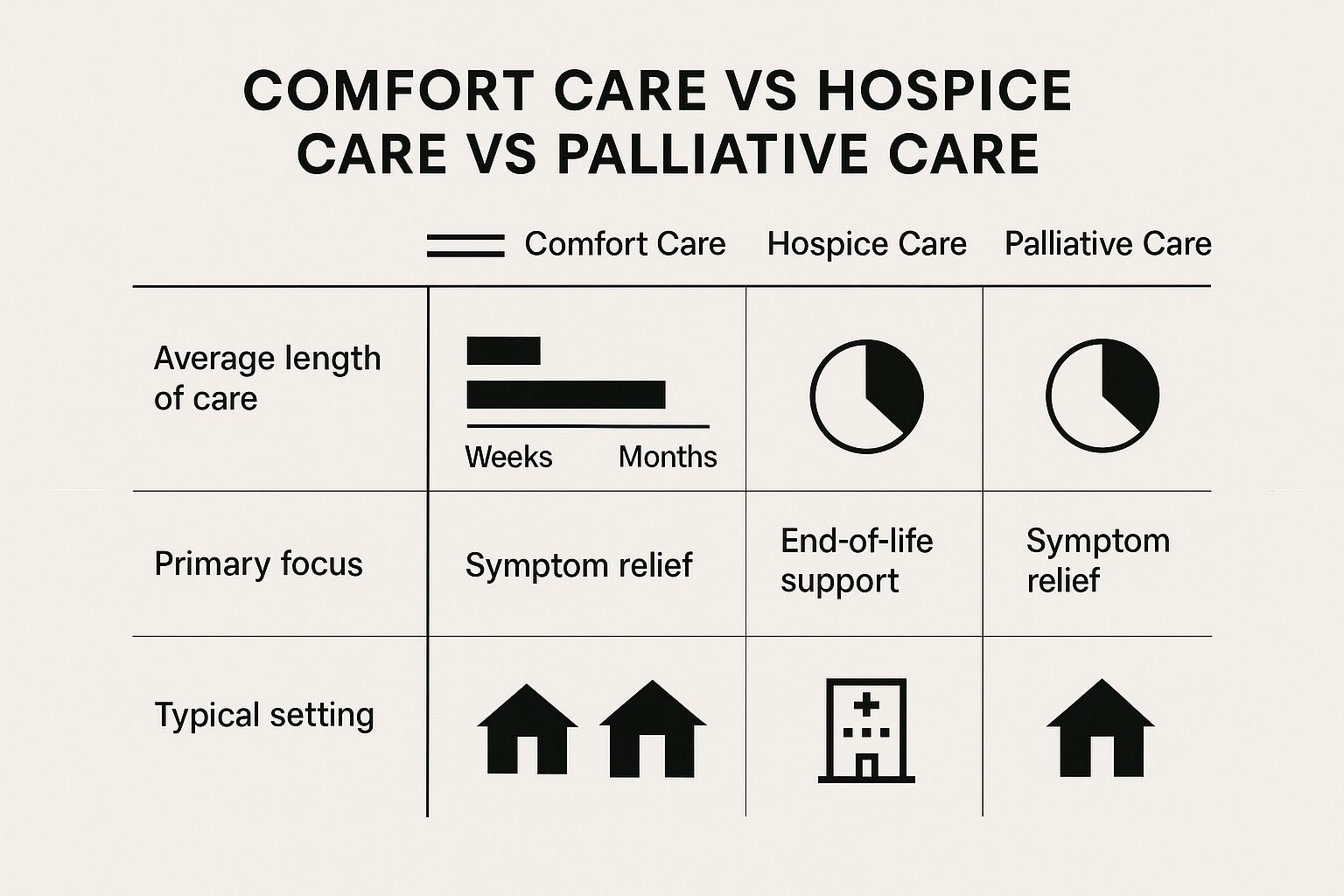
Comfort Care, Palliative Care, and Hospice Explained
Families often hear the terms “comfort care,” “palliative care,” and “hospice.” This can create confusion during a stressful time.
While they are all connected, they represent different stages of support. Understanding these differences helps you make clear, confident decisions.
Think of comfort care as the guiding philosophy. It is the commitment to relieving symptoms and managing pain. Both palliative care and hospice operate under this same principle.
Palliative Care: An Extra Layer of Support
Palliative care is a specialized type of comfort care. It can begin at any point during a serious illness, even right after diagnosis. A patient can receive palliative support while still pursuing treatments to cure their illness.
The main goal is to provide relief from symptoms and stress. This improves daily life for both the patient and their family.
For instance, someone getting chemotherapy might receive palliative care to help with nausea. You can learn more about our palliative home care services to see how this works at home.
Hospice Care: Comfort for the Final Chapter
Hospice is a type of comfort care for people with a life expectancy of six months or less. It is for those no longer seeking curative treatments. The focus shifts entirely to maximizing comfort, peace, and dignity.
The hospice team provides expert medical, emotional, and spiritual care. It is tailored to the patient's end-of-life wishes.
Comparing Care Options
To make these differences clearer, let's break them down side-by-side.
| Feature | Palliative Care | Hospice Care |
|---|---|---|
| When It Starts | At any stage of a serious illness, from diagnosis onward. | When life expectancy is six months or less. |
| Treatment Goals | Can be provided alongside curative treatments. | Focus is on comfort and quality of life, not curing the disease. |
| Who It's For | Patients with a serious or chronic illness. | Patients with a terminal illness who have stopped curative treatments. |
| Duration | Can last for months or years. | Limited to the final months of life. |
The main difference is timing and treatment goals. At Central Coast VNA & Hospice, our mission is to provide the right care at the right time. Our Continuum of Care ensures a seamless transition for families as their needs change.
How to Access Comfort Care on the Central Coast
Figuring out the next steps can feel overwhelming, but you are not alone. Getting started with comfort care on the Central Coast is often simpler than people think. It begins with a conversation.
The process often starts with your primary care doctor or a specialist. They can provide a referral for our services when the time is right.
Starting the Conversation
You do not have to wait for a referral. You can always reach out to Central Coast VNA & Hospice directly. Our team is here to listen and answer your questions.
Taking this first step gives you the information and support you need. For families across Monterey, San Benito, Santa Cruz, and South Santa Clara counties, our team is a trusted local resource. With over 74 years of nonprofit service, our commitment to our neighbors runs deep.
Contact us today to learn how our comfort care can support your family. Our team can also tell you about our other programs, like our skilled home health care services. We are here to help you navigate your healthcare journey.
Frequently Asked Questions About Comfort Care
Here are answers to some of the most common questions we hear from families. We hope these clear answers bring you peace of mind.
Does choosing comfort care mean we are giving up?
No, not at all. Choosing comfort care is an active decision to shift the focus from trying to cure an illness. The goal becomes making sure the time you have left is as comfortable and meaningful as possible.
Where is comfort care provided?
Most of the time, comfort care is provided where the patient calls home. At Central Coast VNA & Hospice, we bring expert support directly to our patients. This can be a private home, assisted living community, or skilled nursing facility in our service areas.
Is comfort care covered by insurance?
In most cases, yes. When comfort care is provided through a hospice benefit, it is typically 100% covered by Medicare, Medi-Cal, and most private insurance plans. As a nonprofit, we are committed to helping families access the care they need. We can help you understand your benefits and provide more details in our guide on how to pay for hospice care.
How long can someone receive comfort care?
It depends on the patient's needs. Palliative care can be provided for years while a patient continues other treatments. Hospice care is for those with a life expectancy of six months or less, but services can continue as long as the patient is medically eligible.
How does comfort care support the family?
Comfort care is a family-centered approach. Our team provides emotional and spiritual counseling, education, and practical guidance. We also offer bereavement support for up to 13 months to help families heal.
What is the service area for Central Coast VNA & Hospice?
We proudly serve families throughout Monterey County, San Benito County, Santa Cruz County, and South Santa Clara County. Our deep local roots mean we understand the needs of our community.
If you have more questions or want to discuss your family’s needs, our compassionate team is here to listen. Call Central Coast VNA & Hospice today at (831) 372-6668 or visit us online at https://ccvna.com to learn more.