
For many older adults, the ability to remain in their own home is a cornerstone of independence and well-being. This desire often comes with a critical need to ensure the home environment is safe and supportive. For families in Monterey County and surrounding areas, this means finding practical solutions to help seniors live at home safely.
This guide provides actionable strategies and resources designed to foster a secure living situation. We will move beyond generic advice to offer specific, implementable tips that make a tangible difference. This listicle is a practical roadmap for families, seniors, and healthcare providers coordinating support.
Our goal is to empower you with the knowledge needed to create a safe, comfortable, and independent home life. Central Coast VNA & Hospice, with over 74 years of nonprofit service, is committed to supporting our community with compassionate home health, palliative, and hospice care.
1. Conduct a Professional Home Safety Assessment
The first step to help seniors live at home safely is to understand the environment. A professional home safety assessment, conducted by an Occupational Therapist or a Certified Aging-in-Place Specialist (CAPS), provides a comprehensive evaluation. These specialists are trained to identify risks that family members might overlook.
What Does a Professional Assessment Involve?
An assessor performs a room-by-room analysis, focusing on high-risk zones like bathrooms and stairways. They evaluate factors such as lighting, clutter, floor surfaces, and accessibility.
Following the evaluation, they provide a detailed report with prioritized recommendations. These can range from simple fixes, like adding non-slip mats, to more significant renovations like installing a walk-in shower.
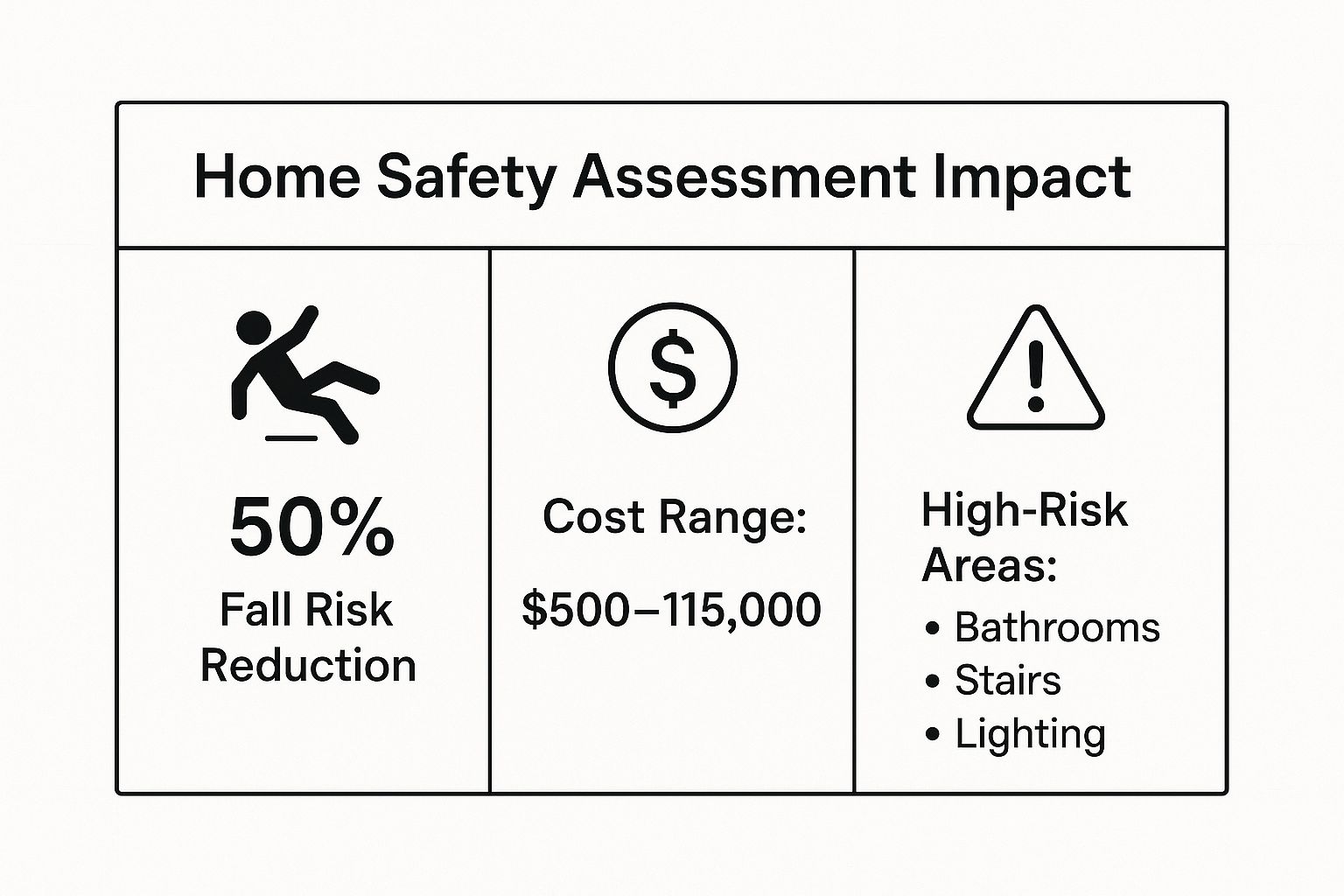
This data highlights how strategic modifications can significantly reduce fall risks. It also shows the wide range of potential costs, from minor adjustments to major renovations.
Why It's Worth the Investment
Investing in a professional assessment is a proactive measure that can prevent accidents and reduce hospital readmissions. It provides peace of mind for the entire family.
By identifying and mitigating risks early, you create a supportive environment. To explore how this fits into a broader strategy, you can learn more about how to help elderly parents age in place.
2. Emergency Response Systems and Medical Alert Devices
Even in the safest homes, accidents can occur. Emergency response systems, or medical alert devices, provide a crucial safety net. They are essential to help seniors live at home safely by offering immediate access to assistance.
Modern systems have evolved far beyond the basic pendant. Many now include advanced features like automatic fall detection, which contacts a monitoring center even if the senior cannot press the button.
GPS-enabled mobile options also provide protection for active seniors when they are away from home. This ensures help is available wherever they go.

What Does a Medical Alert System Involve?
These systems typically consist of a wearable help button and a base station connected to a 24/7 monitoring service. When activated, the device connects the user to a trained operator. The operator can assess the situation, contact family members, and dispatch emergency services if needed.
To maximize effectiveness, it is vital to select the right system and use it correctly. Key considerations include:
- Monthly Testing: Regularly test the system to ensure it functions properly.
- Waterproof Options: Choose a waterproof device that can be worn in the shower or bath, where many falls occur.
- Mobile GPS: For seniors who leave the house independently, a mobile system with GPS is invaluable.
Why It's Worth the Investment
The value of an emergency response system lies in its ability to provide rapid assistance. This can significantly improve outcomes after a fall or medical event.
For family members, these devices offer profound peace of mind. This technology empowers seniors with the confidence to continue living independently, secure in the knowledge that help is just a button-press away.
3. Implement Medication Management Systems
One of the most critical aspects to help seniors live at home safely is managing multiple medications. Polypharmacy, the use of several drugs at once, is common among older adults and increases the risk of errors.
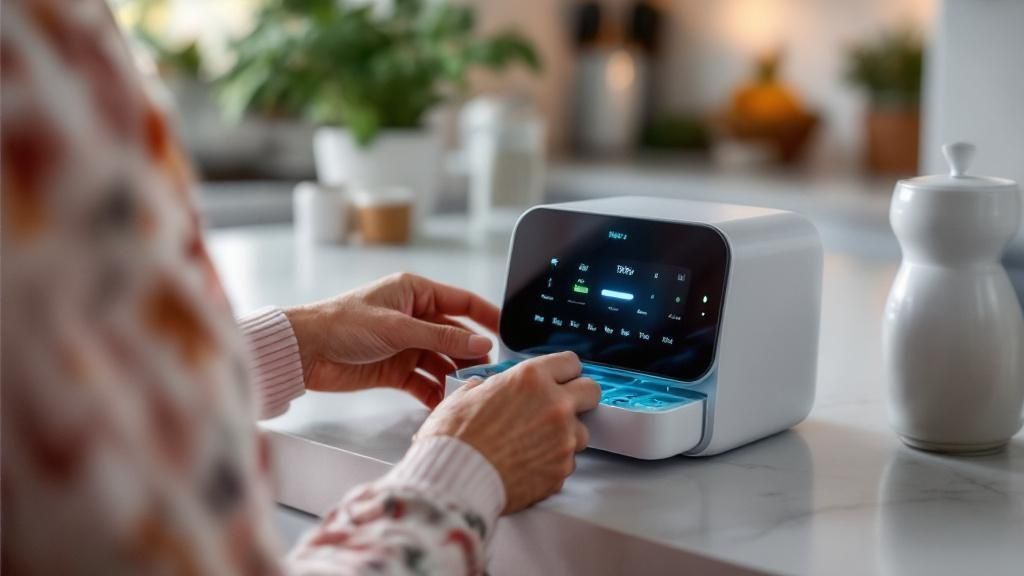
Implementing a robust medication management system is an essential strategy. These systems range from simple weekly pill organizers to advanced automated dispensers with alarms.
What Does Medication Management Involve?
Effective medication management goes beyond simply sorting pills. It’s a comprehensive process that includes regular communication with healthcare providers and proper organization.
For instance, some pharmacy services pre-sort medications into daily packets labeled with the date and time. For those needing more support, smart dispensers can dispense pills at scheduled times and track adherence through an app.
Why It’s a Crucial Safety Measure
An organized system is a powerful tool for preventing medical emergencies. According to a study published in Health Affairs, medication therapy management programs reduced hospitalizations and emergency department visits (Iuga & McGuire, 2014).
Consistent and correct medication intake is fundamental for managing chronic conditions. To ensure effectiveness, it is vital to regularly review all prescriptions with a doctor or pharmacist. You can find more guidance by exploring tips for family caregivers to integrate these practices.
4. Fall Prevention Programs and Exercise
Beyond modifying the home, improving a senior’s physical capabilities is a powerful strategy. Structured physical activity and fall prevention programs are designed to enhance balance, build strength, and improve coordination.
These evidence-based programs empower seniors to move with greater confidence and stability. They are a proactive way to help seniors live at home safely.

What Do These Programs Involve?
Effective programs are multifaceted and address the core physical factors contributing to falls. They often include a combination of different exercise types led by trained instructors.
For example, Tai Chi programs have been shown to reduce falls significantly. A comprehensive approach might also include a professional gait analysis to improve movement, which identifies and helps correct imbalances.
Why It's a Proactive Strategy
Engaging in regular, targeted exercise is one of the most effective ways to prevent falls. It directly addresses the root causes of instability, such as muscle weakness and poor balance.
These programs not only reduce fall-related injuries but also boost overall health and independence. It is always wise to consult a physician before beginning any new exercise regimen. To understand the profound impact of physical activity, you can explore why exercise is important, even in old age.
5. Smart Home Technology Integration
Integrating smart home technology is a modern and effective way to help seniors live at home safely. Connected devices and automation systems can enhance safety and improve daily routines.
These technologies range from simple voice-activated assistants to sophisticated monitoring systems. They can provide peace of mind for both seniors and their families.
What Does Smart Home Integration Involve?
Integrating smart technology involves setting up a network of devices that can be controlled remotely or automatically. This can start with additions like smart lights that turn on with voice commands to prevent falls in the dark.
More advanced systems allow family members to check in and receive alerts. To further enhance passive safety within the home, consider integrating comprehensive smart home security systems.
Why It's a Powerful Tool
This technology empowers seniors with greater control over their environment while offering a non-intrusive safety net. The key is to select technologies that are user-friendly and address a specific need.
Start with a few simple devices to build confidence. Ensure strong Wi-Fi coverage throughout the home for reliability, and create a backup plan for power outages.
6. Transportation and Mobility Solutions
Losing the ability to drive or move around easily can lead to isolation. Implementing robust transportation and mobility solutions is a key strategy to help seniors live at home safely while remaining active.
This involves addressing both getting around inside and outside the home. It ensures seniors can attend appointments, run errands, and socialize.
What Does This Solution Involve?
This strategy focuses on creating a network of reliable transportation options. It also includes utilizing mobility aids like walkers, canes, or scooters to enhance stability.
Modern services like GoGoGrandparent adapt rideshare apps for seniors without smartphones. Traditional volunteer driver programs are also an excellent option.
Why It's a Critical Component of Aging in Place
Access to transportation is directly linked to a senior’s health and quality of life. Without it, they may miss vital medical appointments or become socially withdrawn.
Proactively arranging transportation services and mobility aids prevents these issues. This approach fosters confidence and preserves dignity, making it a cornerstone of any effective plan.
7. Social Connection and Mental Health Support
An often underestimated element to help seniors live at home safely is addressing their emotional and mental well-being. Social isolation can lead to depression, cognitive decline, and decreased motivation to maintain physical health.
Fostering strong social connections and providing mental health support are crucial. This helps a senior’s ability to thrive independently.
What Does Social and Mental Support Involve?
This holistic approach involves creating opportunities for meaningful interaction. Programs can range from in-person activities at local senior centers to virtual communities.
For instance, Meals on Wheels provides not only nutrition but also a vital daily social check-in. These initiatives combat isolation by providing purpose, routine, and a supportive network.
Why It's a Critical Component of Home Safety
Investing in a senior's social and mental health is as important as installing grab bars. A socially engaged and mentally healthy individual is more likely to stay physically active and manage their health needs.
To find local programs that can help, you can explore comprehensive Monterey senior care services. Building a strong support system is a powerful strategy to ensure your loved one can age in place not just safely, but happily.
8. Healthcare Coordination and Telehealth Services
Managing healthcare needs from home is critical to help seniors live at home safely. This is especially true for those with chronic conditions or mobility challenges.
An integrated approach combining coordinated care teams with telehealth technology ensures consistent medical attention. This proactive health management can prevent complications.
What Does Coordinated Telehealth Involve?
This approach uses technology to connect patients with their healthcare providers remotely. It involves virtual visits, remote monitoring of vital signs, and easy communication with a care team.
For instance, a Registered Nurse can use a video call to assess a wound. A doctor can adjust medications based on remotely transmitted blood pressure readings.
Why It's Worth the Investment
Adopting telehealth and coordinated care is a forward-thinking strategy. It empowers seniors and provides immense relief for families.
This model is particularly beneficial for managing chronic illnesses. For families managing complex needs, you can learn more about comprehensive home health care services. This modern approach to healthcare helps ensure a safer, more independent life at home.
Building a Circle of Support for Safe Aging at Home
Creating a safe home environment for seniors is about weaving together a comprehensive tapestry of support. It's an ongoing, collaborative process that requires proactive planning.
By embracing concepts like structured medication management, fall prevention programs, and telehealth, families can address the challenges of aging. These measures reduce risks and provide invaluable peace of mind.
A truly secure environment also encompasses emotional well-being and consistent healthcare oversight. The integration of smart home technology, transportation solutions, and social support networks are equally vital. These elements combat isolation and empower seniors to remain active and connected.
To build a resilient safety net, consider these actionable next steps:
- Schedule a Family Meeting: Gather key family members and the senior to discuss these tips. Create a collaborative plan that respects their wishes.
- Prioritize a Home Assessment: Walk through the home to identify potential hazards. Decide on practical modifications, like installing grab bars or improving lighting.
- Research Local Resources: Every community offers different programs. Understanding the availability of local caregiving support options can provide additional layers of assistance.
- Consult with Professionals: Connect with healthcare providers, Occupational Therapists, or organizations like Central Coast VNA & Hospice. Their expertise can help tailor a plan for specific health needs.
Ultimately, the goal is to create a dynamic and responsive "circle of support" that adapts as needs evolve. By thoughtfully combining these strategies, families can transform a home into a haven. This enables their loved ones to not just live, but thrive, safely and independently for years to come.
If your loved one requires skilled medical care to manage an illness or recover from an injury at home, Central Coast VNA & Hospice can be a vital part of their safety net. Our expert home health, palliative care, and hospice teams have proudly served Monterey County, San Benito County, Santa Cruz County, and South Santa Clara County for over 74 years, bringing compassionate, professional care directly to you. Contact us today to learn how our Continuum of Care can help your family navigate the journey of aging with confidence and support.
Frequently Asked Questions (FAQs)
1. What is the most important first step to help a senior live at home safely?
The most important first step is a professional home safety assessment. An Occupational Therapist can identify specific hazards in the home and recommend targeted modifications to prevent falls and other accidents.
2. How can Central Coast VNA & Hospice help my loved one stay at home?
CCVNA provides a Continuum of Care, including home health, palliative care, and hospice services. Our skilled teams of Registered Nurses, Therapists, and Aides deliver professional medical care and support directly in the patient's home, helping manage symptoms and improve quality of life.
3. Are medical alert systems expensive?
The cost of medical alert systems varies. While some advanced systems have an initial device cost, many operate on an affordable monthly subscription model, often ranging from $20 to $70.
4. What areas does Central Coast VNA & Hospice serve?
As a local, nonprofit organization, CCVNA has served our community for over 74 years. Our service area includes Monterey County, San Benito County, Santa Cruz County, and South Santa Clara County.
5. How can I help my parent manage their medications correctly?
Implementing a medication management system is key. This can be a simple pill organizer or a smart dispenser with alarms. Always review all medications with their doctor or pharmacist regularly to avoid adverse interactions.