
Palliative care is a special type of medical care. It provides relief from the symptoms and stress of a serious illness. Its main goal is to improve the quality of life for patients and their families. Think of it as an extra layer of support that works with your other treatments.
Understanding Palliative Care and Its Purpose
When a senior lives with a serious illness, daily life can be a challenge. Palliative care helps ease that burden. It is important to know that it is not the same as hospice. Palliative care can start at any stage of an illness, even right after diagnosis.
This care offers a dedicated support system. A special team works with your main doctor to manage symptoms like pain or nausea. They also help with the emotional and spiritual stress of a chronic condition. This approach makes sure your healthcare choices match your personal goals.
This visual shows the key parts of palliative care for seniors. It highlights how it manages pain, gives emotional support, and includes the family.
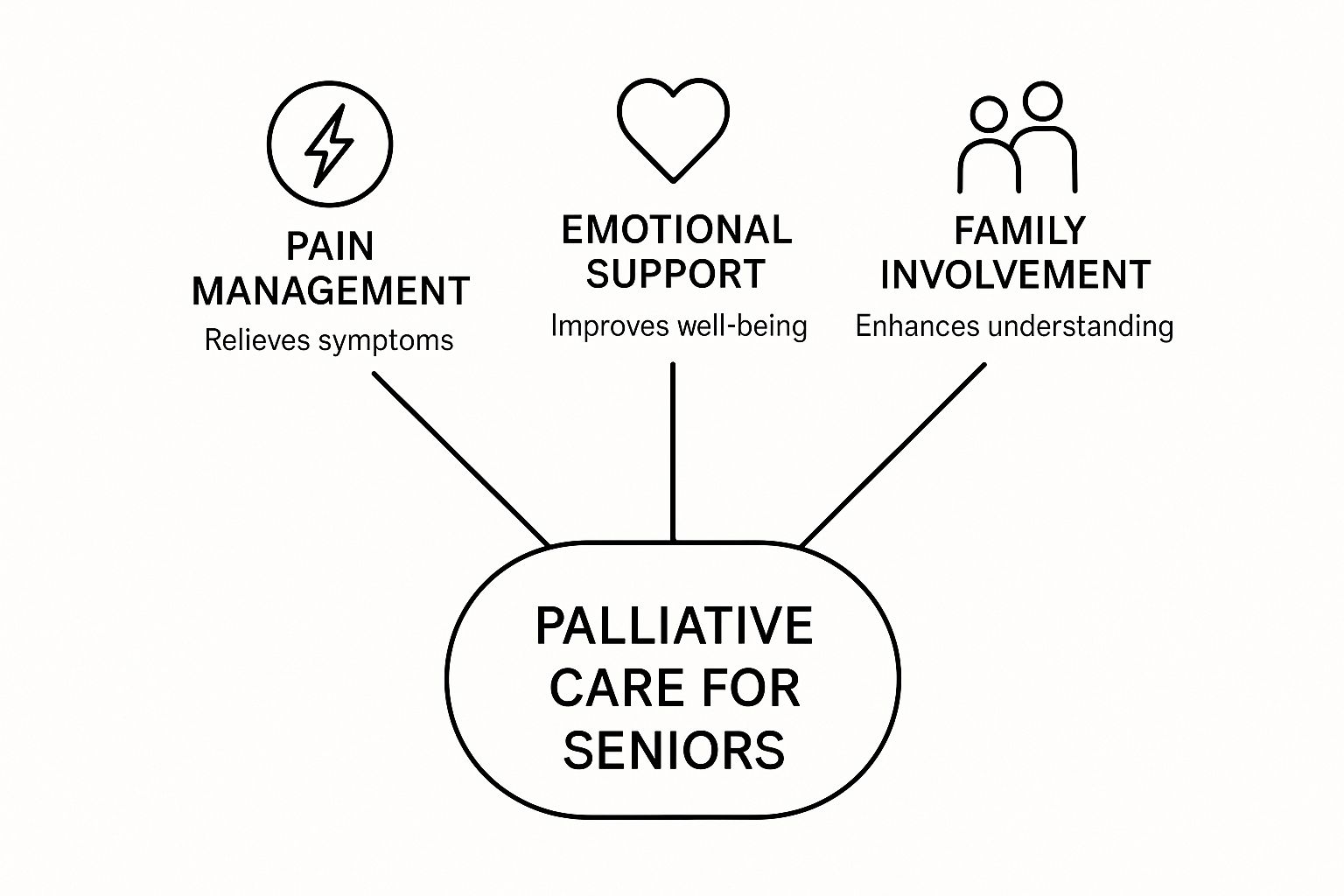
As you can see, this care model surrounds the patient and their loved ones. It creates a full circle of support.
An Extra Layer of Compassionate Support
The focus of palliative care is to improve overall well-being. It is meant to go along with the treatments you already receive, not replace them.
The need for this kind of support is growing. In fact, the global demand for palliative care grew significantly between 1990 and 2021. This is largely due to the rise of chronic illnesses in aging populations.
At Central Coast VNA & Hospice, our nonprofit team has provided this care for over 74 years. We proudly serve families in Monterey County, San Benito County, Santa Cruz County, and South Santa Clara County.
Palliative care is about living as well as possible, for as long as possible. It focuses on the whole person—not just the disease—by addressing physical, emotional, and spiritual needs to enhance comfort and dignity.
This focus on the whole person makes palliative care so helpful. It is about more than medicine. It provides comfort, clarity, and control. To learn more, you can read our guide on what comfort care means. This ensures every senior gets care that respects their wishes.
The Core Goals of Palliative Care
It is easy to think palliative care is just about treating an illness. But it is much more—it is about treating the whole person. The goal is to improve the quality of life for seniors with serious health issues. We want to make sure they feel comfortable, respected, and in control.
This approach helps with physical symptoms and the emotional toll of a long-term condition. Think of it as a partnership between the patient, their family, and a team of professionals. At Central Coast VNA & Hospice, we have delivered this compassionate care to families on the Central Coast for over 74 years.
Comprehensive Symptom Management
A key part of palliative care for seniors is managing difficult symptoms. A serious illness can bring tough physical issues that get in the way of daily life.
The care team works with your primary doctor to create a plan. It is designed to relieve symptoms before they get worse. This helps you keep your strength and independence.
This includes managing things like:
- Chronic Pain: Using proven methods to reduce pain and improve comfort.
- Shortness of Breath: Finding ways to ease breathing and calm anxiety.
- Fatigue and Weakness: Developing strategies to save energy for important things.
- Nausea or Loss of Appetite: Providing medical and nutritional support to help you feel stronger.
By managing these symptoms, palliative care helps seniors get back parts of their lives. It lets them enjoy activities and spend quality time with loved ones.
Emotional and Spiritual Support
A serious illness affects the body, mind, and spirit. It can bring anxiety, depression, and worry for the patient and their family. Palliative care provides vital emotional and spiritual support to address these challenges.
This part of care is just as important as managing physical pain. A Medical Social Worker can offer counseling and connect you with community resources. A Chaplain can provide spiritual comfort to people of all beliefs. This complete support helps families find peace during a difficult time.
Palliative care is designed to support the entire family, not just the patient. By addressing the emotional and spiritual needs of everyone involved, it helps reduce stress and improve coping skills for the whole family unit.
This support system means no one has to face these challenges alone. It offers a steady hand to guide you. You can learn more about the benefits of palliative care on our website.
Aligning Care with Your Wishes
A central goal of palliative care is making sure your medical treatment matches your personal values. It is all about clear, open communication between you, your family, and your healthcare providers. This keeps everyone on the same page.
Your palliative care team acts as your advocate. They help you understand your treatment options and share your goals. By guiding these talks, they ensure your voice is heard and your wishes are respected. This gives you more control over your health journey.
Who Can Benefit from Palliative Care Services?
Many people think palliative care is only for seniors with cancer. But this is a common misunderstanding. This special support is for anyone living with a serious or chronic illness. The key is the impact the illness has on a person’s life.
At its heart, palliative care for seniors is about managing symptoms and stress. At Central Coast VNA & Hospice, we provide this care in the comfort of home. We serve families across Monterey County, San Benito County, Santa Cruz County, and South Santa Clara County. Our focus is on improving quality of life at any stage of an illness.
Common Conditions That Qualify for Palliative Care
Palliative care was once tied mainly to cancer. Today, it helps with a wide range of chronic illnesses common in older adults. According to the National Hospice and Palliative Care Organization (NHPCO), palliative care has expanded to serve patients with many different diagnoses (NHPCO, 2022). You can read more about this global shift in palliative care on Euronews.
This means a senior with one of many conditions can find relief. It is a valuable resource for anyone whose illness creates ongoing symptoms.
Some of the most common conditions include:
- Heart Disease: Such as congestive heart failure (CHF), which causes fatigue and shortness of breath.
- Lung Disease: Like Chronic Obstructive Pulmonary Disease (COPD) or pulmonary fibrosis.
- Kidney Disease: Helping manage chronic kidney failure and its symptoms.
- Neurological Conditions: Including Alzheimer’s disease, Parkinson’s disease, or ALS.
- Advanced Liver Disease: Assisting with symptoms like fluid buildup and discomfort.
This is not a complete list. The key is how the illness affects the person, not just the name of the disease.
Recognizing When It Is Time to Consider Palliative Care
How do you know when it is the right time to talk about palliative support? The decision is more about seeing signs that an illness is getting harder to manage. If a senior's quality of life is going down because of their symptoms, palliative care can help.
The right time for palliative care is as soon as a serious illness starts to impact daily life. It is not about waiting for a crisis; it is about proactively adding a layer of support to improve comfort and control.
Think about the daily struggles your loved one is facing. If you notice these signs, it may be time to talk to their doctor. A referral to a trusted, local nonprofit like Central Coast VNA & Hospice can make a difference.
Practical Signs to Look For
Here are clear signs that a senior could benefit from more support:
- Frequent Hospital or ER Visits: More than one hospital stay in a few months for the same problem.
- Unmanaged Pain or Other Symptoms: Ongoing pain, shortness of breath, nausea, or fatigue that disrupts daily life.
- Significant Weight Loss: Losing weight without trying can be a sign of stress from the illness.
- Decline in Daily Functioning: A noticeable drop in the ability to handle personal care, like bathing or dressing.
- Difficult Treatment Side Effects: When side effects from treatments like chemotherapy become too hard to handle.
Noticing these signs early allows you to bring in support sooner. This proactive step helps prevent future crises. It ensures your loved one gets the expert care they need to live more comfortably.
Meet Your Palliative Care Team
When you choose palliative care, you get a whole team of specialists. This is one of the best parts of palliative care for seniors. Instead of one doctor managing everything, a group of professionals works together. They provide complete, wrap-around support.
This team approach ensures every need is met, from physical comfort to emotional well-being. At Central Coast VNA & Hospice, our team is built on over 74 years of experience. We serve our neighbors in Monterey County, San Benito County, Santa Cruz County, and South Santa Clara County. Each person brings a unique skill to improve your quality of life.
The Professionals Who Support You
Think of your palliative care team as your personal support system. Each member has a role, but they all communicate to make your care smooth.
Your team will usually include a few key professionals. They work with your main doctor to add an extra layer of support.
Here’s a look at the core members and what they do:
- Registered Nurse (RN): Your RN is often your main care coordinator. They are experts at managing symptoms like pain and shortness of breath.
- Medical Social Worker: A serious illness affects more than the body. The Medical Social Worker gives emotional support to you and your family.
- Chaplain: Spiritual support is important for many people. Our Chaplains offer comfort and guidance to people of all faiths and backgrounds.
This team-based approach ensures nothing is missed. It addresses the whole person—body, mind, and spirit.
The table below shows how these professionals work together.
| Team Member Role | Primary Responsibilities |
|---|---|
| Registered Nurse (RN) | Manages physical symptoms like pain. Coordinates care with other doctors and adjusts medications. |
| Medical Social Worker | Provides emotional support and counseling. Helps with resources and long-term planning. |
| Chaplain | Offers spiritual comfort that respects all personal beliefs, faiths, and backgrounds. |
Each role is different, but they all work together. They create a strong, supportive network for you.
A Coordinated Approach to Your Well-Being
The team works together in a special way. They have regular meetings to discuss your progress and update your care plan. This communication means everyone is on the same page—you, your family, and your other doctors.
For example, an RN might notice that anxiety makes a patient's pain worse. They can bring in the Medical Social Worker to help. At the same time, the Chaplain might offer spiritual support to ease fears.
A team-based approach in palliative care provides a safety net of experts. It ensures that every aspect of a person's well-being is considered, leading to better symptom control, stronger emotional resilience, and a greater sense of peace for the entire family.
This integrated care is very effective. It lightens the load for families, so they don't have to manage everything alone. You can learn more about how our specialists work together in our palliative care program.
This partnership helps you feel more supported and in control. It's built on trust, expertise, and a commitment to your comfort and dignity.
Receiving Palliative Care in Your Home
When you're dealing with a serious illness, there is no place like home. Being in a familiar space can make a big difference. That's why palliative care for seniors is often brought right to you. It removes the stress of trips to a hospital or clinic.
At Central Coast VNA & Hospice, bringing care into homes has been our nonprofit mission for over 74 years. We are a trusted part of the community in Monterey County, San Benito County, Santa Cruz County, and South Santa Clara County. This means you can focus on your well-being in the comfort of your home.
What a Palliative Care Home Visit Looks Like
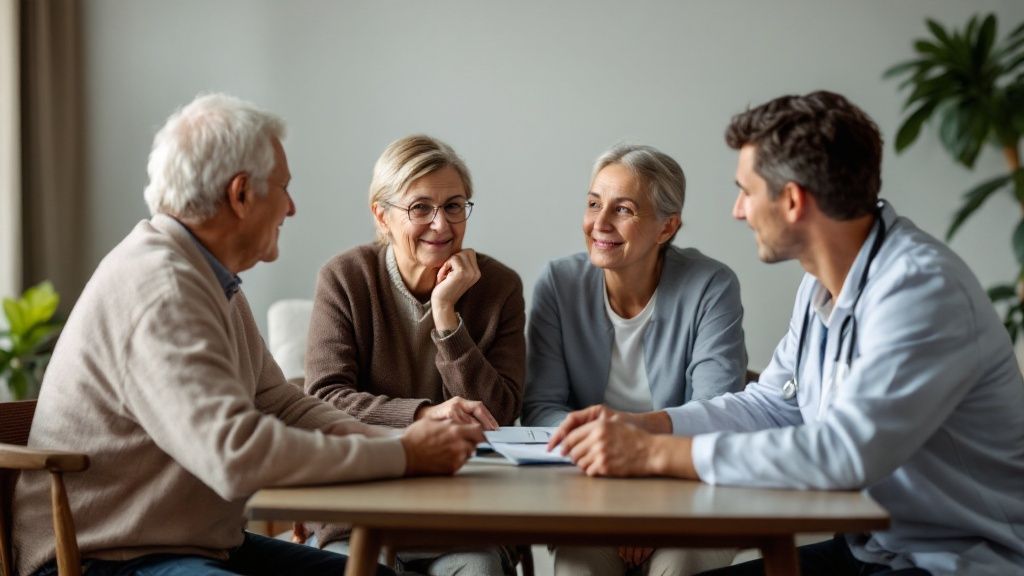
When one of our Registered Nurses visits, their goal is to provide support built around you. These visits are much more than a quick check-in. They are a key part of your care plan.
During a visit, our nurse will:
- Assess and Manage Symptoms: The nurse starts by listening. They will check your symptoms and understand how you are feeling.
- Coordinate with Your Doctor: The nurse communicates directly with your primary doctor. This teamwork allows for quick changes to your treatment plan.
- Provide Hands-On Education: A big part of our role is to empower your family. The nurse provides training to help your loved ones support you confidently.
This in-home model is convenient and effective. It helps us create a care plan that is more personal.
Planning for the Future with Confidence
Our palliative care team also helps with important talks about the future. Talking about long-term healthcare wishes can feel hard. But it is a key step to make sure your preferences are followed. This is called advance care planning.
Our team offers gentle guidance to help you document your wishes. They create a calm space for these conversations with your family. This planning brings peace of mind to you and your loved ones.
Advance care planning is a gift to your family. It clarifies your wishes, removes the burden of difficult decision-making from your loved ones, and ensures your voice remains at the center of your care, no matter what the future holds.
By putting your wishes in writing, you can be sure your values will guide your care. You can learn more about our palliative home care services. This dedicated support ensures you get compassionate care where you want to be.
How to Get Started with Palliative Care
Taking the first step toward getting more support can feel hard. The good news is that starting palliative care for seniors is simpler than you might think. It all begins with a conversation.
The journey starts with your primary doctor. They can give you a referral, which is the official request for palliative services. Here at Central Coast VNA & Hospice, our team works with local doctors to make this process smooth for families in Monterey, San Benito, Santa Cruz, and South Santa Clara counties.
Understanding the Referral Process
Once your doctor agrees that palliative care is a good fit, they will send us a referral. Our team will then call you to schedule a first meeting. This is our chance to listen to your needs and answer your questions.
The referral process has a few simple steps:
- Talk to Your Doctor: Be open about the symptoms and challenges you are facing.
- Get a Referral: Your doctor handles the paperwork and sends it to our team.
- Schedule a Consultation: We will contact you to set up a visit and create a care plan.
Healthcare providers can find referral information on our website.
How Palliative Care Is Paid For
A common worry for families is the cost of care. Palliative care is a medical specialty, like cardiology. Because of this, it is usually covered by Medicare Part B, Medicaid, and most private insurance plans.
According to the World Health Organization, millions of people who need palliative care do not receive it (WHO, 2020). Our nonprofit mission is to help every eligible family get this vital support.
Palliative care is not a luxury; it is a standard medical service designed to be accessible. Understanding your insurance coverage can provide peace of mind and open the door to much-needed comfort and support.
It is also wise to think about legal documents that honor your wishes. This includes understanding the critical importance of Power of Attorney. Taking these steps empowers you and your family. If you think your loved one could benefit from more support, contact their doctor today.
Frequently Asked Questions About Palliative Care for Seniors
Here are answers to some common questions we hear from families. Our goal is to give you clear information to help you make the best decisions.
Is palliative care the same as hospice?
No, they are different. Palliative care can be started at any time during a serious illness, even while you are getting treatment to cure it. Hospice care is for when curative treatment is no longer being sought, focusing entirely on comfort at the end of life. Central Coast VNA & Hospice offers both as part of our continuum of care.
Can I keep my own doctor?
Yes, absolutely. The palliative care team works with your primary doctor and any other specialists you see. They act as an extra layer of support and communicate regularly with your entire healthcare team to coordinate care.
How soon should we start palliative care?
It is best to start palliative care early, soon after a serious diagnosis. You do not need to wait for a crisis. Early support can improve comfort, reduce stress, and help prevent hospital visits.
Where is palliative care provided?
Palliative care can be provided wherever a senior calls home. This includes a private residence, an assisted living facility, or a nursing home. Our Central Coast VNA & Hospice team brings care directly to patients in Monterey County, San Benito County, Santa Cruz County, and South Santa Clara County.
Who is on the palliative care team?
A typical palliative care team includes a Registered Nurse, a Medical Social Worker, and a Chaplain. These professionals work together with your doctor to address your physical, emotional, and spiritual needs. This team approach provides complete support for both the patient and their family.
If you believe your loved one could benefit from an extra layer of compassionate support, talk to their doctor or contact us directly. Learn more about how the dedicated, nonprofit team at Central Coast VNA & Hospice can improve quality of life for your family by visiting us at https://ccvna.com.