
When you or someone you love gets a serious diagnosis, the world can feel overwhelming. It can shrink to just doctor’s appointments, treatments, and tests.
While medical care is vital, the physical and emotional toll of an illness is often overlooked. This is where palliative care comes in.
Think of it as an extra layer of support that works with your main treatment plan. Its only job is to improve your quality of life. It does this by relieving symptoms like pain, fatigue, and stress.
The goal is simple: to help you live more comfortably from the moment you are diagnosed.
Understanding Palliative Care and Its Purpose

Imagine your medical team is focused on fighting the illness. Palliative care is like a specialized support crew that joins them. This crew is dedicated to your comfort and well-being.
They work to ease the burdens that come with a serious health condition. This specialized care isn’t just for the end of life.
It is available for people of any age, at any stage of a serious illness. It can be provided right alongside treatments meant to cure you.
More Than Just Medical Treatment
A serious illness affects every part of your life, not just your body. Palliative care understands this and treats the whole person, not just the disease. The team provides relief and support for every area the illness touches.
This support often includes:
- Symptom Management: Getting expert help with pain, shortness of breath, nausea, fatigue, and other symptoms that make daily life hard.
- Emotional and Spiritual Support: Having someone to talk to who can help you cope with the stress, anxiety, or depression that often comes with a health crisis.
- Clear Communication: Making sure you and your family understand complex medical information. This helps you make decisions that align with your personal goals.
- Coordination of Care: Helping all your doctors and specialists stay on the same page. This creates a smoother, less stressful experience for you.
Ultimately, this approach puts you back in control. It’s about making sure your care plan is clear, personalized, and reflects what matters most to you.
Palliative Care at a Glance
This table offers a quick snapshot of what palliative care focuses on. It shows what that means for you and your family.
| Key Focus Area | What It Means for You |
|---|---|
| Symptom Relief | Less pain, more energy, and better management of symptoms like nausea or breathlessness. |
| Quality of Life | More good days. The focus is on helping you live as fully as possible despite your illness. |
| Emotional Support | A dedicated team to help you and your family cope with the stress and emotions of a diagnosis. |
| Team-Based Care | Your doctors, nurses, and palliative specialists all work together for seamless, coordinated support. |
| Patient-Centered Goals | Your values and preferences guide all care decisions. You're in the driver's seat. |
This holistic approach ensures you're supported physically, emotionally, and practically. It helps you through every step of your illness.
A Local Partner in Your Care
For over 74 years, Central Coast VNA & Hospice has been a trusted, local nonprofit healthcare provider. We serve families across Monterey County, San Benito County, Santa Cruz County, and South Santa Clara County.
Our mission has always been to deliver high-quality, compassionate care right where you call home. As a mission-driven organization, we believe everyone deserves to have their symptoms managed and their quality of life preserved.
Our experienced teams of Registered Nurses, Social Workers, and other professionals work with you and your doctors. We help you navigate the challenges of a serious illness with expert guidance. If you feel that you or a family member could benefit, Central Coast VNA & Hospice is here to help.
Who Benefits Most from Palliative Care
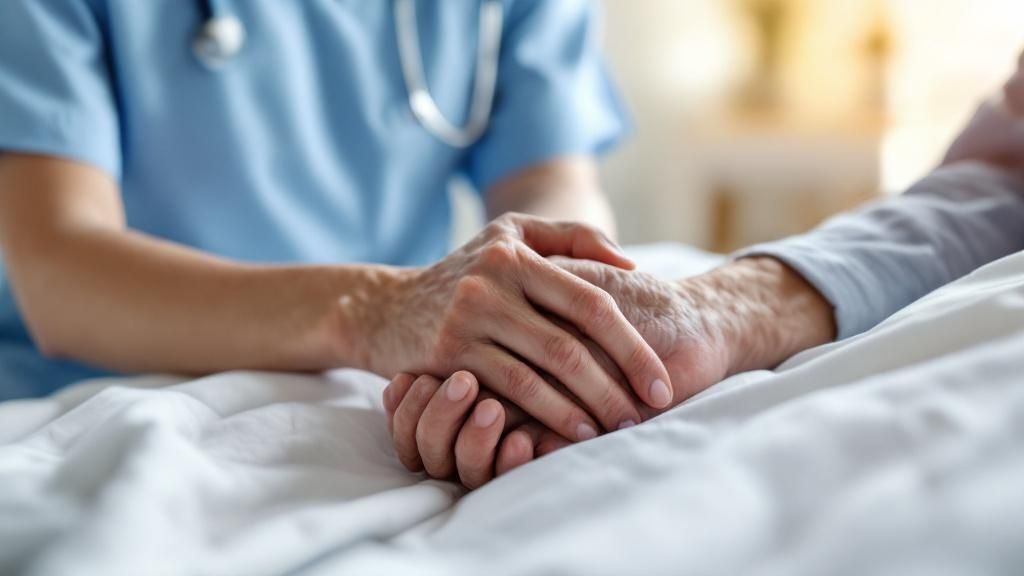
There’s a common myth that palliative care is only for a specific disease or for people at the very end of life. The truth is much simpler and more hopeful.
Palliative care is for anyone of any age, at any stage of a serious illness. It is for anyone who needs help managing difficult symptoms and improving their quality of life.
The focus isn’t on the diagnosis itself but on the person experiencing it. If you’re dealing with pain, fatigue, anxiety, or other challenging symptoms, this extra support can make a world of difference.
Focusing on Need, Not Prognosis
Unlike hospice, which is for those with a life expectancy of six months or less, palliative care is based on need. This means you can receive this supportive care for months or even years.
You can get palliative care while continuing to pursue treatments meant to cure your illness. It’s all designed to help you feel better, so you have the strength to manage both your illness and your daily life.
Many people living with serious health conditions can find relief through palliative care. Some of the most common illnesses include:
- Cancer: To manage the difficult side effects from chemotherapy, radiation, and the disease itself.
- Heart Disease: Including congestive heart failure (CHF), to help with shortness of breath and fatigue.
- Lung Disease: Such as Chronic Obstructive Pulmonary Disease (COPD), to improve breathing and reduce anxiety.
- Kidney Failure: To ease symptoms like nausea and pain during dialysis or other treatments.
- Neurological Diseases: Conditions like Alzheimer's, Parkinson's, or ALS, where managing symptoms is key to maintaining comfort.
A Growing Need for Supportive Care
The demand for this kind of whole-person care is on the rise. According to the World Health Organization, an estimated 56.8 million people, including 25.7 million in the last year of life, are in need of palliative care each year (WHO, 2020).
This increase is driven not just by population growth, but by a rise in diseases that benefit from expert symptom management. This highlights the importance of expert care right here on the Central Coast.
As a nonprofit organization serving our community for over 74 years, we at Central Coast VNA & Hospice see this need firsthand. Our mission is to bring expert, compassionate care to families in Monterey County, San Benito County, Santa Cruz County, and South Santa Clara County.
Who Should Consider Palliative Care
You might be a good candidate for palliative care if you are experiencing challenges related to a serious illness. This support is helpful for individuals making frequent trips to the emergency room. It's also for those who have been hospitalized multiple times for the same condition.
If the side effects of your treatment are making it hard to continue, palliative care can help. Managing those symptoms can help you stay on track with your doctor's plan.
If an illness is impacting your ability to enjoy life, asking about palliative care is a proactive step. Our team at Central Coast VNA & Hospice is here to help you explore your options.
Meet Your Palliative Care Support Team

Palliative care isn’t just one person—it’s a team effort, and you are always at the center. Think of this team as your personal support system. They work with you, your family, and your other doctors.
Their one shared goal is to add a layer of support to help you live more comfortably. At Central Coast VNA & Hospice, our teams bring expertise and compassion right to you. We provide palliative care at home in Monterey County, San Benito County, and our other service areas.
The Experts on Your Side
Your palliative care team is a group of professionals from different fields. Each person brings a unique skill to make sure your physical, emotional, and practical needs are met.
Here are the key members of your support team and the roles they play:
- Palliative Care Doctor or Nurse Practitioner: This is the clinical leader of your team. They specialize in pain and symptom management and work with your other doctors.
- Registered Nurse (RN): Your RN is often your main point of contact. They are experts in managing symptoms day-to-day and teaching you about your condition.
- Medical Social Worker: Our Social Workers are incredible resources. They connect you to community programs, help with advance care planning, and offer emotional support.
- Chaplain: A Chaplain provides non-denominational spiritual support. They listen with an open heart and help you find peace and meaning.
This team-based model provides a safety net. It ensures nothing falls through the cracks and helps you feel more secure.
How Your Team Works Together
Collaboration is what makes palliative care so effective. Your team doesn’t replace your current doctors. Instead, they become an extension of your existing care.
For example, your Registered Nurse might notice a new medication is causing side effects. They'll coordinate with the palliative care doctor and your specialist to find a better solution.
At the same time, the Medical Social Worker could be helping your family apply for financial assistance. This practical support lifts a heavy burden. It frees up your family to focus on what matters most—spending quality time with you.
As a local nonprofit with over 74 years of experience, Central Coast VNA & Hospice is dedicated to this model. Our mission is to provide comprehensive support that treats the whole person, not just the illness. Learn more about how our palliative care program can help you.
Exploring Palliative Care Services
What does palliative care actually look like day-to-day? The services are practical and designed to tackle the challenges that come with a serious illness.
The focus is always on relieving symptoms and supporting you and your family. This support is built around your specific situation, whether you’re at home in Monterey County, San Benito County, or Santa Cruz County.
Practical Support for Better Living
Palliative care services are built around your needs and goals. At Central Coast VNA & Hospice, our nonprofit mission pushes us to provide care that makes a positive difference.
Here are some of the core services you can expect:
- Expert Pain and Symptom Management: This is the heart of palliative care. A Registered Nurse works with you to manage tough symptoms like pain, fatigue, nausea, or shortness of breath.
- Clear and Coordinated Care: Juggling appointments and medications from multiple doctors is draining. Your palliative team acts as a central hub, making sure all your providers are on the same page.
- Guidance with Difficult Decisions: The team helps you make sense of complex medical choices. They explain treatment options in plain language, so your decisions line up with your values.
- Emotional and Spiritual Support: A Medical Social Worker can offer counseling, while a Chaplain provides spiritual guidance. This helps your whole family cope with the emotional toll.
A Local Focus on Supportive Care
While Central Coast VNA & Hospice has provided this kind of care locally for over 74 years, we are part of a larger continuum of care. From home health to palliative care and then to hospice, we provide a seamless transition of support.
Our focus is always on the person living with the illness. The goal is to manage symptoms so effectively that you can focus more on your life and less on your diagnosis.
Real-World Scenarios of Palliative Care in Action
To understand the impact, let’s look at a couple of examples of palliative care at home:
- For a person with COPD: The team can teach breathing techniques, adjust medications to fight fatigue, and provide emotional support to ease anxiety.
- For someone with cancer: The team can manage nausea so they can maintain nutrition, address pain to improve comfort, and lead family meetings to keep everyone informed.
These are the kinds of practical steps that define high-quality palliative care. They’re designed to empower you with relief and a sense of control. You can learn more about the specific palliative care services we offer to families across the Central Coast.
Palliative Care and Hospice Explained
One of the biggest questions families face is the difference between palliative care and hospice care. They are related, but they meet different needs at different stages of an illness.
Here's the most important thing to remember: all hospice care is a form of palliative care, but not all palliative care leads to hospice. Palliative care is a broad umbrella of comfort-focused support that can begin at diagnosis. Hospice is a specific type of care under that umbrella for a specific time.
The Key Differences in Goals and Timing
The main distinction comes down to timing and the goals of care.
Palliative care can start right away, from day one of a diagnosis. It works alongside treatments meant to cure, like chemotherapy or surgery. The point is to manage symptoms so you can tolerate medical treatments and live as fully as possible.
Hospice care is for individuals with a life expectancy of six months or less. It begins when they are no longer pursuing curative treatments. The focus shifts entirely to comfort, peace, and dignity.
This image highlights some of the benefits that palliative care brings to patients and their families.
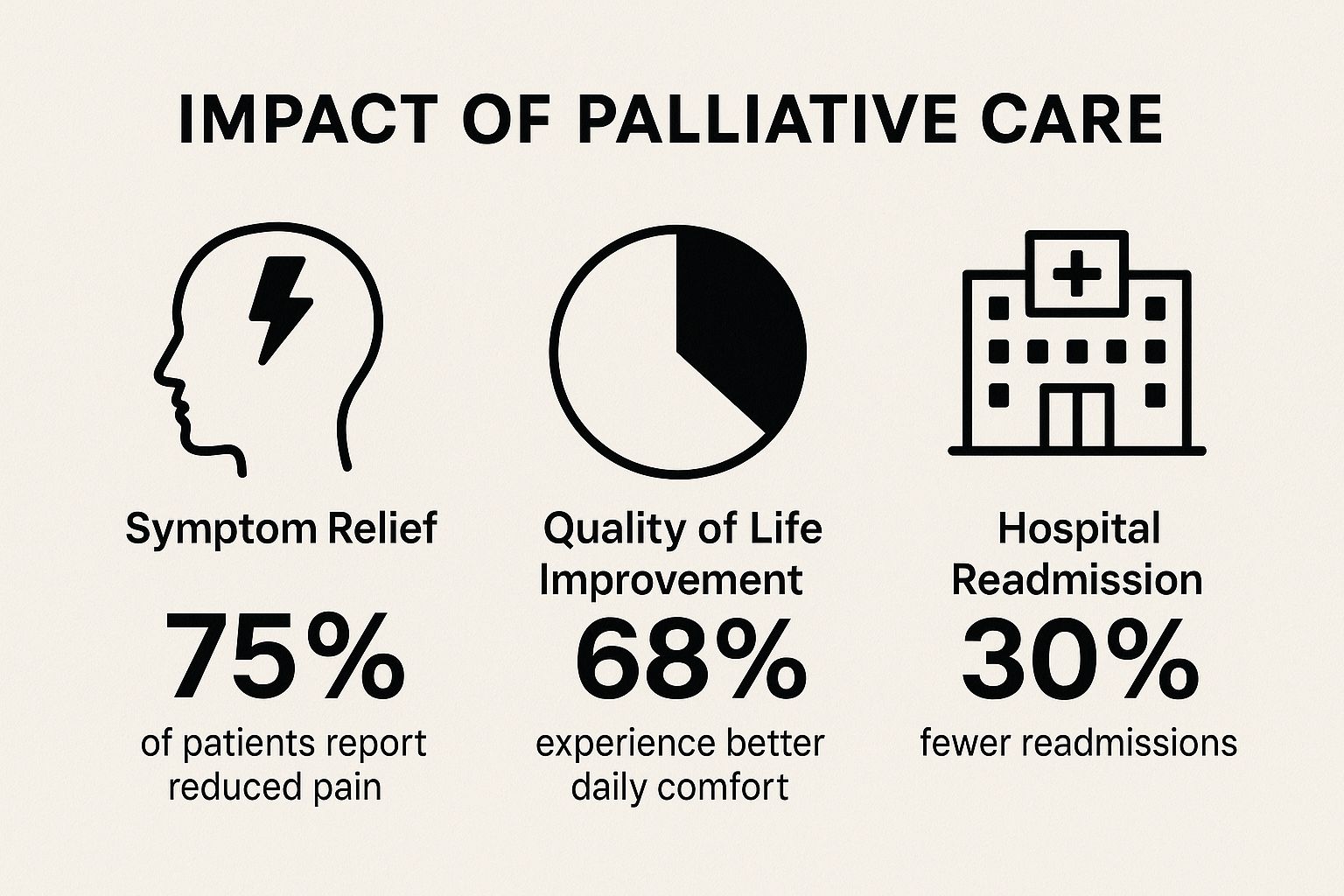
As the data shows, focusing on symptom relief not only reduces pain but also helps prevent stressful hospital visits.
Comparing Palliative Care and Hospice Care
To make the differences clear, here is a side-by-side comparison. Understanding these details can empower you to have better conversations with your healthcare team.
| Feature | Palliative Care | Hospice Care |
|---|---|---|
| Timing | Can begin at any time during a serious illness, right from diagnosis. | Typically begins when a doctor determines life expectancy is six months or less. |
| Treatment Goals | Provided alongside curative treatments to manage symptoms and side effects. | Focuses entirely on comfort and quality of life once curative treatment has stopped. |
| Location of Care | Often provided at home, in clinics, or during hospital stays. | Primarily provided wherever the patient calls home, including private residences. |
| Payment | Covered by Medicare Part B, Medi-Cal, and most private insurance plans. | Covered by the Medicare Hospice Benefit, Medi-Cal, and most private plans. |
For over 74 years, Central Coast VNA & Hospice has guided families across Monterey, San Benito, and Santa Cruz counties through this continuum of care. We are the only local nonprofit offering home health, palliative, and hospice care. This allows us to provide seamless, compassionate support as needs change.
We know these decisions feel overwhelming, but you don't have to face them alone. For a deeper look, see our guide on palliative care versus hospice care.
How to Get Started with Palliative Care
Taking the first step to get more support can be hard, but the process is simpler than you might think. Anyone involved—the patient, a family member, or a doctor—can ask for a palliative care consultation.
All it takes to begin is a conversation. Just ask your primary doctor or specialist for a referral. This request opens the door for a dedicated team to join your existing medical support.
Your First Steps with CCVNA
Once you have a referral, you’ll meet with the Central Coast VNA & Hospice palliative care team. This first meeting is all about you. We will listen to your concerns and work with you on a personalized care plan.
Our only goal is to align our support with what matters most to you. We serve families across Monterey County, San Benito County, Santa Cruz County, and South Santa Clara County. We bring this vital support right to your home.
You can also explore our home health care services to see the full continuum of care we provide.
Making Care Accessible
As a local nonprofit with over 74 years of experience, Central Coast VNA & Hospice is deeply committed to our mission. We work to ensure everyone who needs this care can get it.
Asking for palliative care is an act of empowerment. It's about choosing to add more comfort, clarity, and control to your healthcare journey. Contact us today to learn how our compassionate team can support your family.
Frequently Asked Questions About Palliative Care
It's completely normal for families to have questions. Getting straightforward answers is the best way to find peace of mind.
At Central Coast VNA & Hospice, we want to empower you with clear information. Below are answers to five common questions our care teams hear from families across Monterey, San Benito, and Santa Cruz counties.
1. Does accepting palliative care mean I am giving up hope?
Absolutely not. Palliative care works with curative treatments like chemotherapy or surgery.
Its goal is to make you stronger and more comfortable while you continue your treatment plan. By managing tough symptoms, palliative care often gives you the strength to keep fighting your illness.
2. Is palliative care only for people with cancer?
No, palliative care is for anyone living with a serious illness. While it’s a great resource for people with cancer, its benefits extend to many other conditions.
This includes support for individuals with heart disease, lung disease (COPD), kidney failure, or neurological conditions like Alzheimer's. If an illness is causing symptoms and stress, palliative care can help.
3. Where is palliative care provided?
Palliative care is flexible and meets you where you are most comfortable. As a nonprofit with over 74 years of local service, Central Coast VNA & Hospice specializes in palliative care at home.
Our teams provide care wherever you call home. This could be a private residence, an assisted living community, or a nursing home throughout Monterey County, San Benito County, Santa Cruz County, and South Santa Clara County.
4. Who pays for palliative care?
Because palliative care is a medical specialty, its services are typically covered by most insurance plans.
Palliative care is generally covered by:
- Medicare Part B
- Medi-Cal
- Most private insurance plans
Our team at CCVNA is here to help you and your family understand your specific benefits.
5. How soon can someone start palliative care?
The best time to begin palliative care is at the time of diagnosis with a serious illness. The sooner you start, the more you and your family can benefit.
Starting early helps keep symptoms from becoming severe and reduces stress. It gives the care team time to build a trusting relationship with you and your family.
At Central Coast VNA & Hospice, our nonprofit mission is to provide compassionate, expert care that enhances your quality of life. If you have more questions or believe your family could benefit from our services, please contact us today. Visit us at https://ccvna.com to learn more.