
It's a common myth that hospice is only for the final few days of life. Many families wait, thinking it’s a last resort. In reality, it’s a support system that can bring comfort and stability for months.
Let's clear up this misconception. Understanding how starting hospice earlier can make a world of difference is the first step.
Rethinking When Hospice Care Should Begin
Hospice care isn’t about waiting for the end. It’s about making the most of the time we have. That often means bringing in a dedicated team before a crisis hits.
Unfortunately, many families are referred to hospice too late. According to the National Hospice and Palliative Care Organization (NHPCO), nearly half of hospice patients received care for 17 days or less in 2020 (NHPCO, 2022). This means they miss out on the full benefits.
When you explore hospice sooner, you give everyone time to breathe. Your loved one can build a trusting relationship with their care team. It also gives that team the ability to manage complex symptoms effectively.
For families, it provides profound peace of mind. You’ll have a team ready to help with:
- Expert symptom relief and pain management.
- Emotional and spiritual support for patients and families.
- Skilled team visits in the comfort of home, helping avoid stressful hospital trips.
Key Advantages of Early Enrollment
Here on the Central Coast, families have a trusted local partner. Central Coast VNA & Hospice brings over 74 years of experience. We serve our communities in Monterey County, San Benito County, Santa Cruz County, and South Santa Clara County.
As a nonprofit provider, our focus is entirely on compassionate, personalized care. We are deeply rooted in the communities we serve. For more than seven decades, our teams have helped neighbors in Salinas, Hollister, and Santa Cruz navigate serious illness.
Our team-based approach brings together Registered Nurses, Hospice Aides, Chaplains, and Social Workers. We create a complete circle of support right in your home. If you’re looking for more specifics, our guide on when to call hospice is a great resource.
The illustration below shows how support changes from early to late enrollment.
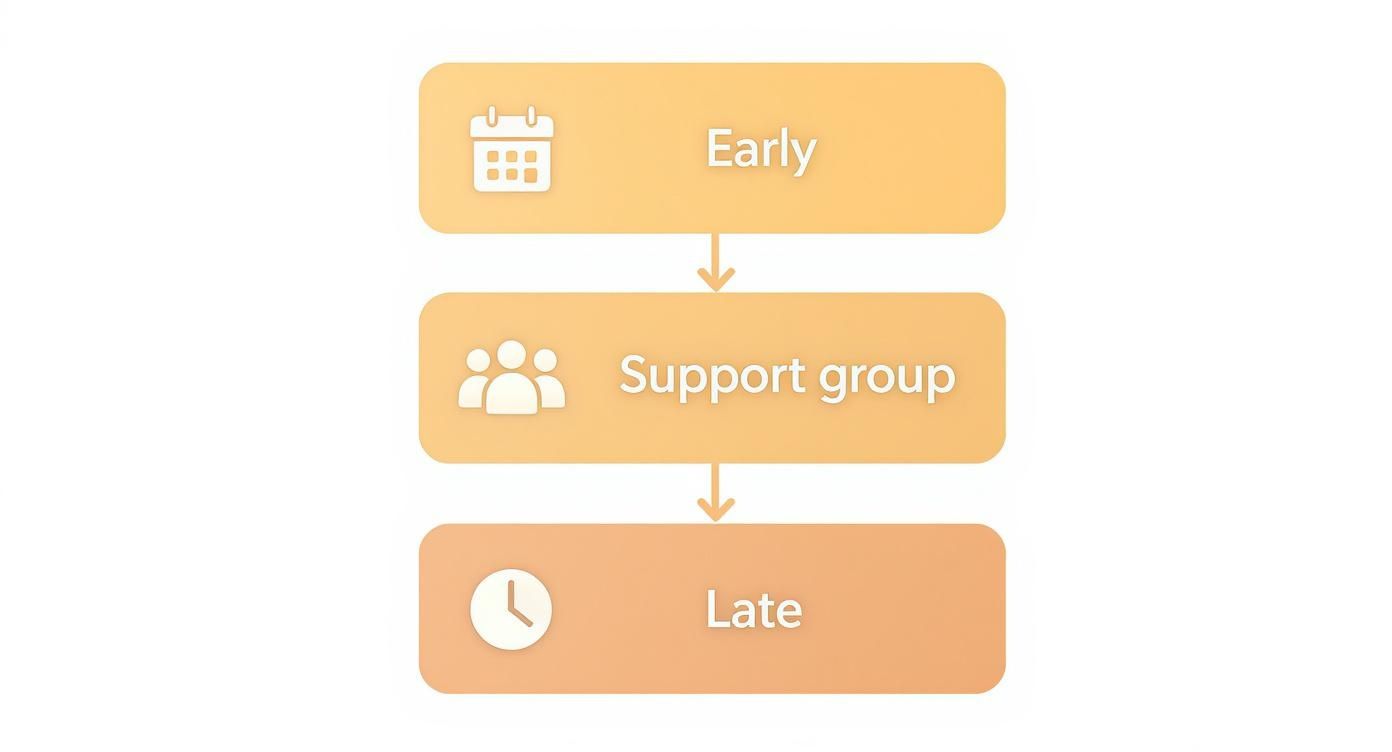
Early hospice enrollment provides steady relief and planning. This contrasts with the urgent, crisis-driven care that comes with waiting.
Choosing hospice earlier means care plans can be thoughtful and evolve over time. Families have space to discuss goals and arrange for equipment without rushing.
Hospice Care Early vs. Late Enrollment
The difference between starting hospice early versus waiting is night and day. This table breaks down what that experience can look like for patients and families.
| Care Aspect | Benefits of Early Enrollment | Challenges of Late Enrollment |
|---|---|---|
| Symptom Management | Proactive, steady relief from pain and other symptoms, leading to fewer flare-ups. | A rush to manage severe pain and symptoms in a crisis, which can be distressing. |
| Family Stress | Consistent guidance and support reduce anxiety and empower family members. | Last-minute planning, difficult decisions, and emotional strain add to a stressful time. |
| Hospital Visits | A dedicated home team helps prevent emergencies, leading to fewer hospitalizations. | Frequent, disruptive trips to the ER often happen when symptoms aren't managed at home. |
Looking into hospice sooner allows families to shift their focus. They can move from crisis management to creating meaningful moments together.
The experienced team at Central Coast VNA & Hospice is here to offer support. A great first step is to discuss the options with a primary physician today.
Understanding When Hospice Is the Right Choice
Deciding on the right time for hospice care is an emotional process. Families in Monterey and Salinas often worry, "Are we choosing this too soon?" The reality is, hospice is an option when a doctor believes a person has a life expectancy of six months or less.
But please, don't get stuck on that number. The six-month timeframe isn't a strict deadline. It's a guideline that opens the door to a different kind of support.
The Shift to Comfort-Focused Care
Choosing hospice marks a significant change in healthcare goals. Instead of hospital stays and treatments aimed at a cure, the priority becomes comfort. We call this comfort care, and it's all about managing symptoms.
This transition allows patients to spend their time in a familiar place. They can be surrounded by the people they love. It’s a proactive decision to live with the highest possible quality of life.
"I had a lot of misconceptions about what hospice care truly was. It wasn’t until we were at our lowest that I knew I had to make the call." — A family member's reflection.
This is a feeling we hear often from families in Monterey County. The decision isn't about giving up. It’s about choosing a path centered on peace and compassionate support.
Who Qualifies for Hospice Care?
A physician will look for specific signs when determining if a patient is ready for hospice. Every person's journey is unique. Learning about them can help you better understand how to know when hospice is needed.
Doctors often consider a combination of factors, including:
- Frequent Hospitalizations: A pattern of recurring trips to the ER or hospital stays.
- Decline in Function: Significant changes in their ability to handle daily activities.
- Increasing Symptoms: Pain, shortness of breath, or fatigue getting worse.
- Significant Weight Loss: Unplanned weight loss can be a sign the body is struggling.
It’s important to remember that hospice is not just for people with cancer. Patients with advanced heart disease, dementia, and COPD can also benefit.
Your Dedicated Care Team at Central Coast VNA & Hospice
When your family chooses Central Coast VNA & Hospice, you welcome a dedicated team into your life. As a nonprofit, our mission is to build a circle of support around the patient and family. This team works together to address physical, emotional, and spiritual needs.
Your family’s dedicated care team will include:
- Registered Nurse: Manages medical care, focusing on pain and symptom control.
- Hospice Aide: Provides gentle, hands-on personal care to ensure comfort and dignity.
- Medical Social Worker: Offers emotional support and helps your family access resources.
- Chaplain: Provides non-denominational spiritual guidance and comfort.
Together, this team provides steadfast, compassionate guidance. For over 74 years, families across the Central Coast have put their trust in us.
The Comprehensive Benefits of Early Hospice Enrollment
Bringing hospice care in earlier unlocks a powerful support system. When care begins weeks or even months before the final days, the focus shifts. It moves from crisis management to creating a stable, comfortable environment.
Instead of reacting to severe symptoms, the hospice team can get ahead of things. This consistent, expert care happens in the comfort of home. It's about giving your loved one more good days.

Better Symptom Management and Fewer Hospitalizations
One immediate benefit of starting hospice sooner is superior symptom control. A Registered Nurse from Central Coast VNA & Hospice will create a personalized care plan. This plan tackles physical discomfort from every angle.
This consistent oversight significantly reduces the need for hospitalizations. That stability improves the patient's well-being. It also brings peace of mind to the entire family.
Emotional and Spiritual Support for the Whole Family
Hospice care isn't just about physical health. It’s about supporting the whole person and their family. The Central Coast VNA & Hospice team includes Medical Social Workers and Chaplains.
They help patients and families navigate complicated feelings. For family members, this support can feel like a lifeline. It helps reduce burnout and provides a safe space to process everything.
Early enrollment isn't about giving up hope; it’s about redefining it. Hope becomes hope for comfort, peace, and more quality time together.
The Full Spectrum of Hospice Services
When a patient enrolls with Central Coast VNA & Hospice, they get access to a full team. You can learn more about what to expect with hospice care in our detailed guide.
Our team provides:
- Expert Medication Management: A Registered Nurse ensures medications keep symptoms under control.
- Personal Care Assistance: A gentle Hospice Aide helps with daily activities.
- Medical Equipment and Supplies: We coordinate delivery of items like a hospital bed or oxygen.
- Grief and Bereavement Support: We offer guidance and counseling for up to a year after a loved one’s passing.
Hospice isn’t just for the last few days. It’s a compassionate choice that prioritizes living as fully as possible.
Distinguishing Between Hospice and Palliative Care
Many families hear "hospice" and "palliative care" used for the same thing. They both aim to provide comfort. But they aren't the same.
Think of palliative care as a supportive layer that can begin at diagnosis. Its focus is on relieving symptoms, pain, and stress. A person can receive palliative care while still pursuing curative treatments.
What Is Palliative Care
Palliative care works alongside a patient's primary doctors. It adds an extra dimension of support. We focus on managing discomfort and making daily life better.
Central Coast VNA & Hospice provides expert palliative care at home. We serve Monterey County, San Benito County, and Santa Cruz County. Our teams collaborate with a patient’s doctors to create a holistic plan.
How Hospice Fits In
So, where does hospice fit in? Hospice is a specific type of palliative care. It's for when the focus shifts away from trying to cure an illness.
Hospice care begins when a doctor believes a patient has six months or less to live. This is when curative treatments are no longer being sought. Simply put, all hospice care is palliative, but not all palliative care is hospice.
An easy way to think about it: Palliative care supports you through a long health journey. Hospice is a specialized program for the final chapter of that journey.
Understanding this distinction is key to making informed choices. Our guide on hospice vs. palliative care offers more information.
By offering both services, Central Coast VNA & Hospice ensures a seamless continuum of care. We can support a family with palliative services early on. If the time comes, we transition them gently to hospice care.
How Medicare and Insurance Cover Hospice Care
Concerns about cost should never stand in the way of care. Many families across Monterey and San Benito counties find relief in learning how accessible hospice is.
The vast majority of hospice care is paid for by the Medicare Hospice Benefit. This coverage is designed to lift the financial burden from families. Once a patient elects this benefit, Medicare covers nearly all costs.
What the Medicare Hospice Benefit Includes
The Medicare Hospice Benefit is all-encompassing. It covers the services of the entire care team. This ensures patients get holistic support without the stress of multiple bills.
This coverage typically includes:
- The full care team: Visits from your Registered Nurse, Hospice Aide, and more.
- Medical equipment: A hospital bed, oxygen, or a wheelchair delivered to the home.
- Medications: Prescription drugs for pain relief and symptom management.
- Medical supplies: Items such as wound care supplies and incontinence products.
This structure ensures families receive complete support. They do not face overwhelming out-of-pocket expenses.
By covering these services, the Medicare Hospice Benefit allows families to concentrate on quality time together. The focus shifts from finances to meaningful moments.
Coverage Beyond Medicare
What if you're not on Medicare? Many other insurance plans provide similar coverage. Most private insurance policies and Medi-Cal offer a hospice benefit.
The team at Central Coast VNA & Hospice can help families understand their specific plan. This includes those in South Santa Clara County. As a nonprofit with over 74 years of service, our mission is to ensure everyone has access to care.
If you have questions, read more about how to pay for hospice care. You can also contact our team for a supportive conversation.
Taking the Next Step with Compassionate Support
Realizing that hospice isn’t just for the final days is a game-changer. It’s the first step toward giving your loved one the best possible care. Learning about your options early empowers you to prioritize comfort and quality of life.
Getting support sooner gives the family room to breathe. Instead of reacting to emergencies, you can focus on being present. You hand off medical complexities to a dedicated team, creating more meaningful moments.

A Compassionate Conversation Awaits
Making decisions about care for a serious illness is overwhelming. You don’t have to do it alone. The team at Central Coast VNA & Hospice is here to offer guidance and answer questions.
Our mission is to help families across Monterey, San Benito, Santa Cruz, and South Santa Clara counties. We want you to navigate this journey with clarity and confidence.
We also know that care extends to the entire family. Our support includes bereavement services like grief counselling services. We continue to offer support for up to a year after a loved one’s passing.
Helping a loved one live well through serious illness starts with knowing your options. Learn more about how Central Coast VNA’s hospice team supports families from the moment care begins.
As a nonprofit with over 74 years of local service, our focus is on providing honorable, effective care. We are here to support you with a gentle, no-pressure conversation.
When you’re ready, we invite you to contact Central Coast VNA & Hospice. Let us help you find the peace of mind that comes from having a trusted partner.
Frequently Asked Questions About Hospice Care
1. Does choosing hospice mean we are giving up?
Absolutely not. Choosing hospice is a decision to shift the goal of care. The focus moves from curing an illness to maximizing comfort, dignity, and quality of life.
2. What if my loved one lives longer than six months?
That's okay. The six-month timeline is a guideline for eligibility, not a strict limit. As long as a physician certifies that the patient meets the criteria, they can remain on hospice care.
3. Can we stop hospice care if we change our minds?
Yes. A patient can choose to stop hospice care at any time. For example, if a patient’s condition improves or a new treatment becomes available, they can disenroll from hospice to pursue that option.
4. Where is hospice care provided?
Most hospice care happens right where the patient calls home. For the families we serve in Monterey County, San Benito County, and Santa Cruz County, this could be a private house, an assisted living community, or a skilled nursing facility.
5. Who pays for hospice care?
Hospice is a fully covered benefit under Medicare Part A. This covers the care team, medications, and medical equipment related to the terminal illness. Most private insurance plans and Medi-Cal also offer similar comprehensive benefits.
The journey through serious illness is never easy, but you don’t have to walk it alone. Central Coast VNA & Hospice is here to provide the compassionate expertise your family deserves, right here on the Central Coast. If you have more questions or feel ready to explore your options, please reach out for a no-pressure conversation. Learn more about our services at https://ccvna.com.