
When a loved one needs more support, in-home care brings professional medical help right to their door. It helps older adults live safely at home and manage health conditions. This service adds a support system that changes as their needs change.
What In-Home Care for Seniors Really Means
In-home care allows seniors to get help without leaving their own house. For families on the Central Coast of California, it means trusted medical professionals provide care where loved ones feel most comfortable. It is a partnership designed to honor their wish to remain at home.
The desire to age in place is very strong. About 75% of Americans over 50 say they want to stay in their current homes as they get older. This preference is a big reason why professional in-home care is so important.
Understanding the Continuum of Care
In-home care is not a single service. It is a range of support that can be adjusted over time. This is often called the continuum of care.
This approach ensures that as a person's health needs shift, their care plan can change too. It creates a smooth and supportive journey. For many, this journey starts with skilled services to manage a new diagnosis or recover after a hospital stay.
- Home Health: This is skilled medical care from a Registered Nurse or therapist. It helps a patient recover from an illness, injury, or surgery.
- Palliative Care: This is specialized support focused on relieving symptoms of a serious illness. The goal is to improve quality of life for the patient and family.
- Hospice Care: This is compassionate end-of-life care. It prioritizes comfort and dignity for the patient and supports their family.
Central Coast VNA & Hospice is the only local nonprofit that offers this full range of services. Our teams work together to ensure patients in Monterey County, San Benito County, Santa Cruz County, and South Santa Clara County get the right care at the right time. This integrated approach gives families peace of mind.
A Holistic and Compassionate Approach
Great in-home care is about more than just medical checks. It requires understanding the whole person, including common health challenges. This means being mindful of issues that affect their quality of life, which includes understanding common senior health challenges like hearing loss.
The goal is to create a supportive environment that not only addresses medical needs but also enhances a senior's overall quality of life, allowing them to live as fully and independently as possible.
With over 74 years of mission-driven service, Central Coast VNA & Hospice is a trusted partner for families. Our focus has always been on delivering compassionate, expert care that honors your loved one's wishes.
Exploring The Types Of In Home Care Services
Thinking about in home care for seniors can feel overwhelming. Understanding the different kinds of support is the first step. It is a range of services that can adapt as your loved one's needs evolve.
This flexible approach is what we call the continuum of care. At Central Coast VNA & Hospice, this philosophy is central to our work. It means we can create a seamless care journey, transitioning between levels of support without stress.
Skilled Medical Care At Home
When people hear "home care," they often think of help with daily chores. However, a huge part of in-home services involves skilled medical care. These are specific services ordered by a doctor to help a patient manage a health condition or recover from surgery.
Some of the key skilled services include:
- Skilled Nursing Care: Provided by a Registered Nurse (RN), this involves complex medical tasks like wound care, IV therapy, and managing medications.
- Physical Therapy: Therapists come to the home to help patients restore strength and mobility after an illness or injury.
- Occupational Therapy: This therapy helps someone regain the ability to perform daily activities like dressing, bathing, and cooking.
- Hospice Aide Support: Working under an RN's supervision, a Hospice Aide provides personal care, like bathing and dressing, to ensure patient comfort.
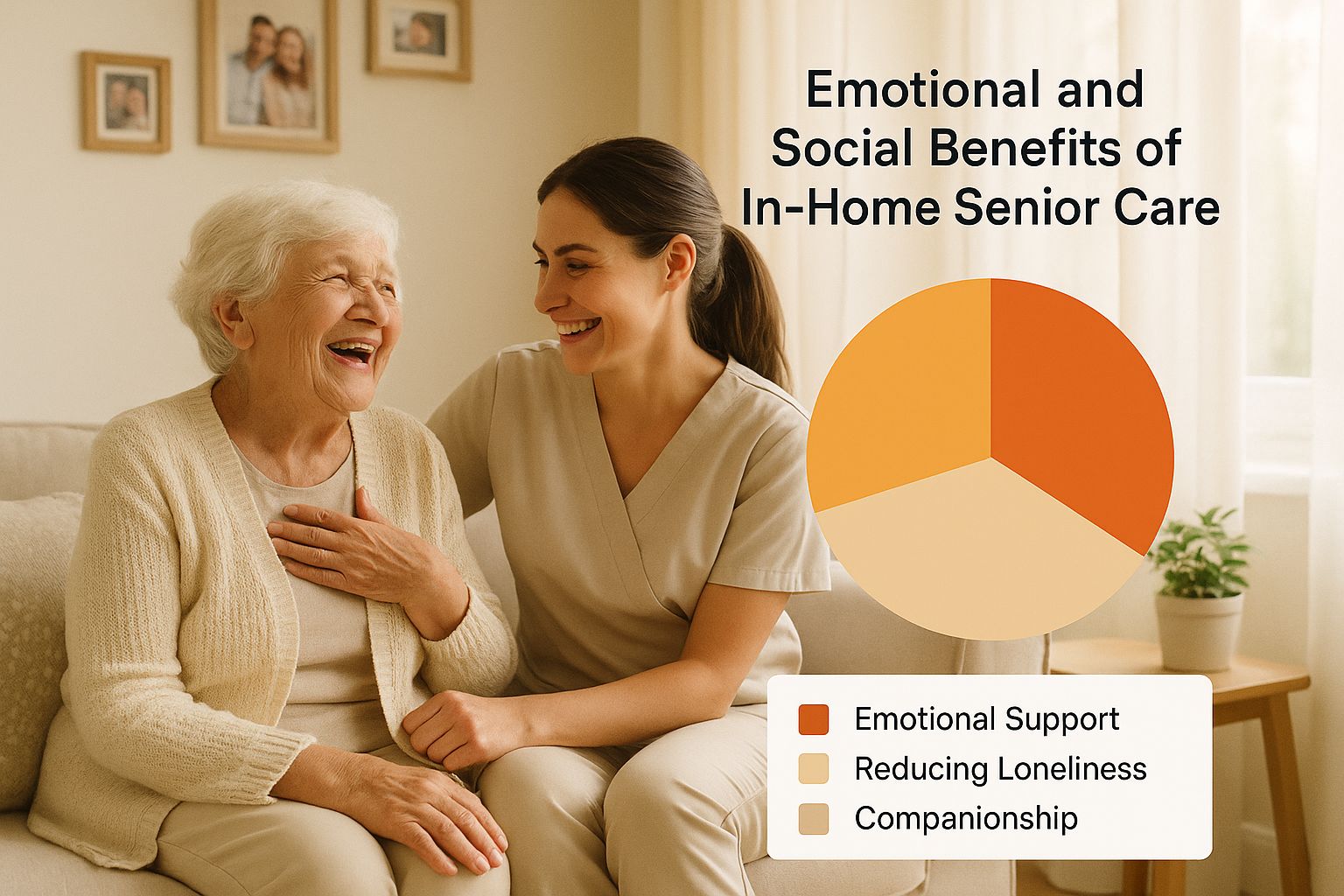
This image shows what high-quality in-home care is about. It’s more than medical procedures; it's about human connection and emotional support. This truly improves a senior’s quality of life.
Distinguishing Between Home Health, Palliative, And Hospice Care
These services all happen at home, but they have different goals. Getting these distinctions right is critical when making decisions. You can read more about the top reasons seniors prefer home health care in our other guide.
Let's compare the three core services we provide at Central Coast VNA & Hospice.
| Comparing In Home Care Options | |||
|---|---|---|---|
| Service Type | Primary Goal | Who It's For | Common Services Provided |
| Home Health | Recovery and rehabilitation from an illness, injury, or surgery. | Patients needing short-term, skilled medical care to regain independence. | Skilled nursing, physical therapy, occupational therapy, wound care. |
| Palliative Care | Pain and symptom management to improve quality of life. | Patients at any stage of a serious illness who need relief from symptoms. | Symptom control, emotional and spiritual support, care coordination. |
| Hospice Care | Comfort and dignity for someone with a terminal illness. | Patients with a life-limiting prognosis (typically 6 months or less). | Pain management, nursing care, emotional support for patient and family. |
Because our teams work together, patients can move smoothly between home health, palliative, or hospice care as their needs change. This integrated system is a major benefit of choosing a local, nonprofit provider with deep community roots.
The Real Benefits Of Choosing Care At Home
Many families in Monterey and Santa Cruz County choose in home care for seniors for its emotional stability. The comfort of familiar surroundings nurtures well-being.
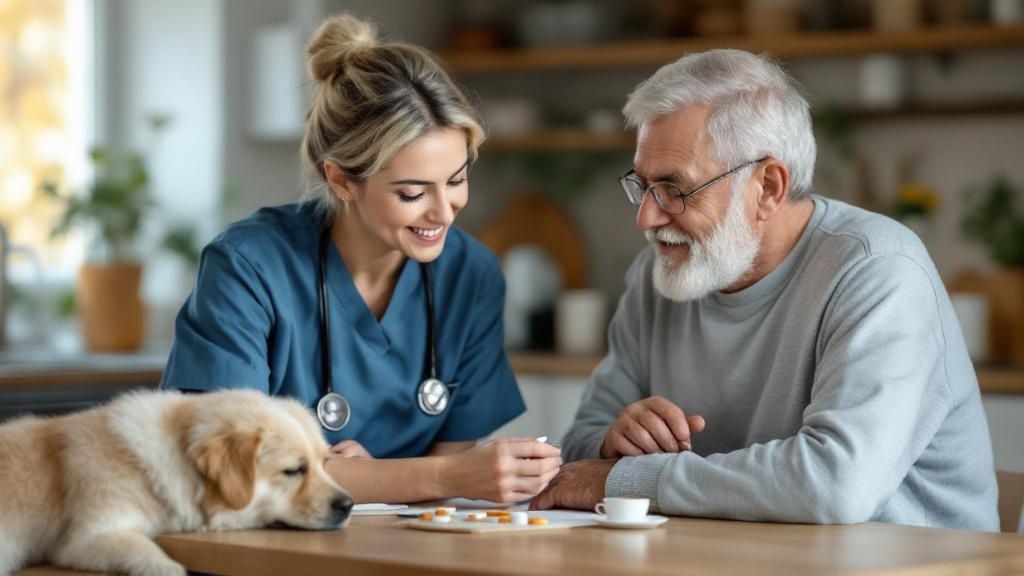
Being in a home filled with memories can lift spirits in ways a clinical setting cannot. Maintaining daily routines reinforces a positive mindset. It helps preserve a sense of normalcy.
Personalized One-On-One Attention
When a Registered Nurse or Hospice Aide visits, your loved one receives undivided attention. Unlike busy facilities, at-home care means every minute is devoted to one person’s needs.
This focus allows for quick adjustments, whether it’s changing medications or just listening. For over 74 years, Central Coast VNA & Hospice has built its nonprofit model around these trusting relationships.
Promoting Safety And Faster Recovery
Imagine a skilled nurse managing wound care and medications in your own home. This hands-on support speeds healing. It also cuts down on the risk of returning to the hospital.
Understanding how to keep seniors independent makes all the difference. You can find valuable information about in-home support to avoid a nursing home on our blog.
Receiving care at home is about more than just medical treatment; it’s about healing in an environment that feels safe, comfortable, and supportive, which can significantly accelerate the recovery process.
Greater Convenience And Accessibility
The most direct benefit is that care comes to your doorstep. This means no stressful trips to the clinic. This is vital for seniors with limited mobility.
Services we coordinate include:
- Physician and Nurse Practitioner house calls
- Mobile lab services for blood draws
- Specialized appointments, such as home visits for eye tests
Throughout Monterey, San Benito, Santa Cruz, and South Santa Clara counties, Central Coast VNA & Hospice synchronizes these offerings. Our mission is to bring expert healthcare directly to the people we serve.
Figuring Out Who Qualifies for In Home Care

Understanding the rules for in home care for seniors can feel complex. The good news is that the qualifications are quite straightforward. Each type of care—home health, palliative, and hospice—has its own specific criteria.
The universal starting point for any skilled in-home medical care is a physician's order. A doctor must certify that the patient needs specific services. This step confirms that every service is medically necessary.
Qualifying for Skilled Home Health Care
Skilled home health care is about recovery and rehabilitation. To qualify for services covered by Medicare, a patient must meet key requirements.
The main criteria are:
- Needing Intermittent Skilled Services: The patient requires part-time care from a Registered Nurse or therapist for things like wound care or physical therapy.
- Being Homebound: This is a crucial Medicare requirement. It means leaving home takes considerable and taxing effort.
Here at Central Coast VNA & Hospice, we work closely with families and doctors across Monterey County and San Benito County to confirm eligibility.
Understanding Palliative and Hospice Care Eligibility
The rules for palliative and hospice care are different. They focus on the nature of the illness itself. These services bring comfort to patients with serious health conditions.
The core qualification for palliative or hospice care is a diagnosis of a serious, life-limiting, or terminal illness. The focus shifts from short-term recovery to long-term quality of life and comfort.
Palliative care can start at any point during a serious illness. Hospice care is for patients with a prognosis of six months or less who have stopped seeking curative treatments.
Seniors are the main recipients of this kind of compassionate support. Approximately 86% of home health care patients are aged 65 or older (CDC, 2021). Many manage chronic conditions that make them ideal candidates for in-home medical care.
Navigating Costs and Insurance for Home Care
The financial side of healthcare can be a huge source of stress. When you look into in home care for seniors, questions about cost are often top of mind. We are here to give you clear answers.
The good news is that for many families on the Central Coast, skilled medical care at home has little to no out-of-pocket cost. Major insurance plans, including Medicare and Medi-Cal, often cover the full cost. Our team at Central Coast VNA & Hospice will work with your insurance provider to handle the details.
Understanding Coverage for Different Services
It helps to know how insurance plans cover our main services. While every plan is different, some general guidelines apply.
- Medicare Coverage: Medicare Part A and Part B typically cover 100% of costs for skilled home health care if a doctor certifies the patient as homebound. Medicare also covers nearly every aspect of hospice care.
- Medi-Cal and Private Insurance: Medi-Cal and most private insurance plans also provide strong coverage for these services. Our team can quickly verify your benefits.
For more details on the care these plans include, please review the information on our home health care services make a difference. We believe financial concerns should never block exceptional care.
The Cost-Effectiveness of In Home Care
Receiving care at home is often a smart financial decision. When your loved one stays at home, you avoid the high costs of room and board in a nursing home. These expenses can add up quickly.
Choosing in-home care isn't just about comfort; it's also a practical financial choice. By receiving skilled care at home, families can often avoid the significant expense of institutional settings while ensuring their loved one gets personalized, one-on-one attention.
As a nonprofit organization serving Monterey County, San Benito County, Santa Cruz County, and South Santa Clara County for over 74 years, our mission is clear. We provide compassionate, high-quality care to everyone in our community, regardless of their ability to pay.
How to Find the Right In Home Care Provider
Choosing an in home care for seniors provider is a big decision. You are inviting a partner into your home. It is critical to find an agency with a proven history of compassionate, expert care.
Start with the essential qualifications. Any reputable agency must be licensed by the state and certified by Medicare. This is proof that a provider meets high standards for patient safety and quality of care.
Key Questions to Ask Potential Providers
Once you confirm credentials, it's time to dig deeper. The goal is to understand their approach to care and the expertise of their staff. A transparent provider will welcome these questions.
Here’s a checklist to guide your conversations:
- What is your history in our community? Look for an agency with deep local roots. Central Coast VNA & Hospice has served families in Monterey, San Benito, and Santa Cruz counties for over 74 years.
- How do you screen and train your clinical staff? Ensure every staff member, from Registered Nurses to Hospice Aides, is licensed and receives ongoing training.
- How do you create a patient's plan of care? A strong provider will build a personalized plan with the patient, family, and doctor.
- How do you communicate with families? You should expect clear, consistent communication from a designated point of contact.
- What happens if our loved one's needs change? Choose a provider that offers a full range of services for a smooth transition between home health, palliative, and hospice care.
Choosing a nonprofit provider like Central Coast VNA & Hospice ensures that the primary focus is always on the patient's well-being, not on profit margins. Our mission-driven approach prioritizes compassionate, high-quality care for everyone in our community.
Making an informed decision brings peace of mind. By asking these critical questions, you can find an agency that aligns with your family’s values.
Frequently Asked Questions About In-Home Senior Care
1. What is the difference between home health care and personal care?
Home health care is skilled medical care prescribed by a doctor, like wound care from a Registered Nurse. Personal care is non-medical help with daily tasks like bathing or meal prep. Central Coast VNA & Hospice specializes in providing skilled medical home health, palliative, and hospice care.
2. How quickly can in-home care services begin?
Once we receive a referral from your doctor, we move quickly. A Registered Nurse can typically conduct the first in-home assessment visit within 24 to 48 hours to create a personalized care plan.
3. Does my loved one need to be homebound for all services?
The "homebound" rule is a specific Medicare requirement only for skilled home health care. This rule does not apply to our palliative or hospice care services.
4. Can our family be involved in the plan of care?
Absolutely. We see families as our partners in care. The Central Coast VNA & Hospice team works closely with both the patient and family to build a plan of care that reflects everyone’s goals and wishes.
5. What happens if my loved one’s needs change?
Our clinical team constantly reassesses your loved one's condition. If their needs change, we can seamlessly adjust their care plan, such as transitioning from home health to palliative care, with a team you already trust.
Are you ready to learn more about how Central Coast VNA & Hospice can support your family with compassionate, expert in-home care? Contact us today to discuss your loved one's needs.