
Let's clear up the biggest myth right away: palliative care is not the same as end-of-life care. It's an extra layer of support that works with your family’s current medical treatments to improve quality of life. The main goal is to bring relief from the symptoms, pain, and stress of a serious illness for both the patient and the family.
Rethinking Palliative Care Beyond Misconceptions
When families in Monterey County or Santa Cruz County hear "palliative care," they often think it means giving up hope. This is a common misunderstanding that prevents many people from getting the support they need.
The truth is that palliative care is about adding more help, not taking anything away. It can begin on the very day a serious illness is diagnosed.
Imagine your loved one is getting treatment for a condition like heart failure, cancer, or COPD. Their doctors focus on treating the disease itself. But who is helping manage the exhausting side effects, the emotional toll, and the tough decisions along the way?
That’s where palliative care steps in to provide an extra layer of support.
A Partnership for Better Living
Think of palliative care as a specialized team that joins your existing medical team. It does not replace your primary doctor or specialists. Instead, our team of Nurse Practitioners and Medical Social Workers works alongside them to manage symptoms and improve daily life.
This added support can help with:
- Pain, nausea, or shortness of breath
- Anxiety, depression, and emotional strain
- Understanding complex treatment choices
- Planning for the future with confidence (Advance Care Planning)
This diagram shows how palliative care works hand-in-hand with curative treatment to support a better quality of life.
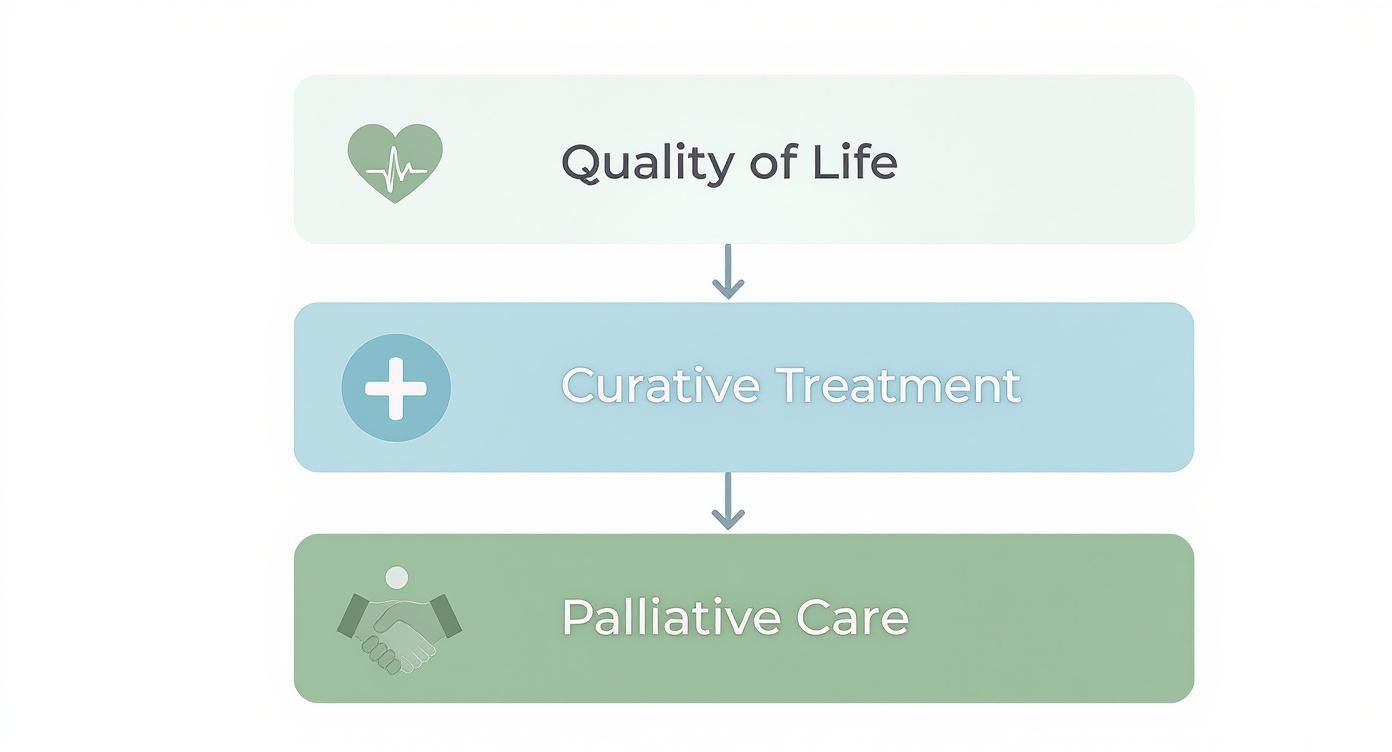
As you can see, palliative care enhances the ongoing medical plan instead of replacing it.
Palliative Care vs. Hospice Care at a Glance
It helps to see how palliative care and hospice care are different. While both focus on comfort, their timing and goals are not the same. This table breaks it down clearly.
| Feature | Palliative Care | Hospice Care |
|---|---|---|
| When It Begins | At any stage of a serious illness, often at diagnosis. | Typically when life expectancy is 6 months or less. |
| Treatment Goal | Can be received alongside curative treatments. | Focuses on comfort care when curative treatment ends. |
| Who It's For | Patients of any age with a serious illness. | Patients with a terminal diagnosis. |
| Duration | Can be provided for years, based on need. | Provided as long as the patient meets criteria. |
Understanding this difference helps families choose the care that best fits their loved one's needs and goals.
Support for the Whole Family
A serious illness affects everyone in the family. At Central Coast VNA & Hospice, we know that family members are the main support system, and they need help too. Our palliative teams, serving communities from San Benito County to South Santa Clara County, offer guidance for the entire family.
You can learn more by debunking the 9 biggest myths about palliative care in our detailed guide. Palliative care helps reduce stressful hospitalizations and ER visits by focusing on the whole person, not just the illness. For over 74 years, our nonprofit mission has been to provide this compassionate care right where it is needed most: at home.
Who Benefits From an Extra Layer of Support
How do you know if palliative care is the right choice for your family? This question comes up when a loved one is living with a serious, long-term illness. The answer often comes from looking at the daily challenges your family faces.
If your loved one is dealing with cancer, heart failure, COPD, or advanced kidney disease, their medical team is focused on treating the illness. But what about the symptoms and the emotional weight of it all? This is where palliative care at home offers crucial support.

This support is not a sign of giving up. It is a proactive step toward gaining comfort and control, and it works with your loved one’s ongoing medical treatments.
Recognizing the Need for More Help
Palliative care is most helpful when an illness creates ongoing challenges that affect quality of life. See if any of these situations sound familiar:
- Uncontrolled Symptoms: This could be persistent pain, shortness of breath, fatigue, or nausea that makes it hard to get through the day.
- Frequent Hospital Visits: Is your family stuck in a cycle of emergency room visits or hospital readmissions? That is a clear sign more support is needed at home.
- Emotional and Spiritual Distress: A serious illness often brings anxiety, depression, or uncertainty. A palliative team provides emotional and spiritual support for both the patient and the family.
If you agree with any of these points, your family is a great candidate for palliative care. Seeking this support means you are choosing to care for the whole person, not just their disease.
Bringing Expert Care to Your Home
For families across Monterey, San Benito, Santa Cruz, and South Santa Clara Counties, Central Coast VNA & Hospice brings this specialized care to your home. Our teams of Registered Nurses, Nurse Practitioners, and Medical Social Workers visit patients wherever they live. This could be a private residence or an assisted living facility.
Our in-home approach makes life easier for everyone. It reduces the strain of travel to appointments and provides expert clinical oversight in a familiar environment. To learn more, explore Central Coast VNA & Hospice's palliative care services and see how we tailor our support to each family's needs.
What Your In-Home Palliative Care Team Provides
When you choose in-home palliative care, you get a dedicated, compassionate team of experts. At Central Coast VNA & Hospice, this team is built to provide complete support for your entire family. We address physical symptoms as well as emotional and spiritual needs.
This is what modern palliative care really means: a team of professionals focused on improving quality of life, right where your loved one feels most comfortable.

This team acts as an extra layer of expert oversight. They work with your loved one’s primary doctor and other specialists to coordinate care and ensure everyone is working toward your family's goals.
Who Is on Your Team
Each member of your palliative care team brings a vital skill to create a support system for the whole person. While the team is shaped by your family's needs, it often includes professionals like these:
- Nurse Practitioners: These clinicians are experts in managing pain and other difficult symptoms. They assess your loved one’s condition, adjust medications with their doctor, and provide clear education to help your family feel more in control.
- Medical Social Workers: A serious illness affects more than just physical health. Our Medical Social Workers provide emotional support, connect you with community resources, and help you navigate the healthcare system.
- Chaplains: For families who desire it, our Chaplains offer non-denominational spiritual support. They provide a comforting presence and can help explore questions of meaning and hope.
How They Support Your Family
The support from your team makes a real difference every day. Beyond managing pain, they help with practical and emotional challenges.
To better understand a patient's abilities, a palliative care team may use various forms of physical performance testing. This helps create a smart plan to keep your loved one as active and independent as possible.
Your team also provides guidance with advance care planning. This is the process of clarifying your loved one's wishes for future medical care. Having these conversations with an expert guide ensures their values are respected and can relieve a significant emotional burden.
This complete approach is designed to reduce stress and prevent unnecessary hospital visits. To see how we support families across the Central Coast, explore our palliative home care services to learn more.
The Real-World Impact on Families
A serious illness sends ripples through the entire family. Managing symptoms, appointments, and an uncertain future is exhausting. Palliative care steps in to lift that burden, improving the quality of life for everyone involved.
There is a deep sense of relief when a loved one’s symptoms are finally under control. It means fewer trips to the emergency room and less anxiety. This is what palliative care really means for families today: it brings back a sense of calm and stability.

This support is not just about physical comfort. It’s about giving families the professional guidance they need to feel confident and in control again.
Reducing Stress and Preventing Crisis
One of the biggest benefits is having an expert clinical team just a phone call away. You are no longer navigating every challenge alone. This professional oversight is key to preventing small issues from becoming major crises.
Proactive symptom management helps families break free from the cycle of hospital readmissions. This reduces stress and allows your loved one to stay at home, surrounded by the people they love. It is all about creating more good days.
This team approach means that tough medical decisions are shared. Having an expert explain complex medical options provides immense emotional relief. For many families, this support is a true lifeline.
Empowering Families to Live More Fully
It’s no surprise that the global market for palliative care is growing. The benefits are clear and profound. You can learn more about the growth and impact of palliative care and its positive outcomes.
This is the heart of our nonprofit mission at Central Coast VNA & Hospice. For over 74 years, we have served families across Monterey, San Benito, Santa Cruz, and South Santa Clara Counties. We believe palliative care helps families live more fully, even when facing a serious illness.
The demands on family members can be intense, which is why understanding options like respite care for family caregivers is so important. By supporting the whole family, we help you focus on what truly matters: making the most of your time together.
How to Start the Conversation and Access Care
Taking the first step to get more support can feel difficult. But it doesn't have to be.
Talking about palliative care is not about giving up. It's about adding a layer of comfort and strength to your loved one's current medical plan. Frame it as a positive choice for a better quality of life.
When you talk with your loved one, focus on the benefits. Explain that it's a way to bring in experts who can help manage tough symptoms like pain or fatigue. This support can make it easier to continue with their treatments and live more fully.
Talking to the Doctor
Bringing up palliative care with a physician is the next key step. While doctors focus on treating the illness, they are also committed to their patient's well-being. A simple question is often all it takes to open the door.
Here are a few conversation starters you can use:
- "We’ve been struggling with [symptom, e.g., pain, nausea]. Could a palliative care team help us manage this better at home?"
- "I've read that palliative care can provide extra support. Could you give us a referral to explore this?"
- "We want to focus on improving quality of life right now. Is palliative care an option for us?"
These questions position palliative care as a collaborative tool.
How to Access Care with CCVNA
Getting started with Central Coast VNA & Hospice is simple. The process begins with a referral from your loved one's physician. From there, our team handles the rest, coordinating with their doctor to ensure a smooth transition.
Palliative care is a medical specialty covered by Medicare Part B, Medi-Cal, and most private insurance plans. It is billed like seeing any other specialist. Our team can help you navigate your specific coverage and answer financial questions.
This removes a huge barrier for many families and makes expert care more accessible. We are here to empower you to advocate for the comfort and support your loved one deserves.
If your loved one is living with a serious illness and you're not sure what support is available, call Central Coast VNA & Hospice at 831‑372‑6668. Our team can help you understand if palliative care is right for your situation.
Your Trusted Local Partner in Compassionate Care
For over 74 years, Central Coast VNA & Hospice has been a trusted nonprofit partner for families. Our mission has always been guided by a simple idea: palliative care is about adding support, not giving up hope.
We are proud to share this message with every family we serve across Monterey, San Benito, Santa Cruz, and South Santa Clara Counties. Our local roots and mission-driven approach are why we are the leading choice for palliative care on the Central Coast.
Getting the Support You Deserve
Globally, the need for this kind of care is huge. A 2024 report highlights a major gap in access, leaving millions without the help they need. These findings on palliative care needs worldwide show how big the global challenge is.
Additionally, some data suggests that 60% of eligible patients never access palliative or hospice care, often due to a lack of understanding.
Palliative care is not about giving up—it’s about getting more support, sooner. This blog helps families understand that serious illness doesn’t have to mean silent suffering or constant crisis.
If your loved one is living with a serious illness and you're not sure what support is available, call Central Coast VNA & Hospice at 831‑372‑6668. Our team can help you understand if palliative care is right for your situation.
Palliative Care: Your Questions Answered
Navigating a serious illness can be overwhelming. To help, we've answered the most common questions our families ask about palliative care. Our goal is to give you clear information so you can feel confident in your choices.
Can my loved one still see their regular doctors?
Yes, absolutely. Palliative care is designed to work with your loved one’s current medical team, not replace it. Our Central Coast VNA & Hospice team acts as an extra layer of support, collaborating with physicians and specialists to manage symptoms and improve comfort at home.
Does choosing palliative care mean we are giving up?
Not at all. This is one of the biggest myths. Palliative care can happen at the same time as curative treatments like chemotherapy or radiation. The goal is to help your loved one feel strong enough to continue with their treatments by managing difficult side effects.
Who pays for palliative care?
Palliative care is a medical specialty covered by Medicare Part B, Medi-Cal, and most private insurance plans. It is billed just like a visit to a specialist, such as a cardiologist. Our team at Central Coast VNA & Hospice can help you understand your specific coverage.
When is the right time to ask for palliative care?
The best time to start is as soon as a serious illness causes persistent symptoms, stress, or frequent hospital visits. You do not have to wait for a crisis to get help. In fact, getting support sooner can improve your family's quality of life and help prevent future emergencies.
How does palliative care reduce hospital visits?
Palliative care is especially beneficial for homebound patients with frequent ER visits or hospitalizations. Our in-home teams manage symptoms proactively, preventing them from becoming crises that require a hospital trip. This expert oversight at home provides stability and peace of mind.
Where does CCVNA provide palliative care?
Our teams bring palliative care to wherever a patient calls home on the Central Coast. This can be a private residence, a board and care home, or an assisted living facility. We proudly serve families throughout Monterey County, San Benito County, Santa Cruz County, and South Santa Clara County.
If your loved one is living with a serious illness and you're not sure what support is available, call Central Coast VNA & Hospice at 831‑372‑6668. Our team can help you understand if palliative care is right for your situation. You can also learn more at our website, https://ccvna.com.