
Making decisions about care for an older family member can feel overwhelming. You are not alone on this journey.
These services provide medical and personal support to help older adults live safely and with dignity. They are helpful when recovering from an illness or managing a long-term condition. The goal is simple: provide the right care at the right time.
Your Compassionate Guide to Senior Care
Finding the right support for an aging loved one is a very important journey for a family. It is a path filled with questions and big decisions. This guide is here to bring clarity to families on California's Central Coast.
Senior care is not a one-size-fits-all solution. It is a spectrum of services that can adapt as health needs change. We'll walk you through this spectrum, from temporary medical support at home to comfort-focused care.
A Local Partner You Can Trust
For families in Monterey County, San Benito County, Santa Cruz County, and South Santa Clara County, a local partner makes a big difference. Central Coast VNA & Hospice has been a cornerstone of our community for over 74 years.
As a mission-driven nonprofit, our focus has always been on delivering compassionate, high-quality care. Our commitment is to the people we serve. We believe every individual deserves expert medical care with dignity, in the comfort of their own home.
This deep history means we understand the unique needs of our neighbors. We're not just another healthcare provider; we're part of the community. When you need help figuring out where to turn when a loved one is seriously ill, our local team is here to help.
Understanding the Continuum of Care
The best senior care services work together in a continuum of care. Think of it as a connected pathway that allows support to change as a person’s health changes. This approach ensures your loved one receives consistent care from a team they know and trust.
This guide will help you understand:
- The different types of services: From home health to palliative and hospice care.
- How they connect: So you can anticipate future needs.
- Who they are for: To help you find the right starting point for your family.
Our goal is to empower you with straightforward information. By the end of this guide, you will have a clearer picture of the options available. This will help you make the best choice for your family.
Understanding the Spectrum of Senior Care Options
Figuring out senior care can feel like learning a new language. The terms can sound similar but mean very different things. To find the right support, you need to understand the purpose of each type of care.
Choosing the right path starts with knowing your options. This flowchart gives you a clear visual of the senior care journey. It helps you see the steps from recognizing a need to making an informed choice.
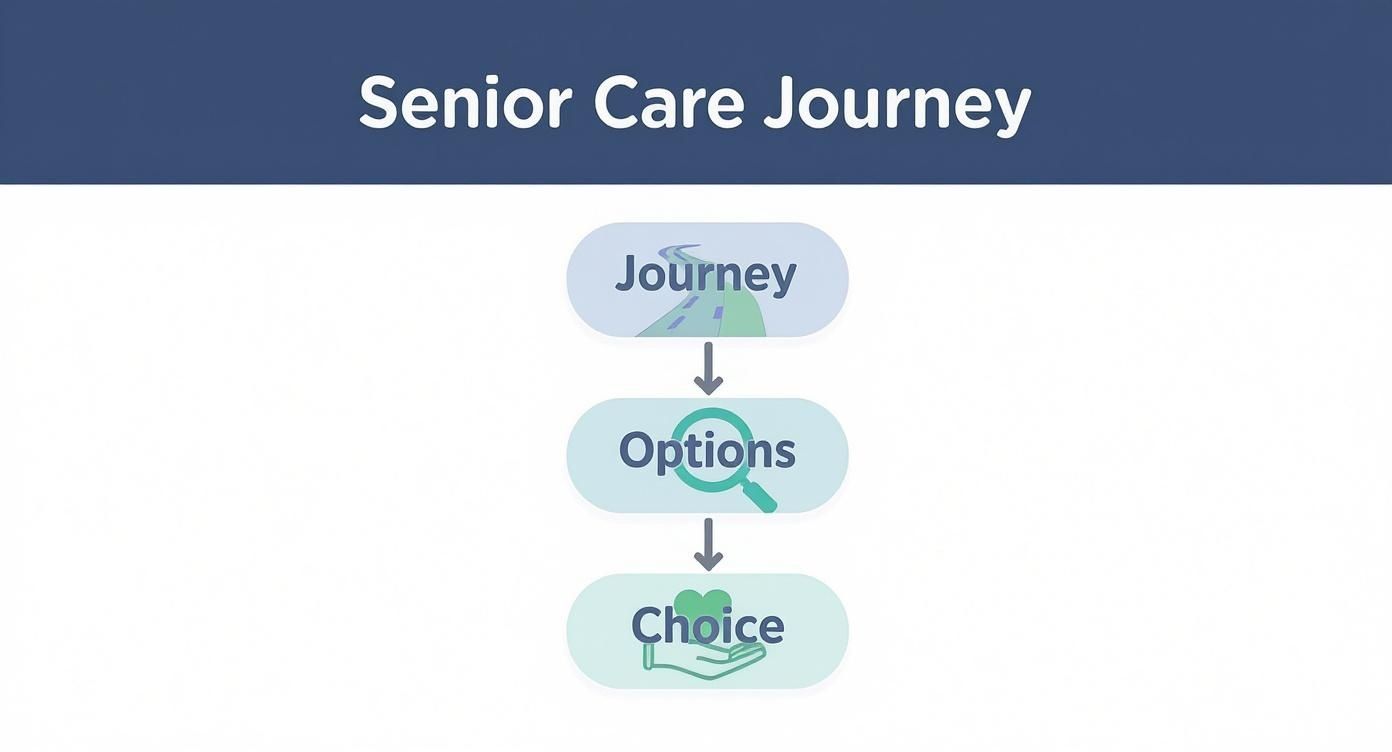
This is a process. It moves from a general starting point toward specific solutions. These solutions put your loved one’s well-being first.
To help you get started, here is a quick comparison of the primary senior care services. This table gives you a clear, at-a-glance understanding of what each service does.
Senior Care Services At-a-Glance
| Service Type | Primary Goal | Who It's For | Provided By (CCVNA) |
|---|---|---|---|
| Home Health | Medical recovery and rehabilitation at home after an illness, injury, or surgery. | Patients needing short-term, skilled medical care prescribed by a doctor. | Yes |
| Palliative Care | Relieve symptoms and stress from a serious, chronic illness to improve quality of life. | Anyone with a serious illness, at any stage, often alongside curative treatments. | Yes |
| Hospice Care | Provide comfort, dignity, and peace at the end of life when a cure is no longer the goal. | Individuals with a life expectancy of 6 months or less. | Yes |
| Home Care Aide | Assistance with daily living activities like bathing, dressing, and meal prep. | Seniors who need non-medical help to live safely and independently at home. | Yes |
| Respite Care | Provide short-term relief for primary caregivers. | Family caregivers who need a temporary break from their duties. | Yes |
| Care Coordination | Plan, coordinate, and monitor care services to meet a person's needs. | Families needing help navigating the healthcare system and managing multiple services. | Yes |
Now let's explore the three core medical services—Home Health, Palliative, and Hospice—in more detail. Understanding these is key to making confident decisions.
Home Health Care: Your Recovery Coach
Home Health Care is skilled, short-term medical support provided in a patient's home. It is prescribed by a doctor to help someone recover from an illness, injury, or hospital stay. This is not about long-term daily assistance; it’s about targeted medical help.
Imagine a loved one returning home after surgery. They are not sick enough for the hospital, but not strong enough to be alone. Home health care acts as a bridge, bringing a professional medical team to them.
The goal is to help patients regain their independence. Services often include:
- Skilled Nursing: A Registered Nurse can manage medications, dress wounds, and teach the family about the condition.
- Physical Therapy: This helps restore strength, balance, and mobility.
- Occupational Therapy: This focuses on helping people perform daily activities safely.
- Speech Therapy: This helps patients recovering from a stroke who need to regain communication skills.
At Central Coast VNA & Hospice, our professional teams work with your doctor to create a recovery plan. This service helps keep patients safe and comfortable at home.
Palliative Care: Your Symptom Relief Team
Palliative care is often misunderstood, but its purpose is simple. It aims to improve the quality of life for anyone with a serious illness. It focuses on relief from symptoms and stress from conditions like cancer or heart failure.
Palliative care can be provided alongside curative treatments. It does not mean you are giving up. Instead, it adds an extra layer of support to manage pain and fatigue.
Palliative care is about living as well as possible, for as long as possible. It addresses the whole person—body, mind, and spirit.
For example, someone undergoing chemotherapy might receive palliative care to manage nausea. Our palliative care team in Monterey County and surrounding areas coordinates with your doctors. We make sure your comfort is a top priority.
Hospice Care: Your Comfort-Focused Team
Hospice Care is a special kind of care for individuals in the final chapter of life. It is chosen when curative treatments are no longer working. The focus shifts to comfort, peace, and dignity.
This compassionate approach is for people with a life expectancy of six months or less. Hospice care is provided by a dedicated team. This team includes a doctor, nurse, social worker, chaplain, and Hospice Aides.
Hospice affirms life and views dying as a natural process. The team provides everything needed to keep the patient comfortable, often in their own home. You can learn more about how our expert teams provide both home health and hospice care.
Why Comprehensive Elderly Care Is More Important Than Ever
If you are looking into senior care options, you are not alone. Families all over the country are trying to find the best support for their loved ones. The need for compassionate, skilled elderly care is growing faster than ever.
This is a major shift in how we approach healthcare for older adults. This growing demand is pushing the industry to get better. It must be more focused on providing dignified support.
A Growing Need for Specialized Support
People are living longer. With longer lives often come more complex health needs. Chronic conditions like heart disease or diabetes become more common and require professional management.
The market for elderly care services was valued at USD 1.2 trillion in 2023. It is projected to more than double by 2032. This growth is fueled by the rising number of adults over 60 worldwide. You can learn more about the growth of the senior care market.
This means care providers have to be more adaptable and skilled than ever before.
Adapting to the Needs of the Central Coast
This global shift impacts our communities here on the Central Coast. For families in Monterey County, San Benito County, Santa Cruz County, and South Santa Clara County, having access to quality care is a necessity. It is about finding a stable, forward-thinking healthcare partner.
As a nonprofit with over 74 years of local service, Central Coast VNA & Hospice has evolved to meet the needs of our neighbors. Our mission is to provide the expert care our community deserves, right here at home.
We have seen how the needs of local families have changed. In response, we built our continuum of care. This ensures a seamless connection between home health, palliative care, and hospice.
The Focus on Holistic Well-being
Modern senior care has moved beyond just treating medical symptoms. Today, it is about supporting the whole person. This includes their physical comfort, emotional state, and personal dignity.
For example, preventing falls is a huge part of elderly care. Professionals use various balance assessment tests for elderly to keep seniors safe at home. A holistic approach includes:
- Pain and Symptom Management: Using expert techniques to ensure physical comfort.
- Emotional and Spiritual Support: Offering resources like social workers and chaplains.
- Family Involvement: Educating and supporting family members throughout the care journey.
This complete approach ensures every aspect of a person’s well-being is addressed. Central Coast VNA & Hospice is dedicated to this model of care.
How Senior Care Services Are Typically Funded
Figuring out how to pay for senior care can be stressful. Let's break down the common funding options in simple terms. This will help you feel empowered with the right information.
Navigating insurance rules is complex, but you don't have to do it alone. Our team at Central Coast VNA & Hospice is here to help families understand their coverage. That way, you can focus on what really matters—your loved one.
Understanding Medicare Coverage
For most Americans aged 65 and older, Medicare is their primary health insurance. It is a key source of funding for certain types of senior care. It's important to know what it does and does not cover.
Generally, Medicare Part A and Part B will cover home health care services. This is only if a doctor certifies they are medically necessary for a homebound patient. It also covers hospice care almost entirely for those with a terminal illness.
Medicare's hospice benefit is very comprehensive. It is designed to cover medical care, equipment, and medications related to the terminal illness.
What Medicare typically won’t cover is long-term custodial care. This includes non-medical help with daily activities. You can learn more in our guide on understanding Medicare home care eligibility.
The Role of Medi-Cal and Private Insurance
Beyond Medicare, other funding sources play a big part for families. Knowing how they fit in can open up more care options.
Medi-Cal, California's Medicaid program, can also cover home health and hospice services. It often works with Medicare to pay for costs that Medicare doesn’t cover. This depends on a person's income and eligibility.
Private insurance plans vary widely in their coverage. Some policies offer solid benefits for home health or palliative care. The best first step is to call the insurance provider to get a clear answer.
At Central Coast VNA & Hospice, our team works with a variety of payers, including:
- Medicare and Medi-Cal
- Central California Alliance for Health
- Blue Shield and other private insurance plans
We coordinate with these providers to sort out benefits and simplify the process. We serve patients in Monterey County, San Benito County, Santa Cruz County, and South Santa Clara County.
Navigating the Financial Journey
The financial part of arranging senior care should not stop you from getting support. As a local nonprofit with over 74 years of service, our mission is to ensure everyone has access to care.
Our team is here to walk you through funding options. We will answer your questions and help you secure benefits.
The Comfort and Rise of Home-Based Care
The phrase ‘home sweet home’ has stood the test of time for a reason. More seniors and their families are choosing to receive care in their own homes. This trend is driven by benefits for both physical recovery and emotional well-being.
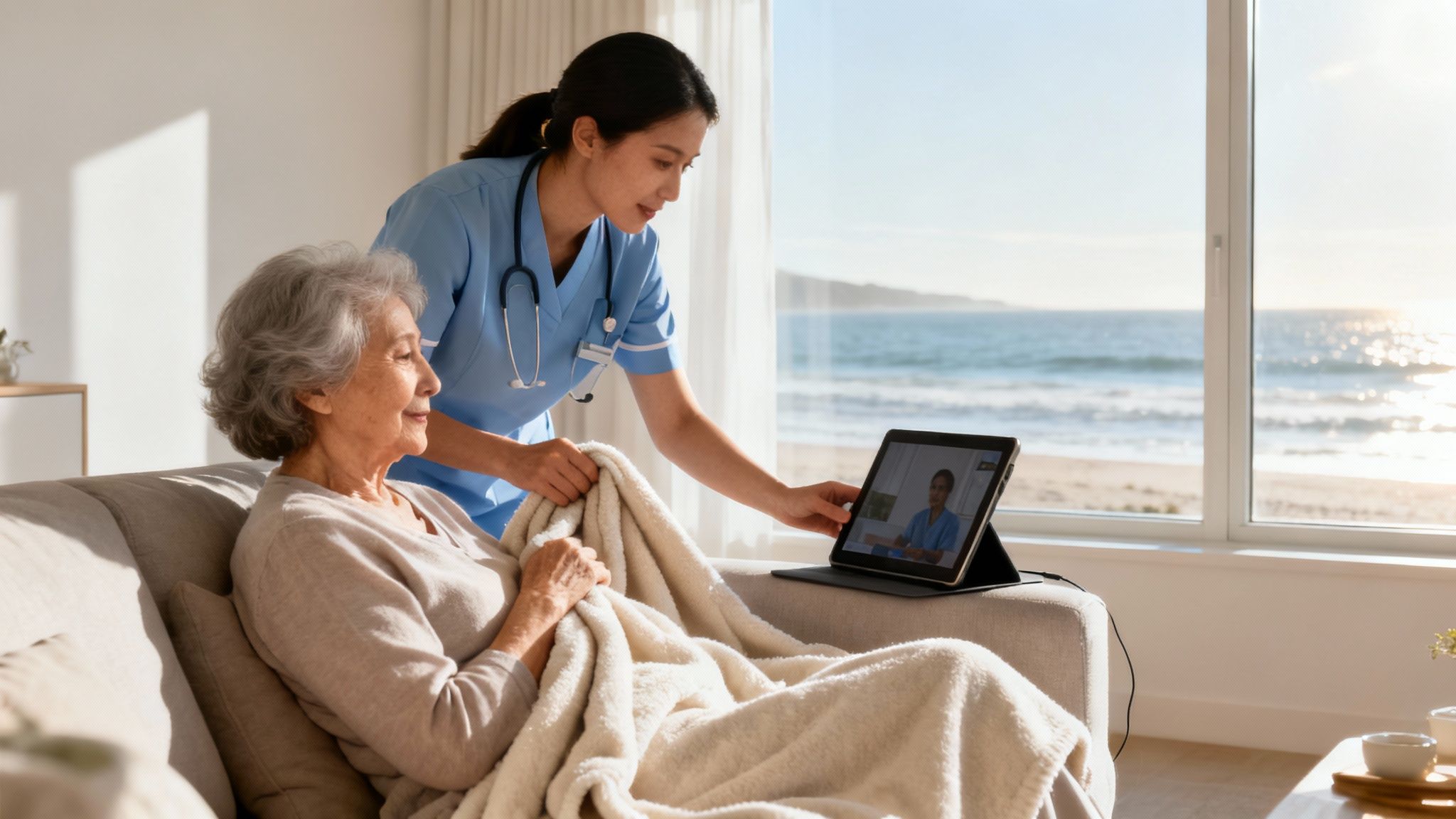
When someone can stay at home, they hold onto independence and dignity. Surrounded by personal memories, people often feel more comfortable and in control. This can lead to better outcomes.
Why More Families Choose Care at Home
For many families, the advantages of receiving care at home are clear. It offers a personalized setting where care plans can be adapted to a person’s lifestyle. This approach helps reduce the stress that can come with hospital stays.
Here are a few of the biggest benefits:
- Enhanced Comfort and Security: Being in a familiar space provides emotional comfort.
- Greater Independence: Patients can stick to their own schedules and routines.
- Reduced Risk of Infection: Limiting exposure to hospital environments lowers risk.
- Stronger Family Involvement: It is easier for family and friends to visit.
At Central Coast VNA & Hospice, our mission is built around this person-centered model. It aligns with the desire to keep loved ones safe where they belong. You can learn more in this guide to in-home care for seniors.
Technology Making Home Care More Effective
Modern healthcare technology is making professional medical care at home more effective. Technologies that were once only in hospitals are now used to support patients in their living rooms.
This shift is backed by a strong trend toward home-based solutions. Projections show that home care services are on track to become a significant part of the elderly care market. Innovations like telehealth are becoming key tools in managing senior health from home.
With tools like telehealth consultations, our Registered Nurses can connect with patients and their doctors remotely. This allows for quick check-ins without a stressful trip to an office.
This blend of compassionate support and modern technology ensures families on the Central Coast receive high-quality care. It empowers patients in our service areas to manage their health from home.
How to Choose the Right Senior Care Provider for Your Family
Picking the right care provider for your family is a big decision. It's about finding a true partner in care. You deserve to feel completely confident in your choice.
Think of this process as getting to know an organization's character. Start by asking about their story, their mission, and their connection to the Central Coast community.

Key Factors to Consider
As you begin looking at providers, certain qualities stand out. A solid foundation built on trust and a complete range of services are signs of a reliable partner.
Here is what you should be looking for:
- Nonprofit, Mission-Driven Status: A nonprofit organization reinvests resources back into patient care and community programs. Central Coast VNA & Hospice operates this way, so our focus is always on your family.
- Deep Community Roots: How long have they been here? A provider with 74+ years of service has built a legacy of trust.
- Full Continuum of Care: Does the agency offer home health, palliative care, and hospice? An organization that provides a seamless transition between services ensures consistent care from a team you know.
Questions to Ask Potential Providers
Once you have a shortlist, it's time to dig deeper with some specific questions. The answers you get will tell you about their commitment to quality and safety. Having questions prepared makes these conversations more productive.
Make sure to ask things like:
-
What are the qualifications of your clinical staff?
You want to hear about skilled professionals like Registered Nurses, licensed physical therapists, and certified Hospice Aides. This ensures your loved one is in expert hands. -
How do you create and manage personalized care plans?
Ask how they involve the patient and family in crafting a plan. Great care respects personal wishes and health goals. -
What are your protocols for emergencies and after-hours support?
Health issues do not stick to a 9-to-5 schedule. Knowing there's a clear plan and 24/7 support offers peace of mind.
Understanding how a team prepares for emergencies is vital. The skills they possess, like CPR, are fundamental. This guide on online CPR certification for healthcare providers offers insight into expected medical training. You can learn more by reading our guide on finding the best home health agency for seniors.
Frequently Asked Questions (FAQs)
It is normal to have questions when exploring senior care. Here are some of the most common questions we hear on the Central Coast. We hope these clear, straightforward answers help you.
1. Can my loved one get different types of care from the same organization?
Yes, and it's often the best approach. Choosing a provider that offers a full spectrum of services, like Central Coast VNA & Hospice, creates a continuum of care. This allows a person to move smoothly from home health to palliative care, and then to hospice if needed.
This consistency is a relief for families. You build a relationship with a trusted team that understands your loved one’s health history.
2. How do we know when it's time for hospice?
This is a personal question, but there are clear guideposts. Hospice is for someone with a life-limiting illness who is expected to have six months or less to live. At this point, the focus shifts from curing the illness to maximizing comfort.
Consider hospice when medical treatments feel like more of a burden than a benefit. We encourage families to have this conversation with their doctor sooner rather than later.
3. What's the real difference between palliative care and hospice?
This is a very common question. Palliative care can be provided at any stage of a serious illness, even while you’re receiving curative treatments. Its goal is to relieve symptoms and stress.
Hospice is a specific type of palliative care for the final stage of life. Both are about comfort, but they apply at different points in a person's health journey.
4. Is home health care only for people coming home from the hospital?
While many people start home health care after a hospital stay, it is not the only time it's used. A doctor might also order home health for someone whose chronic condition, like COPD, has flared up.
It can also be a proactive tool. A doctor might prescribe it for a patient who needs skilled nursing to manage health at home.
5. What does being a nonprofit provider mean for our family?
As a nonprofit, our mission is our bottom line—not profit margins. For over 74 years, Central Coast VNA & Hospice has put every resource back into patient care and staff training. Our decisions are guided by what’s best for the families we serve in our local counties.
This commitment means we provide high-quality care to everyone who needs it. Our long history is a testament to our dedication to our Central Coast communities.
Your journey to finding the right care starts with a simple conversation. The compassionate team at Central Coast VNA & Hospice is here to listen, answer your questions, and guide you with expert advice. Contact us today to learn more about our senior elderly care services.