
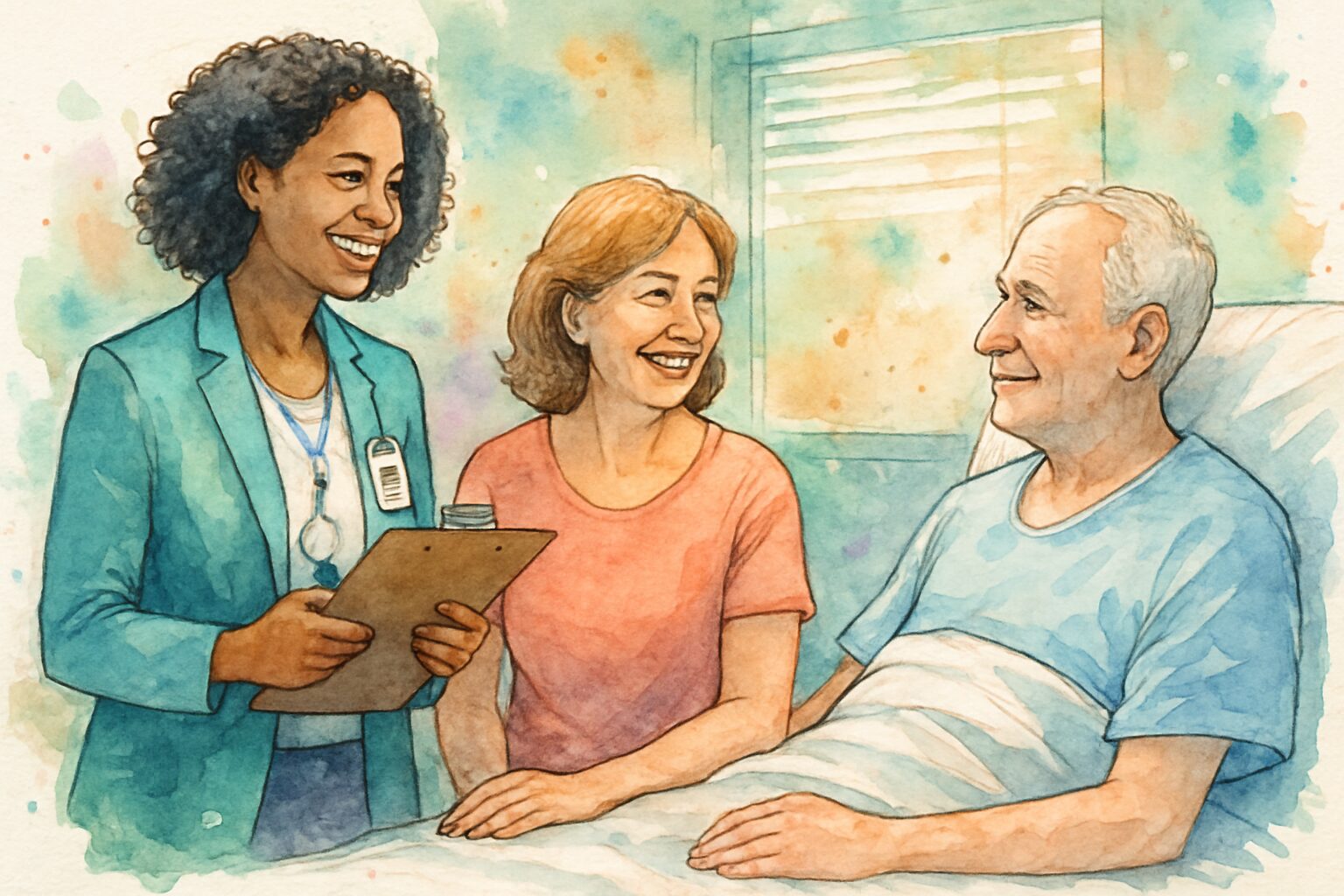
What Families Often Miss When Planning a Hospital Discharge to Home
A family reached out to us recently — the day after their mother came home from Salinas Valley Health. Her physician had already recommended home health services. But no one had made a call before discharge, and now she was home without any care lined up.
This happens more than most families expect. The hospital stay feels like the hard part, and the discharge feels like relief. But the 48 hours after leaving the hospital are when things can quietly go wrong — a wound that needs changing, medications that need managing, a fall that triggers a second admission.
This article is about what to do before that discharge happens — not after. If your family is navigating this right now in Monterey County, Salinas, King City, or anywhere on the Central Coast, here's what actually matters.
The Discharge Day Problem Nobody Warns You About
Hospitals often discharge patients on Fridays. It's not a coincidence — weekend staffing is lighter, beds turn over, and the administrative machinery that keeps patients in the building slows down heading into the weekend.
The problem is that home health agencies work on the same calendar. If a physician order for home health goes out Friday afternoon, a first home visit typically follows within 24 to 48 hours of the order being received. That means your loved one could be home for a full weekend before a Registered Nurse ever walks through the door.
That gap is exactly when readmissions happen — a missed medication dose, an unmanaged wound, a patient who isn't moving the way they should after surgery. For families in communities like Hollister or King City, where the nearest hospital is already a drive away, a weekend readmission is its own ordeal.
The fix isn't complicated, but it has to happen before discharge day, not after. If a physician has already recommended home health during the hospital stay, the conversation with the discharge planner should start that same day — not on the morning your loved one is getting dressed to leave.
How the Medicare Home Health Order Actually Works
About 43% of admissions-related calls to home health agencies are some version of "how do I get started?" Most families don't know what's actually required — and the hospital doesn't always explain it clearly.
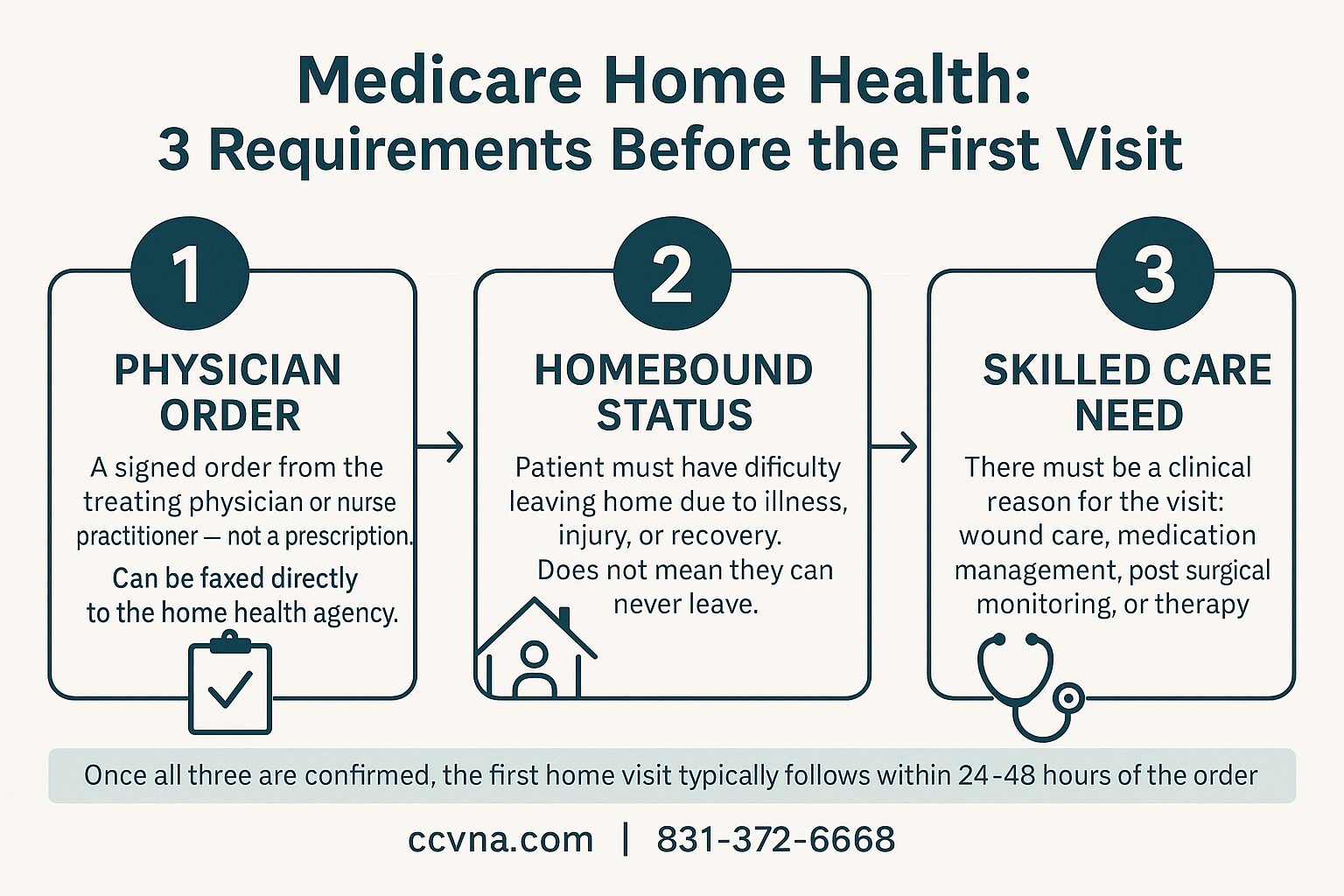
Medicare covers home health services when three conditions are met:
- A physician order — not a prescription, but a signed order from the treating physician (or nurse practitioner) authorizing home health
- Homebound status — your loved one has difficulty leaving home due to illness, injury, or recovery; this doesn't mean they can never leave, but leaving requires significant effort
- A skilled care need — there must be a clinical reason for the visit, such as wound care, medication management, post-surgical monitoring, or physical therapy
Once those three boxes are checked, the physician's office (or the hospital discharge team) can fax the order directly to a home health agency. That fax starts the clock. A first home visit typically follows within 24 to 48 hours of the order being received.
If your loved one is recovering from a procedure and a physician has mentioned home health, ask the hospital team directly: has the order been placed, and has it been sent? Does Medicare cover physical therapy at home? — that's a question worth reading up on before the discharge conversation happens.
The Three Things Medicare Requires for Home Health Coverage
Before a home health agency can schedule a first visit, three conditions must be confirmed. Here's how they fit together.
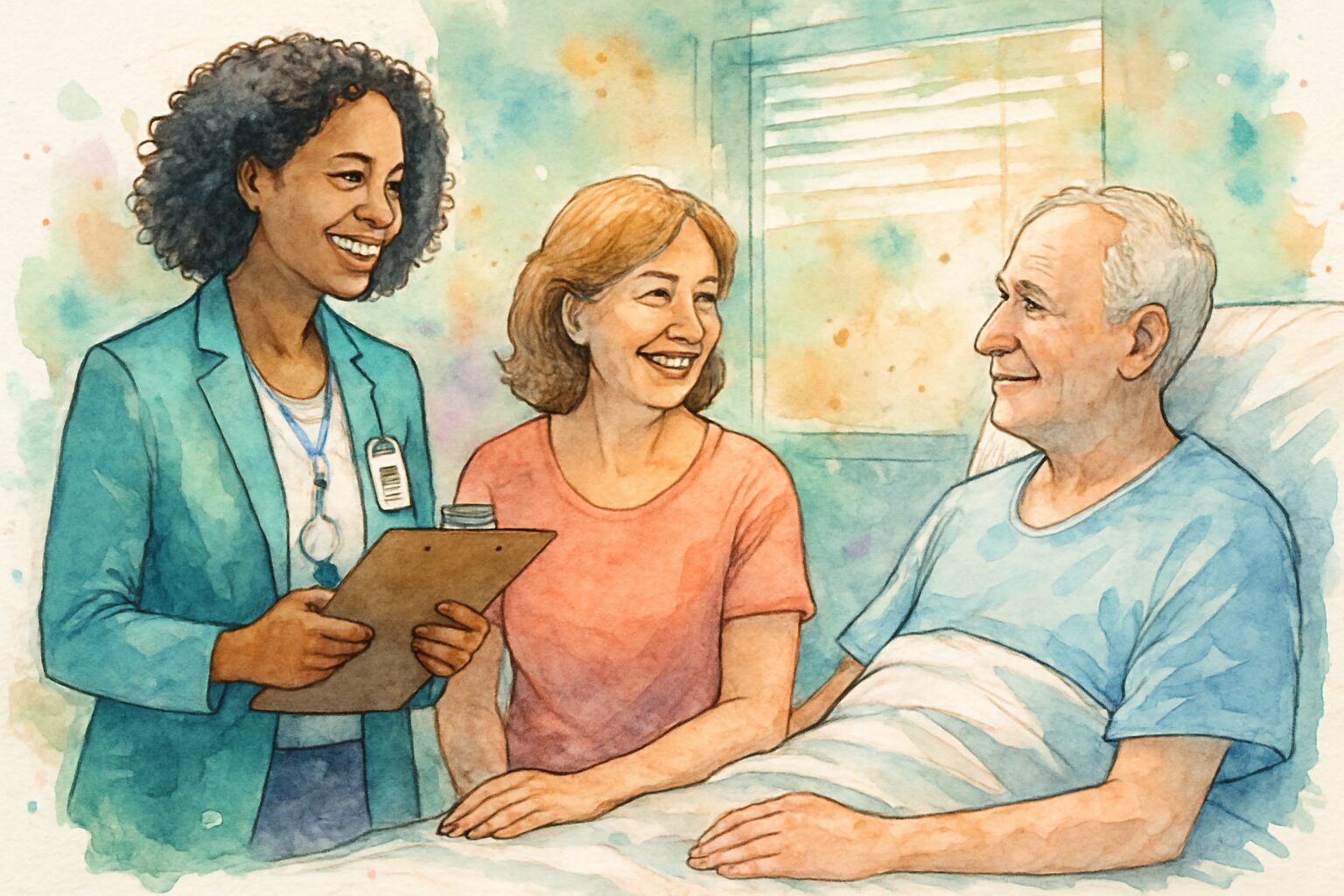
Your Right to Choose — What the Discharge Planner Isn't Always Telling You
Every hospital has a discharge planner or Medical Social Worker whose job is to coordinate what happens after you leave. They're often the ones who will name a specific home health agency — sometimes the one the hospital has a referral relationship with.
What many families don't realize: you have the right to choose your home health provider. The hospital can offer a recommendation, and that recommendation might be perfectly good. But you are not required to accept it, and the decision belongs to your family.
If your family has a prior relationship with a home health agency, or if you've done your own research and prefer a nonprofit provider with deep local roots, you can request that specific agency. You can also ask the discharge planner to contact them directly.
For families in Monterey County, that conversation is worth having. A local agency that has been operating in this region for decades — with staff who know the roads from Salinas to Carmel Valley — brings a different kind of familiarity than a large national network whose nearest office might be a county away. What families in Monterey wish they'd known sooner about home care is a useful read before that conversation.
What Home Health Can Do — and What It Can't
One of the most common mismatches at discharge is a family expecting round-the-clock support at home. Home health services aren't residential care, and the sooner families understand that distinction, the better prepared they'll be.
Home health — covered by Medicare and Medi-Cal — includes:
- Skilled nursing visits by Registered Nurses and Licensed Vocational Nurses for wound care, medication management, post-surgical monitoring, and chronic disease management
- Physical Therapy to rebuild strength and improve mobility after surgery or illness
- Occupational Therapy to help patients manage daily tasks safely at home
- Speech Therapy for swallowing difficulties or cognitive changes
- Medical Social Workers for care coordination, emotional support, and connecting families to community resources
What it doesn't include: 24-hour staffing, live-in care, or ongoing personal care assistance like bathing, dressing, or meal preparation on a daily basis. Those services fall under a different category of support — often called personal care or custodial care — which Medicare does not typically cover.
If your family is realizing that your loved one needs more support than a skilled nursing visit can provide, when caring for an aging parent becomes more than you can do alone walks through what that transition looks like. And the difference between needing help and needing a facility is worth reading if a higher level of care is on the table.
Home Health vs. What Medicare Doesn't Cover
Families frequently arrive at discharge expecting services that fall outside Medicare's home health benefit. Here's a side-by-side look at what is and isn't included.
| Service | Covered by Medicare Home Health? | Notes |
|---|---|---|
| Skilled nursing visits (wound care, medications) | Yes | Requires physician order and homebound status |
| Physical, Occupational, or Speech Therapy | Yes | Must have a skilled care need tied to current diagnosis |
| Medical Social Worker visits | Yes | Included as part of home health benefit |
| 24-hour live-in nursing | No | Falls outside Medicare home health benefit |
| Daily personal care (bathing, dressing) | No | Considered custodial care; not covered by Medicare |
| Meal preparation or housekeeping | No | May be available through county programs separately |
A Pre-Discharge Checklist for Families
If your loved one is currently in a hospital anywhere in Monterey County — Salinas, the Monterey Peninsula, or across the Central Coast — here's what to address before the discharge day arrives.
- Ask the attending physician whether home health services have been ordered and whether the order has been sent
- Identify the hospital's discharge planner or Medical Social Worker and schedule time to talk about the plan — not just the paperwork
- Confirm homebound status applies to your loved one, and ask the team to document it clearly
- Decide which agency you want and give the discharge planner that name early — don't wait until the morning of discharge
- Ask about discharge timing — if it looks like a Friday, ask whether the agency can receive the order Thursday to close the weekend gap
- Prepare the home before your loved one arrives: clear pathways, check medications, remove trip hazards
The families who avoid the readmission spiral are almost always the ones who started this list two or three days early. After the hospital discharge, what comes next? goes into more detail on the days immediately following a return home.
Frequently Asked Questions About Hospital Discharge to Home
How quickly can a home health agency start after my loved one is discharged?
Once a home health agency receives a signed physician order, a first home visit typically follows within 24 to 48 hours. The key is making sure the order is sent before discharge — not after. If the order goes out on a Friday afternoon, the first visit may not happen until Monday. Getting the order placed earlier in the week closes that gap.
Can we choose our own home health provider, or do we have to use the hospital's recommendation?
You can choose your own. The hospital's discharge planner may recommend an agency, but that recommendation isn't binding. If you have a preference — including a local nonprofit with a long history in Monterey County — tell the discharge planner and ask them to send the order there directly.
What does 'homebound status' actually mean? My father goes to the occasional doctor's appointment.
Homebound doesn't mean someone can never leave the house. It means that leaving home requires considerable effort due to illness, injury, or recovery — and that absences are infrequent or brief. Going to a doctor's appointment does not disqualify someone from homebound status. Most patients recovering from surgery or managing serious illness qualify without issue.
My mother needs help bathing and getting dressed every day. Does home health cover that?
Not on a daily basis through Medicare. Home health covers skilled care — nursing, therapy, and social work — but not ongoing personal care like bathing, dressing, or meal prep. If your mother needs that kind of daily support, a Medical Social Worker can help identify what's available in Monterey County, including community programs and private options.
What if the physician already mentioned palliative care or hospice — does that change the discharge process?
It can. Palliative care can be provided alongside home health services and doesn't require giving up other treatment. Hospice is a separate benefit with its own enrollment process and eligibility criteria. If either has come up during the hospital stay, that's worth a direct conversation with the discharge team before your loved one leaves. What comfort-focused care really means is a good place to start if you're trying to understand the difference.
Have Questions Before Discharge Day?
Central Coast VNA & Hospice has been supporting families in Monterey County, Salinas, the Monterey Peninsula, and across the Central Coast since 1951. If a hospital stay is wrapping up and you're not sure what comes next, a care coordinator can walk you through the process — no pressure, just clear answers. Call 831-372-6668 or visit ccvna.com to learn more.
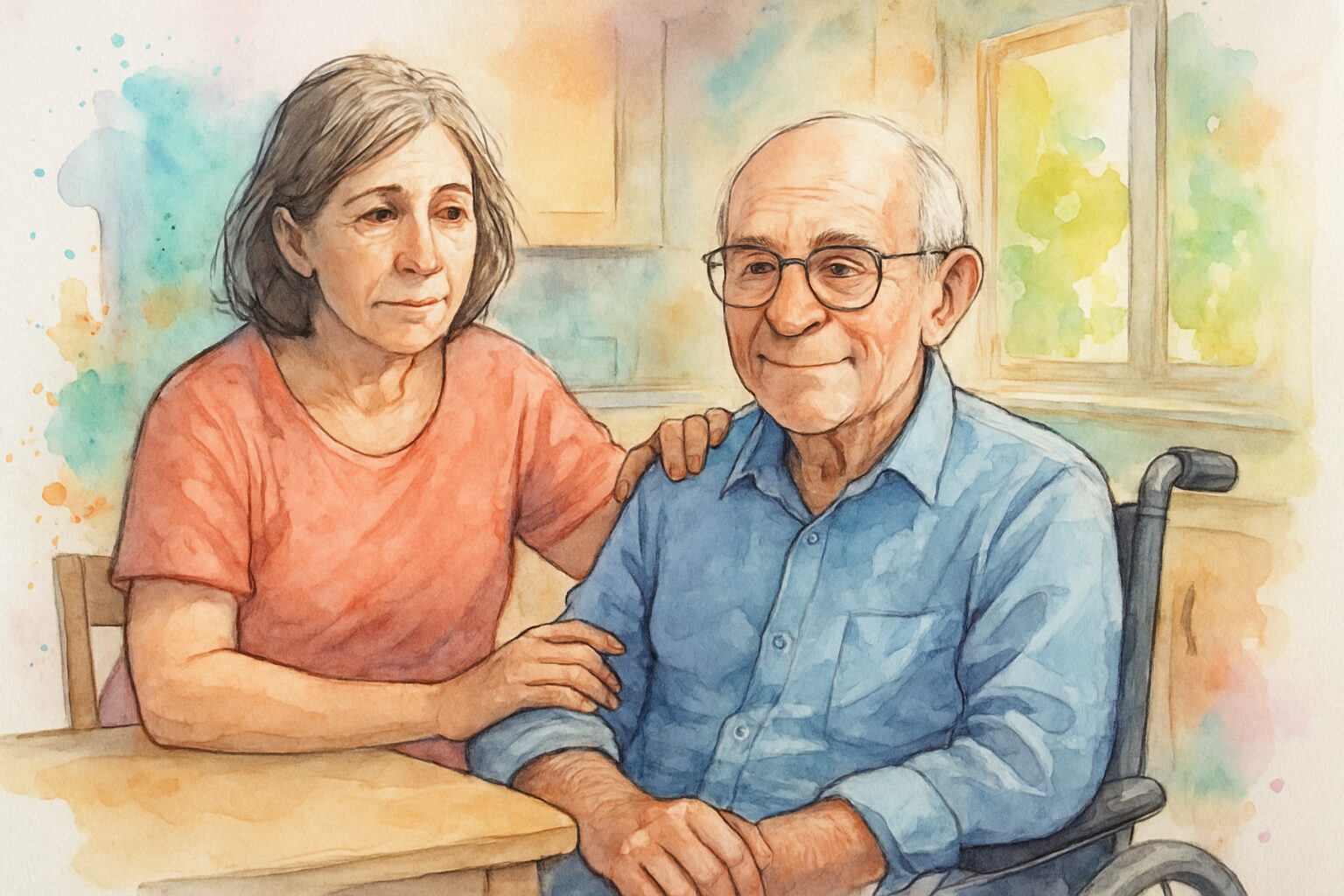
When Caring for an Aging Parent Becomes More Than You Can Do Alone
A woman called recently to ask about help for her husband, who has Parkinson's disease. She wasn't calling on behalf of a grown child or a sibling. She was calling for herself. "I'm elderly myself," she said, "and I'm caring for him alone. I don't know where to turn."
This situation is more common on the Monterey Peninsula and throughout Monterey County than most people realize. One aging adult supporting another — managing medications, preventing falls, handling wound care after a hospital discharge — while quietly running out of physical and emotional capacity. And often, carrying the fear that asking for help means something is ending.
This article is written for people in that exact position. What skilled home health actually looks like. What it costs — or more accurately, what it doesn't cost if Medicare or Medi-Cal covers it. And why a single assessment visit from a Registered Nurse changes the picture for most families who have been guessing.
The Line Between Managing and Not Managing
There's no single moment when caring for an aging parent — or a spouse, or any loved one — becomes too much. It builds. A medication that needs to be managed more carefully. A fall that didn't cause injury but easily could have. Sleep that keeps getting shorter because you're listening for sounds in the next room.
Many families in Salinas, Pacific Grove, King City, and Hollister reach this point without realizing they've passed it. They keep adjusting, keep absorbing. They tell themselves things are manageable. And sometimes they are — for a while.
But a few signs tend to show up before the situation becomes a crisis:
- You're making medical decisions without knowing if they're right
- Wound care, injections, or medication dosing has become part of your daily routine
- Your loved one has been discharged from a hospital and the follow-up care feels unclear — what comes next after a hospital discharge is one of the most common questions families ask
- Your own health — sleep, appointments, mental health — is being neglected
- You feel like you can't leave the house for more than an hour
None of these are signs of failure. They're signs that the situation has grown beyond what one person was ever meant to handle alone.
What Skilled Home Health Actually Is — and What It Isn't
A lot of families picture home health as a full-time aide moving into the house, or as something that signals a loss of independence. Neither is accurate.
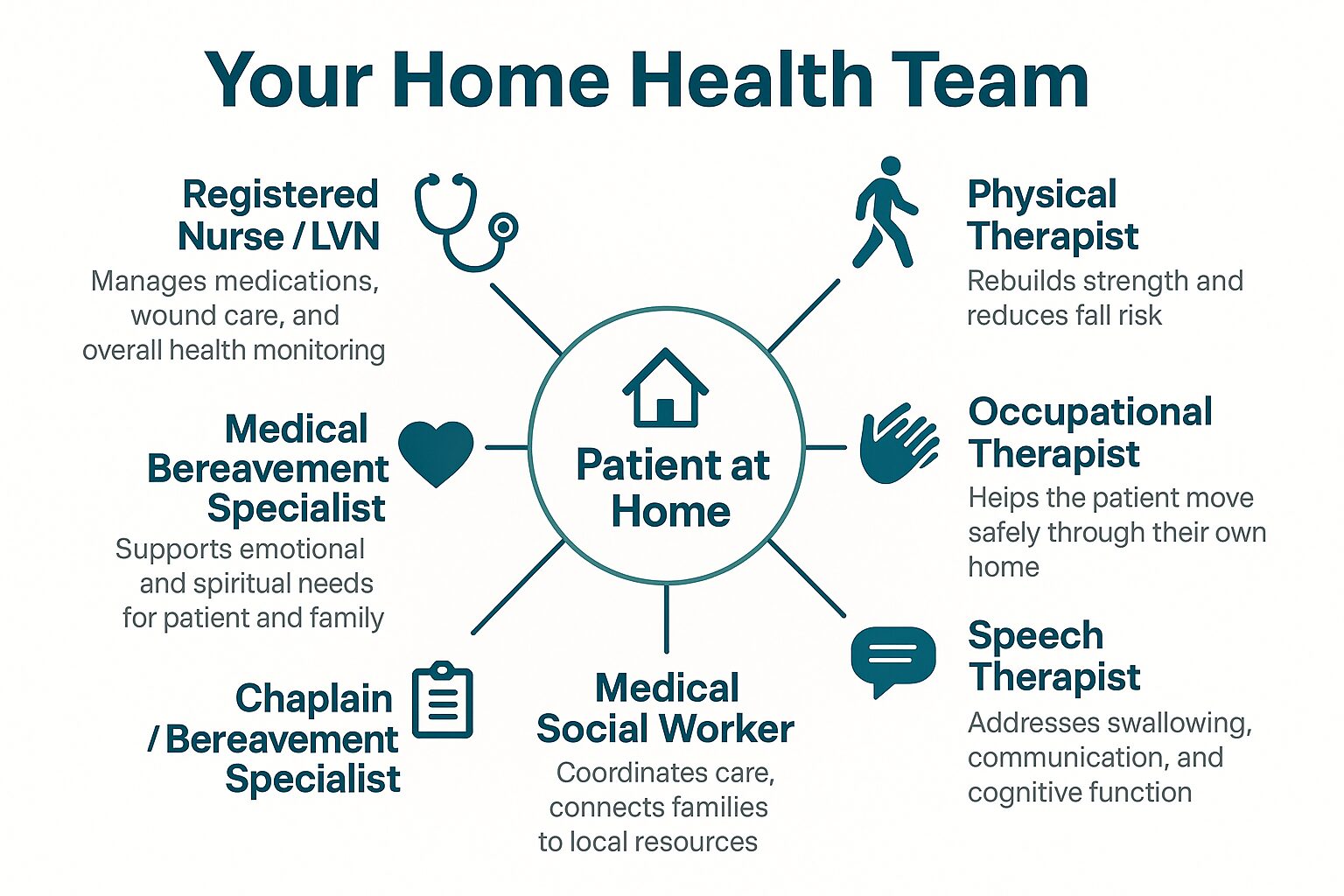
Skilled home health is structured, scheduled visits from a coordinated clinical team. A Registered Nurse might come three times a week to manage a wound or oversee medications. A Physical Therapist works on fall prevention and strength. An Occupational Therapist helps a patient move safely through their own home. A Medical Social Worker handles care coordination and connects families to local resources in Monterey County. A Chaplain or Bereavement Specialist can support the emotional side of a serious illness — for the patient and for the person caring for them.
Nobody moves in. You don't give up control. You get a team of clinicians who take on the clinical tasks that were never yours to carry in the first place.
To understand the full scope of what a Registered Nurse does during a home visit — what they're actually assessing, tracking, and managing — this breakdown of a skilled nurse's home visit is worth reading before you make any decisions.
For many families, the real question isn't whether help is needed — it's whether home is still the right setting. Skilled home health is specifically designed for patients who can and want to stay home, and who need clinical support to do it safely.
The Assessment Visit: Why One Conversation Changes Everything
Most families who have been managing on their own are guessing. Not because they aren't smart or devoted — but because they were never trained as clinicians. They're doing their best with incomplete information.
A Registered Nurse assessment visit changes that picture within a single appointment. The nurse reviews the patient's full medical history, current medications, mobility, wound status, cognitive function, and living environment. They identify what's working, what's risky, and what actually needs clinical attention.
For the person doing the caregiving, this visit is often the first time someone has said: here is what is actually happening, and here is what needs to happen next. That clarity alone — knowing you're not missing something critical — is something families across Monterey County describe as a turning point.
The assessment also determines what services Medicare or Medi-Cal will cover, so you're not going into that conversation blind. What families in Monterey wish they'd known sooner often comes down to this: they waited longer than they needed to because they assumed the process would be complicated or the cost would be out of reach.
Who's on the Home Health Team — and What Each Person Does
Skilled home health isn't one person. It's a coordinated team of clinicians, each handling a specific part of the patient's care.
Does Insurance Cover This? A Plain-Language Breakdown
Insurance uncertainty stops more families from calling than almost anything else. Here's what Medicare, Medi-Cal, and Veterans benefits actually cover for skilled home health.
| Coverage Type | What It Covers | Key Requirement |
|---|---|---|
| Medicare Part A/B | Skilled nursing, PT, OT, Speech Therapy, Medical Social Work — when ordered by a physician | Patient must be homebound and have a physician's order for skilled care |
| Medi-Cal | Similar skilled home health services for eligible patients; covers many who don't qualify for Medicare | Eligibility based on income and medical need; prior authorization may apply |
| Veterans Benefits (VA) | Home health services for qualifying veterans through VA-authorized providers | Must be enrolled in VA healthcare; physician referral required |
| Private Insurance / HMO | Coverage varies widely by plan — always verify benefits before assuming | Check your specific plan; some require pre-authorization |
| Out-of-Pocket / Private Pay | Available when insurance doesn't cover — see what options exist when Medicare doesn't cover everything | No insurance requirement; costs vary by service and frequency |
When the Illness Is Serious: Palliative Care and Hospice as Part of the Picture
For families caring for someone with a serious or progressive illness — Parkinson's, advanced heart failure, cancer, late-stage COPD — the clinical needs often go beyond what standard home health covers.
Palliative care is specialized support for managing symptoms, reducing pain, and helping families understand what's ahead — without requiring the patient to stop pursuing treatment. It's not the same as hospice. A patient can receive palliative care while still seeing their oncologist or neurologist. It's about improving quality of life alongside whatever else is happening medically. What comfort-focused care really means — and when to ask about it is a good starting point if you're not sure whether palliative care applies to your situation.
Hospice is for patients whose illness has advanced to a point where curative treatment is no longer the focus. It brings a full team — nurses, hospice aides, chaplains, social workers, and volunteers — into the home to manage pain, provide emotional and spiritual support, and guide the family through one of the hardest experiences of their lives. How families describe the moment they chose hospice is one of the most honest accounts of what that decision actually feels like.
Both programs are covered under Medicare for qualifying patients. And both are available throughout Monterey County, San Benito County, and the surrounding Central Coast communities where VNA has been serving families since 1951.
Frequently Asked Questions About Getting Help at Home
My spouse has Parkinson's and I'm elderly myself. Am I the kind of person who can actually get help?
Yes — and you're exactly who these services are designed for. When one aging adult is caring for another, the risk of injury, burnout, and medical error increases significantly. A Registered Nurse can assess your spouse's current needs and determine what Medicare or Medi-Cal will cover. You don't have to keep guessing, and you don't have to keep doing this alone.
Will Medicare really pay for a nurse to come to the house?
Medicare covers skilled home health — including nursing, physical therapy, occupational therapy, and medical social work — when a physician orders it and the patient meets the homebound criteria. Most patients with a serious chronic illness or recent hospitalization qualify. The assessment visit will confirm coverage before any services begin.
Does asking for home health mean my parent is going to a facility next?
No. Skilled home health is specifically designed to keep people at home safely. Getting clinical support doesn't put someone on a path to a facility — in many cases, it's what prevents that outcome. What actually makes staying home possible as you age breaks this down in more detail.
How often does someone actually come to the house?
It depends on what the physician orders and what the assessment finds. A typical skilled nursing visit might happen two to four times per week for wound care or medication management. Physical therapy visits are often scheduled three times per week for a set number of weeks. This is structured, scheduled care — not someone living in your home.
What if my parent doesn't want help? They're very independent.
This is one of the most common concerns families in Monterey County bring up. A first visit from a nurse is often just that — a visit. Many patients who were resistant become comfortable once they understand that the goal is to help them stay home and stay independent, not to take over. A Medical Social Worker can also help navigate these conversations with the family.
What happens after a loved one passes — is there any support for our family?
VNA provides bereavement support after a patient passes, including grief counseling and ongoing care for family members navigating loss. That support doesn't end at the time of death. If you're already in a difficult place emotionally, grief support resources for families are available and don't require a prior relationship with VNA's clinical team.
Ready to Talk to Someone Who Can Help You Sort This Out?
Central Coast VNA & Hospice has been serving families across Monterey County, San Benito County, and the surrounding Central Coast since 1951 — including families in Salinas, King City, Pacific Grove, and Hollister who are navigating exactly what you're facing right now. If you're not sure whether your situation qualifies, or you just want to understand your options before making any decisions, a care coordinator can walk you through it without pressure. Call 831-372-6668 or visit ccvna.com to start the conversation.
When Mourning Feels Stuck: Understanding Complicated Grief
Most people expect grief to follow some kind of arc — hard at first, then slowly lighter. But for many families in Monterey County, that arc never comes. Instead, the loss stays as raw at six months as it did the first week. Or it goes quiet for a while, then returns with a force that feels impossible to explain.
This is complicated grief — sometimes called prolonged grief disorder — and it affects roughly 10 to 15 percent of people who experience a significant loss. It's not a sign that someone loved too much or is too fragile to cope. It's a recognized condition, and it looks different from ordinary mourning in ways that matter.
If you're caring for an aging parent on the Monterey Peninsula, managing your own health while grieving, or supporting a family member who hasn't seemed like themselves in over a year — this article is for you. Understanding what complicated grief actually is, and what separates it from the normal pain of loss, is the first step toward finding real support.
What Makes Grief "Complicated"
Grief is painful for everyone. But typical grief, even when it's intense, tends to shift over time. There are good days mixed with hard ones. The person can still function — work, connect with others, find moments of meaning.
Complicated grief doesn't shift. It stays concentrated. The pain doesn't soften — it either holds at the same level or gets worse. Daily life becomes difficult to manage, sometimes for a year or longer.
Clinicians look for a specific cluster of experiences to distinguish complicated grief from normal mourning:
- Intense longing for the person that doesn't ease over time
- Difficulty accepting the reality of the loss, even months later
- Bitterness or anger about the death that feels unresolvable
- Feeling like part of yourself died along with the person
- Pulling away from other relationships and activities you used to care about
- A sense that life has no meaning or purpose without that person
- Difficulty imagining a future
Not everyone experiences all of these. But when several of them persist past the six-month mark and are interfering with daily life, that's when the term complicated grief becomes clinically meaningful — and when professional support is worth seeking.
As grief support specialists note, grief that intensifies rather than softens over time often signals that someone needs more than time alone to heal.
Why Some Grief Gets Stuck — and Who's Most at Risk
There's no single reason complicated grief develops. But research points to a few factors that make it more likely.
The nature of the loss matters a great deal. Sudden deaths — accidents, unexpected cardiac events, a quick decline from a diagnosis that wasn't caught early — leave survivors without any time to prepare. There's no goodbye, no chance to say what needed to be said. Families who cared for a loved one through a long illness sometimes face the opposite problem: they've been grieving in pieces for years, and when the death finally comes, the loss feels complicated by exhaustion, guilt, and relief all at once.
Losing a spouse or a child carries a particular weight. So does losing someone with whom you had a complex relationship — one marked by unresolved conflict, estrangement, or dependency. These losses leave things unfinished in a way that ordinary grief doesn't.
Certain personal factors also increase risk:
- A personal or family history of depression or anxiety
- Previous significant losses, especially in childhood
- Limited social support — living alone, having few close relationships
- Being the primary family decision-maker during a loved one's illness and death
- Financial stress tied directly to the loss
For families in Monterey County — where many older adults live alone in Salinas, King City, or the more rural parts of the county — social isolation is a real issue. The distance from support systems can make grief harder to move through, especially in communities where there's still stigma around asking for help with mental or emotional health.
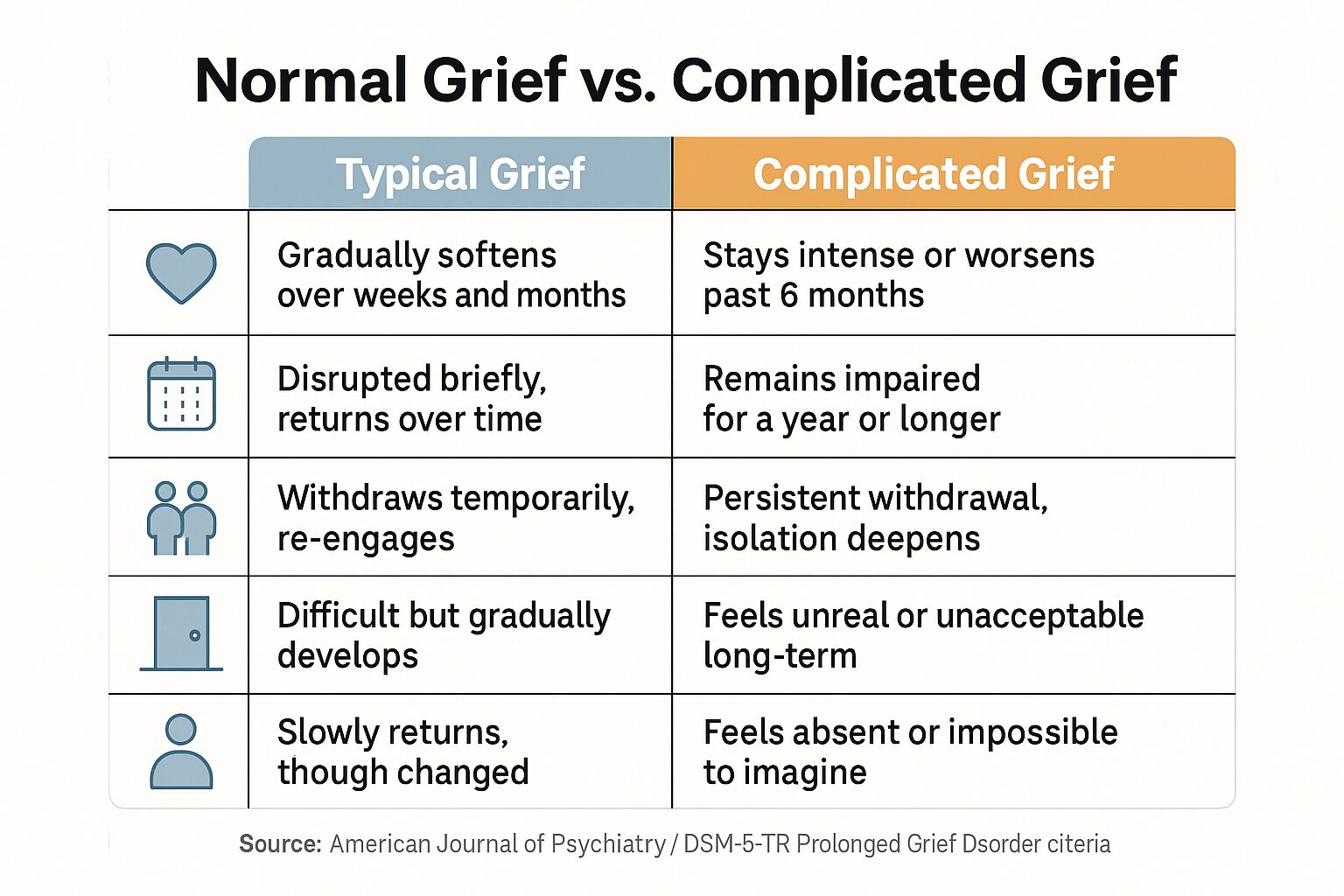
Normal Grief vs. Complicated Grief: Key Differences
This side-by-side comparison shows how typical mourning and complicated grief differ across the most important markers families and clinicians watch for.
What Complicated Grief Actually Feels Like From the Inside
People in complicated grief often don't describe their experience as "grief." They describe feeling broken, or like they're living in a fog. Some say they can go through the motions of daily life but feel completely detached from it — like they're watching themselves from a distance.
Others describe an inability to stop replaying the death itself. The final days in the hospital. The last conversation. What they did or didn't say. This kind of rumination isn't the same as remembering and honoring someone — it's more like being trapped in a loop that won't release.
A few things families should watch for in a loved one:
- Refusing to change anything in the deceased person's room or belongings more than a year after the death
- Avoiding all reminders of the person, to the point that it limits their life
- Talking about death or not wanting to be alive — this requires immediate attention
- Significant weight loss, poor sleep, or physical health decline with no medical explanation
- Expressing that grief feels like a form of loyalty — that getting better would mean forgetting
That last one is worth sitting with. Many people in Monterey County and surrounding communities — families with deep cultural roots in Salinas or Hollister, older widows and widowers living alone on the Peninsula — carry a belief that staying in grief is how they stay connected. Understanding that healing doesn't mean forgetting is often one of the most important shifts that bereavement support can offer.
For families trying to understand what support can look like in practice, this guide on what grief support actually helps explains it plainly.
Types of Support for Complicated Grief — What to Expect
Different approaches to grief support work differently depending on the person and the situation. Here's a general overview of the main options families explore.
| Type of Support | What It Involves | Best Suited For |
|---|---|---|
| Individual grief therapy | One-on-one sessions with a therapist trained in loss and bereavement | People with significant daily impairment, trauma around the death |
| Complicated Grief Treatment (CGT) | A structured 16-session therapy developed specifically for prolonged grief disorder | People who haven't responded to standard counseling |
| Bereavement counseling | Emotional support and guidance from a bereavement specialist, often less clinical | People who need a consistent, compassionate presence and someone to talk to |
| Support groups | Facilitated group setting with others who've experienced similar losses | People who feel isolated and benefit from shared experience |
| Medical evaluation | Assessment by a physician or Nurse Practitioner for depression, anxiety, or sleep issues | When physical symptoms (weight loss, insomnia) are prominent |
| Spiritual care | Conversations with a chaplain or spiritual advisor about meaning, loss, and faith | People for whom spiritual meaning is central to processing loss |
When Complicated Grief Follows a Hospice Loss
Families who've been through hospice sometimes assume that because the death was expected — because there was time to prepare — grief should be more manageable. But that's not how it works.
Caring for someone through the end of their life is physically and emotionally exhausting. By the time the death comes, many family members are already depleted. The grief arrives on top of that exhaustion, and there's no runway left. Some people don't feel the full weight of the loss until months later, once the practical demands of settling an estate, notifying everyone, and handling logistics have finally quieted.
Others carry guilt — about decisions made during the illness, about moments of impatience or frustration during caregiving, about choosing hospice in the first place. Families who've wondered whether they made the right call can find some grounding in reading how other families describe the moment they chose hospice — the doubt is more common than most people realize.
This is exactly why bereavement support doesn't end with the death. A good hospice program continues to support surviving family members — through bereavement specialists, check-in calls, and access to counseling — for at least 13 months after a loved one passes. That's not an arbitrary timeframe. It's designed to cover all the "firsts": the first holidays, the first birthday, the first anniversary of the death.
If you're a year or more out from a hospice loss and still struggling significantly, that's not a sign you're grieving wrong. It may be a sign that complicated grief developed, and that more focused support could help.
Frequently Asked Questions About Complicated Grief
How do I know if what I'm feeling is complicated grief or just normal sadness?
The clearest marker is time and function. Normal grief is painful, but it tends to allow you to live your life even while hurting. If you're more than six months out from the loss and still finding it hard to work, connect with people, or imagine the future — and if the pain hasn't softened at all — that's worth taking seriously. A conversation with a bereavement specialist or your doctor is a good first step.
Is complicated grief the same as depression?
They overlap but aren't the same thing. Depression is a broader condition affecting mood, energy, and function in many areas of life. Complicated grief is specifically anchored to the loss — the yearning, the inability to accept, the sense that life can't go on without that person. Someone can have both at the same time, which is why a medical evaluation alongside grief support is often recommended.
My father lost my mother two years ago and still won't leave the house or talk about the future. What should we do?
What you're describing — withdrawal, isolation, and difficulty imagining a future after two years — is a pattern that warrants a gentle but direct conversation, and possibly a referral to professional support. Try not to frame it as "you need help" and instead approach it as "I want to make sure you're not carrying this alone." A Medical Social Worker or bereavement specialist can often help families navigate this kind of conversation.
Does Medicare cover grief counseling or bereavement support?
Medicare covers bereavement services as part of the hospice benefit — meaning families of a hospice patient are entitled to bereavement support for up to 13 months after the death. Outside of a hospice context, standard Medicare does not typically cover stand-alone grief counseling, though Medicare Advantage plans vary. Medi-Cal may cover mental health services including therapy for grief-related conditions — it's worth checking with your county's behavioral health department.
Can children develop complicated grief too?
Yes. Children process loss differently than adults, and complicated grief in kids can look like behavioral changes, school problems, physical complaints, or regressive behavior — not just sadness. If a child in your family lost a parent or grandparent and hasn't seemed like themselves for many months, a referral to a child therapist experienced in grief is worth pursuing.
Is there a specific treatment that works for complicated grief?
Yes — Complicated Grief Treatment (CGT) is a structured, evidence-based therapy developed specifically for prolonged grief disorder. It typically runs about 16 sessions and has strong research support. It's different from standard grief counseling in that it uses specific techniques to help people process the loss and re-engage with life. Not every therapist is trained in CGT, so it's worth asking specifically about it when seeking a referral.
You Don't Have to Figure This Out Alone
Central Coast VNA & Hospice has been supporting families across Monterey County — from the Peninsula to Salinas to King City — through some of the hardest moments of their lives since 1951. If you or someone you love seems stuck in grief long after a loss, speaking with a bereavement specialist can help clarify what's happening and what kind of support might actually make a difference. You're welcome to call 831-372-6668 or visit ccvna.com to learn more about bereavement support services available to families in our region.
Grief Doesn't Follow a Schedule — What Support Actually Helps
Most families in Monterey County expect the hardest part to be the weeks surrounding a loved one's death. What they don't expect is how heavy month four or month nine can feel — when the casseroles have stopped coming, the phone calls have thinned out, and the world around them has returned to normal while they're still carrying something enormous.
Grief doesn't follow a schedule. It doesn't peak at the funeral and fade evenly from there. It comes in waves — triggered by a song, a smell, a Tuesday afternoon that used to belong to someone else. And the support available to most people doesn't account for that.
This article looks at what actually helps during bereavement — not the platitudes, but the practical and emotional supports that make a real difference — and what families on the Central Coast can realistically access.
Why Grief Feels Worse When Everyone Thinks You Should Be Better
There's a social expiration date on grief that most people feel but nobody says out loud. Around the six-week mark, many family members start hearing things like "you're so strong" or "at least they're not suffering anymore" — signals from well-meaning people that it's time to move forward.
But brain science and clinical experience tell a different story. The acute, disorienting pain of early grief often gives way to a subtler, more persistent grief that can settle in for months or years. Anniversaries, holidays, medical appointments that used to involve your parent — these are landmines that people don't anticipate.
For families in Salinas, Seaside, or King City who may not have close family nearby, the isolation that compounds grief can be significant. The Central Coast has a strong sense of community, but grief is still something most people face quietly and alone. That's exactly where structured bereavement support fills a gap that friendship alone can't.
Understanding what comfort-focused care really means can also help families reframe the period leading up to a death — which shapes how grief is carried afterward.
What Bereavement Support Actually Looks Like
"Bereavement support" can sound clinical, but what it actually involves is fairly straightforward: someone trained to sit with grief — not fix it, not rush it — and help people process what they're carrying.
Depending on what a family needs, support can take several forms:
- One-on-one grief counseling with a Bereavement Specialist, usually by phone or in person, focused on whatever the person is experiencing right now
- Support groups where people who've lost someone can talk with others who understand — without explanation, without having to manage anyone else's discomfort
- Check-in calls at regular intervals, especially around anniversaries and the first year of "firsts" (first holiday, first birthday, first spring without them)
- Resources and education about what grief actually does to the body and mind — because many people worry something is wrong with them when grief is affecting their sleep, concentration, or appetite
For families who went through hospice, bereavement services are often a natural continuation of the care relationship — offered by the same organization that supported their loved one at the end of life. The guide to grief support and bereavement counseling goes deeper into what that process typically involves.
What most families report is that just knowing support is available — that they can call someone who won't get uncomfortable — makes a measurable difference in how alone grief feels.
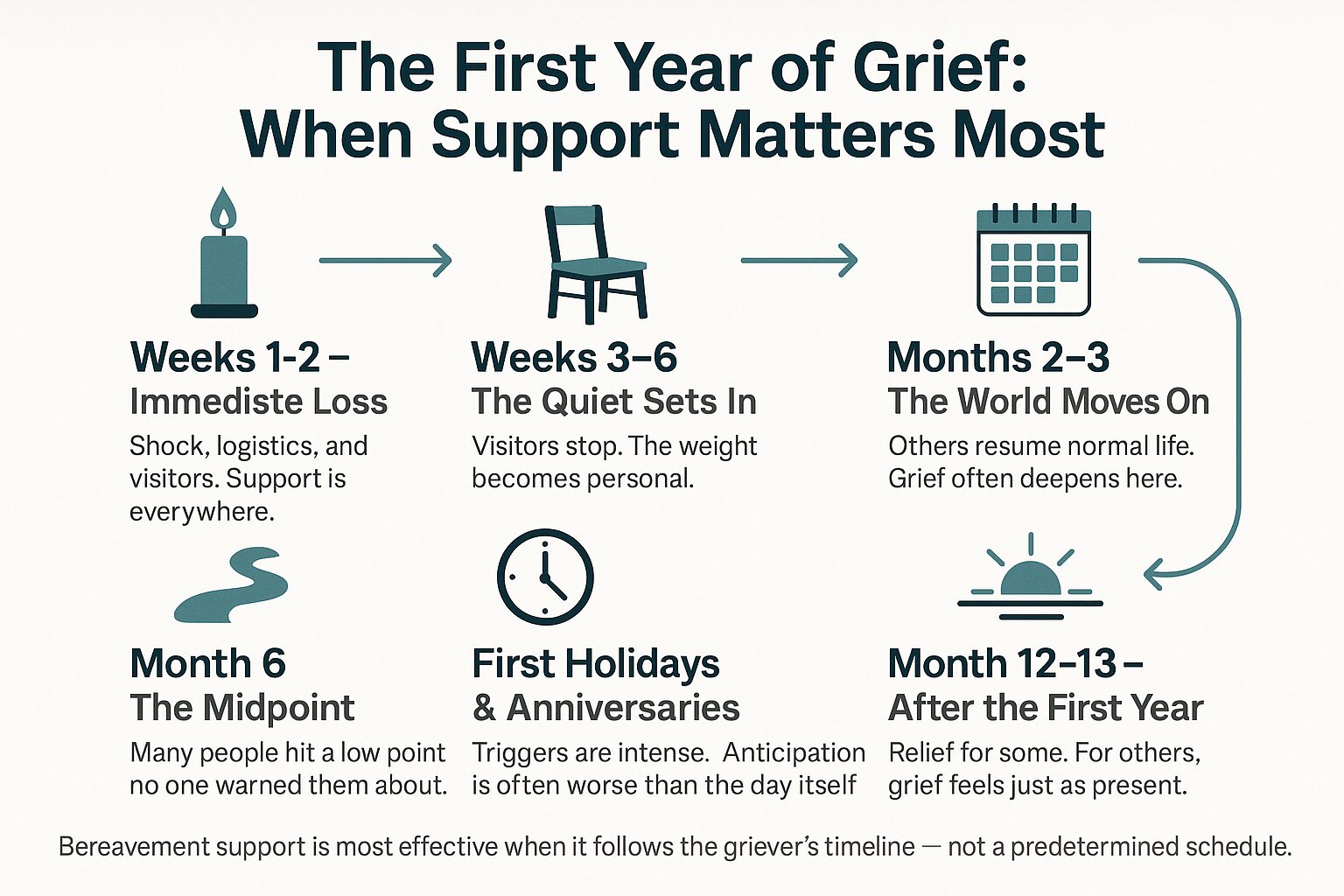
The First Year of Grief: When Support Matters Most
Grief doesn't distribute evenly across the calendar. This shows when families most often need support — and what kind.
The Difference Between Normal Grief and Something That Needs More Help
Most grief — even grief that feels unbearable — is a normal human response to losing someone. It doesn't require a diagnosis or medication. What it requires is time, acknowledgment, and connection.
But sometimes grief becomes something heavier: prolonged grief disorder, sometimes called complicated grief, where the intensity doesn't ease over time and starts to seriously interfere with daily life. Signs that grief may have crossed into something that warrants clinical attention include:
- Inability to function at work or in relationships after six or more months
- Persistent thoughts of wanting to join the deceased
- Complete social withdrawal that isn't improving
- Physical symptoms like dramatic weight loss or inability to sleep for extended periods
- Intense guilt that feels fixed and unshakeable
This isn't about pathologizing grief or putting it on a clock. Most people move through grief without ever reaching this point. But for those who do, having a Bereavement Specialist or Medical Social Worker in their corner means the difference between suffering alone and getting actual help.
For families who first encountered a Medical Social Worker during a hospice admission, that relationship is often where these concerns get surfaced first. How families describe the moment they chose hospice often reflects just how much weight the whole family was already carrying before a death occurred.
Grief Support Options: What Each One Offers
Not every type of support fits every person. This gives a plain-language look at what the main options actually provide.
| Type of Support | What It Involves | Best For |
|---|---|---|
| Individual Bereavement Counseling | One-on-one sessions with a Bereavement Specialist, by phone or in person | People who want private space to process at their own pace |
| Grief Support Groups | Facilitated group conversations with others who've experienced loss | People who feel isolated and want to be understood without explaining |
| Scheduled Check-In Calls | Regular outreach at key intervals — 1 month, 3 months, 6 months, 1 year | People who won't ask for help but benefit from someone reaching out |
| Medical Social Worker Referral | Connection to mental health resources, community services, or clinical care | When grief has crossed into depression, anxiety, or prolonged impairment |
| Chaplain or Spiritual Care | Non-denominational emotional and spiritual support | People processing meaning, faith questions, or spiritual dimensions of loss |
Who Bereavement Support Is For — Including People Who Don't Think They Need It
There's a common assumption that bereavement support is for people who are visibly falling apart. But many of the people who benefit most are the ones who held everything together during the illness and death — and who haven't stopped long enough to feel what they're carrying.
In Monterey County, that often looks like an adult daughter who coordinated her father's care for two years, managed his hospice enrollment, arranged the memorial, and handled the estate — and who finally hits a wall six months later with no idea why she can't sleep.
Bereavement support is also for:
- Adult children processing the death of a parent, even when the death was expected
- Spouses and partners navigating life reconfiguration after decades together
- Siblings who grieve differently from each other and feel misunderstood within their own family
- Grandchildren and younger family members who sometimes get overlooked in family grief
Nobody has to be in crisis to deserve support. And nobody should have to wait until they are.
For families still in the middle of a serious illness — not yet at the point of loss — palliative care support for families addresses the emotional weight that builds well before a death occurs.
Frequently Asked Questions About Grief Support
How long does bereavement support last?
There's no fixed end date. For families who received hospice care, bereavement services are typically available for at least 13 months after a loved one's death — which covers the full first year of grief plus the anniversary. Some people use support for a few months. Others check in periodically for longer. The pace follows the person, not a program calendar.
Does insurance cover grief counseling?
For families who received Medicare-covered hospice, bereavement services for the family are included as part of the hospice benefit — at no additional cost. Outside of hospice, coverage depends on individual plans. A Medical Social Worker can help sort out what's covered and what other community options exist.
What if I'm not sure I need help — I'm functioning okay?
Functioning and grieving aren't opposites. Many people who would genuinely benefit from bereavement support are going to work, managing their households, and appearing fine on the outside. If a loss is sitting heavy — even quietly — reaching out to a Bereavement Specialist isn't a sign of crisis. It's just honest.
My family member died at home under hospice care. Are we automatically connected to bereavement services?
Yes, typically. When someone passes under hospice care, the family is contacted by the hospice's bereavement team as a standard part of the care. You don't have to ask — a Bereavement Specialist or Medical Social Worker will reach out. But if you haven't heard from anyone and want support, you can always call the hospice directly.
Is grief support available if our loved one didn't receive hospice care?
Yes. Bereavement support isn't limited to hospice families. Community-based grief counseling and support groups are available to anyone navigating loss — regardless of how or where a loved one died.
What's the difference between a Bereavement Specialist and a grief therapist?
A Bereavement Specialist is typically focused on supportive care — listening, normalizing grief, tracking how someone is doing over time, and connecting them to additional help if needed. A grief therapist or licensed clinical social worker goes deeper into mental health treatment and is more appropriate when grief has become clinically significant. Many people start with bereavement support and are referred to a therapist if the situation calls for it.
When You're Ready to Talk to Someone
If you're a family in Monterey County, Salinas, Hollister, or anywhere on the Central Coast who is carrying grief — recently or from longer ago than you'd like to admit — Central Coast VNA & Hospice has Bereavement Specialists available to talk. You can reach their care team at 831-372-6668 or visit ccvna.com to learn more about what bereavement support looks like and whether it might help.
What "Comfort-Focused Care" Really Means — and When to Ask About It
Families across Monterey County hear the phrase "comfort-focused care" at some point during a serious illness — often from a doctor, a discharge planner at Community Hospital of the Monterey Peninsula, or a nurse after a difficult diagnosis. And most of the time, they nod along without being entirely sure what it means.
That's not their fault. The phrase gets used loosely, and it carries emotional weight that makes people hesitant to ask follow-up questions. Does it mean treatment is stopping? Does it mean the end is near? Does choosing comfort mean giving up?
The honest answers are no, not necessarily, and never. What comfort-focused care actually describes is a shift in what the care team is working toward — and understanding that shift is one of the most useful things a family can know when they're navigating serious illness.
The Difference Between Curing and Caring
Most of the medical system is built around fixing things — treating infections, removing tumors, repairing damage. That approach works well when the problem is solvable. But for many people living with a serious or advanced illness, cure isn't always on the table. And that's when the goals of care need to shift.
Comfort-focused care means the primary goal becomes quality of life — not length of life, not test results, not disease management for its own sake. It asks: what does this person need to feel as well as possible, right now, in the life they're actually living?
For a 78-year-old in Salinas managing congestive heart failure, that might mean adjusting medications to reduce breathlessness rather than pursuing another hospitalization. For someone in Pacific Grove with advanced cancer, it might mean focusing on pain control, sleep, and being present with family rather than continuing chemotherapy with significant side effects.
This isn't a lesser form of care. In many cases it requires more clinical attention, not less — because managing complex symptoms at home takes real skill. What does a skilled nurse actually do on a home visit? is a question worth asking, because the answer might surprise families who assume comfort care is just "keeping someone comfortable" in a passive sense.
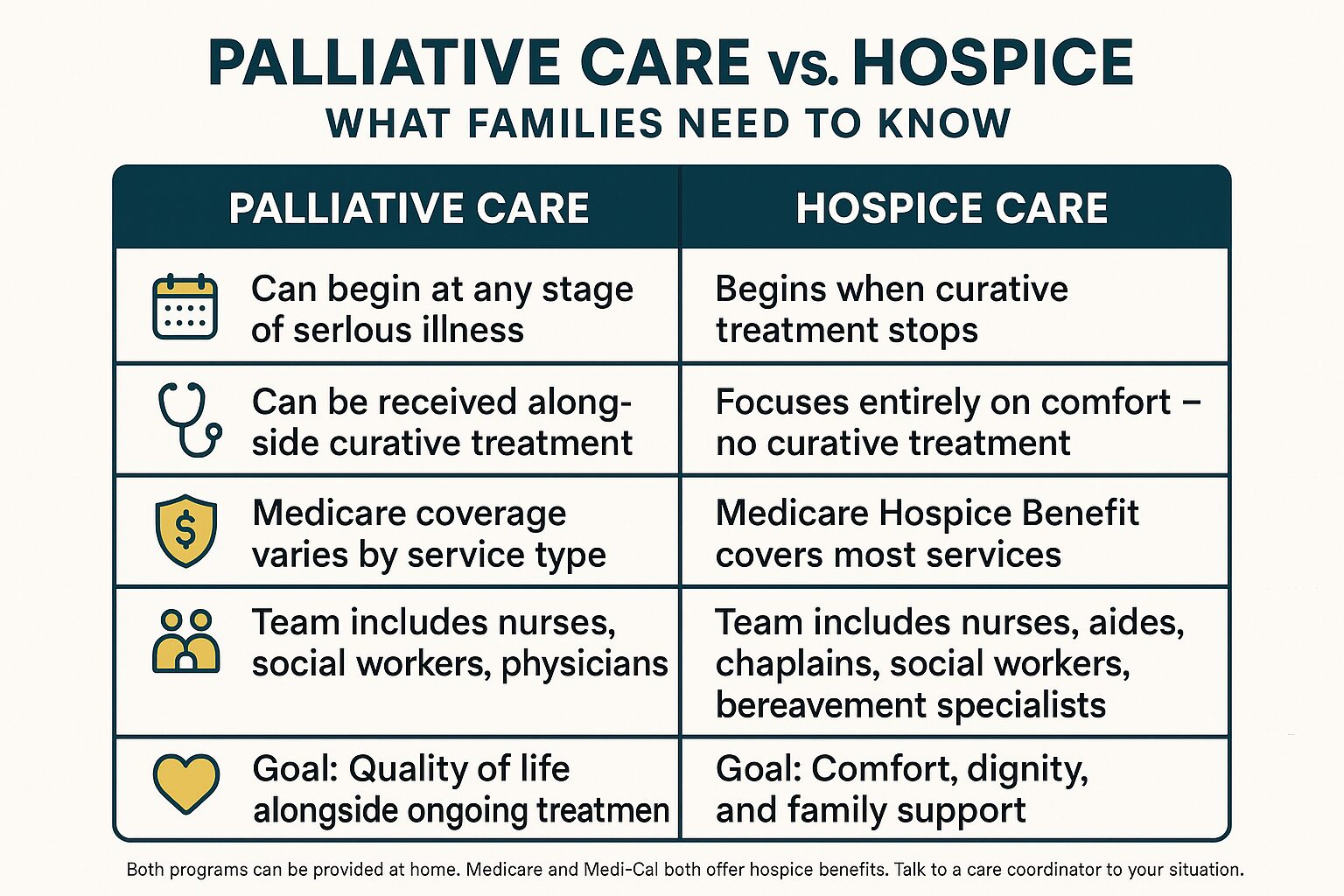
Palliative Care vs. Hospice — Where Comfort Care Lives
Two programs put comfort-focused care into practice: palliative care and hospice. They're related, but they're not the same thing, and the difference matters a lot to families trying to make decisions.
Palliative care can start at any point after a serious diagnosis — even while a person is still pursuing curative treatment. It layers on top of whatever else is happening medically. A person can be receiving chemotherapy and palliative care at the same time. The palliative care team focuses on symptoms, emotional support, care planning, and helping the family understand what's ahead.
Hospice care is specifically for people who have decided — usually alongside their physician — to stop pursuing curative treatment and focus entirely on comfort. Medicare's hospice benefit requires a physician to certify that the patient's life expectancy is six months or less if the illness follows its expected course. But it's important to know: people can live on hospice longer than six months, and they can also choose to leave hospice if their condition stabilizes.
Here's how families often describe the distinction:
- Palliative care: still fighting the illness, but with a team helping manage the burden of it
- Hospice care: no longer trying to cure the illness, with a team focused entirely on comfort and quality of life
Both involve nurses, therapists, social workers, chaplains, and volunteers working together. Neither one is about doing less. For a deeper look at what palliative care actually means for families, it's worth reading through the specifics before making any decisions.
Palliative Care vs. Hospice: A Side-by-Side Look
This comparison helps families quickly see how the two programs differ in terms of goals, timing, and what Medicare covers.
When Families Actually Ask About It — and Why They Wait
In Monterey County, families often ask about comfort-focused care later than they wish they had. This comes up again and again — not because families don't care, but because the system doesn't always make it easy to know when to bring it up.
There's no single right moment. But there are signals worth paying attention to:
- A loved one has been hospitalized two or more times in the past six months for the same condition
- Treatments are causing significant side effects without clear benefit
- A physician has mentioned that the illness is "not responding" or is "progressing"
- The person with the illness has expressed that they feel tired of treatment
- A family member has had to step back from work or their own life to manage care
- Discharge planners at the hospital have raised the question of home-based support
None of these signals means hospice is the immediate answer. But they do mean the conversation is worth having. What families in Monterey wish they'd known sooner about home care often includes wishing they had asked about comfort-focused options earlier — not because it would have changed the outcome, but because it would have reduced suffering in the meantime.
And asking doesn't commit anyone to anything. It's a conversation, not a contract.
What Comfort-Focused Care Can Look Like at Home
Comfort-focused care is practical, not abstract. Here's a plain-language look at what different team members actually do in the home.
| Team Member | What They Focus On | How Often They Visit |
|---|---|---|
| Registered Nurse (RN) | Pain assessment, medication management, wound care, symptom monitoring | Several times per week, or as needed |
| Licensed Vocational Nurse (LVN) | Medication review, vital signs, day-to-day symptom support | Coordinated with RN schedule |
| Medical Social Worker | Emotional support, care planning, connecting families to local resources | Weekly or as needed |
| Chaplain | Spiritual care and emotional presence for patient and family | As requested or scheduled |
| Hospice Aide | Personal care, bathing, comfort routines | Daily or several times per week |
| Bereavement Specialist | Grief support for family members — before and after the patient's passing | Ongoing, continues after death |
| Volunteers | Companionship, respite for family, errands, reading aloud | Flexible, scheduled with the family |
How Medicare and Medi-Cal Actually Cover This
One of the biggest reasons families hesitate to ask about comfort-focused care is cost. The assumption is that it's expensive, or that insurance won't cover it. In most cases, that assumption is wrong.
Medicare's Hospice Benefit covers virtually all hospice-related services for eligible patients — nursing visits, medications related to the terminal diagnosis, medical equipment like hospital beds and wheelchairs, and support from the full care team including chaplains and bereavement specialists. The patient typically pays nothing out of pocket for these services.
Medi-Cal also provides a hospice benefit with similar coverage. And for veterans living in Salinas, King City, Hollister, or elsewhere in the region, VA benefits may cover home-based comfort care as well.
Palliative care coverage is more variable. It depends on the specific services and how they're billed. But many palliative care visits — particularly those involving Registered Nurses or social workers — are covered under standard Medicare home health benefits when a physician orders them.
If you're uncertain what would be covered in a specific situation, a care coordinator can walk through the details before any commitment is made. What families need to know about Medicare coverage for home care covers many of the common questions families ask.
Frequently Asked Questions About Comfort-Focused Care
Does choosing comfort-focused care mean we're giving up?
No. Choosing comfort-focused care means changing the goal — from trying to cure an illness to making sure the person with that illness feels as well as possible. Many families who've made that shift say it was the most loving decision they ever made, not a defeat. How families describe the moment they chose hospice is worth reading if you're wrestling with this question.
Can someone receive palliative care while still getting chemotherapy or other treatment?
Yes. Palliative care does not require stopping treatment. It works alongside whatever treatment a person is receiving. The palliative care team focuses on managing symptoms — nausea, pain, fatigue, anxiety — that treatment often causes, as well as supporting the family through a difficult time.
What happens if someone on hospice starts to get better?
They can leave hospice. There's no penalty and no paperwork punishment for choosing to resume curative treatment if a person's condition improves. Some people stabilize, leave hospice, and re-enroll later. The hospice benefit under Medicare can be used more than once.
How do we know if our family member qualifies for hospice?
Qualification requires a physician to certify that the patient's life expectancy is six months or less if the illness follows its expected path. The patient (or their representative) also needs to agree to focus on comfort rather than cure. A care coordinator or the patient's physician can help determine eligibility — it's a conversation, not a complicated application process.
Can comfort-focused care happen at home, or does it require a facility?
Most comfort-focused care — including both palliative care and hospice — is delivered at home. For families in Monterey County, that means a patient can stay in their own house, with their own routines and the people they love around them, while still receiving skilled clinical support. Facility-based hospice exists but is typically reserved for symptom crises that can't be managed at home.
What support does the family get — not just the patient?
Quite a bit. Hospice care includes medical social workers for emotional and practical support, chaplains for spiritual care, and bereavement specialists who work with the family both before and after a patient's passing. Bereavement support continues for at least 13 months after the death of a loved one under the Medicare Hospice Benefit. That's not a minor detail — grief doesn't follow a schedule, and having a bereavement specialist available during that time makes a real difference.
Still Have Questions About What This Could Look Like for Your Family?
Central Coast VNA & Hospice has been supporting families across Monterey County — from the Peninsula to Salinas to King City — since 1951. If you're trying to understand whether comfort-focused care makes sense for your situation, a care coordinator can talk through the specifics without pressure or obligation. Call 831-372-6668 or visit ccvna.com to start the conversation.
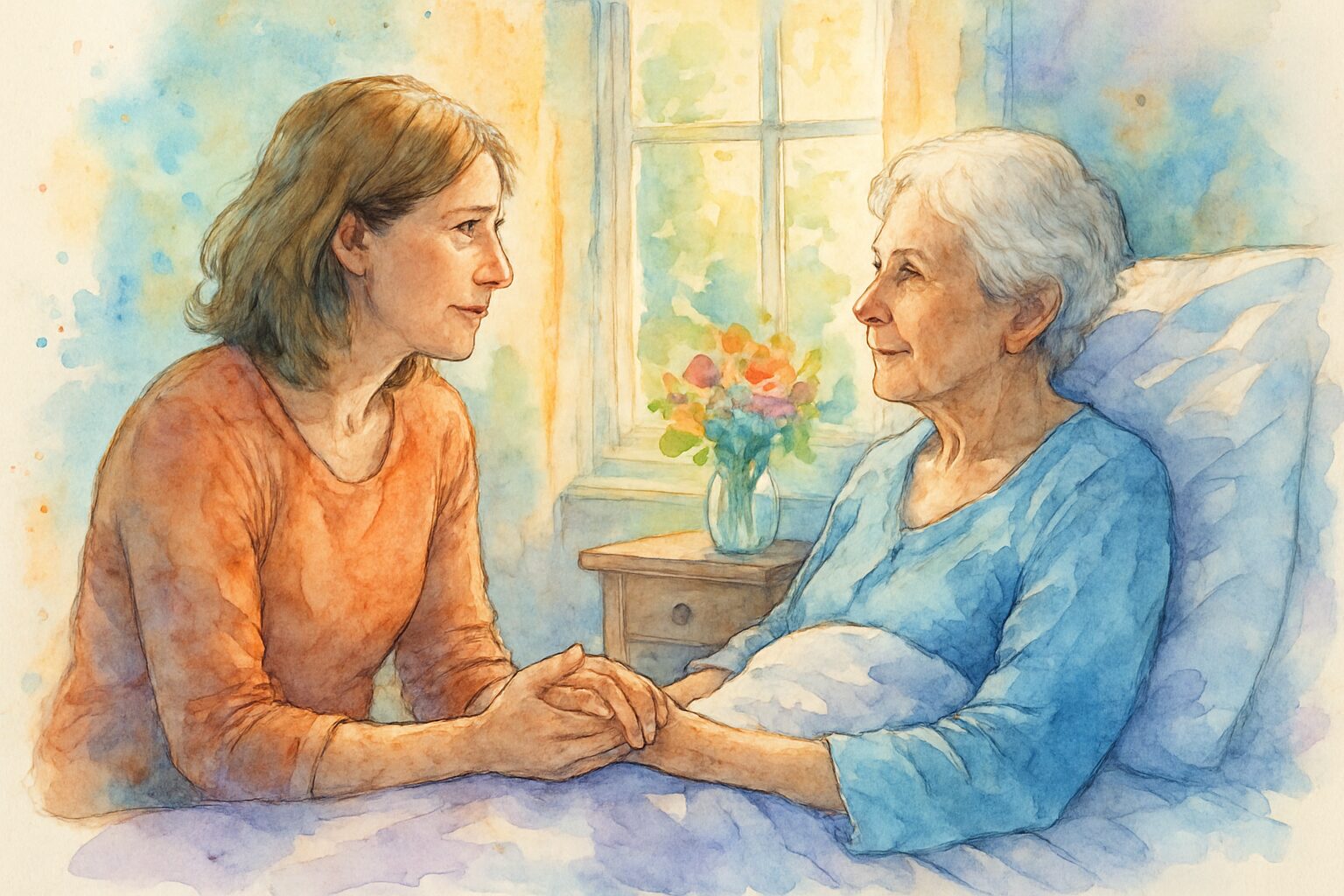
How Families Describe the Moment They Chose Hospice
Most people don't know what the moment of choosing hospice feels like until they're in it. There's no manual for it, no checklist that makes it easy, and no way to fully prepare for what it asks of a family.
Across Monterey County — from Pacific Grove to Salinas to King City — families have sat in living rooms and hospital waiting areas and made this decision while exhausted, grieving, and scared. What they describe afterward is almost never what they expected.
This article is about those real experiences: what pushed families to finally ask about hospice, what surprised them when they did, and what they most wish they had known before the conversation started.
The Moment Families Say Everything Changed
When families talk about choosing hospice, they rarely describe a single dramatic turning point. More often, it's a slow accumulation — weeks of hospitalizations, a loved one who stopped eating, a treatment that wasn't working and everyone quietly knew it.
Then something tips the scale. A doctor says the words "there's nothing more we can do to cure this." Or a parent looks at their child and says, "I just want to go home."
For many families in Monterey County, the conversation started not in a hospital room but at home, when a nurse or physician finally said what the family had been feeling but hadn't said out loud: that continuing aggressive treatment might be causing more suffering than it was preventing.
What families describe most consistently is relief — not happiness, not closure, but relief. The relief of finally having a direction. The relief of knowing that comfort and dignity were now the whole focus, not a secondary concern.
Some families also describe guilt in that same moment. Guilt that they weren't fighting harder. Guilt that it might look to others like they were giving up. One of the most important things families later say is that they wish someone had told them sooner: choosing hospice is not giving up on a person. It's choosing to be fully present with them.
If you're still weighing options and wondering when the right time is, what families in Monterey wish they'd known sooner about home care covers some of that ground in plain terms.
What Families Didn't Expect When Hospice Care Started
Almost every family says the same thing: "We should have done this sooner."
That's not a small thing to say. These are people who spent months in hospitals and treatment centers doing everything they could. And then hospice started, and something shifted in the house.
Here's what families across the Central Coast have described after hospice care began:
- The pain was finally managed. For many patients, hospice was the first time their pain was consistently addressed — not treated as a side issue, but as the main priority.
- Someone was actually available. The hospice team — including nurses, Medical Social Workers, Chaplains, and Volunteers — came to them. The family wasn't driving to appointments or navigating a phone tree at 2 a.m.
- Their loved one became more present. When pain and anxiety are managed, people often become more themselves again. Families describe conversations they didn't think were possible anymore.
- They were part of the care. Hospice didn't push families to the side. It included them — walking them through medications, explaining what was happening, preparing them for what was coming.
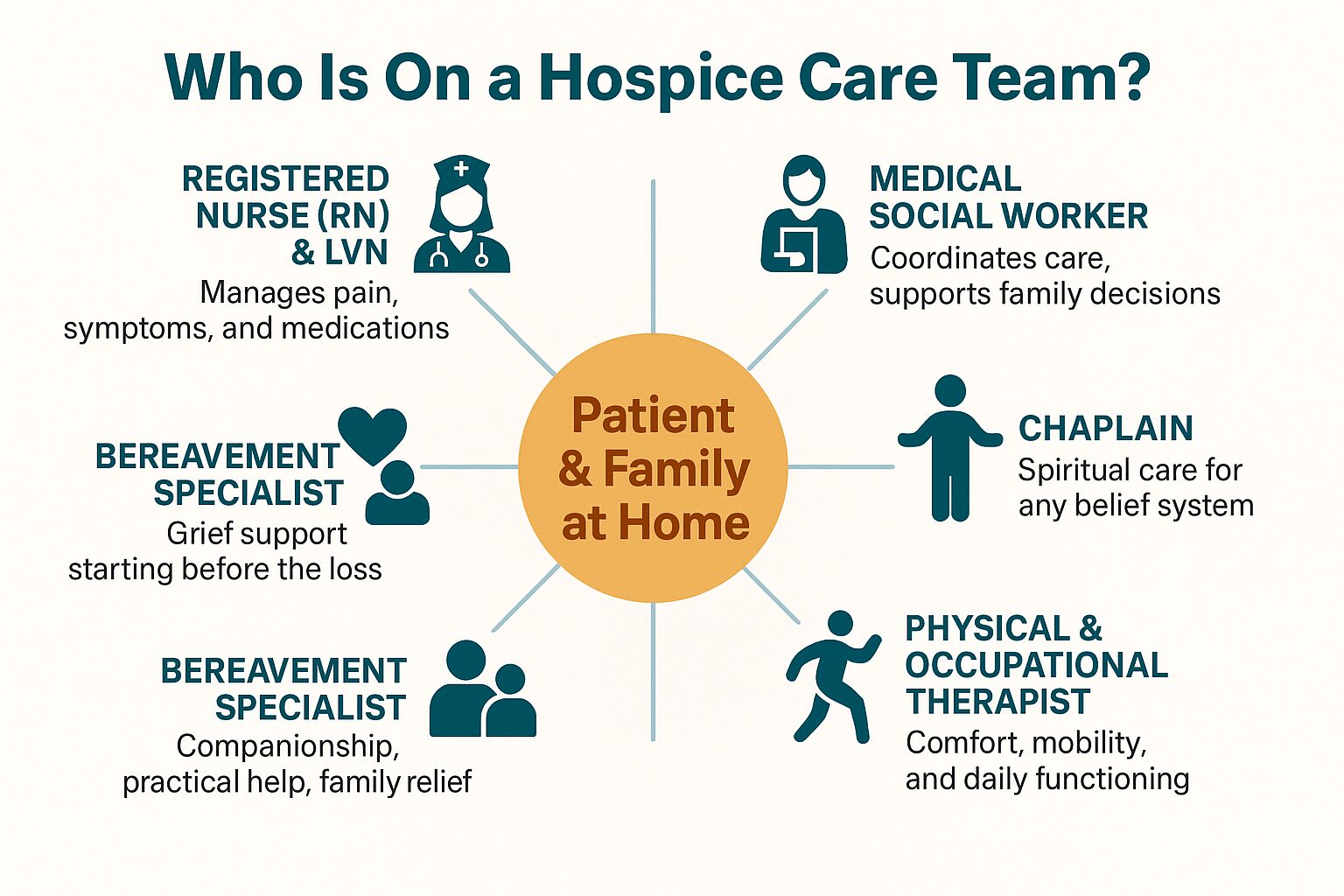
The interdisciplinary team matters more than most families expect going in. Registered Nurses and Licensed Vocational Nurses manage symptoms and medications. Physical Therapists and Occupational Therapists help patients stay as mobile and comfortable as possible. Chaplains support spiritual needs — regardless of faith background. Bereavement Specialists begin supporting families before the death, not just after.
For a closer look at what a skilled nurse actually does on a visit, this guide breaks it down in real terms.
Hospice vs. Continued Treatment: What Families Were Weighing
This isn't a clinical comparison — it's a reflection of the real questions families describe wrestling with before they made their decision.
| What Families Were Asking | Continued Treatment Path | Hospice Care Path |
|---|---|---|
| Where will my loved one be? | Hospital, clinic, or facility visits | At home, wherever home is |
| What's the main goal? | Slow or stop disease progression | Comfort, dignity, quality of life |
| Who manages day-to-day care? | Rotating hospital or clinic staff | A consistent team of nurses, therapists, social workers, chaplains |
| What about pain management? | Often secondary to treatment goals | The primary focus from day one |
| Is Medicare involved? | Covered under standard Medicare benefits | Covered under the Medicare Hospice Benefit — typically $0 out of pocket for eligible patients |
| When does support for family start? | Mostly after the patient's death | During care — and continues for at least 13 months after loss through bereavement services |
The Hospice Team: Who's in the Room (and Why It Matters)
Families often don't realize how many people are involved in hospice care until it starts. This shows the full team and what each person actually does.
The Question Families Wish They Had Asked Earlier
The single most common thing families say — across Monterey, Salinas, Hollister, and every other community in this region — is a version of the same sentence: "Why did we wait so long?"
There's a widespread belief that asking about hospice means you're ready to give up, that it's only for the final days of life. But Medicare's hospice benefit is available when a physician certifies that a patient's illness, if it follows its expected course, may limit life expectancy to six months or less. That's not days. That's months — months that could be spent at home, comfortable, surrounded by people who matter.
Many families in Monterey County also don't realize that hospice doesn't require giving up all treatment. Patients can continue medications that manage their condition. What changes is the goal: treatment shifts from trying to cure the illness to managing symptoms and supporting quality of life.
If your family is somewhere in between — not ready for hospice but aware that a serious illness is changing things — palliative care is worth understanding. It supports comfort and care planning alongside whatever treatment is already happening, without requiring a hospice election.
And for families still trying to understand when any kind of additional support makes sense, this guide on when it's time to think about getting help at home covers the early warning signs in plain language.
What Grief Looks Like After — and Why Support Doesn't Stop
Families who choose hospice don't just lose a loved one. They lose the role they'd been playing — the coordinator, the advocate, the person managing every appointment and medication.
Grief after hospice often surprises people. Some families feel relief and then feel guilty about the relief. Others feel the loss more acutely weeks or months later, after the caregiving structure falls away.
Hospice bereavement services exist specifically for this. Under the Medicare Hospice Benefit, bereavement support is required for at least 13 months following a patient's death. That includes regular contact from Bereavement Specialists, grief counseling, and community resources — not just a single follow-up call.
For families in Monterey County, this ongoing support is part of what makes the hospice experience different from what most people expect going in. The team that helped at the end doesn't simply disappear. To understand more about what grief support looks like after a loss, this guide to bereavement counseling explains what's available and how to access it.
Frequently Asked Questions About Choosing Hospice
Does choosing hospice mean we're giving up on our loved one?
That's the fear almost every family carries into the conversation. But what families consistently describe afterward is that hospice felt like the opposite of giving up — it meant committing fully to the person's comfort, dignity, and quality of life. The goal shifts from fighting the disease to being fully present. That's not surrender. That's a different kind of fight.
When is the right time to ask about hospice?
Earlier than most families think. Medicare's hospice benefit becomes available when a physician certifies that an illness may limit life expectancy to six months or less if it follows its expected course. Many families wait until the final days — and later say that was their biggest regret. If serious illness is changing your loved one's daily life, asking the question now doesn't commit you to anything. It just gives you information.
What does hospice cost for families in Monterey County?
For patients covered by Medicare or Medi-Cal, hospice care is typically covered at $0 out of pocket — including nursing visits, medications related to the terminal diagnosis, equipment, and the full interdisciplinary team. Veterans benefits also cover hospice for qualifying patients. Cost is rarely the barrier families expect it to be.
Can my loved one leave hospice if things improve?
Yes. Hospice is not a one-way door. If a patient's condition stabilizes or improves, they can be discharged from hospice and return to curative treatment. They can also re-enroll later if needed. The decision is always in the hands of the patient and family.
What happens to our family after our loved one passes?
Bereavement support continues for at least 13 months after the death. Bereavement Specialists stay in contact with families, provide grief counseling, and connect families with community resources. The care doesn't end when the patient dies.
Is there a difference between hospice and palliative care?
Yes, and it matters. Palliative care can happen alongside any treatment, at any stage of serious illness — it's focused on comfort, symptom management, and care planning, without requiring patients to give up curative care. Hospice is a specific program for patients who have decided to focus entirely on comfort rather than treatment. Many families move from palliative care to hospice as illness progresses.
Ready to Have the Conversation?
If you're somewhere in the middle of this — not sure if it's time, not sure what to ask, not sure how your loved one will respond — that's exactly where most families are when they first call. Central Coast VNA & Hospice has been serving families across Monterey County, Salinas, Hollister, and the surrounding Central Coast since 1951, and the first conversation doesn't commit anyone to anything. You can reach a care coordinator at 831-372-6668, or learn more at ccvna.com.
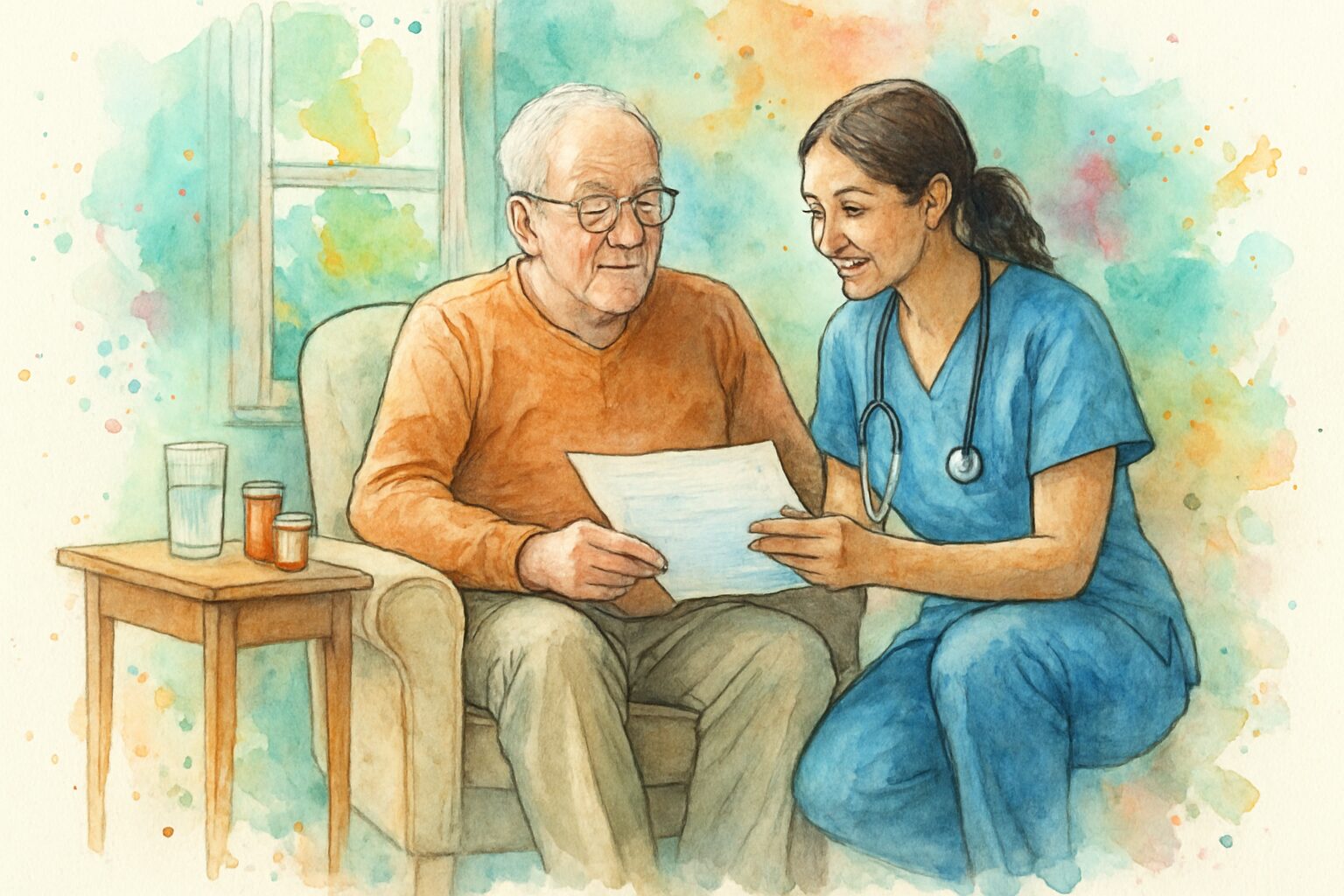
After the Hospital Discharge, What Comes Next?
The discharge papers are signed. Your parent or spouse is being wheeled to the car. And now you're thinking: what exactly happens next?
For families across Monterey County — whether you're driving home from Community Hospital of the Monterey Peninsula in Monterey or Natividad Medical Center in Salinas — that moment can feel disorienting. The hospital felt safe. Home feels like a question mark.
Most patients are actually better served at home than in a skilled nursing facility after discharge, especially with the right support in place. This article walks you through what that transition really looks like, what Medicare typically covers, and how to tell whether your loved one's needs can be met at home.
What 'Discharge Planning' Actually Means — and Why It Matters
Hospitals are required to have a discharge plan in place before a patient leaves. But in practice, families often receive that plan hours before departure — sometimes as a stack of papers, sometimes as a rushed hallway conversation with a social worker.
A discharge plan typically includes:
- A summary of the patient's diagnosis and treatment
- A medication list, often with recent changes
- Follow-up appointment instructions
- Referrals to home health services, if ordered by the physician
- Activity restrictions and wound care instructions, if applicable
The most important thing to understand is this: a physician must order home health services. If the discharging doctor didn't bring it up and you believe your loved one needs skilled care at home, you can — and should — ask directly before leaving the hospital.
If a home health referral is in the plan, services can often begin within 24 to 48 hours of discharge. That window matters, because the first few days at home carry the highest risk of readmission. According to Medicare data, nearly 1 in 5 Medicare patients is readmitted within 30 days of hospital discharge — most often due to medication errors, missed follow-up, or inadequate wound care monitoring at home.
Understanding what a skilled nurse actually does on a home visit can help families know exactly what to expect from those first days.
What Home Health Services Look Like in the First Weeks
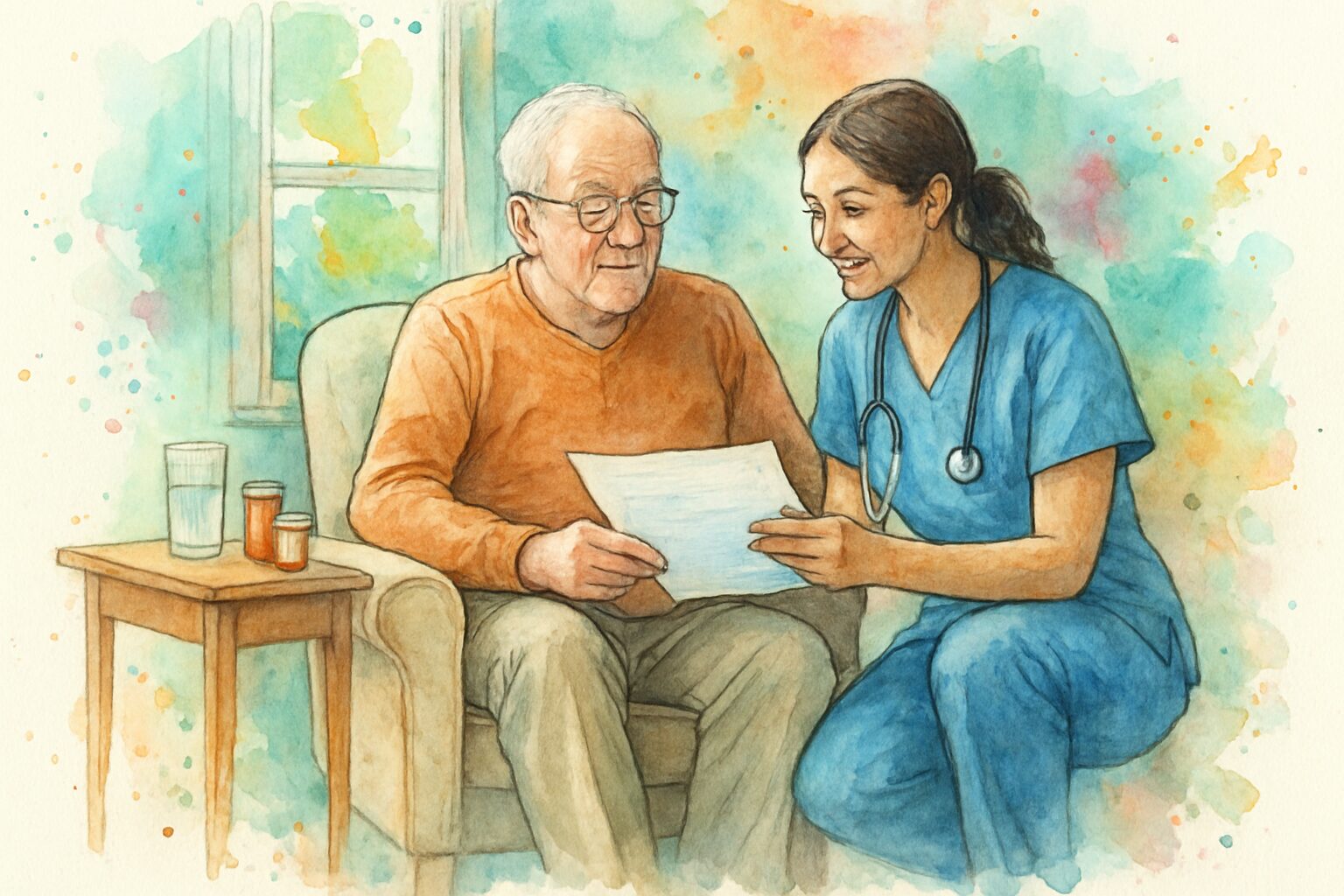
Once home health is ordered, an intake assessment happens first — usually within 24 hours of the referral. A Registered Nurse or Licensed Vocational Nurse visits the home, reviews the discharge summary, assesses the patient's condition, and develops a care plan with the treating physician.
Depending on what the patient needs, the care team may include:
- Registered Nurses (RNs) and Licensed Vocational Nurses (LVNs) for wound care, medication management, and health monitoring
- Physical Therapists for rebuilding strength and mobility after surgery or a fall
- Occupational Therapists to help patients safely perform daily tasks — bathing, dressing, cooking — in their own home
- Speech Therapists if swallowing, speech, or cognitive function was affected
- Medical Social Workers to help with care planning, community resources, and family support
Visit frequency depends on clinical need, not a fixed schedule. Someone recovering from hip replacement surgery in Salinas might have a Physical Therapist and RN visiting three to five days per week in the first two weeks, then tapering as they improve.
One thing families sometimes don't expect: home health is episodic care, not ongoing custodial support. Clinicians come to assess, treat, and teach — not to provide daily personal care or companionship. If your family is sorting through what level of help is actually needed, the difference between needing help and needing a facility lays that out clearly.
Common Needs After Discharge — Who Addresses Them
Families often don't know which type of clinician handles which post-discharge need. This table gives a quick reference for the most common situations.
| Post-Discharge Need | Who Addresses It | Typical Frequency |
|---|---|---|
| Wound care and surgical site monitoring | Registered Nurse (RN) or LVN | 2–5 visits/week initially |
| Medication changes and safety review | Registered Nurse (RN) | First visit, then as needed |
| Walking, balance, and strength recovery | Physical Therapist (PT) | 2–4 visits/week |
| Safe return to daily activities at home | Occupational Therapist (OT) | 1–3 visits/week |
| Swallowing or speech difficulty post-stroke | Speech Therapist (ST) | 2–3 visits/week |
| Care coordination, family support, resource navigation | Medical Social Worker | 1–2 visits total, or as needed |
| Pain and symptom management for serious illness | RN + full interdisciplinary team | Varies by care plan |
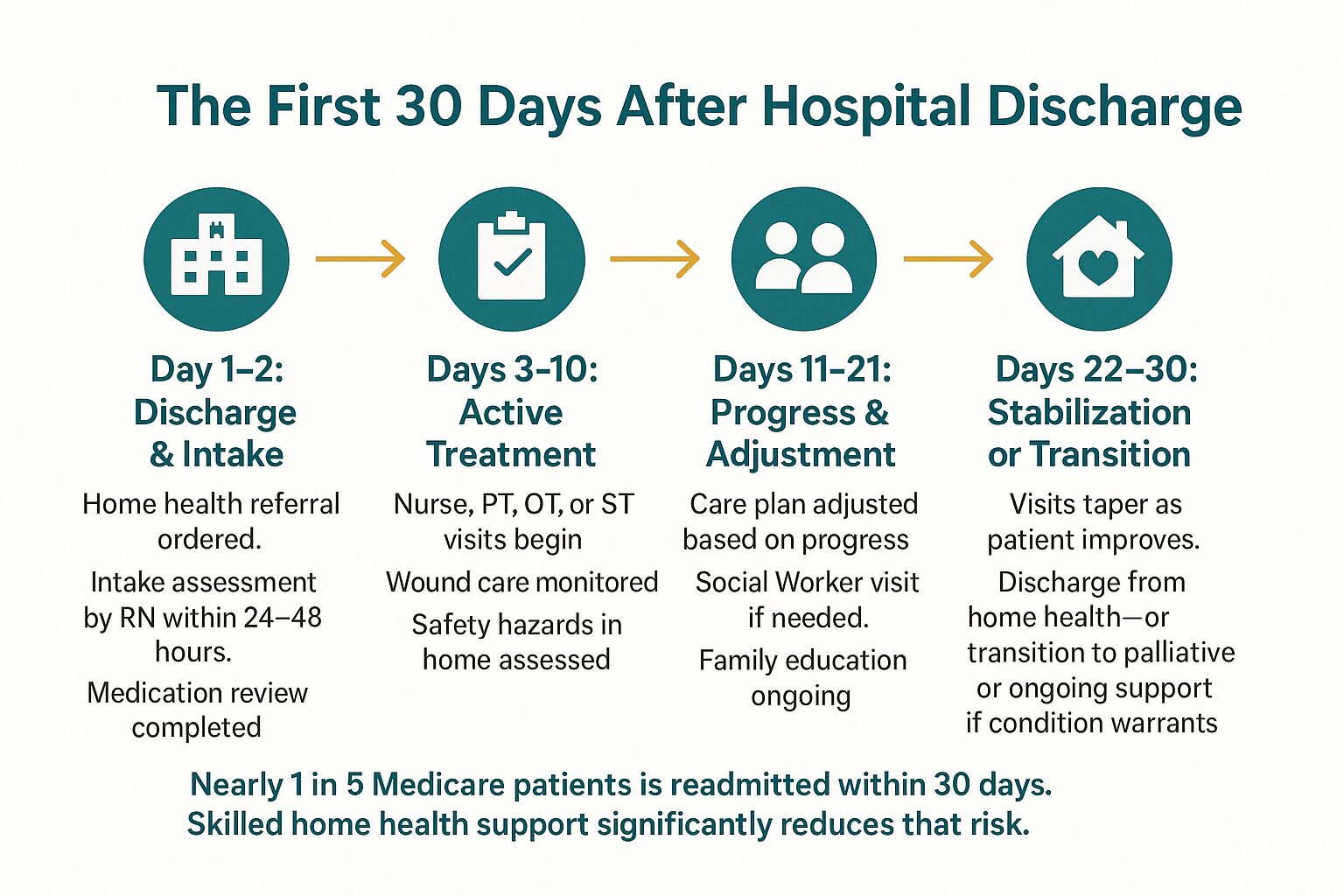
The First 30 Days at Home: What a Typical Recovery Path Looks Like
The 30 days after hospital discharge are the highest-risk window for readmission. This infographic maps out what a supported recovery typically looks like week by week.
What Medicare Covers — and Where Families Get Confused
Medicare Part A and Part B both cover home health services, but the rules trip people up. The most common misconceptions families in Monterey County run into:
Myth: Medicare only pays if you were hospitalized first.
Not true. Medicare covers home health services as long as a physician certifies that the patient is homebound and needs skilled care — regardless of whether there was a recent hospitalization.
Myth: Medicare pays for 24-hour home care.
It doesn't. Medicare covers skilled, intermittent care — meaning clinician visits, not round-the-clock supervision or personal care assistance.
What Medicare does cover:
- Skilled nursing visits (RN or LVN)
- Physical, occupational, and speech therapy
- Medical Social Worker services
- Home health aide visits when skilled care is also being received
- Medical supplies related to the plan of care
There is no copay for Medicare-covered home health services when the agency is Medicare-certified. Families eligible for Medi-Cal may have additional benefits that cover services Medicare doesn't reach. Veterans may have separate coverage through the VA.
For a fuller breakdown of how coverage works when Medicare doesn't cover everything, this guide walks through your options. And if physical therapy is part of the picture, Medicare's coverage of home physical therapy is worth reading before discharge day.
When Home Health Isn't Enough — What Comes After
For most patients recovering from surgery or an acute illness, home health is a temporary bridge. They improve, visits taper off, and they return to managing life independently.
But for patients with a serious or progressive illness — someone with advanced heart failure, COPD, or cancer — discharge may mark the beginning of a longer road. That's where families need to know the difference between home health, palliative care, and hospice, because these are not the same thing.
Palliative care is specialized support for serious illness that can run alongside any other treatment. It focuses on symptom management, care planning, and emotional support for both the patient and family — and patients do not have to give up curative treatment to receive it. If your family is trying to understand what this actually looks like in practice, this guide to palliative care meaning and family support is a useful starting point.
Hospice care is for patients whose illness has progressed to a point where treatment is no longer the focus — where comfort, dignity, and quality of life at home become the priority. It includes a full team: nurses, therapists, social workers, chaplains, volunteers, and bereavement specialists who support the entire family. If you're wondering whether that conversation is worth having, The Heart of Hospice: A Guide for Families explains it without pressure.
For many families in Salinas, King City, Hollister, and across Monterey County, the question isn't whether to ask — it's finding a trustworthy place to start.
Frequently Asked Questions About Home Care After Hospital Discharge
How quickly can home health services start after my parent is discharged?
In most cases, an intake visit from a Registered Nurse can happen within 24 to 48 hours of discharge. If the referral is sent from the hospital before discharge, the timeline can be even shorter. The key is making sure the discharging physician submits the order before your loved one leaves the facility.
My dad was only in the hospital for two days. Does he still qualify for home health?
Possibly, yes. Medicare's home health benefit doesn't require a minimum hospital stay — it requires that a physician certify the patient as homebound and in need of skilled care. A two-day stay for a cardiac event or fall, for example, can absolutely qualify someone for post-discharge home nursing or therapy.
What does 'homebound' mean for Medicare purposes?
It means that leaving home requires a considerable effort and is medically inadvisable or physically difficult. A patient who can walk to the mailbox but cannot safely drive or travel without help typically qualifies. Your Registered Nurse or the intake team can help assess this during the first visit.
We live in King City — can home health actually reach us?
Yes. Service extends throughout Monterey County, including King City and the South County communities. Distance from the Monterey Peninsula doesn't disqualify a patient from receiving home health, though scheduling and visit frequency may look slightly different in more rural areas.
What if my family needs more support than skilled visits can provide?
Skilled home health focuses on medical and therapeutic care, not daily personal assistance or companionship. If your loved one needs help with bathing, meals, or daily supervision beyond what clinicians provide, a Medical Social Worker can help identify community resources and non-medical support options available in Monterey County. That conversation is worth having early — not after a crisis.
Is there any cost to the family for home health under Medicare?
No copay for Medicare-covered home health services when you're using a Medicare-certified agency. The services covered — skilled nursing, therapy, social work, home health aide visits — come at no out-of-pocket cost to Medicare beneficiaries who meet the eligibility criteria.
Questions About What Comes Next for Your Family?
Central Coast VNA & Hospice has been supporting families through exactly this kind of transition since 1951 — across Monterey County, from the Peninsula to Salinas to King City and beyond. If you're trying to sort out what your loved one qualifies for, what Medicare covers, or whether home health is the right fit, a care coordinator can talk it through with you without pressure. Call 831-372-6668 or visit ccvna.com to start that conversation.
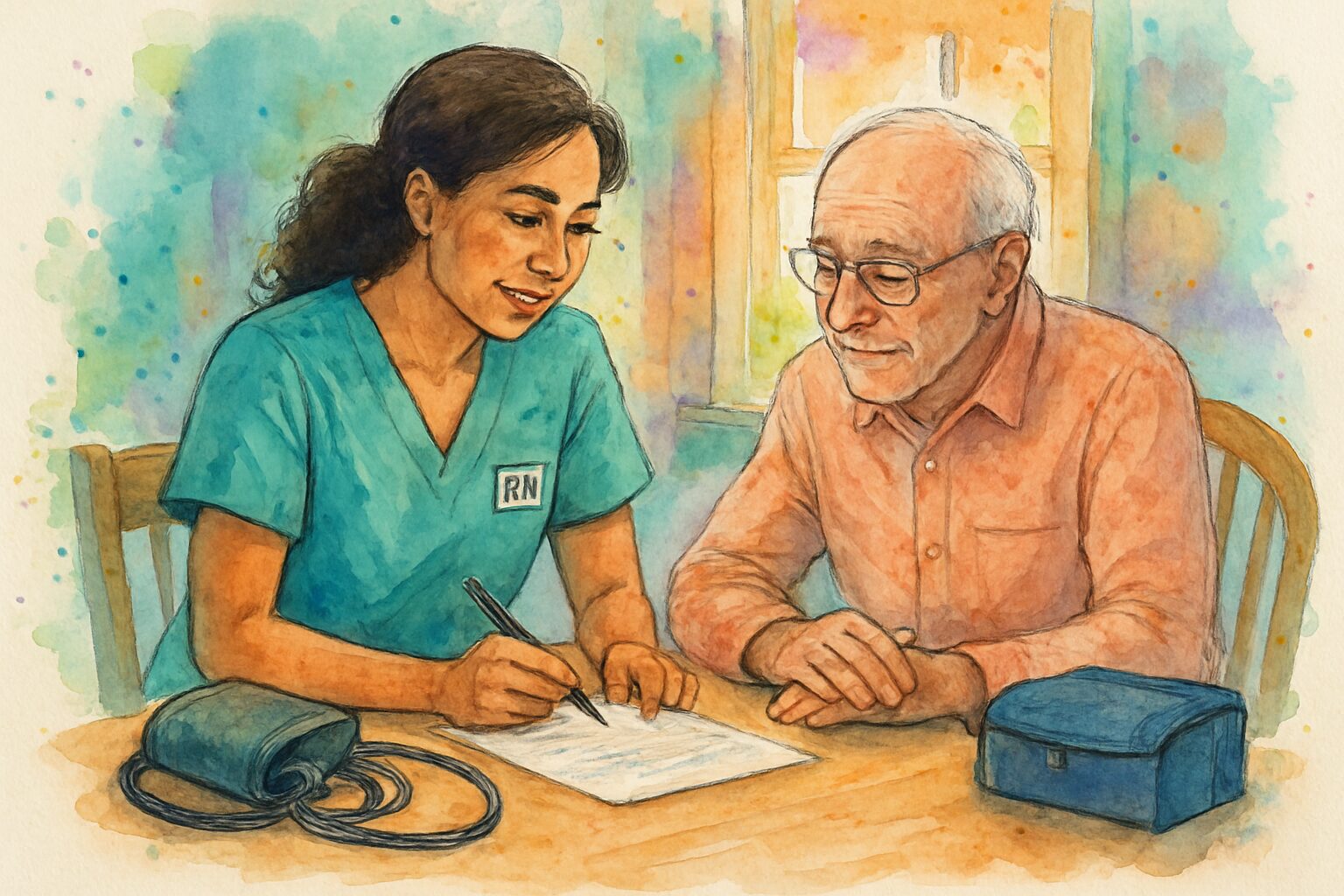
What Does a Skilled Nurse Actually Do on a Home Visit?
Most families in Monterey County have a vague sense that home nursing means 'someone comes to check on Mom.' But when you're making real decisions about a parent recovering from surgery in Pacific Grove or managing heart failure in Salinas, 'someone checks in' doesn't tell you much.
A skilled nursing visit is a medical appointment — it just happens in your living room instead of a clinic. The nurse arrives with clinical tools, a care plan, and direct communication with your loved one's physician. What they do in that hour or so has real consequences for whether someone stays stable at home or ends up back in the hospital.
This article walks through what actually happens during those visits, what problems skilled nurses are trained to catch, and how to know whether your family's situation fits what home health can provide.
The First Visit: More Than a Checkup
The initial home visit is longer and more detailed than follow-up visits — often 60 to 90 minutes. A Registered Nurse conducts a head-to-toe assessment that covers far more than vital signs.
They're building a clinical picture of the patient in their actual environment. That means looking at how the person moves through their home, whether they can safely take their own medications, and what the home itself might be doing to their health — poor lighting, loose rugs, a second-floor bathroom when someone has balance problems.
For families in Monterey County, that first visit also establishes a baseline. If your parent was discharged from Salinas Valley Health or Community Hospital of the Monterey Peninsula after a hip replacement, the nurse arriving at home is working from that discharge summary and confirming that what was documented actually matches what they see in front of them. Those details don't always line up.
By the end of the first visit, the nurse has:
- Completed a full physical assessment
- Reviewed every medication for accuracy, interactions, and adherence
- Identified safety concerns in the home
- Set goals with the patient and family
- Contacted the physician if anything needs to be addressed immediately
What Skilled Nurses Are Actually Watching For
Follow-up visits — which may happen two to three times per week depending on the care plan — are focused and clinical. The nurse isn't just stopping by. They're tracking specific indicators that tell them whether the patient is improving, plateauing, or heading toward a problem.
For someone recovering from cardiac surgery, that might mean monitoring fluid retention and checking whether ankles are swelling. For a patient with diabetes, it means reviewing blood sugar logs and looking at any wounds on the feet. For someone on a blood thinner after a stroke, it means watching for signs of bleeding or new neurological changes.
This kind of close monitoring is what many Monterey families didn't realize was available at home until they needed it.
Common clinical tasks during a skilled nursing visit include:
- Blood pressure, pulse, respiratory rate, and oxygen saturation monitoring
- Wound assessment and dressing changes — including surgical incisions, pressure injuries, and diabetic ulcers
- Medication reconciliation — confirming the patient is taking the right doses at the right times, and flagging anything that changed at discharge
- IV therapy or injections when ordered by the physician
- Catheter care
- Patient and family education — teaching family members what to watch for between visits
The education piece matters more than most families expect. A skilled nurse will walk a spouse or adult child through how to recognize signs that something is wrong — what shortness of breath looks like in someone with CHF, or when a wound needs to be called in to the physician. That knowledge is what keeps people out of the emergency room at 2 a.m.
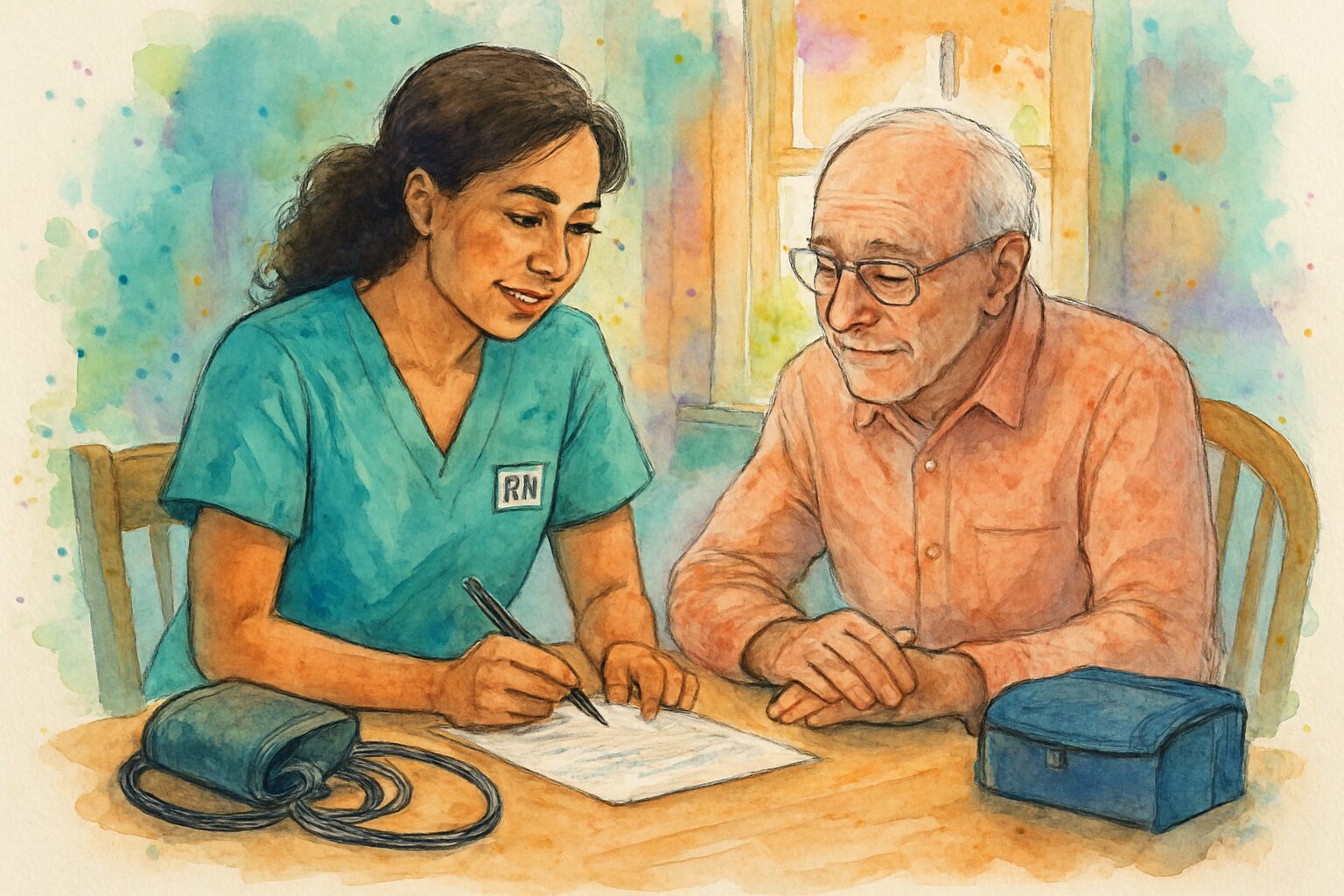
A Typical Skilled Nursing Visit: What Happens and When
This breakdown shows the general flow of a skilled nursing home visit — from arrival to documentation — so families know what to expect.
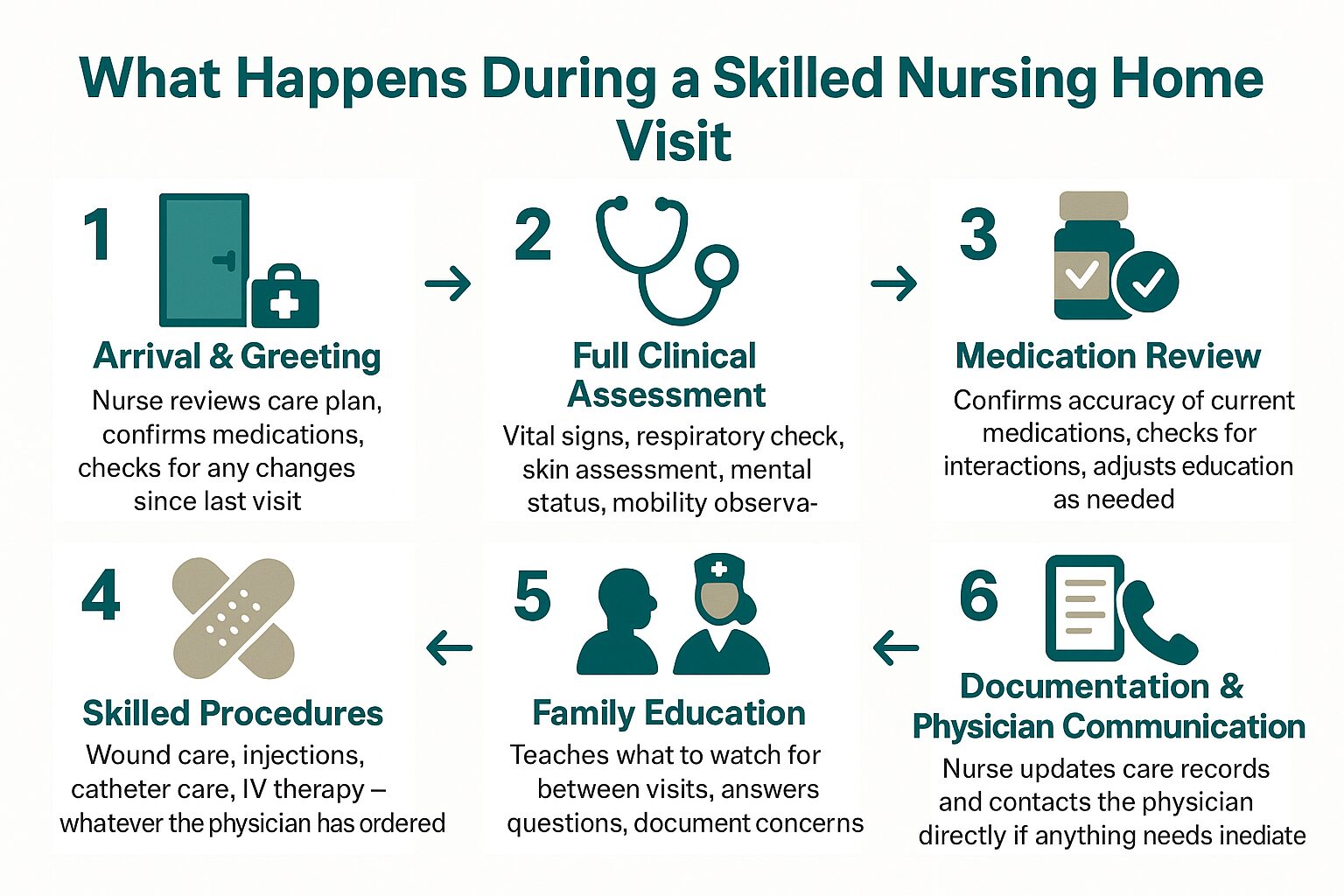
When a Nurse Notices Something the Doctor Hasn't Seen Yet
One thing families consistently underestimate is how much clinical information a home nurse captures that a clinic visit never would.
In a physician's office, a patient is there for 15 to 20 minutes, often in their best condition — dressed, alert, accompanied by a family member who's managing the situation. At home, a nurse sees how that same person actually functions. Do they forget to take their medication until reminded? Do they struggle to get up from the couch? Are they eating?
For patients managing chronic illness in communities like King City or Hollister — where the nearest specialist might be an hour away — this kind of close, repeated observation is often what catches a decline early enough to do something about it.
Skilled nurses are required to communicate changes to the ordering physician. If a patient's weight jumps 5 pounds in 48 hours — a common early warning sign of fluid retention in heart failure patients — the nurse calls the physician that day. That call may result in a medication adjustment that prevents hospitalization. That's not a routine checkup. That's active clinical management.
It's also worth understanding that skilled nursing works best as part of a team. Depending on the care plan, a patient might also be receiving visits from Physical Therapists, Occupational Therapists, Speech Therapists, or Medical Social Workers — all coordinated under the same plan. Staying home as health needs change depends heavily on that kind of coordination working smoothly.
Skilled Nursing vs. Home Health Aide: What's the Difference?
Families often confuse skilled nursing visits with home health aide services. They're not the same thing, and insurance coverage reflects that distinction.
| Skilled Nurse (RN or LVN) | Home Health Aide | |
|---|---|---|
| Training required | Licensed RN or LVN | Certified Home Health Aide (CHHA) |
| What they do | Clinical assessment, wound care, medication management, IV therapy, physician communication | Bathing, dressing, grooming, light household tasks |
| Can administer medications? | Yes | No |
| Medicare coverage | Covered when medically necessary and homebound criteria are met | Covered only when skilled nursing or therapy is also being received |
| Who orders the visits? | Physician order required | Physician order required (as part of the broader home health plan) |
| Typical visit length | 45–90 minutes | 2–4 hours |
Does Medicare Cover Skilled Nursing at Home?
Medicare Part A covers skilled nursing visits at home when three conditions are met: the patient is considered homebound, a physician has ordered the care, and the services are provided by a Medicare-certified home health agency.
'Homebound' doesn't mean bedridden. It means leaving home requires a considerable effort — using a walker, needing assistance, or risking your health by going out. Most patients recovering from surgery or managing serious illness qualify.
When those criteria are met, Medicare covers skilled nursing visits at no cost to the patient — no copay, no deductible for the home health benefit. That's meaningful for families in Monterey County where the cost of care adds up quickly.
Medi-Cal and Veterans benefits also cover home health services, and understanding what happens when Medicare doesn't cover everything is worth reading if your family is working through the financing piece.
One practical note: skilled nursing visits are not the same as private-pay companion care or housekeeping services. Those are separate, not covered by Medicare, and serve a different purpose. If you're trying to figure out when home care is even the right step, starting with what Medicare covers is usually the most useful first question.
Frequently Asked Questions About Skilled Nursing Home Visits
How often does a skilled nurse visit?
It depends on the care plan and what the physician orders. Right after a hospital discharge, visits might happen three to five times per week. As the patient stabilizes, visits typically taper to once or twice a week. The frequency is always based on clinical need, not a set schedule.
Does my parent have to be bedridden to qualify for home nursing?
No. The Medicare definition of 'homebound' is broader than most people think. Someone who can walk short distances but finds it taxing, or who needs help getting in and out of a car, likely qualifies. A physician makes that determination based on the patient's specific condition.
What's the difference between a Registered Nurse and a Licensed Vocational Nurse on a home visit?
Both RNs and LVNs perform skilled nursing visits at home, but their scope of practice differs. Registered Nurses have a broader clinical scope — they conduct the initial assessment, develop the care plan, and handle more complex clinical situations. Licensed Vocational Nurses work under RN supervision and handle many of the ongoing visit tasks like wound care, medication management, and vital sign monitoring. For most families, both represent competent, trained clinical care.
Can the nurse communicate directly with my parent's specialist in San Francisco or Stanford?
Yes. Skilled nurses document every visit and are required to report significant changes to the ordering physician — regardless of where that physician is located. If your parent sees a cardiologist in San Francisco but lives in Monterey, the home nurse coordinates with that physician by phone, fax, or electronic health record. Distance doesn't prevent that communication.
What happens if the nurse finds something serious during a visit?
The nurse contacts the physician immediately and documents the finding. Depending on the situation, this might result in a same-day medication change, an order for lab work, or a recommendation to go to the emergency room. If the situation is life-threatening, the nurse calls 911. Home nurses are trained to triage exactly these moments — it's one of the reasons close monitoring at home can prevent hospitalizations.
Is skilled nursing the same as palliative care or hospice?
No — though they can overlap. Skilled nursing is a medical service focused on recovery, chronic disease management, and post-hospital care. Palliative care adds a layer of symptom management and care planning for serious illness — and doesn't require giving up other treatment. Hospice is specifically for end-of-life care. You can learn more about what palliative care actually means for families if that's the direction your family is considering.
Questions About Home Nursing for a Family Member in Monterey County?
Central Coast VNA & Hospice has been providing skilled nursing care to families across Monterey County, Santa Cruz County, San Benito County, and South Santa Clara County since 1951. If you're trying to sort out whether a loved one qualifies, what a care plan might look like, or what to ask their physician, a care coordinator can walk you through it without any pressure. Call 831-372-6668 or visit ccvna.com to start that conversation.
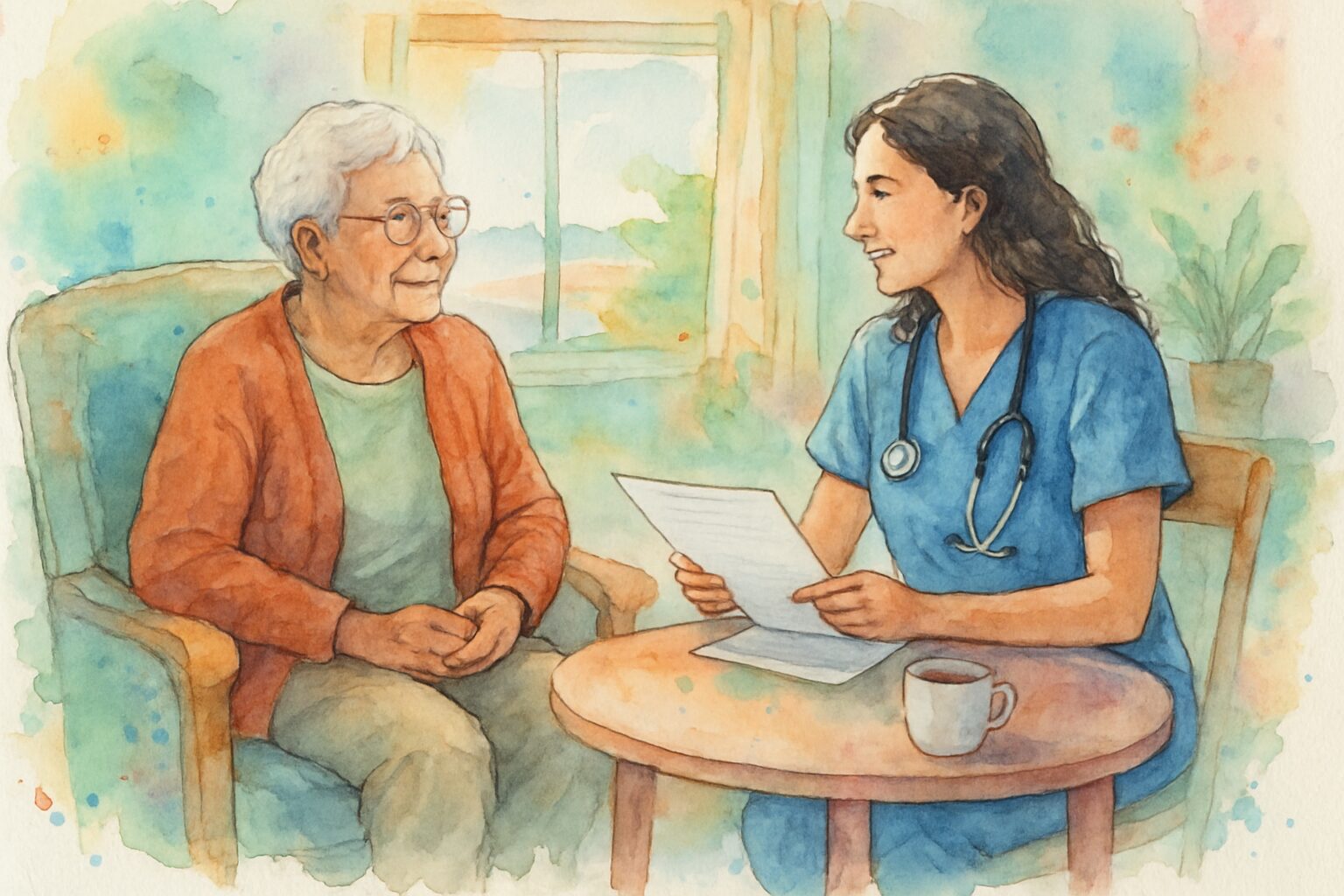
The Difference Between Needing Help and Needing a Facility
When a parent's health starts to slip, the mind goes straight to the hardest question: do we need to move them somewhere? It's one of the most emotionally loaded decisions a family can face — and in Monterey County, it's a question thousands of families work through every year without a clear roadmap.
But here's what often gets missed: needing help is not the same as needing a facility. A lot of families assume those are the only two options — either you manage everything yourself, or you start looking at skilled nursing facilities in Salinas or memory care units on the Peninsula. There's a wide middle ground that most people never fully explore.
This guide is for families trying to understand what home-based care can actually handle — and where the real line is between that and facility-level care. No sales pitch. Just a clear-eyed look at what the options actually mean.
What 'Needing Help' Actually Looks Like
Most families recognize something is off before they can name it. Dad is slower getting up. Mom missed two doses of her blood pressure medication. A fall happened — or almost happened. These are signals, but they don't automatically mean a facility is the answer.
Home-based support exists precisely for this stage. Skilled nursing visits, physical therapy, medication management, wound care after a surgery — these are all services that can come to your loved one's home in Monterey, Salinas, Hollister, or King City without uprooting their life.
The kinds of situations that respond well to home-based care include:
- Recovery from a hospital stay or surgery
- Managing a chronic illness like heart failure, COPD, or diabetes
- Wound care that requires a Registered Nurse's assessment
- Physical therapy after a hip or knee replacement
- Medication reviews and adjustments supervised by a clinician
- Early or moderate cognitive changes where the person is still safe at home
None of these automatically require a facility. And for many families, understanding what home care can realistically provide changes the entire conversation.
The goal of home-based skilled care isn't to avoid hard decisions indefinitely — it's to make sure families aren't making those hard decisions prematurely, before they've tried what's actually available to them.
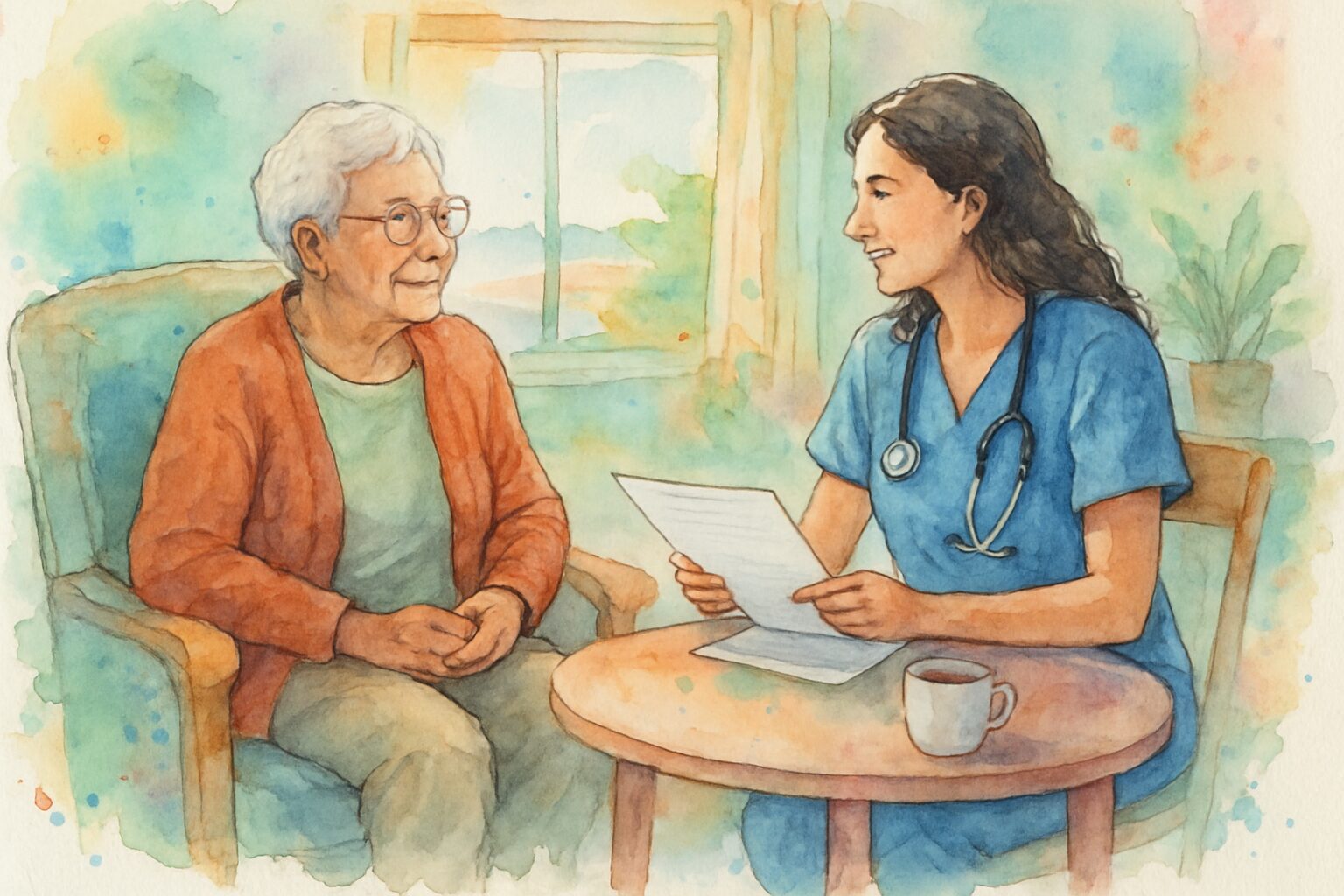
Where the Real Line Is: When a Facility Becomes Necessary
Home-based care has real limits, and it's important to name them honestly.
A facility becomes the right answer when the level of supervision or medical complexity exceeds what can be safely managed — even with daily visits from nurses and therapists. 24-hour supervision, certain types of wound care requiring constant monitoring, or situations where a person can no longer be left alone safely for any stretch of time are examples where the home setting may no longer be appropriate.
Some specific indicators that point toward facility-level care:
- The person is a fall risk who cannot be left unsupervised at any point during the day or night
- They require ventilator support or IV therapy that can't be managed intermittently
- Behavioral symptoms of dementia — aggression, wandering, or severe disorientation — have become unsafe for everyone in the home
- The primary family support in Salinas, Pacific Grove, or wherever they live has reached a point of physical or emotional exhaustion that creates a safety risk
- Round-the-clock hands-on assistance with eating, bathing, and repositioning is required every few hours, not just once or twice a day
These are specific, clinical thresholds. And reaching one of them doesn't mean failure — it means the situation has changed, and the right support has to change with it.
For families navigating serious illness who haven't reached that threshold, palliative care at home often provides the symptom management and care coordination that keeps people safely in place far longer than families expect.
Home Care vs. Facility Care: How the Decision Actually Works
This breakdown shows the key factors that separate home-based care from facility-level care — and what the decision hinges on for most Monterey County families.
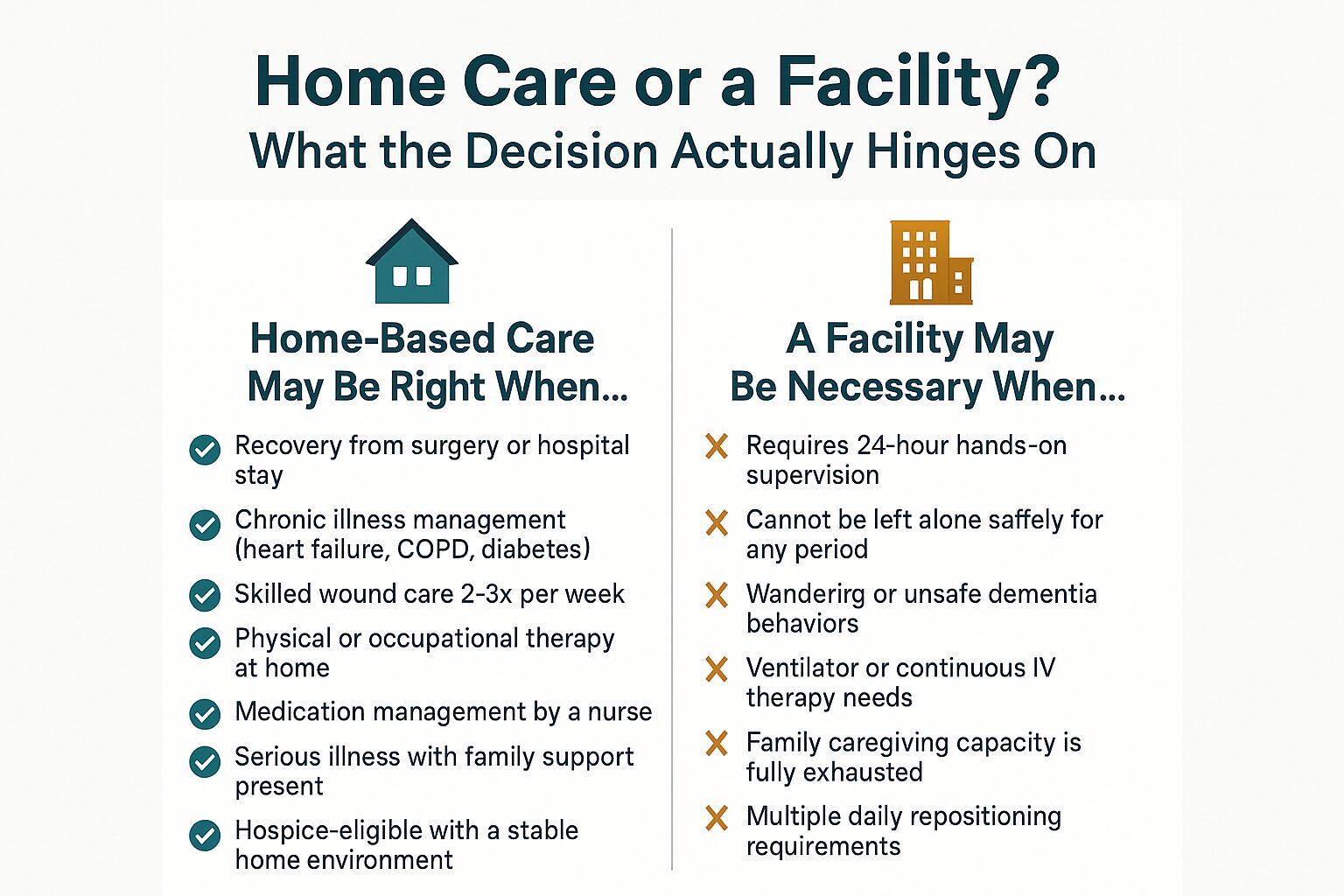
What Medicare Actually Covers at Home — and What It Doesn't
One reason families jump to facility thinking is cost uncertainty. They don't know what Medicare covers at home, so they assume a facility is the only structured option.
Medicare covers skilled home health services when a physician certifies that the patient is homebound and needs skilled nursing, physical therapy, occupational therapy, or speech therapy. That coverage is meaningful — it includes Registered Nurse visits, Licensed Vocational Nurse visits, therapy sessions, and Medical Social Worker support, all without a copay under traditional Medicare Part A and B.
What Medicare does not cover at home:
- Custodial care — help with bathing, dressing, and meals — unless it accompanies a skilled service
- 24-hour home supervision
- Long-term personal care without a skilled medical need
Medi-Cal can fill some of those gaps for qualifying patients in Monterey County. And for families facing end-of-life situations, the Medicare Hospice Benefit covers a wide range of services — nursing, aide support, medications related to the terminal diagnosis, chaplain visits, and bereavement support — with no cost-sharing for Medicare beneficiaries.
Veterans receiving care through VA benefits may have additional options worth exploring through a Medical Social Worker.
For a closer look at how coverage works, this breakdown of Medicare home health coverage walks through what's included and how to know if a patient qualifies.
Home Care vs. Facility Care: A Side-by-Side Look
This table gives families a concrete comparison of what each setting typically provides and what it costs in the Monterey County area.
| Factor | Home-Based Skilled Care | Skilled Nursing Facility |
|---|---|---|
| Setting | Patient's own home | Residential facility |
| Medicare coverage | Covered when homebound + skilled need certified | Covered for short-term rehab stays (up to 100 days) |
| Typical out-of-pocket cost (Monterey County) | $0 copay for Medicare-covered skilled visits | $194.50/day after day 20 (2024 Medicare rate) |
| Who provides care | RNs, LVNs, PTs, OTs, Social Workers, Aides on scheduled visits | On-site nursing staff 24 hours/day |
| Level of supervision | Intermittent — visits, not constant presence | Continuous staff availability |
| Best suited for | Recovery, chronic illness management, serious illness with family support | High-acuity needs, post-acute rehab requiring 24-hour oversight |
| Patient autonomy | Full control over environment, routine, diet | Structured facility schedule and environment |
| Hospice eligible | Yes — hospice is primarily delivered at home | Yes — hospice can be provided in facilities too |
The Conversation Families Avoid — and Why It Matters
Most families put off this conversation until something forces it — a hospitalization, a bad fall, or a crisis that lands everyone in an ER waiting room at midnight. By then, decisions get made under pressure instead of with clarity.
Having the conversation earlier — when a parent is still relatively stable — is one of the most practical things a family can do. It's not morbid. It's the opposite: it protects the person's ability to stay in their own home longer, because you've identified what support would make that possible before a crisis strips away those options.
For families in Pacific Grove, Carmel, Hollister, or anywhere across Monterey County, knowing when to start thinking about home care is the kind of guidance that changes outcomes — not because it speeds anything up, but because it gives families more real choices.
And for those dealing with a serious illness diagnosis, palliative care is often the missing piece. It doesn't replace treatment, and it doesn't mean giving up. It means a team of nurses, therapists, social workers, and chaplains is actively managing symptoms and supporting the family while the patient continues receiving care.
Frequently Asked Questions About Home Care vs. Facility Care
Can someone with dementia stay at home with skilled care support?
Often, yes — for a significant portion of the illness. The determining factor isn't the diagnosis itself but the level of supervision required and the safety of the home environment. Early to moderate dementia, where the person is not wandering or posing a physical danger, can frequently be managed at home with a combination of family involvement, skilled nursing visits, and home health aide support. When behavioral symptoms become unpredictable or dangerous, that's when the balance shifts.
My mother just got out of the hospital. Does she automatically qualify for home health?
A hospital stay doesn't automatically qualify someone, but it's one of the most common pathways. Medicare requires that a physician certify the patient as homebound (meaning leaving home requires considerable effort) and that there is a skilled need — nursing, therapy, or both. Discharge planners at hospitals in Salinas or Monterey can initiate the referral before the patient even leaves.
Is hospice only for the last few days of life?
No — and this is one of the most damaging misconceptions families carry. Hospice is available when a physician certifies that a patient has a life-limiting illness with a prognosis of six months or less if the disease follows its expected course. Many patients receive hospice care for weeks or months, not just days. Families who access hospice earlier consistently report better pain control and more time to focus on what matters. You can read more in this guide to hospice care for families.
What if we can't afford a facility but aren't sure home care is enough?
Talk to a Medical Social Worker before making any decisions. They can assess the actual clinical picture, map out what Medicare or Medi-Cal covers, and identify realistic options — including whether the level of need actually calls for a facility at all. In many cases, families who assume they need a facility find that structured home-based care with the right clinical team covers what's needed.
What happens to the family after a loved one passes — does support end?
Bereavement support continues after a patient's death. Families who received hospice care have access to grief counseling and ongoing emotional support through bereavement specialists — typically for at least 13 months following the loss. Bereavement support services are also available to community members in Monterey County who didn't receive hospice care through VNA.
Not Sure Which Direction Makes Sense for Your Family?
Central Coast VNA & Hospice has been walking alongside families in Monterey County, Salinas, Hollister, and the surrounding Central Coast since 1951 — including families facing exactly the kind of decision this article is about. A care coordinator can help you think through what your loved one's situation actually calls for, without pressure and without guesswork. Call 831-372-6668 or visit ccvna.com to start that conversation.
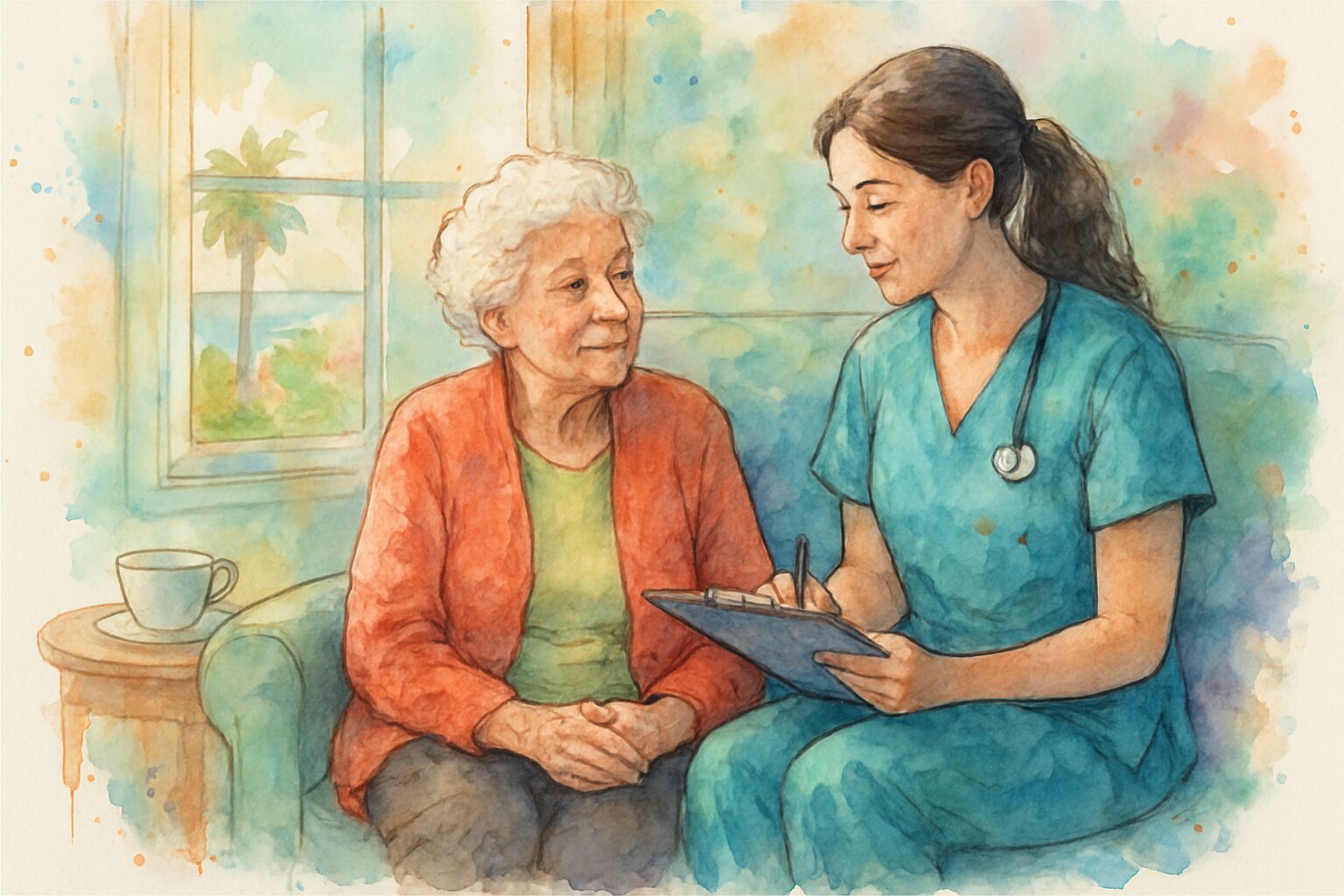
What Families in Monterey Wish They'd Known Sooner About Home Care
Most families in Monterey County don't think about home care until a parent falls, a hospital stay ends abruptly, or a diagnosis lands that nobody was ready for. Then the questions come fast — and the answers feel impossibly hard to find.
What actually surprises people, once they're on the other side of that moment, is how much was available to them all along. Skilled nursing at home. Physical therapy in the living room. Help managing a chronic illness without driving to Salinas or Pacific Grove three times a week.
This article is built around the things families consistently say they wish they'd understood earlier — not about any one service, but about how home-based care actually works, what it costs, and when to start the conversation.
The Part About Medicare Nobody Explains Clearly
When a parent comes home from Community Hospital of the Monterey Peninsula after a surgery or a health event, the discharge process moves fast. A nurse hands over paperwork, someone mentions "home health," and families nod along — often without fully understanding what they just agreed to or what they're entitled to.
Medicare covers more than most families realize. If your parent is homebound and a physician certifies that skilled care is needed, Medicare Part A will pay for:
- Skilled nursing visits from a Registered Nurse or Licensed Vocational Nurse
- Physical therapy, occupational therapy, and speech therapy at home
- Medical social worker visits
- Some medical equipment and supplies
There is no copay for Medicare-covered home health services, and there's no requirement that your parent have a prior hospital stay to qualify. That surprises almost everyone.
What Medicare doesn't cover is around-the-clock supervision or personal care that isn't tied to a medical need. Understanding that line — between skilled care and custodial care — saves families from a lot of confusion later. For a deeper look at what happens when coverage has gaps, Can I Still Get Home Care If Medicare Doesn't Cover Everything? is worth reading before you need it.
Medi-Cal and Veterans benefits also cover home health services for qualifying patients, and those programs serve a significant portion of families across Monterey County, Salinas, and Hollister.
When to Ask for Help — and Why Families Usually Ask Too Late
There's a pattern that plays out in families across Monterey County, from Carmel Valley to King City. A parent starts declining slowly — missing medications, losing weight, struggling with balance — and family members rationalize each change as a one-off. By the time someone calls for help, the situation is harder to manage than it needed to be.
The signs that warrant a conversation with a physician or a home health organization aren't dramatic. They're quiet.
- Repeated falls or near-falls in the past 90 days
- A new diagnosis that requires ongoing monitoring (heart failure, COPD, diabetes)
- A surgery recovery happening at home without clinical follow-up
- Wounds that aren't healing or are getting worse
- Medications that are confusing or being taken inconsistently
- Noticeable changes in strength, balance, or the ability to speak clearly
Any one of those is a legitimate reason to ask a physician whether home health services are appropriate. The bar isn't "my parent can't function at all." The bar is: is there a clinical need that could be safely addressed at home?
For families trying to figure out where that line actually falls, When Is It Time to Think About Getting Help at Home? gives a more detailed breakdown of the signals worth taking seriously.
Home Health vs. Palliative Care vs. Hospice — What's the Difference?
Families often use these terms interchangeably, but they describe three different things. Here's a plain-language comparison of what each one involves.
| Type of Care | Who It's For | Key Services | Medicare Coverage |
|---|---|---|---|
| Home Health | Patients recovering from illness, surgery, or managing a chronic condition | Skilled nursing, physical/occupational/speech therapy, wound care, medication management | Yes — if homebound and physician-ordered |
| Palliative Care | Patients with serious illness at any stage, including those still receiving treatment | Symptom management, care planning, emotional support, coordination with treating physicians | Partially — varies by service and payer |
| Hospice | Patients with a terminal diagnosis and a life expectancy of 6 months or less | Pain management, interdisciplinary team support, spiritual care, family guidance, bereavement | Yes — Medicare Hospice Benefit covers nearly all costs |
The 5 Things Monterey Families Wish They'd Known Sooner
These are the five points that come up most consistently when families reflect on what they would have done differently.
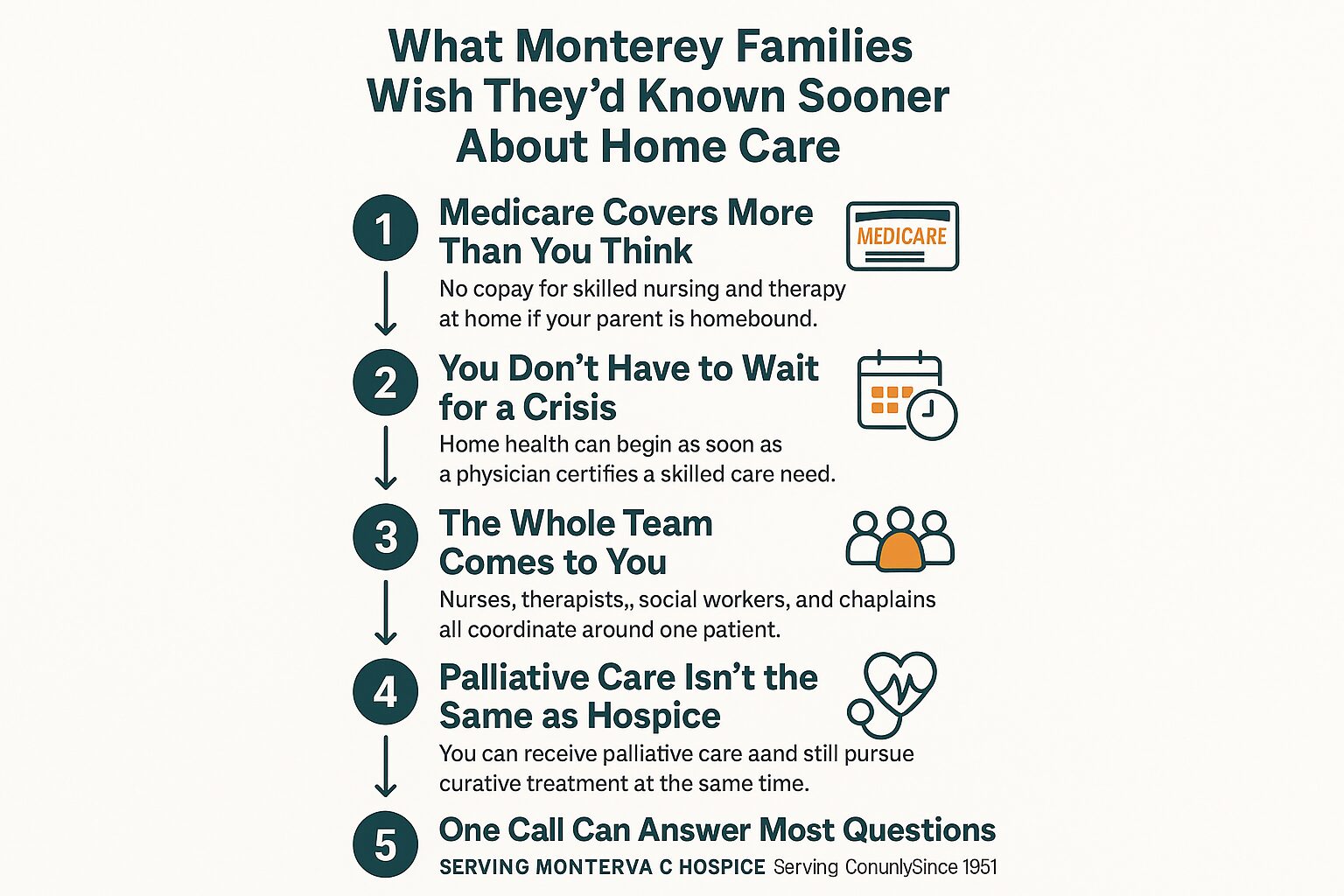
What Palliative Care Actually Means for a Family in the Middle of It
"Palliative" is one of those words that stops people cold. Families often assume it means their loved one is being given up on — that it's a step toward hospice, not away from suffering.
That's not what it is.
Palliative care is symptom management and support for people living with serious illness, and it can happen alongside any other treatment a physician is providing. Someone in Salinas going through chemotherapy can receive palliative care at the same time. Someone in Pacific Grove managing advanced heart disease can have a palliative care team helping with pain, breathlessness, and care planning — while still seeing their cardiologist.
The team that delivers palliative care typically includes nurses, Medical Social Workers, and sometimes Chaplains or other clinicians depending on what the patient needs. Visits happen at home. The focus is on quality of life and making sure the patient — and the family — understands what's happening and what choices are available.
For a much more detailed explanation of what this looks like in practice on the Central Coast, Palliative Care Meaning: A 2026 Guide to Family Support is a good place to start.
One thing families consistently say: they wish they'd asked about palliative care months earlier. It doesn't foreclose any options. It adds support.
Hospice at Home — What It Looks Like in Real Life
People picture hospice as a facility — a quiet building somewhere outside of town. In Monterey County, most hospice care happens at home. The patient stays in their own bedroom, in a house they know, surrounded by people who matter to them.
The hospice team visits regularly. That team isn't just a nurse. It includes:
- Registered Nurses managing pain and symptoms
- Hospice Aides helping with personal care and comfort
- Medical Social Workers supporting the patient and family emotionally and practically
- Chaplains available for spiritual support — regardless of religious background
- Volunteers who provide companionship and relief for family members
- Bereavement Specialists who continue working with the family after the patient passes
The Medicare Hospice Benefit covers nearly everything — medications related to the terminal diagnosis, equipment like hospital beds or wheelchairs, and all team visits. For families who have spent months managing costly care, that often comes as a genuine relief.
And the conversation about hospice doesn't have to be a final door closing. For many families across the Central Coast, it's the moment things get quieter — and more manageable. The Heart of Hospice: A Guide for Families goes into much more depth on what that transition actually looks like day to day.
If your family is earlier in that conversation and still weighing options, What Is Aging in Place? A Guide for Central Coast Families addresses how home-based care at every stage fits into the broader goal of staying home.
Frequently Asked Questions About Home Care in Monterey County
Does my parent have to be completely homebound to qualify for Medicare home health?
Not completely housebound — but leaving home has to require considerable effort. Someone who can only go out for medical appointments, or who needs a wheelchair or significant assistance to leave, generally qualifies. A physician makes that determination based on your parent's specific situation.
What's the difference between home health and having a home health aide come in?
Home health under Medicare refers to skilled clinical services — nursing, therapy, wound care — provided by licensed clinicians. A home health aide visit can be part of a Medicare-covered home health plan, but only if it's paired with a skilled care need. Personal care alone — help with bathing, dressing, cooking — is generally not covered by Medicare.
Can someone receive palliative care and still get curative treatment at the same time?
Yes. That's one of the most important things to understand about palliative care. It's not a replacement for treatment — it runs alongside it. A patient can continue working with their oncologist or cardiologist while a palliative care team manages symptoms and supports the whole family.
How does grief support work after a loved one passes?
Bereavement support through a hospice organization typically continues for at least 13 months after a patient's death. That includes check-in calls, counseling resources, and support groups depending on what the family needs. This support is part of the hospice benefit and available to family members — not just the patient. Bereavement Counseling: A Guide to Grief Support covers what to expect during that period.
We live in Hollister — does home care reach us?
Yes. Home-based services in San Benito County, including Hollister, are covered. Monterey County is the largest service area, but families in Hollister and surrounding communities in San Benito County have access to the same skilled nursing, therapy, and hospice services.
How do I even start this conversation with my parent?
That's usually the hardest part. Most families find it easier to frame it around a specific event — a recent fall, a new diagnosis, a medication that's gotten complicated — rather than a general conversation about aging. Focusing on what's already happening, rather than what might happen, tends to feel less threatening to the parent. A Medical Social Worker can also help families navigate that conversation directly.
Ready to Get Some Clarity?
If anything in this article raised a question you haven't been able to answer, a care coordinator at Central Coast VNA & Hospice can talk through your family's specific situation — no commitment required, just information. VNA has been serving families across Monterey County, Salinas, Hollister, and the surrounding Central Coast since 1951, and that experience shows up in every conversation. Call 831-372-6668 or visit ccvna.com to learn more.