
Direct Answer: Most families describe choosing hospice not as giving up, but as a shift toward comfort — a moment when the goal changed from fighting illness to making the time left as good as it could be.
Most people don’t know what the moment of choosing hospice feels like until they’re in it. There’s no manual for it, no checklist that makes it easy, and no way to fully prepare for what it asks of a family.
Across Monterey County — from Pacific Grove to Salinas to King City — families have sat in living rooms and hospital waiting areas and made this decision while exhausted, grieving, and scared. What they describe afterward is almost never what they expected.
This article is about those real experiences: what pushed families to finally ask about hospice, what surprised them when they did, and what they most wish they had known before the conversation started.
The Moment Families Say Everything Changed
When families talk about choosing hospice, they rarely describe a single dramatic turning point. More often, it’s a slow accumulation — weeks of hospitalizations, a loved one who stopped eating, a treatment that wasn’t working and everyone quietly knew it.
Then something tips the scale. A doctor says the words “there’s nothing more we can do to cure this.” Or a parent looks at their child and says, “I just want to go home.”
For many families in Monterey County, the conversation started not in a hospital room but at home, when a nurse or physician finally said what the family had been feeling but hadn’t said out loud: that continuing aggressive treatment might be causing more suffering than it was preventing.
What families describe most consistently is relief — not happiness, not closure, but relief. The relief of finally having a direction. The relief of knowing that comfort and dignity were now the whole focus, not a secondary concern.
Some families also describe guilt in that same moment. Guilt that they weren’t fighting harder. Guilt that it might look to others like they were giving up. One of the most important things families later say is that they wish someone had told them sooner: choosing hospice is not giving up on a person. It’s choosing to be fully present with them.
If you’re still weighing options and wondering when the right time is, what families in Monterey wish they’d known sooner about home care covers some of that ground in plain terms.
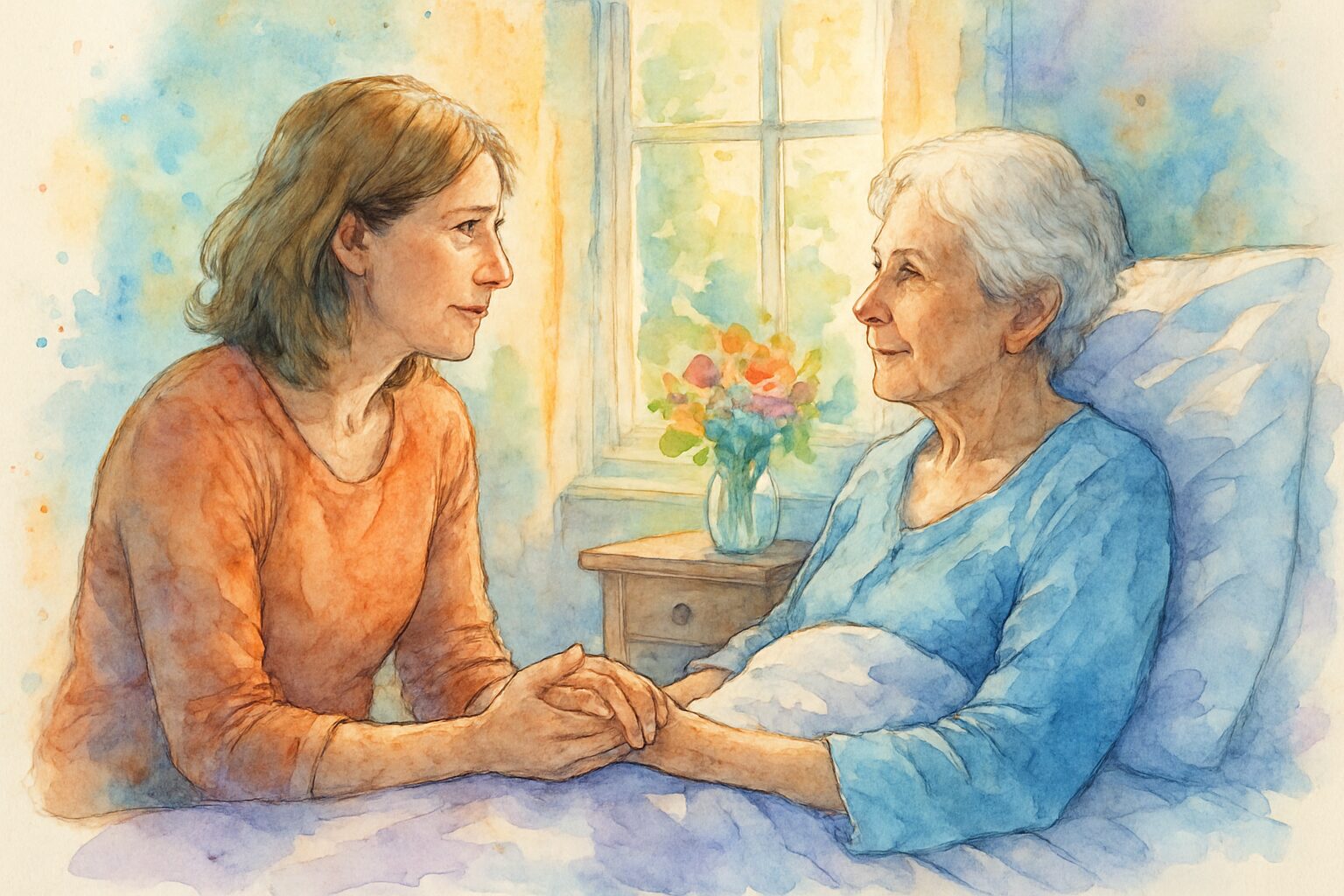
What Families Didn’t Expect When Hospice Care Started
Almost every family says the same thing: “We should have done this sooner.”
That’s not a small thing to say. These are people who spent months in hospitals and treatment centers doing everything they could. And then hospice started, and something shifted in the house.
Here’s what families across the Central Coast have described after hospice care began:
- The pain was finally managed. For many patients, hospice was the first time their pain was consistently addressed — not treated as a side issue, but as the main priority.
- Someone was actually available. The hospice team — including nurses, Medical Social Workers, Chaplains, and Volunteers — came to them. The family wasn’t driving to appointments or navigating a phone tree at 2 a.m.
- Their loved one became more present. When pain and anxiety are managed, people often become more themselves again. Families describe conversations they didn’t think were possible anymore.
- They were part of the care. Hospice didn’t push families to the side. It included them — walking them through medications, explaining what was happening, preparing them for what was coming.
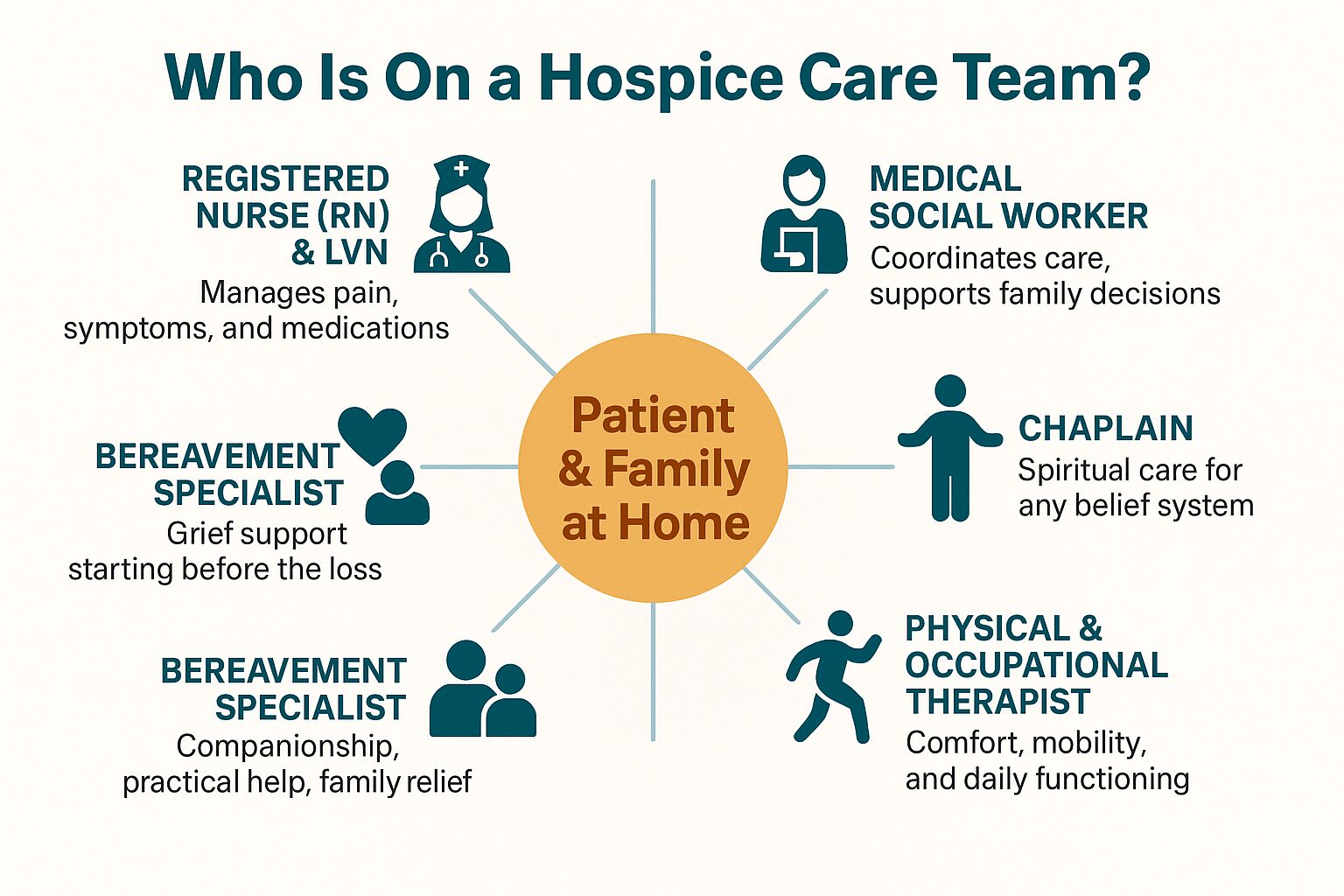
The interdisciplinary team matters more than most families expect going in. Registered Nurses and Licensed Vocational Nurses manage symptoms and medications. Physical Therapists and Occupational Therapists help patients stay as mobile and comfortable as possible. Chaplains support spiritual needs — regardless of faith background. Bereavement Specialists begin supporting families before the death, not just after.
For a closer look at what a skilled nurse actually does on a visit, this guide breaks it down in real terms.
Hospice vs. Continued Treatment: What Families Were Weighing
This isn’t a clinical comparison — it’s a reflection of the real questions families describe wrestling with before they made their decision.
| What Families Were Asking | Continued Treatment Path | Hospice Care Path |
|---|---|---|
| Where will my loved one be? | Hospital, clinic, or facility visits | At home, wherever home is |
| What’s the main goal? | Slow or stop disease progression | Comfort, dignity, quality of life |
| Who manages day-to-day care? | Rotating hospital or clinic staff | A consistent team of nurses, therapists, social workers, chaplains |
| What about pain management? | Often secondary to treatment goals | The primary focus from day one |
| Is Medicare involved? | Covered under standard Medicare benefits | Covered under the Medicare Hospice Benefit — typically $0 out of pocket for eligible patients |
| When does support for family start? | Mostly after the patient’s death | During care — and continues for at least 13 months after loss through bereavement services |
The Hospice Team: Who’s in the Room (and Why It Matters)
Families often don’t realize how many people are involved in hospice care until it starts. This shows the full team and what each person actually does.
The Question Families Wish They Had Asked Earlier
The single most common thing families say — across Monterey, Salinas, Hollister, and every other community in this region — is a version of the same sentence: “Why did we wait so long?”
There’s a widespread belief that asking about hospice means you’re ready to give up, that it’s only for the final days of life. But Medicare’s hospice benefit is available when a physician certifies that a patient’s illness, if it follows its expected course, may limit life expectancy to six months or less. That’s not days. That’s months — months that could be spent at home, comfortable, surrounded by people who matter.
Many families in Monterey County also don’t realize that hospice doesn’t require giving up all treatment. Patients can continue medications that manage their condition. What changes is the goal: treatment shifts from trying to cure the illness to managing symptoms and supporting quality of life.
If your family is somewhere in between — not ready for hospice but aware that a serious illness is changing things — palliative care is worth understanding. It supports comfort and care planning alongside whatever treatment is already happening, without requiring a hospice election.
And for families still trying to understand when any kind of additional support makes sense, this guide on when it’s time to think about getting help at home covers the early warning signs in plain language.
What Grief Looks Like After — and Why Support Doesn’t Stop
Families who choose hospice don’t just lose a loved one. They lose the role they’d been playing — the coordinator, the advocate, the person managing every appointment and medication.
Grief after hospice often surprises people. Some families feel relief and then feel guilty about the relief. Others feel the loss more acutely weeks or months later, after the caregiving structure falls away.
Hospice bereavement services exist specifically for this. Under the Medicare Hospice Benefit, bereavement support is required for at least 13 months following a patient’s death. That includes regular contact from Bereavement Specialists, grief counseling, and community resources — not just a single follow-up call.
For families in Monterey County, this ongoing support is part of what makes the hospice experience different from what most people expect going in. The team that helped at the end doesn’t simply disappear. To understand more about what grief support looks like after a loss, this guide to bereavement counseling explains what’s available and how to access it.
Frequently Asked Questions About Choosing Hospice
Does choosing hospice mean we’re giving up on our loved one?
That’s the fear almost every family carries into the conversation. But what families consistently describe afterward is that hospice felt like the opposite of giving up — it meant committing fully to the person’s comfort, dignity, and quality of life. The goal shifts from fighting the disease to being fully present. That’s not surrender. That’s a different kind of fight.
When is the right time to ask about hospice?
Earlier than most families think. Medicare’s hospice benefit becomes available when a physician certifies that an illness may limit life expectancy to six months or less if it follows its expected course. Many families wait until the final days — and later say that was their biggest regret. If serious illness is changing your loved one’s daily life, asking the question now doesn’t commit you to anything. It just gives you information.
What does hospice cost for families in Monterey County?
For patients covered by Medicare or Medi-Cal, hospice care is typically covered at $0 out of pocket — including nursing visits, medications related to the terminal diagnosis, equipment, and the full interdisciplinary team. Veterans benefits also cover hospice for qualifying patients. Cost is rarely the barrier families expect it to be.
Can my loved one leave hospice if things improve?
Yes. Hospice is not a one-way door. If a patient’s condition stabilizes or improves, they can be discharged from hospice and return to curative treatment. They can also re-enroll later if needed. The decision is always in the hands of the patient and family.
What happens to our family after our loved one passes?
Bereavement support continues for at least 13 months after the death. Bereavement Specialists stay in contact with families, provide grief counseling, and connect families with community resources. The care doesn’t end when the patient dies.
Is there a difference between hospice and palliative care?
Yes, and it matters. Palliative care can happen alongside any treatment, at any stage of serious illness — it’s focused on comfort, symptom management, and care planning, without requiring patients to give up curative care. Hospice is a specific program for patients who have decided to focus entirely on comfort rather than treatment. Many families move from palliative care to hospice as illness progresses.
Ready to Have the Conversation?
If you’re somewhere in the middle of this — not sure if it’s time, not sure what to ask, not sure how your loved one will respond — that’s exactly where most families are when they first call. Central Coast VNA & Hospice has been serving families across Monterey County, Salinas, Hollister, and the surrounding Central Coast since 1951, and the first conversation doesn’t commit anyone to anything. You can reach a care coordinator at 831-372-6668, or learn more at ccvna.com.