
Direct Answer: When caring for an aging parent starts affecting your own health or safety, skilled home health — covered by Medicare for qualifying patients — can bring a coordinated clinical team into the home so you’re not doing this alone.
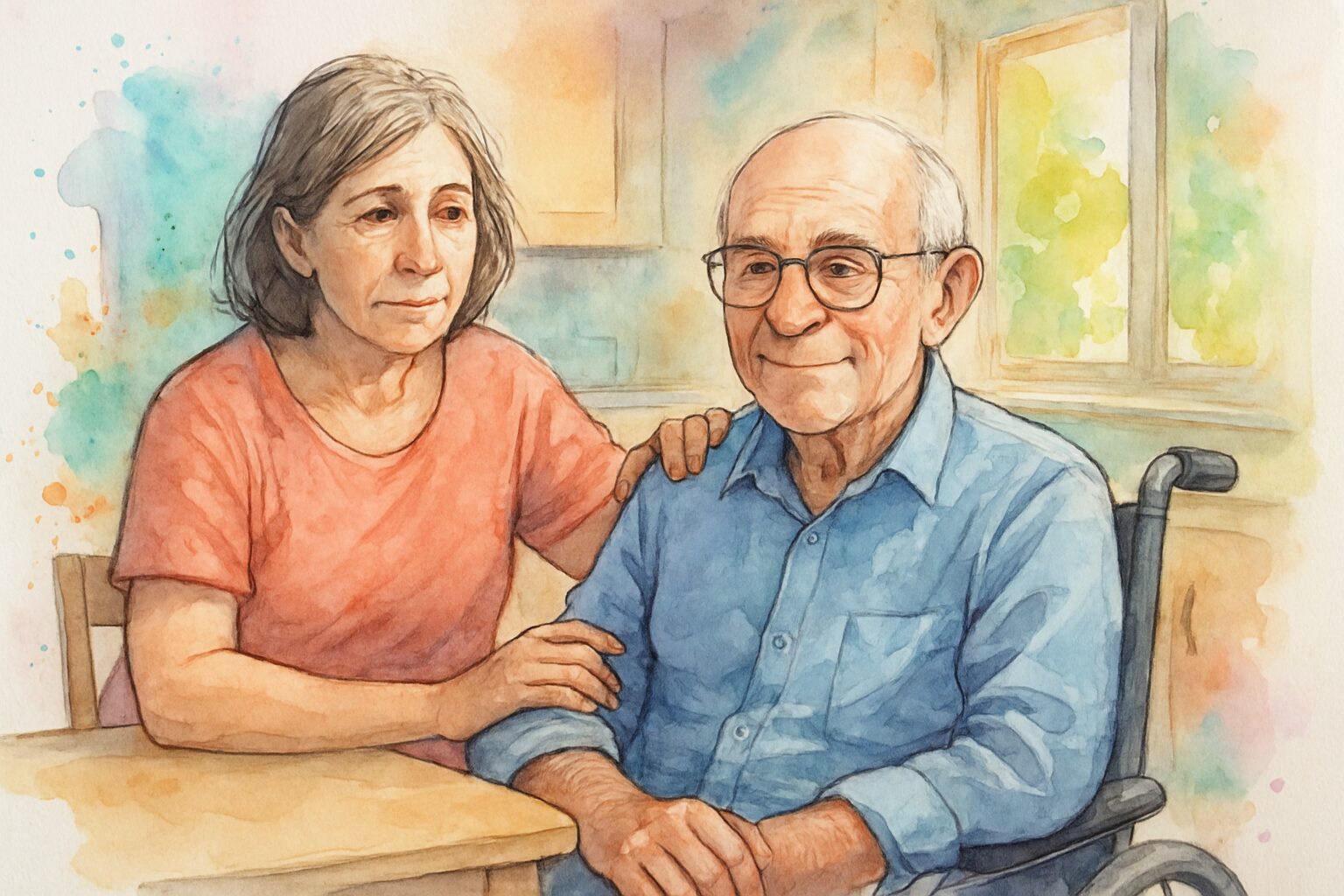
A woman called recently to ask about help for her husband, who has Parkinson’s disease. She wasn’t calling on behalf of a grown child or a sibling. She was calling for herself. “I’m elderly myself,” she said, “and I’m caring for him alone. I don’t know where to turn.”
This situation is more common on the Monterey Peninsula and throughout Monterey County than most people realize. One aging adult supporting another — managing medications, preventing falls, handling wound care after a hospital discharge — while quietly running out of physical and emotional capacity. And often, carrying the fear that asking for help means something is ending.
This article is written for people in that exact position. What skilled home health actually looks like. What it costs — or more accurately, what it doesn’t cost if Medicare or Medi-Cal covers it. And why a single assessment visit from a Registered Nurse changes the picture for most families who have been guessing.
The Line Between Managing and Not Managing
There’s no single moment when caring for an aging parent — or a spouse, or any loved one — becomes too much. It builds. A medication that needs to be managed more carefully. A fall that didn’t cause injury but easily could have. Sleep that keeps getting shorter because you’re listening for sounds in the next room.
Many families in Salinas, Pacific Grove, King City, and Hollister reach this point without realizing they’ve passed it. They keep adjusting, keep absorbing. They tell themselves things are manageable. And sometimes they are — for a while.
But a few signs tend to show up before the situation becomes a crisis:
- You’re making medical decisions without knowing if they’re right
- Wound care, injections, or medication dosing has become part of your daily routine
- Your loved one has been discharged from a hospital and the follow-up care feels unclear — what comes next after a hospital discharge is one of the most common questions families ask
- Your own health — sleep, appointments, mental health — is being neglected
- You feel like you can’t leave the house for more than an hour
None of these are signs of failure. They’re signs that the situation has grown beyond what one person was ever meant to handle alone.
What Skilled Home Health Actually Is — and What It Isn’t
A lot of families picture home health as a full-time aide moving into the house, or as something that signals a loss of independence. Neither is accurate.
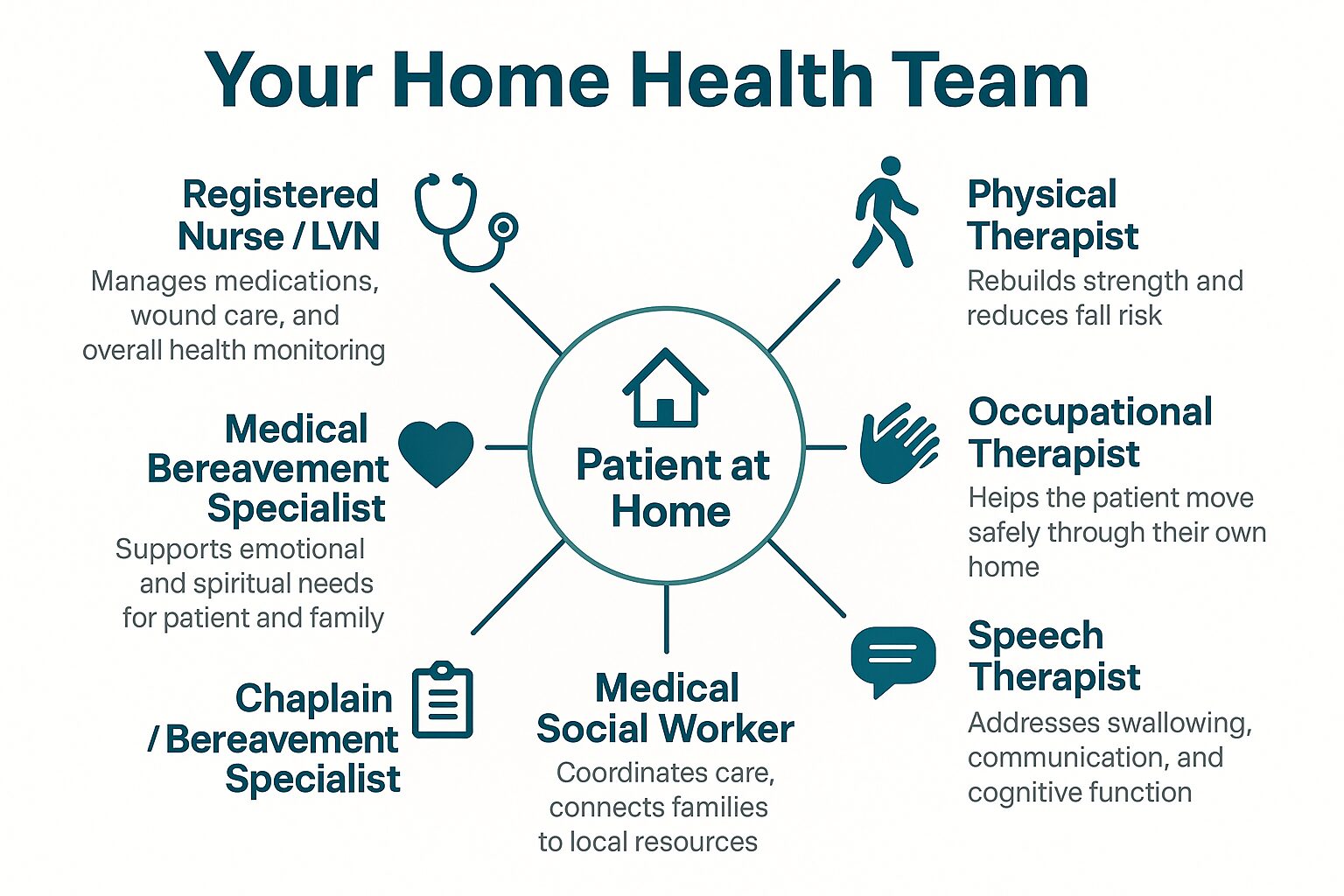
Skilled home health is structured, scheduled visits from a coordinated clinical team. A Registered Nurse might come three times a week to manage a wound or oversee medications. A Physical Therapist works on fall prevention and strength. An Occupational Therapist helps a patient move safely through their own home. A Medical Social Worker handles care coordination and connects families to local resources in Monterey County. A Chaplain or Bereavement Specialist can support the emotional side of a serious illness — for the patient and for the person caring for them.
Nobody moves in. You don’t give up control. You get a team of clinicians who take on the clinical tasks that were never yours to carry in the first place.
To understand the full scope of what a Registered Nurse does during a home visit — what they’re actually assessing, tracking, and managing — this breakdown of a skilled nurse’s home visit is worth reading before you make any decisions.
For many families, the real question isn’t whether help is needed — it’s whether home is still the right setting. Skilled home health is specifically designed for patients who can and want to stay home, and who need clinical support to do it safely.
The Assessment Visit: Why One Conversation Changes Everything
Most families who have been managing on their own are guessing. Not because they aren’t smart or devoted — but because they were never trained as clinicians. They’re doing their best with incomplete information.
A Registered Nurse assessment visit changes that picture within a single appointment. The nurse reviews the patient’s full medical history, current medications, mobility, wound status, cognitive function, and living environment. They identify what’s working, what’s risky, and what actually needs clinical attention.
For the person doing the caregiving, this visit is often the first time someone has said: here is what is actually happening, and here is what needs to happen next. That clarity alone — knowing you’re not missing something critical — is something families across Monterey County describe as a turning point.
The assessment also determines what services Medicare or Medi-Cal will cover, so you’re not going into that conversation blind. What families in Monterey wish they’d known sooner often comes down to this: they waited longer than they needed to because they assumed the process would be complicated or the cost would be out of reach.
Who’s on the Home Health Team — and What Each Person Does
Skilled home health isn’t one person. It’s a coordinated team of clinicians, each handling a specific part of the patient’s care.
Does Insurance Cover This? A Plain-Language Breakdown
Insurance uncertainty stops more families from calling than almost anything else. Here’s what Medicare, Medi-Cal, and Veterans benefits actually cover for skilled home health.
| Coverage Type | What It Covers | Key Requirement |
|---|---|---|
| Medicare Part A/B | Skilled nursing, PT, OT, Speech Therapy, Medical Social Work — when ordered by a physician | Patient must be homebound and have a physician’s order for skilled care |
| Medi-Cal | Similar skilled home health services for eligible patients; covers many who don’t qualify for Medicare | Eligibility based on income and medical need; prior authorization may apply |
| Veterans Benefits (VA) | Home health services for qualifying veterans through VA-authorized providers | Must be enrolled in VA healthcare; physician referral required |
| Private Insurance / HMO | Coverage varies widely by plan — always verify benefits before assuming | Check your specific plan; some require pre-authorization |
| Out-of-Pocket / Private Pay | Available when insurance doesn’t cover — see what options exist when Medicare doesn’t cover everything | No insurance requirement; costs vary by service and frequency |
When the Illness Is Serious: Palliative Care and Hospice as Part of the Picture
For families caring for someone with a serious or progressive illness — Parkinson’s, advanced heart failure, cancer, late-stage COPD — the clinical needs often go beyond what standard home health covers.
Palliative care is specialized support for managing symptoms, reducing pain, and helping families understand what’s ahead — without requiring the patient to stop pursuing treatment. It’s not the same as hospice. A patient can receive palliative care while still seeing their oncologist or neurologist. It’s about improving quality of life alongside whatever else is happening medically. What comfort-focused care really means — and when to ask about it is a good starting point if you’re not sure whether palliative care applies to your situation.
Hospice is for patients whose illness has advanced to a point where curative treatment is no longer the focus. It brings a full team — nurses, hospice aides, chaplains, social workers, and volunteers — into the home to manage pain, provide emotional and spiritual support, and guide the family through one of the hardest experiences of their lives. How families describe the moment they chose hospice is one of the most honest accounts of what that decision actually feels like.
Both programs are covered under Medicare for qualifying patients. And both are available throughout Monterey County, San Benito County, and the surrounding Central Coast communities where VNA has been serving families since 1951.
Frequently Asked Questions About Getting Help at Home
My spouse has Parkinson’s and I’m elderly myself. Am I the kind of person who can actually get help?
Yes — and you’re exactly who these services are designed for. When one aging adult is caring for another, the risk of injury, burnout, and medical error increases significantly. A Registered Nurse can assess your spouse’s current needs and determine what Medicare or Medi-Cal will cover. You don’t have to keep guessing, and you don’t have to keep doing this alone.
Will Medicare really pay for a nurse to come to the house?
Medicare covers skilled home health — including nursing, physical therapy, occupational therapy, and medical social work — when a physician orders it and the patient meets the homebound criteria. Most patients with a serious chronic illness or recent hospitalization qualify. The assessment visit will confirm coverage before any services begin.
Does asking for home health mean my parent is going to a facility next?
No. Skilled home health is specifically designed to keep people at home safely. Getting clinical support doesn’t put someone on a path to a facility — in many cases, it’s what prevents that outcome. What actually makes staying home possible as you age breaks this down in more detail.
How often does someone actually come to the house?
It depends on what the physician orders and what the assessment finds. A typical skilled nursing visit might happen two to four times per week for wound care or medication management. Physical therapy visits are often scheduled three times per week for a set number of weeks. This is structured, scheduled care — not someone living in your home.
What if my parent doesn’t want help? They’re very independent.
This is one of the most common concerns families in Monterey County bring up. A first visit from a nurse is often just that — a visit. Many patients who were resistant become comfortable once they understand that the goal is to help them stay home and stay independent, not to take over. A Medical Social Worker can also help navigate these conversations with the family.
What happens after a loved one passes — is there any support for our family?
VNA provides bereavement support after a patient passes, including grief counseling and ongoing care for family members navigating loss. That support doesn’t end at the time of death. If you’re already in a difficult place emotionally, grief support resources for families are available and don’t require a prior relationship with VNA’s clinical team.
Ready to Talk to Someone Who Can Help You Sort This Out?
Central Coast VNA & Hospice has been serving families across Monterey County, San Benito County, and the surrounding Central Coast since 1951 — including families in Salinas, King City, Pacific Grove, and Hollister who are navigating exactly what you’re facing right now. If you’re not sure whether your situation qualifies, or you just want to understand your options before making any decisions, a care coordinator can walk you through it without pressure. Call 831-372-6668 or visit ccvna.com to start the conversation.