
A quiet but powerful shift is happening in homes across the Central Coast and the nation. More seniors are choosing to age in place, surrounded by the comfort and memories of the homes they love. This is a fundamental change in how we think about long-term care.
This movement is driven by personal choice, financial sense, and a deep desire for safety.
The Unmistakable Trend: Why More Seniors Are Choosing Home
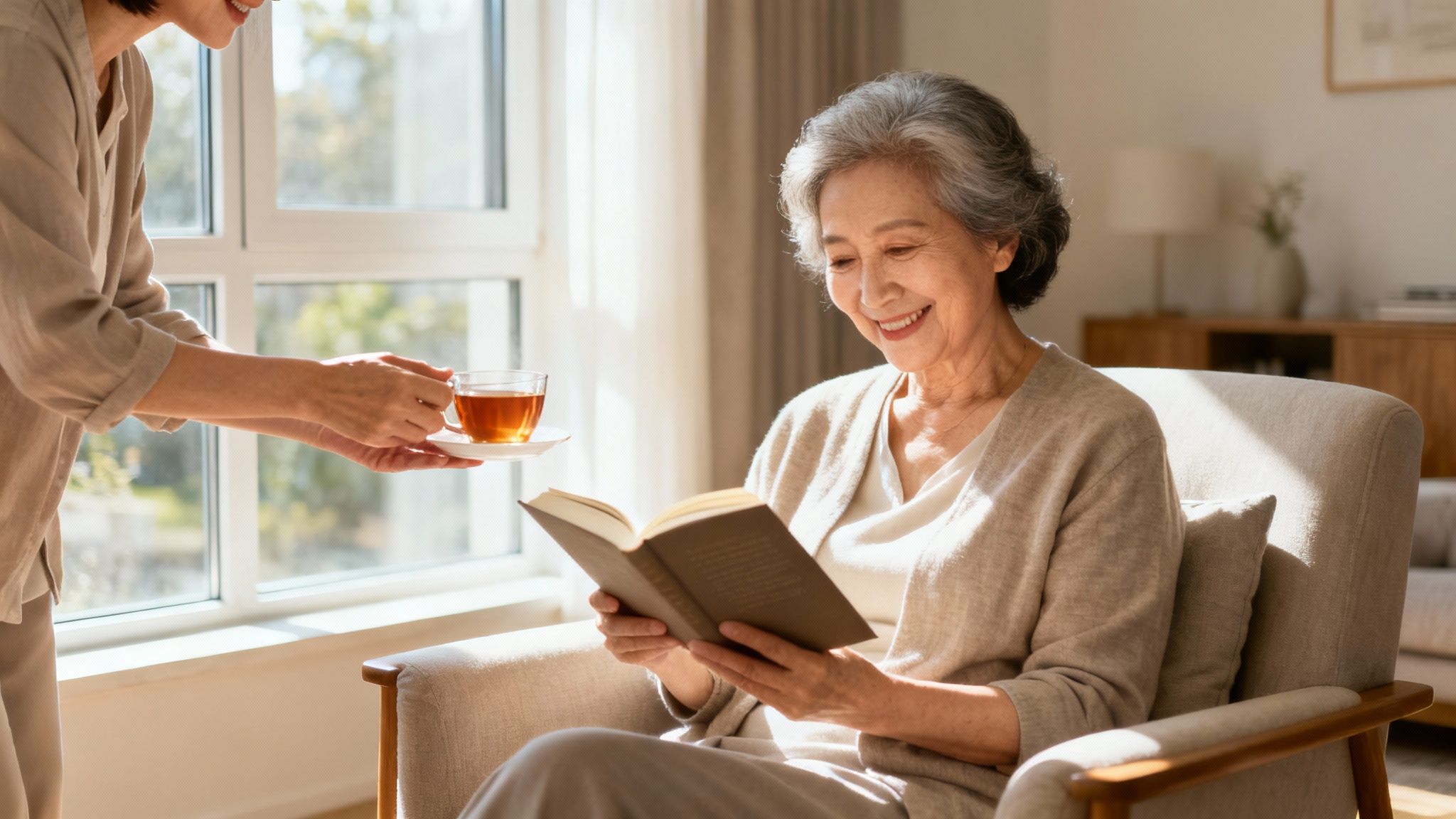
The message from older adults is clear: they want to stay home. Instead of moving to a facility, they are opting to receive care where they feel most comfortable. This preference is reshaping healthcare for families and providers alike.
The reasons are both practical and personal. Home is a lifetime of memories, a connection to neighbors, and the freedom to live by one's own rules. For many, preserving that dignity is essential.
The Driving Forces Behind Aging in Place
Several powerful factors are making in-home care a more appealing choice. This is true for families in Monterey County, San Benito County, Santa Cruz County, and South Santa Clara County.
- A Desire for Autonomy: At home, seniors decide their own schedule. This simple independence is something they value deeply.
- Emotional Well-being: Being in a familiar space has a huge impact on mental and emotional health. It brings an undeniable sense of peace.
- Health and Safety: For many families, home now feels like the safest place to receive care. It helps minimize exposure to illnesses often found in group settings.
The numbers tell the same story. A recent poll found that an overwhelming 75% of adults 50 and older say they want to age in place. This desire is a major driver behind the growing demand for at-home senior care services.
This preference is also fueled by cost. Professional home-based care is often a much more sustainable option for many families compared to expensive facility care.
Key Drivers for Seniors Choosing Home Care in 2026
The shift toward home is pushed by a few key motivations. This table breaks down what is behind this growing preference.
| Driving Factor | Impact on Seniors and Families |
|---|---|
| Personal Independence | Seniors maintain control over their daily routines, diet, and social life. |
| Emotional Comfort | Staying in a familiar environment reduces stress and promotes mental well-being. |
| Financial Savings | Home care is often more affordable than facility-based options. |
| Health & Safety | Reduces exposure to infections common in congregate settings. |
| Family Connection | Makes it easier for family and friends to visit and stay involved in care. |
These factors create a compelling case for why home is becoming the preferred setting for long-term care.
Creating a Comfortable and Safe Home
As more seniors decide to age in place, making the home environment supportive is key. Simple adaptations can make a world of difference. This might include adding grab bars, improving lighting, or selecting furniture like the best recliners for seniors.
For families on the Central Coast, organizations like Central Coast VNA & Hospice meet this growing need. You can learn more about why home health care is growing fast on the Monterey County coast on our blog.
Exploring the Forces Behind the At-Home Movement
The growing desire for seniors to stay home is not a coincidence. It is a powerful shift driven by personal wishes, practical finances, and a major change in our population. Understanding these forces helps families prepare for what lies ahead.
Three big drivers are fueling this trend here on the Central Coast and across the nation. Each one is reshaping the future of senior care.
The Demographic Wave
First and foremost, America is getting older. This simple fact is the engine behind the at-home movement. A significant 4.1 million Americans turned 65 in 2024, creating a huge wave of new seniors.
This is a generation that has always prized its independence. This is a local reality for families in Monterey, Salinas, and Hollister. As more of our neighbors enter their senior years, the demand for healthcare that fits their values is skyrocketing.
The Economic Reality of Senior Care
The second powerful force is the financial difference between care facilities and aging at home. The costs of nursing homes can quickly become overwhelming. This often creates incredible stress for families.
In-home care offers a much more manageable financial path. Services are designed to fit specific needs, so families only pay for the support required.
This could include:
- Skilled Nursing Visits: A Registered Nurse can handle medical needs like wound care or medication management at home.
- Therapy Services: Physical, occupational, or speech therapy can be delivered in a patient's own living room.
- Palliative and Hospice Care: Specialized support for serious illness or end-of-life care can be provided at home.
This flexibility makes professional home-based care a practical choice. It lets families in Santa Cruz and San Benito counties put resources toward targeted medical help. You can learn more by reading about the 6 home care trends Central Coast families should watch in 2026.
The Powerful Preference for Independence
Finally, we have the most personal force of all: the deep need for comfort and independence. Home is a sanctuary filled with memories and familiar routines. Leaving that behind can feel like losing a piece of yourself.
Staying at home means seniors can keep their daily rhythms. This sense of control is directly linked to emotional well-being and quality of life.
A home care plan is built around the individual. It adapts to their life, rather than forcing them to adapt to an institution. For over 74 years, Central Coast VNA & Hospice has helped families build these kinds of personalized plans.
The Growing Gap Between Senior Needs and Available Care
The desire to age in place is running up against a hard reality. The healthcare system is not always built for it. As seniors choose to remain home, a gap is opening between the care they need and what is available.
This leaves families scrambling to find consistent, reliable in-home care. This is especially true when different services are isolated from one another.
A Family's Journey Through Uncoordinated Care
For healthcare providers and families, this shift means more pressure. They must manage chronic conditions and mobility issues without facility placement. The current system often makes this difficult.
Organizations that treat home health, palliative care, and hospice as isolated offerings risk confusing patients. Without clear guidance across the continuum of care, families may delay decisions. This can lead to preventable health crises or costly ER visits.
This kind of fragmented care creates real pain points:
- Disjointed Communication: Families are forced to be the messenger between different agencies that rarely talk to each other.
- Preventable Hospital Visits: Small problems can quickly turn into major health crises without one team seeing the big picture.
- Emotional and Physical Burnout: Juggling appointments, medications, and different care teams is exhausting for family members.
The Looming Supply Crunch
Finding care is already tough, and it may get harder. The construction of new senior living facilities is not keeping pace with our aging population. This will push even more seniors to seek care at home.
This "development/demand divide" is setting the stage for a challenge. Demand is set to explode as the oldest Baby Boomers turn 80. You can explore more data on senior living trends to see the full scope of the issue.
This is the problem Central Coast VNA & Hospice was founded to solve. For over 74 years, our nonprofit mission has been to offer a seamless continuum of care under one roof. Our integrated model is designed to close that care gap for families in Monterey, San Benito, Santa Cruz, and South Santa Clara counties.
How a Continuum of Care Bridges the Gap for Seniors
The growing gap between what seniors need and what our healthcare system offers can be frustrating. There is a better way, built on the idea of a continuum of care. This approach helps families avoid disjointed services.
Think of it like having a trusted guide for a long journey. This guide walks alongside you and anticipates the twists and turns ahead. That is what an integrated continuum of care does for families.
Understanding the Integrated Care Model
A continuum of care is an integrated system that follows a patient through every stage of their health journey. It connects home health, palliative support, and hospice under one coordinated team. This model eliminates the confusion many people experience.
As a patient's needs change, the transitions are seamless. The same trusted team that already knows your history and wishes stays involved. This is how we can address the shift driving more seniors to stay at home in 2026.
This growing gap between what seniors need and what a disconnected system can provide is a real challenge.
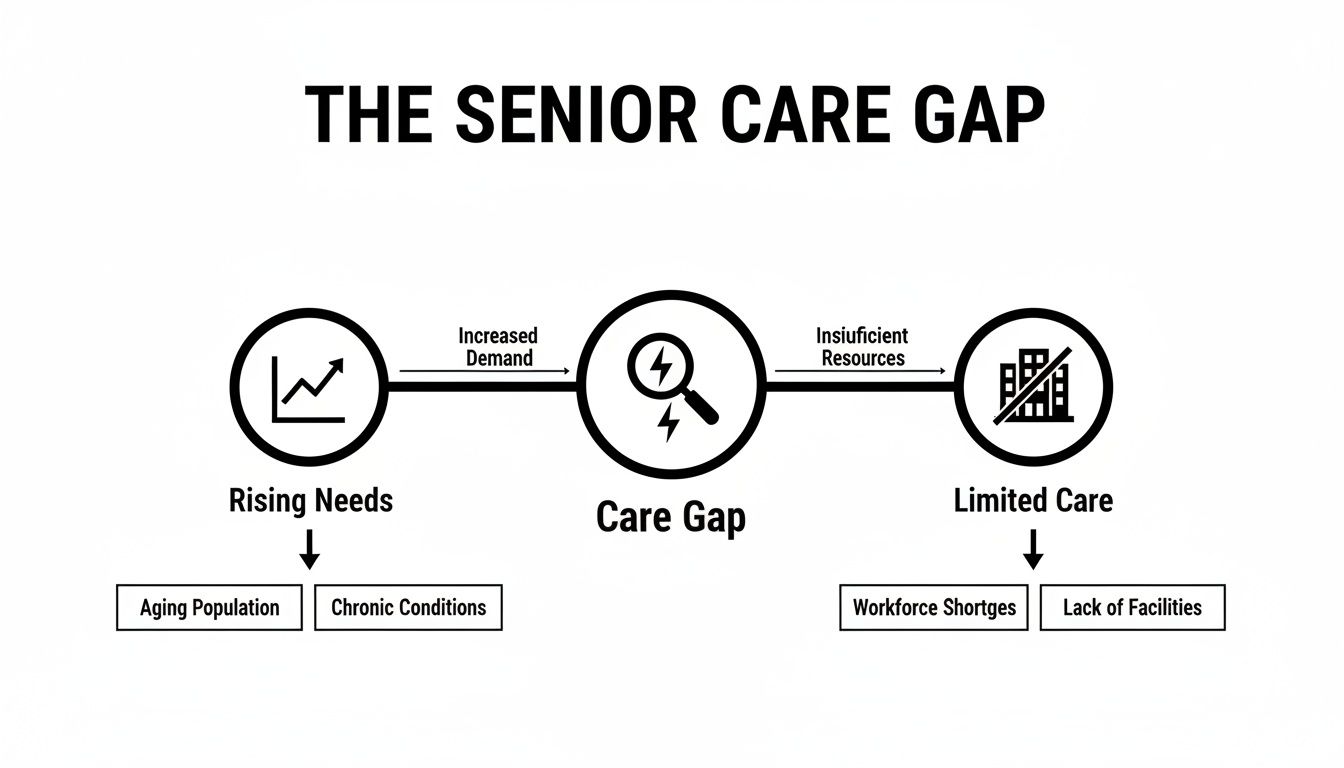
The visual above shows why a unified approach is essential. It ensures seniors get consistent, reliable support.
How a Single Provider Makes a Difference
When one organization provides the full spectrum of home-based care, the benefits are immediate. Central Coast VNA & Hospice has spent over 74 years perfecting this model. Our approach is built on core principles.
- Seamless Transitions: If a home health patient’s illness progresses, our team can introduce palliative care without disruption. The transition to hospice is handled with compassion by clinicians who already know them.
- Coordinated Communication: Our Registered Nurses, therapists, social workers, and Hospice Aides are all part of the same team. They communicate constantly so you never have to repeat your story.
- Clinically Superior Outcomes: This leads to better health outcomes. By managing symptoms proactively, we can reduce preventable hospitalizations and improve quality of life.
At its heart, the continuum of care is about providing the right care, at the right time, in the right place. It replaces confusion with clarity and stress with support.
For families in Monterey, Hollister, Santa Cruz, or South Santa Clara County, this means you have a dedicated partner. You can see this model in action by learning more about how our expert teams provide skilled nursing at home.
Why a Nonprofit Mission Matters
As the only local provider offering this full continuum of care, Central Coast VNA & Hospice operates as a nonprofit. This is a critical distinction. Our mission is driven by the needs of our community, not by shareholder profits.
This focus allows us to pour our energy into what truly matters. We deliver compassionate, high-quality care that honors each person's wish to remain at home.
What Integrated Home-Based Care Really Means for You
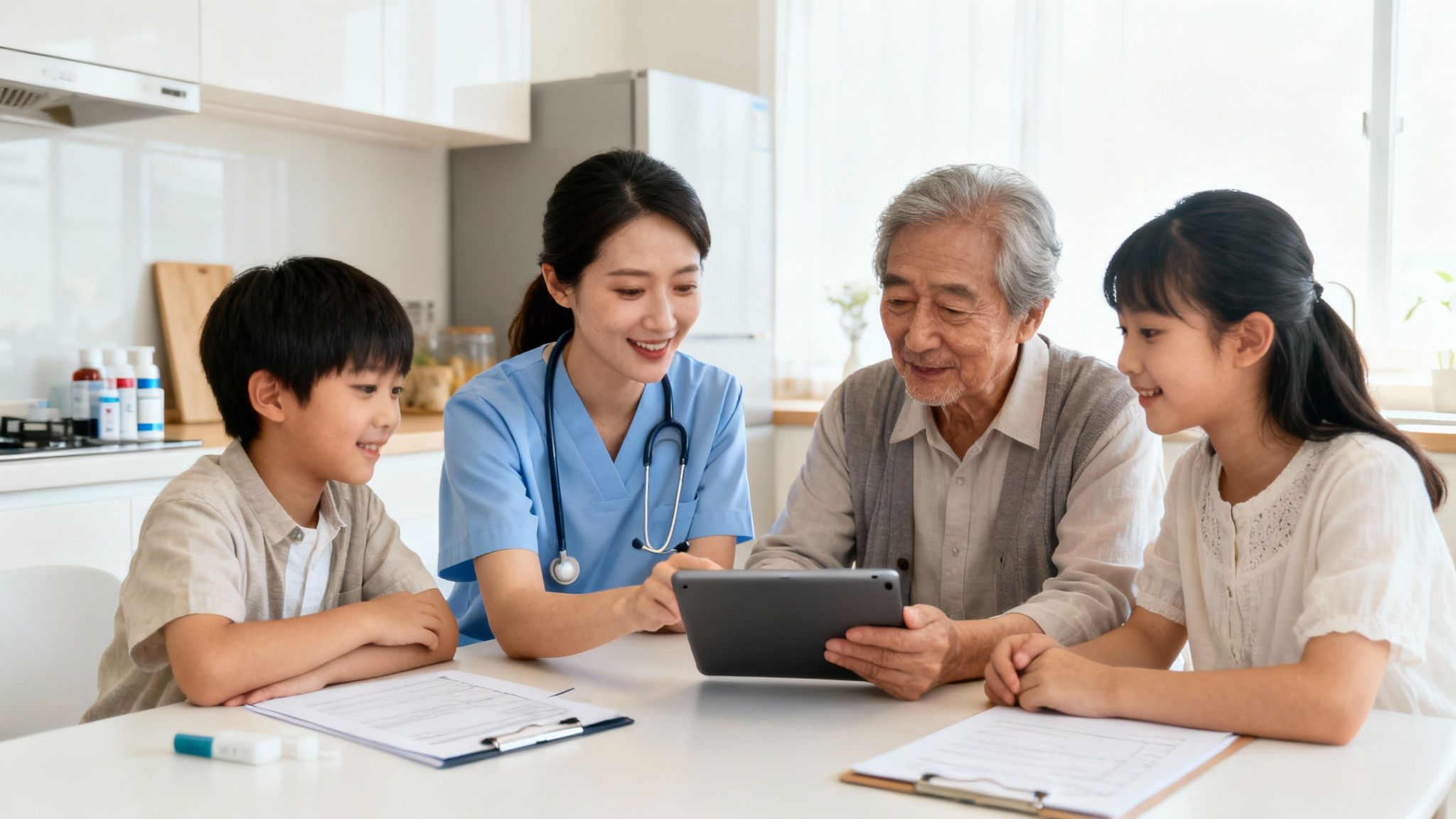
Choosing an integrated care model goes far beyond convenience. It delivers real benefits that improve a patient’s quality of life and give families peace of mind. This unified approach makes the wish to stay home a safe reality.
When a single, mission-driven team oversees a patient's entire journey, the care becomes smarter. It is more responsive and deeply personal. It is the difference between a stressful experience and a seamless one.
No More Broken Telephone
With separate agencies, families often find themselves playing messenger. An integrated model eliminates this risk.
At Central Coast VNA & Hospice, our Registered Nurses, therapists, and Hospice Aides are part of one connected team. Proactive communication helps us catch potential issues before they become serious problems.
Keeping You Safely Out of the Hospital
One of the biggest wins with coordinated home-based care is a drop in avoidable ER visits. Our clinical teams work in sync to manage symptoms and teach families how to handle challenges at home. This is more important than ever as the shift driving more seniors to stay at home in 2026 picks up speed.
Integrated services make this possible, keeping patients safely out of hospitals. This helps to reduce hospitalizations and support seniors to age safely in their own homes.
By offering a steady, watchful eye, integrated care teams can address health concerns before they escalate. This preserves a patient’s well-being and a family's emotional resources.
Care Plans That Evolve With You
A person's health needs are not static. The beauty of an integrated continuum is that the care plan adapts just as smoothly. This model ensures the right level of support is always there.
Here’s how a care journey can evolve under one roof:
- Home Health: Following a hospital stay, a patient gets skilled nursing and physical therapy to rebuild strength.
- Palliative Care: As a chronic illness progresses, the focus can shift to managing symptoms, often while other treatments continue. Our article on using telehealth in hospice and palliative care shows how technology helps us do this.
- Hospice Care: If the time comes, the transition to hospice is handled with compassion by a team that has earned the family’s trust.
Integrated care also provides practical solutions for daily living. Guides on finding the best lift chairs for seniors can make a huge difference in comfort and independence.
For over 74 years, Central Coast VNA & Hospice has delivered this connected care to families. We serve Monterey, San Benito, Santa Cruz, and South Santa Clara counties.
Getting Your Network Ready for the Future of Senior Care
For healthcare providers on the Central Coast, the message is clear. By 2026, a massive wave of seniors will be choosing to age at home. This shift puts pressure on our local health systems.
Discharge planners and physicians in Monterey, Hollister, Salinas, and Santa Cruz should evaluate their care networks now. If we wait, we risk serious service gaps. A fragmented approach no longer works for our community.
Central Coast VNA & Hospice is a local partner ready to help. As a nonprofit with over 74 years of local experience, we offer an integrated continuum of care under one trusted roof. Our coordinated model creates seamless transitions and personalized support.
We are ready to partner with providers to help meet the rising need for aging-in-place services. Let's work together to strengthen our community’s ability to support seniors.
To learn how you can partner with a trusted, mission-driven leader, visit us at ccvna.com or call 831-372-6668 to speak with our team.
Frequently Asked Questions About In-Home Senior Care
Figuring out the world of in-home care brings up many questions. As the shift driving more seniors to stay at home in 2026 becomes clearer, getting a handle on your options is the first step. Here are answers to common questions.
How do I know if my loved one is eligible for home health care?
Eligibility for home health care usually depends on a few key things set by Medicare. A patient needs to be under a doctor's care and require skilled services on an intermittent basis. This may include visits from a Registered Nurse or a physical therapist.
The patient must also be considered "homebound," meaning it is a major effort to leave the house. A physician must certify that the care is medically necessary. Our team can work with your loved one's doctor to determine eligibility.
What should I expect from a home-based care team?
A professional home-based care team brings expert medical support to your home. At Central Coast VNA & Hospice, our teams are led by experienced healthcare professionals. Their team-based approach ensures we care for the whole person.
Depending on a patient's needs, their team might include a Registered Nurse, a Physical Therapist, or a Medical Social Worker. This approach addresses physical, emotional, and social needs with skill and heart.
How does home health care coordinate with my primary doctor?
Great coordination with a primary doctor is the foundation of quality home health care. Our clinical team becomes the doctor's eyes and ears in the home. We provide regular, detailed updates on your loved one's progress.
This constant communication loop ensures the care plan is always in sync with the doctor's orders. This partnership helps catch issues early and manage symptoms better. It also reduces the chance of an unnecessary trip back to the hospital.
What is the difference between palliative and hospice care?
This is a very common and important question. Both palliative and hospice care are centered on comfort and quality of life. However, they are designed for different situations.
Palliative care can start at any stage of a serious illness and can be given alongside curative treatments. Hospice care is for individuals with a terminal illness who have decided to stop seeking curative treatments. Central Coast VNA & Hospice offers both, ensuring a smooth transition if needs change.
How do I start the conversation about in-home care with my parent?
Bringing up this topic requires sensitivity. Frame it as a way to support their independence and honor their wish to stay at home. You could say, “Let’s talk about getting a little extra help to make it easier and safer for you to stay here.”
Focus on the benefits, like having a skilled nurse visit or a therapist to build up strength. For more tips, you can read our article on how to get help caring for an aging parent at home. Approaching it as a partnership is key.
At Central Coast VNA & Hospice, we are your local, nonprofit partner. We are dedicated to providing compassionate, integrated care for families across Monterey, San Benito, Santa Cruz, and South Santa Clara counties. Contact us today to learn how our 74+ years of experience can support your loved one’s wish to age safely and with dignity at home. Learn more at https://ccvna.com.