
Using telehealth in hospice and palliative care adds an extra layer of support for patients and families. It uses technology like video calls and remote monitoring to supplement, but never replace, in-person care.
This approach gives families timely symptom management and connects loved ones who are far away. It also reduces stress by ensuring compassionate support from a Registered Nurse or Hospice Aide is always just a click away.
What Telehealth for Hospice Really Looks Like
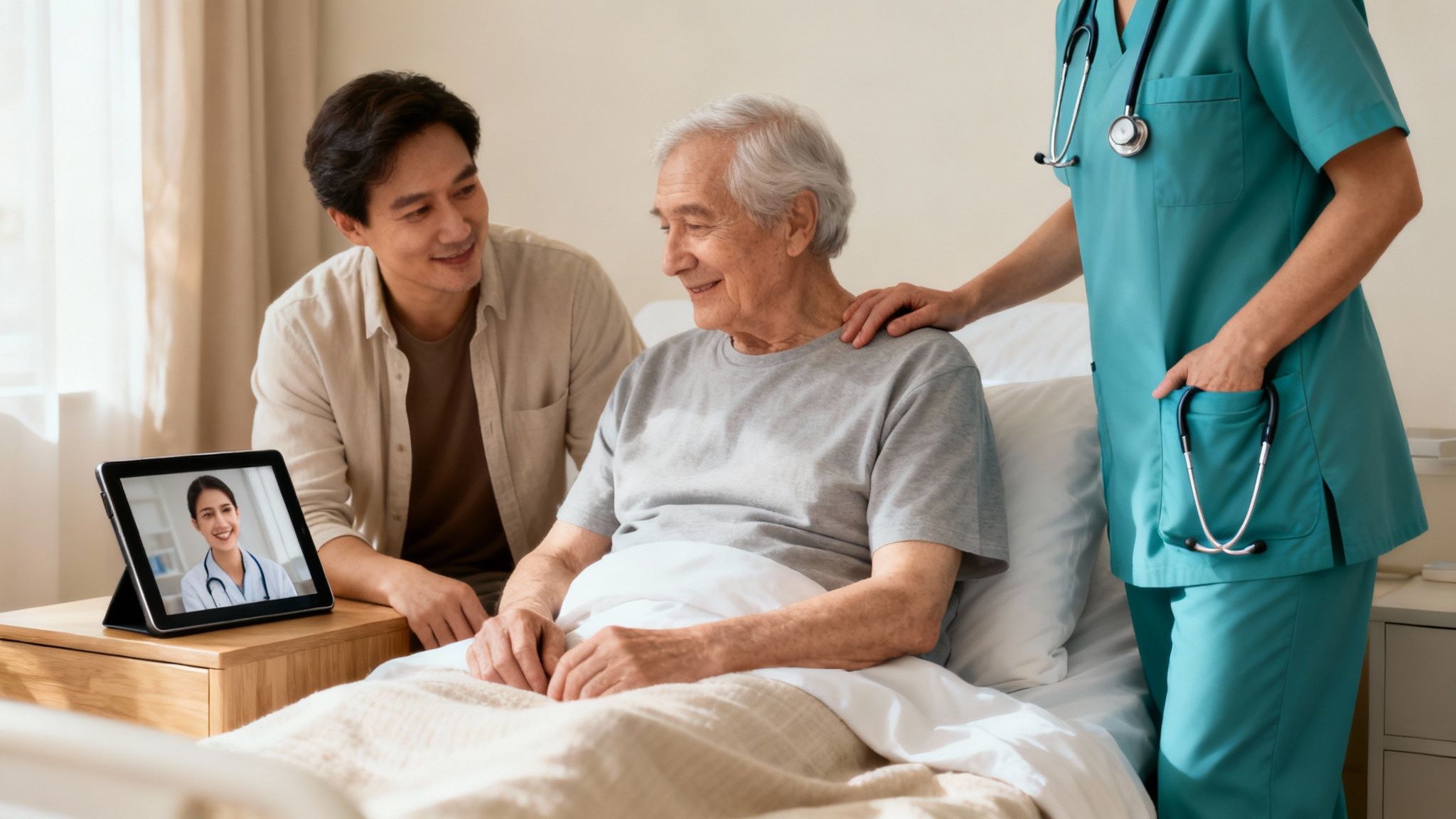
When families first hear "telehealth," they might picture complicated, impersonal gadgets. The reality is much simpler and warmer. Think of it as a way to extend the compassionate reach of our care team.
For families here on the Central Coast, telehealth blends seamlessly with our traditional, hands-on care. It’s not about replacing the human touch of a Hospice Aide or the clinical expertise of a Registered Nurse. It’s about adding crucial moments of connection between those essential home visits.
Extending Compassionate Care Virtually
Telehealth in hospice can take many forms, each designed to make life easier. This virtual support is built around familiar technology, so it feels accessible and not intimidating.
Here’s what this kind of support often includes:
- Virtual Check-Ins: A quick video call with a nurse can help manage a new symptom or answer a question. This immediate access can prevent discomfort from worsening and may even help avoid a stressful ER trip.
- Family Care Conferences: Telehealth allows family members—whether they’re in Monterey County or across the country—to join important care discussions. Everyone can stay connected and involved in decision-making.
- Emotional and Spiritual Support: A video chat with a Medical Social Worker or Chaplain creates a private space for comfort. This support is available from the familiarity of home.
- Digital Symptom Tracking: Simple tools allow a patient or family member to report symptoms like pain or anxiety. This helps our care team adjust the care plan to keep your loved one comfortable.
This approach has proven its value. In fact, 43% of adults 65 and older have used telehealth since the pandemic. This shows that seniors are often more comfortable with digital tools than many assume.
How Technology Supports the Human Connection
A key part of making telehealth work is using the right tools. At Central Coast VNA & Hospice, we ensure this technology is straightforward. Its main purpose is to strengthen the bond between our team, our patients, and their families.
We are dedicated to making our hospice-at-home services as supportive as possible. You can learn more about our approach here: https://ccvna.com/hospice-at-home/.
By integrating telehealth, we honor our 74-year legacy of providing compassionate, local care. We serve Monterey County, San Benito County, Santa Cruz County, and South Santa Clara County. We're committed to ensuring every family feels connected, whether we’re with them in person or online.
Enhancing Quality of Life with Virtual Support
For many families, a top priority is ensuring their loved one is comfortable and at peace. Telehealth brings expert hospice and palliative support right into the home. This helps preserve a patient's energy and gives them a greater sense of control.
Think about a patient in Monterey County with an advanced illness. Instead of tiring trips to a clinic, they can have regular video check-ins with their Nurse Practitioner. These calls allow the care team to fine-tune medications and manage symptoms before they become a crisis.
This proactive care helps patients feel more comfortable and empowered. It also saves precious energy that’s better spent on creating memories with loved ones.
Providing Consistent Emotional and Spiritual Comfort
A serious illness affects a person's emotional and spiritual health. It's normal for patients and families to feel anxiety, fear, and uncertainty. Telehealth provides a direct line to the compassionate support needed to navigate these feelings.
A video call with a Chaplain or a Medical Social Worker can feel just as personal as a face-to-face meeting. It creates a safe, private space to talk through worries from the comfort of home. For so many, getting this support without leaving their favorite armchair makes a huge difference.
This isn’t just a feeling; it’s backed by research. A study found that video consultations for patients with advanced lung cancer provided nearly identical quality-of-life benefits as in-person care. You can learn more about these powerful findings on cancertodaymag.org.
Fostering Shared Decision-Making for Families
Telehealth also acts as a crucial bridge for families spread across different locations. It ensures everyone can be part of important conversations. This builds a strong sense of connection and shared decision-making.
A daughter in another state can join a video call with her father and his palliative care nurse. This inclusive approach has real advantages. It leads to clearer communication and gives everyone a chance to ask questions and decide on the best path forward.
For families in Santa Cruz County or San Benito County, the first step is understanding how these services can help. Our team is here to explain how our palliative home care uses technology to improve comfort. By blending hands-on visits with virtual check-ins, we offer a more responsive and personalized experience.
How We Make Telehealth Simple and Accessible
We know that bringing new technology into your home can feel overwhelming. That’s why we’ve made our telehealth process simple and supportive. Our goal is to make care in Monterey County and surrounding areas more accessible, not more complicated.
Many families worry about setting up strange devices or learning confusing software. Our team ensures that using telehealth feels as natural as a phone call with a trusted friend.
Getting Started with Virtual Care
For families trying telehealth for the first time, the setup couldn't be easier. We provide everything needed to get started with total confidence. Our approach is hands-on and tailored to your loved one’s comfort.
Here’s how we make the process worry-free:
- We Provide the Tech: If you need it, we’ll deliver a pre-configured tablet to your home. Everything is set up and ready to use.
- Personalized Guidance: A member of our team will personally walk you through the first virtual call. We’ll show you exactly how it works and answer every question.
- Ongoing Support: Should any technical issues pop up, our team is just a phone call away. You’ll never have to troubleshoot a connection problem on your own.
This whole process is designed to bring comfort and support right into your home.
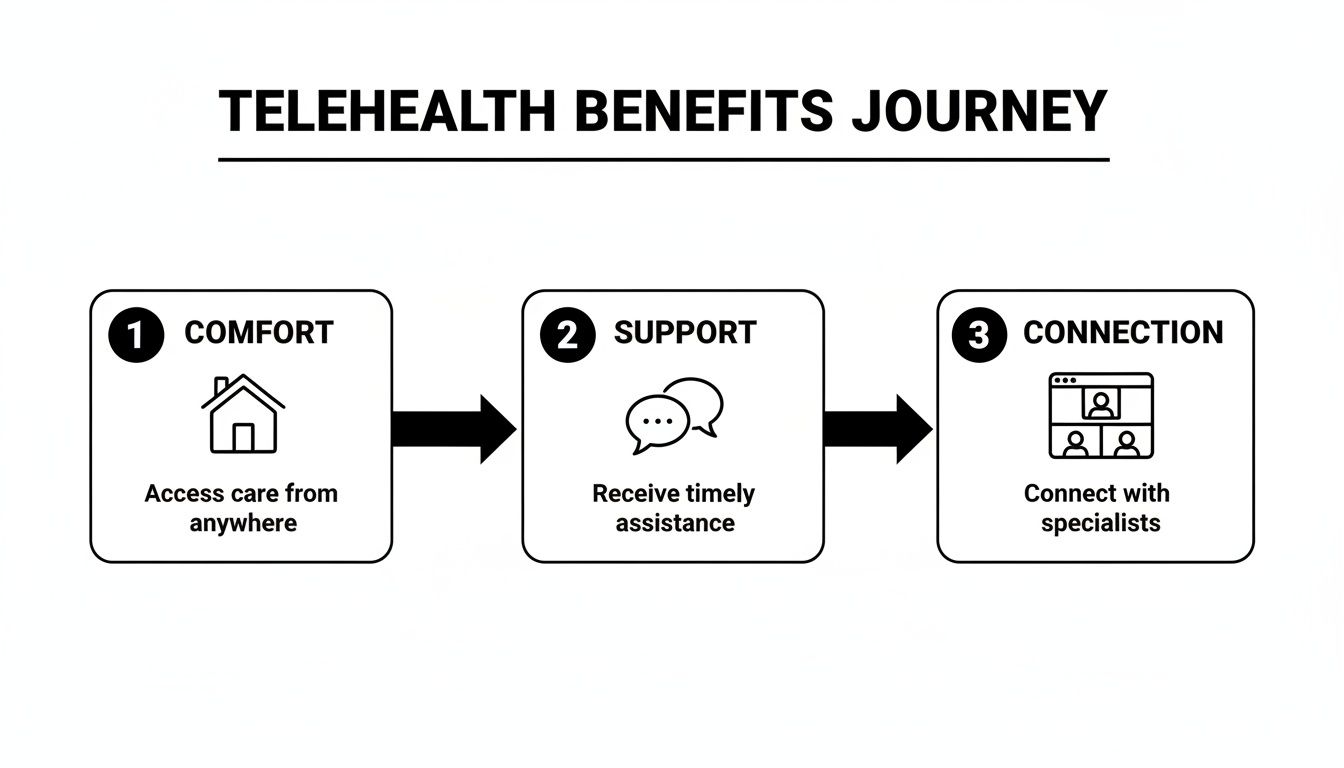
A Look at Our Virtual Services
Once you’re set up, you’ll have an added layer of compassionate care. These virtual services complement the essential in-person visits from our Registered Nurses and Hospice Aides. It's a powerful way we use telehealth in hospice and palliative care.
Our virtual support includes several key services:
- Routine "Tuck-In" Calls: These are brief video check-ins from a nurse to see how your loved one is feeling. They provide regular reassurance between our scheduled home visits.
- Video Consultations for Adjustments: If a new symptom appears, a quick video call with a Nurse Practitioner can provide a timely assessment. This allows us to make immediate changes to the care plan.
- Simple Symptom Tracking: We also offer easy-to-use digital tools for tracking things like pain. This gives our clinical team real-time data to better manage your loved one’s comfort.
Central Coast VNA & Hospice has been a pillar of this community for over 74 years. Adopting telehealth is another way we fulfill our nonprofit mission. You can learn more about our technology by exploring our user-friendly VNA&CS tablets.
Keeping Long-Distance Families Connected
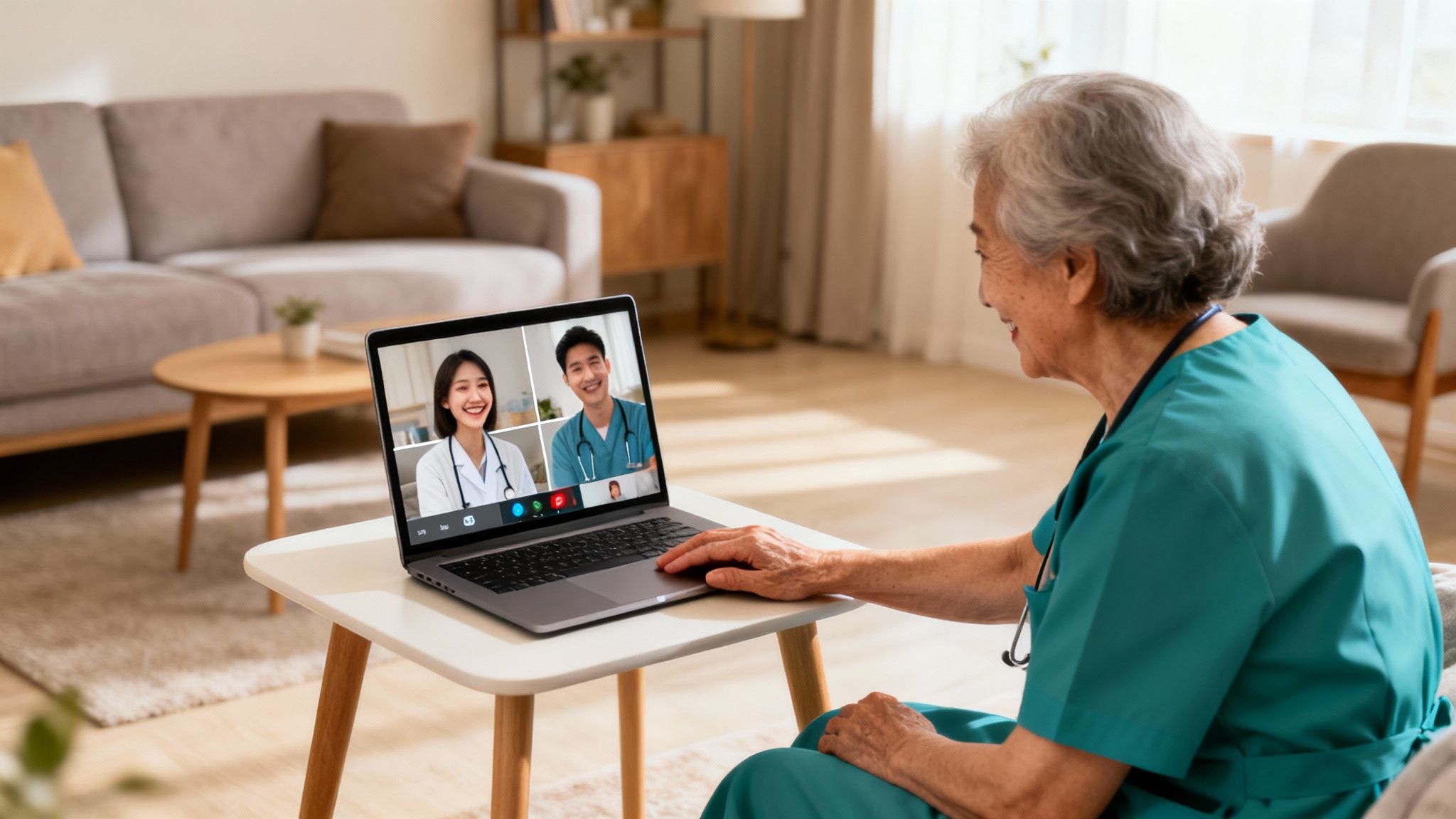
When a loved one is seriously ill, it's hard not to be there in person. For adult children living outside of Monterey County or Santa Cruz County, that distance can cause stress. Telehealth is a bridge across that gap, turning long-distance relatives into active members of the care team.
Our approach uses technology to make sure families feel connected and heard. It helps lift the emotional weight that comes with managing care from afar.
Bridging the Miles with Virtual Presence
Imagine your mother is receiving palliative care in her Salinas home, but you live hundreds of miles away. Telehealth lets you join a video conference with her and her Central Coast VNA & Hospice Registered Nurse.
You get to see her face and hear the nurse’s insights firsthand. This face-to-face connection brings a level of clarity and reassurance that a simple phone call can’t match.
Staying Informed with Secure Updates
Telehealth also offers other ways to stay connected without interrupting your loved one's day. We use secure messaging platforms and family portals to send quick notes. This might be an update about a medication change or a short message to let you know your parent had a comfortable day.
These small, consistent updates provide immense peace of mind. They keep you in the loop and reduce the anxiety of the unknown.
A Real-Life Scenario in Action
Here’s a common situation:
- The Patient: An 82-year-old man in Hollister is on our hospice service.
- The Family: His son lives in another state, and his daughter lives an hour away with a demanding job.
- The Solution: The family joins a weekly video call with our Medical Social Worker to discuss emotional support. Between calls, the son uses a secure portal to ask non-urgent questions, and the daughter gets quick text updates.
This integrated system keeps everyone on the same page. It supports collaboration and strengthens family bonds during a tough time.
We know that navigating elderly care from a distance is a challenge. Sometimes, families also want to show support through symbolic gestures. Resources like A Thoughtful Guide to Choosing Flowers for a Funeral can be helpful.
At Central Coast VNA & Hospice, our mission has always been to care for the whole family. By using technology to bring loved ones closer, we extend our compassionate care beyond the physical walls of a home.
Knowing When Virtual and Hands-On Care are Needed
It’s important to see telehealth as a tool that adds to, but never replaces, hands-on clinical care. While virtual visits offer flexibility, they work hand-in-hand with the in-person expertise of our local team. This balanced approach is at the heart of our 74+ years of service.
Our team, including your Registered Nurse and Hospice Aide, carefully decides when a face-to-face visit is best. Certain needs will always be met in person to ensure your loved one’s safety, comfort, and dignity.
When In-Person Care Is Essential
A video call is perfect for a quick check-in, but some situations require a physical presence. Our deep local roots in Monterey County, San Benito County, and Santa Cruz County make a difference. Our clinicians are your neighbors, ready to provide direct, hands-on support.
Here are examples of care that will always be provided in person:
- Hands-On Wound Care: A skilled clinician needs to be physically present to clean, dress, and monitor wounds properly.
- Assistance with Personal Hygiene: Our compassionate Hospice Aides provide essential help with bathing and dressing to preserve comfort and dignity.
- Complex Symptom Assessments: Evaluating complex symptoms often requires a physical examination by one of our Registered Nurses.
- Support During a Crisis: Having a Chaplain physically present during intense emotional or spiritual moments offers support that technology cannot replicate.
This hybrid model blends the efficiency of virtual check-ins with the irreplaceable value of human touch.
A Proven Approach to Better Outcomes
Bringing telehealth into palliative care isn't just about convenience. It leads to real improvements for patients and families. Studies have shown this blended approach can lead to fewer hospitalizations and lower psychological distress.
Globally, telehealth is an essential tool for filling critical gaps in care. You can read more about these telehealth findings in a comprehensive review.
This is especially true for families in the rural parts of the Central Coast. For them, virtual visits can mean less travel and reduced risk of infection. At Central Coast VNA & Hospice, our dedicated local team is available 24/7 for any urgent needs.
Frequently Asked Questions About Telehealth in Hospice Care
1. Is telehealth secure and private for hospice patients?
Yes. We use secure, HIPAA-compliant platforms for all virtual communications. Your loved one's personal health information is always encrypted and protected, ensuring every conversation remains confidential.
2. What if my parent isn’t comfortable with technology?
We understand this concern. Our approach is built around simplicity and support. If needed, we provide a pre-configured tablet and a team member will visit to walk your loved one through their first call.
3. Does using telehealth mean we’ll see nurses less often?
Not at all. Telehealth adds more support; it doesn't replace it. Your loved one will continue to receive all necessary in-person visits from our Registered Nurses and Hospice Aides for hands-on care.
4. Can family from different locations join a call?
Yes, this is one of the greatest benefits. We can schedule virtual family meetings that allow relatives from anywhere to join a single video call with your loved one and our clinical team.
5. How do I know if telehealth is a good option for my family?
The best way to know is to have a conversation with our team. We will work with you to develop a personalized care plan that blends in-person visits with virtual support, based on what will best enhance your loved one’s comfort and quality of life.
At Central Coast VNA & Hospice, we are dedicated to providing compassionate care that supports the whole family. If you're supporting a loved one on the Central Coast, our team can explain how telehealth works alongside our essential hands-on care. Contact us today to explore what’s possible—virtual, in-person, or both. Learn more at https://ccvna.com.