
Feeling stretched thin while caring for an aging parent is an incredibly common experience. Acknowledging you need support is the first and most important step.
You're not just looking for buzzwords; you're asking, "What do I do next?" This guide provides clear, practical steps to find the right help.
Recognizing When It Is Time to Ask for Help
Caring for an aging loved one often starts small. It might be helping with groceries or offering rides to appointments.
Over time, these tasks can grow until you're managing medications and worrying about safety. You might feel overwhelmed and isolated, unsure of what to do.

If this sounds familiar, you are not alone. This guide will walk you through building a support system so you no longer have to do everything yourself.
The Growing Need for Support
Nearly half of adults expect to care for an aging relative at some point. Many find themselves overwhelmed when insurance-covered services don't meet the full need.
The number of family caregivers for older adults has grown significantly. Learn more about the trends in family care for older Americans. This shows the pressure families face today.
Professional in-home support isn't a luxury. It's often a necessity for maintaining both your parent's well-being and your own.
Moving Past Common Missteps
A common misstep is waiting for a crisis to ask for help. Families often assume they must piece together care on their own.
Many don't know what services can come to the home beyond basic nursing. The key is to be proactive and plan ahead.
Planning can reduce burnout, prevent accidents, and improve your parent’s comfort. It empowers you to make thoughtful decisions instead of reacting to emergencies.
Look into full-spectrum services that combine skilled nursing, therapy, and palliative support. As a nonprofit serving the Central Coast for over 74 years, Central Coast VNA & Hospice offers this coordinated approach.
Our services bring expertise right to your parent's home in Monterey County, San Benito County, Santa Cruz County, and South Santa Clara County:
- Skilled Nursing: A Registered Nurse helps manage complex medical needs.
- Therapies: Physical, occupational, and speech therapists improve strength and safety.
- Palliative Consults: We help manage symptoms and stress from serious illness.
- Social Work Support: Our team connects you with resources and provides emotional support.
If you see changes in your loved one's health, it helps to know what to look for. You can learn more about the 5 warning signs that elderly parents need home health care.
Your Quick Guide to Getting Started
Taking the first step can feel daunting. This table breaks down the immediate actions you can take.
| Action Item | Why It Matters | Real-World Example |
|---|---|---|
| Have an open conversation. | This builds trust and ensures your parent feels involved in decisions. | "Mom, I've noticed you're having a harder time with the stairs. I want to talk about how we can make things easier for you." |
| Assess daily needs. | You can't find the right help if you don't know what you're solving for. | Does Dad need help with meals? Medication reminders? Bathing? Make a list of what he struggles with daily. |
| Contact a local expert. | A professional can explain options, navigate insurance, and save you guesswork. | Call a trusted local agency like CCVNA. A quick call can clarify if home health or another service is the right fit. |
These simple actions move you from worry to proactive planning.
Creating a Clear Picture of Your Parent's Needs
Moving from general concern to an action plan can feel overwhelming. The first step is to get a realistic look at your parent's day-to-day life.
This isn't about being critical. It’s about creating a map of where support is needed most.
This clarity helps you talk to doctors and find services that will make a difference.
A Practical Checklist for Assessing Needs
Think through a typical day for your loved one. Being specific and honest here will guide your decisions.
This assessment helps you figure out if you need a Registered Nurse for medical tasks or a Hospice Aide for personal support.
Here are four key areas to evaluate:
- Medical Tasks: Is your parent keeping up with medications correctly? Can they manage multiple doctor's appointments?
- Personal Care: Does your loved one need help with daily routines like bathing or dressing? This is often where hands-on support becomes essential.
- Household Responsibilities: Who is handling groceries and cooking? Is the house clean? These chores are important for nutrition and safety.
- Safety and Mobility: Can your parent move around their home without risk of falling?
A thorough assessment turns a broad concern into an actionable problem. It gives you something concrete to work with.
This detailed picture is your most powerful tool. It lets you have productive conversations with your parent’s doctor and providers like our team at Central Coast VNA & Hospice.
From Observation to Action
Once you have a list of challenges, you can match them to the right solutions. For medication worries, skilled nursing visits can ensure proper management.
Our guide on effective medication management for the elderly offers more details.
If mobility is the main issue, in-home Physical Therapy can improve strength and reduce fall risk. A Medical Social Worker can connect you with local programs for meal prep and other needs.
You don't have to piece this together on your own. A Registered Nurse from Central Coast VNA & Hospice can perform an in-home assessment and build a professional care plan.
This plan can include services tailored to every need you identified. This proactive approach enhances your parent's comfort and safety at home in communities like Salinas or Santa Cruz.
Understanding Your In-Home Care Options
Once you know your parent's needs, the next step is finding the right professional help. Many families feel lost, thinking their only option is basic nursing care.
There is a whole spectrum of expert support that can be delivered at home. Getting familiar with these services is key.
For families on the Central Coast, Central Coast VNA & Hospice provides a full Continuum of Care. This ensures consistent, coordinated support through home health, palliative care, and hospice.
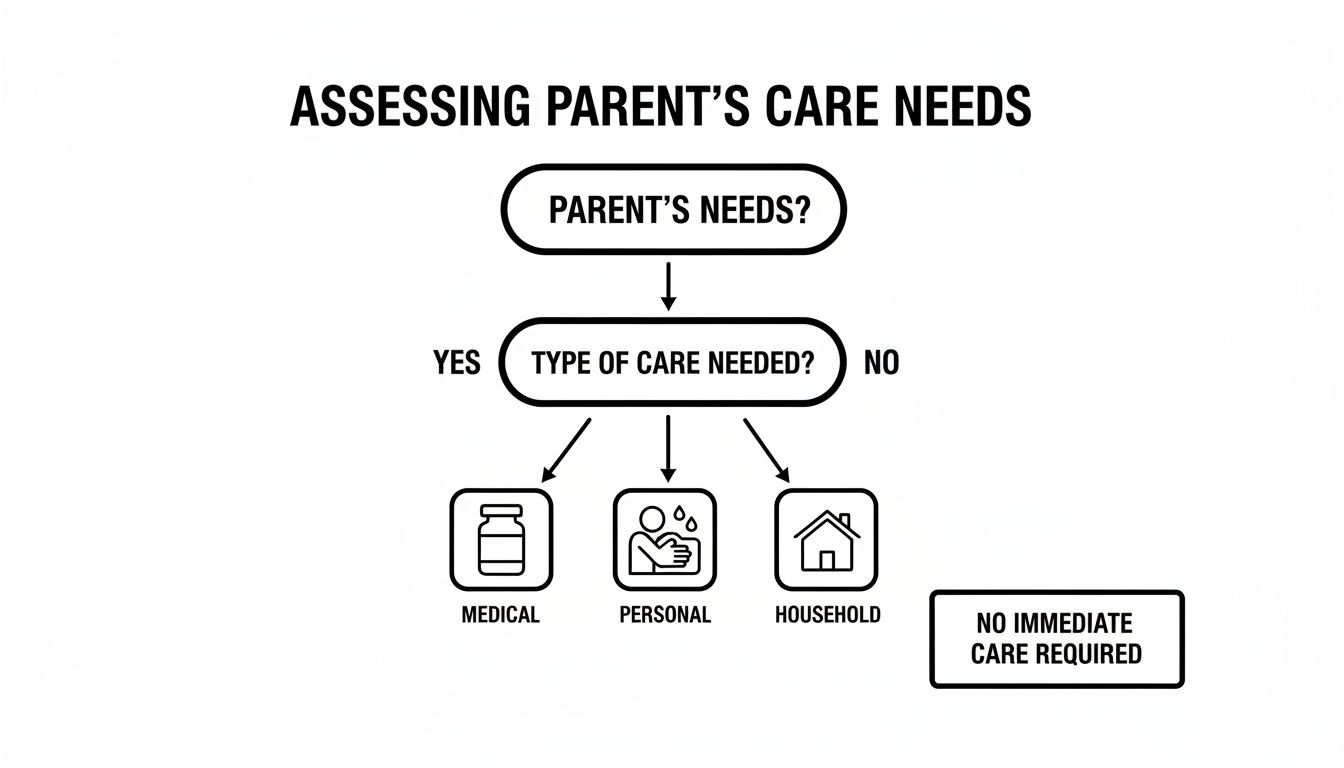
Identifying a specific challenge helps narrow down the kind of professional support needed.
Home Health Care for Recovery and Rehabilitation
Home Health Care is skilled, short-term medical support prescribed by a doctor. It helps patients recover after an illness, injury, or surgery.
This care is for a parent recently discharged from the hospital or managing a new condition. For example, a Physical Therapist can help regain strength after a hip replacement.
A Registered Nurse might visit to change a dressing or manage IV medications.
The main goals are to:
- Restore independence through therapy and skilled nursing.
- Prevent a return trip to the hospital.
- Empower patients and families with knowledge.
Palliative Care for Comfort and Quality of Life
A common misconception is that Palliative Care is only for the end of life. It's specialized medical support focused on relief from symptoms and stress of a serious illness.
It can be provided at any age and stage, alongside curative treatments. For example, a palliative care team can help a father manage chemotherapy side effects.
The goal isn't to replace treatment but to improve his quality of life. Palliative care adds an extra layer of support for the whole person.
Hospice Care for Peace and Dignity
When a doctor determines an illness is no longer curable, Hospice Care becomes an option. The focus shifts from curing the disease to providing comfort and dignity.
This is comprehensive support from a dedicated team, including a physician, Registered Nurse, and Hospice Aide. They work together to manage symptoms and offer spiritual and emotional support.
Hospice care at home means a parent can stay in a familiar place, surrounded by loved ones.
Comparing Home Health, Palliative, and Hospice Care
This table breaks down the key differences between these core in-home services.
| Service Type | Primary Goal | Ideal Candidate | Medicare Coverage |
|---|---|---|---|
| Home Health | Recover from illness, injury, or surgery. Restore independence. | Someone needing short-term, skilled care post-hospitalization. | Typically covered for eligible patients who are homebound. |
| Palliative Care | Relieve symptoms and stress of a serious illness; improve quality of life. | Anyone with a serious illness, still receiving curative treatment. | Often covered under Medicare Part B and private insurance. |
| Hospice Care | Provide comfort, dignity, and peace at the end of life. | Someone with a terminal illness and a life expectancy of 6 months or less. | Fully covered under the Medicare Hospice Benefit. |
Each service plays a unique role depending on your parent's health journey. According to the National Hospice and Palliative Care Organization (NHPCO), over 1.72 million Medicare beneficiaries received hospice services in 2020 (NHPCO, 2021).
At Central Coast VNA & Hospice, our mission for over 74 years has been to provide this continuum of support. We help families in Monterey, Salinas, and Hollister find the right in-home care for seniors.
Navigating Insurance to Pay for In-Home Care
The fear of cost often stops families from seeking help. The good news is that expert in-home medical care is often accessible.
Most in-home medical services are covered through Medicare, Medi-Cal, and private insurance. You don’t have to become an expert overnight.
Organizations like Central Coast VNA & Hospice help families navigate these financial questions daily.
How Medicare Covers In-Home Medical Care
For many older adults, Medicare is the first place to turn for home health coverage. There are specific criteria that must be met.
To qualify for Medicare-covered home health care, a patient must:
- Be under the care of a doctor with a plan of care.
- Require intermittent skilled services, like nursing or therapy.
- Be certified by a doctor as "homebound."
"Homebound" doesn't mean your parent has to be bedridden. They can still go to medical appointments and qualify.
You can learn more about the specifics of Medicare home care eligibility on our site. A common misconception is that families must figure out insurance details alone.
Trusted providers like CCVNA will verify benefits and handle the insurance side for you.
The Role of Medi-Cal and Private Insurance
Medicare doesn't cover everything. This is where other plans like Medi-Cal and private insurance are essential.
Medi-Cal (California's Medicaid program) provides critical support beyond Medicare. It is a lifeline for many families facing financial hardship.
Private insurance plans can also cover home health, palliative, and hospice services. Long-term care insurance is specifically designed for these needs.
Planning ahead by understanding the real long term care insurance cost is critical.
You Don't Have to Navigate This Alone
Coordinating benefits can feel like a full-time job. Choosing a local, mission-driven provider makes a difference.
For over 74 years, Central Coast VNA & Hospice has helped families in our region secure the care they need. Our team handles the complexities for you.
We work directly with doctors and insurance providers to confirm eligibility. Our goal is to make the process smooth and stress-free.
How to Arrange Services and What to Expect
You've figured out what your parent needs and the types of care available. The next question is: how do you get started?
Getting professional help at home is often more straightforward than you might realize.
For skilled services like Home Health, the journey begins with your parent's doctor. A physician's referral is the first step, confirming medical necessity.
Making the First Call
With a doctor's referral, your next move is to contact a trusted local provider. When you call Central Coast VNA & Hospice at 831-372-6668, you're building a real support system.
That first conversation is simple and reassuring. Our care managers will ask about your parent’s situation, their doctor, and insurance details.
This is the starting point for our team to begin verifying benefits and scheduling the in-home assessment.
The In-Home Assessment and Care Plan
Within a day or two, a Registered Nurse will visit your parent’s home. This is a comprehensive evaluation of your parent’s health and living environment.
It’s a collaborative process where the nurse listens to your concerns and answers questions.
This in-home visit is foundational. It’s where a personalized plan of care is created. This plan outlines goals, services needed, and visit frequency.
The plan is a living document that we adjust as your parent's needs change.
Meeting Your Interdisciplinary Care Team
One of the greatest benefits of working with an agency like Central Coast VNA & Hospice is the team. You get a whole team of specialists who coordinate holistic care.
Each member brings a unique skill set:
- Registered Nurse (RN): The clinical leader who manages the care plan and communicates with the doctor.
- Medical Social Worker (MSW): Provides emotional and practical support, connecting you to community resources.
- Hospice Aide: Assists with personal care like bathing and dressing, preserving dignity.
- Chaplain: Offers non-denominational spiritual support, respecting all beliefs.
From the first call, you and your parent are guided by compassionate experts. Our team helps you build a plan that works, right at home.
Finding Support for Yourself Before Burnout Sets In
You can only give your best care when you're also taking care of yourself. The day-to-day reality of caregiving is emotionally and physically draining.
Pushing yourself to the limit leads to burnout. Recognizing you need a hand is a smart strategy for the long haul.

Many families feel overwhelmed, especially when insurance-covered services don't cover everything. This is where planning ahead makes a difference.
Building Your Own Support System
Access to education and emotional support is a powerful tool. This help is often woven into professional home-based services.
A Medical Social Worker from Central Coast VNA & Hospice is there for the whole family. They provide counseling and connect you with community resources.
Asking for help is the most powerful thing you can do for your parent and yourself. It prevents burnout and ensures consistent care.
Exploring options like respite care for family caregivers can give you a needed break. It's a critical piece of a sustainable care plan.
If you're in Monterey, Hollister, Santa Cruz, or Salinas, you don't have to figure this out alone. Central Coast VNA & Hospice has spent over 74 years helping families like yours.
Call 831-372-6668 or visit ccvna.com to learn more about how our team can help you build a plan that works—before burnout sets in.
Frequently Asked Questions About In-Home Care
Exploring care options for a loved one brings up many questions. Below are answers to some of the most common things families ask.
How do I start the conversation about needing help with my parent?
Start with love and concern. Frame it as a way to support their independence, not take it away. Say something like, "I want to make sure you're safe and comfortable here at home. Let's talk about some options to make things easier."
Does my parent have to be completely bedridden to get home health care?
Not at all. Under Medicare, a person is 'homebound' if it takes a major effort to leave the house. They can still go to doctor’s appointments or infrequent outings and qualify for skilled nursing and therapy at home.
Can my parent receive palliative care while still trying to cure their illness?
Yes, absolutely. Palliative care is an extra layer of support alongside curative treatments. Its purpose is to help manage symptoms and improve day-to-day quality of life during a serious illness.
What if my parent refuses to accept help from strangers?
This is a common concern. Start small, perhaps with just one type of service. Often, when a parent meets our compassionate clinicians, like a friendly Registered Nurse or therapist, they become much more comfortable with the idea.
How quickly can we start getting care from Central Coast VNA & Hospice?
Once we receive a referral from your parent’s doctor, our team moves quickly. We can typically schedule the first in-home assessment within 24 to 48 hours to get a personalized care plan started.
Trying to figure out in-home care can feel overwhelming, but you don’t have to do it alone. The compassionate team at Central Coast VNA & Hospice has been the trusted guide for families in our community for over 74 years.
Give us a call at 831-372-6668 or visit us online to learn more about how we can help.