
Managing medications for an elderly loved one can feel like a full-time job. It is often confusing, stressful, and loaded with worry. Getting it right is one of the most important things you can do for their health. Good medication management for elderly loved ones prevents dangerous errors and harmful drug interactions. It also makes sure they get the best results from their treatment.
This process involves organizing prescriptions and understanding dosages. It also means keeping an open line of communication with their doctors.
Why Safe Medication Management Is Essential
Many older adults juggle multiple prescriptions for chronic conditions. This is a normal part of daily life. As we get older, our bodies change how they process medications. This makes careful management more critical than ever.
Without a solid system in place, the risk of medication mistakes goes up. These errors can lead to serious health issues or avoidable trips to the hospital. The goal is to create a routine that is safe, simple, and consistent. This helps them stay independent and feel their best.
Understanding the Risks of Polypharmacy
One of the biggest hurdles in medication management for the elderly is polypharmacy. This is a clinical term for regularly taking five or more medications at the same time. While each drug might be necessary, taking them together increases the risk of side effects.
How common is it? One study found that about 26.3% of older adults are dealing with polypharmacy. Getting a handle on polypharmacy is the first step to avoiding its dangers. You can read the full research about polypharmacy in elderly populations for more details.
A well-organized medication plan is a powerful tool for helping seniors maintain their health. It provides clarity for the individual, peace of mind for the family, and vital information for the healthcare team.
Getting professional support can make all the difference. At Central Coast VNA & Hospice, our home health and palliative care teams help families manage these complex situations. As a mission-driven nonprofit serving Monterey County and surrounding areas for over 74 years, we focus on providing compassionate, expert care. This guidance is key in helping many elderly parents age in place safely.
Build a Comprehensive Medication Master List
One of the best things you can do is create a single, comprehensive medication list. This document is for everything an older adult takes. This includes every pill, vitamin, herbal supplement, and over-the-counter remedy. Think of it as the foundational tool for their safety.
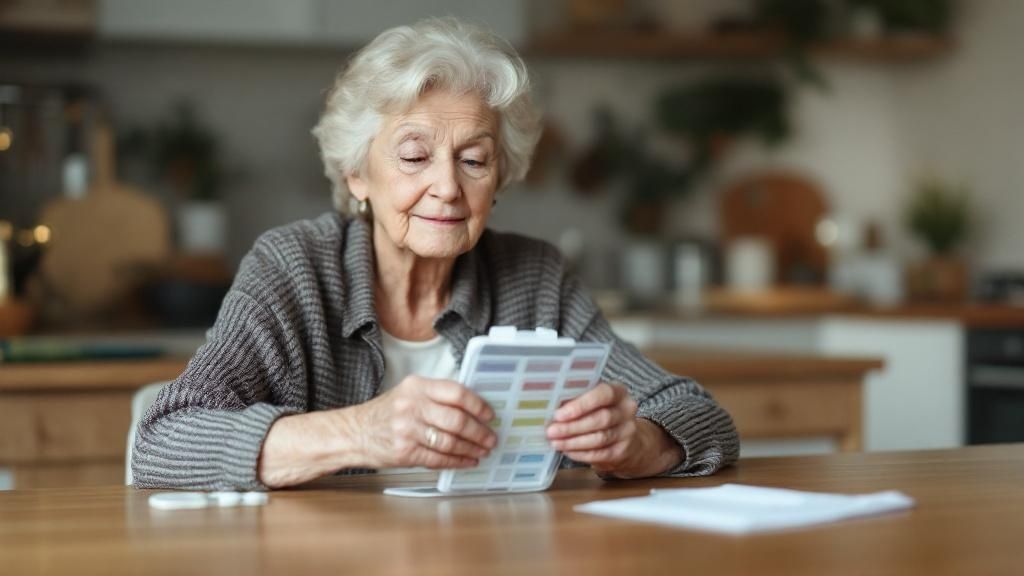
This simple document makes a world of difference. Imagine a Central Coast VNA & Hospice Registered Nurse is visiting your home in San Benito County. Handing them a complete list lets them get to work immediately. It is also critical in an emergency.
What Goes on the List?
First, gather up every single bottle and package. Don't forget things that might not seem like "medicine." This includes daily vitamins, fish oil capsules, or occasional ibuprofen. Even harmless items can interact with prescription drugs.
For every item, log the following details:
- Medication Name & Strength: Write down the brand name, generic name, and strength (e.g., Lisinopril 10 mg).
- Dosage & Frequency: Be precise. "One tablet by mouth, twice daily" is clearer than "take two a day."
- Purpose: Note why they are taking it, such as "For high blood pressure."
- Prescribing Doctor: Jot down the doctor’s name and phone number.
- Special Instructions: Include notes like "Take with a full meal" or "Do not take with dairy products."
This detailed approach means everyone involved is working from the same playbook.
A well-maintained medication list is a vital communication tool. It helps prevent dangerous errors, coordinates care between doctors, and empowers families.
This is a key part of effectively streamlining administrative processes in caregiving. Your goal is to make the master list clear, easy to update, and simple to share.
Here is a straightforward template you can use to build your own master list. It captures all the essential details in one place.
Sample Medication Master List Template
| Medication Name & Strength | Dosage & Frequency | Purpose | Prescribing Doctor | Notes (e.g., take with food) |
|---|---|---|---|---|
| e.g., Lipitor 20 mg | 1 tablet at bedtime | High cholesterol | Dr. Smith | Avoid grapefruit |
| e.g., Metformin 500 mg | 1 tablet with breakfast & dinner | Type 2 Diabetes | Dr. Jones | Take with food |
| e.g., Vitamin D3 2000 IU | 1 capsule daily | Bone health | Over-the-Counter | Take with a meal containing fat |
Filling this out gives you a clear overview of your loved one's entire medication regimen.
Keep It Current, Keep It Close
A medication list is only useful if it’s accurate and easy to find. Make a habit of reviewing and updating it after every doctor's appointment. Also update it any time a change is made to a medication.
Then, put copies where they can be easily found. We recommend keeping one on the refrigerator and a copy in a wallet or purse. A digital version on a smartphone is also a great idea.
Establish a Simple and Consistent Daily Routine
Once you have a complete medication list, it's time to build a simple, consistent daily routine. A predictable schedule is your best defense against missed doses or mix-ups. This transforms medication management from a source of stress into a manageable part of the day.
To make new behaviors stick, it helps to understand the basics of building healthy habits. The trick is to link the new task to an existing one. For example, take pills with breakfast or right after brushing teeth at night. This makes the process feel more natural over time.
Create a Dedicated Medication Station
Having one spot for all medications can cut down on confusion and improve safety. Choose a location that is cool, dry, and out of direct sunlight. A spot on the kitchen counter or a shelf in a pantry usually works well.
The bathroom medicine cabinet is often too humid. This can damage certain medications, so it's best to avoid it.
Make sure the area is well-lit so labels are easy to read. This central hub should have everything needed for the daily routine:
- The weekly pill organizer, filled and ready.
- A glass of water for swallowing pills.
- Your master medication list for a quick check.
- A small notebook to log doses or write questions for the doctor.
Use Practical Tools for Consistency
Simple tools can have a huge impact on keeping the routine on track. A weekly pill organizer is an essential item. Take the time to fill it once a week, so all doses for the upcoming days are sorted.
Forgetting doses is a common issue. Setting alarms on a smartphone, a clock, or a medication reminder device can help. It provides a reliable nudge when it's time for a dose.
A Central Coast VNA & Hospice palliative care professional helped a family in South Santa Clara County set up labeled alarms on their father’s phone. It was a simple change, but it improved his medication adherence. This gave the entire family peace of mind.
This simple graphic breaks down the steps to a successful medication routine.
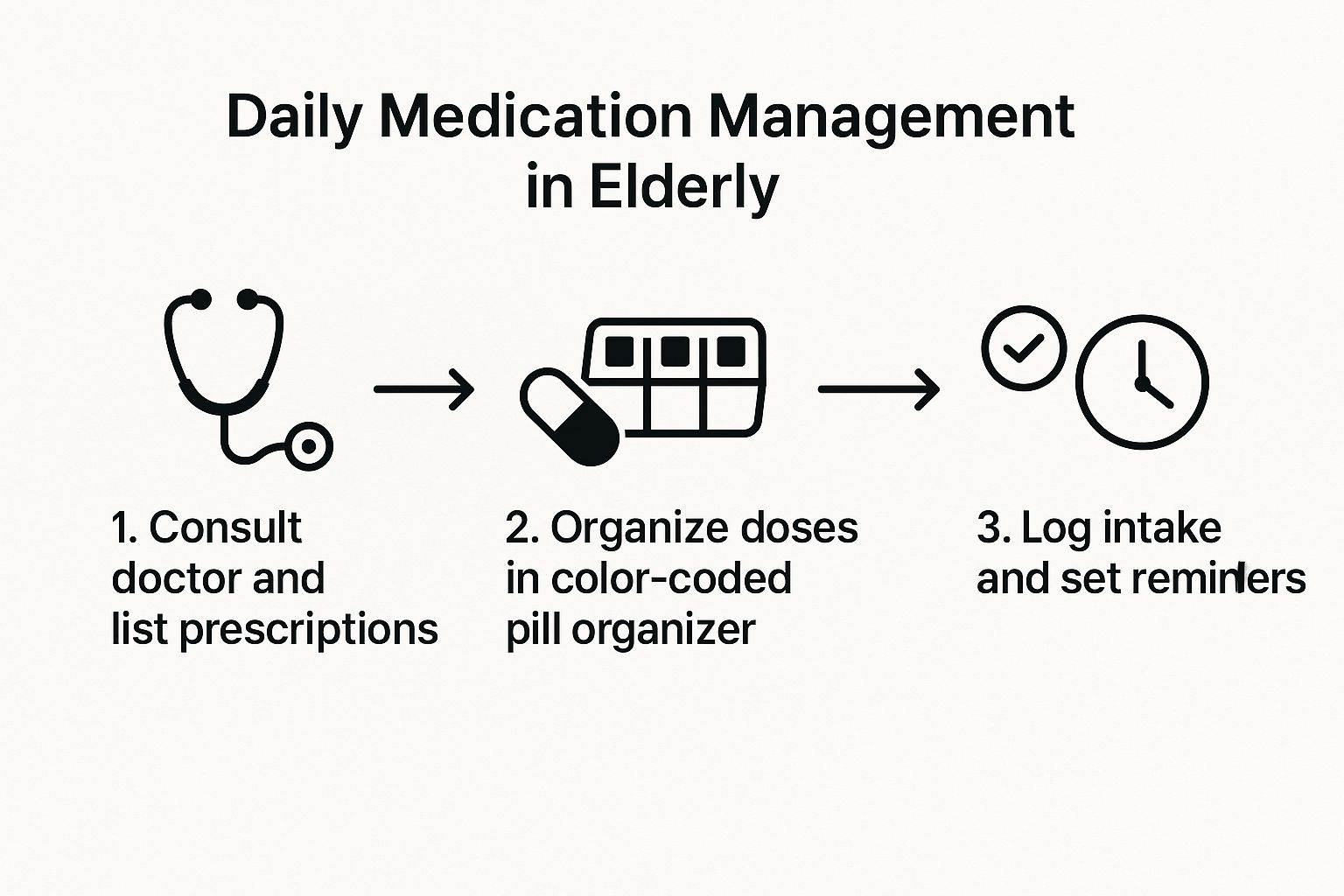
As you can see, it’s a straightforward flow. Consult with professionals, get organized, and track everything. This process forms the backbone of a safe and effective routine.
Consistency is more important than complexity. A simple, repeatable routine is far more effective than an elaborate system that is hard to maintain.
This structured approach is something our teams emphasize. The reason home health care services make a difference is because our professionals are skilled at setting up these sustainable routines. They empower families to manage care confidently.
Identify and Prevent Common Medication Problems
Being proactive is the heart of keeping an older loved one safe. This goes beyond organizing pills in a container. It’s about having a keen eye for potential issues before they cause harm. A huge part of that is knowing what common problems to look for.

One of the biggest risks is Potentially Inappropriate Medications, or PIMs. These are prescriptions where the risks might outweigh the benefits for older adults. As we age, our bodies process drugs differently. A medication that was fine years ago could now trigger side effects like confusion or dizziness.
This is a widespread issue. A 2022 study revealed that the global use of PIMs among elderly outpatients is 36.7%. Benzodiazepines, often prescribed for sleep, are a common example. They are known for increasing the risk of falls and cognitive problems. You can read the full study to learn more about medication use in older adults.
Watching for New Side Effects
It is critical to pay close attention anytime a new medication is started. Many families think new symptoms are just from "getting older." In reality, they could be a direct side effect of a prescription.
Keep an eye out for any new changes, such as:
- Sudden dizziness or loss of balance, which is a major fall risk.
- New or worsening confusion or memory fog that could be mistaken for dementia.
- Unexplained drowsiness or fatigue that was not present before.
- Changes in appetite or digestive issues like constipation or nausea.
Catching these shifts early is essential. Sometimes, these symptoms are the first of the 5 warning signs that elderly parents need home health care. This signals that it might be time for more professional support.
Regular medication reviews are an essential safety check. Think of it as a periodic tune-up for your loved one's health, ensuring every prescription is still safe and necessary.
The Importance of Regular Medication Reviews
A proactive approach requires regular check-ins with a doctor or pharmacist. An annual medication review should be the minimum. A review is also needed any time a new drug is prescribed or after a hospital stay. This is your chance to ask questions.
At Central Coast VNA & Hospice, our skilled nurses are trained to spot these exact risks. Serving families across Monterey County, San Benito County, Santa Cruz County, and South Santa Clara County, our team works with physicians. We help craft safer, more effective medication plans as part of our continuum of care.
Navigate Financial Hurdles to Medication Adherence
Good medication management goes beyond remembering to take pills. For many older adults, the biggest challenge is affording their prescriptions.
High medication costs create a serious barrier to good health. Seniors are sometimes forced to choose between prescriptions and other expenses like food. This financial stress takes a real toll.
Some will try to stretch a prescription by skipping doses or cutting pills in half. While it might seem practical, it can undermine treatment. As a nonprofit, our teams at Central Coast VNA & Hospice often help families find local resources.
Exploring Cost-Saving Strategies
The best first step is a conversation with your loved one’s doctor and pharmacist. They are your greatest allies in finding affordable solutions. Don't be hesitant to bring up cost concerns.
Here are a few things you can discuss with their healthcare provider:
- Generic Alternatives: Always ask if a generic version is available. They contain the same active ingredients as brand-name drugs but cost less.
- Therapeutic Alternatives: Sometimes, another medication in the same drug class can work just as well but is more affordable.
- Patient Assistance Programs: Many drug companies offer programs that help patients get medications for free or at a reduced cost.
This isn't a small problem. Recent CDC data shows that from 2021 to 2022, cost was a real issue for seniors. 2.2% took less medication than prescribed, while 2.7% delayed filling prescriptions. You can learn more about medication cost challenges from the CDC.
Ensuring a loved one can afford their medication is a critical part of their care plan. No one should have to choose between their health and their financial stability.
Understanding Insurance and Local Support
Insurance plans like Medicare Part D can be confusing, but understanding the coverage is vital. Families should review their loved one’s plan every year during open enrollment.
Formularies change, and a plan that was great last year might not be the best fit now. Switching to a different plan can sometimes lead to significant savings.
For families here in Monterey County, San Benito County, Santa Cruz County, and South Santa Clara County, local resources may be available. Our teams at CCVNA know this community well and can point you toward helpful programs. Understanding broader financial planning, like how to pay for hospice, can also provide a clearer view of available support.
How Professional Home Health Support Can Make a Difference
Managing medications can feel like a heavy burden, but you do not have to carry it alone. Professional home health support offers families peace of mind. It brings clinical expertise into the home, ensuring safety and simplifying complex routines.
For families across Monterey, San Benito, Santa Cruz, and South Santa Clara counties, this support is a game-changer. It transforms daily stress into a well-managed part of your loved one’s care.

Expert Guidance from Skilled Clinicians
Central Coast VNA & Hospice provides a full continuum of care—from home health to palliative and hospice care. We directly tackle the challenges of medication management for elderly individuals. Our mission-driven, nonprofit teams have served the Central Coast for over 74 years, building a legacy of trust and compassionate care.
Our professional support includes a few key services:
- Medication Setup: A Registered Nurse can visit the home to fill weekly pill organizers. This simple act ensures every dose is sorted and helps prevent errors.
- Family Education: Our clinicians take the time to explain what each medication is for. We also discuss potential side effects and how to respond if they occur.
- Physician Coordination: We act as a link between you, your loved one, and their doctor. We can communicate concerns, ask questions, and advocate for simpler regimens.
This hands-on assistance is invaluable. Having a professional team offer dedicated help with administering medication ensures everyone stays safe.
Having a skilled nurse oversee medication management provides a critical layer of safety. It empowers families with knowledge and offers reassurance that their loved one is receiving the best care at home.
Ultimately, getting professional support lifts a weight off family members. With our expertise, you can focus less on pill schedules and more on sharing quality time. You can learn more by exploring our services for in-home care for seniors.
Frequently Asked Questions About Managing Medications
Navigating medication management for an older loved one can be overwhelming. Families often have similar concerns. We've put together answers to some common questions below.
What is polypharmacy?
Polypharmacy means taking five or more medications every day. This number is a critical threshold. It is the point where the risk for harmful drug interactions and side effects starts to climb. A healthcare professional can review a medication list to see if the combination is safe and necessary.
How often should my loved one's medications be reviewed?
A complete medication review should happen at least once a year. However, you should not wait a full year if something changes. It is crucial to schedule a review anytime a new medication is prescribed or after a hospital stay. A Central Coast VNA & Hospice Registered Nurse can help coordinate these reviews with your doctor.
What can I do if my parent keeps forgetting to take their pills?
This is a very common problem. The best approach is to start simple. A weekly pill organizer and daily alarms on a phone or clock can make a big difference. If memory issues still cause missed doses, it might be time for extra support. Home health services can provide medication setup and reminders.
Are over-the-counter medicines safe to mix with prescriptions?
Not always. Many common over-the-counter products, vitamins, and herbal supplements can interfere with prescription drugs. These interactions can sometimes cause dangerous side effects. It is important to list everything your loved one takes and review it with their doctor or pharmacist.
Who can I contact for help with medication management at home?
You don't have to figure this out alone. Central Coast VNA & Hospice offers expert home health and palliative care services that include medication management. Our skilled nurses serve families across Monterey, San Benito, Santa Cruz, and South Santa Clara counties. We are a nonprofit, mission-driven organization with over 74 years of service to the community.
If you need expert support with medication management for elderly loved ones, the compassionate team at Central Coast VNA & Hospice is here to help. Contact us today to learn how our home health and palliative care services can bring safety and peace of mind to your family.