
Palliative home care is a special kind of medical support. It focuses on relieving the symptoms, pain, and stress of a serious illness right in your own home. It is not about giving up on treatment.
Think of it as an extra layer of support. Its goal is to improve the quality of life for both the patient and their family.
What Palliative Home Care Really Means
When you or a loved one has a serious illness, medical appointments can be overwhelming. Palliative care works alongside curative treatments to focus on your comfort. It answers the question, "How can we make today better?"
Imagine your doctors are working hard to fix the engine of a car. Palliative home care adds a "comfort crew." This crew improves the ride by making the journey as peaceful as possible.
This support comes from a team of experts. Central Coast VNA & Hospice, a trusted nonprofit with over 74 years of service, brings this compassionate care to you.
An Extra Layer of Support at Home
Many people think palliative care is the same as hospice. In reality, it can begin at any stage of a serious illness and last for years. It helps you manage symptoms so you can live more fully.
Palliative care helps people gain the strength to carry on with daily life. It improves their ability to tolerate medical treatments and helps them better understand their choices for care.
This means you can continue treatments like chemotherapy while getting expert help for pain or fatigue. The goal is to enhance your comfort and empower you. For a closer look, explore our guide to improving quality of life at home with palliative care.
Palliative Care at a Glance
This table breaks down what our palliative home care team does for you.
| Core Principle | What It Means for You and Your Family |
|---|---|
| Symptom Management | We work to relieve pain, shortness of breath, fatigue, nausea, and other symptoms. |
| Emotional & Spiritual Support | We address the emotional, social, and spiritual needs that come with a serious illness. |
| Coordinated Care | Our team talks with all your doctors to ensure everyone is on the same page. |
| Family-Centered Approach | We support the entire family, providing guidance and resources for your journey together. |
| Focus on Quality of Life | Our goal is to help you live as well as possible, for as long as possible. |
Palliative care is about adding life to your days, not just days to your life.
Your Local, Mission-Driven Provider
As a nonprofit, Central Coast VNA & Hospice is driven by our mission to serve the community. We are deeply rooted in the Central Coast and provide care across:
- Monterey County
- San Benito County
- Santa Cruz County
- South Santa Clara County
Our focus is to deliver caring support that respects your values. We bring comfort, dignity, and peace to every family we serve in the place you feel most comfortable—your home.
Who Benefits From Palliative Care at Home?
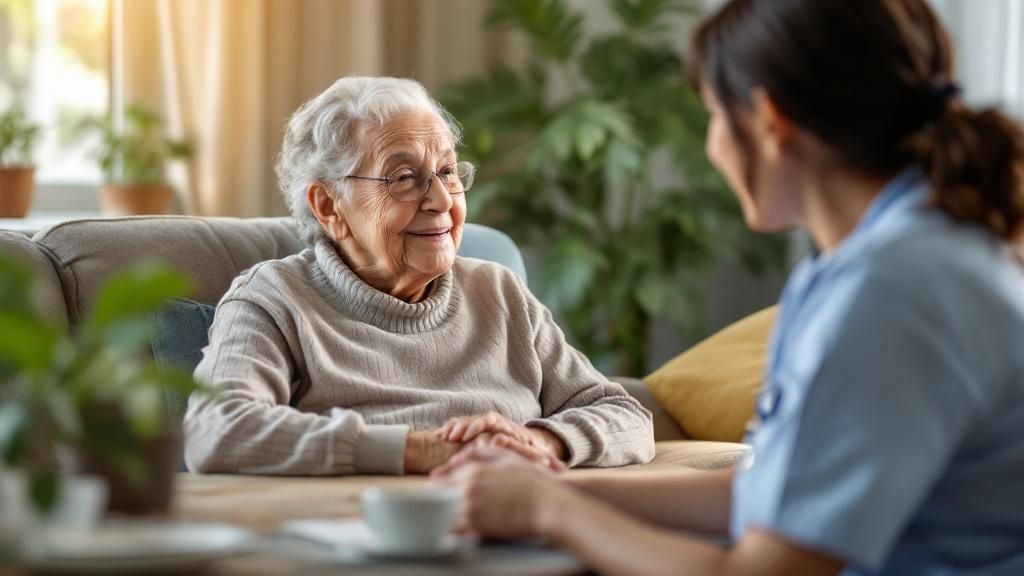
Palliative care at home helps people of any age living with a serious illness. Many think it is only for certain situations, but that is not the case.
Eligibility is based on a simple need: better symptom management and quality of life. This support helps people feel more in control of their health at home.
Real-Life Scenarios Where Palliative Care Makes a Difference
Let's look at real-life situations instead of medical terms. Palliative care makes each day more manageable when an illness takes over.
Think of a Monterey County resident getting chemotherapy. Their cancer team fights the disease, while our palliative team visits them at home. We help manage side effects like nausea, allowing them to rest and keep up their strength.
Or, imagine someone in San Benito County with heart failure. They might struggle with shortness of breath. Our Registered Nurses can help manage that symptom, helping them stay active at home.
Common Challenges We Help You Overcome
Palliative care is more than just pain management. Our teams are experts at supporting you through many physical and emotional symptoms.
Here are a few challenges we help people manage:
- Chronic Pain: We work with your doctor to find the right therapies to keep you comfortable.
- Shortness of Breath: We teach breathing techniques to help you feel less anxious.
- Constant Fatigue: We help find the cause of your fatigue and plan how to save energy for what matters.
- Emotional Distress: Our Medical Social Workers and Chaplains offer emotional and spiritual support.
By addressing these issues, we help reduce stressful emergency room visits. You can learn more by exploring our home health and hospice services.
Who Is Eligible for This Support?
Eligibility for palliative care is based on need, not life expectancy. If symptoms from a serious illness impact your daily life, you may be a candidate for our services.
Palliative care is appropriate at any age and at any stage in a serious illness and can be provided along with curative treatment. This specialized support focuses on providing relief from the symptoms and stress of the illness.
You can continue treatments meant to cure your illness while receiving this extra support. Central Coast VNA & Hospice serves individuals across Monterey, San Benito, Santa Cruz, and South Santa Clara Counties with conditions like:
- Cancer
- Heart Disease (like Congestive Heart Failure)
- Kidney or Liver Disease
- Lung Disease (like COPD)
- Neurological Conditions (like ALS or Parkinson's)
This is not a complete list. If you are struggling with any serious illness, our team is here to help you live more comfortably.
Meet Your Compassionate Palliative Care Team

When you start palliative home care, you are not alone. At Central Coast VNA & Hospice, our team of professionals works alongside you and your family.
This team model is the heart of effective palliative care. It ensures every part of your well-being is supported with expertise and compassion. As a local nonprofit, our mission is to bring this complete support to your home.
Your Core Support System
Your care team is a group of specialists who bring unique skills to your care. They work closely with each other and with your own doctor. This ensures your care is coordinated.
Here are the key members of your CCVNA palliative care team:
-
Registered Nurse (RN): Your RN is a specialist in managing complex symptoms like pain and fatigue. They are your main clinical contact and provide expert medical care.
-
Medical Social Worker (MSW): An MSW is a master of resources. They can connect you to community support, help with advance care planning, and offer counseling.
-
Chaplain: Spiritual comfort is a vital part of well-being. Our Chaplains provide a supportive presence, helping you explore feelings of fear, hope, and meaning.
How Your Team Works Together for You
Your care plan is a roadmap to make your journey as comfortable as possible. Each team member helps create that map. They hold regular meetings to talk about your progress and adjust the plan as your needs change.
For example, your Registered Nurse may notice a symptom is causing you anxiety. They will coordinate with the Medical Social Worker for emotional support. The Chaplain can also provide spiritual comfort to ease your mind.
This constant communication means nothing gets missed. It is a proactive way to provide care that helps prevent small issues from becoming big problems.
Your palliative care team acts as a single, unified support system. We partner with your existing doctors to add another layer of expert care, ensuring everyone is working toward the same goal—your comfort and quality of life.
Seamless Coordination with Your Doctor
Families often ask how a new care team will work with their primary doctor. At Central Coast VNA & Hospice, we see ourselves as partners in your care.
Our team keeps an open line of communication with your doctor. We give them regular updates and work together on your care plan. This ensures our palliative home care services complement your other treatments.
As a nonprofit with 74+ years of local service in Monterey, San Benito, Santa Cruz, and South Santa Clara counties, our only goal is your well-being.
How Palliative Care Improves Quality of Life

Improving quality of life is the main goal of palliative care. But what does that mean for you? It is about restoring comfort, dignity, and control while you navigate health challenges.
This focus on well-being makes a real difference. A specialized team comes to your home to ease your burdens and help you find more good days.
As a nonprofit serving the Central Coast for over 74 years, Central Coast VNA & Hospice is built on this patient-first philosophy. Our goal is to provide care that prioritizes your comfort.
Expert Pain and Symptom Management
Palliative care offers expert management of difficult symptoms. Chronic pain, nausea, or fatigue can make it hard to enjoy simple moments.
Our Registered Nurses are specialists in symptom control. They work with you and your doctor to find the right therapies to bring you relief at home. This often reduces the need for stressful emergency room visits.
Easing Emotional and Spiritual Distress
A serious illness affects more than just the body. It can bring a heavy emotional weight for patients and families.
Our team includes Medical Social Workers and Chaplains who provide a safe space to navigate these emotions.
- Medical Social Workers offer counseling and connect you with community resources.
- Chaplains provide non-denominational spiritual support to help you find peace.
This holistic support ensures your mental well-being is given the same attention as your physical health. Find more details on the benefits of palliative care to improve quality of life today.
Coordinated Care Reduces Confusion and Stress
Juggling multiple doctors and appointments can be confusing. Our palliative team acts as your central point of contact. This ensures everyone involved in your care is on the same page.
We maintain open communication with your primary doctor and specialists. This coordination means less stress for you and your family. It ensures your care plan is seamless and aligned with your goals.
The core of our service is to bring clarity and calm to a challenging time. By coordinating every aspect of your care, we reduce the burden on your family, allowing you to focus on what truly matters—spending quality time together.
To learn more about how efficient processes improve care, discover how workflow automation in healthcare can lead to better patient outcomes.
Supporting and Empowering Families
A serious illness impacts the entire family. Loved ones often take on new, stressful roles. Our team is here to support them, too.
We provide education to help family members understand the illness. We also offer guidance on making difficult decisions together. By empowering the whole family, we help strengthen your ability to face challenges.
This commitment to families is the foundation of our nonprofit mission in Monterey, San Benito, Santa Cruz, and South Santa Clara counties.
Understanding the Path From Palliative to Hospice Care
Families are often confused about the difference between palliative and hospice care. They are related but serve different needs at different times.
Getting this distinction right is important. It ensures your loved one gets the right support at the right time.
Think of it this way: all hospice care is palliative, but not all palliative care is hospice. Both focus on comfort and quality of life. The main difference is when they are used. At Central Coast VNA & Hospice, we see them as part of our continuum of care.
The Bridge Between Palliative Support and Hospice
Palliative home care can start with a serious diagnosis and may continue for years. It works alongside curative treatments to help manage symptoms and maintain strength.
Hospice care is for the final chapter of life. It begins when the focus shifts from curing an illness to maximizing comfort. This usually happens when a doctor believes a patient has six months or less to live.
This infographic breaks down how these services are often funded.
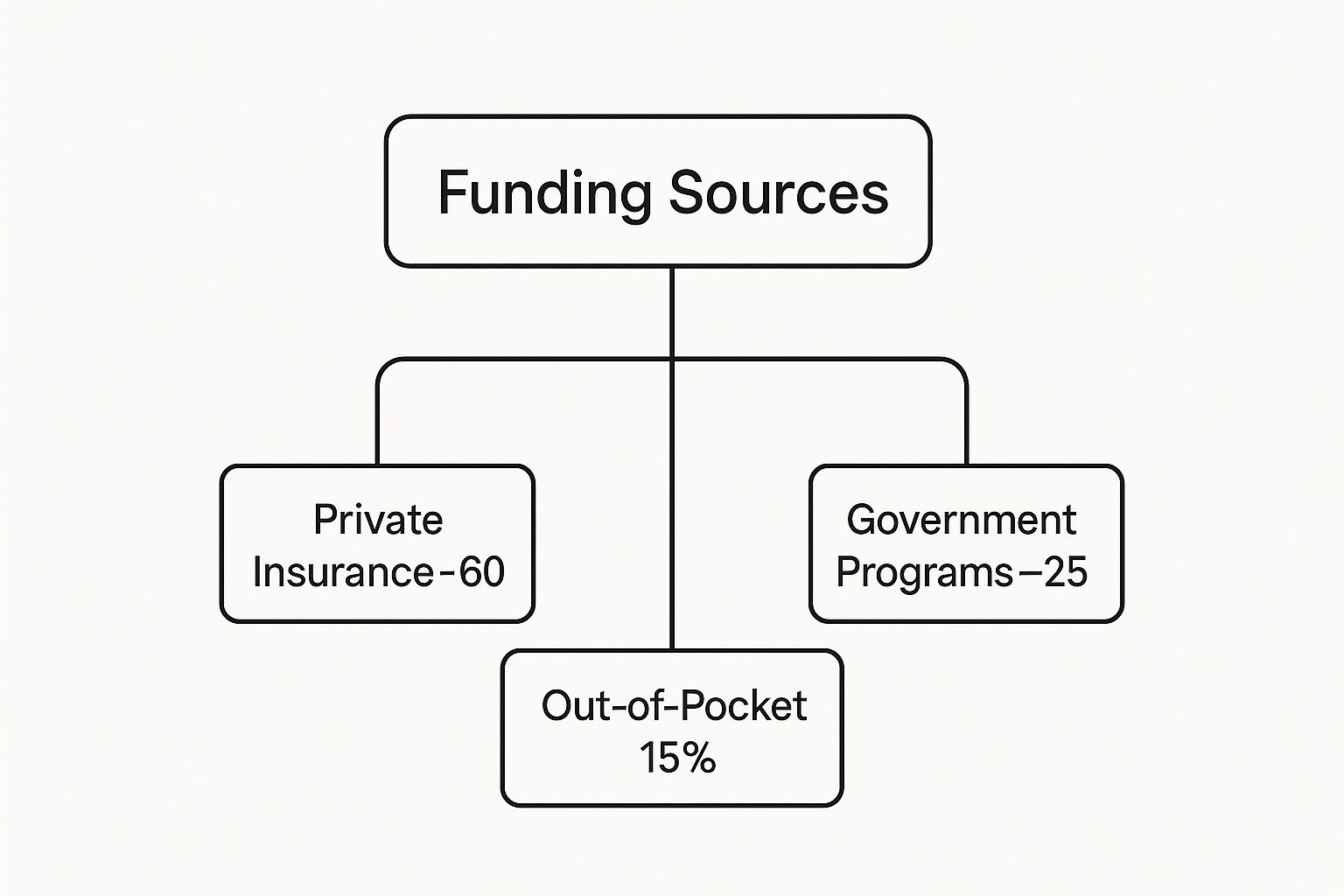
Private insurance covers much of the care, but government programs like Medicare and Medicaid also play a large role.
When Is the Right Time to Consider Hospice?
Moving to hospice is a personal choice made with your family and doctor. It is not about giving up. It is about redefining hope toward comfort and meaningful time with loved ones.
How do you know it might be time? Here are a few signs:
- Repeated hospital stays or trips to the emergency room.
- A decline in the ability to handle daily activities.
- Pain or other symptoms become harder to manage.
- The patient wants to stop curative treatments and focus on comfort.
This transition can feel overwhelming. Our team at Central Coast VNA & Hospice provides compassionate guidance. To learn more, see our guide on when to call hospice.
Hospice is not about waiting to die; it is about living every remaining moment to the fullest. The focus is on ensuring the patient is comfortable and supported, surrounded by family and compassion.
According to the National Hospice and Palliative Care Organization (NHPCO), over 1.72 million Medicare beneficiaries received hospice services in 2020 (NHPCO, 2021).
A Seamless Continuum of Care
At Central Coast VNA & Hospice, we are the only provider on the Central Coast offering the full spectrum of care, from home health to hospice. This allows for a smooth transition as your needs change.
If you already receive palliative care from us, the same trusted team can help you move to hospice. You keep the relationships you have built with a local, nonprofit team that knows you.
Our mission across Monterey, San Benito, Santa Cruz, and South Santa Clara counties is to ensure your journey is met with expert care every step of the way.
How to Get Started With Palliative Home Care
Taking the first step toward palliative home care is empowering. It can feel like a big decision, but the process is simpler than you might think. Anyone involved—you, a family member, or your doctor—can start the conversation.
At Central Coast VNA & Hospice, we make getting support as easy as possible. We are here to listen and answer your questions.
A Simple Path to Comfort
Getting started involves a few easy steps. It is about making sure your care is coordinated and personalized.
- Talk to Your Doctor: The best place to begin is by speaking with your physician. Ask if a referral for palliative home care services is a good fit.
- Contact Us Directly: You can also call Central Coast VNA & Hospice directly. We offer a compassionate consultation to help you understand how our services can help.
- Coordinated Assessment: Our team will work with your physician to get a complete picture of your needs. We will create a personalized care plan to improve your daily life at home.
For families exploring different supports, our guide on how do you know when hospice is needed can also be helpful.
Getting help should never be complicated. Our team is here to guide you through the process, ensuring a smooth and stress-free start to receiving the comfort and support you deserve.
The good news is that in-home care is becoming more accessible. You can read more about upcoming shifts in home care accessibility.
If you live in Monterey County, San Benito County, Santa Cruz County, or South Santa Clara County, contact Central Coast VNA & Hospice today to learn more.
Frequently Asked Questions About Palliative Home Care
It’s natural to have questions when considering palliative home care. Getting clear answers is the first step toward peace of mind. Here are some of the most common questions we hear.
1. What is the main goal of palliative care?
The main goal is to improve quality of life for both the patient and their family. It focuses on providing relief from the symptoms, pain, and stress of a serious illness. This care is provided alongside any curative treatments you may be receiving.
2. Is palliative care the same as hospice?
No, they are different. Palliative care can begin at any stage of a serious illness and can be provided with curative treatments. Hospice care is for the last six months of life when curative treatments are no longer being pursued.
3. Who is on a palliative care team?
A typical team at Central Coast VNA & Hospice includes a Registered Nurse for symptom management, a Medical Social Worker for emotional and practical support, and a Chaplain for spiritual comfort. This team works closely with your own doctor.
4. Who pays for palliative care?
Most insurance plans, including Medicare Part B and Medicaid, cover palliative care. As a nonprofit, Central Coast VNA & Hospice is committed to helping you understand your coverage. Our team will review your specific plan with you.
5. How can I start palliative home care services?
You can start by talking to your doctor and asking for a referral. You can also contact Central Coast VNA & Hospice directly. We can speak with you and your family to see if our services are the right fit.
If you have more questions or feel that palliative care might be right for you or a loved one, please reach out. The team at Central Coast VNA & Hospice is here to offer compassionate guidance.
You can learn more by contacting us today at https://ccvna.com.