
For families on the Central Coast, talking about future health wishes can feel like a conversation for another day. But having a plan in place before a health crisis hits is one of the most loving things you can do for your family.
This guide is a local roadmap. It is designed for families in Monterey, Salinas, Santa Cruz, and Hollister to navigate advance care planning at home. Think of it as turning a difficult topic into an act of empowerment and care.
Why Planning Before a Crisis Brings Peace of Mind

The end of the year often makes us reflect on what's next. For many, that includes concerns about aging parents, a spouse managing a serious illness, or their own long-term health. These conversations are important but are often put off until it's too late.
Waiting for a 911 call to discuss care wishes is a stressful mistake. During a crisis, emotions are high, decisions are rushed, and options become limited. This is when families in Monterey and San Benito Counties must guess what their loved one would have wanted.
Proactive planning changes that scenario completely. This is not about expecting the worst. It’s about ensuring loved ones receive care that reflects their values and goals.
The Gift of Clarity and Control
Advance care planning is the process of thinking about, talking about, and writing down your preferences for future healthcare. It ensures your family and doctors know what matters most if you cannot speak for yourself. This is an incredible gift.
When your wishes are documented, your family is relieved of making difficult decisions in the dark. Instead of guessing, they can be your confident advocate, knowing they are honoring your choices. This simple act helps prevent painful conflicts and reduces emotional strain.
Just think about the benefits:
- Your Wishes Are Honored: Your personal values drive every decision.
- Family Stress is Reduced: Loved ones have a clear roadmap, easing their burden.
- Your Advocate is Empowered: Your chosen decision-maker can speak confidently for you.
- Quality of Life Improves: Planning can lead to services like palliative care earlier, improving comfort long before a crisis.
Your Local Partner in Planning
For over 74 years, Central Coast VNA & Hospice has been a trusted, nonprofit guide for local families. We live here too and understand the unique needs of our communities. We serve Monterey County, San Benito County, Santa Cruz County, and South Santa Clara County.
Our regional population is aging, with more than one in five residents over 65 in some areas. The need for clear, compassionate planning is more urgent than ever.
Our mission-driven team is here to help you understand all your options. We cover everything from home health nursing to palliative care and hospice. You can learn more about the 7 important benefits of advance care planning in California and see how these steps bring peace of mind.
Starting these talks now protects your family from the chaos of a future medical event. It is an act of love that provides comfort and clarity when it’s needed most.
How to Start the Conversation About Care Wishes
Starting the topic of future health wishes can be the hardest part. Many families across Monterey and Santa Cruz Counties worry about upsetting their loved one or saying the wrong thing.
The secret is to treat it as a series of small, heartfelt talks, not one big meeting. You are not trying to fill out legal forms on day one. You are trying to understand what makes life meaningful for the person you love.
Framing the Conversation with Care
Finding the right moment is key. A formal meeting can feel intimidating. A quiet afternoon, a peaceful drive, or a shared cup of coffee creates a more relaxed setting.
A natural way to begin is by connecting it to a recent event. This could be a friend's health scare or a story in the news. You could also start from a place of joy, asking, "I was thinking about our last family picnic. What does a truly good day look like for you?"
A great conversation about care wishes starts with listening, not talking. It’s about creating a safe space where your loved one feels heard and understood, ensuring their values lead every future decision.
Remember, this is a dialogue. Your main job is to ask open-ended questions and listen carefully to the answers.
Gentle Questions to Get Started
Instead of asking about specific medical treatments, try questions that explore values. This helps you understand the "why" behind their future choices.
Here are a few conversation starters:
- Focus on Joy: "When you think about the future, what are you most looking forward to?"
- Define a Good Day: "If your health changed, what would a 'good day' still look like for you?"
- Address Fears: "What are your biggest worries if you were to get seriously ill?"
- Explore Trade-Offs: "Are there times you would value comfort more than living as long as possible?"
These questions shift the focus from medical jargon to what truly matters. Research shows that people who have these conversations are more likely to get the care they want. One review found these talks led to care that matched patient goals and reduced unwanted hospitalizations. You can learn more about from these findings.
When You Need a Helping Hand
Sometimes, these conversations are too hard to have alone. That’s when bringing in a neutral third party can help.
At Central Coast VNA & Hospice, our team includes Medical Social Workers and Chaplains trained to facilitate these discussions. They help families across Monterey, San Benito, Santa Cruz, and South Santa Clara counties navigate these talks with empathy.
If you’re struggling, our guide on how to talk to your parents about hospice care offers more tips. The most important thing is to just start the conversation.
Getting Your Wishes Down on Paper
Once you've started talking, the next step is to make it official. Legal documents give your loved one’s voice real power. They turn personal wishes into clear instructions for healthcare teams during a crisis.
For families on the Central Coast, understanding these key forms is the first step. They might sound similar, but each one has a different job.
The Three Core Documents for Central Coast Families
In California, there are three main documents in advance care planning. Not everyone needs all three. Knowing what each one does helps you choose the right tools.
- Advance Healthcare Directive: This is the foundation for any adult. It lets you name a healthcare agent—the person you trust to make decisions for you—and outline your general wishes for care.
- Durable Power of Attorney for Health Care (DPOAHC): This is the part of your Advance Directive that legally appoints your healthcare agent. It answers the crucial "who" question.
- Physician Orders for Life-Sustaining Treatment (POLST): This is a medical order signed by a doctor. It is for people with a serious illness or advanced frailty and gives direct instructions to EMTs.
A key part of this process is the Durable Power of Attorney (POA). You can review a Durable Power of Attorney (POA) form template to see what’s involved. Our team at Central Coast VNA & Hospice can help you get the right California-specific forms.
Key Advance Care Planning Documents at a Glance
It is easy to mix up these documents. In short, an Advance Directive states general wishes for the future. A POLST gives specific medical orders for right now.
This table breaks down the key differences.
| Document Type | What It Does | Who It's For | When It's Used |
|---|---|---|---|
| Advance Healthcare Directive | Names a healthcare agent and outlines general wishes for future medical care. | Any adult 18 or older, regardless of health status. | When you are unable to communicate your own medical decisions. |
| Durable Power of Attorney for Health Care (DPOAHC) | Legally appoints the person who will make healthcare decisions on your behalf. | Any adult who wants to choose a specific person to be their advocate. | When you are unable to speak for yourself; it activates upon incapacity. |
| Physician Orders for Life-Sustaining Treatment (POLST) | Translates your wishes into direct medical orders (e.g., DNR, feeding tubes). | Individuals with a serious, life-limiting illness or advanced frailty. | Immediately, and it is followed by all healthcare providers, including EMS. |
Thinking through what truly matters is the first step. The choices you make should reflect what makes life meaningful.
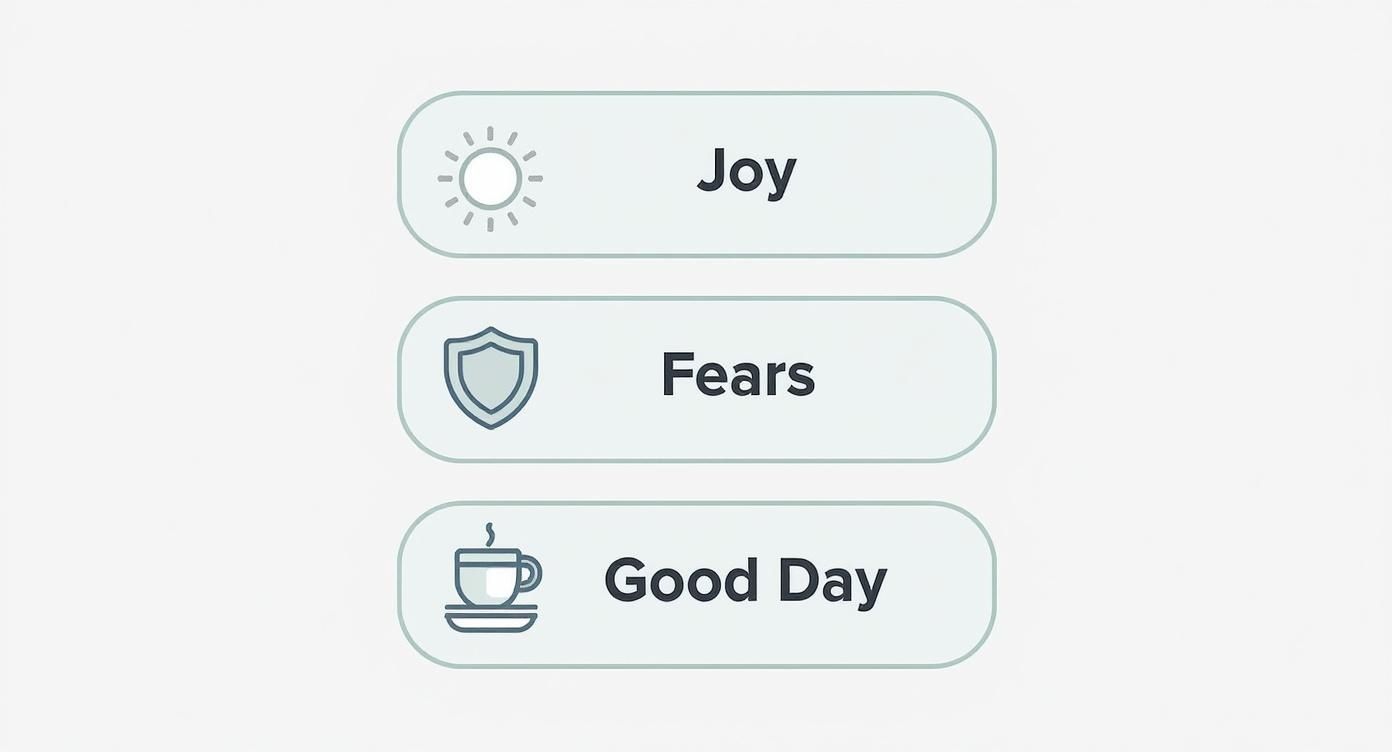
Understanding what brings joy, what causes fear, and what a "good day" looks like provides emotional clarity. For a closer look, see our helpful guide to three common advance directives for more detail.
Having these documents completed and shared is a profound act of love. It replaces uncertainty with clarity, ensuring that even in a crisis, the care provided aligns perfectly with your loved one's deeply held values and wishes.
Remember, these are not "set it and forget it" documents. They should be revisited every few years or after a major life change.
Assembling Your Home Health Emergency Kit
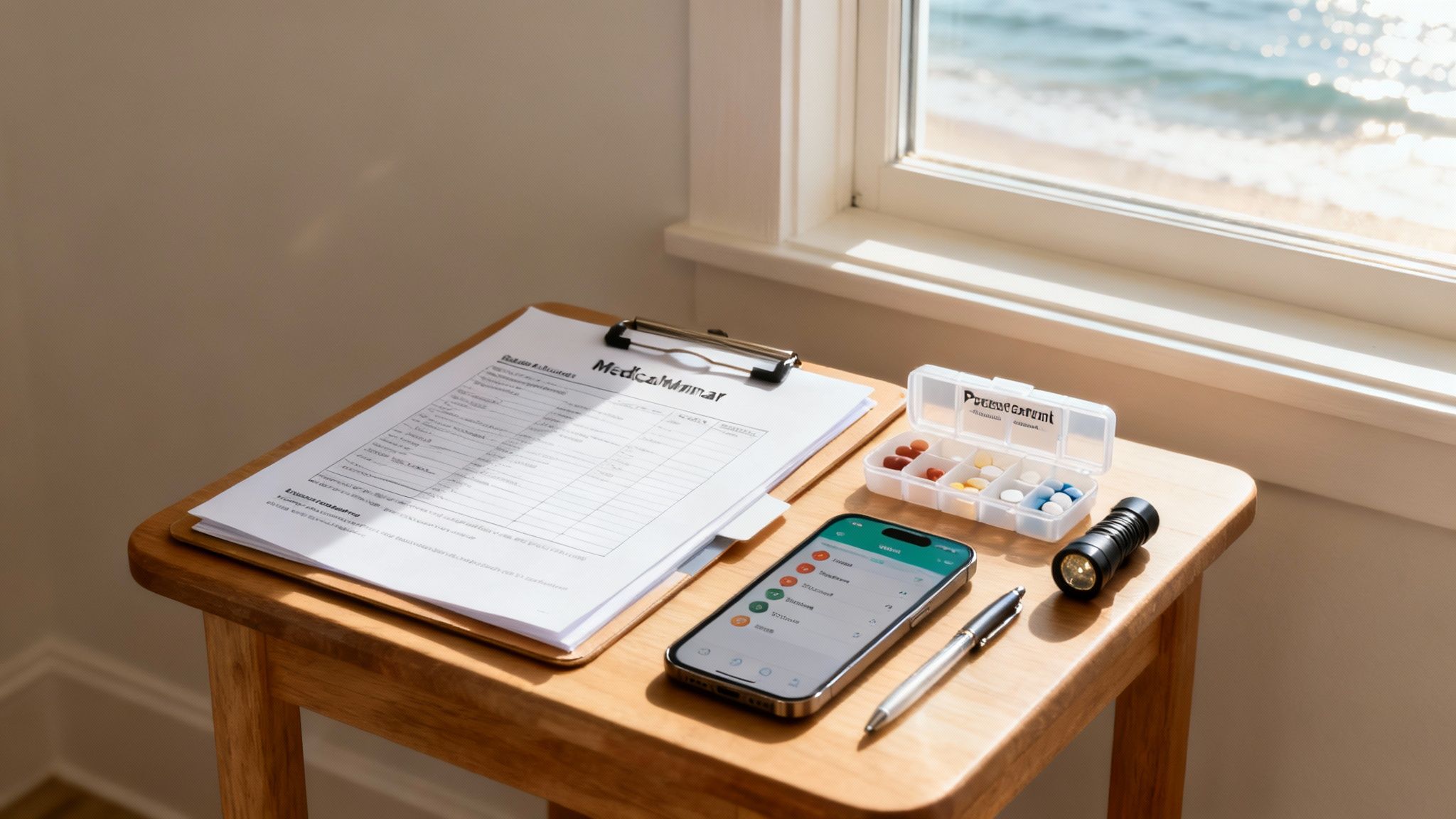
Advance care planning is not just about legal documents. It is also about being practically prepared. A well-organized “ready kit” at home makes a huge difference during a stressful moment.
Think of this kit as the single source of truth for your family. A visiting Registered Nurse from Central Coast VNA & Hospice or an emergency team can use it. It cuts through confusion and helps clinicians provide faster, better care.
Creating a One-Page Medical Summary
The heart of your kit is a simple, one-page medical summary. This is a snapshot of your loved one's health that anyone can understand quickly.
Keep it somewhere obvious, like on the refrigerator or in a marked folder by the front door.
Your one-page summary should include:
- Full Name and Date of Birth: Start with the basics.
- Key Medical Diagnoses: List significant conditions like heart failure or COPD.
- Known Allergies: Make this stand out in bold or red text.
- Primary Care Physician's Name and Number: Include office and after-hours contacts.
- Specialist Contact Information: List key specialists like a cardiologist.
- Emergency Contacts: Provide names and numbers for at least two family members.
This single sheet can save precious time.
Organizing Medications and Prescriptions
Medication management is a big challenge for families. Getting it organized prevents missed doses and dangerous interactions.
Your kit should have an up-to-date list of all medications. Include the name, dosage, frequency, and reason for taking it. A simple pill organizer can also help with daily routines.
Note the pharmacy's name and phone number to make refills easier. Knowing about options for home medical equipment rental can also be a crucial part of your plan.
Preparing Questions for Medical Professionals
During a health crisis, it’s normal to feel overwhelmed and forget what you wanted to ask. Preparing a list of questions in advance empowers you to be a better advocate.
In a crisis, your emergency kit is your family's anchor. It transforms chaos into clarity, ensuring that even under pressure, your loved one’s care is guided by accurate information and well-defined wishes.
This simple preparation ensures you get the information needed to make informed decisions. Keep a small notebook in your kit with questions like:
- What is the main problem we are treating?
- What are the next steps in the treatment plan?
- What side effects should we watch for?
- Who should we call if we have questions after we go home?
Assembling a hands-on kit is a powerful way to make your planning practical and effective.
How Home-Based Care Brings Your Plan to Life
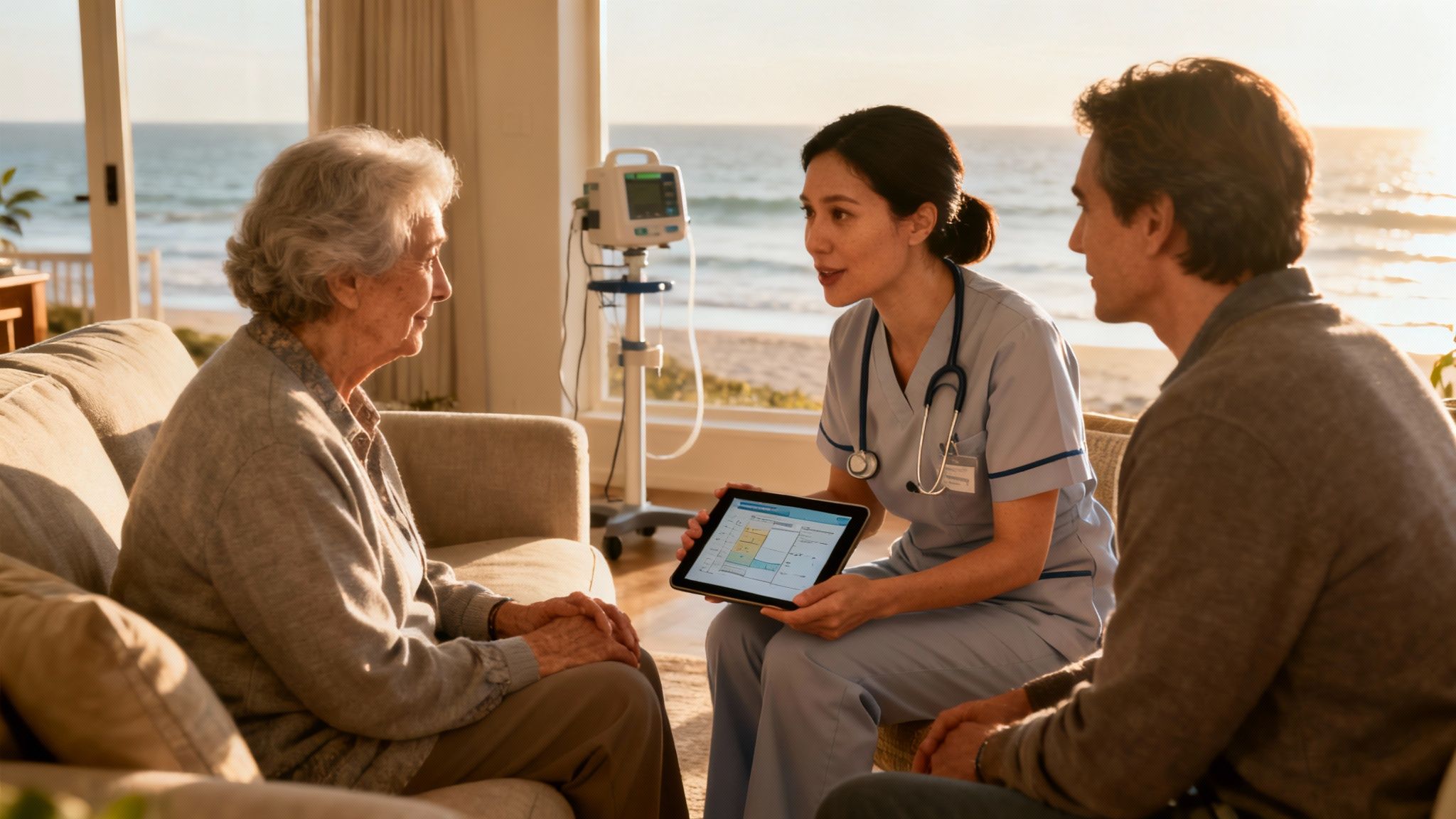
An advance care plan is more than just paperwork. It is a living roadmap that guides your family and healthcare team. But how do those wishes become reality?
Home-based care is the vehicle that brings your plan to life. It ensures your loved one’s values are honored in the comfort of their home.
For families across Monterey and San Benito Counties, this is what makes planning so powerful. It ensures care aligns with discussed goals, like prioritizing comfort or avoiding hospital stays. At Central Coast VNA & Hospice, our nonprofit mission is to make this happen every day.
Aligning Care with Your Family’s Values
The beauty of a good advance care plan is how it centers on what matters most. Home-based care is designed to support those personal goals. We bring a personalized, interdisciplinary team to the patient.
This team may include a Registered Nurse, Medical Social Worker, Hospice Aide, and Chaplain. They work together to follow the instructions in an Advance Directive or POLST.
Home-based care ensures that a person's documented wishes aren't just acknowledged—they become the foundation of the daily care plan. It's about honoring values, not just treating symptoms.
For example, if a plan emphasizes avoiding hospitalization, our home health and palliative care teams provide expert symptom management at home. This proactive approach helps prevent crises before they start.
The Power of Palliative Care at Home
Many families in Salinas and Santa Cruz believe this type of care is only for the end of life. That is a myth. Palliative care improves quality of life for anyone with a serious illness, at any stage.
When provided at home, palliative care can:
- Manage Complex Symptoms: Control pain, nausea, and shortness of breath.
- Provide Emotional and Spiritual Support: Help patients and families cope.
- Coordinate Care: Improve communication between all doctors.
Bringing palliative care into the home sooner gives families support to honor their loved one's wish for comfort.
A Seamless Continuum of Care
As a nonprofit with over 74 years of service on the Central Coast, CCVNA supports families as their needs change. We offer the full spectrum of home-based services, from home health to palliative care and hospice.
This continuum ensures a smooth transition if a condition progresses. The same trusted organization can provide all levels of care. You can learn more about how VNA helps seniors live safely at home in Monterey in our dedicated article.
According to the National Hospice and Palliative Care Organization (NHPCO), over 1.72 million Medicare beneficiaries received hospice services in 2020 (NHPCO, 2021). As you consider how to bring your plan to life, exploring resources on general healthcare services and technology that support in-home care might be beneficial. By planning ahead, you give your loved one the gift of expert, compassionate care that reflects their wishes.
FAQs: Your Questions About Advance Care Planning Answered
Navigating advance care planning can bring up many questions. As a nonprofit healthcare provider with over 74 years of experience on the Central Coast, we have helped thousands of local families find clarity. Here are answers to common questions we hear in Monterey, San Benito, Santa Cruz, and South Santa Clara counties.
1. When is the right time to start advance care planning?
The best time to start is now, while you are healthy. A sudden accident or health crisis can happen to anyone at any age. Starting the conversation early removes the pressure of making these decisions during an emergency.
2. Who should I choose as my healthcare agent?
Your healthcare agent is the person you appoint to make medical decisions for you if you cannot. Choose someone who understands your values, can stay calm under pressure, and will be a strong advocate for your wishes. Have a frank conversation with them to ensure they are comfortable with this role.
3. How often should I update my advance care planning documents?
Review your documents every few years or after a major life event. This includes a new diagnosis, a change in marital status, or the death of your chosen healthcare agent. Keeping them current ensures they always reflect what is most important to you.
4. Do I need a lawyer to complete these forms in California?
No, you do not need a lawyer to complete an Advance Healthcare Directive in California. The forms can be legally binding if signed by two witnesses or notarized. However, guidance from a healthcare professional, like our Medical Social Workers at CCVNA, can be very helpful.
5. What is the difference between palliative care and hospice care?
Palliative care can be provided at any stage of a serious illness to improve quality of life and can be given alongside curative treatments. Hospice care is for individuals with a life-limiting illness when the focus shifts to comfort and quality of life, typically when life expectancy is six months or less. Central Coast VNA & Hospice offers both services at home.
At Central Coast VNA & Hospice, we believe every family deserves the peace of mind that comes with a thoughtful advance care plan. If you're ready to start the conversation, our compassionate team is here to guide you every step of the way. Contact us today to learn how we support families throughout the Central Coast.