
Direct Answer: Hospice care doesn’t mean giving up. It means a full team comes to your home to manage pain, support your family, and keep your loved one comfortable — often for months.
The word “hospice” stops families cold. For most people, it sounds like a final door closing — a signal that medicine has nothing left to offer and the end is imminent. That fear keeps families waiting weeks or months longer than they need to, often until a crisis forces the decision.
But the families who have actually been through it — here in Monterey County and across the Central Coast — consistently say the same thing: they wished they had called sooner. Not because the outcome changed, but because the experience of those final weeks or months was completely different than they expected.
This article is for anyone who has heard the word hospice and felt their stomach drop. What hospice actually involves, what it covers, and what it does not take away from your loved one — these are things most families don’t find out until they’re already in the middle of it.
The Myth That Keeps Families Waiting Too Long
The single biggest barrier to hospice care isn’t eligibility. It’s the word itself.
Families delay because they believe that choosing hospice means “we’ve given up” — or worse, that it somehow speeds up the dying process. Neither is true. Research consistently shows that patients receiving hospice care report better quality of life than those who don’t, and families overwhelmingly report feeling relieved rather than defeated once care begins.
One family’s account captures it well. Their loved one — an Alzheimer’s patient — had been making difficult trips to clinics that weren’t improving her condition and were exhausting everyone involved. Once hospice began, she stayed home. She stayed comfortable. As the family put it: “The word hospice does not mean the patient is dying right away. It just means the patient will be comfortable.”
That reframe matters. Because the decision to call isn’t a surrender — it’s a choice to stop spending whatever time remains in waiting rooms and start spending it at home.
For families who aren’t sure whether hospice or another type of support is the right fit right now, understanding the difference between home health and hospice is a good place to start.
What Hospice Care Actually Looks Like in Your Home
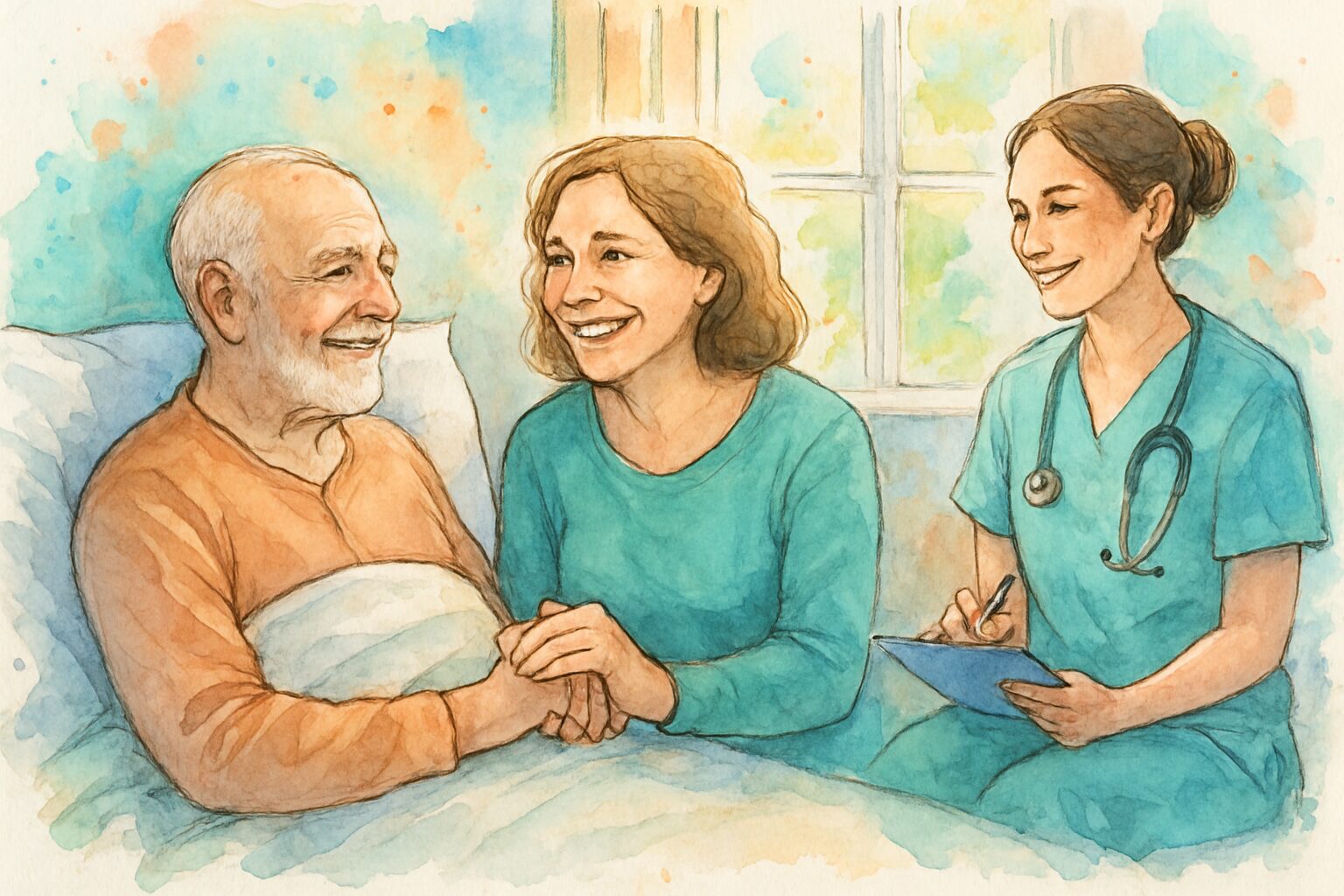
Most families picture hospice as one nurse, a few visits a week, and not much else. The reality is a full interdisciplinary team that comes to wherever your loved one lives — a house in Pacific Grove, an apartment in Salinas, a family home in King City or Hollister.
The team typically includes:
- Registered Nurses who visit regularly to manage pain, monitor symptoms, and adjust medications
- Hospice Aides who help with bathing, personal care, and daily comfort
- Medical Social Workers who help the family navigate decisions, paperwork, and emotional stress
- Chaplains who provide spiritual care — for patients of any faith, or none
- Volunteers who offer companionship, respite time for family, and practical support
- Bereavement Specialists who continue supporting the family after the patient passes
The physician stays involved too. Hospice coordinates directly with your loved one’s doctor — it doesn’t replace that relationship.
What consistently moves families from hesitation to yes is simply hearing this list out loud. Many assume hospice means handing their loved one over to an institution. Instead, the institution comes to them — and the family remains at the center of everything.
For families carrying the weight of day-to-day support, recognizing when that load has become too much to carry alone is part of this same conversation.
What Hospice Covers That Most Families Don’t Know About
One of the most common reasons families delay calling is cost. They assume hospice will add another financial burden on top of everything else.
For most families in Monterey County, Medicare covers hospice care in full when a physician certifies that the patient has a terminal illness with a prognosis of six months or less if the illness follows its expected course. Medi-Cal and Veterans benefits also cover hospice services — and for families navigating dual eligibility, a hospice intake coordinator can walk through exactly how coverage applies.
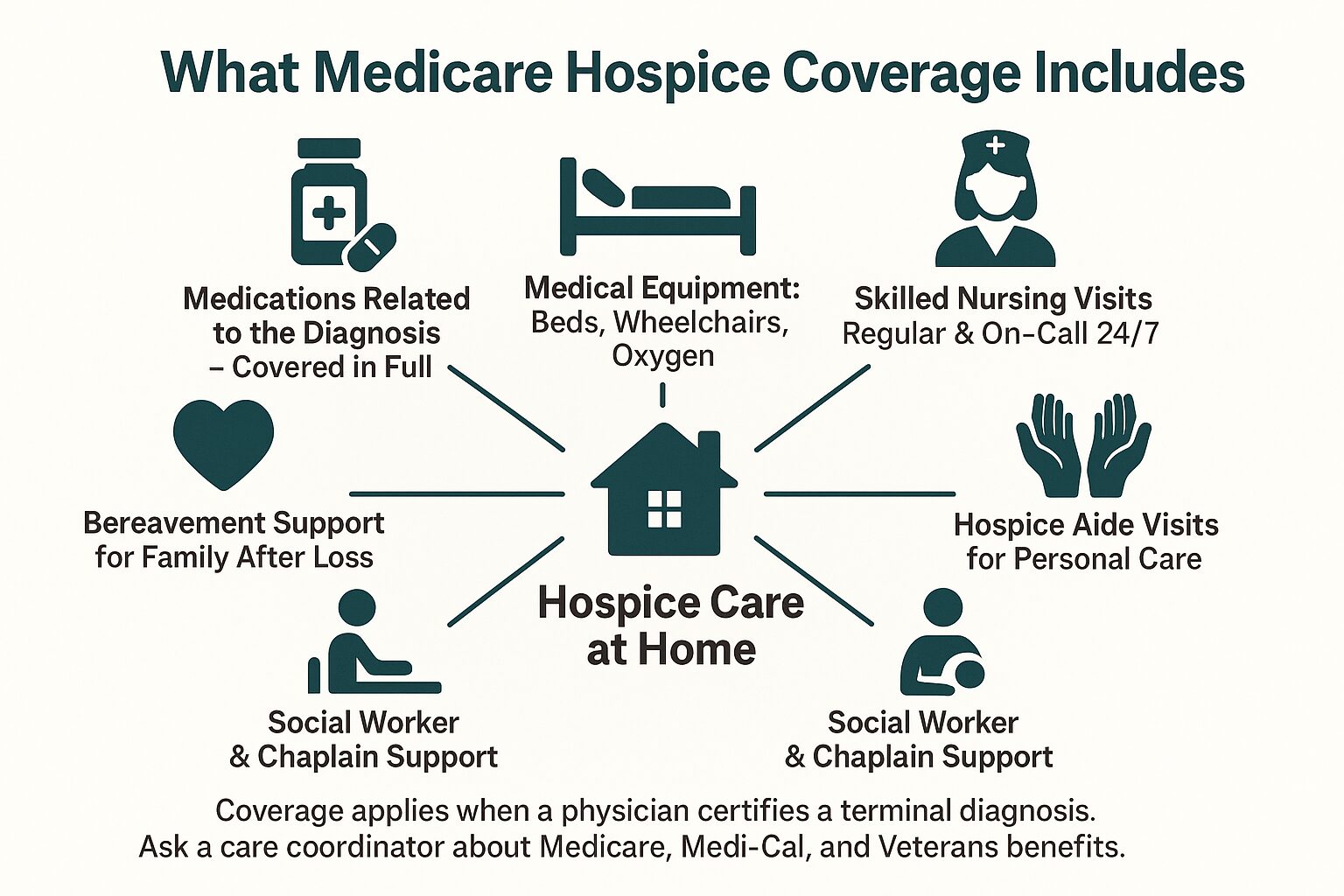
What Medicare hospice coverage includes:
- Medications related to the terminal diagnosis — filled and delivered, no co-pay
- Medical equipment — hospital beds, wheelchairs, oxygen, whatever is needed at home
- All team visits — nursing, aide, social work, chaplaincy, and volunteer services
- 24/7 on-call nursing access — a real nurse available by phone any hour, any day
- Bereavement services — grief support for family members that continues after the patient passes
The medication and equipment coverage surprises almost every family. That gap — not knowing that prescription costs and home equipment are included — is one of the most consistent things that keeps families from calling.
For families who want to understand what comfort-focused care actually means before they make any decisions, this explanation of comfort-focused care breaks it down without any clinical language.
What Hospice Care Actually Covers
Most families are surprised by how much is included. This breakdown shows what Medicare hospice coverage typically provides — at no additional cost to the family.
The ‘Point of No Return’ Myth — and Why It’s Wrong
Many families hold back because they believe that choosing hospice is permanent. They worry that once they say yes, there’s no going back — no more curative treatment, no more options.
This is one of the most underexplained things in all of end-of-life care, and it’s worth being direct about it.
A patient can leave hospice at any time. The formal term is “revoking the hospice election,” and it happens more often than most families realize. A patient who improves, or who decides they want to pursue treatment again, can return to curative care. They can re-elect hospice later if their condition changes again.
A few things that don’t go away when someone is on hospice:
- Their relationship with their primary care physician
- Treatment for unrelated conditions — a hospice patient with diabetes still receives insulin
- The ability to go to the emergency room or seek a second opinion
This flexibility is what often frees families to say yes. They’re not locking a door. They’re opening one — to a team of nurses, aides, social workers, chaplains, and volunteers who will show up at the home and focus entirely on comfort, dignity, and the family’s experience of this time.
Families who have been through this moment — the decision itself — describe it in ways that are worth reading before you’re in the middle of it. How families describe the moment they chose hospice captures those experiences honestly.
Common Hospice Misconceptions vs. What’s Actually True
These are the beliefs that show up most often when families first call — and what the reality actually looks like.
| What Families Often Believe | What’s Actually True |
|---|---|
| Hospice means we’ve given up | It means shifting the focus to comfort — the patient and family remain in control |
| Hospice speeds up death | Studies consistently show hospice patients often live as long or longer, with better quality of life |
| Once we choose hospice, we can’t go back | Patients can revoke hospice at any time and return to curative treatment |
| Hospice is just a nurse visiting a few times a week | It’s a full team — nurses, aides, social workers, chaplains, volunteers, and bereavement support |
| Hospice costs a lot out of pocket | Medicare, Medi-Cal, and Veterans benefits cover hospice — including medications and equipment |
| The doctor steps back once hospice starts | The physician stays involved; hospice coordinates directly with the treating doctor |
When to Start the Conversation — and What Happens First
There’s no perfect moment that announces itself. But there are signs that it’s time to at least ask the question.
Families in Monterey County often reach out after a loved one has been in and out of the hospital for the same condition — when treatment isn’t improving things anymore, only managing acute episodes. Others call after a diagnosis that carries a clear prognosis, like end-stage heart failure, advanced COPD, or late-stage cancer.
But many calls come from families who aren’t sure yet. A daughter in Pacific Grove managing her father’s medications. A family in Salinas whose mother keeps declining between hospital stays. A spouse who hasn’t slept well in months. These families often aren’t calling because hospice is definitely the answer — they’re calling because they need someone to help them understand what the options actually are.
A physician referral is part of the process, but families can also call a hospice provider directly to ask questions before any decisions are made. An intake coordinator can explain what a physician certification involves, what the evaluation looks like, and whether the situation qualifies — without any pressure to commit.
For families weighing whether this is the right time, what families wish they’d known sooner about home care covers the hesitation that almost always comes before the call. And for anyone already thinking about the longer arc of planning, why starting end-of-life planning earlier changes everything is worth reading alongside this one.
Frequently Asked Questions About Hospice Care
Does a patient have to stop seeing their regular doctor to start hospice?
No. The primary care physician stays involved and hospice coordinates with them directly. The hospice team works alongside the treating doctor — not instead of them.
What if my loved one improves after starting hospice?
Improvement is always welcome, and it happens. If a patient’s condition stabilizes or improves, they can be discharged from hospice. If they later meet the criteria again, they can re-elect hospice services. There is no penalty and no permanent commitment.
Does Medicare really cover all of it — medications, equipment, the whole team?
For most patients, yes. Medicare Part A covers hospice care in full when a physician certifies a terminal diagnosis with a prognosis of six months or less. That includes medications related to the diagnosis, medical equipment delivered to the home, all team visits, and 24/7 on-call nursing. Medi-Cal and Veterans benefits have comparable coverage. A care coordinator can walk through how coverage applies to a specific situation.
Can hospice care be provided in a nursing facility or assisted living community?
Yes. Hospice is defined by a philosophy of care, not a physical location. A hospice team can come to a skilled nursing facility, an assisted living community, or any place the patient calls home.
What happens to the family after the patient passes?
Hospice doesn’t end when the patient dies. Bereavement services — including grief counseling and ongoing emotional support — continue for family members after the loss. For families navigating grief in the months that follow, understanding what grief support actually looks like can help set realistic expectations.
How do we know if it’s too early to call?
It almost never is. Families who call early get information — not enrollment pressure. A conversation with an intake coordinator can clarify whether the situation qualifies, what the process looks like, and what questions to bring to the physician. Most families who waited wish they had called months sooner.
Questions About Hospice Care for a Loved One on the Central Coast?
Central Coast VNA & Hospice has been serving families across Monterey County — from the Peninsula to Salinas, King City, and the surrounding communities — since 1951. If you have questions about whether hospice care is the right fit, or just want to understand what the process looks like before making any decisions, a care coordinator is available to talk through it with you. Call 831-372-6668 or visit ccvna.com to reach someone who can help.