
Thinking about the future can feel overwhelming. This is true when helping a loved one stay in their own home as they get older. Here on the Central Coast, more and more families are choosing this path. It is a choice for independence, comfort, and familiarity.
But aging at home is often a choice made from necessity. The rising cost of living and few long-term care facilities in our area make it the main option for many. This reality makes having a solid plan more critical than ever.
Why Planning for In-Home Care Is More Urgent Than Ever
The simple truth is that our communities are changing. The Central Coast is experiencing a rapid shift as older adults make up a growing part of the population. This trend is clear across Monterey, Santa Cruz, and San Benito counties.
This demographic shift is putting new pressures on families and our local healthcare system. For families, now is the time to plan, not react. A proactive plan can ease future stress and ensure your loved one gets the best care.
A Changing Central Coast
This shift means more of us are stepping into caregiving roles. Adult children and spouses often find themselves juggling jobs, raising kids, and managing a parent's health. Many do this without a clear roadmap or support system.
This trend is increasing pressure on family caregivers. Many are unprepared, overextended, or unaware of available support. Burnout, emotional strain, and a lack of local resources are growing concerns across the region.
Waiting for a health crisis to make decisions leads to stress and limited options. A proactive approach, on the other hand, empowers you to navigate this journey with confidence.
The Power of a Proactive Plan
When you plan ahead, you turn uncertainty into empowerment.
You will be able to:
- Know Your Options: Learn about home health, palliative care, and hospice before you are in a crisis.
- Prevent Emergencies: Simple home modifications can reduce the risk of falls and hospital stays.
- Honor Their Wishes: Early conversations ensure your loved one’s care preferences are heard and respected.
- Reduce Family Stress: Knowing what resources are available provides peace of mind for everyone.
As a nonprofit organization with over 74 years of service to this community, Central Coast VNA & Hospice has seen how a good plan changes everything. Our deep local roots mean we provide more than medical care; we offer compassionate guidance.
To help you get started, we have broken down the key areas to focus on. This guide will give you a clear overview of what you need to consider.
Key Steps for Planning to Age at Home
| Planning Area | What to Consider | Why It's Important |
|---|---|---|
| Healthcare & Medical Needs | Types of care (home health, palliative, hospice), Medicare/insurance coverage, managing medications. | Ensures your loved one receives the right level of care at the right time, preventing crises. |
| Home Safety & Accessibility | Fall prevention, bathroom safety (grab bars), easy navigation, emergency alert systems. | Creates a safe environment that reduces the risk of accidents and hospitalizations. |
| Legal & Financial Planning | Advance directives (living will, power of attorney), long-term care insurance, budgeting for care. | Guarantees wishes are honored and avoids financial strain on the family. |
| Caregiver Support | Respite care options, support groups, understanding burnout, family communication. | Protects the well-being of the primary caregiver, allowing them to provide better care long-term. |
| Community Resources | Meals on Wheels, transportation services, local senior centers, social programs. | Connects your loved one with a broader support network to combat isolation and meet daily needs. |
Each of these areas is crucial for building a strong foundation. Our teams, including Registered Nurses and Medical Social Workers, provide expert in-home support to avoid nursing home placement.
Whether you are just starting to think about the future or are in the middle of a challenge, you do not have to do it alone.
Understanding Your In-Home Healthcare Options
Making sense of healthcare terms can feel like learning a new language. This is especially true during a stressful family situation. Getting a clear picture of in-home support is the first step.
At Central Coast VNA & Hospice, we provide a full spectrum of care. We make sure your family member gets the right support as their needs change. Our Continuum of Care model seamlessly connects home health, palliative care, and hospice services.
This chart breaks down the basic steps for planning care right here on the Central Coast.
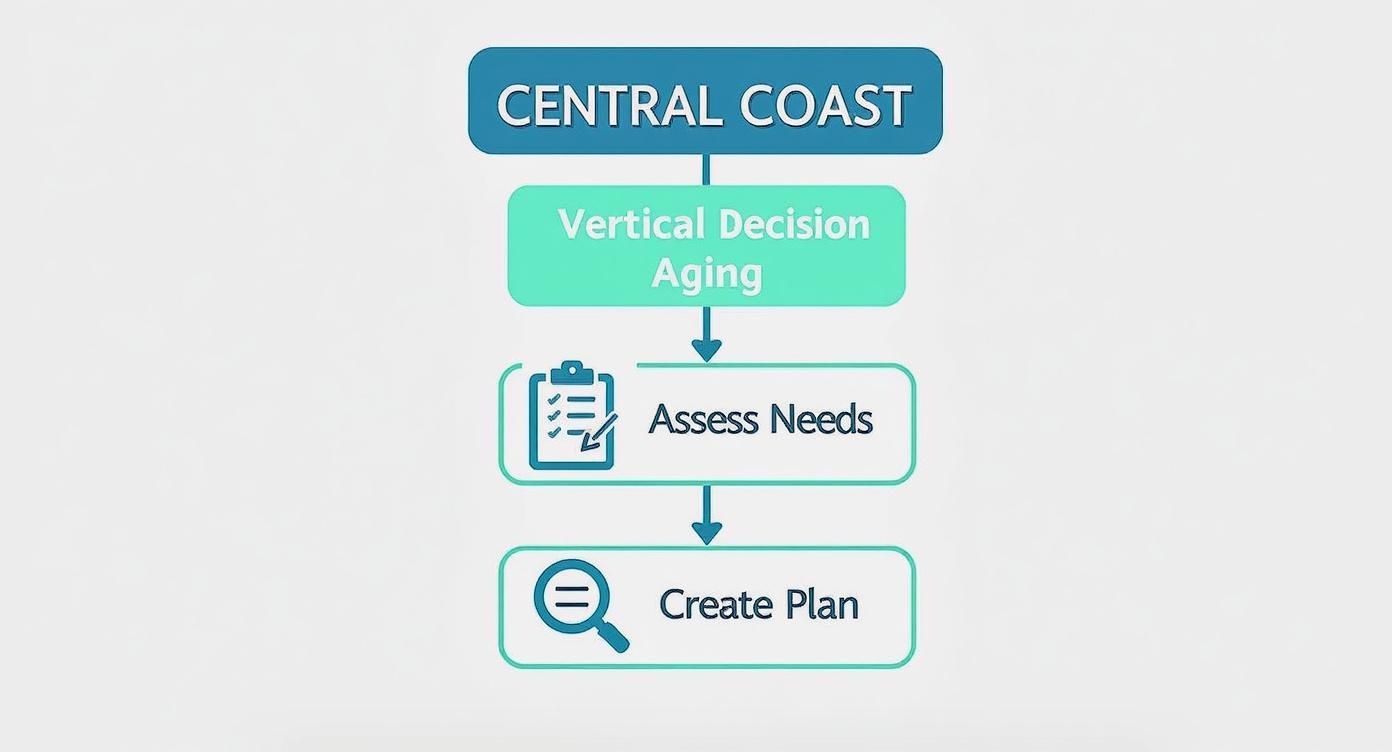
As you can see, a successful plan starts with understanding what is needed. That assessment guides you to the right options. Let's look at the three main types of in-home care.
Home Health Care: For Recovery and Independence
Imagine your father is heading home from the hospital in Salinas after a knee replacement. He needs help managing his medications, changing his surgical dressing, and doing his physical therapy.
This is a perfect time for home health care.
Home health is a short-term, skilled service prescribed by a doctor. It helps patients recover from an illness, injury, or surgery. The goal is to restore independence right at home.
Our teams of professionals work together to provide care:
- Registered Nurses for skilled medical care, medication management, and patient education.
- Physical and Occupational Therapists to help regain strength and mobility.
- Medical Social Workers to connect you with community resources and support.
This expert care helps lower the risk of a return trip to the hospital. You can learn more about our Central Coast VNA & Hospice home health care services.
Palliative Care: For Comfort and Quality of Life
Now, picture a different situation. Your mother in Santa Cruz County has a chronic lung condition. She wants to continue treatment, but her symptoms make life difficult.
This is where palliative care can make a world of difference.
Palliative care is specialized medical care for people with a serious illness. The focus is on relief from symptoms and stress. The goal is to improve quality of life for both the patient and the family.
A person can receive palliative care at any age and at any stage of a serious illness. It can be provided alongside curative treatments. Think of it as an extra layer of support.
Hospice Care: For Dignity and Peace
When treatments are no longer working and a doctor expects a person to live six months or less, the focus often shifts. This is when hospice care provides comfort, dignity, and peace.
For a family in Monterey or San Benito County, this means a dedicated team ensures a loved one’s final months are lived as fully as possible. Hospice is not about giving up; it is about shifting the focus to quality of life.
Our hospice teams include Registered Nurses, Hospice Aides, Chaplains, and volunteers. They provide support for the patient and the entire family. That support continues with bereavement counseling for 13 months.
CCVNA's In-Home Care Services Compared
It can be tough to keep these services straight. This table breaks down the key differences to help you.
| Service | Primary Goal | Who It's For | Covered By |
|---|---|---|---|
| Home Health | Help patients recover from an illness, injury, or surgery and regain independence. | Individuals needing short-term, skilled nursing or therapy after a hospital stay or new diagnosis. | Medicare, Medi-Cal, and most private insurance plans with a doctor's order. |
| Palliative Care | Relieve symptoms and stress of a serious illness to improve quality of life. | Patients of any age, at any stage of a serious illness, often alongside curative treatments. | Medicare Part B, Medi-Cal, and many private insurance plans. |
| Hospice | Provide comfort, dignity, and peace when a cure is no longer the goal. | Patients with a life-limiting illness and a prognosis of six months or less. | Medicare, Medi-Cal, and most private insurance plans. |
Each service plays a vital role. Understanding the differences is the first step toward getting the compassionate care your loved one deserves.
Preparing the Home for Safe and Comfortable Aging

Turning a house into a safe haven is a practical and loving act. For many on the Central Coast, their home holds decades of memories. The goal is to keep them there, comfortably and safely.
This is not about a massive renovation. It is about thoughtful changes that support independence and give everyone peace of mind. Small adjustments can have a huge impact.
High-Impact Changes for Key Areas of the Home
Start by focusing on the rooms where your loved one spends the most time. Simple fixes in the bathroom, bedroom, and living areas can make a world of difference.
Here are a few practical ideas:
- Brighten things up. Good lighting is very important. Add nightlights to hallways, bathrooms, and bedrooms.
- Clear the way. Walk through the main pathways and remove clutter, loose rugs, and extra furniture.
- Make the bathroom a priority. This room is a high-risk area for falls. Install grab bars, a non-slip mat in the tub, and a shower chair.
These changes help create a safer living space. They make daily life easier and reduce the risk of accidents.
Organizing Medications and Medical Equipment
A jumble of pill bottles can be dangerous. A disorganized system can lead to missed doses or errors. Creating a simple, consistent routine is key.
Start by dedicating one spot for all medical needs. A pill organizer, clearly labeled, is a must-have. It simplifies the daily routine.
Our Registered Nurses often help families create a safe medication plan. This hands-on support gets everyone on the same page. It helps prevent common mistakes that can lead to hospital visits.
Creating an Accessible Living Space
As mobility changes, stairs can become a major obstacle. Creating a main living area on a single floor is often a practical solution. This might mean converting a downstairs den into a bedroom.
The goal is to have everything for daily life on one level. This reduces the need to use stairs, a major source of falls. If you need ideas, you can look at house plans specifically designed for elderly people.
Making these changes can be emotional. It is helpful to see them as tools for empowerment. They help your loved one maintain independence in the home they love.
Navigating the Financial and Legal Realities of Care
Talking about money and legal documents can be hard. But these conversations are critical for a family to have. Tackling them now removes a massive amount of future stress.
This allows you to make thoughtful decisions, not panicked ones. It is an important part of planning for aging at home on the Central Coast.
How Is In-Home Care Paid For?
Figuring out how care will be covered is always the first question. For most families, Medicare is the primary source of funding. Its benefits for home health and hospice are quite strong.
When ordered by a doctor, Medicare generally covers skilled home health care. This includes visits from a Registered Nurse or a physical therapist. The focus is on helping your parent get better.
The Medicare hospice benefit is also very comprehensive. It covers nearly everything related to a terminal diagnosis. This includes nursing support, medical equipment, and comfort medications.
Our team at Central Coast VNA & Hospice guides families through Medicare benefits every day. We serve Monterey, San Benito, and Santa Cruz Counties. We are here to bring clarity to your situation.
Getting Their Wishes on Paper
Beyond finances, it is vital to have legal documents in place. This process is called Advance Care Planning. It ensures your loved one’s voice is heard, even if they cannot speak for themselves.
Having these documents is a great gift to your family. It replaces guesswork with guidance. It ensures care decisions align with your loved one’s values.
Two documents are the cornerstone of a solid plan:
- Durable Power of Attorney for Healthcare: This names a person (a "healthcare agent") to make medical decisions if your loved one cannot.
- Living Will (or Advance Directive): This document outlines preferences for end-of-life medical treatments, like life support.
These are not just legal forms; they are powerful tools for communication. As a trusted nonprofit, we encourage families to explore end-of-life care planning sooner rather than later. For more information, you can also research strategies to safeguard assets for long-term care.
Building a Support System for Family Caregivers
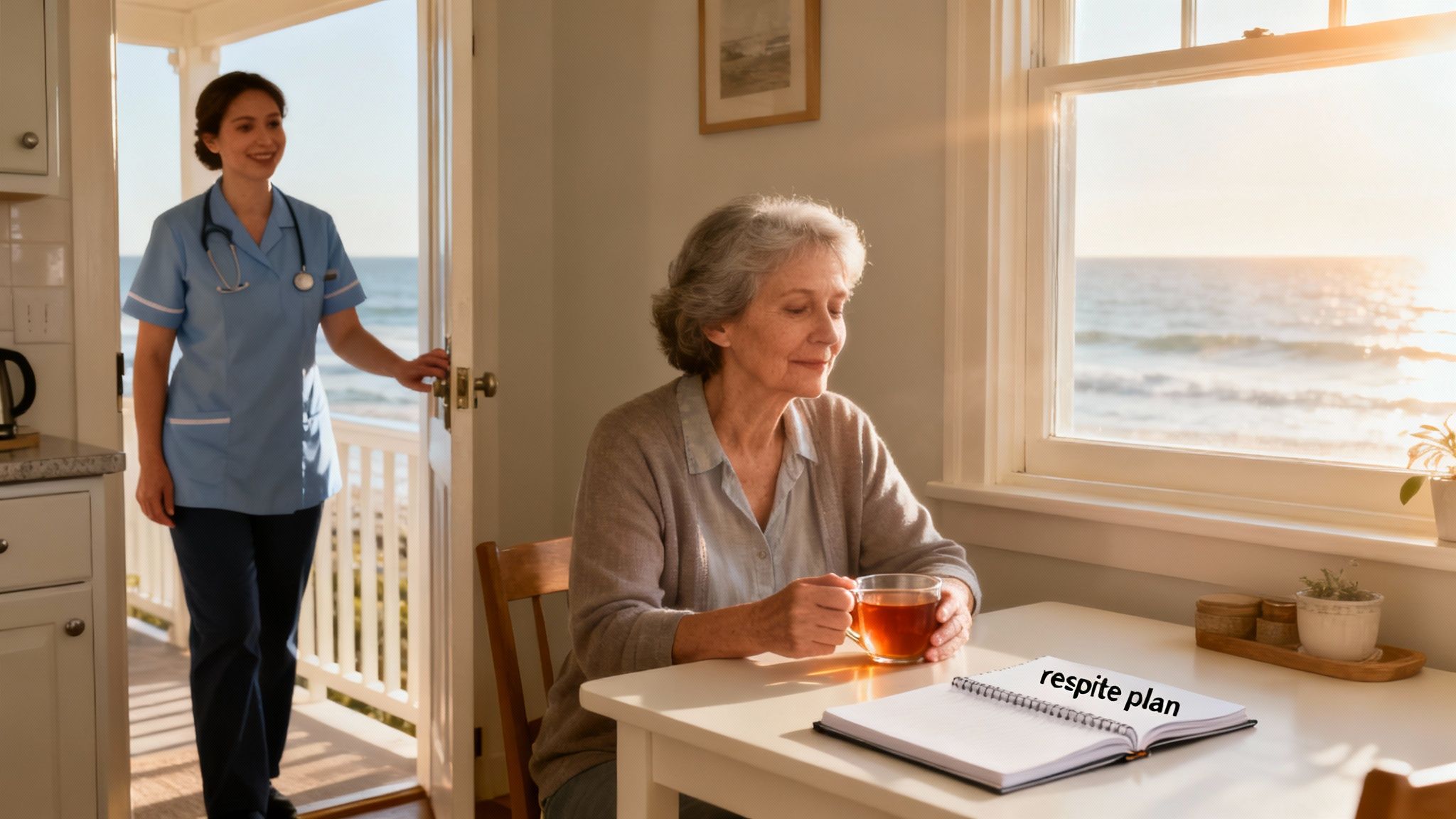
Caring for a loved one is a profound act of love. But it is also one of the most demanding jobs. Here on the Central Coast, thousands of family members are helping loved ones age at home.
The simple truth is, no one can do it alone. A solid plan for aging at home must include support for the caregiver. Your own well-being is the foundation for providing sustainable, loving care.
Acknowledging the Reality of Caregiver Burnout
Caregiver burnout is not a sign of weakness. It is a sign that you have been strong for too long. It can show up as exhaustion, feeling irritable, or being overwhelmed.
Juggling care duties with a job and family can feel impossible. This is a growing issue on the Central Coast. According to the Public Policy Institute of California, by 2030, more than 1 in 5 Californians will be 65 or older, increasing the need for family care (PPIC, 2022). As our communities age, the need for robust caregiver support is critical.
Finding Balance Through Respite and Support
One of the most effective tools for preventing burnout is respite care. It is a short-term break for caregivers. It gives you a chance to rest, recharge, and take care of your own needs.
Taking this time is not selfish; it is a necessary part of the journey. It allows you to return to your loved one with renewed energy.
Central Coast VNA & Hospice offers services to provide this vital break. A Hospice Aide can assist with personal care. A trained volunteer can provide companionship. For more details, see our guide on respite care for family caregivers.
More Than Just Medical Support
Caregiving is an emotional and spiritual journey. Families in Monterey, Hollister, and the surrounding areas often navigate complex feelings. You do not have to walk this path by yourself.
Our interdisciplinary teams include professionals dedicated to supporting the whole family:
- Medical Social Workers: These team members connect you with community resources and offer counseling.
- Chaplains: Our Chaplains offer non-denominational spiritual support for people of all faiths and beliefs.
As a nonprofit with over 74 years of local service, our mission extends to the entire family. We encourage you to reach out before you hit a breaking point. A simple conversation can provide clarity and reassurance.
FAQs: Your Questions About Aging at Home Answered
It is normal to have questions when planning for a loved one’s care. Making decisions for someone aging at home on the Central Coast can feel overwhelming. Our goal is to give clear, compassionate answers.
As a trusted community partner for over 74 years, Central Coast VNA & Hospice is here to be a resource for your family.
When is the right time to contact Central Coast VNA & Hospice?
The best time to reach out is often before a crisis hits. If you notice changes in a loved one’s health, a conversation with our team can bring clarity. Getting a plan in place early makes all the difference. We guide families in Monterey, San Benito, Santa Cruz, and South Santa Clara counties at any point in their journey.
How is palliative care different from hospice care?
This is an important question. Palliative care can be provided at any stage of a serious illness, even during curative treatment. Hospice care begins when curative treatments stop, and the focus shifts to comfort and quality of life for the final months. Central Coast VNA & Hospice provides both services, ensuring a smooth transition if needs change.
What if my parent is resistant to getting help at home?
This is a common challenge. Resistance often comes from a fear of losing independence. Approach the conversation with empathy. Frame in-home support as a tool to help them stay safely in their own home. Starting with small steps, like a weekly visit from a Registered Nurse, can help.
Does Medicare cover the services we need for aging at home?
Yes, Medicare provides excellent coverage for many in-home services. Medically necessary home health care is typically covered after a hospitalization. The Medicare hospice benefit is very comprehensive, covering nearly all aspects of care related to a terminal illness. Our team can help your family understand the specifics of your coverage.
How does Central Coast VNA & Hospice support the whole family?
We believe high-quality care must extend to the entire family. Our interdisciplinary teams include Medical Social Workers who connect you with resources and Chaplains who offer spiritual support. We also provide bereavement support for 13 months after a loved one passes, ensuring no one feels alone on this journey.
Planning for the future can feel daunting, but you have a local, nonprofit partner ready to help. At Central Coast VNA & Hospice, our teams are here to answer your questions, provide expert guidance, and deliver the compassionate care your family deserves. Contact us today to learn more about how we can support you.