
When you or a loved one faces a serious illness, the journey can feel overwhelming. Home palliative care adds a layer of support. It brings specialized medical care to your home to ease symptoms and stress.
This care works alongside your main treatments. Its goal is to improve your quality of life.
A Compassionate Approach to Serious Illness
Dealing with a serious illness is like flying a plane through a storm. Home palliative care is your co-pilot. It helps you manage the rough spots so you can live as comfortably as possible.
This specialized approach offers relief from pain and other symptoms. It also helps with the emotional weight of a serious illness.
Many people think palliative care is the same as hospice, but they are different. Palliative care is for anyone with a serious illness, at any age or stage. You can receive this support while still getting treatments to cure your condition.
While your doctor focuses on treating the illness, the palliative care team focuses on you. They manage symptoms, improve your comfort, and support your family.
Support That Comes to You
The goal of home care palliative care is to improve your life at home. This isn’t about giving up. It's about adding comfort to help you live better every day.
For over 74 years, Central Coast VNA & Hospice has been a trusted nonprofit partner for families. Our team has deep roots in Monterey County, San Benito County, Santa Cruz County, and South Santa Clara County. We are a mission-driven provider dedicated to expert, compassionate care.
This care is part of a larger system of support. To learn more, you can explore the broader aged care sector, which delivers many essential services.
What Does This Care Involve?
Home palliative care is a team effort. A group of skilled professionals works with you and your doctors. They create a care plan tailored to your needs.
This plan is holistic and addresses many challenges.
This can include:
- Pain and Symptom Control: Managing pain, fatigue, shortness of breath, and other difficult symptoms.
- Emotional and Spiritual Support: Offering counseling to help you and your loved ones cope with the illness.
- Care Coordination: Helping you understand the healthcare system and communicate with your doctors.
This approach ensures your physical, emotional, and spiritual needs are met. Bringing this support into your home reduces stressful hospital visits. To learn more, read our guide on what is palliative care.
Contact Central Coast VNA & Hospice to learn how we can support you.
The Real Benefits of Palliative Care at Home
Choosing home care palliative care offers powerful benefits. Receiving care in the comfort of your home improves well-being. It means fewer hospital visits and lets family be more involved.
This approach shifts the focus from managing an illness to living with it on your terms. You maintain daily routines and a sense of control. A dedicated team comes to you, easing the burden on loved ones.
The demand for this support is growing. According to the National Hospice and Palliative Care Organization (NHPCO), an estimated 1.72 million Medicare beneficiaries received hospice care in 2020 (NHPCO, 2021). Integrating palliative care early improves quality of life.
A Story of Independence and Dignity
Think about a gentleman we cared for in Monterey County. He was managing advanced heart failure, and hospital stays left him weak. He cherished his independence and his garden.
His doctor referred him to Central Coast VNA & Hospice. Our Registered Nurse worked with his cardiologist to adjust his medications. This reduced his shortness of breath and fatigue.
A Hospice Aide also began visiting to help with personal care. This saved his energy for the things he loved.
This support got him back to his garden. His family could share precious moments with him, knowing he was comfortable and safe.
This is the heart of what we do as a local nonprofit. Our mission is to put your goals first. We help you live life as fully as possible.
Empowering Families Through Support
Palliative care at home is a lifeline for families. Loved ones often become caregivers, which can be exhausting. Our team is here to share that load.
We support families by providing:
- Expert Guidance: We teach family members how to assist with daily care and what to look for as symptoms change.
- Emotional Relief: Our Medical Social Workers and Chaplains offer counseling and a listening ear.
- Care Coordination: We ensure everyone, from family to the primary doctor, is on the same page.
This teamwork empowers families to focus on spending quality time together. To learn more, explore the core benefits of palliative care.
Meet Your Palliative Care Support Team
When you choose home-based palliative care, you gain an entire team of experts. This team is dedicated to your well-being. You and your family are never alone on this journey.
This group works with you, your family, and your doctor. It's a circle of support in your home in Monterey County, San Benito County, Santa Cruz County, or South Santa Clara County. This team approach is key to high-quality care.
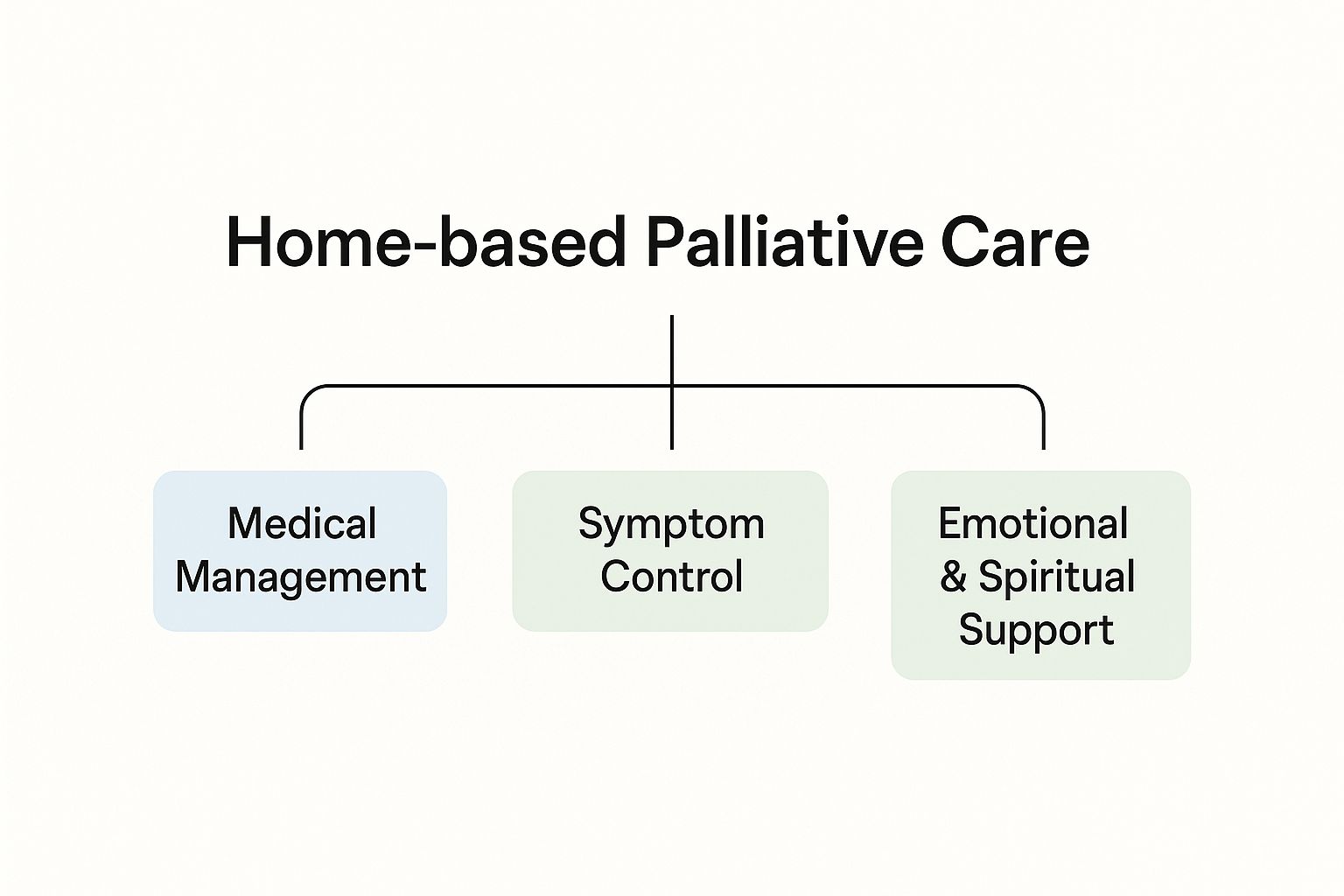
Our team’s efforts focus on medical management, symptom control, and emotional support. They are all connected to care for the whole person. The table below shows who is on your team and what they do.
Your Central Coast VNA Palliative Care Team Roles
| Team Member | Primary Role and Responsibilities |
|---|---|
| Registered Nurse (RN) | Your main point of contact for medical care. The RN manages pain and other symptoms, working with your doctor for maximum comfort. They are also your advocate and educator. |
| Medical Social Worker | Your guide through the healthcare system. They connect you with community resources, provide counseling, and assist with advance care planning. |
| Hospice Aide | The heart of the team, providing hands-on personal care with dignity. They assist with daily activities like bathing and dressing. Their presence offers comfort and relieves family. |
| Chaplain | A source of spiritual and emotional support, regardless of your beliefs. Chaplains are skilled listeners who offer a compassionate presence to help you find peace. |
Let's look at how each professional makes a difference.
The Registered Nurse
Your Registered Nurse (RN) coordinates your medical care. They are experts in managing pain and other symptoms. They work closely with your doctor to adjust treatments so you can feel your best.
An RN also listens and educates. They explain your condition and treatments in a way that makes sense. This empowers you and your family to manage health challenges.
The Medical Social Worker: Your Advocate and Guide
Navigating the healthcare system can be overwhelming. A Medical Social Worker can help. They connect you with the practical support you need.
A Medical Social Worker can help with tasks like:
- Coordinating Community Resources: Arranging services like meal delivery or transportation.
- Counseling and Emotional Support: Offering a safe space to talk through fears and anxieties.
- Advance Care Planning: Guiding you through conversations about future healthcare wishes.
Their goal is to reduce your stress. This lets you focus on your health and time with loved ones.
Providing Comfort and Personal Assistance
Hospice Aides provide hands-on personal care with dignity and respect. They assist with daily activities like bathing, dressing, and grooming. This can be challenging during a serious illness.
Their presence ensures your comfort and safety. It also gives relief to family members. You can read about the key responsibilities of a Hospice Aide on our blog.
Spiritual and Emotional Support
A serious illness often raises deep spiritual questions. Our non-denominational Chaplains are here to provide comfort. They respect your personal beliefs and values.
They are skilled listeners who offer guidance or a quiet presence. This support is for everyone, regardless of faith. A Chaplain helps you and your family find peace during a difficult time.
What Palliative Care Services Actually Look Like

Choosing home-based palliative care brings a complete support system to your home. It is designed to lift the burdens of serious illness. It improves your quality of life where you are most comfortable.
At Central Coast VNA & Hospice, our care plans are built on three pillars. These pillars work together to care for the whole person.
Expert Symptom Management
The first goal is relief. Palliative care focuses on easing difficult symptoms from a serious illness. This goes beyond just managing pain.
Our Registered Nurses are experts at managing issues, including:
- Pain Relief: Using medications and other therapies to keep you comfortable.
- Fatigue Management: Helping you conserve energy for what you love.
- Breathing Difficulties: Addressing shortness of breath.
- Nausea and Appetite Loss: Finding solutions to improve appetite.
- Anxiety and Sleeplessness: Providing support to help you rest.
A nurse might work with your doctor to adjust a medication schedule. They can also teach your family simple techniques to manage symptoms.
Compassionate Emotional and Spiritual Support
A serious illness affects your emotional and spiritual health. Our care goes deeper to offer a steady hand. It is a safe space for you and your loved ones.
Our Medical Social Workers and Chaplains are skilled listeners. They offer guidance and a comforting presence.
This care is about honoring your journey and helping you find strength. We walk alongside you, offering support whenever you need it most.
A Chaplain might help you explore questions of meaning. A Medical Social Worker can counsel your family on coping with stress.
Seamless Care Coordination
Navigating the healthcare system can feel like a full-time job. Our team steps in to be your advocate and guide. We manage the details so you can focus on your well-being.
Our teams use tools like mobile medical computer carts to keep medical information organized. This ensures everyone on your care team is always on the same page. The global need for palliative care is growing, highlighting how critical this support has become.
At Central Coast VNA & Hospice, our palliative care is part of a full continuum of support. It often bridges home health and, if needed, hospice care. This ensures you receive continuous support from a trusted, nonprofit team.
How to Get Started with Home Palliative Care
Getting the right support should not be another source of stress. Starting home palliative care is a simple process. It begins with a conversation.
A common myth is that palliative care is only for the end of life. That is not true. Anyone with a serious illness is likely eligible.
We often work with people with conditions like cancer, heart failure, or dementia. The key is whether the illness causes symptoms and stress.
Starting the Conversation with Your Doctor
The first step is to talk to your primary doctor or specialist. They understand your medical history. They can make a referral for palliative care.
Here’s how you can bring it up:
- Be direct. Ask, "Could palliative care help manage my symptoms?"
- Explain your challenges. Describe your pain, fatigue, or anxiety.
- Focus on your goals. Mention you want to improve your quality of life at home.
Your doctor can then connect you with a provider like Central Coast VNA & Hospice. Our team will work with your physician to build a coordinated care plan.
Understanding Eligibility and Coverage
Worries about cost should not stop you from getting support. Most insurance plans cover palliative care. This includes Medicare, Medi-Cal, and private insurance.
Palliative care is a recognized medical service focused on relief from the symptoms and stress of a serious illness. Its aim is to improve quality of life.
Access to this care is not the same everywhere. The World Health Organization reports many people live where palliative care is underdeveloped. You can read more about the global state of palliative care access.
We are ready to help you sort through your options. We can help you navigate insurance questions. You can also check our guide on Medicare home care eligibility.
Taking the First Step in the Central Coast
If you live in Monterey County, San Benito County, Santa Cruz County, or South Santa Clara County, getting started is easy. Central Coast VNA & Hospice is here to guide you. Our nonprofit mission and 74+ years of service ensure our community can access compassionate care at home.
Call us for a consultation. Our team can answer questions and coordinate with your doctor. We can help you decide if home palliative care is the right choice.
Frequently Asked Questions About Home Palliative Care

Exploring home palliative care brings up many questions. It is normal to want a clear picture of this support. We’ve gathered answers to common questions from our neighbors.
Our goal is to help you feel confident and informed. Each answer is grounded in the expert, patient-first approach of Central Coast VNA & Hospice.
Is Palliative Care the Same as Hospice?
No, they are not the same. While both focus on comfort, they serve different needs at different times. The key difference is that you can receive palliative care at any stage of a serious illness, even while seeking curative treatment. Hospice care is for when curative treatments are no longer working or wanted, focusing entirely on comfort at the end of life.
Can I Keep My Own Doctor?
Yes, absolutely. Our palliative care team works with your existing doctors. We act as an extra layer of support, communicating regularly with your primary doctor to ensure your care is coordinated.
How Are Family Members Supported?
A serious illness affects the entire family, and our support extends to them. Our Medical Social Workers and Chaplains provide emotional support, practical guidance, and connections to community resources. We help prevent burnout and build a stronger circle of care at home.
What Does a Typical Home Visit Look Like?
A home visit is focused, unhurried time dedicated to you. A Registered Nurse will check your vitals and discuss how you've been feeling, including pain, energy levels, and appetite. Based on your needs, they may adjust medications in coordination with your doctor or teach you new ways to manage symptoms, always leaving time to answer your questions.
How Do I Start This Conversation with a Loved One?
Approach the topic gently, framing it as adding support, not giving up. You could say, “I learned about something called palliative care—it's a team that works with your doctor to help with symptoms like pain. It’s an extra layer of support to help you feel stronger.” Emphasize that it is not hospice and that they remain in control of all healthcare decisions. For more answers, please see our palliative care FAQs.