
Patient engagement means patients are active partners in their own health journey. Instead of just receiving care, they work with their healthcare team. This teamwork leads to better health, higher satisfaction, and more control for patients and families. For nonprofit organizations like Central Coast VNA & Hospice, this partnership is key to our mission. We have served Monterey County, San Benito County, Santa Cruz County, and South Santa Clara County for over 74 years.
When patients are involved, they are more likely to follow their care plans and make smart decisions. This is very important for home health, palliative care, and hospice, where care happens at home. Exploring proven strategies to improve patient satisfaction helps build strong patient engagement.
Our team of Registered Nurses and Hospice Aides sees how good patient engagement strategies change the care experience. This article will cover nine powerful ways to improve healthcare. These strategies help you and your loved ones take an active role in your care.
1. Harnessing Technology with Patient Portals
Secure online platforms called patient portals are changing how people access health information. These tools give you 24/7 access to medical records and let you talk securely with your care team. This access is a key part of modern patient engagement strategies because it puts important information in your hands.
How Patient Portals Enhance Care
For families in home health or hospice, a patient portal is a central place for information. You can see care plans from your Registered Nurse, medication lists, and appointments. This makes things less stressful and reduces the need for phone calls. These tools build trust between patients and providers, a value Central Coast VNA & Hospice has practiced for over 74 years.
Making Portals Work for Everyone
To work well, portals must be easy to use. This means training patients and families who are new to the technology. Key features include:
- User-Friendly Design: Simple menus and clear language help everyone find what they need.
- Mobile Accessibility: A design that works on phones and tablets lets you access information anywhere.
- Responsive Communication: Care teams should reply to messages quickly to keep your trust.
This infographic shows the main benefits of patient portals.
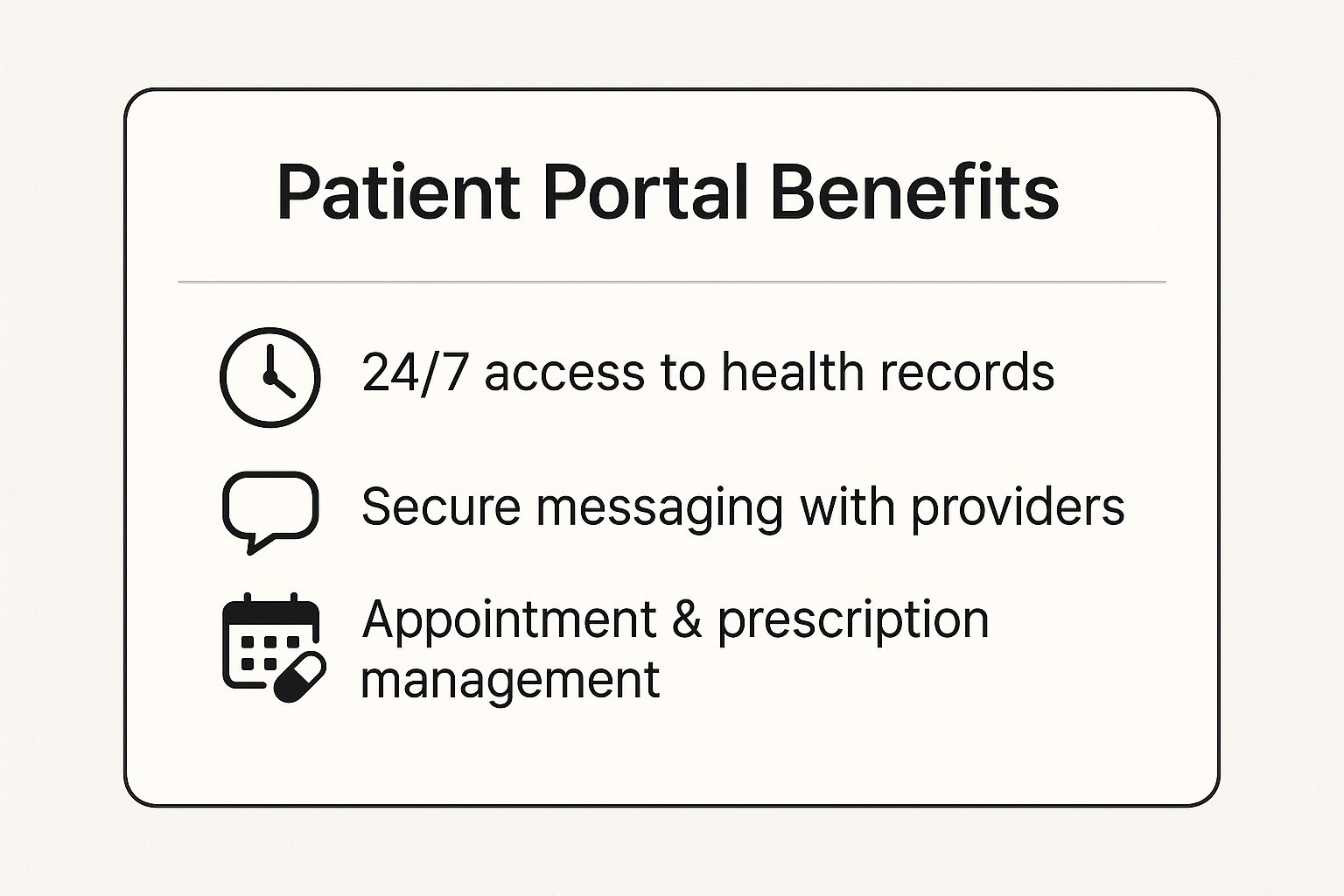
These features help create a better and more informed care experience. Portals are very helpful for services that help seniors with aging in place safely and comfortably. By using these digital tools, we make managing health easier for everyone.
2. Shared Decision Making (SDM)
Shared Decision Making (SDM) is when clinicians and patients make healthcare choices together. This approach combines the provider's medical knowledge with the patient's values and goals. It turns patients into active partners, which is a key part of successful patient engagement strategies. This teamwork makes sure the care plan fits what is important to you.
How SDM Enhances Care
For families in home health or hospice, SDM helps create a care plan that respects the patient's wishes. A Registered Nurse might discuss different ways to manage symptoms, explaining the good and bad of each. This allows the patient and family to choose what aligns with their comfort, giving them a sense of control.
Making SDM Work for Everyone
Good SDM needs a thoughtful and kind approach. Key parts for success include:
- Use Helpful Tools: Patient decision aids can explain complex choices with clear, simple information.
- Allow Enough Time: Important talks about care goals should not be rushed.
- Train Providers: Clinicians need training to lead these sensitive talks well.
This process is very important when planning for future medical needs. Learning about advance care planning can help families feel more prepared. By using SDM, we make sure care is not just medically correct but also personal and respectful.
3. Mobile Health (mHealth) Apps
Mobile health (mHealth) apps are tools on smartphones and tablets that help manage health. These apps can track symptoms, manage medications, or monitor long-term conditions. As a modern part of patient engagement strategies, mHealth apps offer a handy way for people to be involved in their own care.
How mHealth Apps Enhance Care
For patients at home, mHealth apps can improve how they manage their health. For instance, a diabetes app can log blood sugar levels and share them with a Registered Nurse. This real-time information helps the care team give advice quickly, which can prevent problems.
Making Apps Work for Everyone
For mHealth apps to be effective, they must be easy to use. It is important to choose apps that are simple for patients of all ages. Key features for success are:
- Proven Clinical Value: Choose apps that are backed by evidence and provide helpful information.
- Data Security: Make sure any app is HIPAA-compliant to protect patient health information.
- Simple Onboarding: Give clear instructions to help patients and families use the app correctly.
These apps help create a more connected healthcare experience. By using technology patients already have, we can help them be more independent.
4. Patient Education Programs
Patient education programs help people understand their health conditions, treatments, and self-care. These programs turn patients into active partners in their care. This is a key part of effective patient engagement strategies, as people who know more can make better decisions.
How Education Enhances Care
For families in home health or hospice, education gives them clarity and confidence. A good program can explain medical terms and teach skills for managing symptoms at home. For example, learning about and understanding and managing the psychological effects of breast cancer is very important for mental well-being. This knowledge helps reduce worry and gives families more control.
Making Education Work for Everyone
To have a real impact, education must be tailored to the person. This means using different learning styles and simple language. Key features include:
- Teach-Back Method: Clinicians ask patients to explain things in their own words to check if they understand.
- Visual Aids: Using charts, videos, and simple graphics can make information easier to learn.
- Accessible Materials: Information should be available in different languages and formats, like large print.
Using these methods helps providers make sure important information is understood. This leads to a stronger partnership, better health, and a more positive care experience.
5. Care Coordination Programs
Care coordination programs organize a patient's care across different providers and services. They make sure everyone on the care team works together smoothly. This is a vital patient engagement strategy, especially for those with complex health needs.
How Care Coordination Enhances Care
For families in home health or hospice, care coordination prevents confusion. It creates one clear plan that includes doctors, nurses, and therapists. This makes care less confusing and ensures the patient's wishes are always the focus. This helps build trust and encourages active involvement in the care plan.
Making Coordination Work for Everyone
Good care coordination relies on clear communication. It helps make transitions, like going from the hospital to home, much smoother. Key features include:
- Dedicated Care Coordinator: One person, often a Registered Nurse, guides the patient and family through the system.
- Shared Care Plans: All providers use a single care plan that is updated regularly.
- Proactive Communication: The care team meets often to discuss progress and plan next steps.
This organized approach is key to managing complex symptoms and improving quality of life. This is a main goal of our palliative care services. By coordinating care well, we empower patients and families on their healthcare journey.
6. Telemedicine and Virtual Care
Telemedicine and virtual care use technology to provide healthcare from a distance. Patients can talk with their care team through video calls or phone calls. This is a powerful part of patient engagement strategies for people managing an illness at home.

How Virtual Care Enhances Care
In home health and hospice, telemedicine helps between in-person visits from a Registered Nurse or Hospice Aide. It allows for quick check-ins to manage symptoms or give emotional support. This immediate access to the care team can prevent trips to the emergency room. It reflects the kind, responsive care model Central Coast VNA & Hospice has provided for over 74 years.
Making Virtual Care Work for Everyone
For virtual care to work, it must be simple for everyone. The goal is connection, not complicated technology. Key features include:
- Reliable Technology: A stable and secure platform helps with clear communication.
- Patient and Family Education: Offer simple instructions on how to use the virtual visit tools.
- Integrated Care: Connect virtual visit notes with the patient’s health record so the whole team is informed.
Virtual care is a handy way to improve communication and provide ongoing support. By using telemedicine, we offer more flexible interactions to help patients feel comfortable at home. This is especially helpful for services like palliative care.
7. Patient Advisory Councils
Patient Advisory Councils (PACs) are groups of patients and family members who work with healthcare organizations. They give feedback on policies and care to make sure the patient's voice is heard. This teamwork is one of the most direct patient engagement strategies for improving services.
How Patient Advisory Councils Enhance Care
For home health and hospice agencies, a PAC offers a way to get real feedback from the people we serve. Members can share their thoughts on everything from communication to emotional support. This helps organizations like Central Coast VNA & Hospice improve services to meet the needs of families at home.
Making Councils Work for Everyone
A good PAC needs real partnership and a promise to take action. To work well, councils should be set up with care. Key parts include:
- Diverse Representation: Include patients and families from different backgrounds to get a wide range of views.
- Clear Expectations: Give members training and clear goals so they can contribute in a meaningful way.
- Actionable Feedback: Create a process for leaders to review and use the council's ideas.
These councils are a great way for people to give back, much like our VNA & Hospice volunteer program. By listening to our community, we can build a better care system for everyone.
8. Gamification in Healthcare
Gamification uses game-like elements, such as points and badges, to encourage healthy habits. This can turn tasks like taking medicine or doing physical therapy into fun challenges. This is one of the newer patient engagement strategies that uses our natural desire to achieve goals to improve health.
How Gamification Enhances Care
For patients managing long-term conditions at home, gamification can make treatment plans feel less like a chore. An app might give points for checking blood sugar on time or a badge for taking medicine every day for a week. This positive feedback helps build healthy habits and makes patients more involved in their care.
Making Gamification Work for Everyone
To work well, gamified health programs must be simple and have a clear purpose. The health goal should always be the main focus. Key features include:
- Meaningful Goals: Connect challenges and rewards to important health goals, like better mobility.
- Simple Gameplay: Make sure the rules are easy to understand for people who are not used to technology.
- Progressive Difficulty: Start with easy goals and add new challenges over time to keep it interesting.
When designed well, gamification can boost motivation for patients. This is helpful for complex treatment plans, like those in our palliative care programs, by adding fun to daily health tasks.
9. Peer Support Programs
Peer support programs connect patients with trained people who have had similar health experiences. These groups use shared understanding to provide emotional support and encourage self-care. This is a key part of patient engagement strategies because it builds a community of trust and empathy.
How Peer Support Enhances Care
For people managing a long-term illness or facing end-of-life care, feeling understood is very important. Peer support offers a safe place to share fears, celebrate small wins, and give practical advice. This connection helps people feel less alone and more empowered to manage their health.
Making Peer Support Work for Everyone
To build a good program, training and structure are key. The goal is to create a safe and supportive space. Key elements include:
- Comprehensive Training: Peer supporters must learn how to listen well, keep information private, and set boundaries.
- Thoughtful Matching: Pairing people based on similar conditions or backgrounds can create stronger connections.
- Professional Integration: These programs work best when they support clinical care and have clear communication with the healthcare team.
These programs create a strong support network that improves well-being and health. By connecting people who understand each other, we can offer deeper comfort. Learn more about the group support for patients and families at Central Coast VNA & Hospice.
Your Partner in Health on the Central Coast
Becoming an active partner in your healthcare is the way of the future. The nine patient engagement strategies in this article all have one goal. They aim to empower you and your loved ones to take a main role in your health journey. This change leads to better health and care that fits your personal values.
At Central Coast VNA & Hospice, these ideas have been the foundation of our care for over 74 years. We believe the best patient engagement strategies are built on trust, communication, and respect. Our dedicated teams of Registered Nurses, Hospice Aides, and Medical Social Workers live this idea every day.
Putting Engagement into Action
By understanding these ideas, you can change your relationship with healthcare. It means asking questions, using digital tools to track your progress, and stating your wishes for your care. For families on the Central Coast dealing with serious illnesses, this active role is very important. It makes sure care plans are tailored to your unique needs.
As a local, nonprofit provider serving Monterey, San Benito, Santa Cruz, and South Santa Clara counties, our commitment is to you. We offer a full range of care from home health to palliative and hospice services. This ensures you get steady, kind support as your needs change.
By building strong partnerships, we help you have the best possible quality of life, on your terms. True engagement is more than a strategy. It is our promise to honor your journey with dignity and respect. Contact us today to learn more about our services.
Frequently Asked Questions (FAQs)
1. What is patient engagement?
Patient engagement is the process of involving patients as active partners in their own healthcare. It means they work together with their providers to make informed decisions about their treatment and health management. This teamwork often leads to better health outcomes and higher satisfaction with care.
2. Why are patient engagement strategies important for home health and hospice?
In home-based care settings, patients and their families have more responsibility for daily care. Strong engagement strategies empower them with the knowledge, tools, and confidence to manage symptoms, follow care plans, and communicate effectively with their team. This is essential for ensuring safety and quality of life at home.
3. How does Central Coast VNA & Hospice support patient engagement?
As a nonprofit serving Monterey County and surrounding areas for over 74 years, we focus on building trust and partnership. Our clinicians use shared decision-making, provide thorough patient education, and coordinate care closely with all providers. Our mission is to ensure every patient's voice is heard and their care plan reflects their personal goals.
4. Can technology really help older adults engage in their care?
Yes. When designed to be user-friendly, tools like patient portals and telemedicine can be very helpful for older adults. They provide convenient access to health information and make it easier to communicate with providers from home. We offer education to help patients and families feel comfortable using these tools.
5. What is the difference between palliative care and hospice care?
Palliative care can be provided at any stage of a serious illness and focuses on relieving symptoms and stress to improve quality of life. Hospice care is a specific type of palliative care for individuals with a life-limiting illness who are nearing the end of life. Both are part of Central Coast VNA & Hospice's continuum of care.
Ready to experience a healthcare partnership built on trust and empowerment? Learn how the dedicated teams at VNA and Hospice integrate these patient engagement strategies into our home health, palliative, and hospice care. Visit VNA and Hospice to discover how our nonprofit, mission-driven approach puts you at the center of everything we do.