
Making the decision to bring professional health services into the home is a significant choice. On the Central Coast, many families wait until a crisis hits before seeking support. This delay in 2026 often comes from wrong ideas about services like palliative and hospice care.
Many people think these services are only for the final days of life. However, getting help earlier from a trusted provider like Central Coast VNA & Hospice leads to a much better quality of life. For over 74 years, our nonprofit mission has been to serve families with compassionate care. We work in Monterey County, San Benito County, Santa Cruz County, and South Santa Clara County.
This guide will show you three clear ways to know it’s time for help at home. Understanding your options is the first step. Consulting a comprehensive guide to home services for the elderly can help. We want to empower you to make good choices for your loved one.
1. Increasing Physical Challenges and Safety Concerns
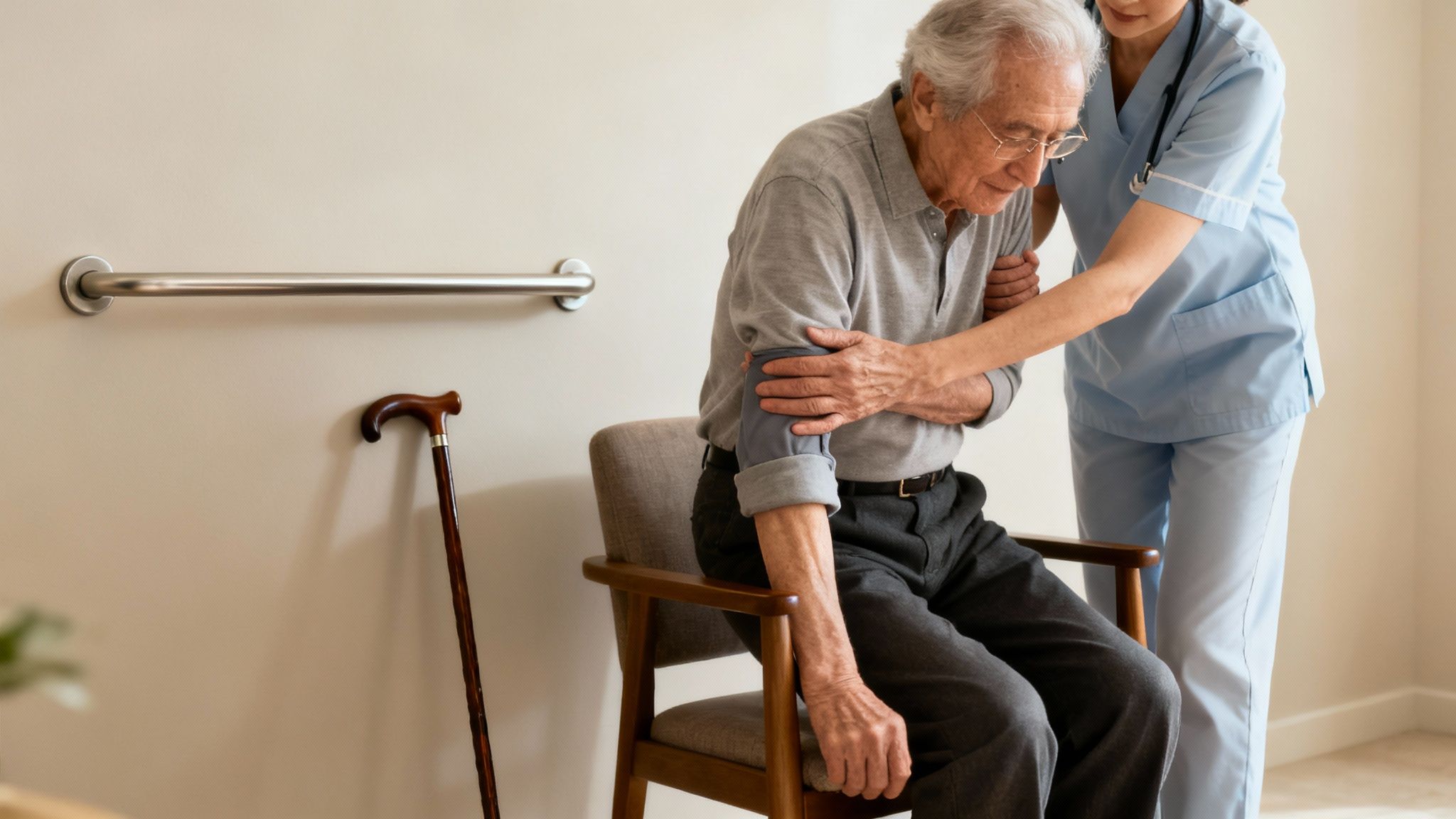
One of the clearest signs that it's time for help at home is when physical challenges create safety risks. This is more than just slowing down. It means daily activities that were once easy have become hard.
This can turn a familiar home into a place of potential danger. When tasks like bathing, dressing, or making a meal become difficult, it is a sign that professional support is needed. Families are often the first to notice these changes.
They might see more stumbles or falls, or a decline in personal hygiene. These are not small issues. They show that a loved one's home is no longer safe without skilled help.
Red Flags to Watch For
Recognizing specific signs is the first step. Look for these changes:
- Difficulty with Mobility: Needing to hold onto furniture to walk or struggling to get up from a chair.
- Decline in Personal Care: Infrequent bathing or wearing dirty clothes. This is often due to physical limits.
- Unexplained Weight Loss: Spoiled food in the fridge or weight loss can mean meal preparation is too hard.
- Medication Mishaps: Forgetting to take pills or taking the wrong doses are serious safety risks.
How Central Coast VNA & Hospice Can Help
When these challenges arise, Central Coast VNA & Hospice provides a team-based approach. Our skilled clinicians work with patients and families in places like Monterey and Salinas. We create a supportive environment at home.
A Registered Nurse can help manage complex medications to prevent emergency room visits. A Physical Therapist can help a patient recover strength and balance after surgery. A Hospice Aide can assist with personal care tasks like bathing and dressing.
Our goal is to help individuals maintain their independence at home for as long as possible. If you are noticing these signs, you can learn more about our home health care services and how we can help.
2. Worsening Chronic Illness and Complex Symptoms
Another clear sign it's time for help is when a chronic illness gets worse. This leads to symptoms that are hard to manage at home. Conditions like heart failure, COPD, or cancer often bring pain, shortness of breath, and fatigue.
Families may feel overwhelmed trying to handle these symptoms alone. Frequent trips to the emergency room or hospital are a strong signal that more support is needed. This is a key moment to consider in-home palliative or hospice care.
Misconceptions often create unnecessary suffering. Many people think accepting hospice means "giving up." In reality, these services are designed to enhance comfort and dignity, often alongside treatment.

Red Flags to Watch For
It's important to recognize when symptoms are becoming unmanageable. Look for these signs:
- Increased Pain or Discomfort: Pain that is no longer controlled by current medications.
- Frequent Hospital Visits: Multiple trips to the ER or hospital admissions in the last few months.
- Significant Decline in Function: Spending most of the day in bed or a chair due to fatigue or weakness.
- Trouble Breathing: Worsening shortness of breath, even while resting.
How Central Coast VNA & Hospice Can Help
Central Coast VNA & Hospice offers expert palliative and hospice care at home. Our teams are skilled in managing complex symptoms to improve quality of life. We serve families across Monterey County, Santa Cruz County, and nearby areas.
For a patient with advancing illness, our Palliative Care team can manage pain and other symptoms. This care can be provided alongside curative treatments. Our goal is to provide relief and support.
When an illness is terminal, our hospice team provides comfort-focused care. Our team includes a Registered Nurse, Hospice Aide, Medical Social Worker, and Chaplain. We work together to support the patient and family. If you see these signs, learn more about our palliative care services.
3. Family Caregiver Burnout and Stress
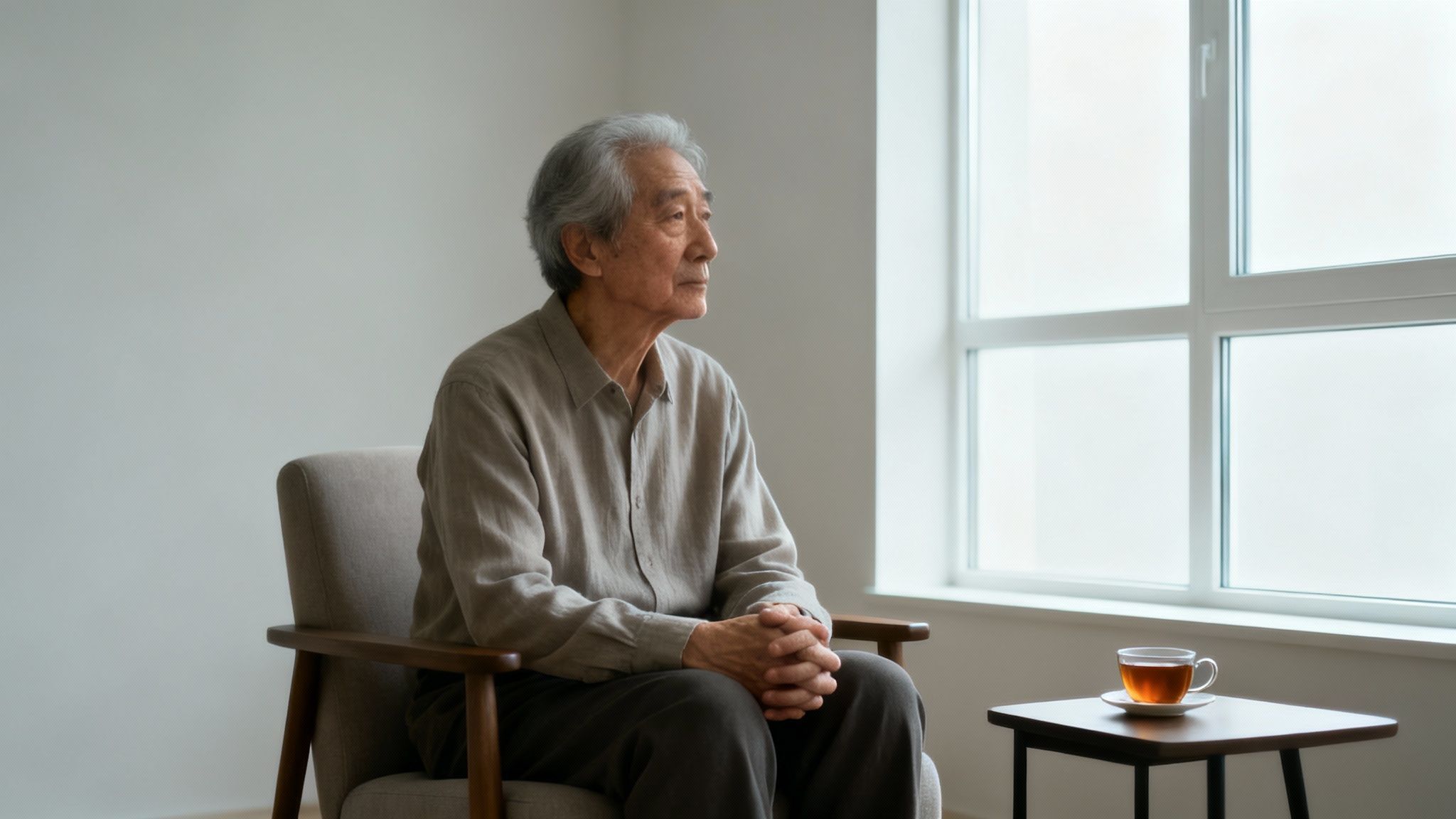
Sometimes, the clearest sign isn't about the patient, but about their family caregiver. When a spouse or adult child shows signs of exhaustion, it is time for professional support. Caregiving is a demanding role that can lead to burnout.
This exhaustion can be physical, emotional, and mental. A stressed caregiver may struggle to provide safe and effective care. Ignoring caregiver burnout puts both the caregiver and the patient at risk.
Families often say they "wish they'd started sooner" with professional help. Getting support early avoids crisis and regret. It ensures the whole family is cared for. According to the National Hospice and Palliative Care Organization (NHPCO), the average hospice stay is just 17 days, which is much shorter than the six months available (NHPCO, 2021). This shows many wait too long.
Red Flags to Watch For
Recognizing caregiver burnout is essential. Watch for these signs:
- Emotional and Physical Exhaustion: Constant fatigue or feelings of being overwhelmed.
- Withdrawal from Social Life: Losing interest in hobbies and friendships.
- Increased Irritability or Anxiety: Frequent mood swings or impatience.
- Neglecting Personal Health: Skipping their own doctor's appointments or having poor eating habits.
How Central Coast VNA & Hospice Can Help
At Central Coast VNA & Hospice, we support the entire family. Our team-based approach lifts the burden from family members. This allows them to focus on quality time with their loved one.
A Registered Nurse can manage complex medical tasks. A Hospice Aide can assist with personal care, giving the family caregiver a much-needed break. Our Medical Social Workers and Chaplains provide emotional and spiritual support for everyone.
We help families in Hollister, Santa Cruz, and all our service areas. Our support makes caregiving sustainable. You're not alone and can learn how to get real support as a family caregiver on the Central Coast.
Take the Next Step with Confidence
Recognizing these signs is a loving first step. It shows you are ready to find the best support for your family. Waiting for a crisis is not the only option in 2026.
By acting early, you can introduce support that enhances safety and preserves dignity. It's not about giving up. It's about adding a layer of expert care at home. This allows you to shift from being a stressed caregiver back to being a spouse or child.
If you are unsure, just ask. Families in Monterey, Santa Cruz, Salinas, and Hollister can call us. We offer a no-pressure consultation to walk you through your options with compassion.
Your Action Plan for Moving Forward
Navigating this journey requires a clear approach. Here’s what you can do next:
- Start the Conversation: Talk openly with your loved one and family about goals like safety and comfort.
- Document Your Observations: Keep notes of the changes you see to share with healthcare providers.
- Consult with Professionals: Discuss your concerns with your loved one’s doctor.
- Explore Local Resources: Research trusted providers like Central Coast VNA & Hospice.
Making the decision to bring in help is a profound act of love. Our team is here to guide you with expertise and a compassionate heart. We will ensure you feel confident in your decisions every step of the way.
Ready to explore your options with a team that has served the Central Coast for over 74 years? Contact VNA and Hospice for a no-obligation consultation. Learn how our continuum of care can support your family.
Frequently Asked Questions (FAQs)
1. What is the difference between home health, palliative care, and hospice care?
Home health care helps patients recover from surgery, illness, or injury with skilled nursing and therapy. Palliative care focuses on symptom relief for serious illness and can be given alongside curative treatment. Hospice care is for patients with a life-limiting illness, focusing on comfort and quality of life when a cure is no longer the goal.
2. Does accepting hospice care mean we are giving up?
No, this is a common misconception. Hospice care is not about giving up. It is about shifting focus to comfort, dignity, and quality of life. It provides a team of experts to support both the patient and the family.
3. Who pays for home health and hospice services?
Most services are covered by Medicare, Medi-Cal, and private insurance. As a nonprofit organization, Central Coast VNA & Hospice provides care to all eligible patients, regardless of their ability to pay.
4. How early should we contact Central Coast VNA & Hospice?
It is never too early to learn about your options. Many families tell us they wish they had called sooner. Contacting us early allows more time for planning and ensures you get the full benefit of our support.
5. What areas do you serve?
Central Coast VNA & Hospice has served our local communities for over 74 years. We provide care in Monterey County, San Benito County, Santa Cruz County, and South Santa Clara County, including cities like Salinas and Hollister.