
When people ask if hospice is only for the last few days of life, the answer is no. This is a common misunderstanding about this special type of care.
Hospice care is designed to improve the quality of life for someone with a life-limiting illness. This means a doctor believes they have six months or less to live if the illness follows its usual course.
Reframing the Purpose of Hospice Care

Many people think starting hospice means giving up. The truth is very different.
Choosing hospice is about shifting the goal from curing an illness to managing symptoms. It helps patients focus on comfort, dignity, and their final wishes. It is about making the most of the time that is left.
For over 74 years, Central Coast VNA & Hospice has provided this kind of care. We are a nonprofit serving families in Monterey County and nearby areas. We have learned that patients get more benefit from hospice when they start sooner.
The Goal of Hospice Is Quality of Life
Hospice care is not about dying. It is about living as well as possible for as long as possible. We offer a team of experts to help with more than just physical pain.
The main goals of hospice include:
- Managing Pain and Symptoms: Our team provides expert medical care. We help relieve pain, breathing problems, and other symptoms of a serious illness.
- Providing Emotional and Spiritual Support: We have chaplains and social workers on our team. They help patients and families work through difficult emotions and find peace.
- Supporting the Family: A serious illness affects everyone. Hospice gives education, resources, and breaks to loved ones who are providing care.
Hospice care changes what hope looks like. Instead of hoping for a cure, families can hope for peaceful days, meaningful talks, and comfort at home.
This approach makes sure a person’s final months are lived with dignity. It lets them make choices about their care and focus on what matters to them.
To learn more about this philosophy, you can find detailed information about what hospice care is and how we support patients and families on the Central Coast.
Understanding Hospice Eligibility and When to Consider It
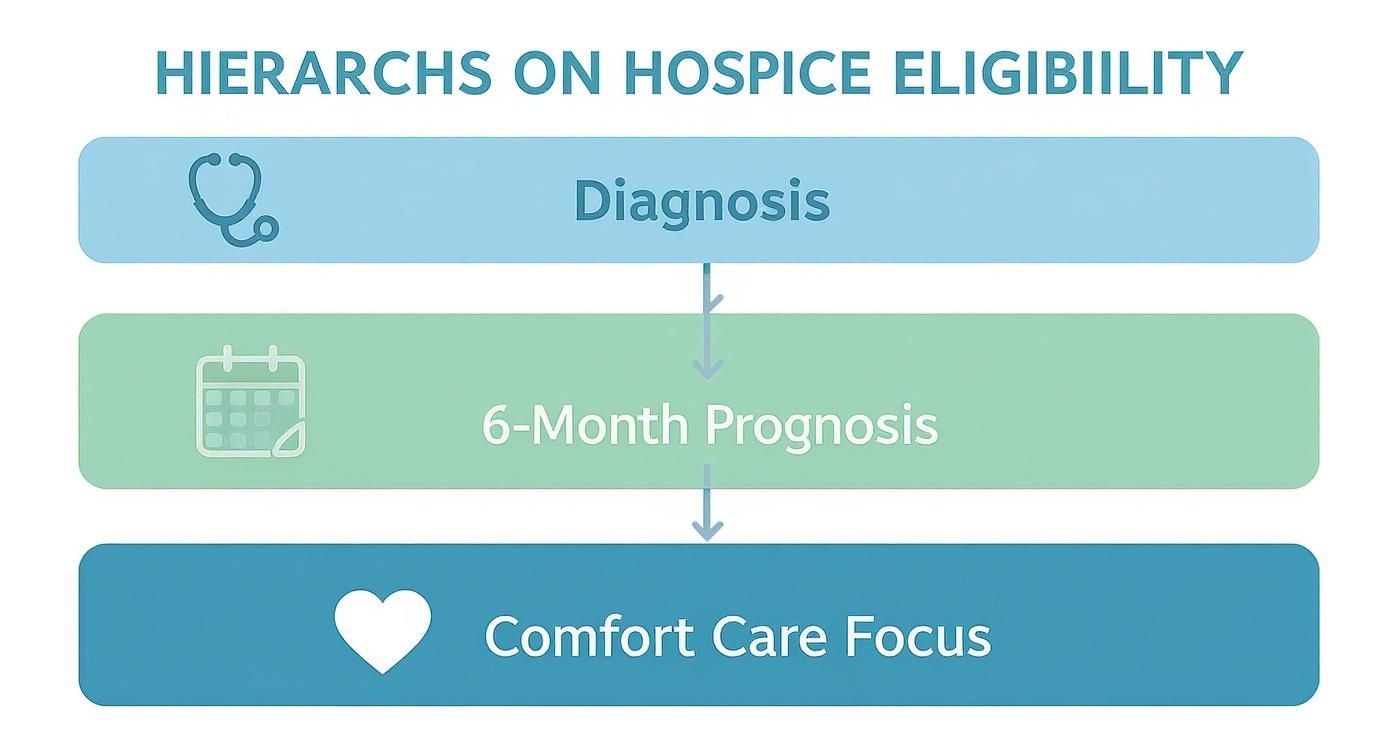
Knowing when to think about hospice can feel confusing. The main rule, especially for Medicare, is that a doctor expects the patient to live for six months or less. This is if the illness runs its natural course.
This six-month timeline is not a strict deadline. Many people receive hospice care for longer than six months. A doctor just needs to confirm they still meet the requirements. The focus moves from cure to comfort.
Gentle Signs It May Be Time to Talk
The choice to talk about hospice is very personal. It is often a series of small changes, not one big event.
If you are in Monterey County or nearby, it may be time for a gentle conversation if you see these signs:
- Frequent Hospital Stays: Are visits to the ER or hospital happening more often?
- Noticeable Decline: Is your loved one weaker, losing weight, or too tired for simple daily tasks?
- Worse Symptoms: Is pain or shortness of breath getting harder to manage?
- Trouble with Daily Activities: Do they need more help with bathing, dressing, or eating?
This is also a good time to review advance care plans. Resources like understanding Do Not Resuscitate (DNR) orders can help make sure everyone agrees on what to do.
Navigating the Six-Month Guideline
In the U.S., a doctor must certify that a patient is eligible for the Medicare Hospice Benefit. This can mean that patients with serious illnesses that are not yet terminal may not qualify. This is where palliative care can help.
Many hospice agencies, including Central Coast VNA & Hospice, offer palliative care. This service supports patients who need help with symptoms but do not meet the strict hospice rules yet.
Exploring hospice means choosing to put comfort and quality of life first. It ensures a loved one’s final months are lived with dignity and peace.
Starting these talks early, before a crisis, gives your family time to make careful choices. For a closer look at the rules, see our guide on hospice eligibility requirements. Our team is here to give you kind answers and support.
Hospice Care Versus Palliative Care

It is common to confuse hospice and palliative care. They are related, but they are not the same. Understanding the difference helps you choose the right support.
Simply put, all hospice care is palliative, but not all palliative care is hospice. Palliative care is a broad approach focused on relief from the symptoms and stress of a serious illness. It can start on the day of diagnosis and happen alongside treatments meant to cure.
Defining the Primary Focus of Care
The main difference is the goal of care. Palliative care aims to improve your quality of life while you are still getting treatment for an illness. It helps manage symptoms like pain and anxiety.
Hospice care begins when the focus moves from curing the illness to maximizing comfort. It is for someone with a life-limiting illness and a life expectancy of six months or less. The goal is to help them live their final months with dignity and peace. Knowing whether Medicare pays for palliative care can also help families decide.
Here is a simple chart to compare them:
Comparing Palliative Care and Hospice Care
| Feature | Palliative Care | Hospice Care |
|---|---|---|
| When It Starts | At any stage of a serious illness, often at diagnosis. | Typically when life expectancy is 6 months or less. |
| Treatment Goal | To relieve symptoms and stress while pursuing curative treatment. | To provide comfort and quality of life when curative treatment is stopped. |
| Location of Care | Can be provided in a hospital, outpatient clinic, or at home. | Primarily provided wherever the patient calls home. |
| Curative Treatments | Can be received at the same time as treatments like chemo or radiation. | Curative treatments are no longer the focus of the care plan. |
This table shows that palliative care can be given with cure-focused treatments. Hospice is for when comfort becomes the main goal.
The Continuum of Care on the Central Coast
Here at Central Coast VNA & Hospice, we offer a complete Continuum of Care in Monterey County. This means we guide patients from one level of support to the next. Families do not have the stress of changing agencies as needs change.
For example, a patient might start with our home health nursing after a hospital stay. If their illness gets worse, they could move to our palliative care program for more symptom management. When the time is right, they can transition to our hospice program, often with the same nurses they already know.
This connected approach ensures patients receive consistent, compassionate care. It is part of our nonprofit mission to support our community.
Understanding the benefits of each service is important. We explain more in our article about hospice vs. palliative care.
What Services Hospice Actually Provides
Many families wonder what hospice support looks like from day to day. It is much more than just a nurse visiting. It is a complete support system for both the patient and their loved ones.
This care happens wherever a person calls home. This could be a private house, an assisted living community, or a nursing facility.
At the center of this support is a dedicated team. These professionals work together to create a plan that honors the patient's wishes. This brings a sense of calm and control back to the family.
Your Dedicated Care Team
As a nonprofit serving the Central Coast for over 74 years, our focus is on patient care, not profits. Our team is built to provide layers of support.
The main members of every hospice team include:
- Registered Nurse (RN): The RN leads the medical care, focusing on pain and symptom control. They visit regularly, monitor the patient, and teach the family how to help.
- Hospice Aide: A Hospice Aide helps with personal care like bathing and dressing. This support can be a huge relief for family members.
- Medical Social Worker: This person offers emotional support and helps with practical challenges. They connect families to community resources and help with advance care planning.
- Chaplain: The Chaplain provides spiritual support that respects all beliefs. They listen, offer comfort, and help patients and families find peace.
This team approach ensures that all needs are met. It is a circle of support that provides comfort when it is needed most.
A Plan Centered on Comfort and Dignity
Together, this team does much more than medical check-ups. They manage symptoms like pain and shortness of breath to keep the patient comfortable.
The team also provides emotional and spiritual guidance. They offer respite for family members, giving them a needed break.
This complete system is the foundation of the hospice care options we offer. We serve families across Monterey, San Benito, Santa Cruz, and South Santa Clara counties.
Debunking Common Fears About Hospice

Fear and wrong information can keep families from exploring hospice. This is unfortunate because hospice can bring great comfort and support. Most of these fears are based on myths that are not true.
Let's clear up what hospice really is. This will help you make confident decisions for your family.
One of the biggest fears is that choosing hospice means "giving up hope." Hope does not go away—it just changes. Instead of hoping for a cure, families hope for comfort, peace, and meaningful time together.
This shift helps everyone focus on quality of life at home. For over 74 years, our team at Central Coast VNA & Hospice has seen this positive change in thousands of families. We serve communities across the Central Coast of California, including Monterey and San Benito Counties.
Hospice Is a Service, Not a Place
Another common myth is that hospice is a building you move into. This is not true.
Hospice is a service delivered by a team that comes to you. They provide care wherever you call home, whether it's a house, assisted living, or a nursing facility. The goal is to provide expert support in a familiar place.
Hospice is not just for the last few days of life. Many patients receive services for months. This gives them time to build trusting relationships with their care team.
Enrolling in hospice earlier gives patients more time to benefit from symptom management and emotional support. This leads to a higher quality of life.
The Benefit of Early Enrollment
Waiting until the last days of life to start hospice is a common regret we hear. When you wait, you miss out on the full benefits of this support.
According to the National Hospice and Palliative Care Organization (NHPCO), about 1.72 million Medicare beneficiaries received hospice care in 2020 (NHPCO, 2022). Many still enroll very late, missing months of comfort and guidance. You can discover more insights about these hospice trends to learn why early talks are so important.
When you face these fears with facts, hospice becomes a team of allies for the journey. To learn more, you can separate fact from fiction in our detailed guide. Our nonprofit mission is to provide this care to everyone in our community who needs it.
Taking the Next Step with Central Coast VNA & Hospice
Learning about your options is the first step toward peace of mind. Hospice is not about giving up. It is a choice to focus on comfort, dignity, and making the most of every day.
For families in Monterey County, San Benito County, Santa Cruz County, and South Santa Clara County, the next step is a simple talk. We encourage you to talk with your loved ones and your doctor about your wishes. When everyone is on the same page, the choices made will reflect what truly matters.
How to Get More Information
You do not have to figure this out alone. You can contact Central Coast VNA & Hospice for a no-obligation consultation. The best time to get information is before a crisis.
Our compassionate, local team has been part of this community for over 74 years. We are here to provide clear, honest answers for your journey.
Taking time to understand your options now helps you make thoughtful decisions. It honors your values and brings comfort to your family.
As a nonprofit, our mission is to ensure every family has the support they need. Contact us today to start the conversation. You deserve this support.
Frequently Asked Questions About Hospice
What if a patient on hospice gets better?
A person can leave hospice care at any time if their health improves or they want to try curative treatments again. If their health declines later, they can re-enroll in hospice. This flexibility ensures the care plan always meets the patient’s needs.
Do we have to give up our own doctor?
No. Your family doctor can remain an important part of the care team. The hospice team works closely with your physician to coordinate care, ensuring a smooth and collaborative process. Central Coast VNA & Hospice values the relationship you have with your trusted doctor.
Is hospice care expensive?
Hospice is covered by Medicare Part A, Medi-Cal, and most private insurance plans. This benefit typically covers the hospice team, medications related to the terminal illness, and medical equipment. As a nonprofit, CCVNA is committed to providing care to all eligible individuals, regardless of their ability to pay.
Where is hospice care provided?
Hospice care is provided wherever the patient calls home. This could be a private residence, an assisted living facility, or a nursing home. The goal is to bring comfort, support, and expert care directly to the patient in a familiar environment.
When is the right time to learn about hospice?
It is never too early to gather information. Many families say they wish they had called sooner. Learning about your options now, before a crisis, allows you to make calm, informed decisions that align with your family’s wishes.
At Central Coast VNA & Hospice, our mission is to provide comfort, dignity, and expert care. If you have more questions or just want to talk through your family's situation, please contact us today. We're here for a compassionate, no-obligation conversation whenever you're ready.