
For family caregivers on the Central Coast, vague advice like "take breaks" can feel hollow. You need to know where to turn for help. Getting real, practical support means connecting with local services in Monterey, San Benito, Santa Cruz, and South Santa Clara counties.
This guide is your roadmap to finding that help. It moves beyond generic tips to offer real solutions for caregivers in our community.
The Unseen Challenges of Caregiving on the Central Coast
Stepping into a caregiving role is an act of love. But it often comes with an enormous physical, emotional, and financial weight. Most people are thrown into this role with no training, leading to stress that affects the entire family.
General advice from national websites often misses the mark. It doesn't understand the unique challenges of our local community. You need more than just encouragement; you need coordinated, compassionate support right here at home.
A trusted local partner can change everything. For over 74 years, Central Coast VNA & Hospice has served this community. We understand the specific challenges family caregivers face in our region.
The Growing Reality for Families
If you feel like the demands of caregiving are growing, you are not alone. It is a national trend that impacts families everywhere. According to AARP, the number of family caregivers providing complex or intense care grew from 2015 to 2020 (AARP, 2020).
This surge means more people like you are juggling difficult medical tasks. You are also managing finances and providing emotional support. This often comes at the expense of your own well-being.
It is important to recognise the signs of emotional burnout. Burnout is a serious and common consequence of this demanding role. Recognizing when you need help is the first step toward getting relief.
Taking care of yourself is not selfish. It is an essential part of providing sustainable, loving care for someone else.
Many caregivers in Salinas, Hollister, and across the Central Coast do not realize they qualify for help. They often think services like hospice are only for the patient. The truth is, these programs are designed to support the entire family by offering a lifeline when you feel most isolated.
For immediate ideas, our team has put together some practical tips for family caregivers that can help on this journey.
Signs You Need More Support
This table helps you identify signs of burnout. It connects them to specific, actionable solutions. Recognizing your needs is the first step.
| Common Feeling or Challenge | What It Could Mean | Where to Find Help |
|---|---|---|
| Constant exhaustion, poor sleep | Physical Burnout | Respite Care, Hospice Aides |
| Feeling isolated, irritable, or hopeless | Emotional Strain | Caregiver Support Groups, Social Workers |
| Overwhelmed by medical tasks | Lack of Training | Home Health Nursing, Palliative Care Team |
| Worried about finances or insurance | Financial Stress | Financial Assistance Programs, Social Workers |
| No time for yourself or other family | Need for a Break | Respite Care, Volunteer Visits |
If any of these challenges feel familiar, it is a clear signal to reach out. You do not have to carry this weight alone.
Pinpointing the Exact Support You Need
Saying "I need a break" is a huge first step. But to get help that truly helps, it is useful to get more specific. Taking a personal inventory of your caregiving role can clarify what is most draining.
You can break down your support needs into three main areas. These are physical, emotional, and logistical. Once you know which one causes the most strain, you can find solutions that lighten your load.
Understanding Your Unique Needs
Every caregiving situation is different. Are you physically tired from helping a loved one with daily tasks? Or is the emotional weight and constant worry the biggest challenge?
Perhaps the biggest stressor is logistical. This can include juggling prescriptions, appointments, and insurance paperwork. Answering these questions honestly helps you create a clear, actionable plan.
- Physical Support: This is the hands-on help. A professional can assist with medications, wound care, or personal hygiene.
- Emotional Support: This tends to the mental toll of caregiving. It might mean finding a local support group or talking with a social worker or chaplain.
- Logistical Support: This covers administrative tasks. It involves getting help with insurance, scheduling, or important legal documents.
This decision tree infographic can help you visualize that first step. It shows how to recognize when you are overwhelmed and need to reach out.
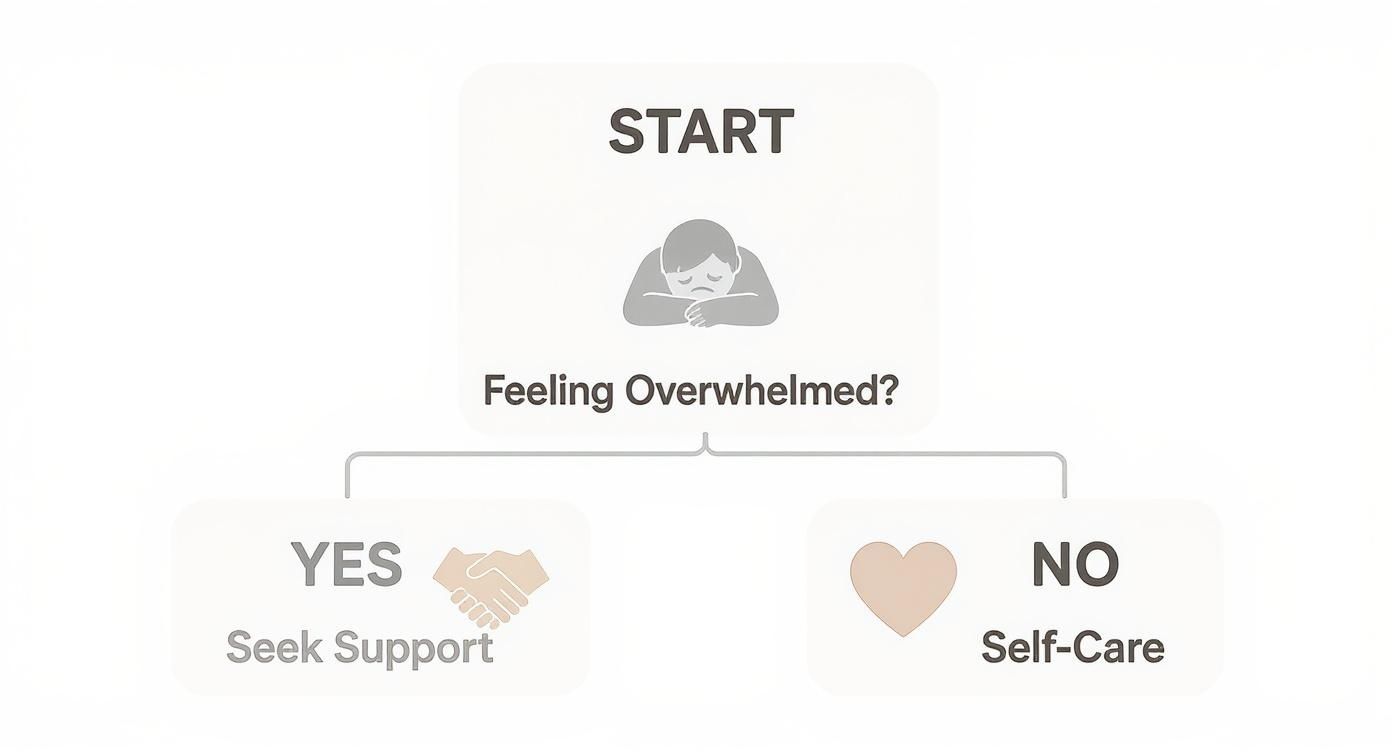
Acknowledging you are burning out is the critical trigger. It is the moment you decide to seek real, structured support.
From Identification to Action
Once you name your biggest challenges, you can connect them to specific services. If medical tasks cause anxiety, you may benefit from training from a Registered Nurse. This is available through our home health care services.
If you feel overwhelmed by paperwork, a Medical Social Worker can help. They are experts at connecting families with local resources.
Pinpointing your needs transforms a cry for help into a targeted request. It’s the difference between saying "I'm drowning" and "I need a life raft."
Caregivers often manage finances and legal matters. For instance, understanding the critical importance of Power of Attorney is essential for managing a loved one's affairs. Breaking down your challenges helps you find the right professionals for each one.
Finding Actionable Local Resources
Knowing you need help is one thing. Finding it is something else. For families on the Central Coast, national advice does not always apply. You need local solutions from a team that knows our community.
Central Coast VNA & Hospice builds caregiver support into everything we do. Our continuum of care—from home health to palliative and hospice—is designed with you in mind. We provide different layers of assistance to relieve your burden at the right time.

How Our Continuum of Care Supports You
Imagine having a team of experts in your corner. That is what our services feel like. Each one is tailored not just to help your loved one, but to make your life more manageable.
For example, after a hospital stay, you may face complex medical tasks. A Home Health Registered Nurse can provide hands-on training for medication management or wound care. This expert guidance turns overwhelming duties into manageable routines.
If a serious illness is the focus of every day, our Palliative Care team can help. Their expertise in symptom management directly eases your load. When your loved one is more comfortable, you can focus on being a family member again.
The goal is not to replace you, but to empower you. Our professionals work alongside you, providing specialized skills to ensure the best care while you get relief.
The Comprehensive Support of Hospice
When an illness is terminal, our hospice program provides complete support for the entire family. Many caregivers in Monterey, Salinas, Hollister, and Santa Cruz do not realize hospice is for them, too. It is not about giving up; it is about gaining a full support system.
Here is what that support looks like:
- 24/7 Access to Nurses: You can call a Registered Nurse anytime for guidance. This on-call support prevents late-night panic.
- Trained Volunteers: Our compassionate volunteers can visit, offering companionship. This gives you a chance to run errands or take a quiet break.
- Respite Care: This is a vital tool for preventing burnout. It provides a short-term break while your loved one receives professional care.
- Social Work and Spiritual Support: Our Medical Social Workers and Chaplains help your family navigate complex emotions and end-of-life planning.
Figuring all this out can feel overwhelming. We have a list of local health care resources for seriously ill family members on the Central Coast to help you start. Our team is always here to talk through your family’s situation.
How Palliative and Hospice Care Support You
Many families misunderstand palliative and hospice care. There's a common fear that choosing them means giving up. However, it is the opposite—it is about gaining an incredible support system for the entire family.
Palliative care can start at diagnosis of a serious illness. It works alongside curative treatments to improve quality of life. For a caregiver, this means a team helps manage symptoms, freeing you up to focus on quality time.

Hospice Support Is Family Support
It is important to reframe how we think about hospice. When an illness can no longer be cured, hospice provides comfort and dignity. It offers a dedicated team for both the patient and their family.
This support is becoming more critical every day. According to AARP, over 40% of caregivers handle complex medical tasks. However, only 22% report receiving any training for it (AARP, 2020). You can discover more insights about the state of caregiving from AARP.
Hospice services directly address these pressures. Here’s what that support looks like:
- Professional Respite Care: This gives you a planned break to prevent burnout. Your loved one receives expert care, so you can rest.
- 24/7 Nurse Access: Calling a Registered Nurse anytime reduces anxiety. It helps you manage unexpected symptoms at home.
- Grief and Bereavement Counseling: Support from Chaplains and counselors begins before a loss. It helps you navigate anticipatory grief.
- Guidance from Social Workers: Our Medical Social Workers help with family dynamics, planning, and connecting you to other local resources.
A Team That Wraps Around Your Entire Family
At Central Coast VNA & Hospice, we build this support into everything we do. We know a serious illness impacts the entire family. Our team of Registered Nurses, Hospice Aides, Medical Social Workers, and Chaplains works together to lift your burden.
You do not have to be a medical expert, a counselor, and a full-time aide. Our team is here to fill those roles, allowing you to be a family member again.
This approach recognizes that you are on this journey together. You can learn more about the specifics of palliative and hospice care to see how each service supports the whole family. We provide compassionate, expert care so no one feels alone.
Your First Steps to Getting Help
Taking the first step to ask for help can feel hard. We understand that. We have made connecting with Central Coast VNA & Hospice a simple, compassionate process.
It all begins with a phone call. You will talk to a real person who will listen and answer your questions. There is no pressure—just clear, helpful information for your family.
Making the First Call
If that conversation feels right, the next step is a no-cost assessment. A Registered Nurse will visit to understand your needs. This visit is about building a partnership and creating a plan for relief.
We know finances are a worry for families. Services from Central Coast VNA & Hospice are covered by Medicare, Medi-Cal, and most private insurance. As a nonprofit, our mission for over 74 years has been to provide exceptional care.
The economic weight on families is staggering. A recent report found that unpaid family caregivers in the U.S. provided an estimated $600 billion in economic value in 2021 (AARP, 2023). You can read the full report on the economic impact of caregiving. Our goal is to connect you with covered services to ease this burden.
How to Talk About Getting Help
Bringing up outside support with a loved one can be delicate. The best approach is with honesty, love, and a focus on teamwork.
Frame it as adding to the support system, not replacing you. Explain that professional help allows more quality time together.
Here are a few tips for that conversation:
- Use "I" Statements: Instead of, "You need help," try, "I’m feeling overwhelmed, and I want us to have the best support team."
- Focus on the Benefits: Talk about how a professional can help. For example, "A nurse could help manage these new medications."
- Start Small: Suggest trying it for a few hours a week to see how it feels.
Getting started is straightforward. Healthcare providers, patients, or family can submit referral information online or call us. Our team will guide you through every step.
Frequently Asked Questions (FAQs)
Making decisions about care can bring up many questions. Below are some common ones we hear from Central Coast caregivers. We aim to provide clear, compassionate answers.
1. Does insurance cover support services for me as a caregiver?
While your insurance may not cover "caregiver support" directly, your loved one's benefits often include it. For example, the Medicare Hospice Benefit includes respite care, counseling, and social work services for the family. Our team can help you understand all the benefits available.
2. I feel guilty asking for help. How do I move past that?
Feeling guilty is a common and tough emotion for caregivers. Asking for help is not a failure; it is a responsible choice to ensure the best care. Bringing in a professional from Central Coast VNA & Hospice helps you sustain your own health for the long haul.
3. What is respite care and how does it work?
Respite care is a dedicated, short-term break for you. If your loved one is in our hospice program, they can receive temporary care in a skilled facility for up to five days. This gives you a chance to rest, knowing your loved one is safe and receiving expert care.
4. My loved one is not ready for hospice. What other support is available?
This is a common situation, and we have other options. Palliative care is often a perfect fit for those still seeking treatment but needing help with symptoms and stress. We also offer home health services, which provide skilled nursing and therapy after a hospital stay.
5. How do I talk to my family about bringing in outside help?
This can be a tough conversation. Frame it around your feelings and needs, not their shortcomings. Present it as adding to their support team, not replacing you. Our Medical Social Workers are also experts at helping families navigate these important talks.
At Central Coast VNA & Hospice, we are committed to supporting family caregivers in our community. If you are feeling overwhelmed, you do not have to carry this weight alone. Contact us today to learn how our services can provide the relief you need to recharge and continue your vital role.