
No, hospice is not just for cancer patients. This is a common myth. Hospice care supports anyone with a life-limiting illness, no matter the diagnosis.
The focus is on providing comfort, dignity, and the best quality of life. This happens when curative treatments are no longer the main goal.
Challenging a Common Hospice Myth
When families in Monterey and Santa Cruz counties think of hospice, cancer often comes to mind. While we proudly support cancer patients, this myth can prevent people with other serious illnesses from getting the care they deserve.
The truth is, hospice serves a wide range of advanced conditions. For over 74 years, Central Coast VNA & Hospice has provided compassionate support to our community, regardless of the diagnosis. We see how this care helps people with heart failure, dementia, and other illnesses live their final months in peace.
Understanding this helps you make informed choices for your loved ones. We explore more myths in our article separating hospice fact from fiction.
Hospice Serves a Diverse Patient Community
While cancer is a common diagnosis, it is only one of many. Hospice care is for anyone facing the final chapter of a serious illness.
According to the National Hospice and Palliative Care Organization (NHPCO), over 1.72 million Medicare beneficiaries received hospice services in 2020 (NHPCO, 2021). Many of these patients had diagnoses other than cancer, such as heart disease, dementia, and lung disease.
Hospice is not defined by a single disease but by a philosophy of care. It embraces anyone facing the final stages of a serious illness, offering a supportive embrace that honors their life and wishes.
The goal is to provide comfort and manage symptoms. It also includes offering emotional and spiritual support to the patient and their family. This focus on the whole person makes hospice a vital resource for our neighbors in Monterey County, San Benito County, Santa Cruz County, and South Santa Clara County.
Hospice Eligibility at a Glance
This simple table gives a quick overview of common conditions that may qualify a patient for hospice. It shows that many illnesses beyond cancer are included.
| Condition Category | Examples of Diagnoses |
|---|---|
| Heart Disease | Congestive Heart Failure (CHF) |
| Lung Disease | Chronic Obstructive Pulmonary Disease (COPD) |
| Neurological Conditions | Parkinson's Disease, ALS |
| Kidney Disease | End-Stage Renal Disease |
| Liver Disease | End-Stage Liver Disease |
| Dementia | Advanced Alzheimer's Disease |
This is just a starting point. A physician must determine that a patient's life expectancy is six months or less if the disease runs its natural course. The key is focusing on the person, not just the diagnosis.
Understanding When Hospice Is an Option
Knowing when to consider hospice can feel overwhelming. The guidelines are designed to bring clarity and support during a difficult time.
The main requirement is that a doctor must certify the patient likely has six months or less to live if their illness follows its natural course. This is not a strict deadline. If a patient lives longer, hospice support can continue as long as they still meet the criteria.
Recognizing the Signs It Might Be Time
The conversation about hospice often begins when a family notices changes in a loved one's health. While every person's journey is unique, there are common signs that comfort-focused care could be beneficial.
Observing these changes helps your family start a conversation. Recognizing them early allows you to explore options with less pressure.
Key indicators that hospice may be an appropriate choice include:
- Frequent Hospitalizations: A pattern of recurring trips to the emergency room or multiple hospital stays in the last six months.
- Difficulty Managing Pain: When pain and other symptoms become persistent and are not well-controlled by current treatments.
- Noticeable Decline: You might see increasing weakness, constant fatigue, significant weight loss, or recurring infections.
- Reduced Daily Function: A clear decline in the ability to manage daily activities like bathing, dressing, eating, or moving around independently.
This simple decision tree shows that hospice eligibility is based on the seriousness of an illness, not a specific diagnosis.
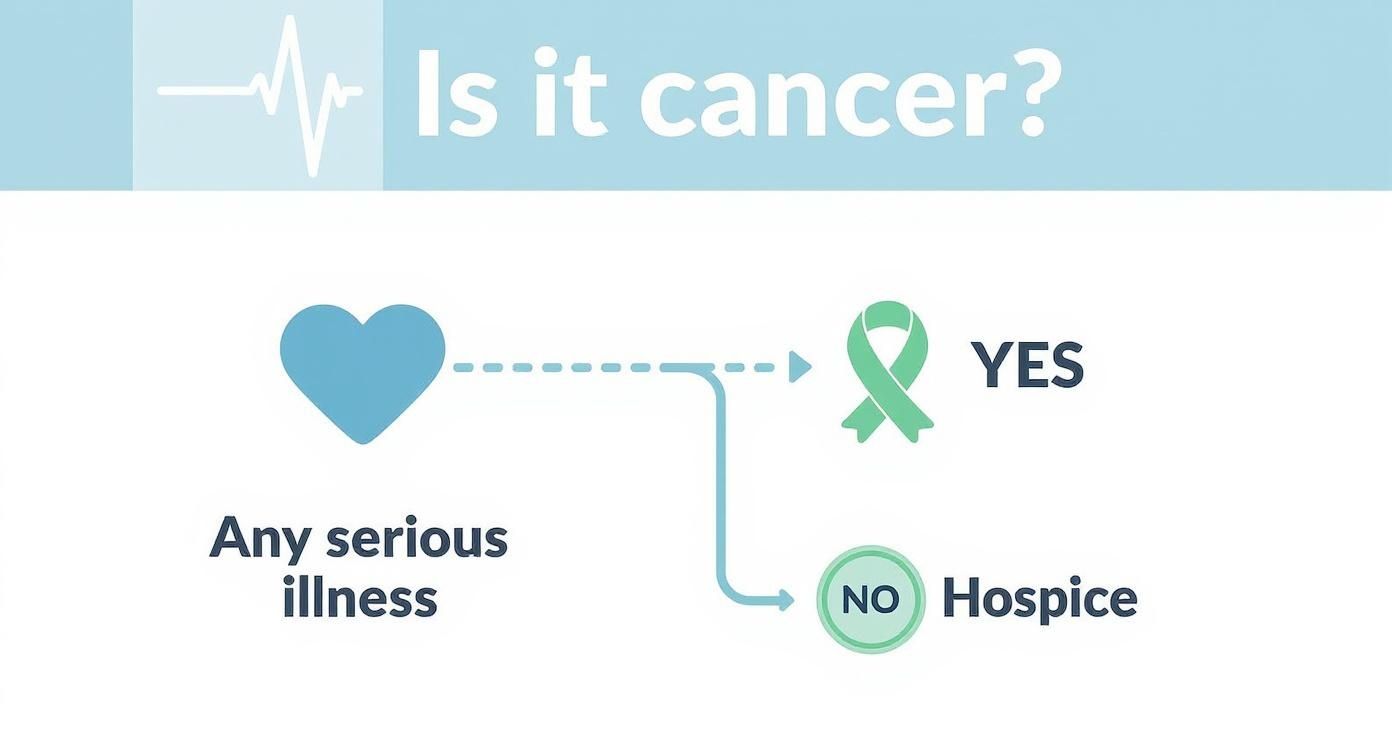
The path to hospice is determined by need, not the name of the disease. It’s all about focusing on quality of life when an illness has advanced.
Empowering Your Family with Information
Understanding these signs empowers you to advocate for your loved one. It opens the door to a different kind of care—one that prioritizes peace over aggressive treatments. This is often the most compassionate choice a family can make.
It ensures their loved one receives holistic support for their body, mind, and spirit. If you are noticing these signs and wondering about next steps, you can learn more about when to call hospice in our detailed guide.
Choosing hospice is not about giving up. It is an active decision to shift the focus from curative treatments to maximizing comfort, managing symptoms, and honoring a person's wishes for their final months.
By understanding the criteria and recognizing the signs, you can make informed decisions. Our team at Central Coast VNA & Hospice is ready to help families in Monterey County and San Benito County navigate this sensitive topic with compassion.
The Many Conditions Hospice Can Support
Most people think of cancer when they hear the word "hospice." But this care adapts to many other serious illnesses.
The teams at Central Coast VNA & Hospice support individuals with a wide range of advanced conditions. We tailor care to meet each person's unique needs right here in Monterey County and the surrounding areas.
Advanced Heart Disease
For someone with advanced heart disease, like Congestive Heart Failure (CHF), daily life can be exhausting. Simple activities might trigger fatigue, shortness of breath, or chest pain.
Our hospice Registered Nurses are experts at managing these symptoms at home. They work with the patient’s doctor to adjust medications and provide oxygen. The goal is to reduce hospital visits and improve comfort.
Chronic Lung Disease
Patients with Chronic Obstructive Pulmonary Disease (COPD) often feel anxious about their breathing. This feeling of breathlessness can be frightening and isolating.
Hospice care for COPD focuses on easing this symptom. We teach patients breathing techniques and relaxation methods. Our Hospice Aides can also help with personal care, saving the patient’s energy for time with loved ones.
Hospice care is about adding life to a patient’s days, not just days to their life. By focusing on symptom relief and emotional peace, we help individuals with any terminal illness live as fully as possible.
Dementia and Alzheimer's Disease
As dementia or Alzheimer's advances, communication becomes a challenge. The world can feel confusing.
Our teams are trained to create a peaceful and safe environment. We learn to read non-verbal cues to understand needs and manage agitation. This approach upholds the patient’s dignity and gives their family needed support.
Advanced Neurological Conditions
Conditions like Amyotrophic Lateral Sclerosis (ALS) or Parkinson’s Disease cause a progressive loss of function. This creates immense physical and emotional hurdles.
For these individuals, hospice care helps maintain comfort and preserve independence. A dedicated hospice team coordinates pain management, mobility assistance, and medical equipment. Our Social Workers and Chaplains also offer emotional and spiritual support.
What a Hospice Care Team Provides
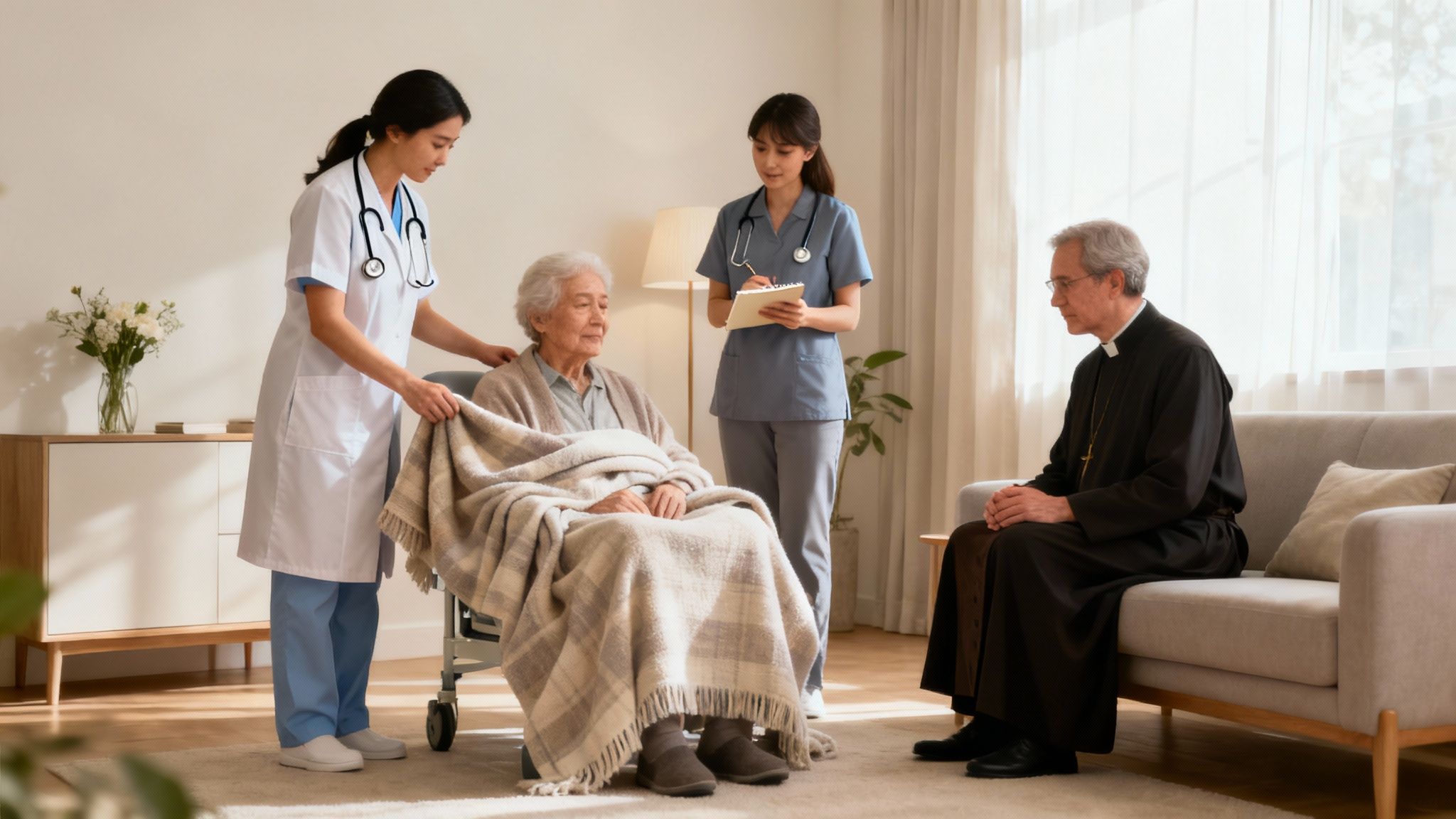
Hospice is a dedicated team of professionals working together for you and your family. This team-based approach supports every aspect of a person's well-being.
At Central Coast VNA & Hospice, our care comes to you, wherever you call home. This could be a private residence in Monterey County or an assisted living facility in San Benito County. Our goal is to provide comfort in a familiar environment.
Your Interdisciplinary Care Team
A patient’s hospice journey is guided by a core team of specialists. They work together to create a personalized care plan.
Your Central Coast VNA & Hospice team includes:
- Registered Nurse: Manages pain and other symptoms and coordinates with your physician.
- Hospice Aide: Assists with personal care tasks like bathing and dressing.
- Social Worker: Offers emotional support and helps with practical matters like advance care planning.
- Chaplain: Provides non-denominational spiritual guidance that respects your family’s beliefs.
This team approach ensures the complete needs of the patient and family are met. It addresses physical, emotional, and spiritual well-being.
Easing Financial and Practical Burdens
Worrying about the cost of care can be a major source of stress. Hospice is designed to relieve this burden. This lets you focus on spending quality time together.
Under the hospice benefit, most medical supplies, equipment, and medications related to the illness are covered. This can include a hospital bed, oxygen, and pain medications. Our team coordinates the delivery and setup of everything you need.
Hospice is a comprehensive support system that wraps around the entire family. It’s about ensuring comfort, preserving dignity, and providing a steady, guiding hand during a challenging time.
By handling these logistics, we help create a more peaceful home environment. This is central to our mission as a nonprofit serving the Central Coast for over 74 years. Learn more about what to expect from hospice care in our helpful guide.
The Relationship Between Palliative and Hospice Care
Many people think "palliative care" and "hospice care" are the same. They are related, but they serve different needs at different times.
Think of palliative care as a broad type of support that can begin at any point after a serious diagnosis. A person can receive palliative care while still getting curative treatments, like chemotherapy. The goal is to relieve symptoms and improve quality of life.
All Hospice Is Palliative, But Not All Palliative Care Is Hospice
Hospice care is a specific type of palliative care. It begins when the focus shifts from curing the illness to maximizing comfort. It is for individuals with a life expectancy of six months or less.
This is the main difference. Palliative care can be given alongside curative treatments, but hospice starts after the decision to stop them.
The simplest way to think about it is that all hospice care is palliative because it’s all about comfort and symptom management. However, not all palliative care is hospice, because it can be provided long before a person reaches the end-of-life stage.
For a deeper look, you can read our guide on the real difference between hospice and palliative care.
A Seamless Continuum of Care on the Central Coast
Central Coast VNA & Hospice provides a complete continuum of care. We are the only organization in Monterey County and the surrounding areas offering home health, palliative, and hospice services under one roof.
A patient might start with our home health nursing after a hospital stay. They can then transition to our palliative care program for extra support. When the time is right, they can move smoothly into hospice care, often with the same team they already trust.
This integrated approach prevents stressful gaps in care. Our team builds a lasting relationship with your family, providing consistent support.
How to Begin the Hospice Conversation
Talking about hospice can be tough, but it is a loving conversation. It’s not about giving up. It’s about ensuring your loved one’s final chapter is lived with comfort and dignity.
You can create a safe space by starting with open-ended questions. Try asking, "Have you thought about what kind of care you’d want if you became more ill?" The goal is to listen and understand their hopes and fears.
Taking the Next Step
Once the conversation is open, the next step is gathering information. It is a myth that you need a doctor’s referral to learn about hospice. Anyone—a patient, family member, or friend—can call to ask for information.
You don’t need a physician’s referral to explore your options. A simple, no-pressure phone call can bring so much clarity and answer your questions, empowering you to make the best decision for your family.
At Central Coast VNA & Hospice, our team is right here in Santa Cruz County, ready to help. We can walk you through the services and explain eligibility.
The process for starting hospice care is straightforward. Here’s how it works:
- Contact a Hospice Provider: Call us to request an informational visit. There is no commitment.
- Schedule a Consultation: One of our Registered Nurses will meet with you to discuss needs and eligibility.
- Obtain a Physician's Order: If hospice is the right choice, we will coordinate with your loved one’s doctor to get the necessary certification.
This process is meant to relieve stress. Contact us today for a compassionate, no-obligation conversation.
Frequently Asked Questions (FAQs)
Is hospice only for the last few days of life?
No, this is a common misconception. Hospice care is most beneficial when started earlier. Patients can receive care for six months or longer, as long as they meet the eligibility criteria, allowing more time for comfort and support.
Does choosing hospice mean we are giving up?
Not at all. Choosing hospice is an active decision to focus on quality of life. It’s about ensuring your loved one’s final months are lived with peace, dignity, and as much comfort as possible.
How is hospice care paid for?
Hospice is fully covered by Medicare, Medicaid, and most private insurance plans. As a nonprofit serving the Central Coast for over 74 years, Central Coast VNA & Hospice provides care to all eligible patients, regardless of their ability to pay.
Can a patient leave hospice if they get better?
Absolutely. If a patient's condition improves or they want to try a new curative treatment, they can leave hospice care at any time. They can re-enroll later if they meet the hospice eligibility requirements.
Where is hospice care provided?
Hospice care is provided wherever a patient calls home. This could be their own house, an assisted living community, or a nursing home in Monterey County, San Benito County, or our other service areas. The goal is to bring support to them in a familiar setting.
If you have more questions or want to understand how our continuum of care can support your family, contact Central Coast VNA & Hospice today. Learn more at https://ccvna.com.