
As seasons turn on California's Central Coast, the crisp air is a welcome change. But for older adults, lower temperatures bring a quiet danger. The simple truth is that fall risks for seniors rise as temps drop locally, turning homes into potential hazards.
The Invisible Threat of Cooler Weather on the Central Coast
When cooler weather settles into Monterey, Santa Cruz, and San Benito Counties, it brings more than a chill. For seniors, it creates new challenges that increase the chance of a fall. This seasonal shift creates environmental and physical risks that catch many families off guard.
Slippery sidewalks after a morning frost in Salinas can be a problem. Earlier sunsets leave rooms dimly lit, and cold-induced stiffness makes joints ache. What might seem like a minor stumble can lead to serious injuries, hospital stays, and a loss of independence.
This flowchart shows the link between colder weather and the hazards that follow.
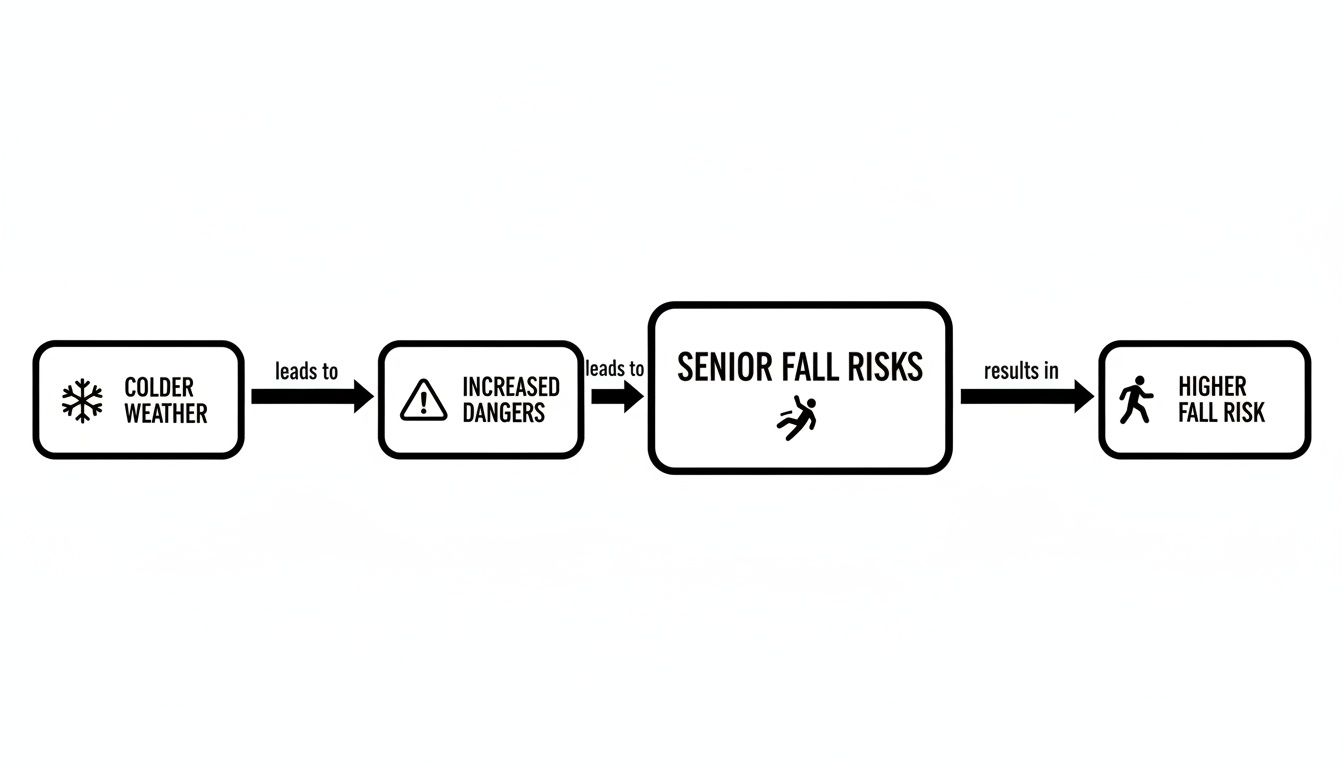
As you can see, falling temperatures set off a cascade of new dangers, directly elevating the risk of a fall.
Understanding the Seasonal Spike in Falls
This connection is backed by data. National studies show a clear seasonal pattern. Fall-related emergency room visits for adults aged 65 and older spike during the winter months.
A simple fall can be a life-altering event. It is a leading cause of both fatal and non-fatal injuries for older Americans. This makes prevention a critical part of senior wellness.
For families across our local communities, from Hollister to South Santa Clara County, understanding this threat is the first step. Once you recognize the risk, the need for proactive solutions becomes clear. The table below breaks down common hazards seniors face on the Central Coast during colder months.
Common Winter Fall Risks for Seniors on the Central Coast
This table shows the main factors that increase fall risk for seniors during colder weather in our local communities.
| Risk Factor | Description | Example in Monterey or Santa Cruz |
|---|---|---|
| Environmental Hazards | Slippery surfaces from morning frost, dew, or rain become more common. | A senior in Santa Cruz walks out to get the newspaper and slips on a walkway that is unexpectedly slick from morning moisture. |
| Reduced Visibility | Earlier sunsets and overcast days lead to lower indoor and outdoor light, obscuring trip hazards. | An older adult in Monterey misjudges a step inside their home during the dimly lit late afternoon hours. |
| Physiological Changes | Cold temperatures can cause joint stiffness, muscle tightness, and slower reaction times, affecting balance. | After sitting for a while in a cool room, a senior in Hollister stands up too quickly and feels unsteady due to stiff knees. |
| Increased Indoor Activity | Spending more time indoors can increase the risk of tripping over household clutter like rugs and cords. | A resident in Salinas, staying inside to avoid the cold, trips over a throw rug they usually navigate around easily. |
At Central Coast VNA & Hospice, our mission is to provide proactive support. With over 74 years of nonprofit service, our teams of Registered Nurses and therapists understand local challenges. We are dedicated to providing in-home care to keep your loved one safe and secure at home.
How Cold Weather Affects a Senior's Body and Balance
When an older loved one falls during the winter, it’s easy to blame obvious things like ice. But the biggest threat isn't always underfoot. A key reason fall risks for seniors rise as temps drop locally is due to subtle changes happening inside their bodies.
The cold itself changes how muscles, nerves, and joints work. This creates a hidden vulnerability. Cold makes muscles and joints stiff and less responsive, like a rubber band left in a freezer.
Stiff Joints and Tight Muscles
On a chilly day, the body tries to save heat by constricting blood vessels. This reduces blood flow to the legs and feet. Less blood flow means less warmth for muscles and joints, causing stiffness.
For an older adult, this change makes simple movements harder. Here’s how it plays out:
- Slower Reaction Times: Stiff muscles can't contract as quickly. This makes it hard to catch oneself during a stumble.
- Reduced Range of Motion: When hips and knees are tight, a person’s gait can change. They might start shuffling their feet, which increases the risk of tripping.
- Increased Arthritis Pain: Cold, damp weather can make arthritis flare up. Chronic pain can make a senior hesitant to move, leading to instability.
These factors quietly disrupt a person’s balance. They make falls more likely, even in the familiar setting of home.
Numbness and Reduced Sensation
Another change happens in the nervous system. Cold temperatures can slightly numb nerve endings in the feet. This is a problem because it dulls the feedback the brain needs to maintain balance.
Imagine walking across an uneven floor while wearing thick socks. You wouldn't feel the dips and bumps beneath you. That’s what happens when cold reduces sensation in a senior's feet.
The Impact of Medications
Winter also brings cold and flu season, which means more over-the-counter medications. Many of these remedies can cause drowsiness or dizziness. These are major risk factors for a fall.
When added to a senior's existing prescriptions, the risk can multiply. For help, exploring professional medication management for elderly loved ones can be a game-changer. A medication review with a skilled clinician from Central Coast VNA & Hospice is a vital part of winter safety.
Our Registered Nurses help families in Hollister, Salinas, and surrounding areas understand side effects. We organize medication schedules to lower risks. By identifying these internal threats, we help build a stronger foundation for fall prevention.
Creating A Fall-Proof Home For Winter
Making a home a safe haven for winter doesn't require a massive overhaul. Simple changes can make the biggest difference in preventing falls. As fall risks for seniors rise as temps drop locally, walking through the living space is a powerful way to protect a loved one.
The stakes are high. According to the CDC, millions of older adults fall each year, with many resulting in serious injury. A few thoughtful adjustments can dramatically lower the odds of an accident.
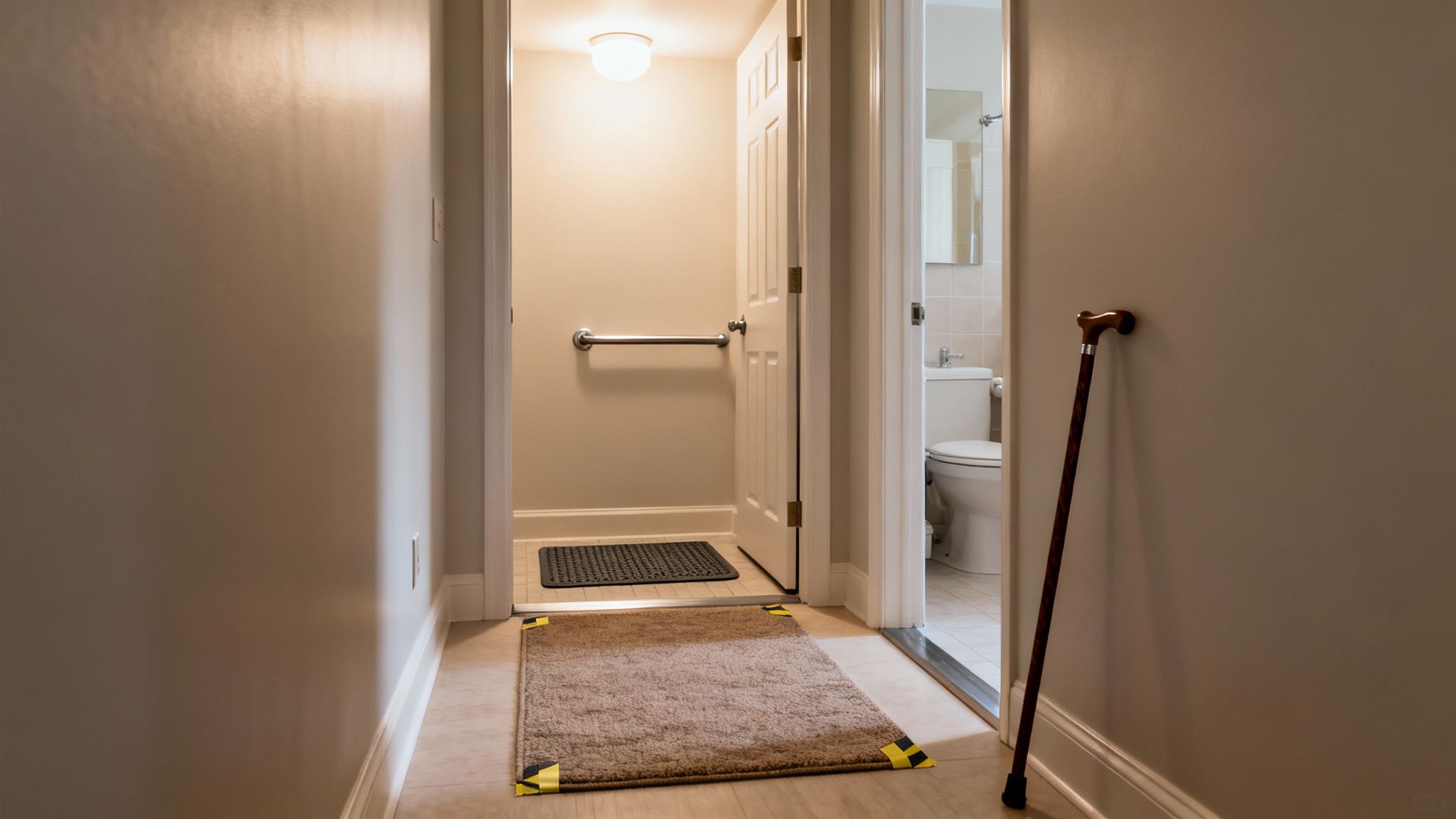
A Room-By-Room Safety Checklist
This is a practical guide to fixing common household hazards. These steps can create a safer environment for an older adult this winter.
Hallways and Main Walkways:
- Light It Up: Use brighter bulbs in hallways, stairwells, and entryways. Nightlights can make a difference for late-night trips to the bathroom.
- Clear the Path: Get rid of clutter that could cause a trip. This includes mail, shoes, and small items in walking areas.
- Secure All Rugs: Use double-sided tape or non-slip backing to anchor area rugs. It's often best to remove small throw rugs entirely.
Living Areas:
- Tame the Cords: Neatly tuck away electrical and phone cords along baseboards.
- Rethink Furniture Placement: Make sure there are wide, clear paths through every room.
Bathroom:
- Add Non-Slip Surfaces: Place non-slip mats inside the tub or shower. Use a non-slip bathmat on the floor right outside of it.
- Install Grab Bars: Securely install grab bars next to the toilet and inside the shower. Towel racks are not built to support a person's weight.
- Bring in a Shower Chair: A shower chair provides stability and helps reduce fatigue.
Kitchen:
- Keep Things Within Reach: Store frequently used items on lower, easy-to-reach shelves. This prevents the risky need for a step stool.
- Wipe Up Spills Immediately: A little water or grease on the floor is a serious slipping hazard.
- For peace of mind, consider installing non-slip vinyl flooring in high-risk areas.
A fall-proof home is about smart choices that support independence and safety.
When You Need An Expert Eye
While these DIY tips are a great start, some hazards are not obvious. This is where a professional’s expertise helps. At Central Coast VNA & Hospice, our Occupational Therapists are trained to perform expert home safety evaluations.
During a visit, our therapists look at daily routines and identify specific risks. They provide personalized recommendations and can help with adaptive equipment. This guidance ensures your loved one's home is truly optimized for their needs.
For a deeper dive into creating a secure living space, check out our guide on preventing falls in the home. These small changes can add up to a season of safety.
Taking Action Before A Fall Happens
The best time to deal with a fall is before it happens. A proactive approach is the most effective way to help a loved one stay safe. As the seasons change, this becomes more important than ever since fall risks for seniors rise as temps drop locally.
Waiting for an accident can have serious consequences. Building a safety net now can address the root causes of instability. This means taking a professional look at their health, mobility, and medications.
An Integrated Approach to In-Home Safety
At Central Coast VNA & Hospice, our mission is built around providing proactive, in-home support. We know that preventing a fall requires a coordinated effort. For over 74 years, our nonprofit teams have served Monterey, Santa Cruz, and nearby communities.
Our teams work together to create a personalized safety plan. This continuum of care makes sure your loved one gets the right support.
Here's how our different services come together:
- Skilled Nursing: Our Registered Nurses conduct medication reviews to spot prescriptions that might cause dizziness. They work with doctors to minimize dangerous side effects.
- Physical Therapy: Our Physical Therapists design custom exercise programs. They focus on building strength, improving balance, and increasing flexibility.
- Palliative Care: For those with a serious illness, our Palliative Care team provides extra support. They manage symptoms like pain and fatigue that contribute to falls.
Palliative Care: A Key Layer of Support
Many families think Palliative Care is only for hospice, but it plays a key role in fall prevention. It is specialized care for people with a serious illness, available at any age or stage.
Its goal is to relieve symptoms and stress, which directly impacts stability. By managing symptoms, our Palliative Care specialists help seniors feel stronger. This reduces their risk of falling.
The table below shows how our core services work together to keep your loved one safe.
How CCVNA Services Reduce Fall Risk
| Service | How It Helps Prevent Falls | Who It's For |
|---|---|---|
| Skilled Nursing | Conducts medication reviews to identify and manage prescriptions that cause dizziness or drowsiness. Monitors overall health to catch issues early. | Seniors recovering from surgery, managing a new diagnosis, or needing complex medical care at home. |
| Physical Therapy | Develops personalized exercise plans to build strength, improve balance, and increase flexibility. Teaches safe ways to move and use assistive devices. | Individuals who feel unsteady, have lost mobility, or are recovering from an injury or illness that affects their physical abilities. |
| Palliative Care | Manages symptoms like chronic pain, fatigue, and shortness of breath that contribute to instability. Focuses on improving overall comfort and quality of life. | Anyone with a serious illness (like heart disease, COPD, or dementia) needing an extra layer of support, at any stage of their illness. |
This integrated approach ensures we are actively preventing problems.
Central Coast VNA & Hospice is the only provider on the Central Coast offering this full spectrum of care under one roof. Our mission is to keep seniors in our community safe and independent at home. If you are looking for ways to help seniors live at home safely, our team is here to help.
Warning Signs Your Loved One Is At Risk
Recognizing subtle red flags of a fall risk is a powerful tool for families. These signs often get brushed off as just “getting older.” But they are signals that a loved one needs more support, especially as fall risks for seniors rise as temps drop locally.
For families in Hollister, Salinas, and across the Central Coast, paying attention to small shifts can reveal a bigger picture. Trust your gut. If you notice something feels off, it probably is.
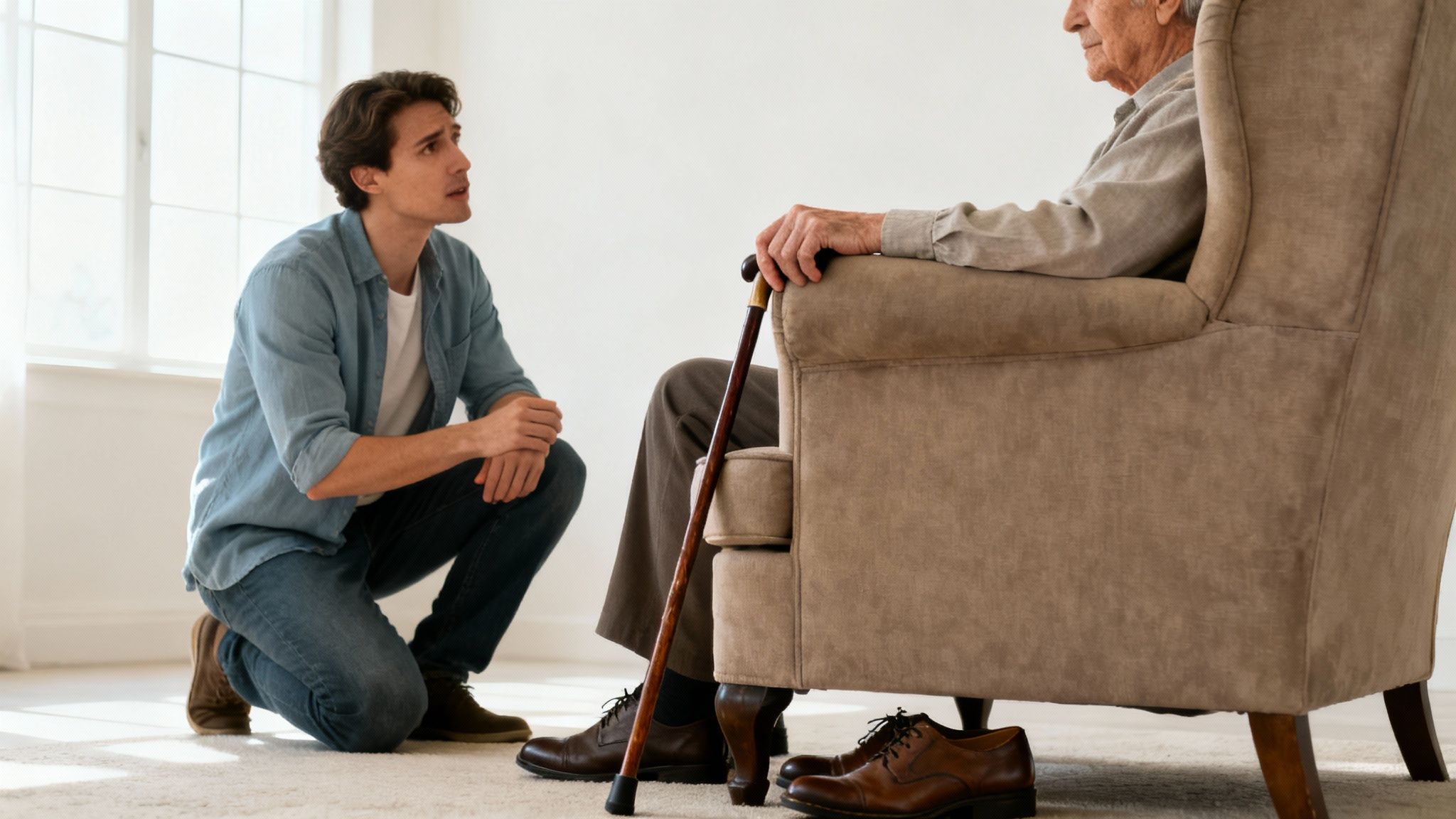
Physical and Behavioral Clues To Watch For
These warning signs often appear gradually. They are clear indicators that balance and confidence are fading. Being observant is the first step toward prevention.
Keep an eye out for these easy-to-spot signs:
- "Furniture Walking": Holding onto walls or furniture for support while moving through a room.
- Difficulty Standing Up: Struggling to get out of a chair or pushing off forcefully with their arms.
- Shuffling or Unsteady Gait: A change from a confident stride to short, shuffling steps.
- Avoiding Certain Activities: Stopping daily walks, using the stairs, or carrying groceries due to fear.
Verbal Cues That Signal Trouble
Sometimes, the most important clues are in what your loved one says. Pay attention to complaints that might seem minor but point to bigger issues. Any mention of dizziness, lightheadedness, or feeling "woozy" should be taken seriously.
Other verbal signs include:
- Expressing a direct fear of falling.
- Complaining of numbness in their feet.
- Mentioning they’ve had a "close call" or nearly stumbled.
If you’ve noticed any of these cues, it may be time for a professional evaluation. Our guide on the 5 warning signs elderly parents need home health care can provide more insight. Contact Central Coast VNA & Hospice to ask about an in-home evaluation.
Partner With CCVNA For A Safer Winter
You don't have to navigate these challenges alone. We've seen how fall risks for seniors rise as temps drop locally. Partnering with Central Coast VNA & Hospice is a powerful move toward a safer winter.
For over 74 years, our nonprofit mission has been to deliver expert care at home. We are woven into the communities we serve, from Monterey to Hollister. We understand the unique challenges our local seniors face.
Your Local Partner in the Continuum of Care
We empower families with a seamless range of support. Our services are designed to work together to create a comprehensive safety net.
- Home Health: Our Registered Nurses and therapists address immediate health concerns, from medication management to physical therapy.
- Palliative Care: This service provides an extra layer of support. It focuses on managing symptoms that lead to instability.
- Hospice Care: Should the need arise, we provide compassionate end-of-life care focused on comfort and dignity.
This integrated approach solidifies our role as your dedicated local partner.
Central Coast VNA & Hospice is the only organization on the Central Coast providing this full spectrum of care under one roof. Don't wait for a fall to happen. Taking action today can preserve independence and give you peace of mind. To see how our teams make a real difference, learn more about how VNA helps seniors live safely at home in Monterey.
Compassionate, professional help is just a phone call away. Contact Central Coast VNA & Hospice today to learn how we can support your family this winter.
Frequently Asked Questions About Senior Fall Prevention
As temperatures drop on the Central Coast, many families worry about their aging loved ones. Protecting them from a fall is a top priority. Here are answers to some of the most common questions we receive.
How can I tell if my parent is at risk for a fall?
The earliest signs are often subtle changes in daily movements. A professional home health evaluation from Central Coast VNA & Hospice is the best way to get a clear picture. Watch for signs like "furniture walking," struggling to stand up, shuffling their feet, or mentioning dizziness.
Isn't home health care just for after a hospital stay?
While home health is essential for recovery, it is also a powerful tool for prevention. Proactive care is key, as fall risks for seniors increase as temperatures drop. If your loved one is becoming weaker or managing a chronic illness, they may qualify for our preventive services.
Does CCVNA help people in the rural parts of the Central Coast?
Yes. As a local nonprofit provider for over 74 years, our commitment extends to every corner of our community. Our mobile clinical teams bring expert care to your loved one’s front door, whether you live in town or in a rural part of Monterey or San Benito Counties.
What's the difference between palliative and hospice care?
Palliative care can start at any point during a serious illness, alongside curative treatments. It focuses on managing symptoms that can increase fall risk. Hospice care is for the end of life when the focus shifts entirely to comfort, peace, and dignity.
How do I start the conversation about fall prevention with my parent?
Approach the topic with compassion and as a partnership. Frame it as a way to help them maintain their independence. Say something like, “I want to make sure you can keep living here safely. Could we look at a few things together to make the house safer for winter?” This respects their autonomy while addressing your concerns.
If you've noticed any of these warning signs in someone you love, please don't wait. The team at Central Coast VNA & Hospice is here with the expert support your family needs to get through the winter safely. Contact us today to learn more about our home health, palliative care in Monterey County, and hospice care services.