
Can home health care truly help your parent stay out of the hospital? The answer is a strong yes. It acts as a bridge, bringing skilled medical care into the comfort of home. This ensures recovery stays on track and helps prevent return trips to the ER.
The Overwhelming Journey from Hospital to Home
Bringing a parent home after a hospital stay can feel confusing. You often get a stack of papers, a long list of new medications, and are told to set up follow-up appointments. This is a common and stressful experience for families across Monterey County. It leaves them wondering, "Am I doing this right?"
The good news is that you don't have to figure it all out alone. When facing a sudden illness or a hospital discharge, many families are told to “get home health care.” But they often don't know what it includes, who provides it, or how to qualify.
Understanding Your Options
Many people think home health is just a quick nurse visit or only for someone who is bedbound. Others hire expensive private help without realizing Medicare may cover what their parent needs to recover safely. Getting the right care early is key to avoiding ER visits and hospital readmissions.
Home health care helps over 12 million Americans a year recover from illness, manage chronic conditions, and live independently at home. It’s not just basic help—it’s skilled care, including nursing and rehabilitation therapy, prescribed by a doctor.
The first step is to ask your parent's doctor or the hospital discharge planner for a referral to a Medicare-certified home health agency. This professional support often includes:
- Wound Care: To prevent serious infections that could send your parent back to the hospital.
- Medication Management: Teaching you and your parent how to safely manage new prescriptions.
- Fall Prevention: Physical and occupational therapy to rebuild strength and make the home safer.
- Disease-Specific Education: Hands-on training for managing conditions like heart failure or diabetes.
To help you understand the different types of in-home support, here's a quick comparison:
Home Health Care vs Private-Duty Care
| Service Provided | Medicare-Certified Home Health (e.g., CCVNA) | Private-Duty Care (Hired Help) |
|---|---|---|
| Type of Care | Skilled medical care (nursing, PT, OT, speech therapy) ordered by a doctor. | Non-medical assistance with daily living (bathing, meals, errands). |
| Goal | To help a patient recover from an illness, injury, or surgery. | To provide long-term support for daily activities and personal care. |
| Payment | Typically covered 100% by Medicare and most private insurance plans. | Paid for out-of-pocket by the individual or family. |
| Duration | For a specific, doctor-ordered period until recovery goals are met. | Can be arranged for as many hours as needed, for an indefinite period. |
The main takeaway is that Medicare-certified home health focuses on skilled clinical care for recovery. Private-duty care is about ongoing personal assistance.
As a nonprofit organization serving our community for over 74 years, Central Coast VNA & Hospice provides this critical link between the hospital and home. Our skilled clinicians offer personalized, expert care that supports a safe recovery. You can learn more in our guide to discharge planning from the hospital.
How Skilled Care Keeps Your Parent Out of the Hospital
When a parent comes home from the hospital, the biggest fear is a return trip to the ER. This is where skilled home health care makes a real difference. It creates a safety net of clinical support right in their living room.
This isn't just having someone check in. It’s a strategic plan designed by licensed clinicians—like Registered Nurses and therapists—who work with your parent's doctor. The goal is to target specific risks that could send your loved one back to the hospital.
The journey from a hospital stay to a safe recovery at home is a critical transition. Home health care acts as the bridge, ensuring a smoother healing process.
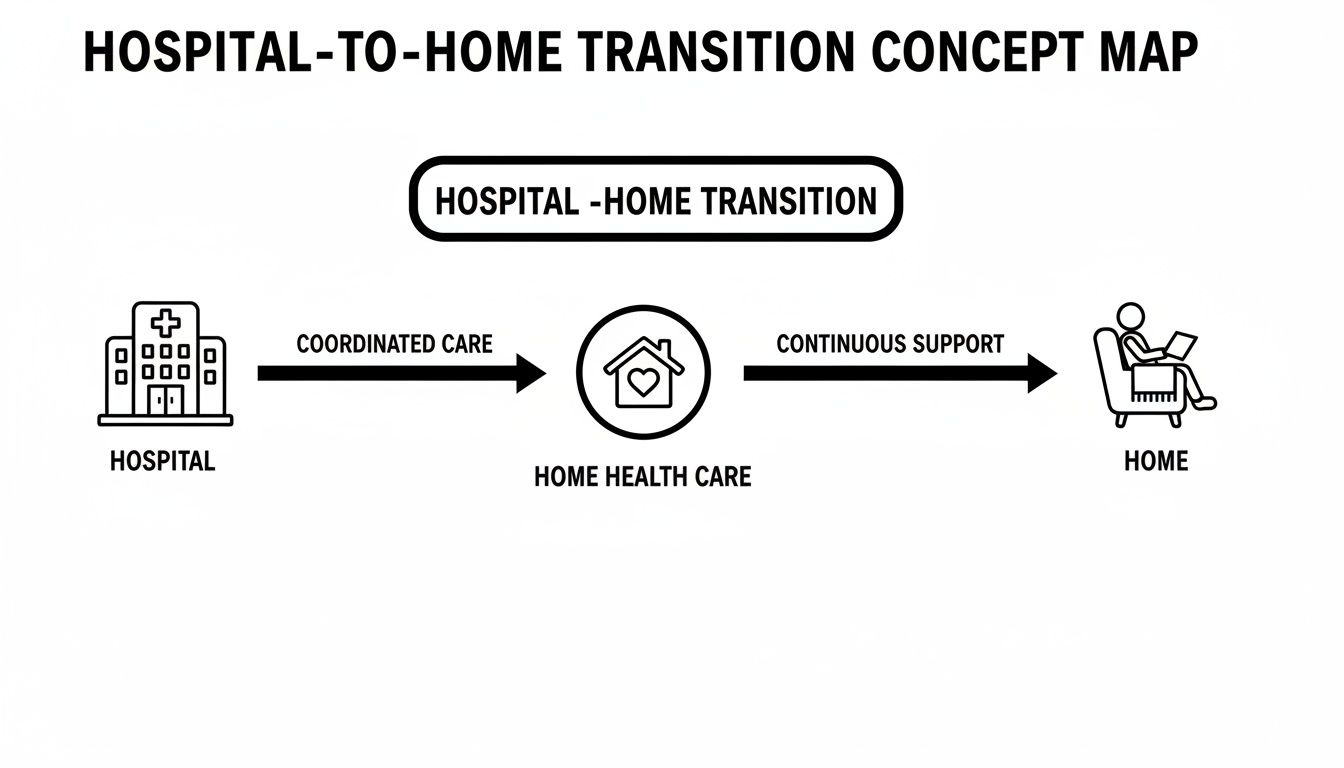
This coordinated, proactive approach is what Central Coast VNA & Hospice provides. We are a mission-driven nonprofit serving Monterey, San Benito, Santa Cruz, and South Santa Clara counties.
The Power of Proactive Care at Home
The true value of home health care is catching problems before they become crises. Our clinicians are trained to spot subtle changes in a patient's condition. This consistent oversight is a game-changer.
Research shows that home health care can dramatically cut the risk of returning to the hospital within 30 days. One key study found that patients receiving home health services had a 60% lower risk of readmission compared to those without that support.
This professional oversight gives families incredible peace of mind. Knowing a skilled clinician is keeping a close watch allows you to focus on your parent's well-being.
A Coordinated Team Approach to Recovery
With home health care, you get a whole team of specialists. It’s a holistic approach that ensures all of your parent's needs are met.
This team often includes:
- Registered Nurses (RNs): They manage the overall care plan, handle medications, and treat wounds.
- Physical Therapists (PTs): PTs are essential for regaining strength and mobility after an illness or surgery.
- Occupational Therapists (OTs): OTs help patients relearn how to safely perform daily activities like bathing and dressing.
- Speech-Language Pathologists: They work with patients who have trouble speaking or swallowing.
This team-based therapy and support is vital. For example, they can guide patients through safe and effective cardiac rehab exercises at home to build strength safely.
This coordinated effort makes all the difference. To see how we put these strategies into action, read our article on how Central Coast VNA reduces hospital readmissions. Our expert team helps your parent thrive safely at home.
Managing Chronic Conditions to Avoid a Crisis
Most hospital stays don't happen because of a sudden injury. They often occur when a chronic condition—like heart failure (CHF) or diabetes—spirals out of control. Skilled home health care acts as an early warning system to stop a crisis before it begins.
This proactive approach is one of the most powerful ways home health keeps a loved one out of the hospital. A Registered Nurse becomes a health coach, providing hands-on education in your parent's home.
For families in Monterey, Salinas, or Hollister, this personalized guidance from Central Coast VNA & Hospice can be a game-changer. Our clinicians teach you how to recognize early warning signs. This one-on-one attention helps turn anxiety into informed action.

Empowering Patients Through Education
Effective management of any chronic illness is built on understanding. When a parent knows why they need to take a pill, they are more likely to stick with their care plan. A home health nurse from CCVNA provides this education in a comfortable setting.
This isn’t about just handing over a pamphlet. It’s about demonstrating skills and answering questions in real-time.
Key areas where our nurses educate families include:
- Symptom Recognition: We teach the difference between a normal fluctuation and a red flag that requires a call to the doctor.
- Medication Adherence: It’s vital to understand what each medication does and how to create a simple system so doses aren't missed.
- Dietary Guidance: Our team helps your parent understand and follow special diets, like low-sodium for heart conditions.
- Equipment Use: We provide clear instructions for using medical equipment like blood pressure cuffs or glucose meters.
This expert guidance transforms the home into a safe environment for healing.
The Role of Medication Management
One of the biggest risks for a patient just home from the hospital is medication mismanagement. New prescriptions and changed dosages can lead to errors. Home health nurses are experts at untangling this complexity.
Our nurses perform medication reconciliation to catch dangerous discrepancies. They can set up pill organizers and create easy-to-follow schedules. You can learn more in our guide to medication management for the elderly.
A home health nurse doesn't just manage medications; they build a system of safety and understanding. This skill is fundamental to preventing hospital readmissions.
This careful oversight ensures your parent receives the full benefit of their prescribed treatments. It is a foundational piece of helping your parent stay safely at home.
For over 74 years, Central Coast VNA & Hospice has been dedicated to this mission. If you have questions about managing a chronic condition at home, call us at 831-372-6668.
Signs Your Parent Is Ready for Home Health Care
How do you know when it’s the right time for home health care? A recent hospital stay is an obvious trigger, but many subtle signs can tell you that skilled support is needed. Catching these cues early is one of the best ways to help your parent stay out of the hospital.
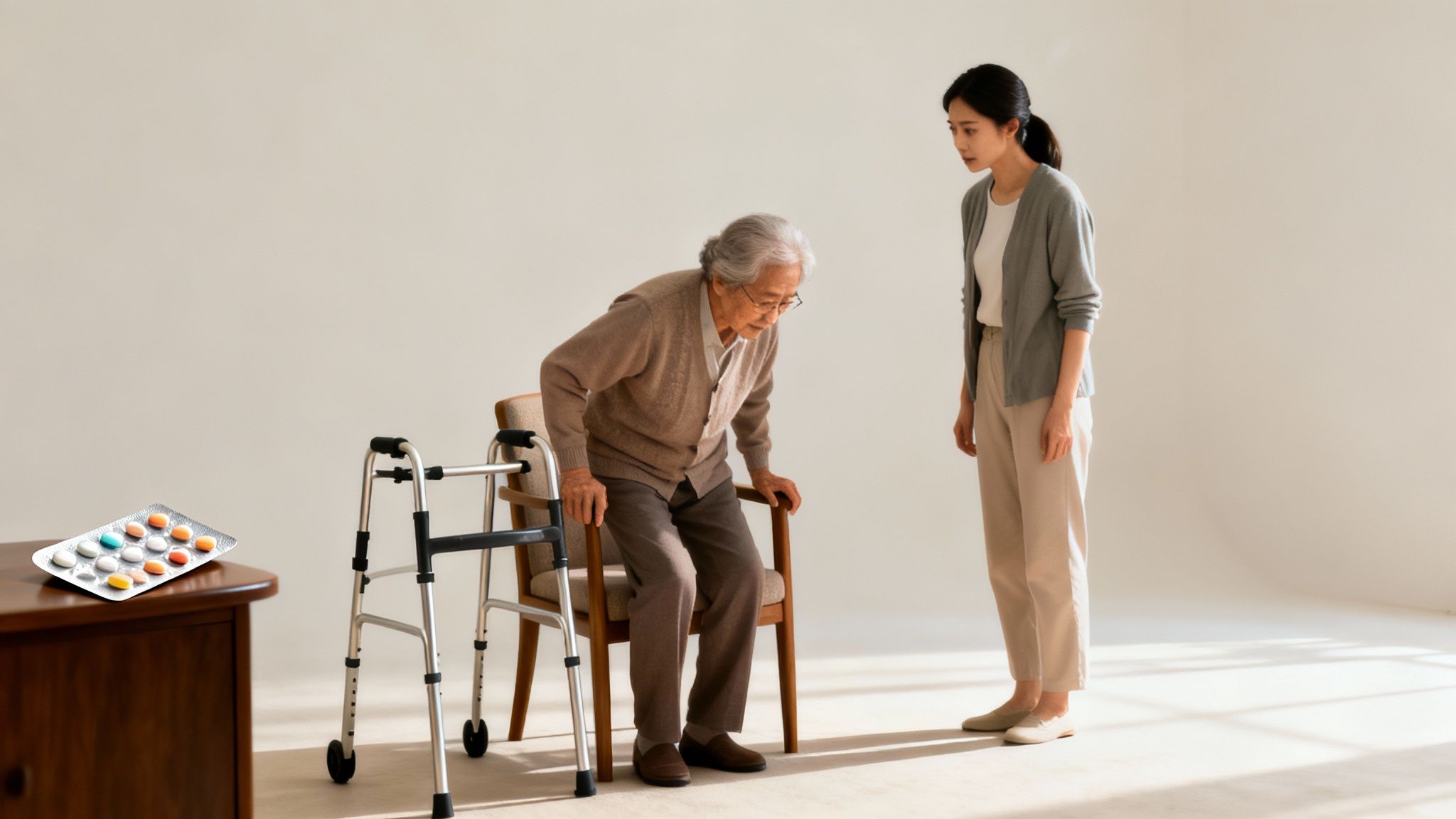
It often starts with small changes. Maybe your parent is less steady on their feet or seems confused about their new medications. These are signals that professional support could prevent a future crisis.
For families in Monterey County and San Benito County, this can be a tough conversation. But waiting until after a fall is far more stressful. The goal is to be proactive.
Common Warning Signs to Watch For
If you notice one or more of these situations, it might be time to talk with your parent's doctor. Each sign points to a skilled service that can make a huge difference.
-
A Recent Fall or Growing Fear of Falling: A Physical Therapist can build an exercise plan to improve strength, while an Occupational Therapist can remove hazards at home.
-
Confusion Over Medications: Are there multiple pill bottles on the counter? A Registered Nurse from Central Coast VNA & Hospice can organize their medications and create an easy-to-follow schedule.
-
More Frequent ER Visits or Hospital Stays: This pattern often means a chronic condition isn't being managed effectively. Skilled nursing provides the monitoring needed to stabilize their health.
-
Difficulty with Daily Tasks: If bathing or dressing has become a struggle, an Occupational Therapist can teach safer, easier ways to handle these tasks.
The Link Between Health Risks and Hospital Readmissions
Certain health issues significantly raise the odds of a patient ending up back in the hospital. The good news is these are the exact risk factors our home health clinicians are trained to manage.
Broader data on patients transitioning from the hospital to home health showed a 14.7% 30-day readmission rate. Key predictors for readmission included longer hospital stays, having multiple chronic conditions, the presence of urinary catheters, and pressure ulcers.
Home health care directly confronts these risks. Our nurses and therapists create customized care plans to manage wounds, provide therapy, and monitor for trouble.
Taking the Next Step
Recognizing the signs is the first step. The next is reaching out for help. A simple conversation with your parent's doctor about a home health evaluation can open the door to the support they need.
For a more in-depth look, check out our guide on the 5 warning signs that elderly parents need home health care.
Navigating the Referral Process and Medicare Coverage
One of the first questions families ask is, "How will we pay for this?" For most eligible seniors, Medicare covers 100% of the cost of skilled home health care. This knowledge often brings a huge sense of relief.
Let's break down how the process works so you can feel confident taking the next step.
Getting the Referral
It all starts with a doctor's referral. This can happen during a hospital discharge in Salinas or a routine check-up in Santa Cruz. That one step connects your parent with the professional care they need.
You don't have to wait for a crisis to ask for help. If you've noticed your parent is struggling, bring it up with their doctor.
Hospital discharge planners are also your allies. They want to make sure patients have a solid recovery plan to avoid penalties for high readmission rates.
Understanding Medicare Eligibility
For Medicare to cover home health care, your parent needs to meet a few basic requirements. Our team at Central Coast VNA & Hospice is always here to help you navigate it.
The main criteria are straightforward:
- A Doctor's Order: A physician must certify that your parent needs skilled medical services at home.
- Needing Skilled Care: Your parent must require intermittent skilled nursing or therapy services.
- Being "Homebound": This doesn't mean your parent is stuck in bed. It simply means leaving home requires a considerable effort.
The most important thing for families to know is that you have a choice. You can request a Medicare-certified agency, like Central Coast VNA & Hospice, to ensure your parent receives care from a trusted, local, nonprofit provider.
You can get a more detailed breakdown by reviewing our guide on Medicare home care eligibility. Families often have questions about other equipment, too; knowing about things like Medicare coverage for electric wheelchairs can be a big part of successful home care planning.
Once the referral is made, one of our skilled clinicians will visit your parent's home. They will work with your family to create a personalized plan of care.
Your Partner in Health on the Central Coast
Choosing a home health provider is about inviting someone you trust into your home. At Central Coast VNA & Hospice, we have always understood that. We are a local, nonprofit organization that’s been part of this community for over 74 years.
Our roots run deep here. We proudly serve our neighbors across Monterey County, San Benito County, Santa Cruz County, and South Santa Clara County. From Salinas to Santa Cruz, we are here because this is our home, too.
A True Continuum of Care
What sets us apart is our seamless continuum of care. Health needs can shift. If your parent’s situation changes, they can transition smoothly from our home health services to palliative or hospice care without stress.
They will be supported by a team they already know and trust. It’s a level of stability that makes a world of difference.
Our skilled team—including Registered Nurses, Physical Therapists, and Occupational Therapists—partners with your parent's doctor. We work together to build strength, manage symptoms, and restore independence.
We believe that expert medical care, delivered with warmth and respect, is the key to avoiding unnecessary hospital trips. If you think your parent could use that support, the first step is a simple conversation.
If you’re in Salinas, Monterey, Hollister, or Santa Cruz, contact Central Coast VNA & Hospice today. Call us at 831‑372‑6668 or visit us at ccvna.com to request a nurse consultation.
Frequently Asked Questions About Home Health Care
When you're looking into care options, many questions come up. Families want to feel sure they're making the right choice.
Here are some of the most common questions we hear from families across the Central Coast.
What happens during a typical home health visit?
A home health visit is a focused medical appointment in your living room. It is led by a licensed clinician like a Registered Nurse or a Physical Therapist. The visit is built around the health goals in your parent’s care plan.
During a visit, the clinician might check vital signs, provide wound care, or guide your parent through therapy exercises. They also review medications and teach you about symptoms to watch for. It's active, skilled care designed to move your parent toward independence.
How is home health different from private-duty care?
This is an important distinction. Home health care is skilled medical care prescribed by a doctor and often covered by Medicare. It is delivered by licensed clinicians to help someone recover from an illness or surgery.
Private-duty home care is non-medical assistance with daily activities like bathing or meals. These services are paid for out-of-pocket and are for long-term support.
How long will my parent receive home health services?
The length of time is tied to medical needs and recovery goals. It is not a permanent arrangement.
Services continue as long as there is a medical reason and your parent is showing progress. Once the goals in the care plan are met, the services are completed.
Who is part of the home health care team?
Your parent’s care is a coordinated team effort. The professionals involved depend on the doctor's orders. This team-based approach looks at the whole picture of their recovery.
A typical team is led by a Registered Nurse case manager. It can also include Physical Therapists, Occupational Therapists, Speech-Language Pathologists, Medical Social Workers, and Home Health Aides. At Central Coast VNA & Hospice, this team works with your parent's primary doctor.
How do we get started if my parent is already home?
You do not need a hospital stay to start home health care. If you notice your parent is struggling, you can be proactive.
The first step is a call to their primary care physician. Explain what you've seen and ask for a home health evaluation. The doctor can then order services from a Medicare-certified agency like Central Coast VNA & Hospice.
If you're in Monterey, San Benito, Santa Cruz, or South Santa Clara County, the team at Central Coast VNA & Hospice is ready to help.
Give us a call today at 831-372-6668 or visit us online at ccvna.com to request a conversation.